Physical Address
304 North Cardinal St.
Dorchester Center, MA 02124
Physical Address
304 North Cardinal St.
Dorchester Center, MA 02124

Katori Shrine (officially known as Katori Jingu) is located in Chiba Prefecture and is one of Japan’s oldest and most prestigious shrines. It also serves as the head shrine of more than 400 Katori shrines across the country.
Surrounded by dense forest, the entire shrine grounds feel grounded, and deeply sacred, like a place that has been quietly preserved by time.
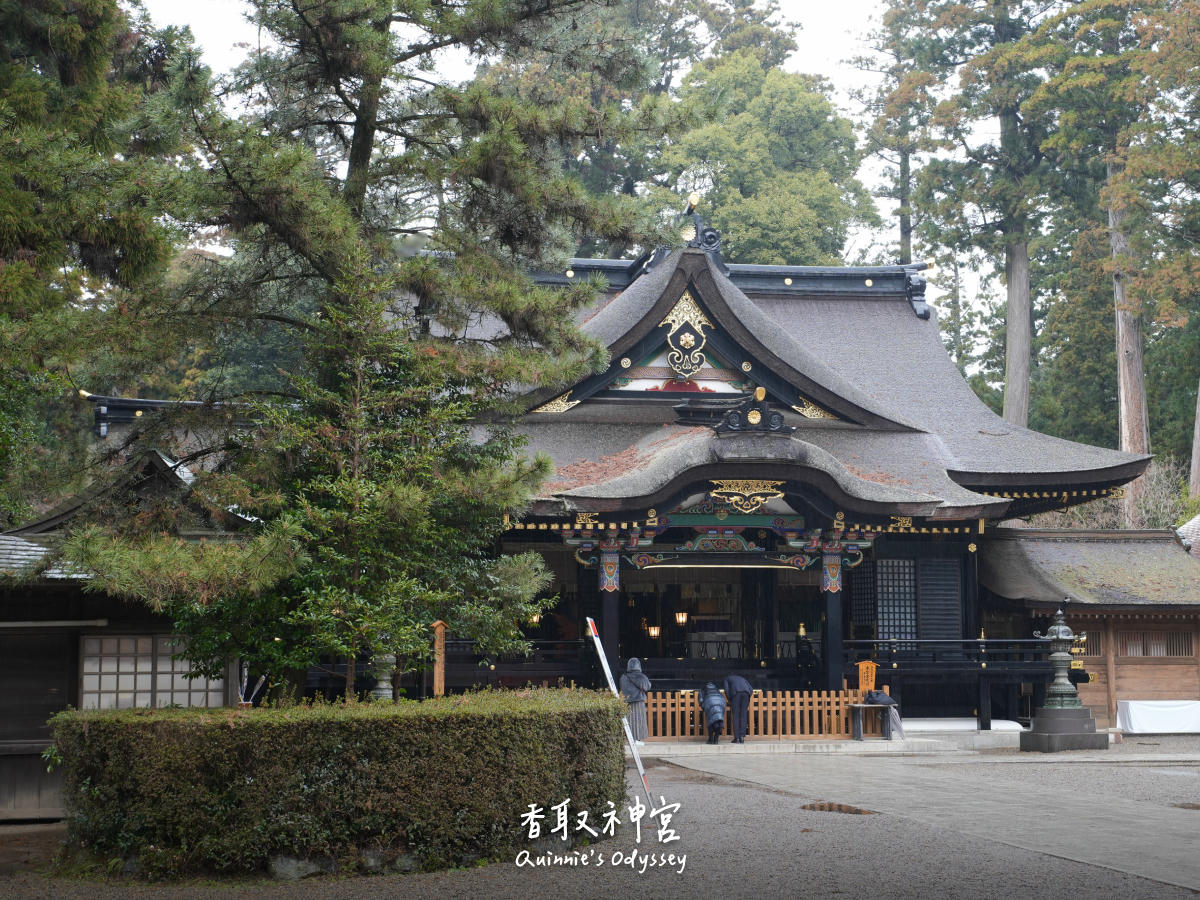
The shrine sits on Mount Kamegayama. It symbolizes stability and protection, and has long been considered a place where deities reside.
It’s also very accessible from Tokyo, making it perfect for a half-day or one-day trip.
During this visit, we stayed near Sawara Station, and it only took about 15 minutes by local bus to get there.
Maybe because it was raining, there were very few visitors, which made the whole experience even more peaceful and immersive.
▼ Exclusive Deal for Sika Readers ▼
Use code【DNBDRT】👉👉 Save ¥3,000on your TOCOO! car rental(view guide)
Nestled in the forests of Chiba, Katori Jingu has a history of over 2,600 years.
In ancient Japan, its status was said to rival that of Ise Jingu, making it one of the most important and oldest sacred sites dedicated to warrior deities in eastern Japan.
From mythological war gods to the spirit of the samurai, this shrine has witnessed the very origins of Japan’s “warrior ethos.”
To understand Katori Jingu, it helps to start with the famous myth of the “Transfer of the Land” (Kuniyuzuri).
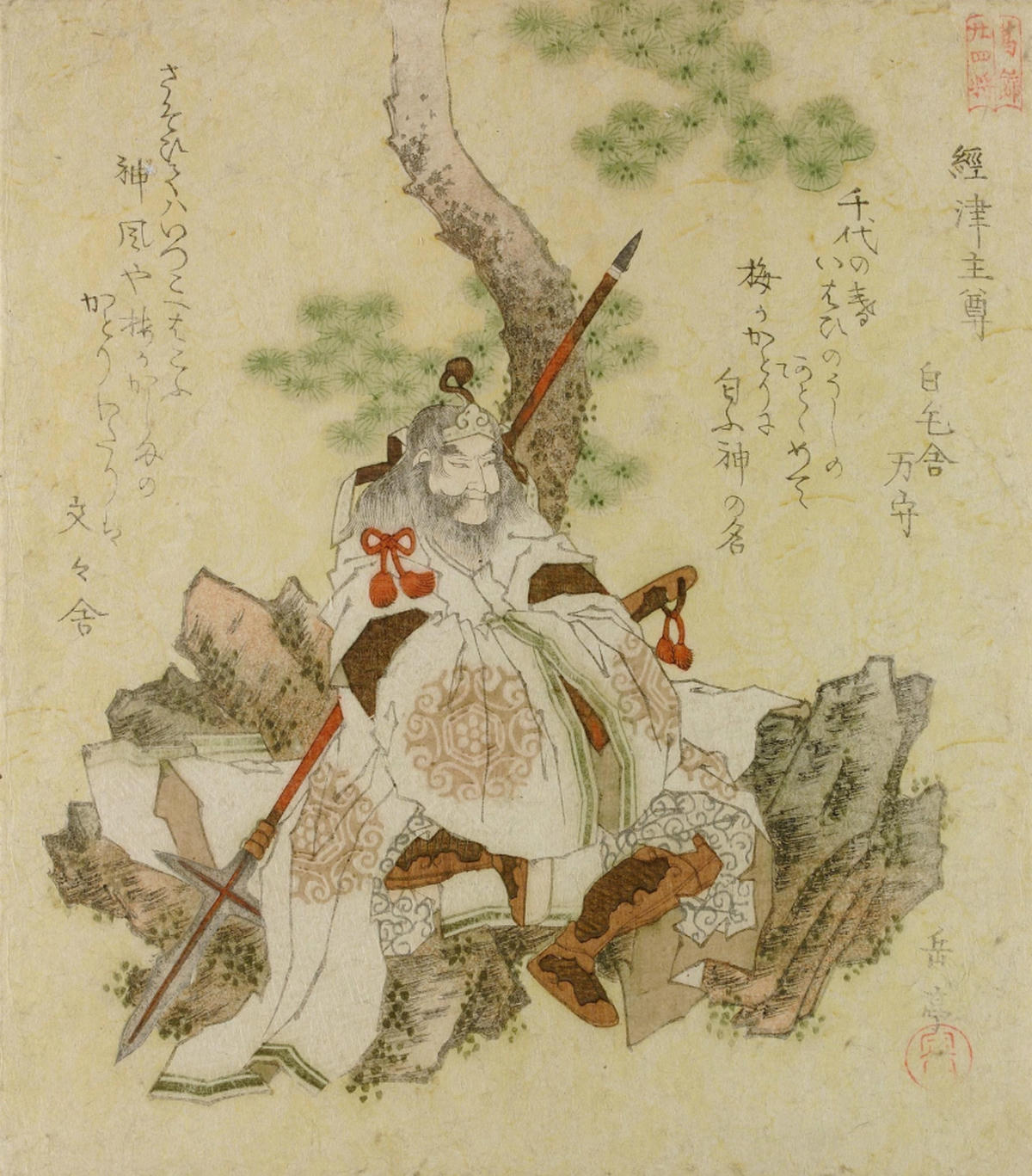
According to legend, when the sun goddess Amaterasu sought to pass control of the land to her descendants, she sent two powerful deities: Futsunushi-no-Okami and Takemikazuchi-no-Okami. With overwhelming authority, they successfully completed the negotiation and became key figures in Japan’s creation mythology.
Futsunushi-no-Okami, the main deity of Katori Jingu, is known as the “god of the sword,” symbolizing decisiveness and strength. Takemikazuchi-no-Okami is enshrined at Kashima Jingu, and together the two shrines have long been regarded as a pair, forming part of the “Three Shrines of the Eastern Provinces” (Togoku Sansha).
In ancient times, the title “Jingu” (Grand Shrine) was not given lightly.
Only three shrines in all of Japan were granted this prestigious title: Ise Jingu, Kashima Jingu, and Katori Jingu.
Katori Jingu was also the ichinomiya (highest-ranking shrine) of the former Shimōsa Province, further highlighting its importance.
For thousands of years, it has been revered and supported by the imperial court.
As the samurai rose to power, Katori Jingu became an important spiritual site for warriors.
Figures like Minamoto no Yoritomo, Ashikaga Takauji, and Tokugawa Ieyasu all visited or made offerings here, praying for victory and success in battle.
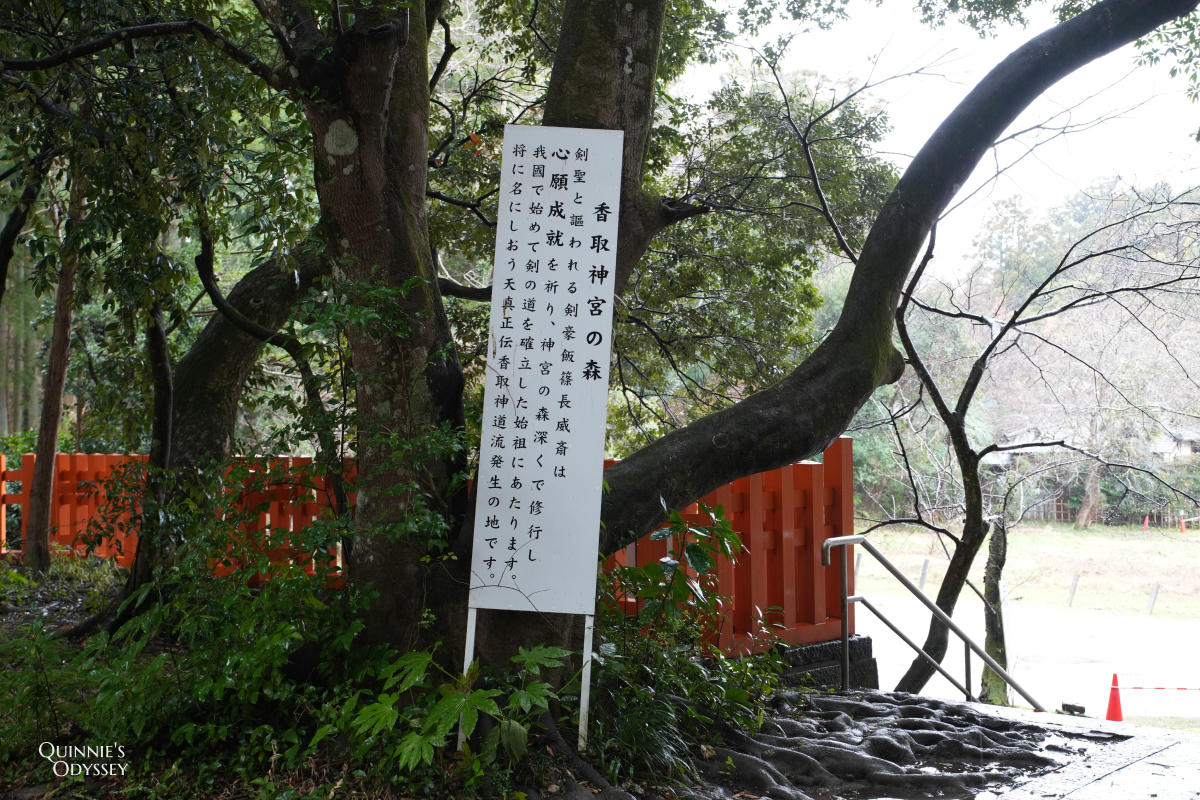
The shrine is also closely tied to the origins of Japanese swordsmanship. The legendary swordsman Iizasa Choisai Ienao trained here and founded Tenshin Shoden Katori Shinto-ryu, one of Japan’s oldest martial arts schools.
Even today, scrolls bearing the name “Katori Daimyojin” can still be found in dojos as a sign of respect.
Katori Jingu is a great place to visit when you’re facing a turning point or an important decision.
Whether it’s exams, career changes, starting a business, or major life choices, many people come here to pray for guidance, victory, safety, protection, and success.
There’s a calm yet powerful atmosphere here, like having steady support behind you, helping you move forward with confidence and clarity.
If you’re planning to explore more than just Katori Jingu, staying in Sawara is highly recommended.
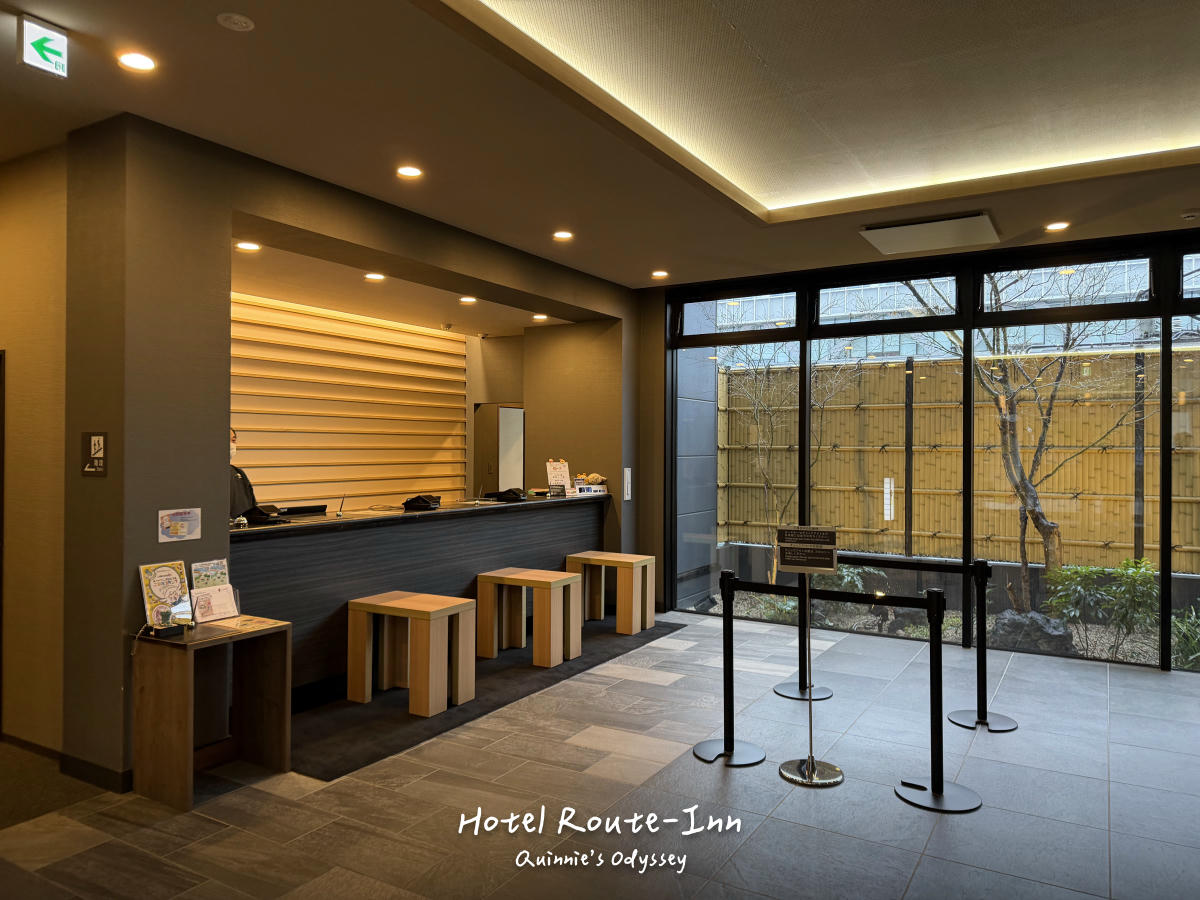
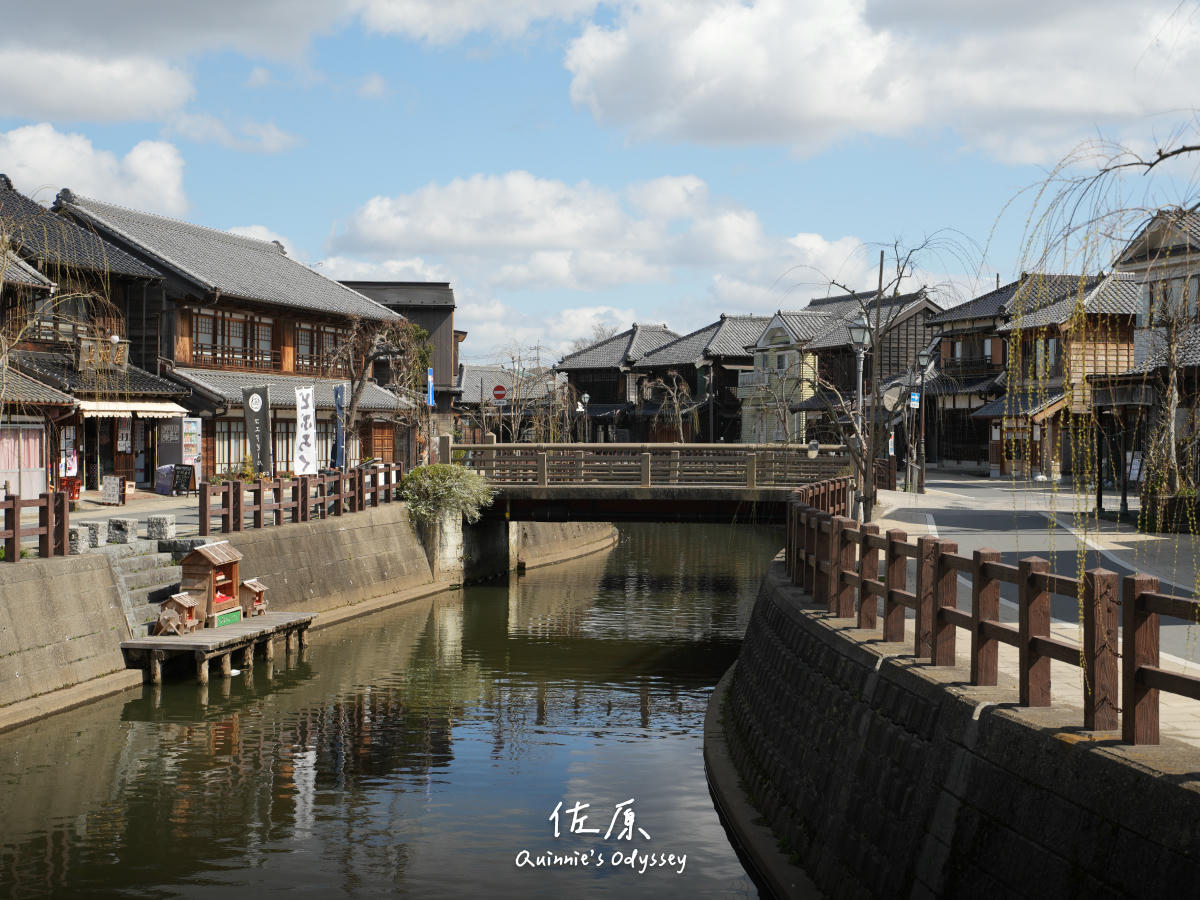
For this trip, I used Sawara as my base and stayed at Hotel Route Inn near the station. From there, it’s easy to visit nearby spots, including all three shrines of the Togoku Sansha – Katori Jingu, Kashima Jingu, and Ikisu Jinja.
Sawara itself is also a charming historic town, perfect for a relaxed 2-3 day itinerary.
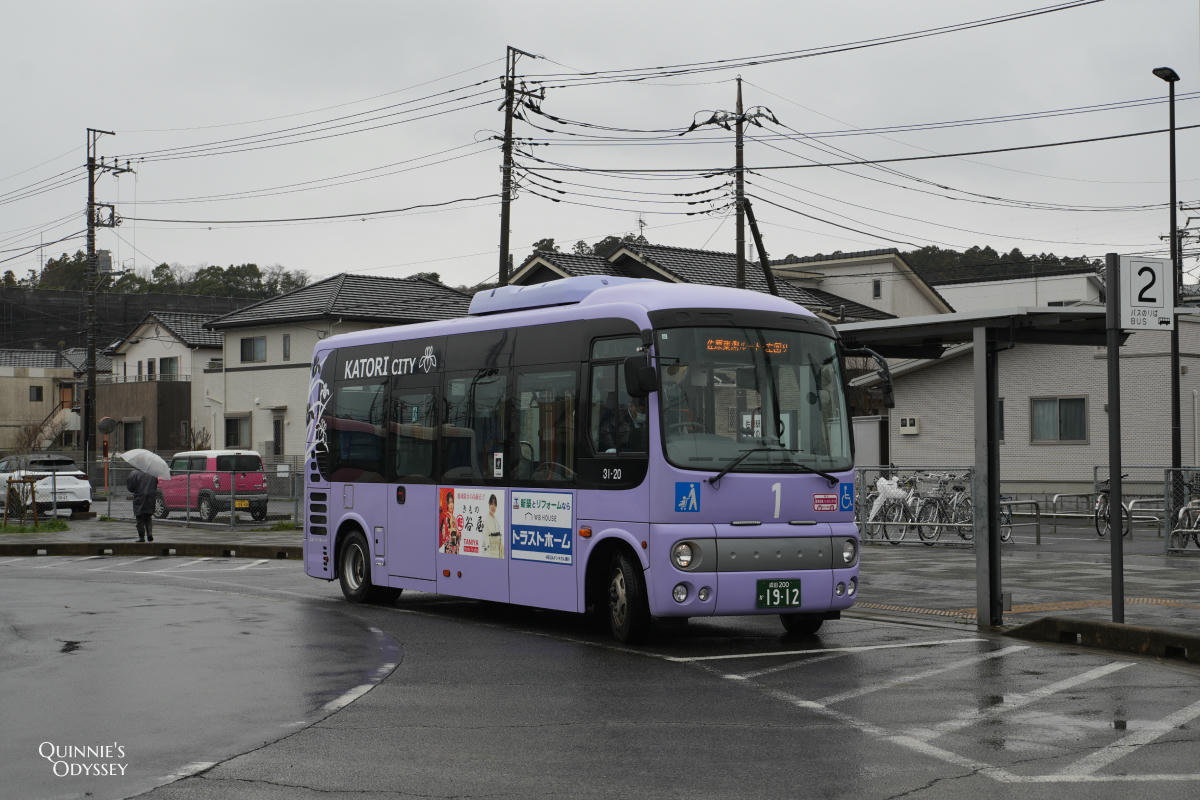
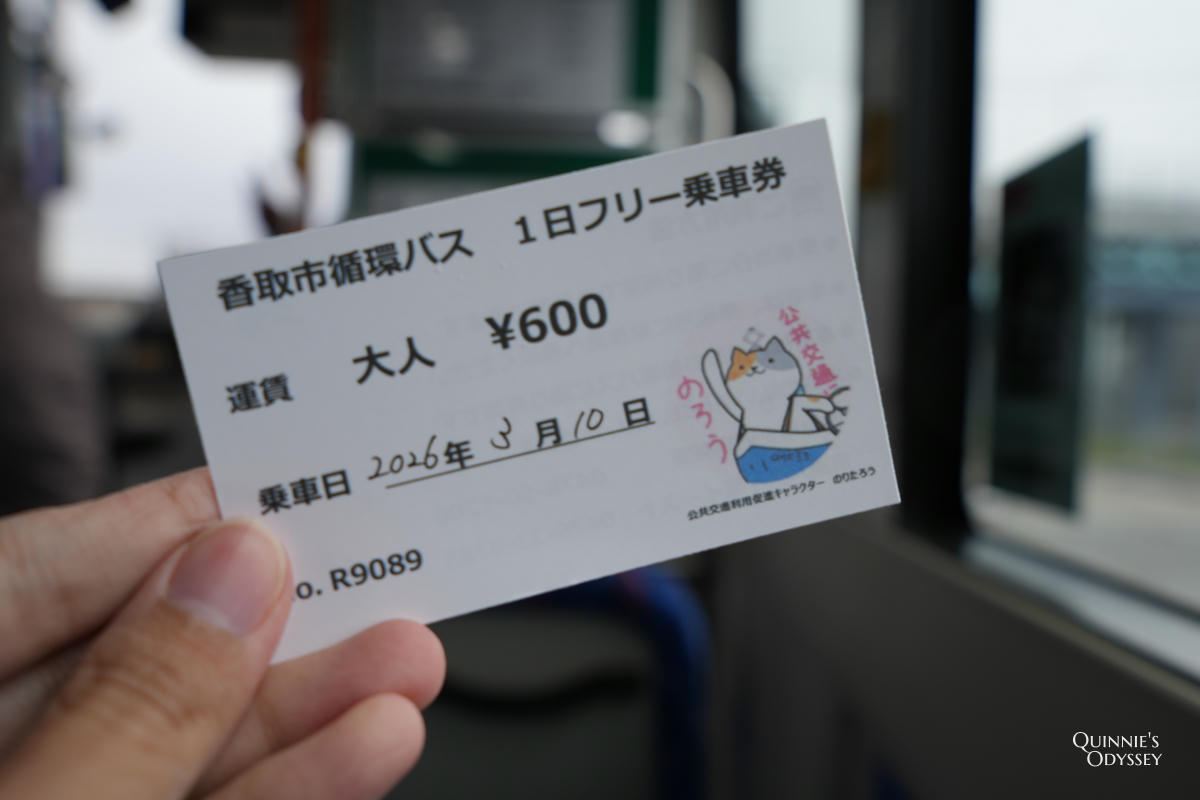
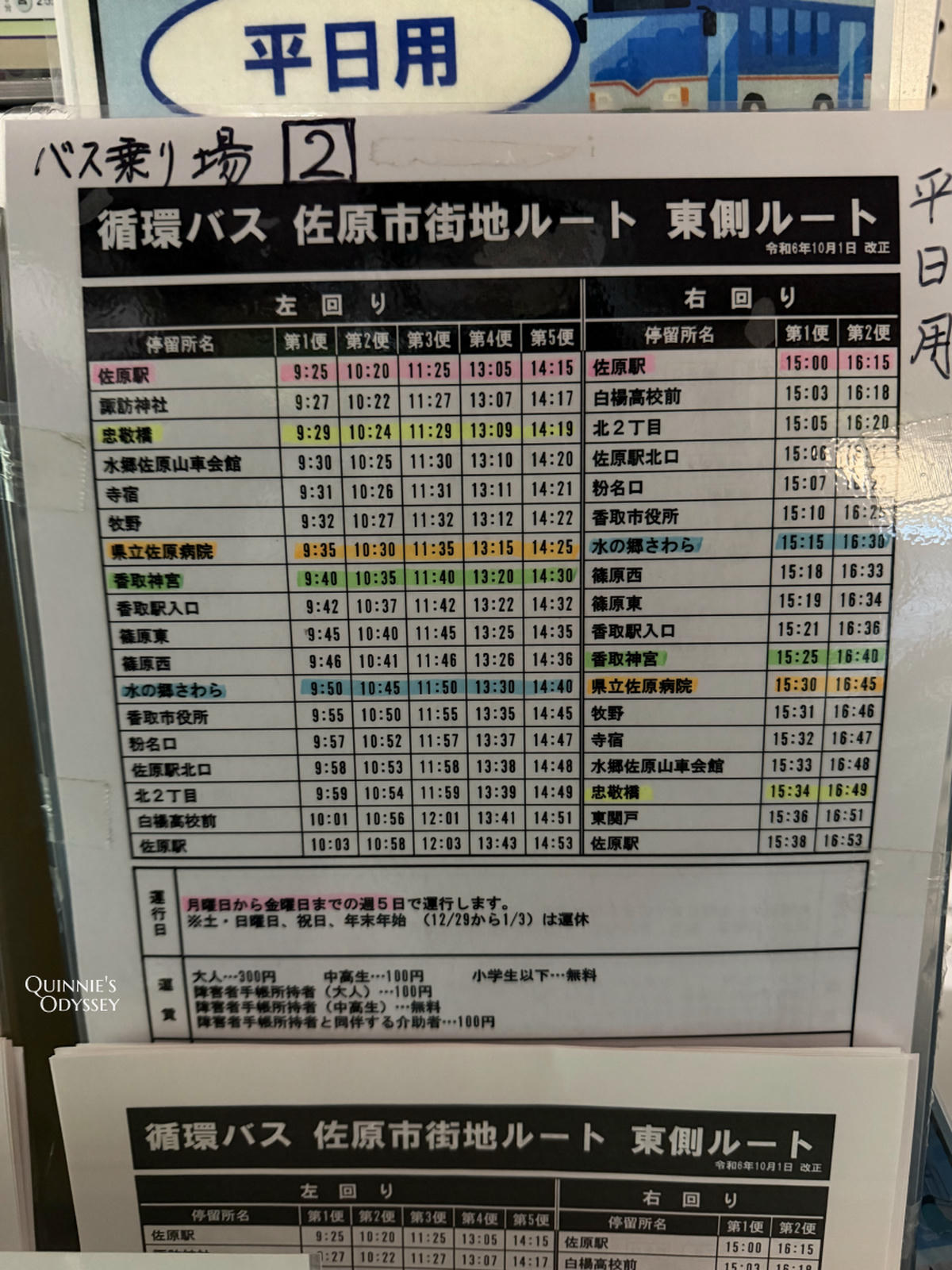
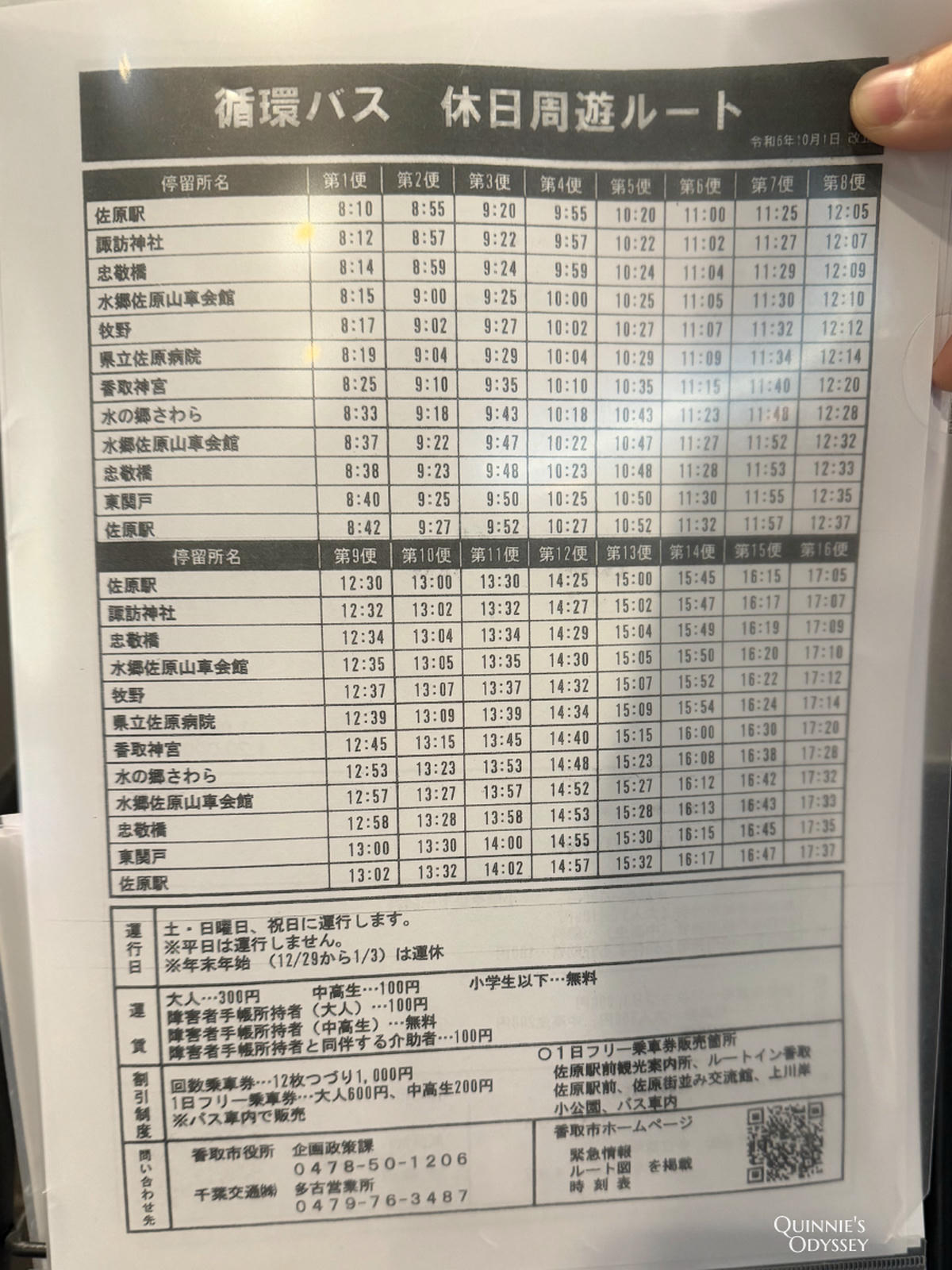
There’s a convenient loop bus from Sawara Station that goes directly to Katori Jingu, it’s the small purple bus you’ll likely spot near the station. 👇
▼ Exclusive Deal for Sika Readers ▼
Use code【DNBDRT】👉👉 Save ¥3,000on your TOCOO! car rental(view guide)
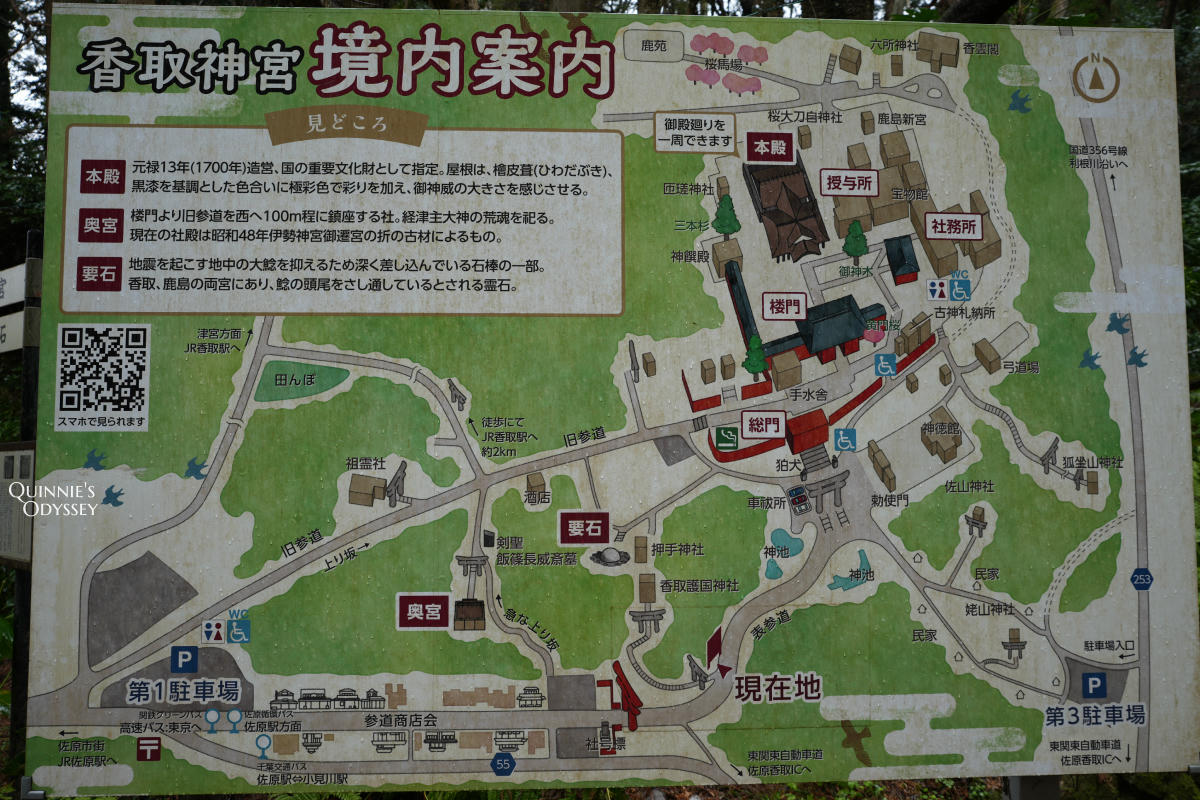
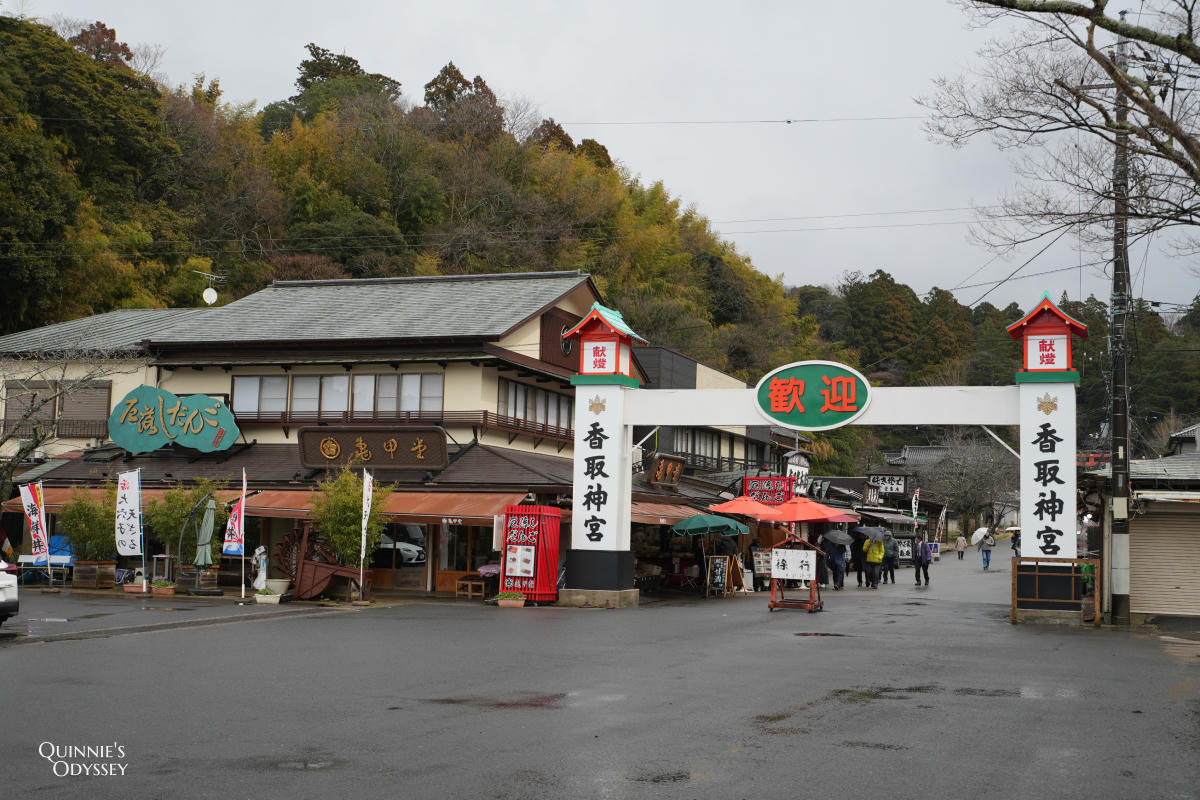
On the way from the parking lot to Katori Jingu, you’ll first pass through a small omotesando shopping street.
It’s not very big, but there are a few local shops on both sides selling souvenirs and simple snacks.
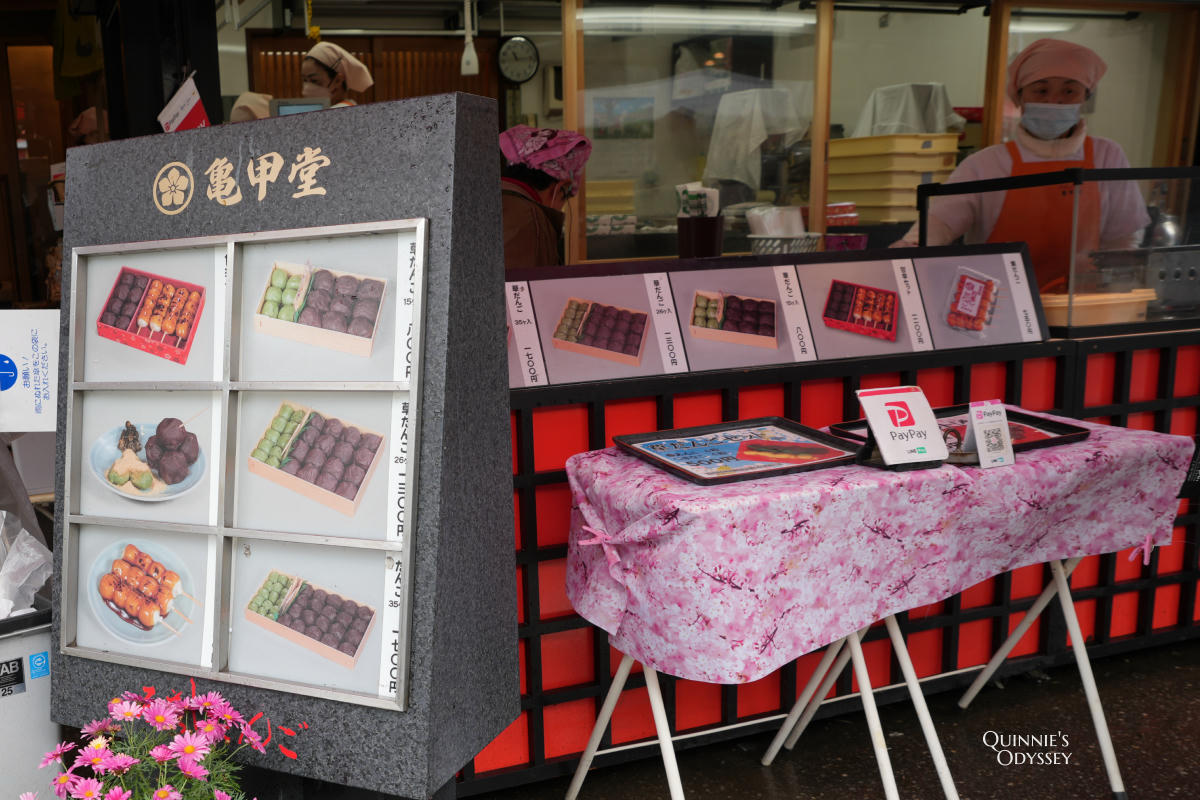
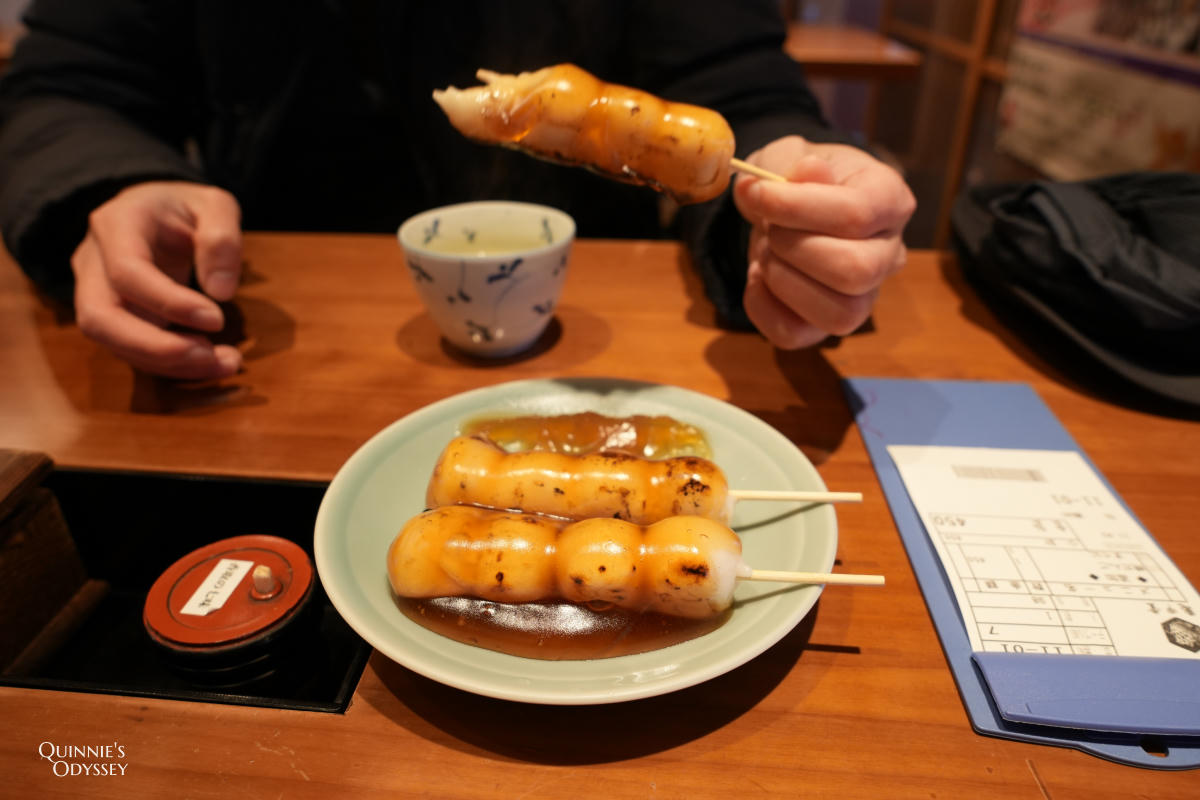
One spot worth mentioning is Kikkodo, the first shop near the entrance. On our way back, we stopped by and ordered freshly grilled soy sauce rice dumplings.
They were lightly charred on the outside and soft and chewy on the inside, perfect comfort food. Sitting inside the warm shop, enjoying dango and hot tea while it rained outside felt incredibly cozy.
At the end of the street, you’ll arrive at the Second Torii Gate.
The first torii is located much farther away, and if you arrive by loop bus and get off at the parking lot, you won’t pass by it. Walking there takes nearly 20 minutes, so it’s quite a detour.
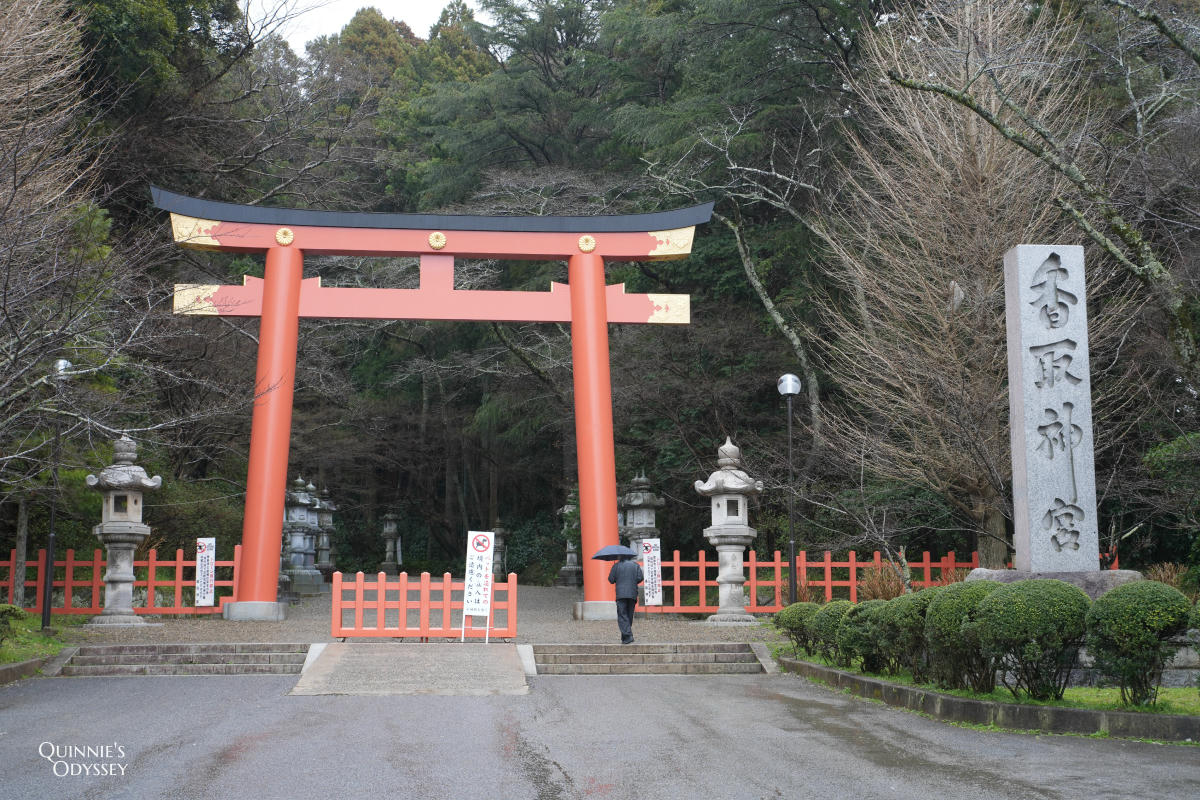
Once you pass through the vermilion Second Torii, the ground changes from pavement to gravel, and the air suddenly feels cooler, almost like stepping into another world.
This area is known as the “Forest of Katori.” Towering cedar trees, many hundreds of years old, line both sides of the path.
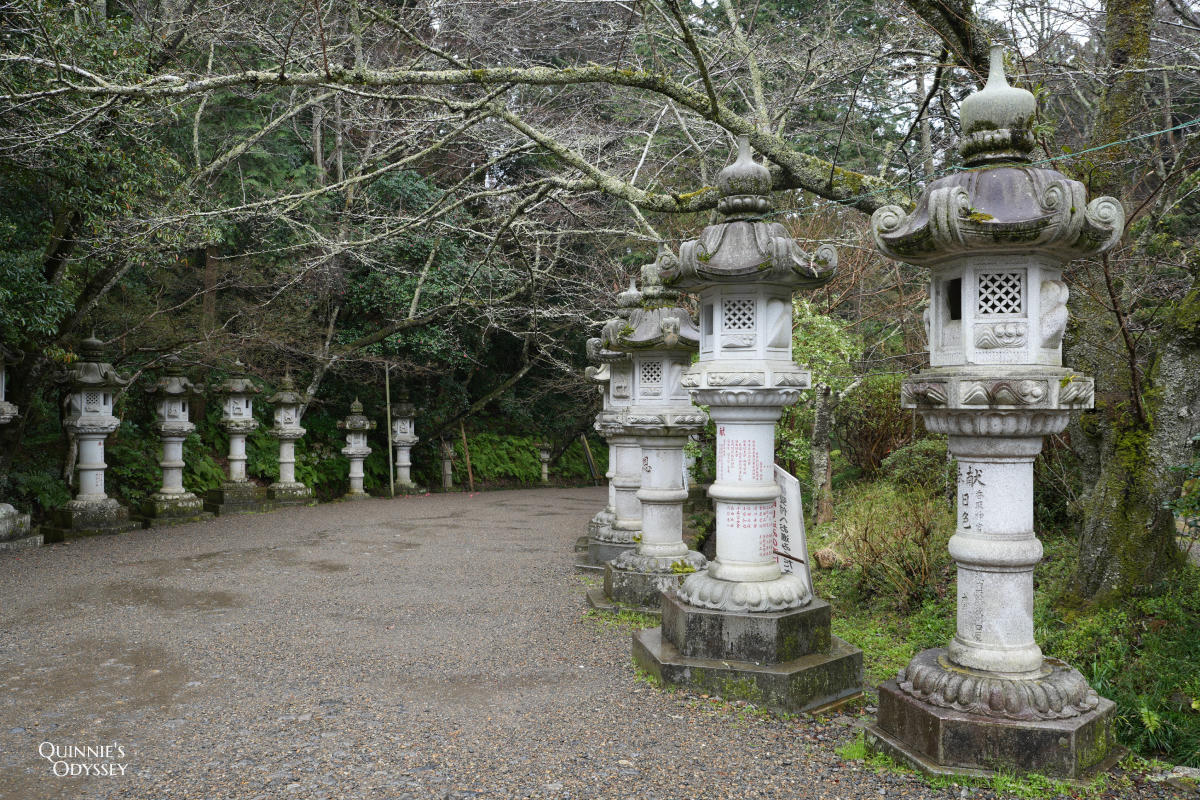
As you walk up the gently sloping approach, it feels completely removed from the outside world. When we visited in light rain, the forest felt even more mystical.
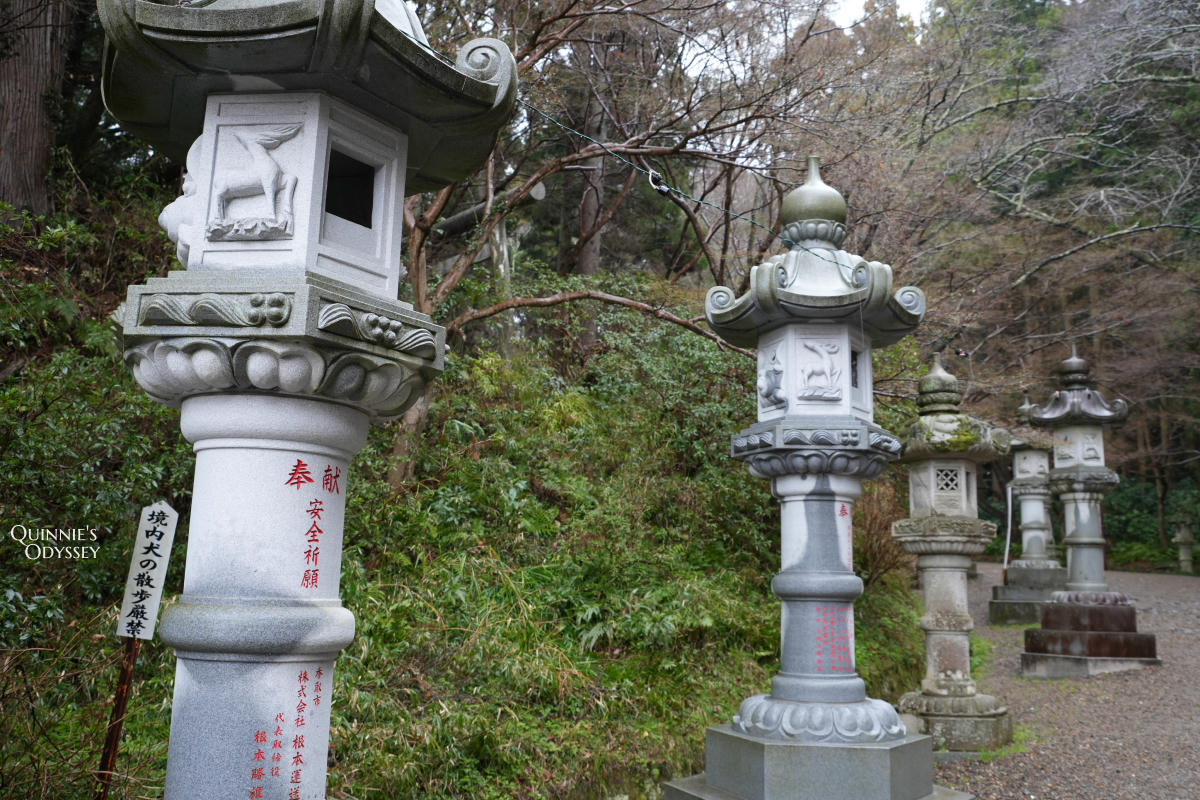
If you look closely at the stone lanterns along the path, you’ll notice carvings of deer. Deer are considered messengers of the gods, and they also symbolize the deep connection between Katori Jingu and Kashima Jingu.
At the end of the path stands the third torii, made of gray granite.
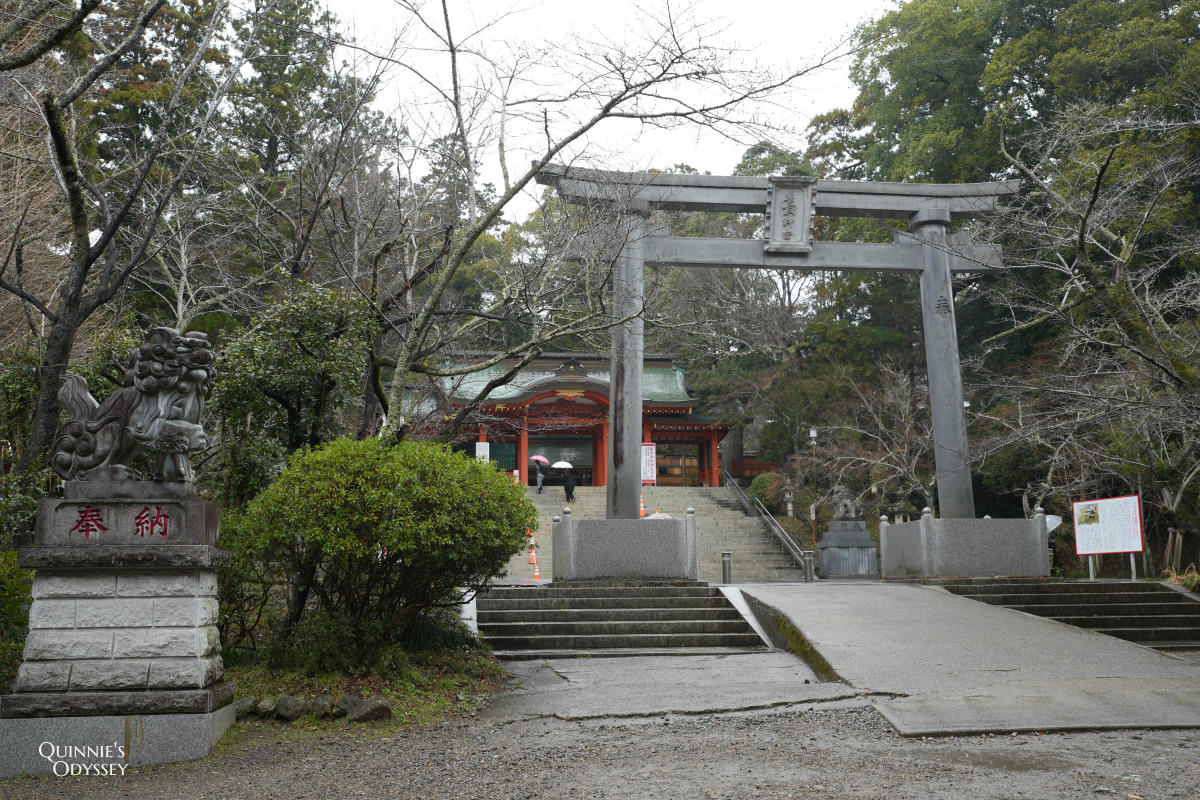
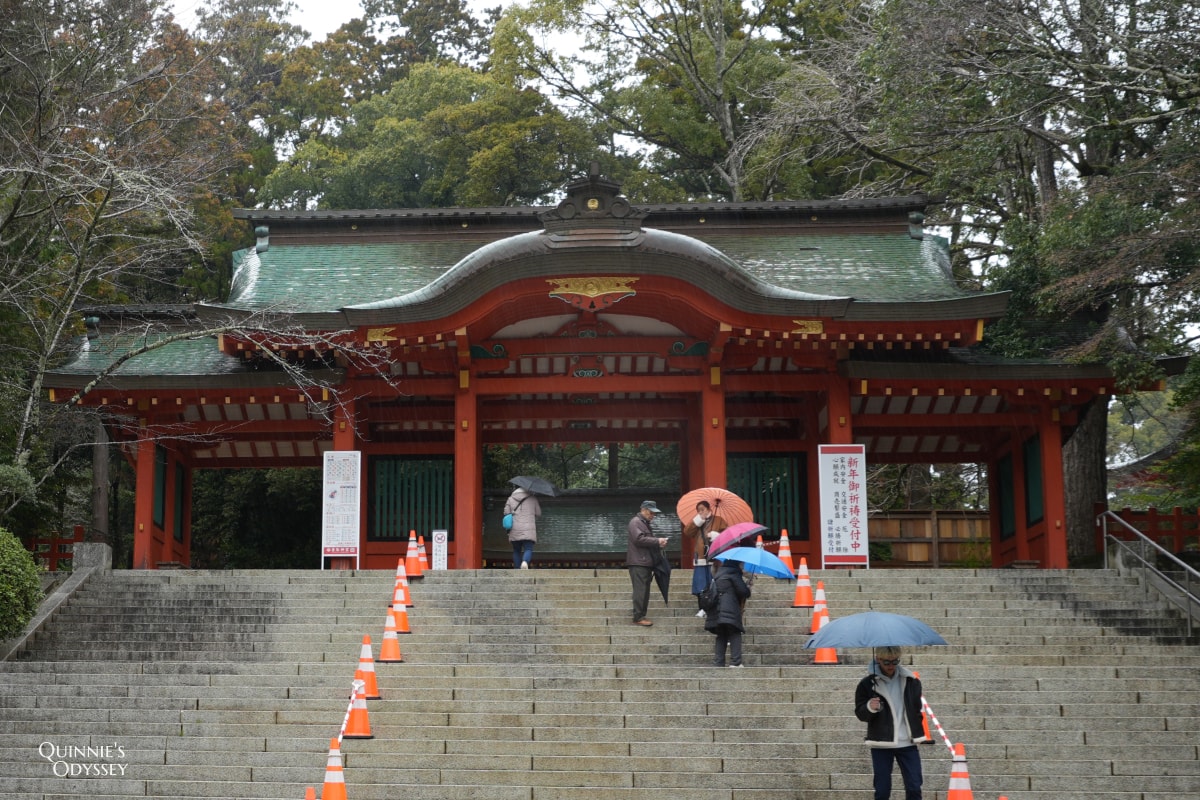
Passing through it, you’ll see a striking vermilion main gate (Somon) ahead. Surrounded by lush greenery, the vivid red color feels especially sacred, with a solid copper roof adding to its presence.
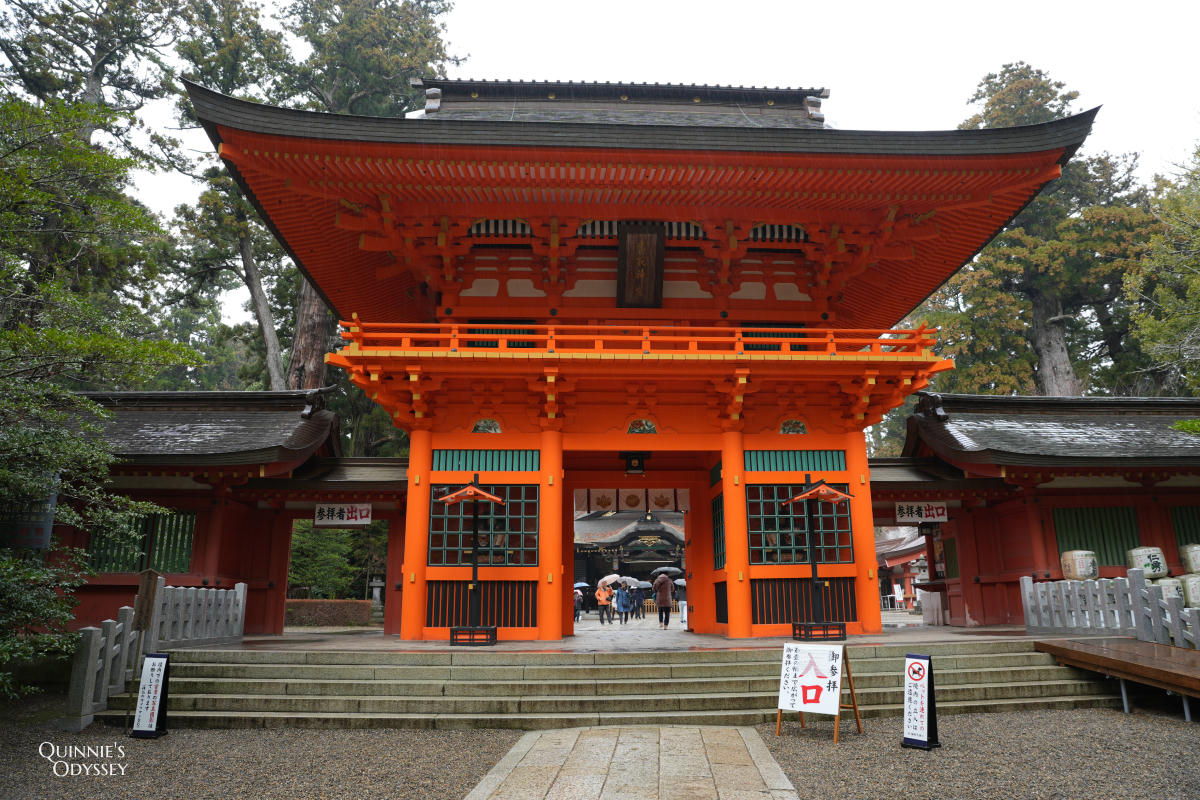
Beyond the stone torii and main gate is the iconic Romon Gate, the most recognizable structure of Katori Jingu.
This two-story gate has balanced proportions and a strong, dignified presence. It’s considered a symbol of the shrine and is designated as an Important Cultural Property.
Inside the gate stand two historical figures: a youthful Fujiwara no Kamatari and an elderly Takenouchi no Sukune, positioned on either side as guardians.
If you look up, you’ll see the plaque reading “Katori Jingu,” handwritten by Admiral Togo Heihachiro, the same person who inscribed the gate at Kashima Jingu.
Passing through the Romon, you’ll enter the heart of Katori Jingu, the main hall.
The current structure was built in 1700 by order of Tokugawa Tsunayoshi, the fifth Tokugawa shogun, and is also designated as an Important Cultural Property.
The architecture follows the traditional sangensha nagare-zukuri style with a cypress bark roof, but what really stands out is its color scheme. The deep black base, combined with elegant gold details, creates a refined, understated sense of luxury.
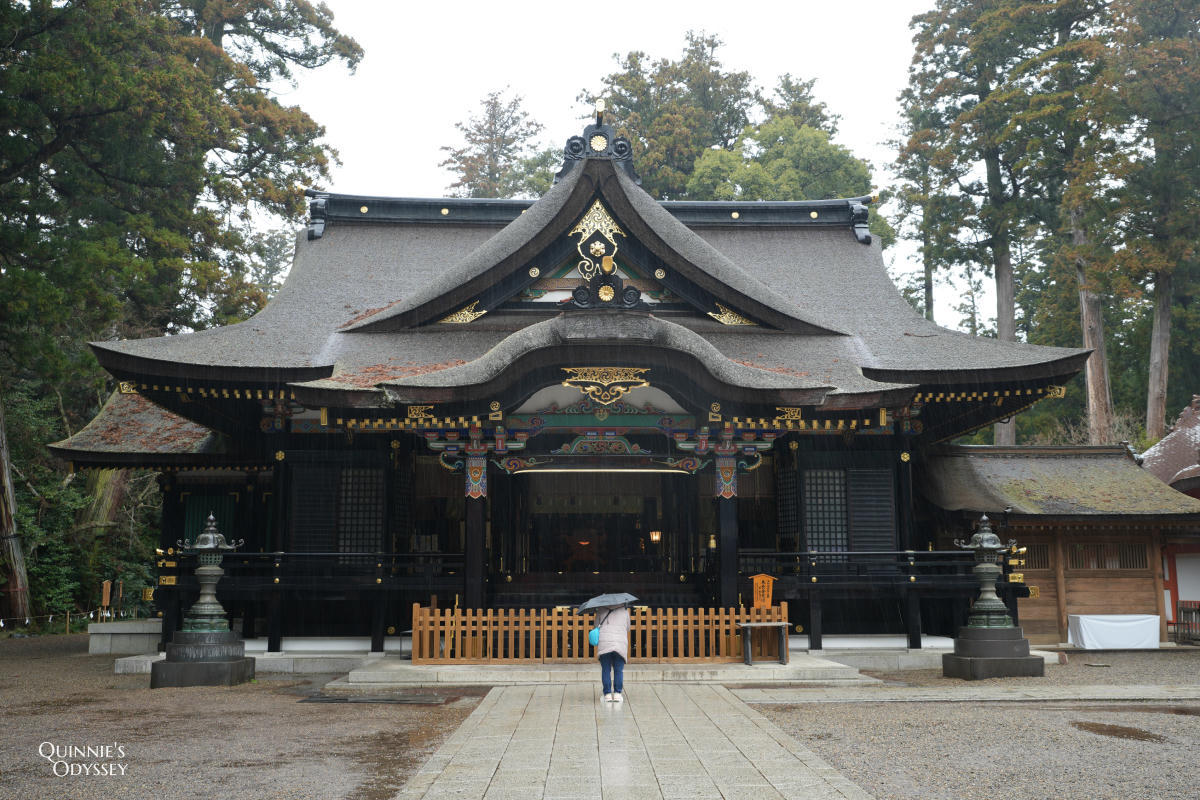
Enshrined here is the gentle aspect (nigimitama) of Futsunushi-no-Okami, the main deity.
In Shinto belief, deities have multiple aspects, such as the calm, protective side (nigimitama) and the more powerful, assertive side (aramitama).
The main hall embodies that calm, reassuring energy, while the more intense, primal force is enshrined deeper within the shrine grounds.
After visiting the main hall, don’t head back just yet.
Walk about 100 meters toward the old approach path, and deep within the cedar forest, you’ll find a small shrine, this is the Okunomiya.
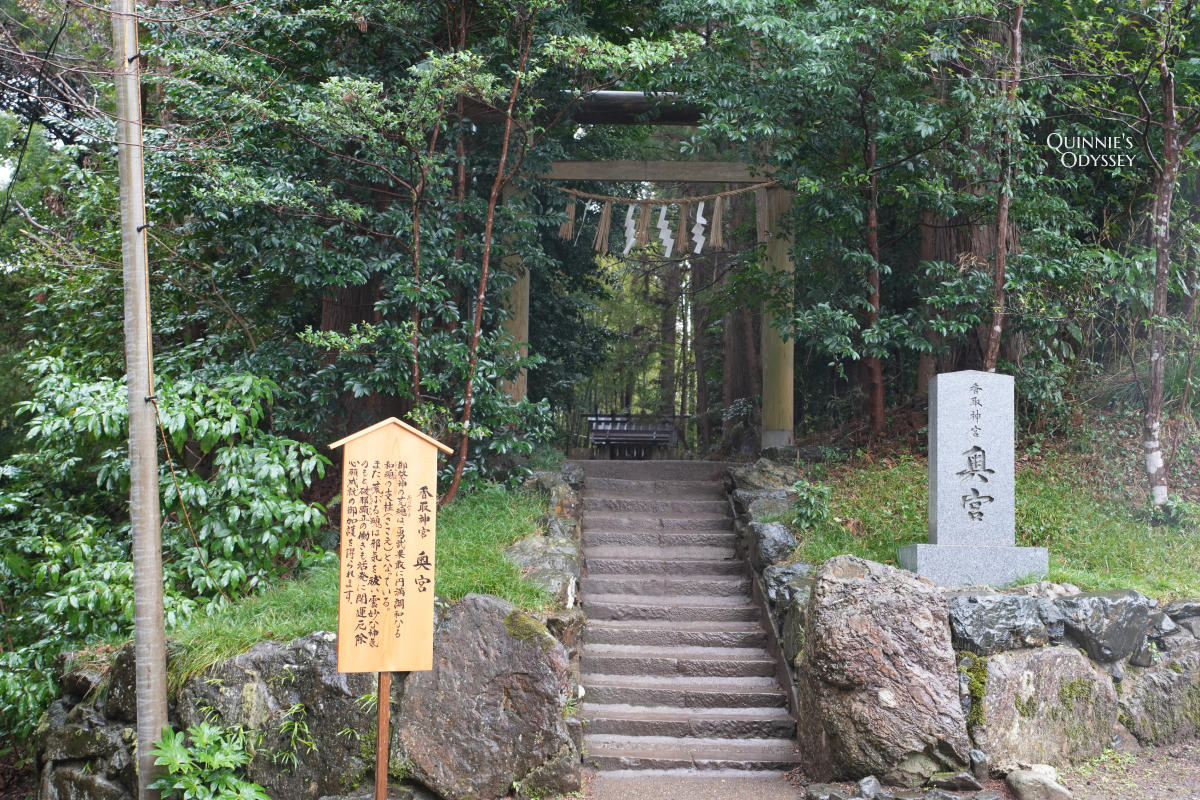
Here, the aramitama (powerful, dynamic aspect) of Futsunushi-no-Okami is enshrined.
Compared to the calm and protective feeling of the main hall, the atmosphere here feels more direct and intense, like a place for those seeking breakthroughs or pushing forward in life.
The shrine itself is also special: it was rebuilt using sacred timber from the periodic reconstruction of Ise Jingu.
In other words, every piece of wood here once belonged to Ise Jingu, adding an extra layer of quiet sacredness.
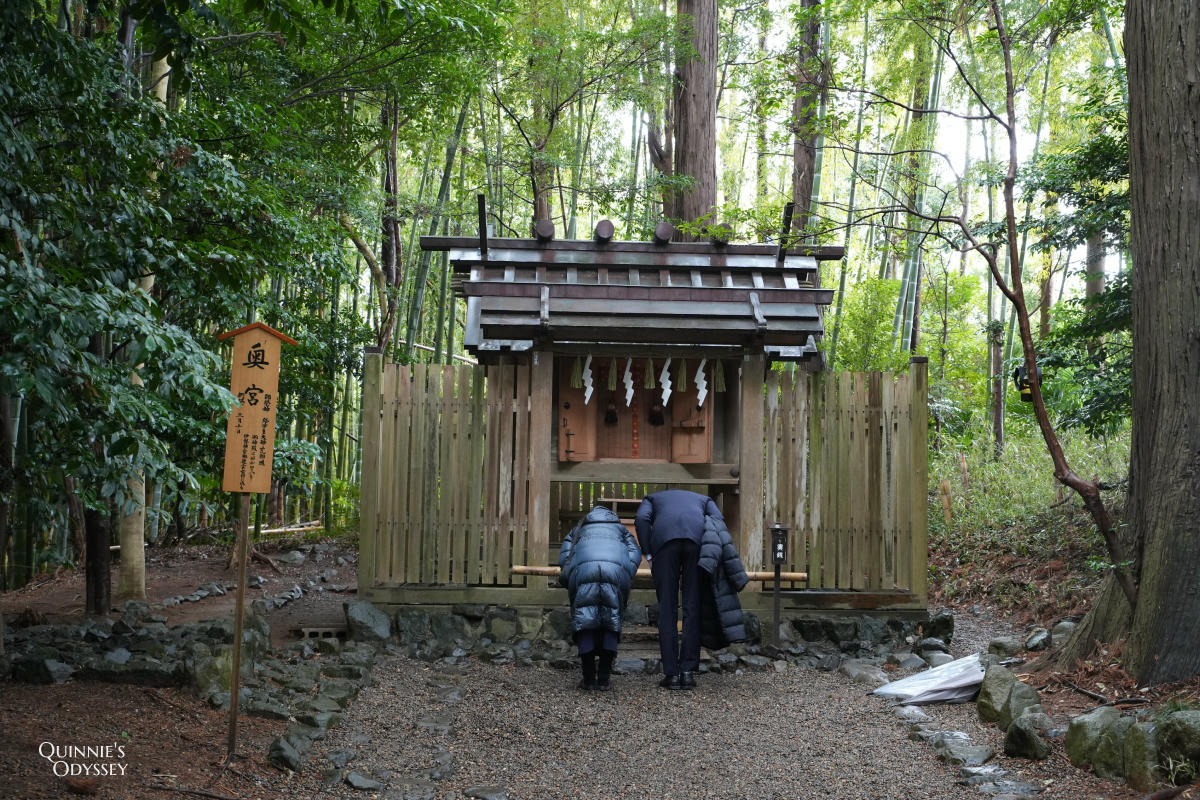
When I visited, there was a couple standing in front of the shrine, praying for a long time with deep sincerity. That moment made the place feel even more powerful.
In traditional Japanese belief, earthquakes were once explained by a vivid myth: a giant catfish lives deep underground, and when it moves, the earth shakes.
Katori Jingu is one of the shrines said to keep this creature under control.
Deep within the grounds lies a small stone called the Kanameishi. It may look unremarkable, but legend says it extends endlessly into the earth, pinning down the catfish below.
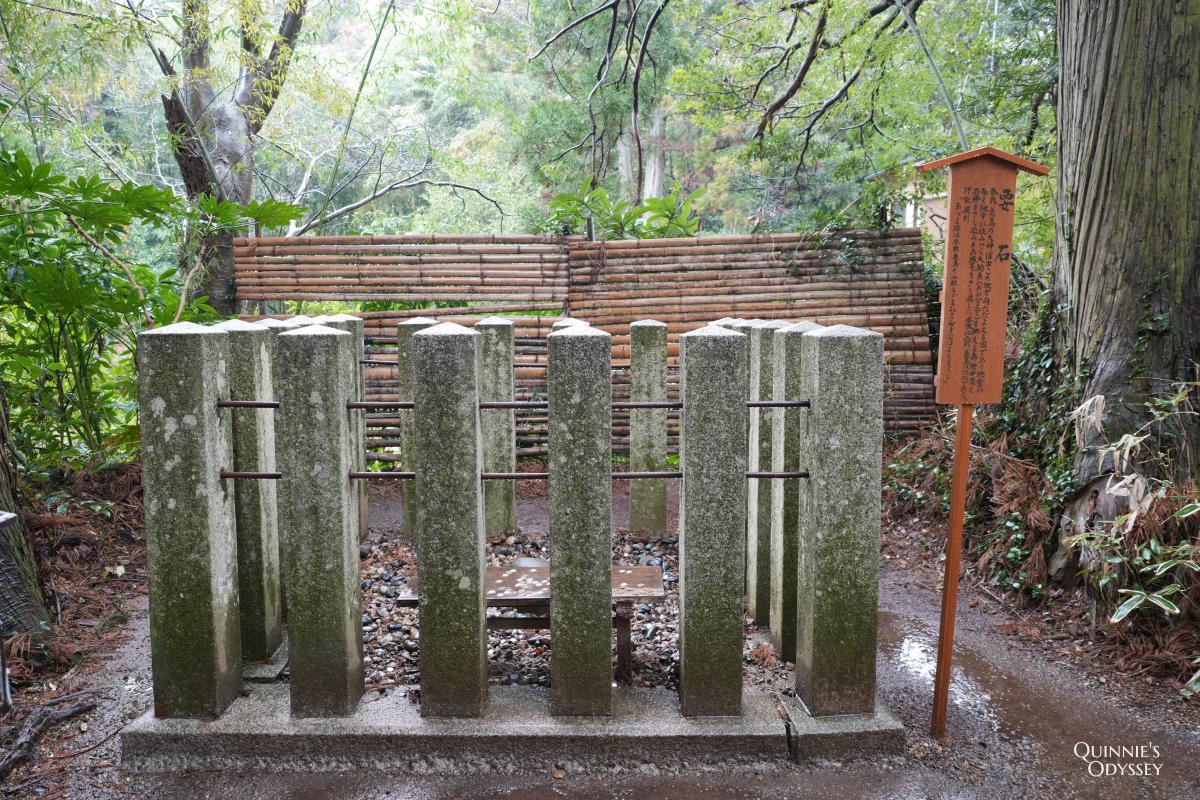
This role is shared, Katori Jingu holds the tail, while Kashima Jingu pins the head. Together, they keep disasters in check.
Even the shapes of the stones are symbolic: Katori’s is convex, and Kashima’s is concave, like two halves of one whole.
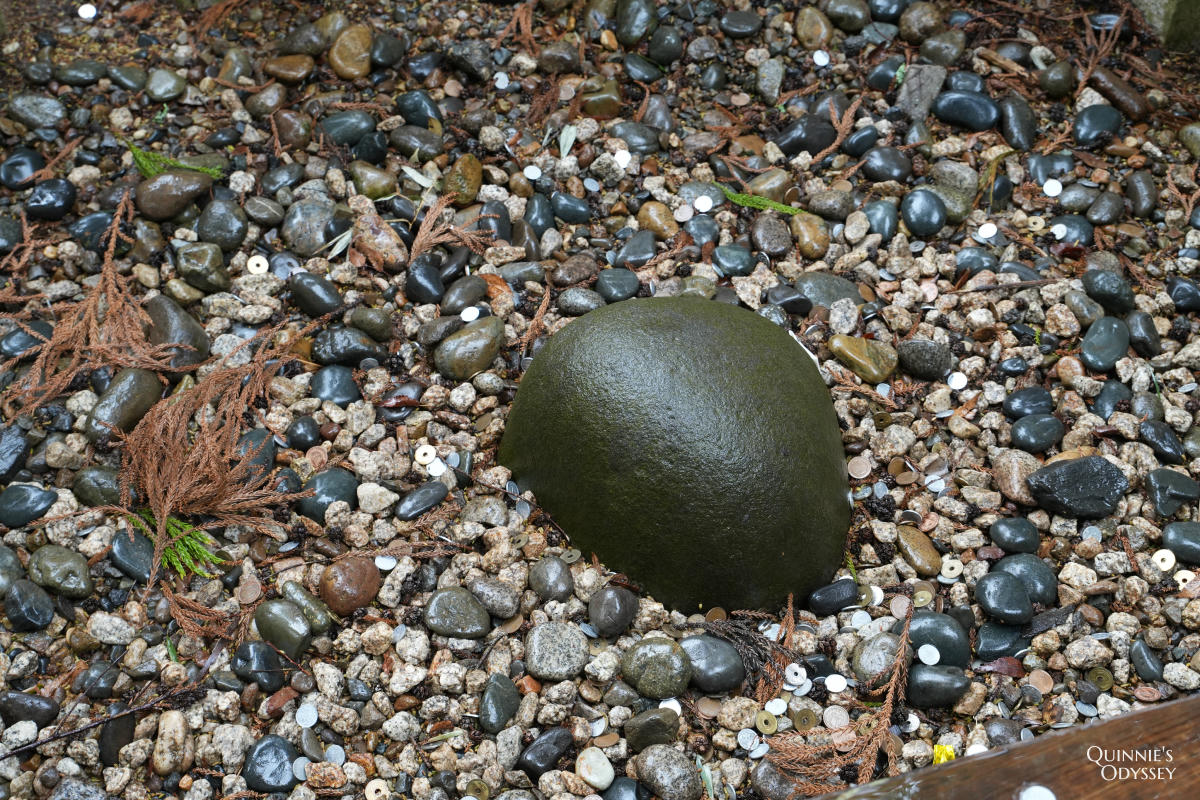
The legend even fascinated historical figures. Tokugawa Mitsukuni once tried to dig up the stone, but no matter how far he went, he couldn’t find the end and eventually gave up.
Standing before it, it’s hard to imagine the vast world said to lie beneath.
Katori Jingu is a place where mythology feels alive.
For over 2,600 years, this ancient forest has witnessed the rise and fall of eras, while beneath the Kanameishi, the legendary catfish is still said to be held in place.
If you’re facing a turning point, a challenge, or simply need a quiet reset, this is a place worth visiting.
Step into the cedar forest, stand before the warrior deity, gather your thoughts, and move forward.
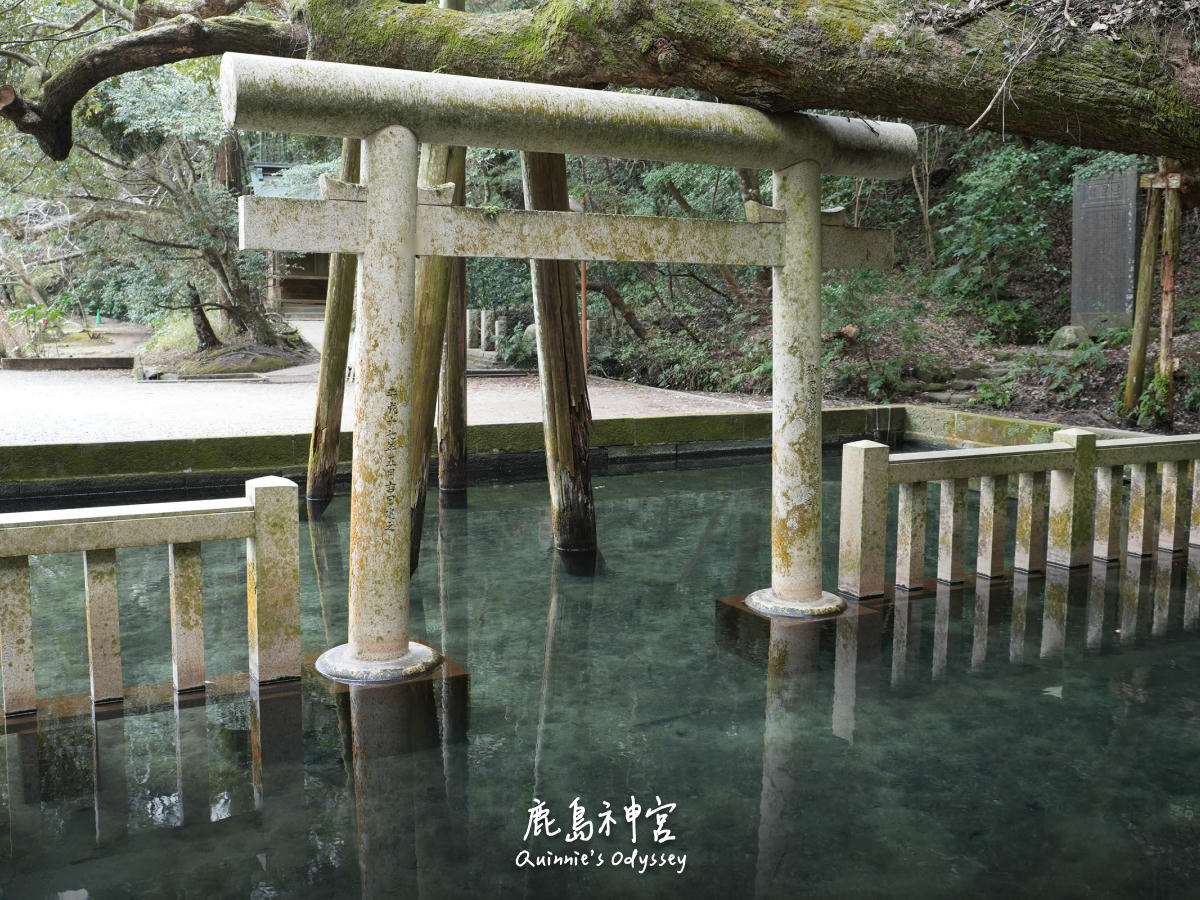
Kashima Jingu
Enter the domain of one of Japan’s most powerful warrior deities. Within a sacred forest, discover the mysterious keystone said to pin down a giant underground catfish and keep earthquakes at bay.
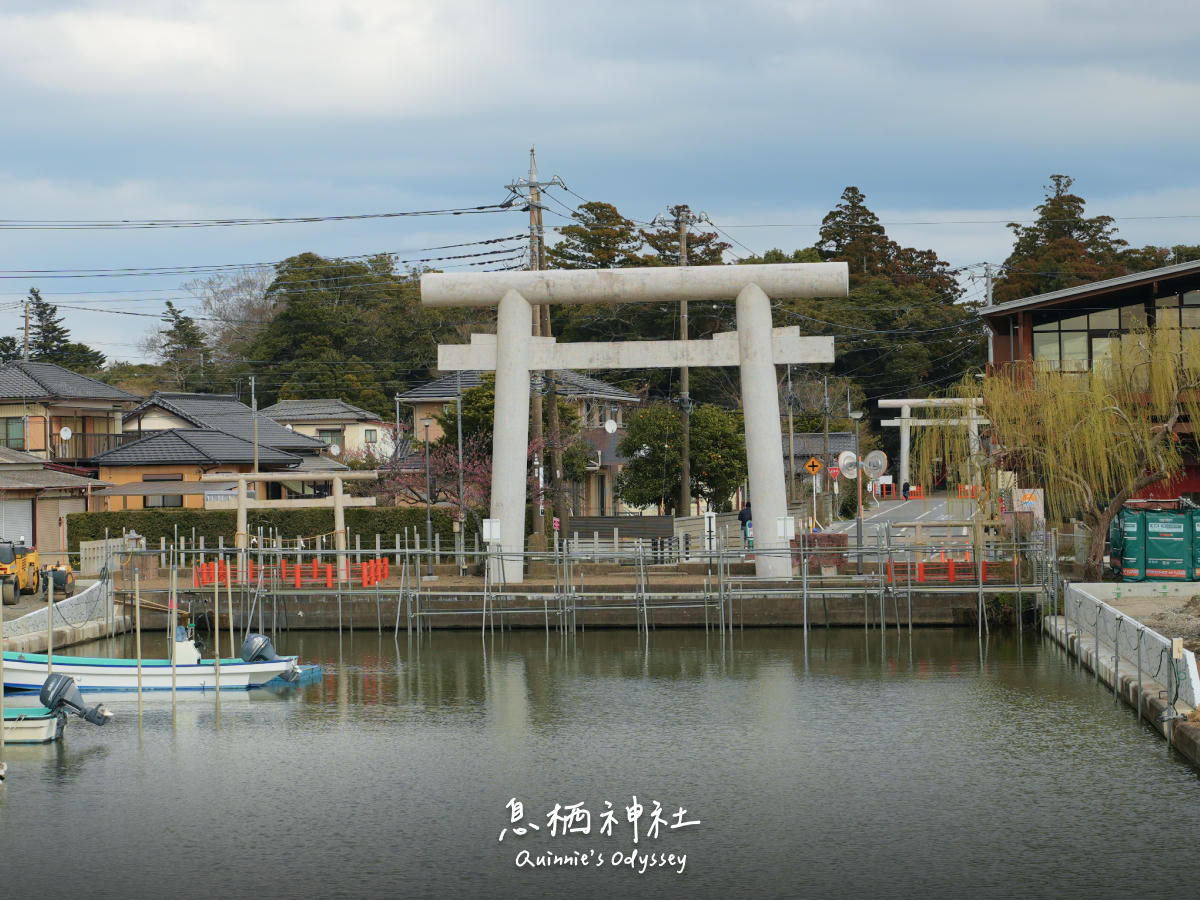
Ikisu Shrine
Discover a sacred spring hidden in the water, believed to wash away fatigue and negativity through the power of the god of guidance. It’s the most peaceful stop of the pilgrimage.
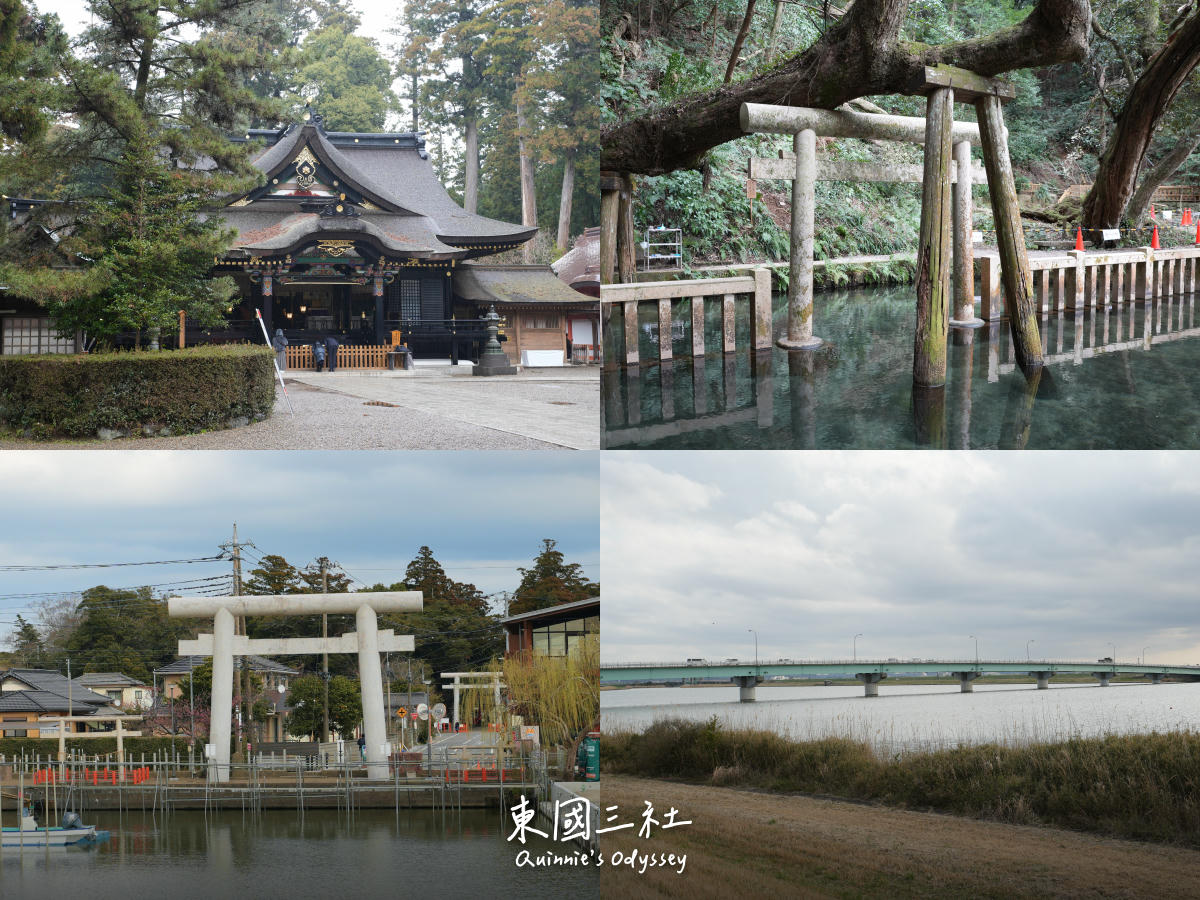
Togoku Sansha Pilgrimage
Follow the traditional Edo-era pilgrimage route, visiting the warrior god, the god of order, and the god of guidance in a journey that helps you reset and realign yourself.
▼ Exclusive Deal for Sika Readers ▼
Use code【DNBDRT】👉👉 Save ¥3,000on your TOCOO! car rental(view guide)
▼ Tokyo Travel Essentials ▼

Thanks for reading!
If you’re interested in my stories, feel free to follow me on Instagram.
👉👉 IG: @sika_artist 👈👈