Physical Address
304 North Cardinal St.
Dorchester Center, MA 02124
Physical Address
304 North Cardinal St.
Dorchester Center, MA 02124

If you’ve visited Kashima Jingu, you probably remember its towering cedar forest and powerful warrior energy.
If you’ve been to Katori Jingu, the vivid vermilion gate and elegant black main hall likely left a strong impression.
But when it comes to the third shrine of the Togoku Sansha, Ikisu Shrine, many people might ask: “Wait, which one is that?”
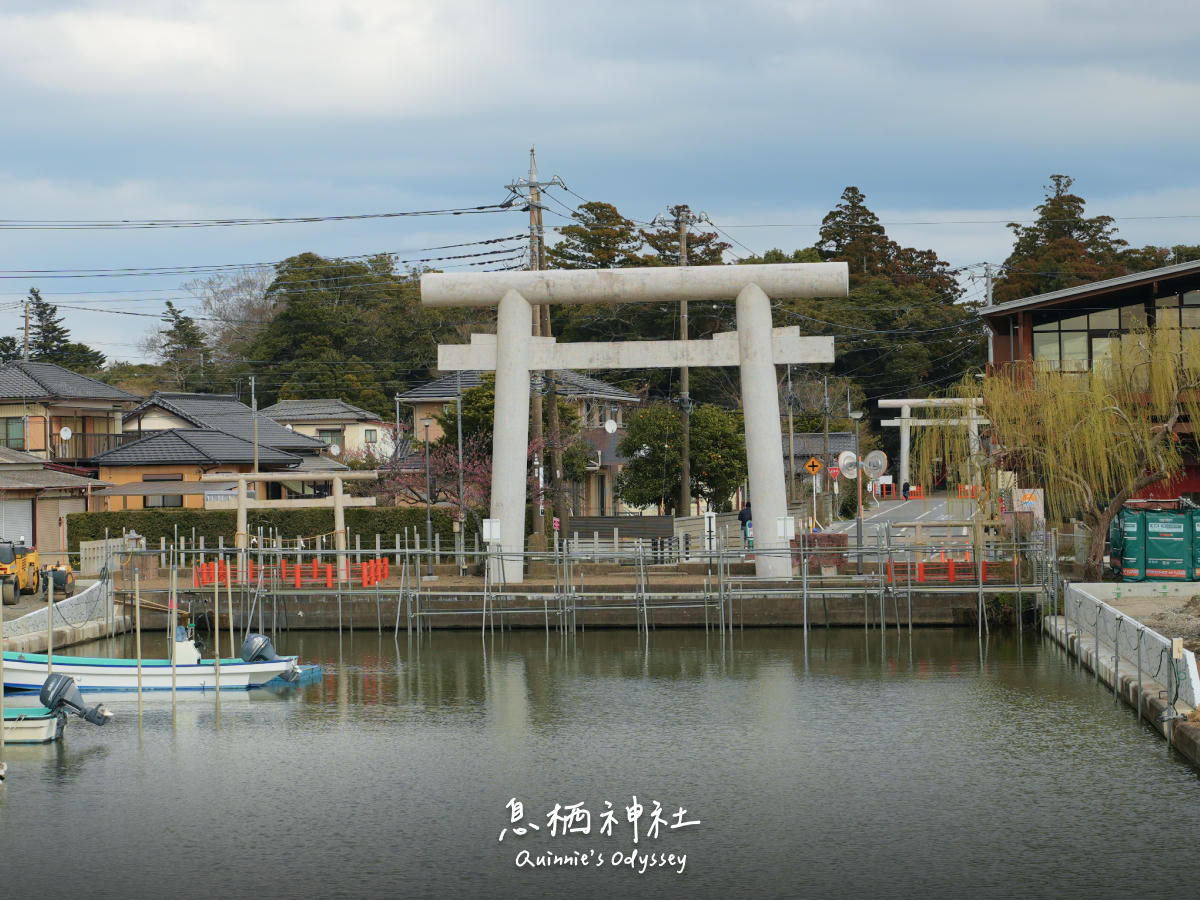
It may not be as grand as Kashima or Katori, and it doesn’t carry the title of “Jingu,” but Ikisu Shrine has quietly existed for over 2,000 years, nestled in the waterside landscapes of Kamisu, Ibaraki, and marking the final stop of a complete Togoku pilgrimage.
If Kashima represents the sword, and Katori represents order, then Ikisu is the guide – the one who first set foot on the land and paved the way for the two deities.
Without it, the myth that shaped Japan could never have begun.
Ikisu Shrine is located in Kamisu City, Ibaraki, in a low-lying waterside area between the Tone River and Lake Kitaura.
Since the Edo period, this area has been an important water transport route, with rivers crisscrossing and boats constantly passing through. This gives the shrine a very different atmosphere compared to most others.
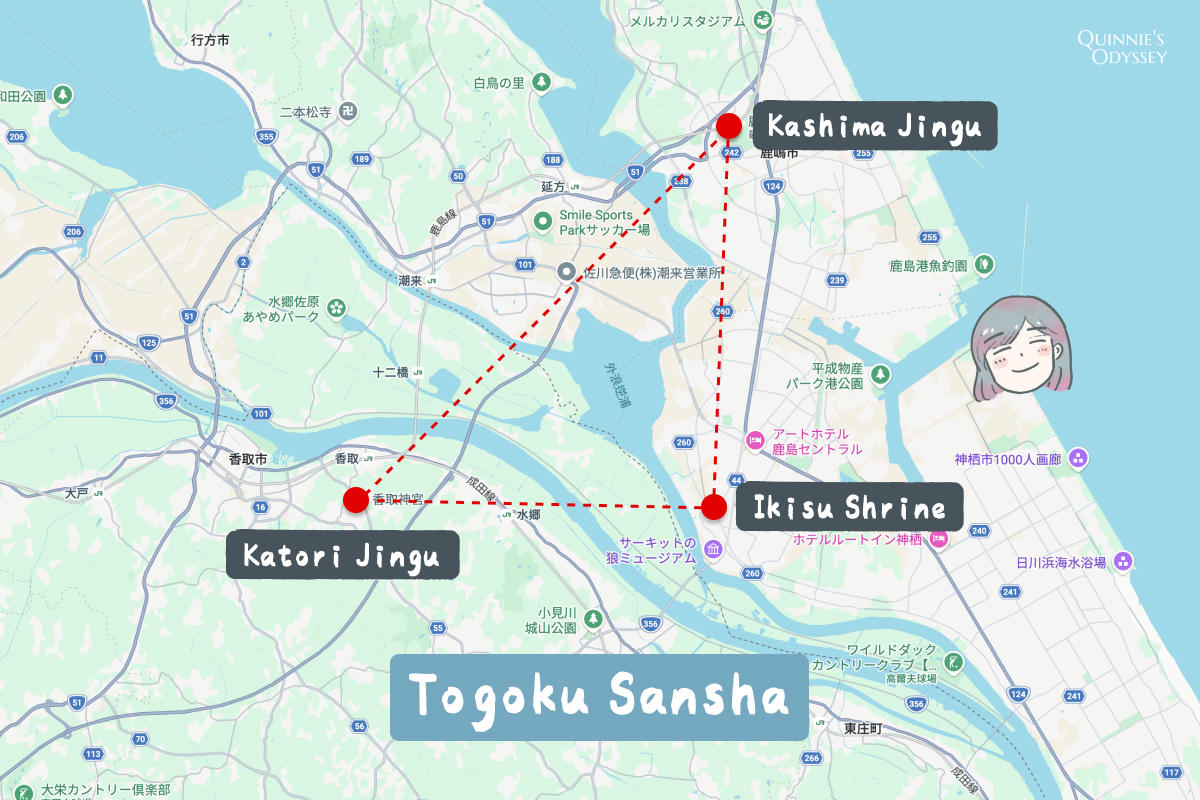
If you look at a map, you’ll notice something interesting – Ikisu Shrine sits almost exactly between Kashima Jingu and Katori Jingu.
Together, the three shrines form a near-perfect right isosceles triangle, with Ikisu at a key point. Whether this layout was intentional remains a mystery, but it adds another layer of intrigue to the Togoku Sansha pilgrimage.
Unlike the grand forest paths of Kashima or the striking gates of Katori, Ikisu Shrine is quiet and understated, surrounded by trees and calm waters.
▼ Exclusive Deal for Sika Readers ▼
Use code【DNBDRT】👉👉 Save ¥3,000on your TOCOO! car rental(view guide)
Ikisu Shrine’s origins date back nearly 2,000 years, traditionally said to have been founded during the reign of Emperor Ojin.
Originally, it stood closer to the sea in an area called Hikawa, which was once a sandbank connected to the ocean, known as “Okisu”, the origin of the shrine’s name.
As the landscape changed and the sea gradually receded, the land formed and the shrine took root.
In 807, by imperial order, the shrine was moved to its current location, and the name evolved into what we now know as “Ikisu.”
Ikisu Shrine reached its peak during the Edo period.
After Tokugawa Ieyasu granted it official status and land, it became an important religious site.
At the same time, river transport along the Tone River flourished, giving rise to a popular pilgrimage route known as Shimo-Sangu-Mairi .
After visiting Ise Jingu, travelers would journey by boat through the waterways to visit the three eastern shrines – Kashima, Katori, and finally Ikisu.
This combination of river travel and shrine visits became one of the most popular spiritual journeys of the time.
The riverbanks around Ikisu were once lively and bustling, attracting visitors and writers alike, including Matsuo Basho and Kobayashi Issa. Later, author Tokutomi Roka also wrote about this area.
Ikisu was once a key destination at the end of this sacred water route.
Ikisu Shrine enshrines three deities, all connected to journeys and new beginnings.
Because of these deities, Ikisu Shrine is especially suited for prayers related to safe travel, transportation, protection from misfortune, and smooth new beginnings.
If you’re about to take an important first step in life, this is a place that quietly supports your departure.
Getting to Ikisu Shrine is a bit less convenient compared to the other two shrines, especially without a car.
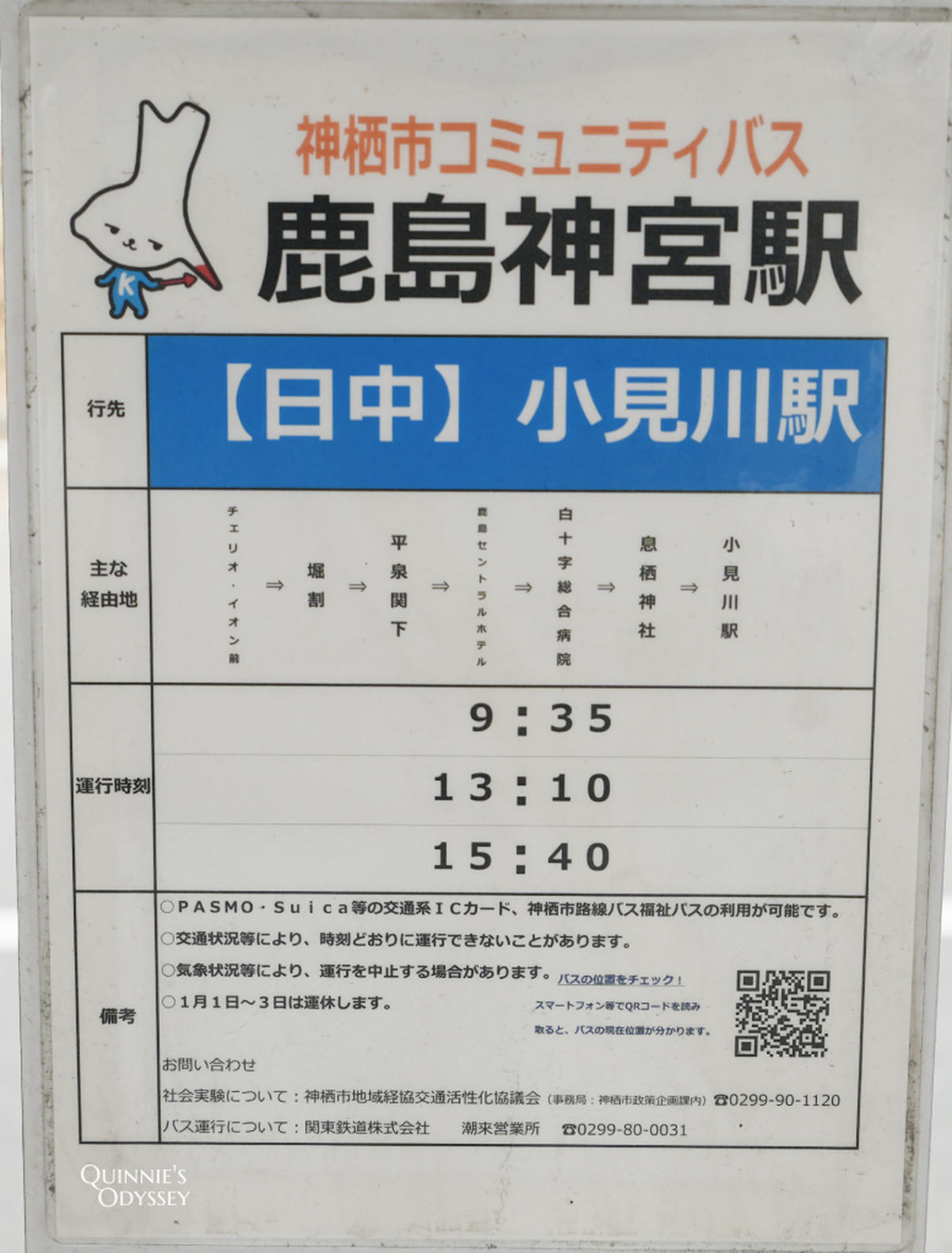
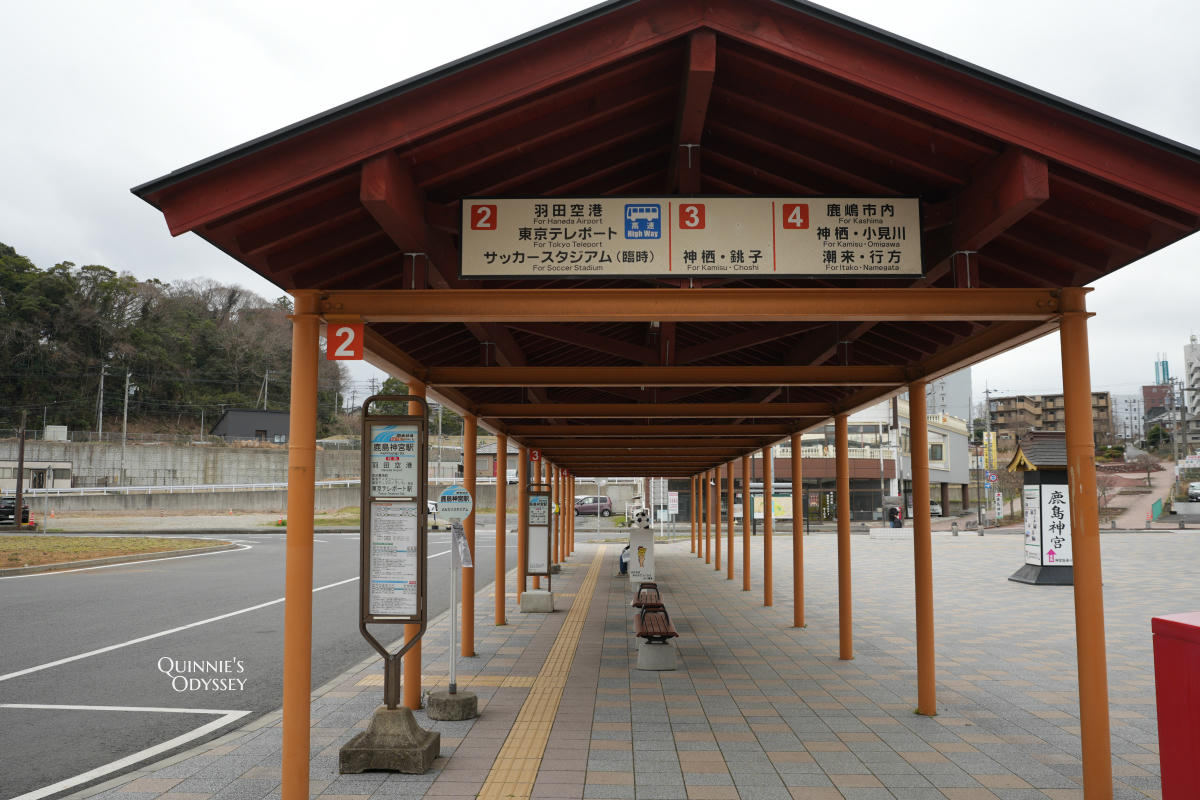
The bus stop is right outside the station, look for Stop No. 4 (Kamisu / Omigawa direction).
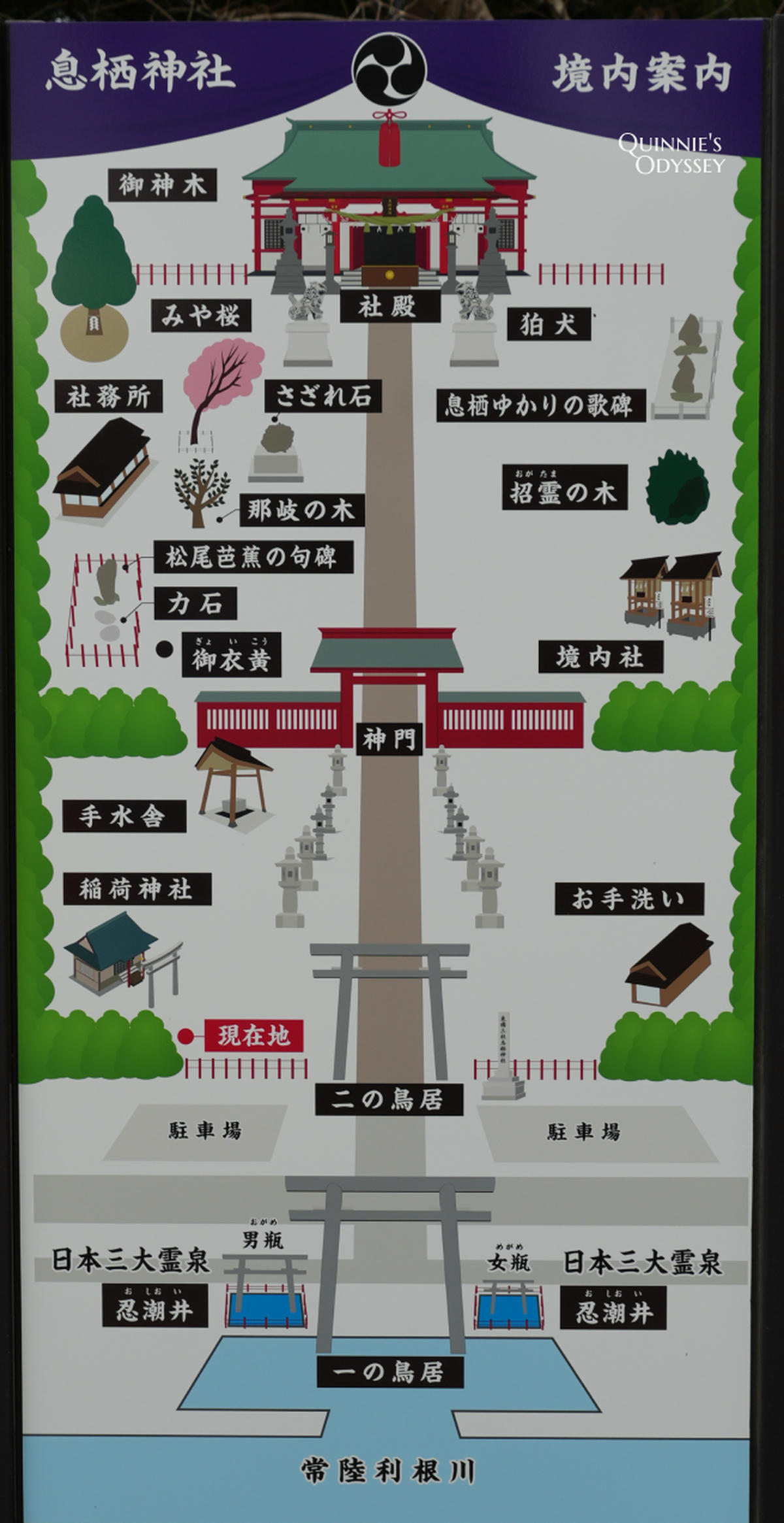
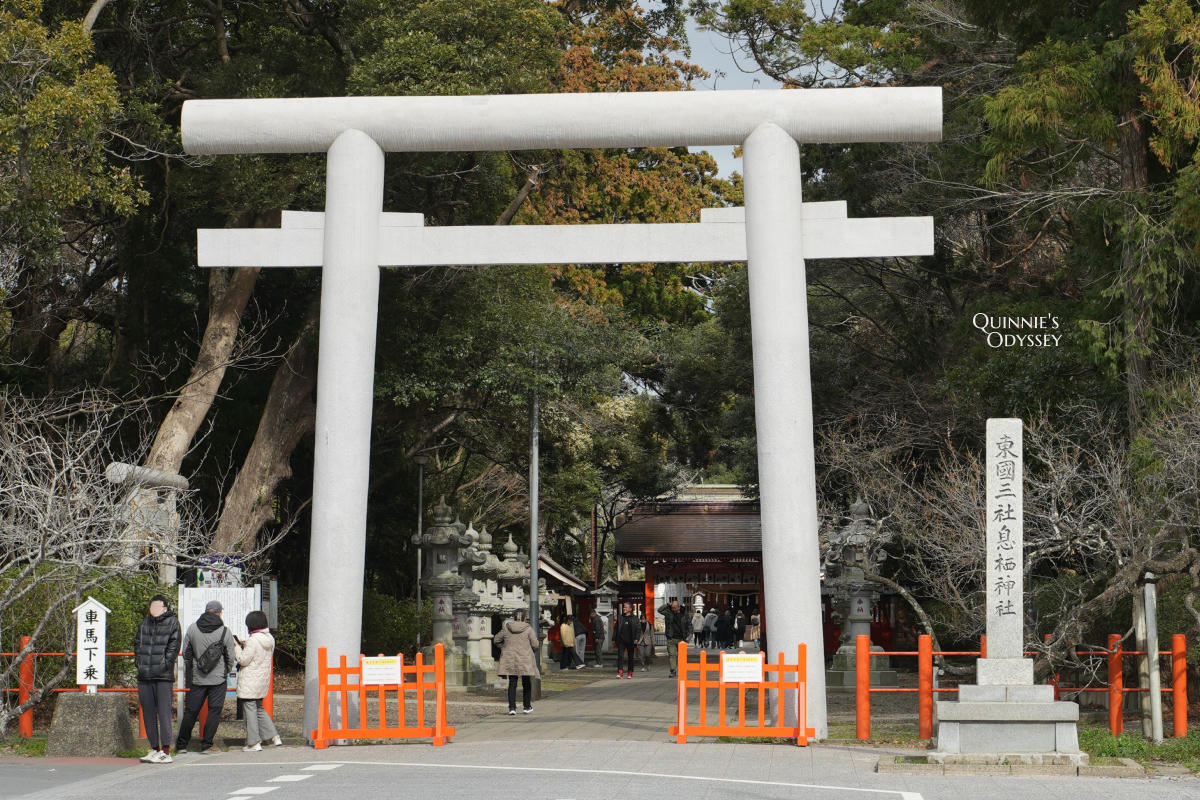
The Second Torii stands at the entrance of the shrine grounds, a large stone gate with a calm, solemn presence.
Tall trees line both sides, and from here you can see a straight approach leading toward the main hall, surrounded by greenery.
Whether you arrive by car or bus, this is where you’ll naturally start your visit. Entering from here and heading straight to the main hall is the most convenient route.
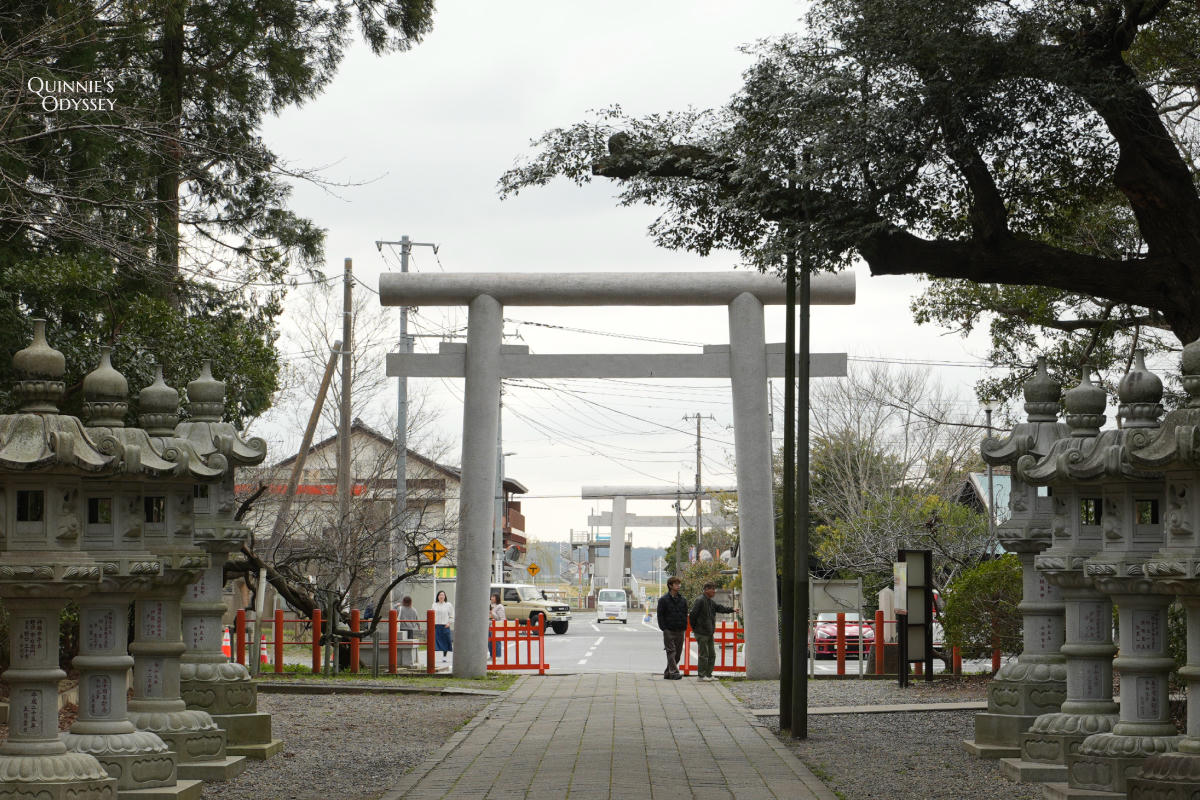
The First Torii, on the other hand, is located farther out near the river, together with the famous Oshioi spring. It’s best to visit that area after finishing your main shrine visit.
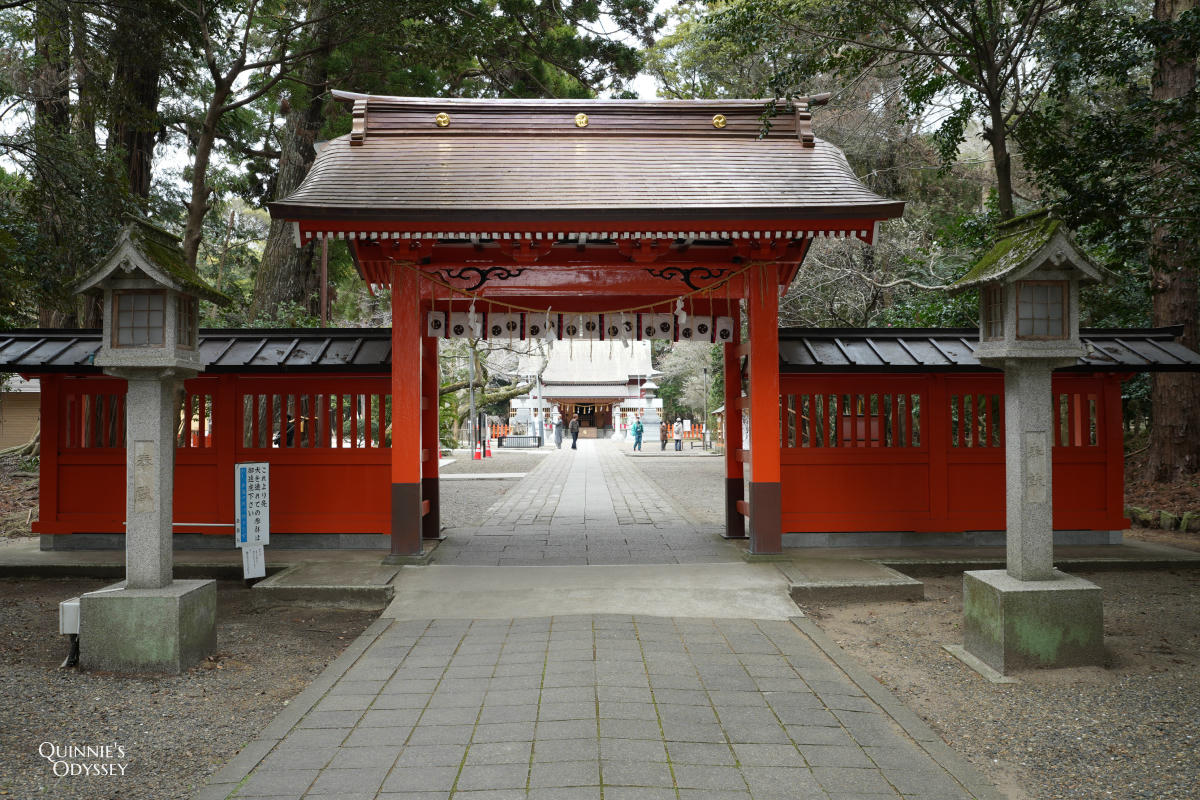
Along the main path stands a small, traditional shrine gate, built in 1847.
It miraculously survived a major fire in 1960 and is now the only remaining Edo-period structure in the shrine.
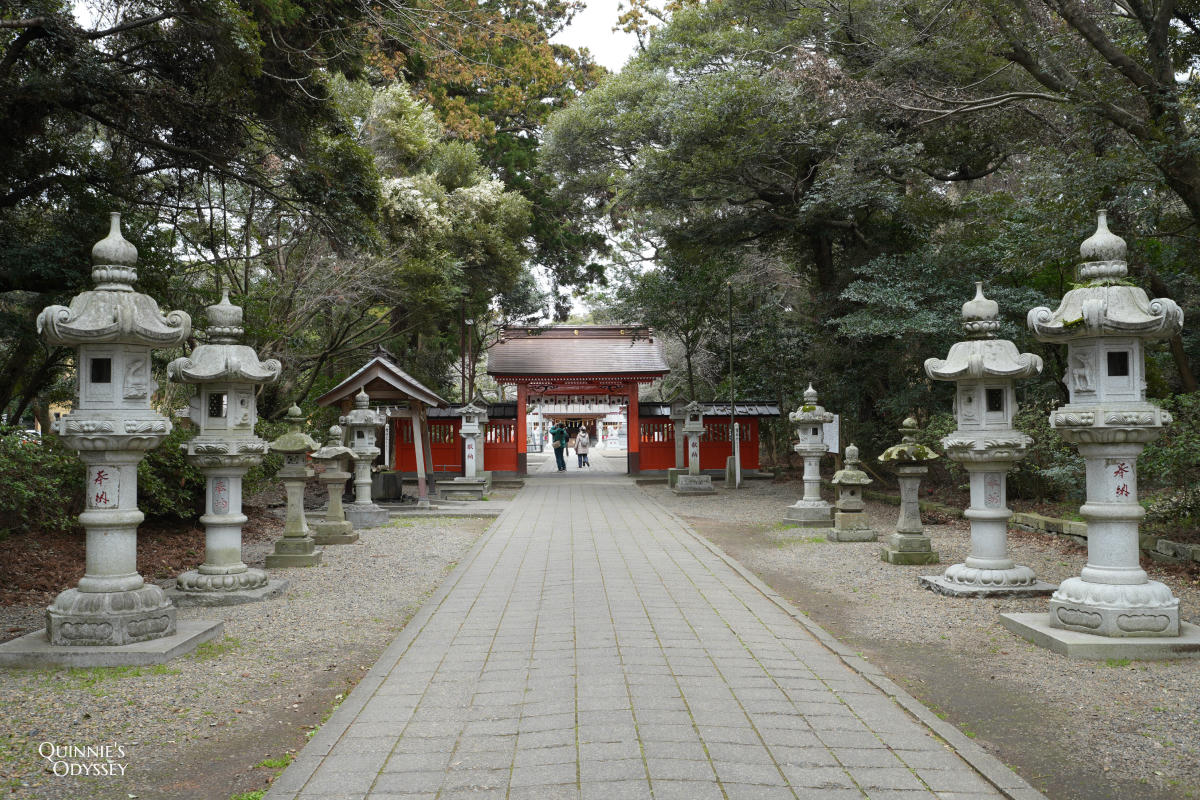
Unlike the grand gates of Katori or Kashima, it’s modest and understated, but that simplicity gives it a quiet sense of history and weight.
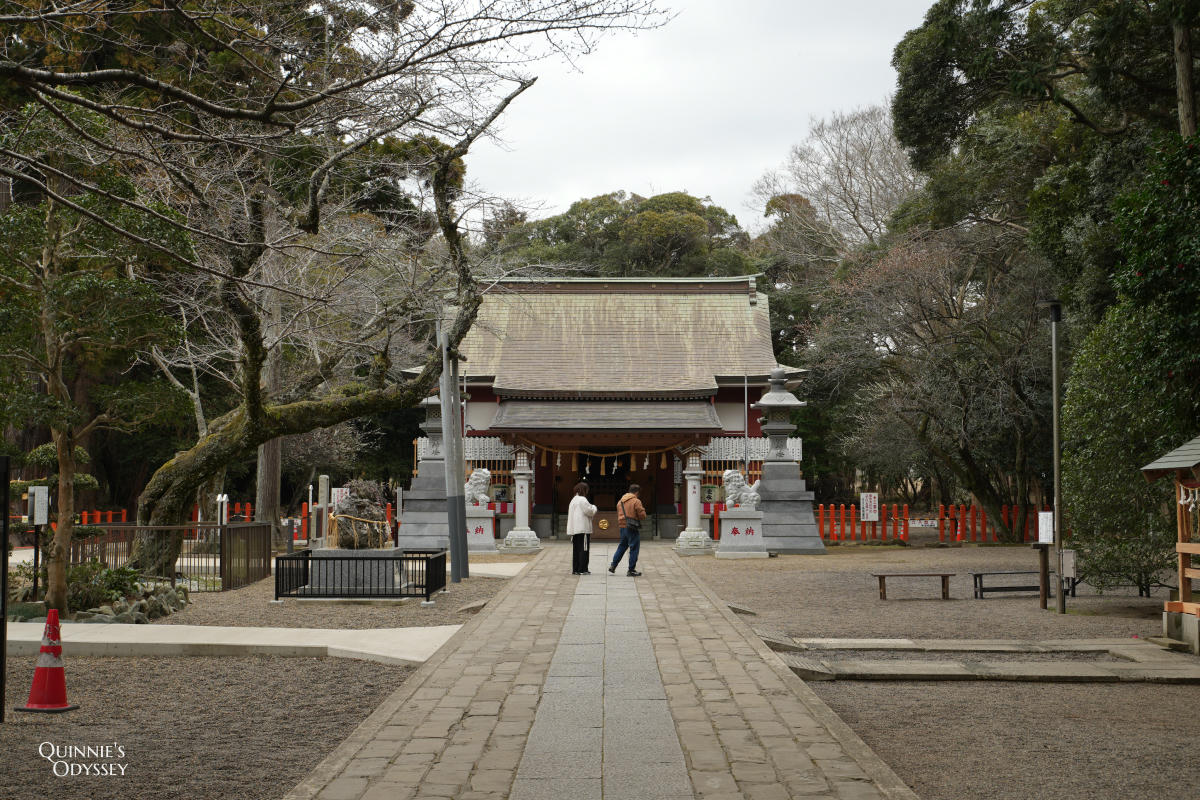
The current main hall and worship hall were rebuilt in 1963 using reinforced concrete, with a simple and unadorned appearance.
Here, the deities quietly reside, and the entire space feels incredibly calm and pure, like a place where something has been gently cleansed, leaving behind a clear, peaceful atmosphere.
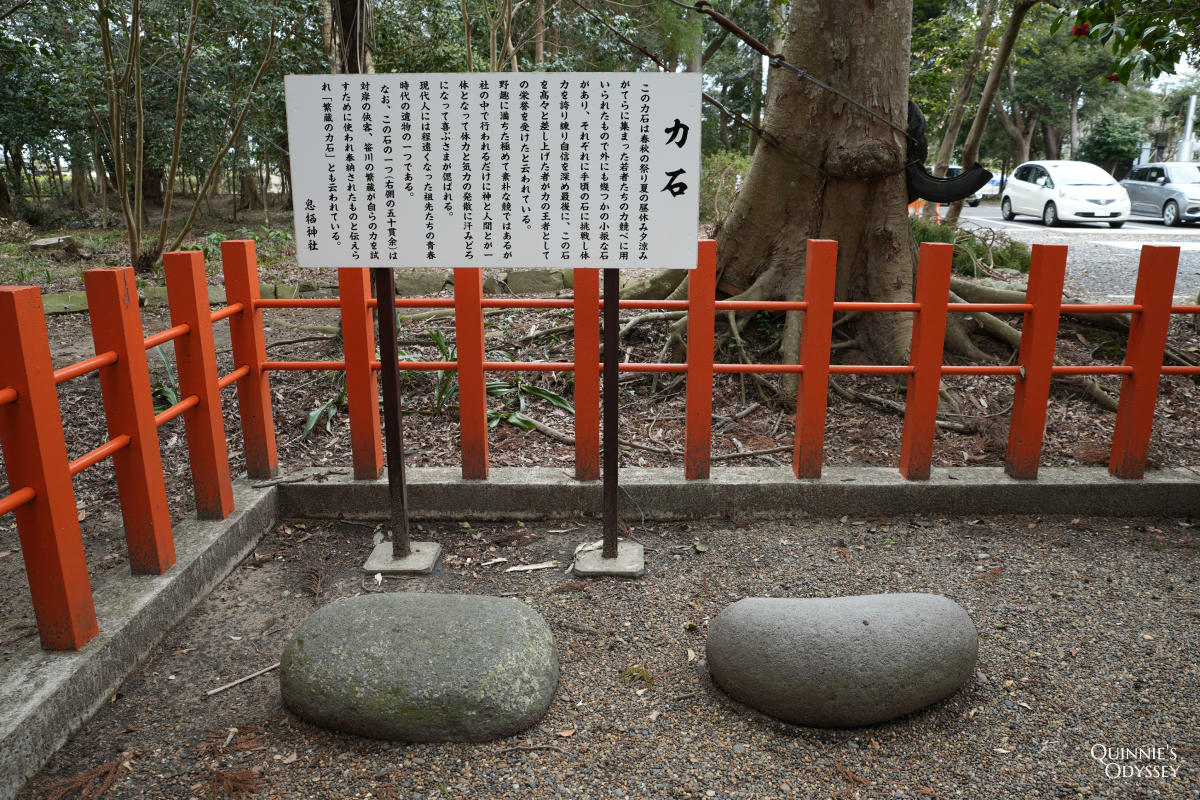
Within the shrine grounds are two power stones, once used by young men to test their strength.
Before modern gyms, people would gather at shrines during festivals, lifting stones of increasing weight to challenge themselves. The heaviest stone, about 187 kg, is said to have been dedicated by a legendary Edo-period figure, adding a layer of local folklore.
These contests weren’t just about strength, they were also seen as a way to connect with the divine through effort and endurance.
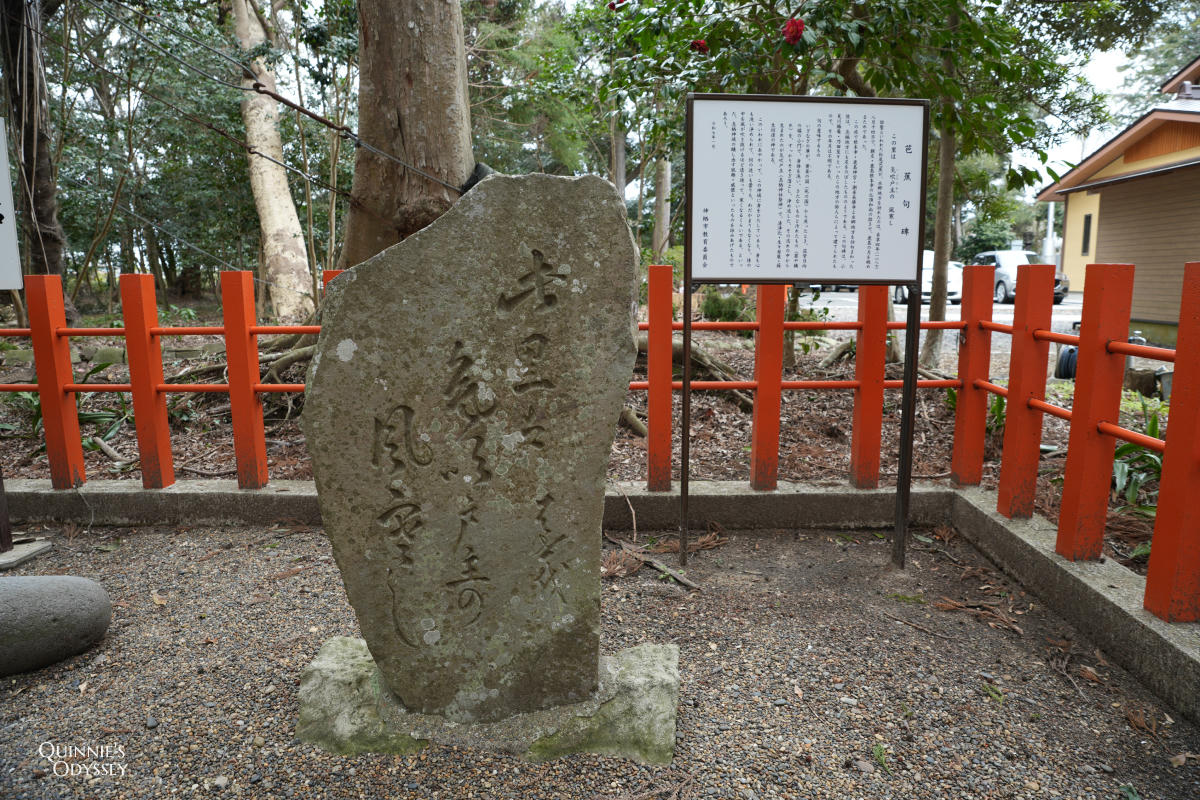
There is also a stone monument dedicated to Matsuo Basho, the famous haiku poet, who visited this area in 1687.
He wrote:
“In this village, the wind carries the breath of the gods, cold and clear.”
The “coldness” he described isn’t just physical, it reflects a sense of purification, as if the air itself clears the mind.
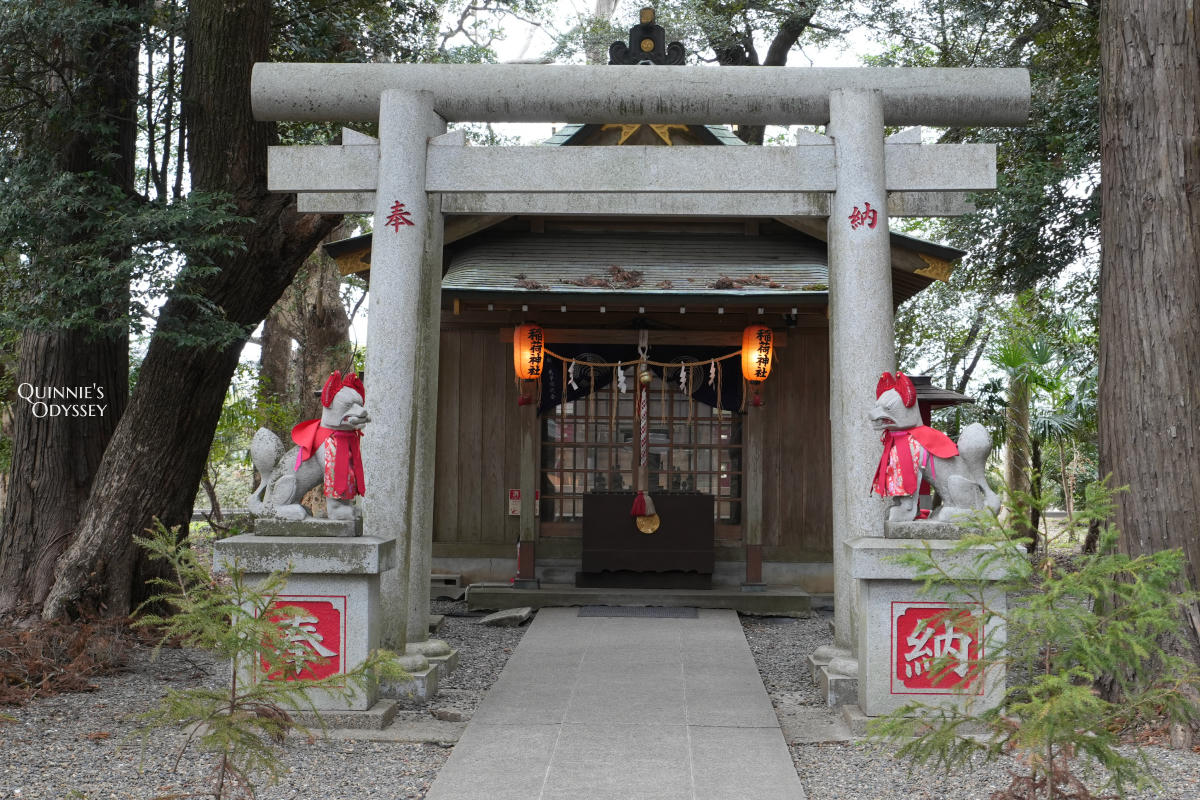
Next to the main hall, you’ll find a row of smaller auxiliary shrines, each dedicated to different deities and blessings, from health and success to safe travel and good harvests.
Interestingly, there are even small shrines dedicated to Kashima and Katori within the grounds, bringing the spirit of the Togoku Sansha together in one place.
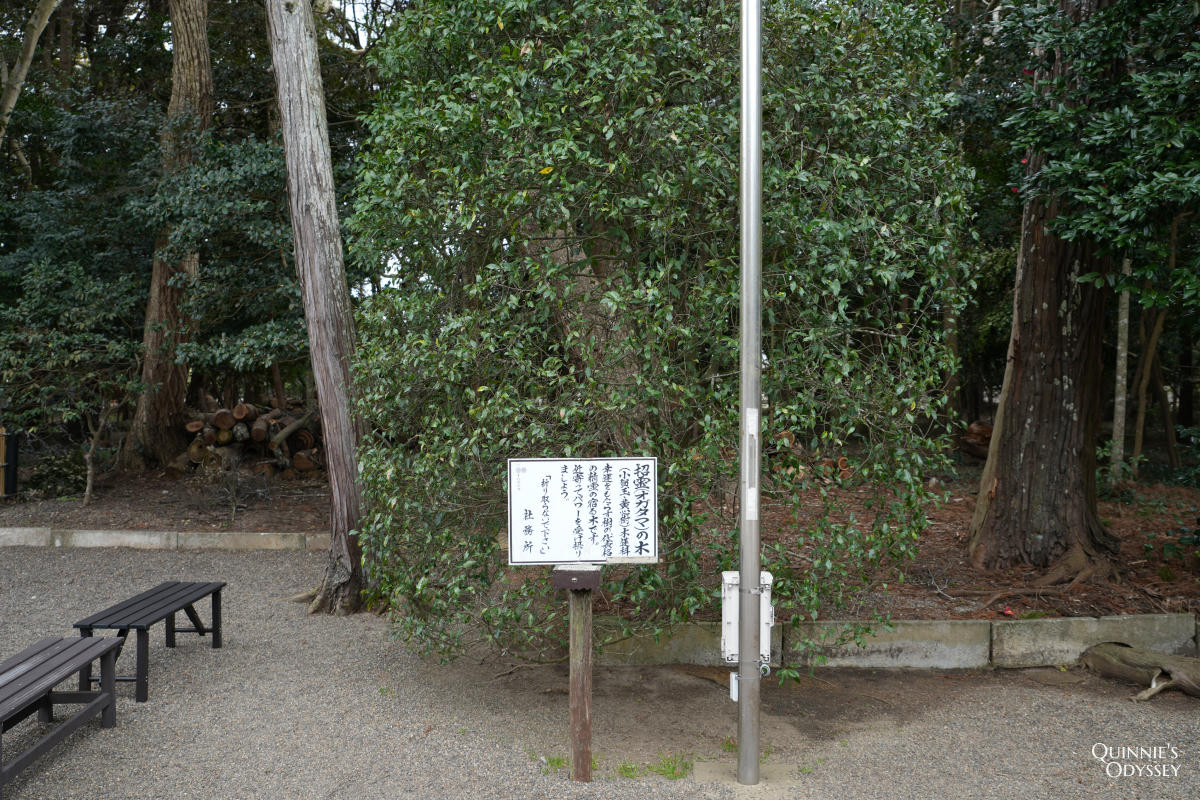
Within the shrine stands a sacred tree believed to be a place where spiritual energy gathers.
A nearby sign describes it as a tree where spirits dwell, encouraging visitors to stand quietly beside it and feel its presence.
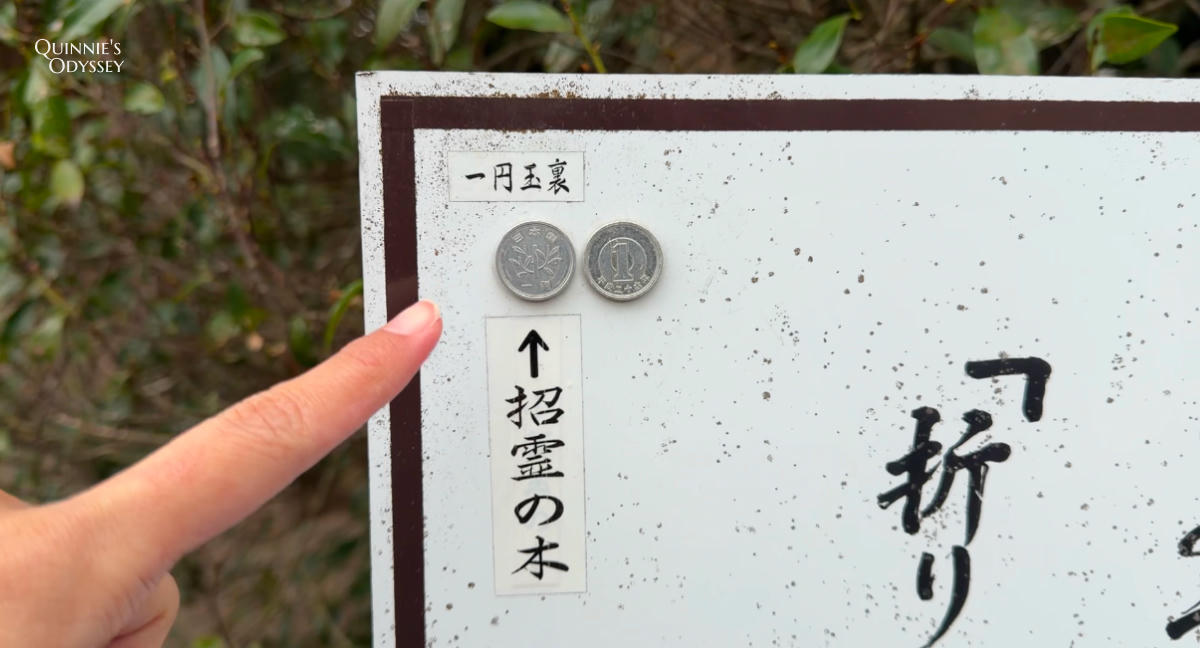
Interestingly, it’s also said to resemble the tree depicted on the Japanese 1-yen coin, though that design is actually fictional.
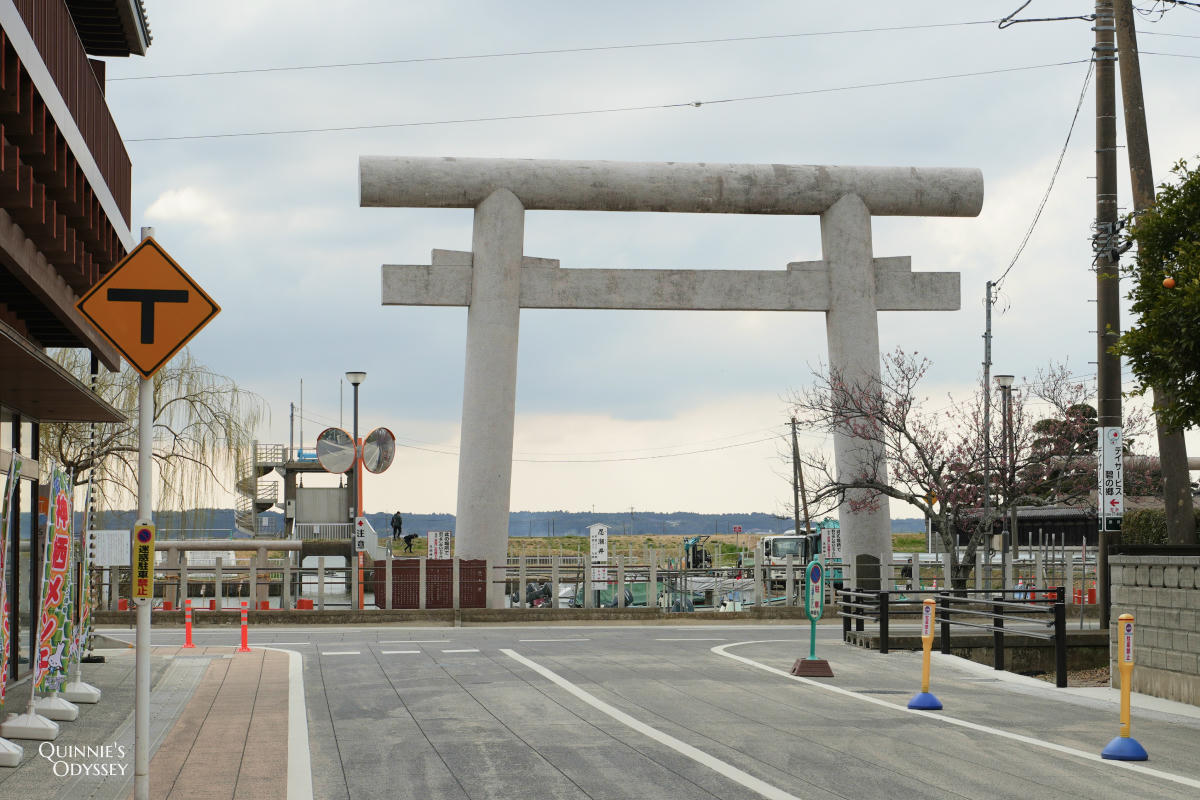
The First Torii stands by the Tone River and is one of the shrine’s most iconic sights.
In the Edo period, visitors didn’t arrive by road but by boat, traveling along the river. This torii served as a sacred landmark, marking the entrance to the shrine from the water.
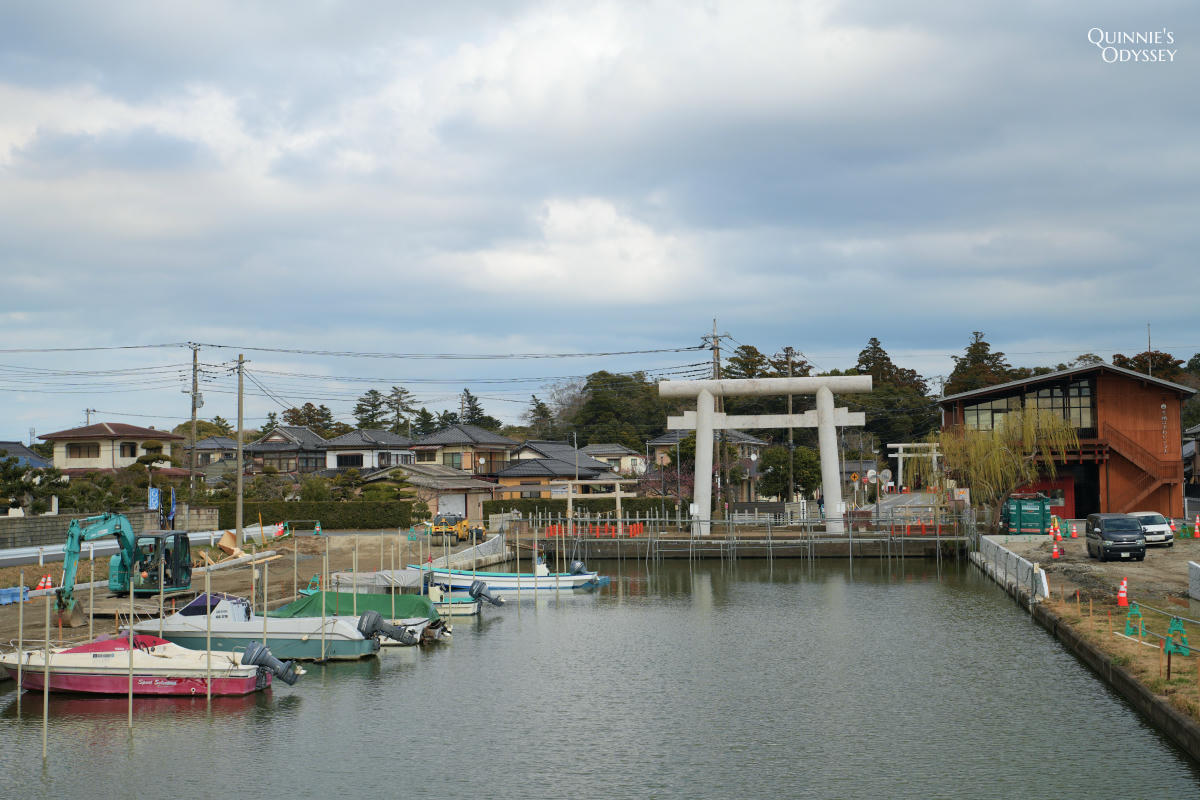
Today, most people enter from the opposite side and miss it, so it’s worth taking a short walk here after your visit.
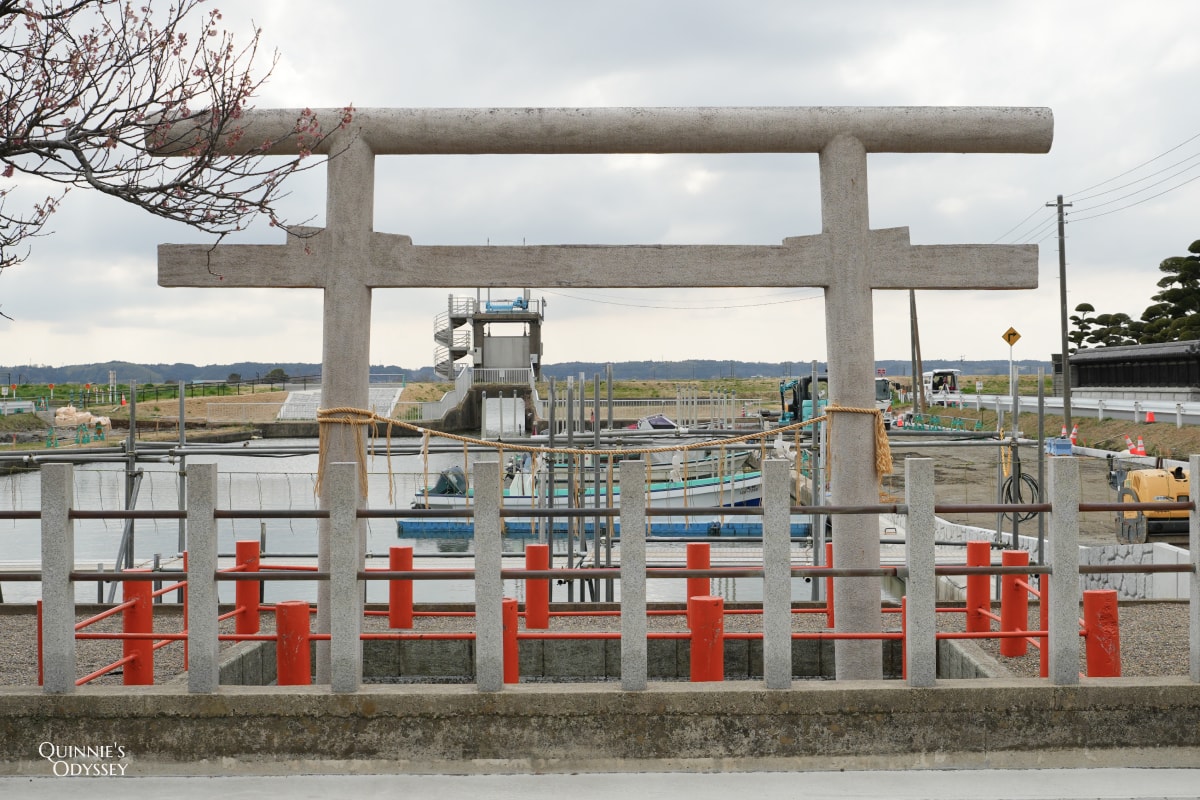
On either side of the First Torii are two wells known as the Oshioi spring, one of the shrine’s most mysterious features.
Despite being in an area once covered by seawater, these wells have always produced clear freshwater, earning them a place among Japan’s Three Sacred Springs.
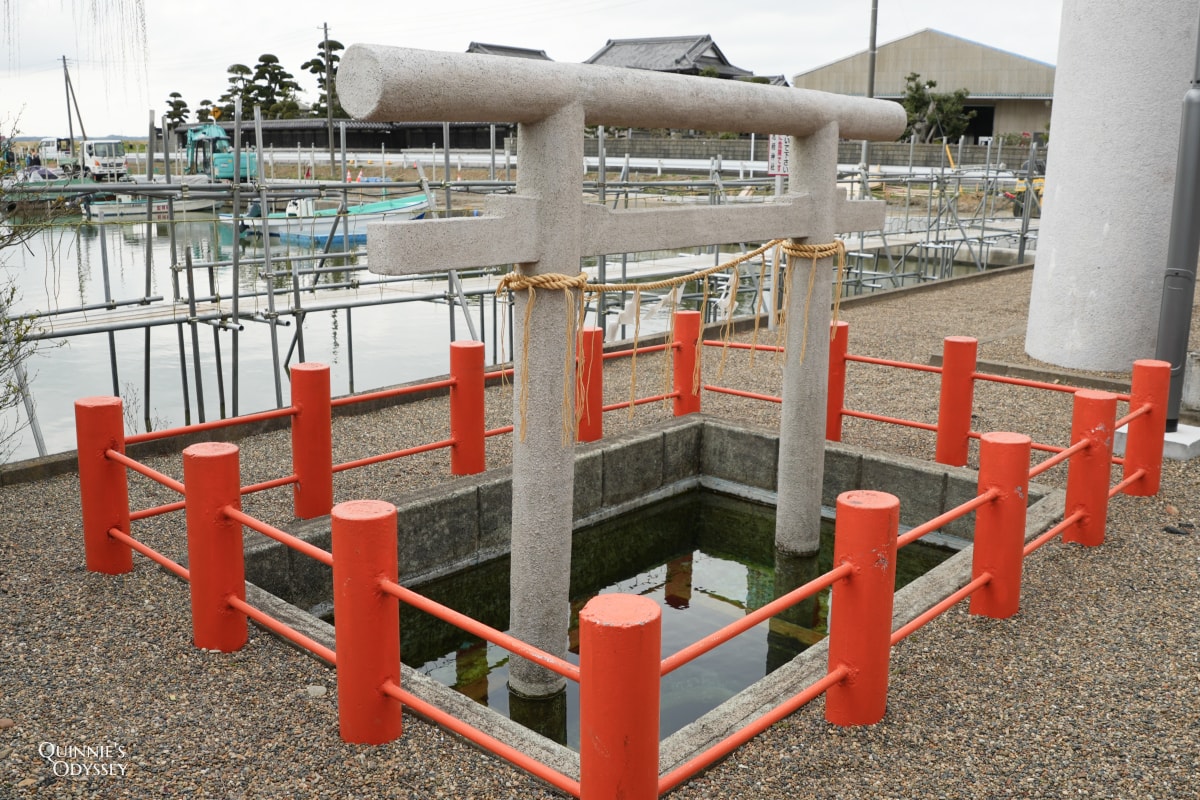
Each well contains a submerged jar, one “male” and one “female.” According to legend, they followed the shrine from its original location and have remained here for over a thousand years.
The jars aren’t always visible, but on clear days with the right light and water level, you might catch a glimpse. It’s said that those who do are blessed with good luck, especially in relationships and life opportunities.
Getting around Ikisu Shrine isn’t the easiest.
We took the 13:10 bus from Kashima Jingu and arrived at Ikisu Shrine around 1:50 PM. The shrine itself is fairly small, and we finished exploring in about 30 minutes.
Then came the problem, the next bus toward Omigawa doesn’t arrive until around 4:20 PM.
With not much around the area and nearly two hours to kill, we made a slightly crazy (but totally memorable) decision: walk to JR Omigawa Station.
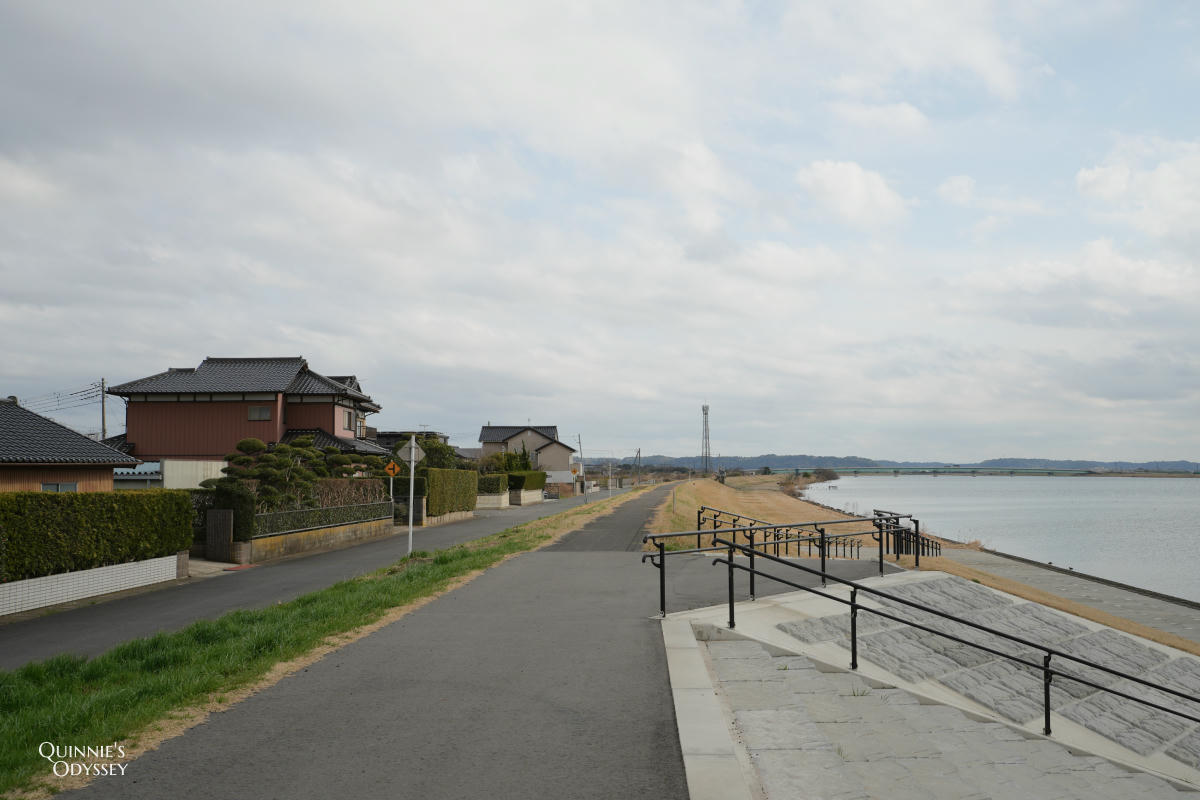
According to Google Maps, it would take about 1 hour and 15 minutes, still faster than waiting. So… we just went for it.
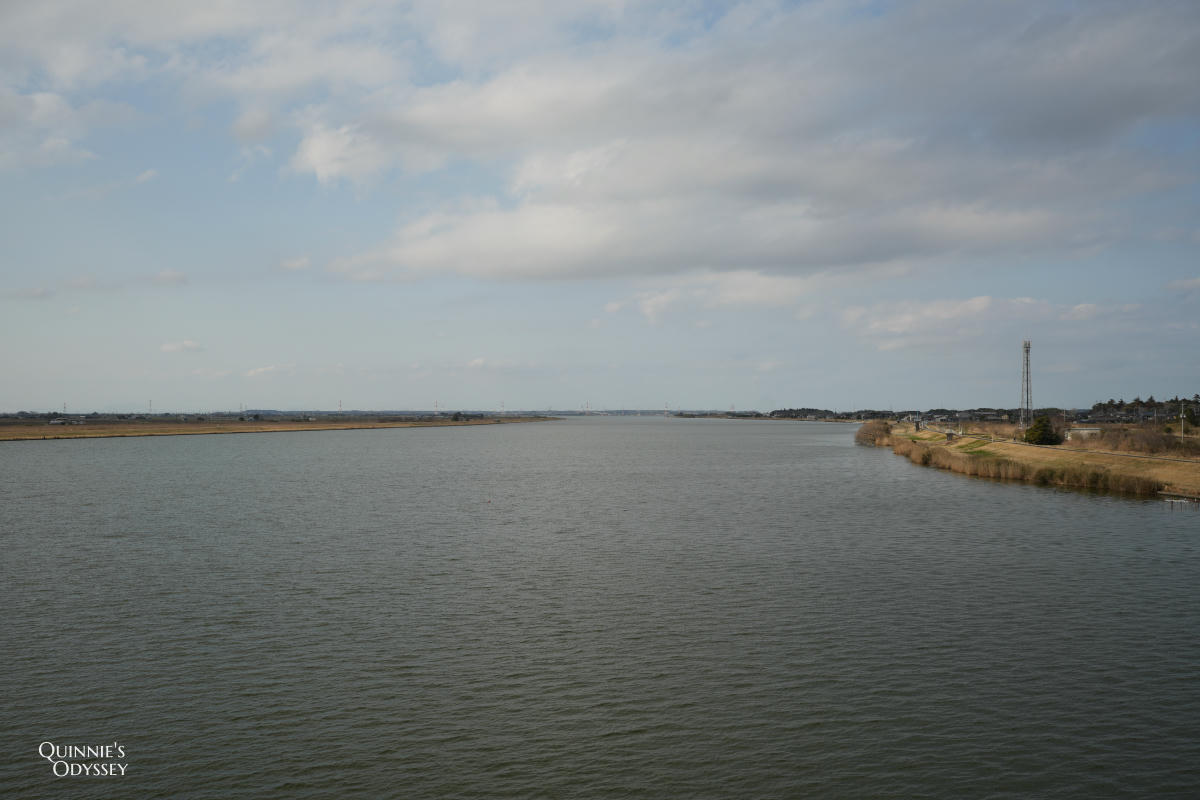
We walked about 5.4 km, mostly along the Tone River.
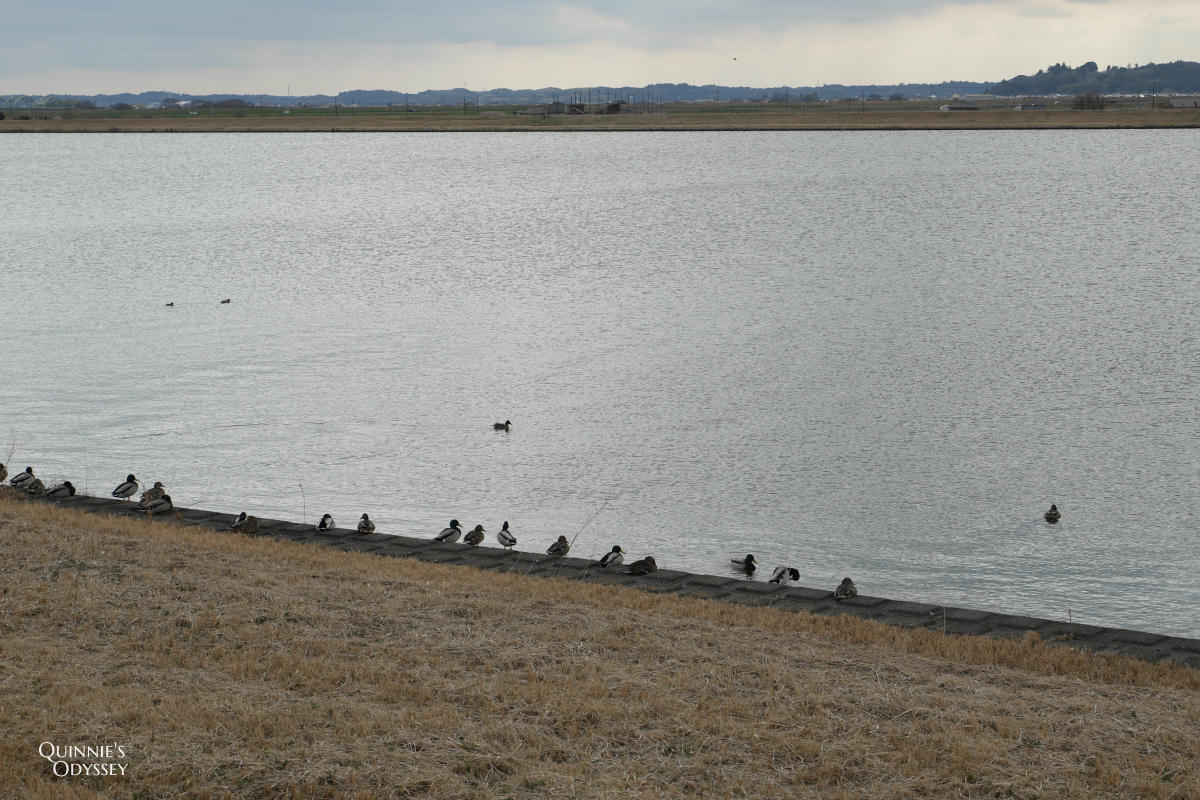
The scenery was surprisingly nice, wide open views, a cool breeze, and rows of ducks resting along the riverbank. As we got closer, they all jumped into the water at once, then slowly returned after we passed. Weirdly calming.
At one point, we had to cross Ikisu Bridge. It looked close, but took nearly 20 minutes to walk across. There were only cars, no pedestrians, so we probably looked a bit out of place.
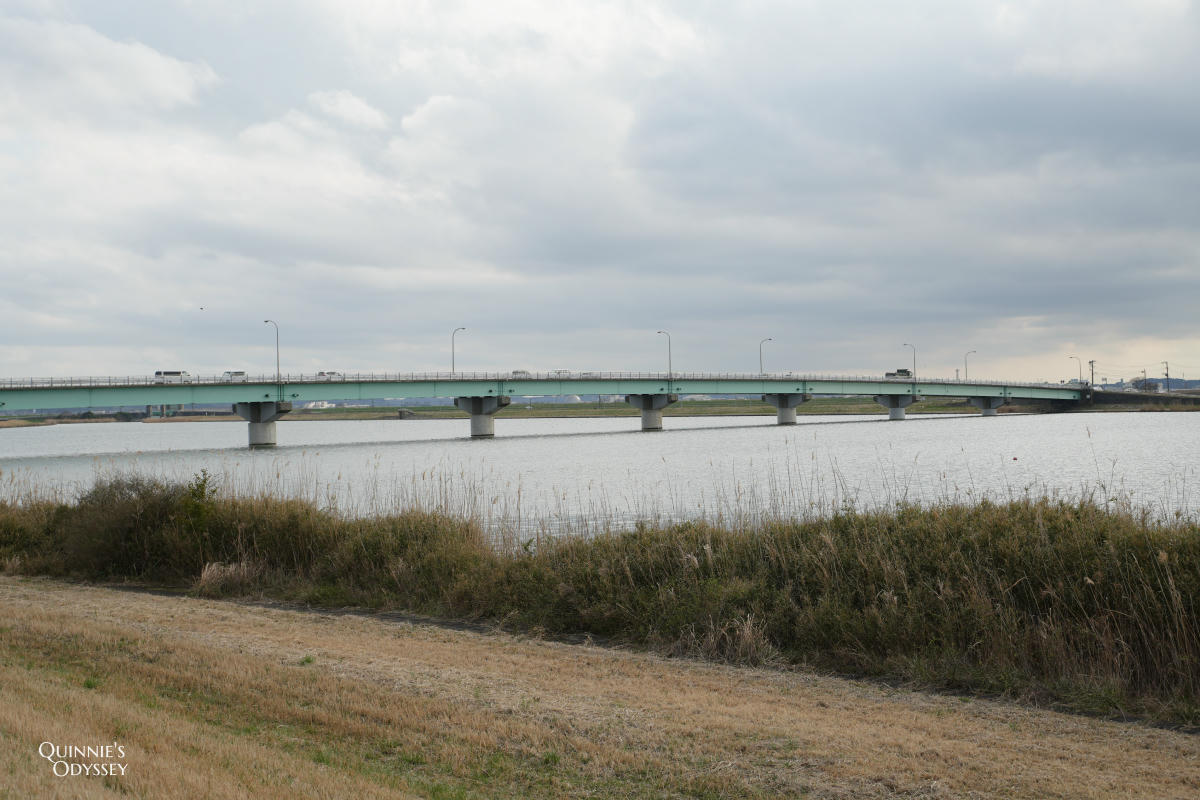
After crossing both Ikisu Bridge and Omigawa Bridge, we were exhausted and starving (we had only eaten a dango earlier that day).
Then, like an oasis, we spotted a Joyfull restaurant by the roadside. It felt like a lifesaver. The food was great, and exactly what we needed.
After recharging, we walked another 30 minutes and finally reached Omigawa Station.
There were barely any people along the way, which gave the whole walk a strangely quiet, almost post-apocalyptic vibe.
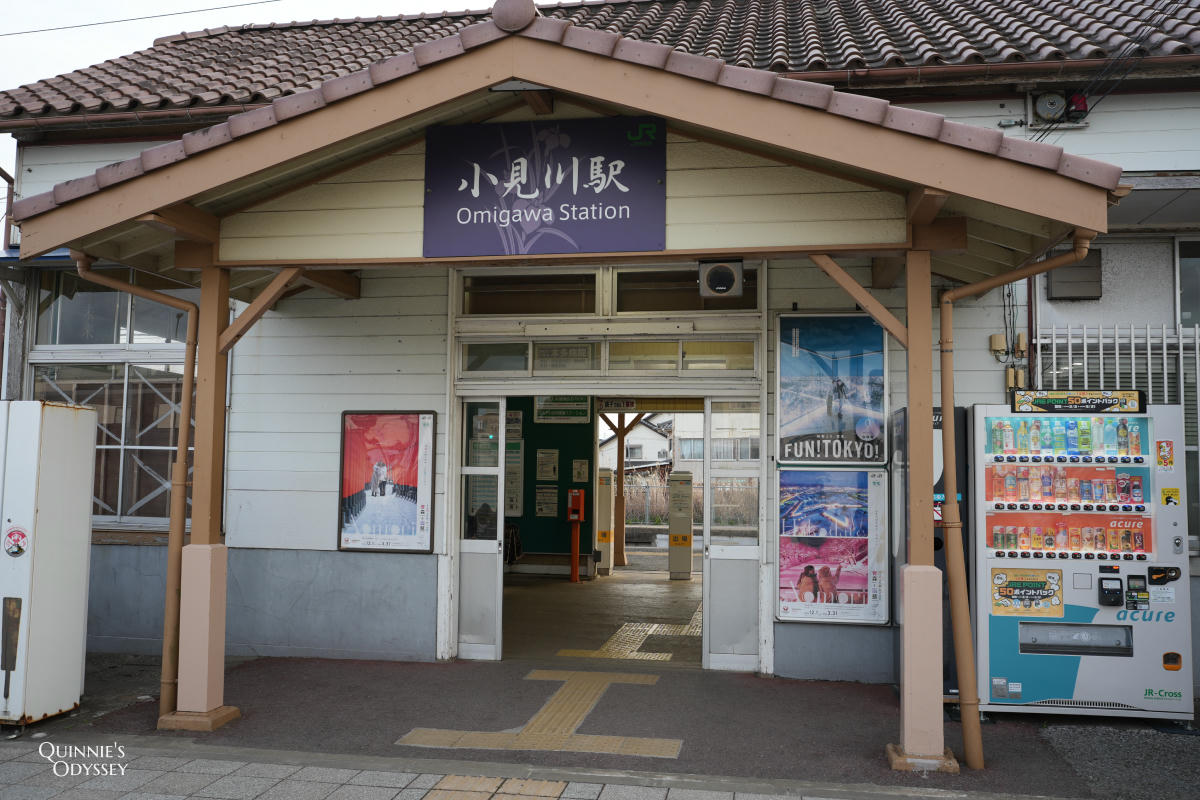
Including our meal break, the journey took over two hours.
At the time, we were definitely questioning our life choices, but looking back, it turned out to be one of the most memorable parts of the trip.
Would I do it again? Probably not.
But somehow… I still miss it.
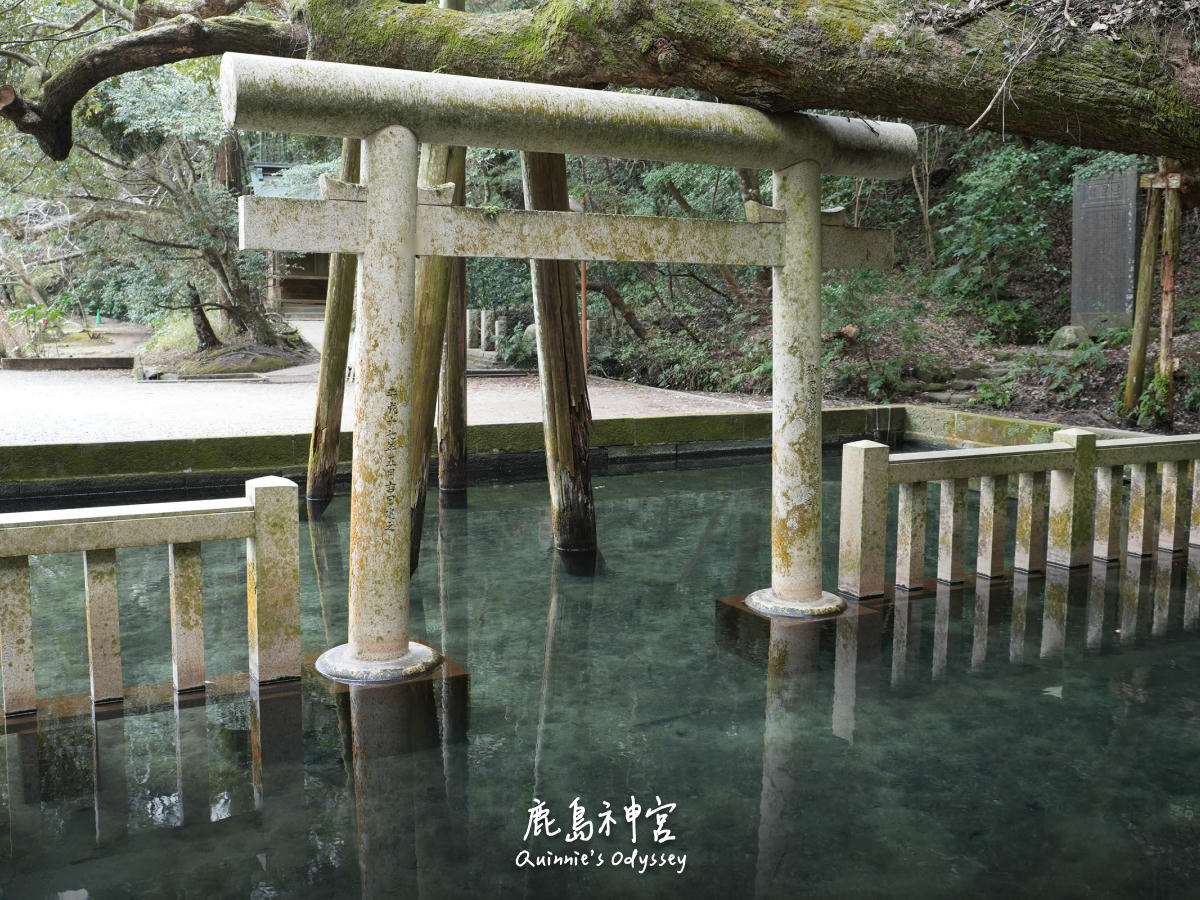
Kashima Jingu
Enter the domain of one of Japan’s most powerful warrior deities. Within a sacred forest, discover the mysterious keystone said to pin down a giant underground catfish and keep earthquakes at bay.
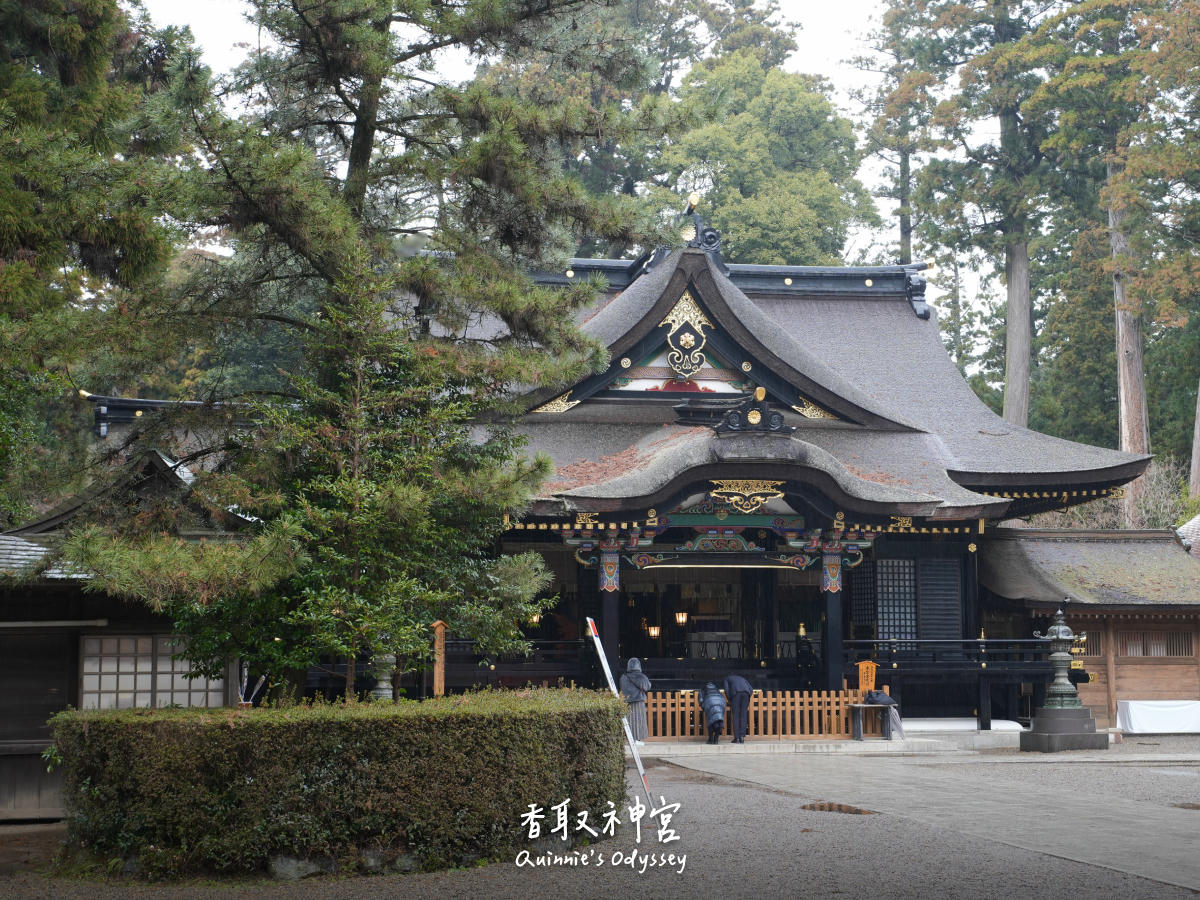
Katori Jingu
Walk among elegant black-lacquered buildings with gold details, and experience Edo-period aesthetics along with stories of the god of order and legendary swordsmen.
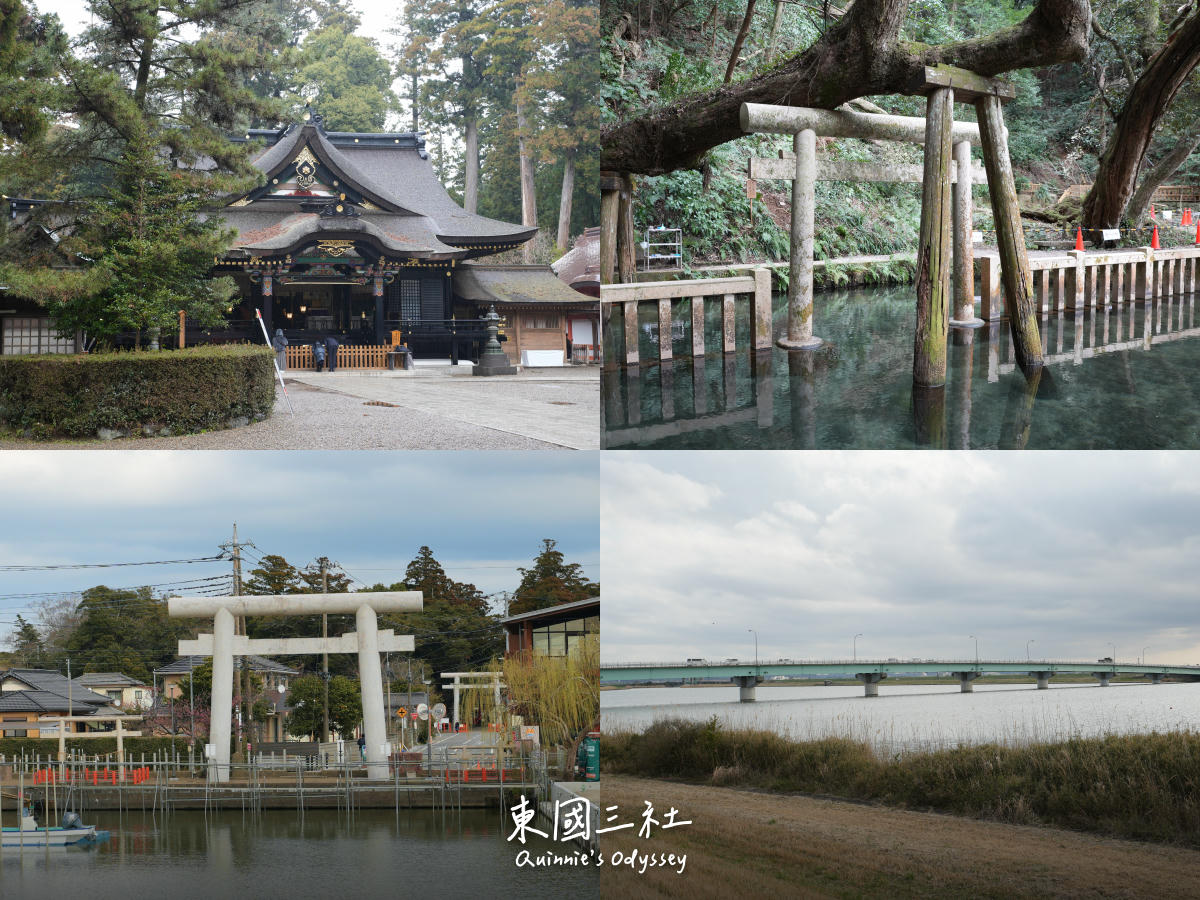
Togoku Sansha Pilgrimage
Follow the traditional Edo-era pilgrimage route, visiting the warrior god, the god of order, and the god of guidance in a journey that helps you reset and realign yourself.
▼ Exclusive Deal for Sika Readers ▼
Use code【DNBDRT】👉👉 Save ¥3,000on your TOCOO! car rental(view guide)
▼ Tokyo Travel Essentials ▼

Thanks for reading!
If you’re interested in my stories, feel free to follow me on Instagram.
👉👉 IG: @sika_artist 👈👈