Physical Address
304 North Cardinal St.
Dorchester Center, MA 02124
Physical Address
304 North Cardinal St.
Dorchester Center, MA 02124

Fushimi Inari Taisha is one of Kyoto’s most iconic landmarks. Its Senbon Torii, thousands of vermillion gates stretching endlessly up the mountain, draws visitors from every corner of the world, filling the air with chatter and the constant click of camera shutters.
But just off that bustling main pilgrimage path, hidden in plain sight, lies a completely different world: Fushimi Kandakara Shrine.
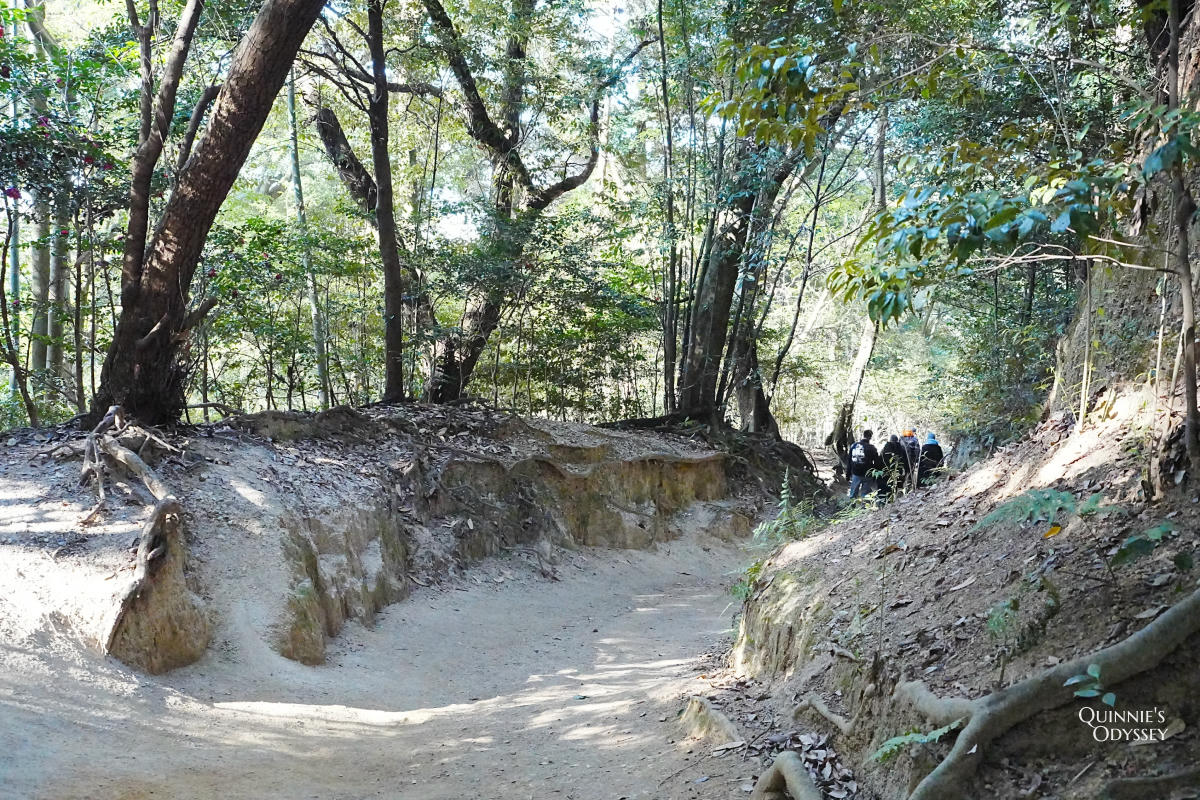
Fushimi Kandakara Shrine sits within the grounds of Fushimi Inari Taisha. After passing the Okusha Hohaisho (the inner sanctuary worship hall), you’ll reach a fork in the path leading toward the summit. Look carefully, and you’ll notice a small, easy-to-overlook trail branching off to the side.
Step onto it, and everything changes. The stone path gives way to bare earth, the noise of the crowds fades behind you, and the air fills with the scent of damp soil and bamboo leaves. A short five-to-six minute walk feels like crossing through an invisible barrier into a realm entirely apart from the world you just left.
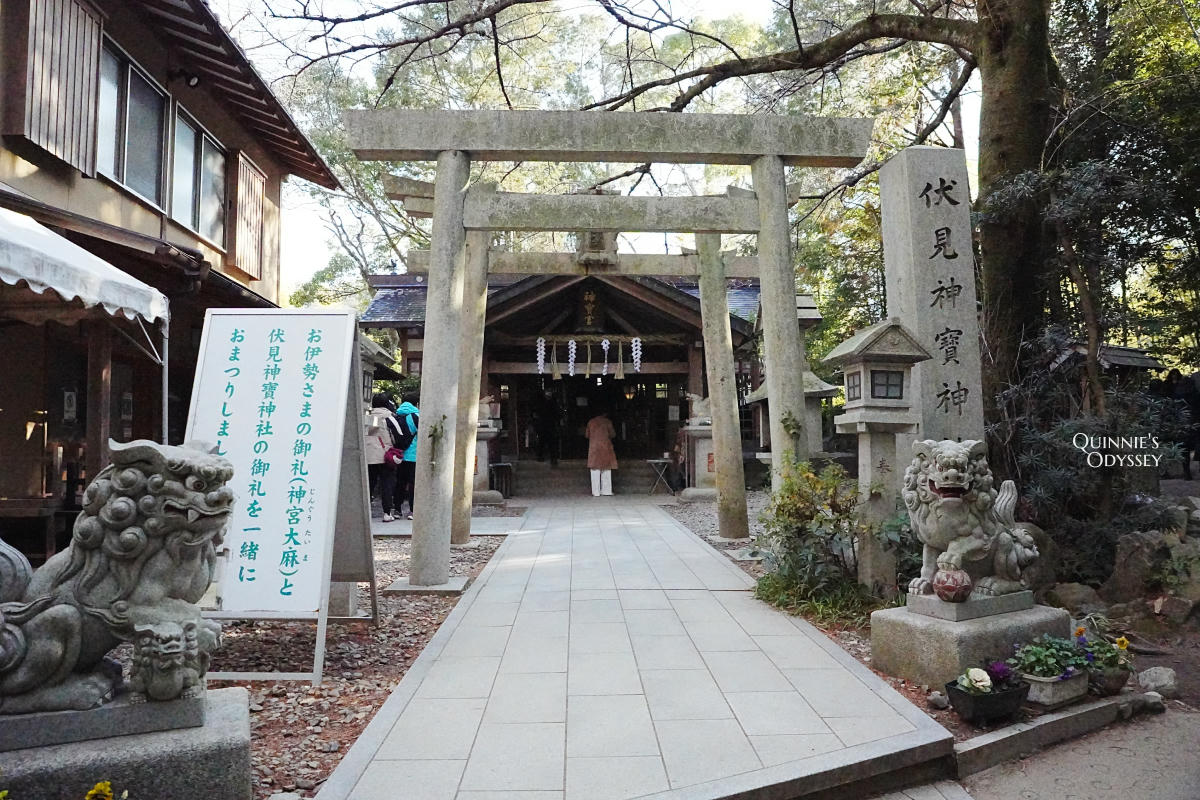
Inside Fushimi Inari Taisha, fox imagery is everywhere. In Shinto belief, the fox serves as the messenger of Inari, symbolizing prosperity and good fortune. But the guardian of Fushimi Kandakara Shrine is something altogether different.
Pass through the torii gate at the entrance and approach the main hall, and you’ll find not foxes, but two dragons. On the left stands the Chiryū, the Earth Dragon. On the right, the Tenryū, the Heavenly Dragon.
Both are imposing figures, each holding a sacred jewel in its mouth, their eyes sharp and watchful as they guard the entrance to this shrine’s inner realm.
The temizuya (purification water basin) follows the same theme, with water flowing from a dragon’s mouth.
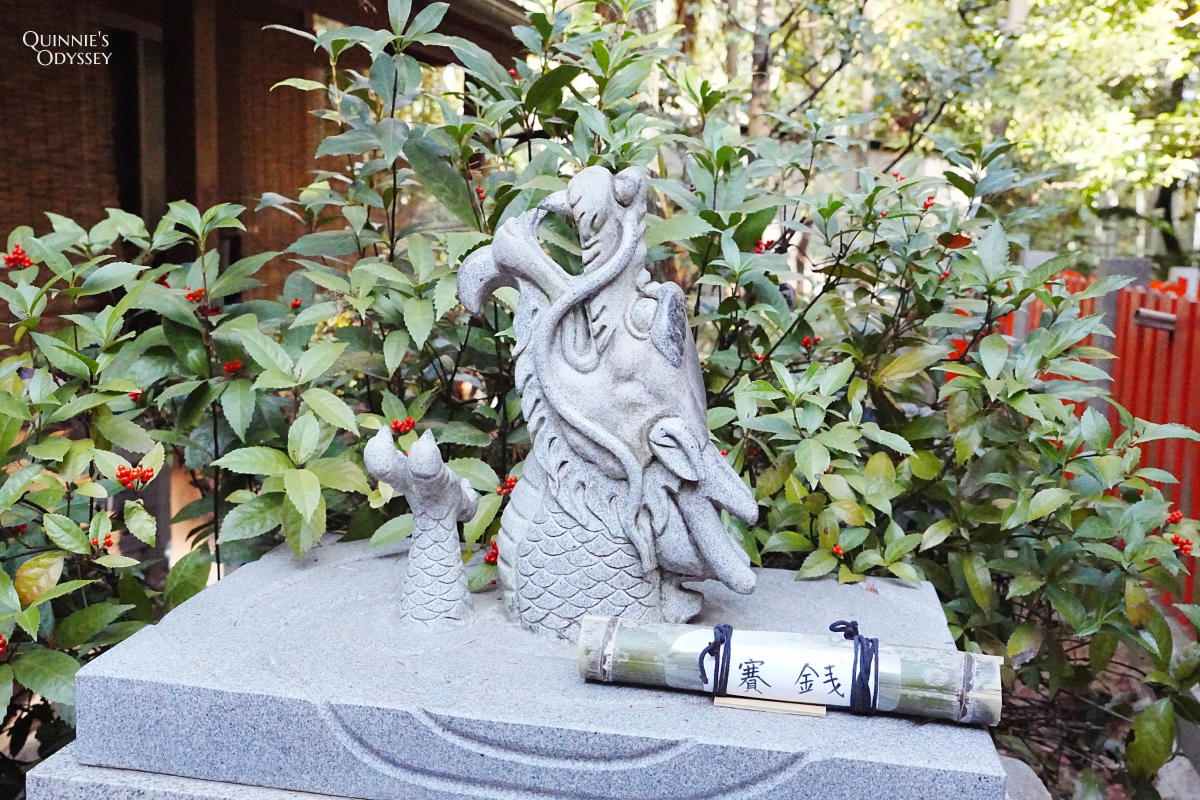
In Japanese Shinto, dragons represent the forces of heaven and earth: the Heavenly Dragon governs the spiritual energy of the sky, while the Earth Dragon holds the power of the ground beneath us.
Because this shrine enshrines the ancient and deeply sacred Tokusa no Kandakara, the Ten Sacred Treasures, it requires both dragons together to protect them. In this way, the twin dragons have become the true spiritual soul of the shrine.
According to Japanese mythology, the Ten Sacred Treasures (Tokusa no Kandakara) were bestowed upon humanity by the gods of heaven. These ten divine objects are said to possess extraordinary power, the ability to heal illness, purify spiritual defilement, and even, according to legend, restore life to the dead.
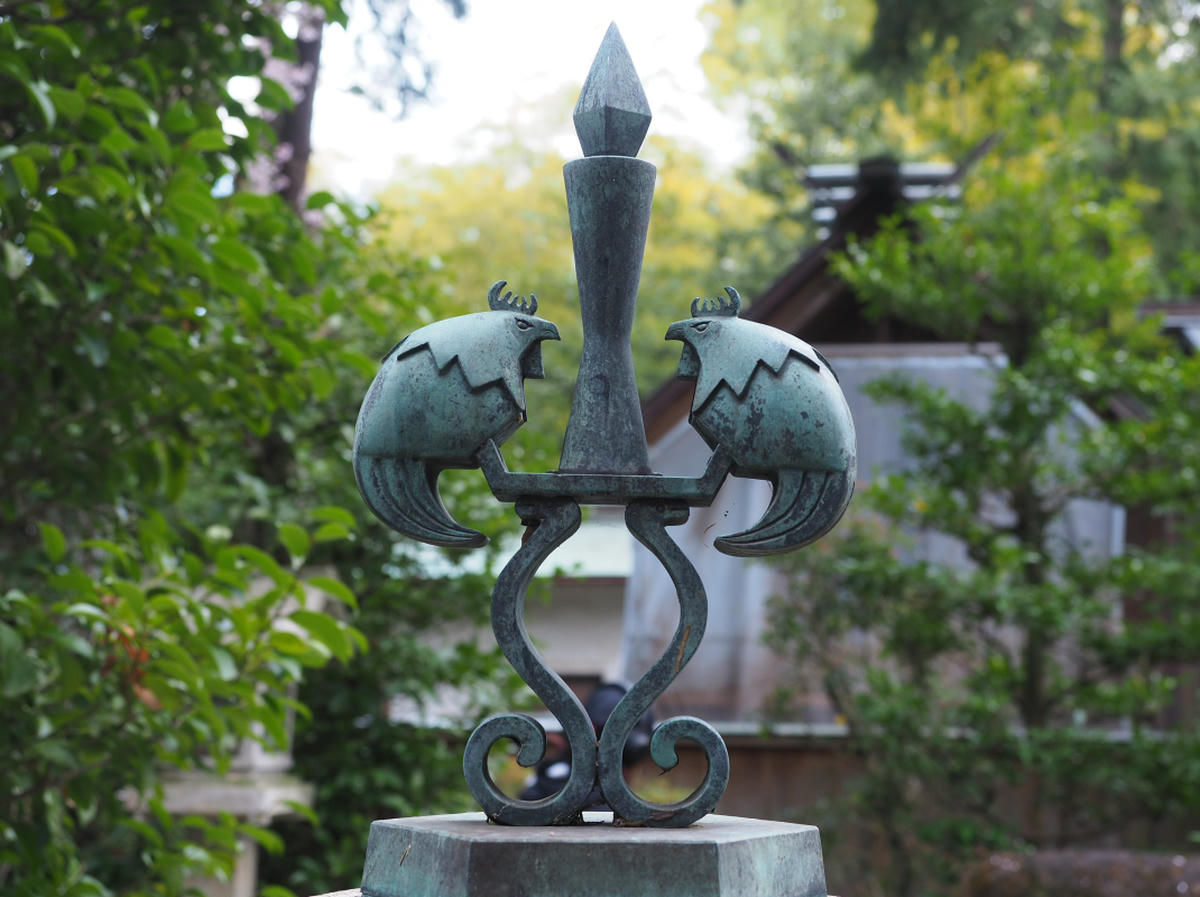
The shrine’s principal deities are Amaterasu Ōmikami (the Sun Goddess) and Inari Okami, but its spiritual focus is quite distinct from the main Inari shrine complex. Where Fushimi Inari Taisha is primarily associated with prayers for wealth, career success, and business prosperity, Fushimi Kandakara Shrine turns inward, toward something more personal:
Many Japanese worshippers come here during the most difficult chapters of their lives, seeking quiet prayer and hoping that the ancient power of the Ten Sacred Treasures will help them find their way back to inner balance and strength.
The ten treasures include mirrors, swords, jewels, and four types of hire (sacred cloth-like objects). The most powerful of all is said to be the Furu no Koto, an ancient incantation. Legend holds that if you wave the sacred treasures while reciting these words, you can bring the dead back to life.
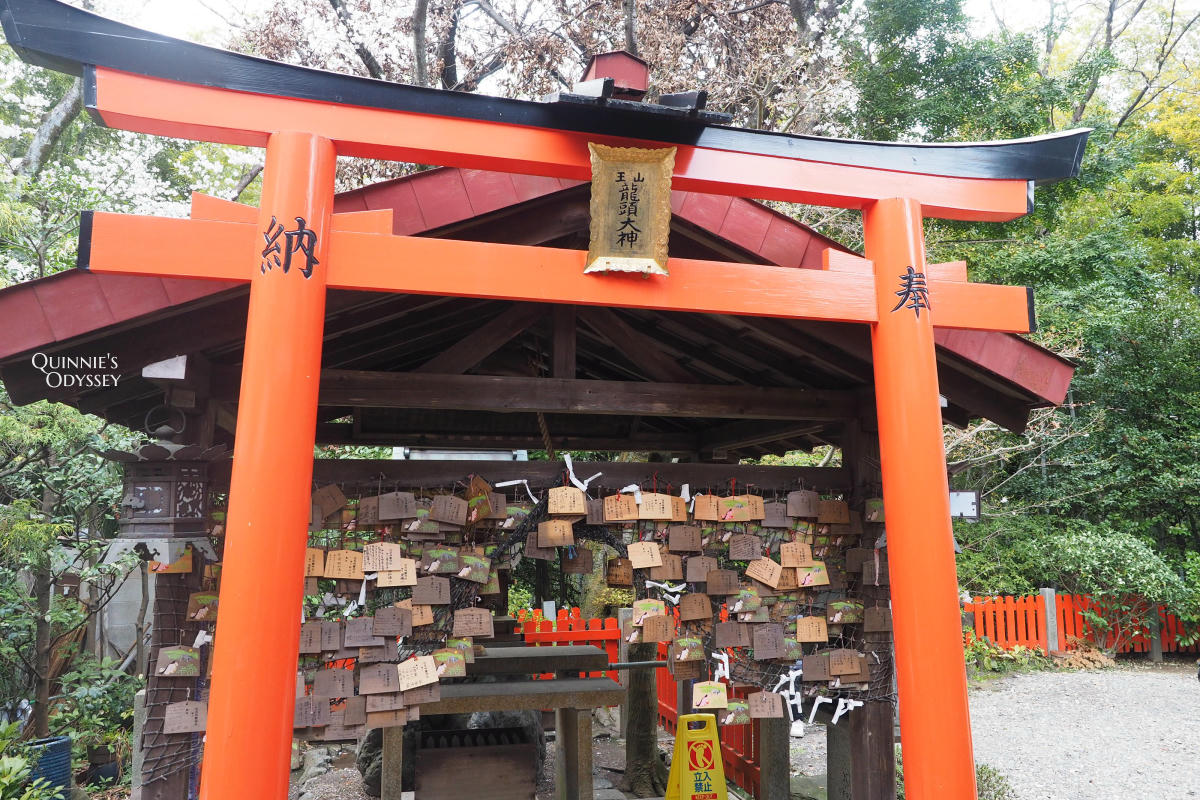
At Fushimi Inari, the torii gates are a vivid, almost electric vermillion. At Fushimi Kandakara Shrine, they are a soft, weathered grey.
This is a deliberate aesthetic choice, an embrace of understated simplicity. The pale gates stand among lush greenery, with stone lanterns scattered throughout and quiet stone figures and monuments standing in place.
Without the bright artificial color of the main shrine, the space settles into something more ancient and natural, closer to the earth.
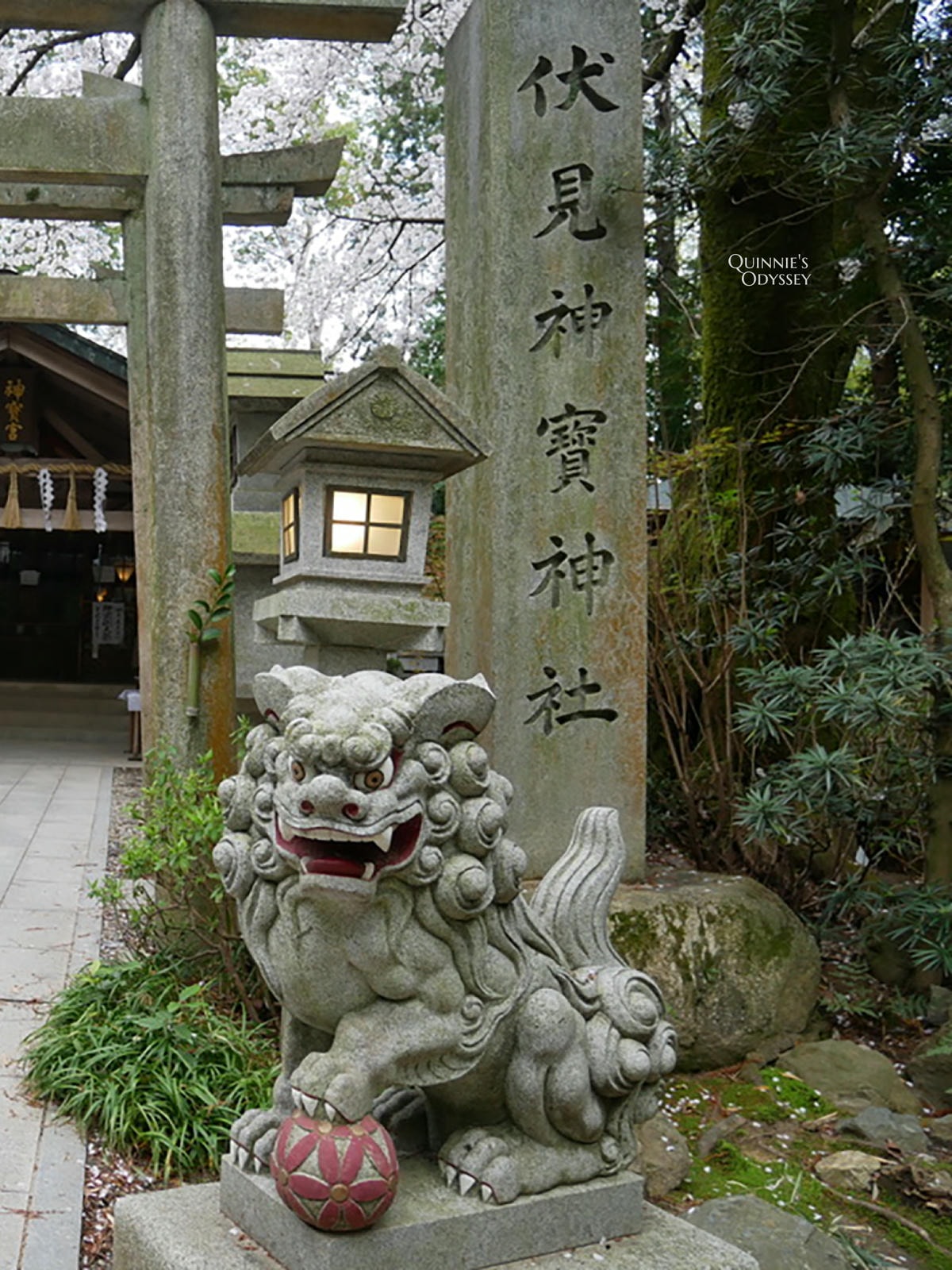
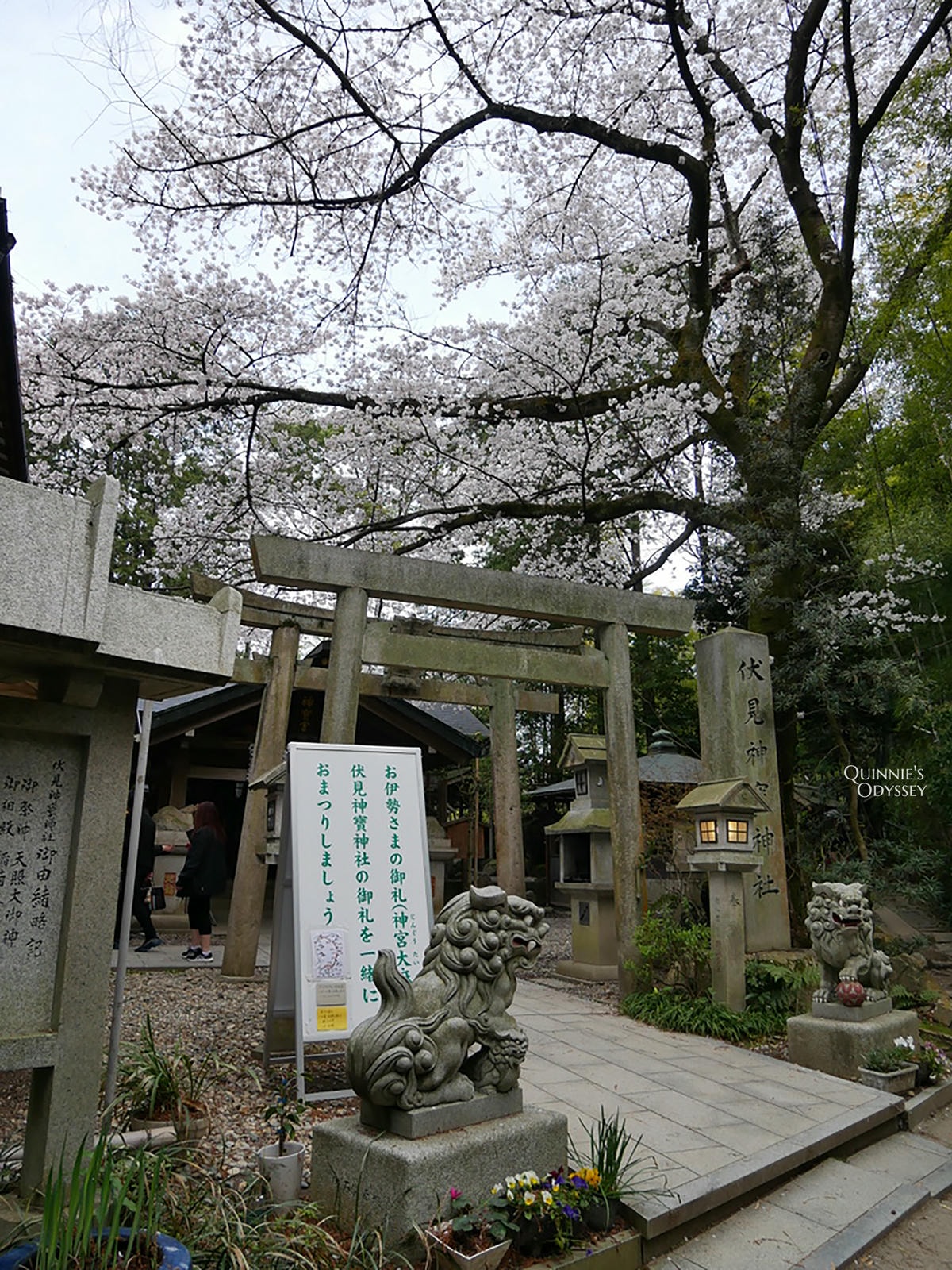
In spring, the effect is even more striking. When the cherry blossoms bloom within the shrine grounds, pale pink petals drift down between the grey gates and stone structures, creating a scene that is breathtaking and quietly melancholic at once, a reminder, in the Buddhist spirit, of beauty’s impermanence. It’s the kind of sight that makes you stop and simply stand there for a moment, letting it pass over you.
When most people think of Kyoto’s bamboo groves, Arashiyama is the first name that comes to mind. It’s undeniably beautiful, but it’s also perpetually crowded, and capturing a clean photograph without strangers in the frame has become something close to impossible.
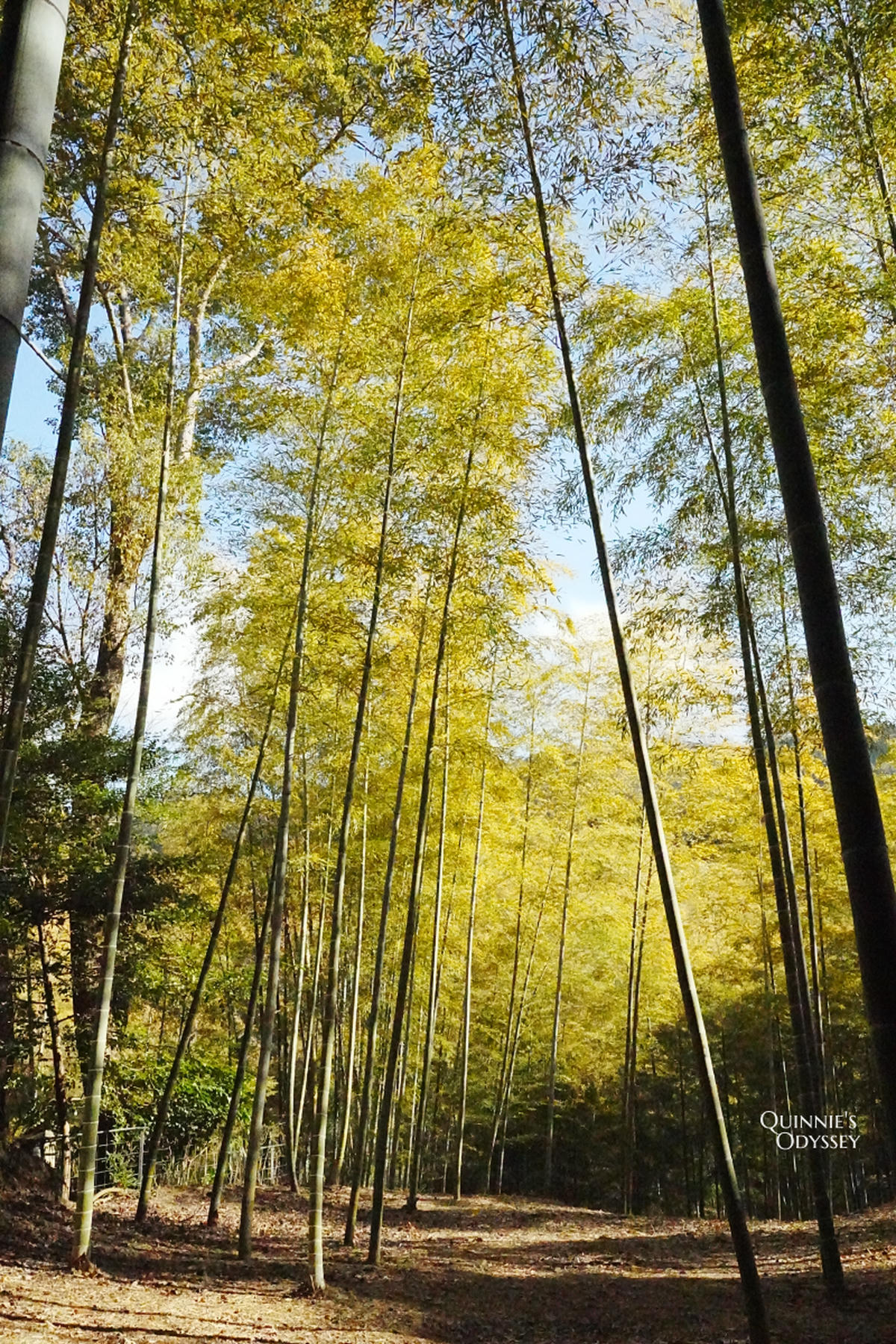
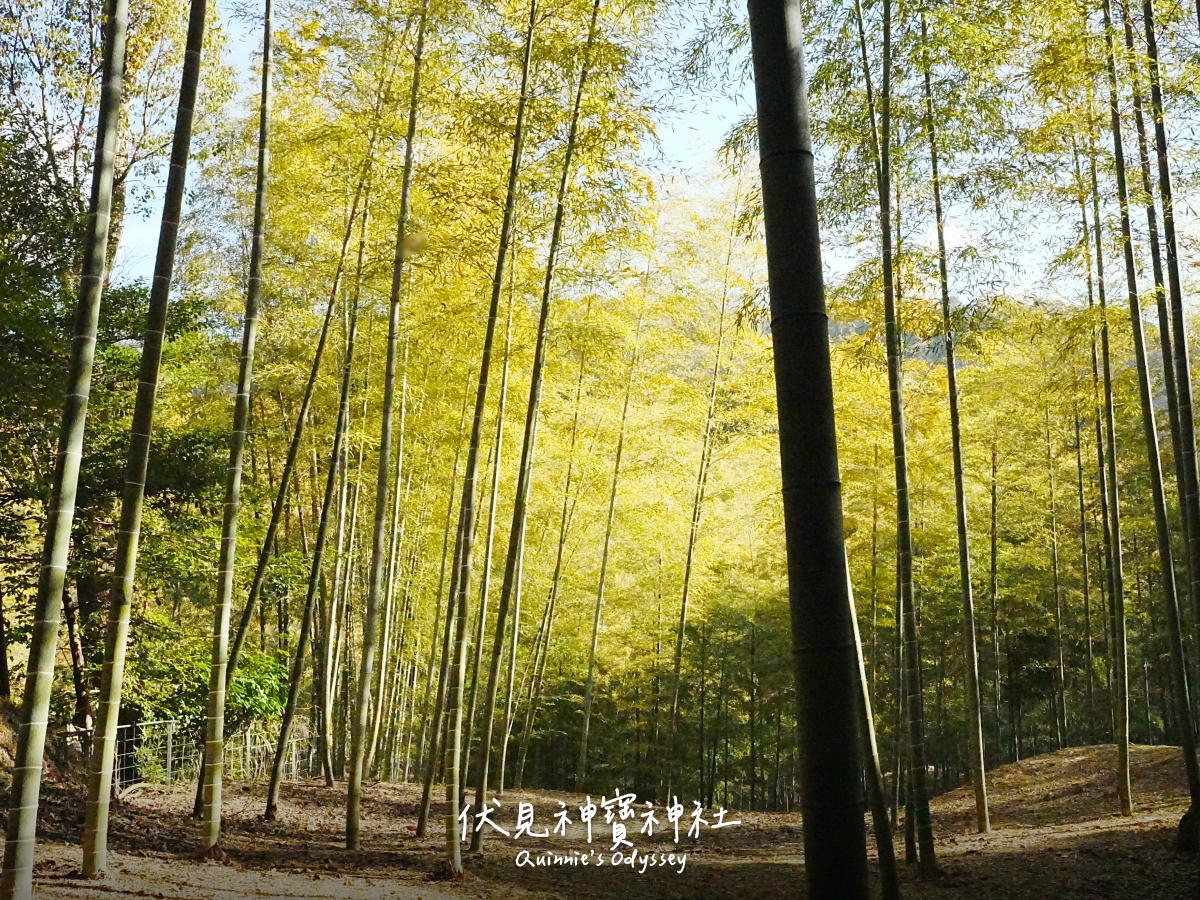
What very few visitors know is that there’s another bamboo grove hidden behind Fushimi Kandakara Shrine, and almost no one comes here.
Step into the narrow bamboo path and the tall stalks rise on either side, forming a green canopy overhead. Sunlight filters through the gaps in the leaves, casting shifting patterns of light and shadow on the ground below. There’s no noise, no crowds, no waiting for a gap in the foot traffic.
This grove moved me far more than Arashiyama ever did, because it has the one thing Arashiyama lacks: silence. When you don’t need to dodge other people or time your shutter, when you can simply stand still and look, the bamboo truly becomes yours.
Fushimi Kandakara Shrine exists right alongside the noise of Senbon Torii, yet it feels like it occupies an entirely different dimension. The dragon gods watch over the ancient Ten Sacred Treasures, and the power those treasures are said to carry points toward one thing above all else: renewal.
That word feels particularly apt when you encounter it mid-journey. Kyoto travel can be busy, loud, and relentlessly stimulating, but if you need a corner of quiet, a place to slow down and let your spirit settle, turn onto that earthen path and walk toward Fushimi Kandakara Shrine.
Your soul will thank you for it.
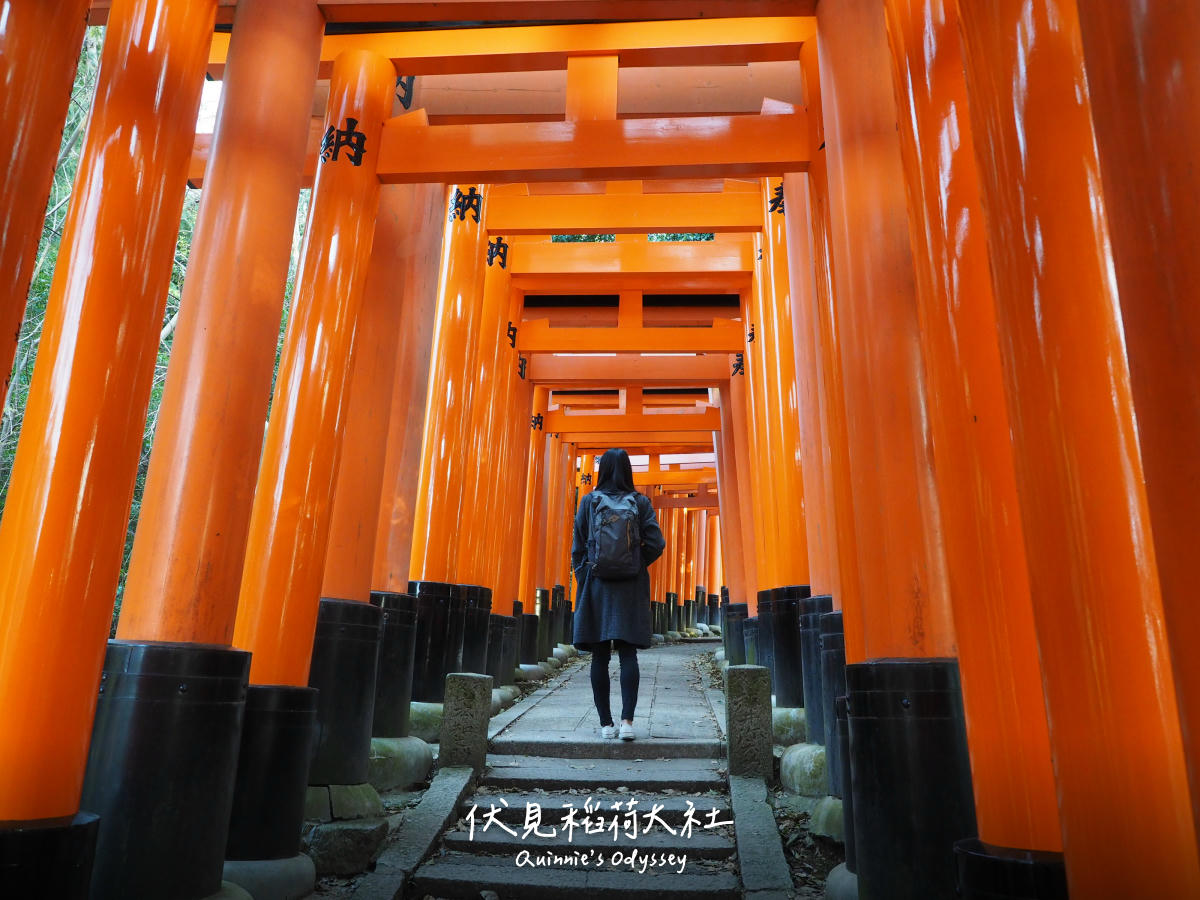
At Fushimi Inari Taisha, thousands of vermilion Torii gates form a seemingly endless tunnel that snakes its way up the sacred mountain.
👉 The Ultimate Fushimi Inari Guide
👉 Night at Fushimi Inari Taisha
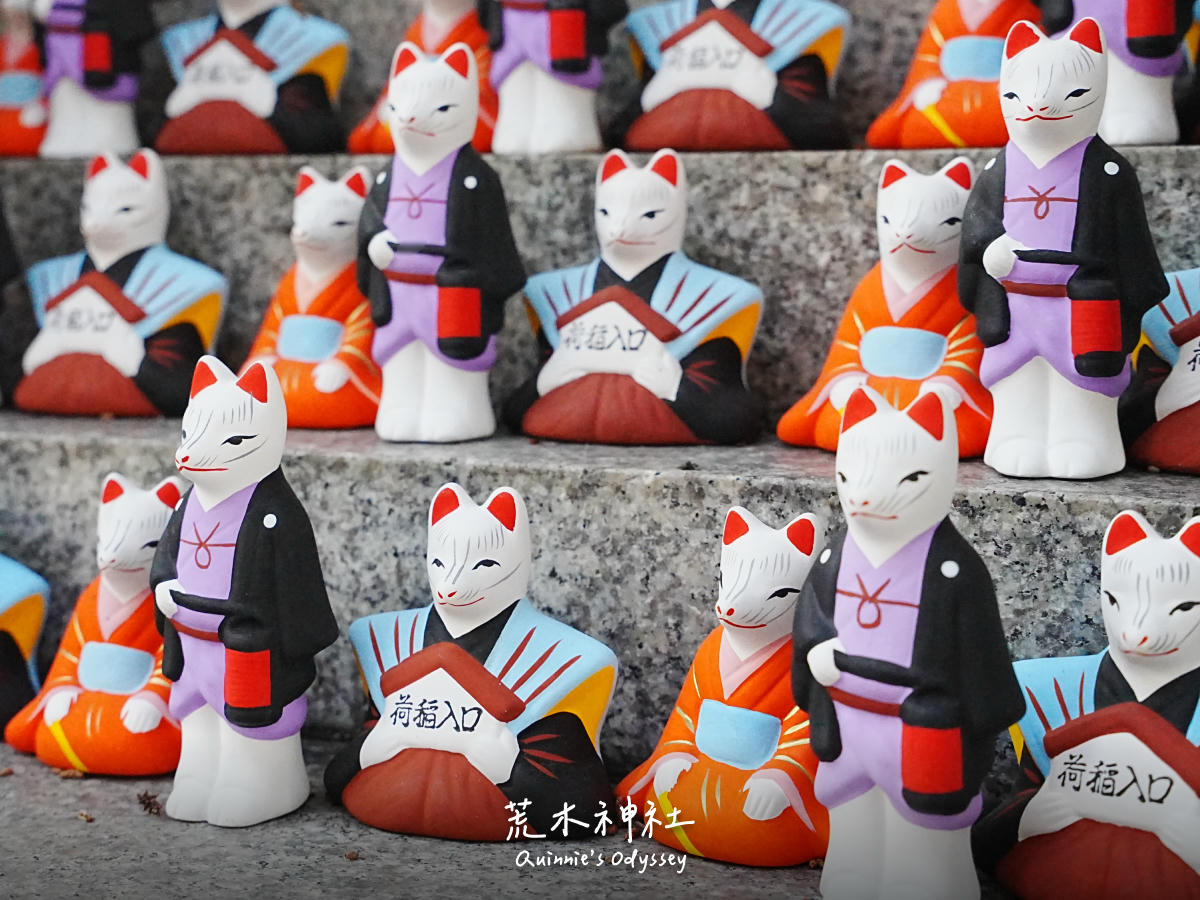
Inside this tiny shrine, hundreds of neatly lined fox figurines create a truly eye-catching sight.
👉 Discovering Araki Shrine
Explore More Things to Do 👉👉 GetYourGuide, Fushimi Inari Taisha
▼ Kyoto Travel Essentials ▼

Thanks for reading!
If you’re interested in my stories, feel free to follow me on Instagram.
👉👉 IG: @sika_artist 👈👈