Physical Address
304 North Cardinal St.
Dorchester Center, MA 02124
Physical Address
304 North Cardinal St.
Dorchester Center, MA 02124

If you’re visiting Kyoto, Fushimi Inari Taisha is an absolute must. It’s the kind of place that draws you in slowly, pulling you deeper the further you walk. The vermillion torii gates stretch one after another in an endless tunnel climbing up the mountain, a visual impact that no photograph can ever truly capture.
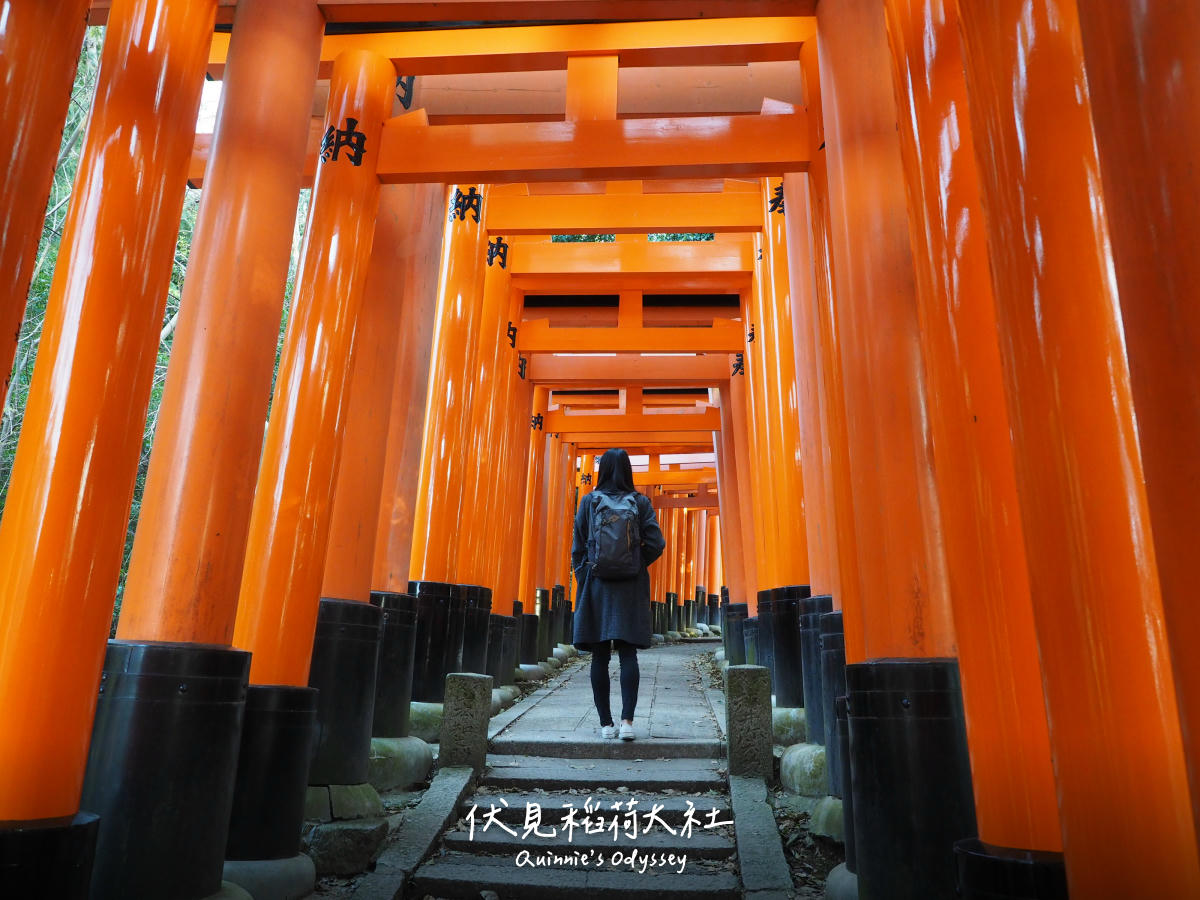
That said, I’ll be upfront: the crowds are intense.
During the day, it’s packed with tourists almost year-round. But even so, this remains one of my favorite spots in all of Kyoto, not just because it’s photogenic, but because the deeper into the mountain you go, the quieter and more mysterious it becomes, until the atmosphere feels almost surreal.

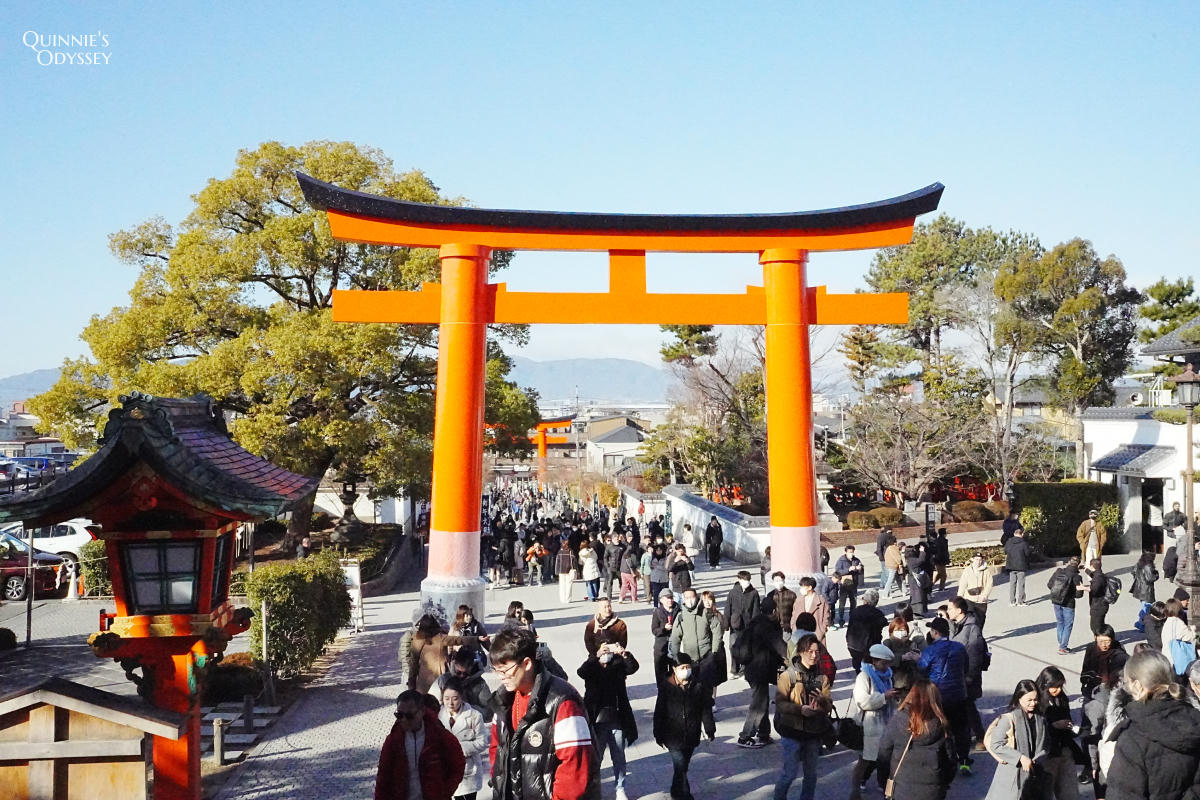
Fushimi Inari Taisha is open 24 hours a day, completely free of charge. If you’d like to purchase omamori (protective charms), the shop operates from 8:30 AM to 4:30 PM.
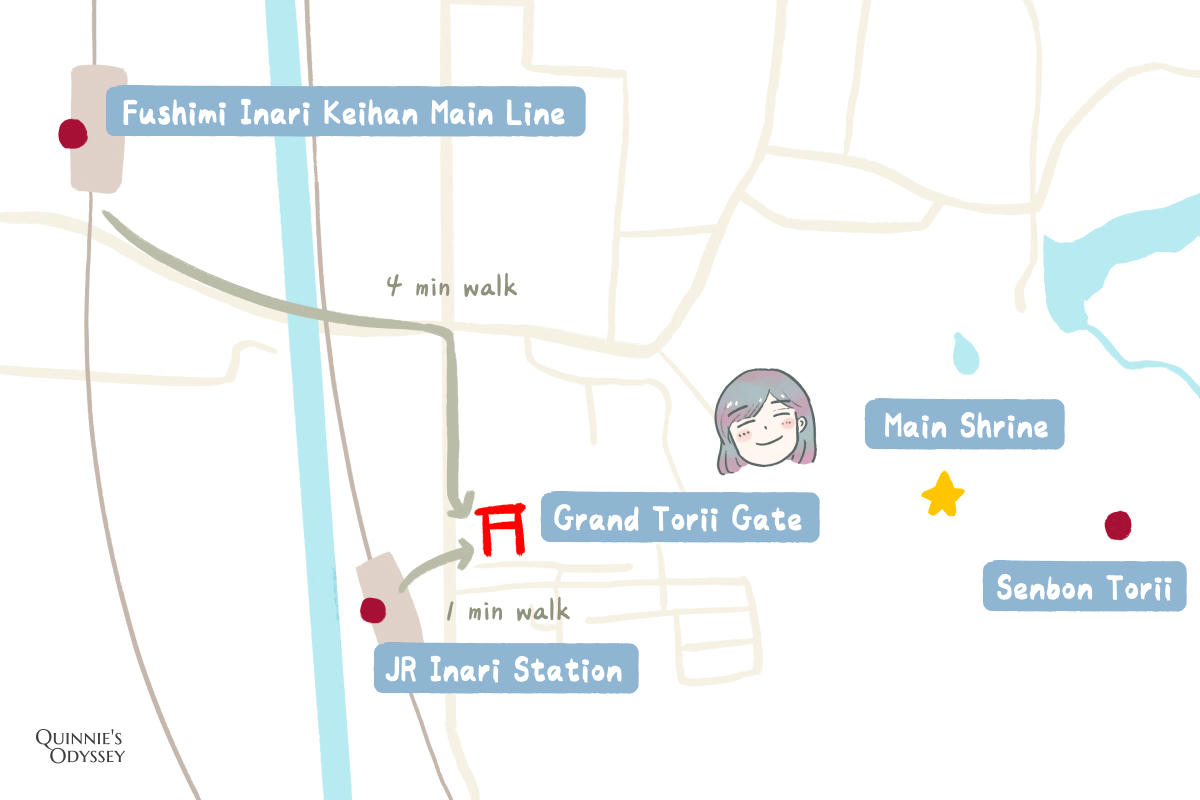
There are two main ways to reach the shrine.
Explore More Things to Do 👉👉 GetYourGuide, Fushimi Inari Taisha
Inari shrines are among the most widely venerated in Japan, particularly within the business community, and they are the most numerous type of shrine in the entire country, with over 30,000 across Japan. Fushimi Inari Taisha in Kyoto serves as the head shrine of them all.
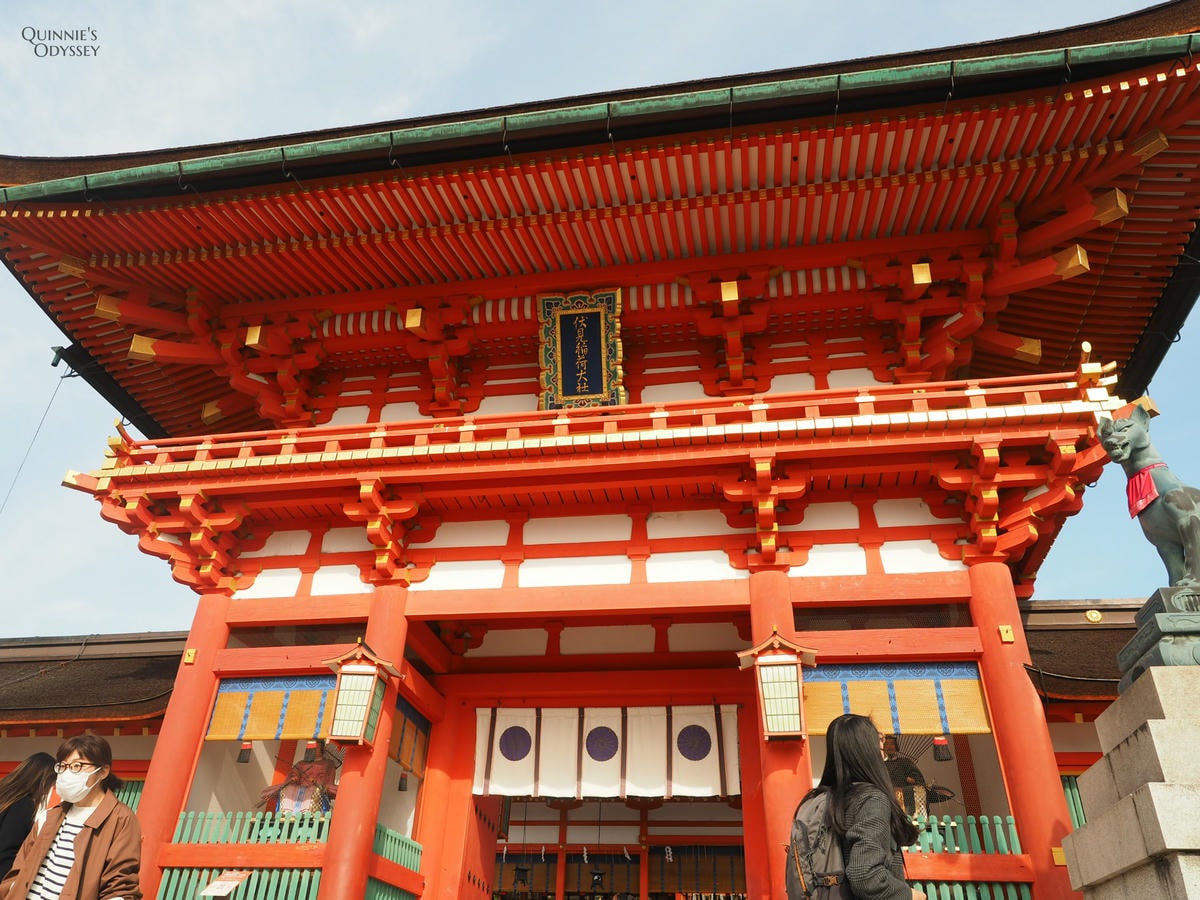
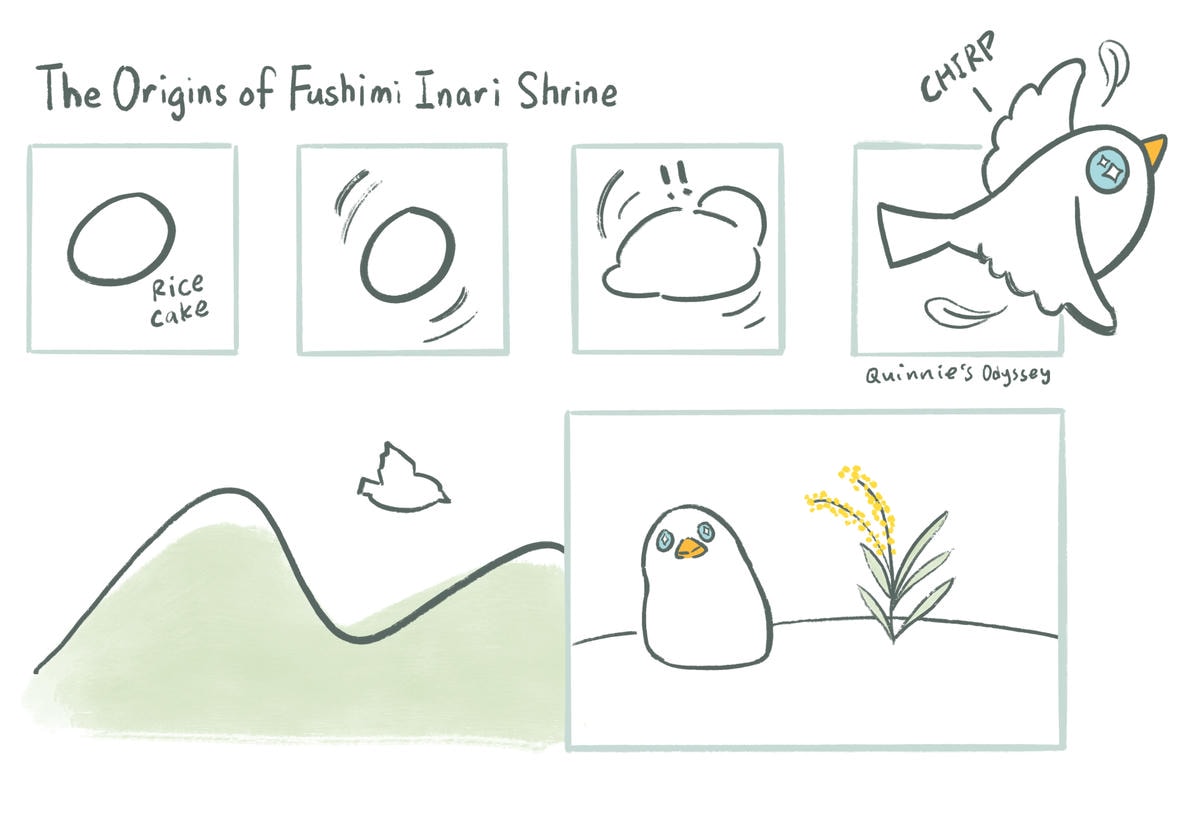
The shrine was founded in 711 AD during the Nara Period, and is said to have been established by the descendants of the Hata clan, who originally came from China. A powerful nobleman of the time, Hata no Irogu, was practicing archery one day using a rice cake as a target. The rice cake suddenly transformed into a white bird and flew away. He chased it all the way up a mountain, and where the bird finally landed, rice began to grow from the ground. That mountain became known as Inari-yama, and it was there that Hata no Irogu founded the shrine, naming it after the word for rice: inari.
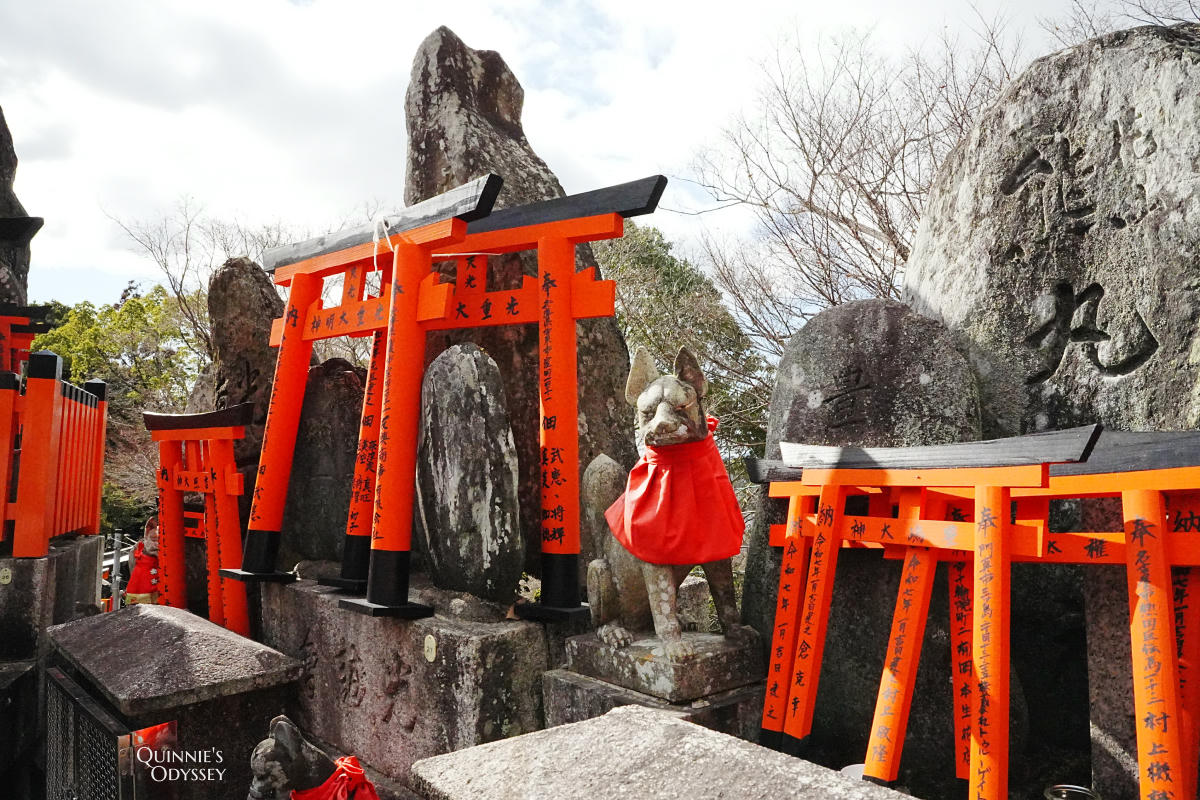
One of the most striking features of the shrine is the abundance of fox statues throughout the grounds, with particularly intricate ones near the main hall.
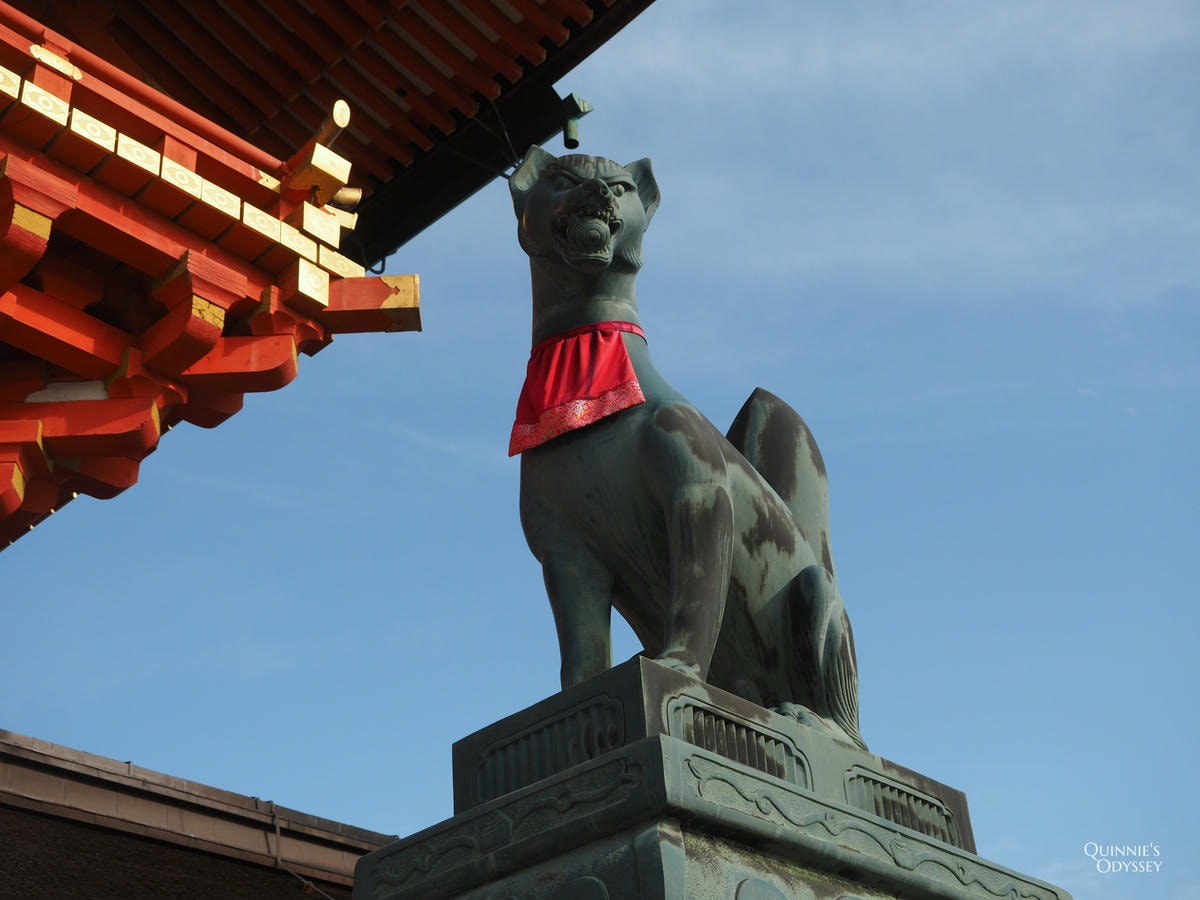
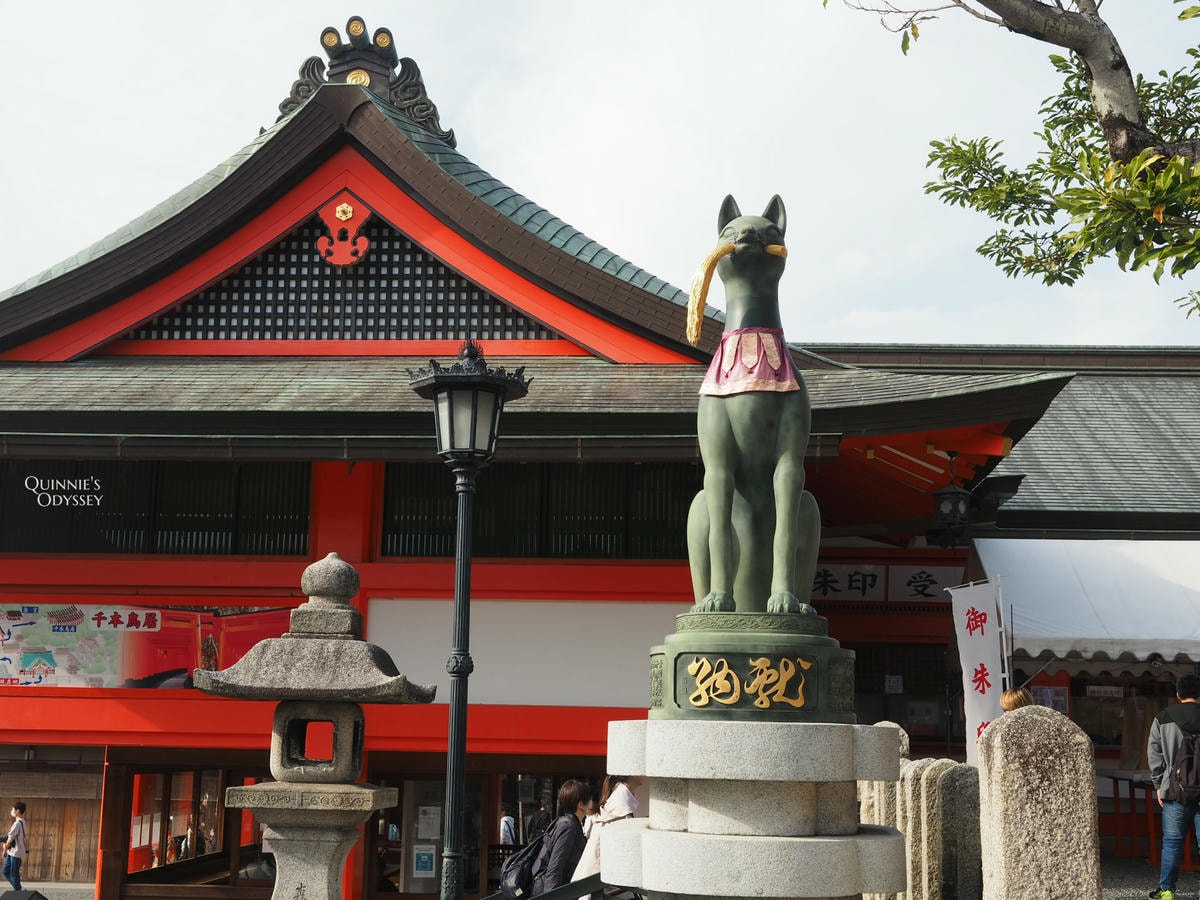
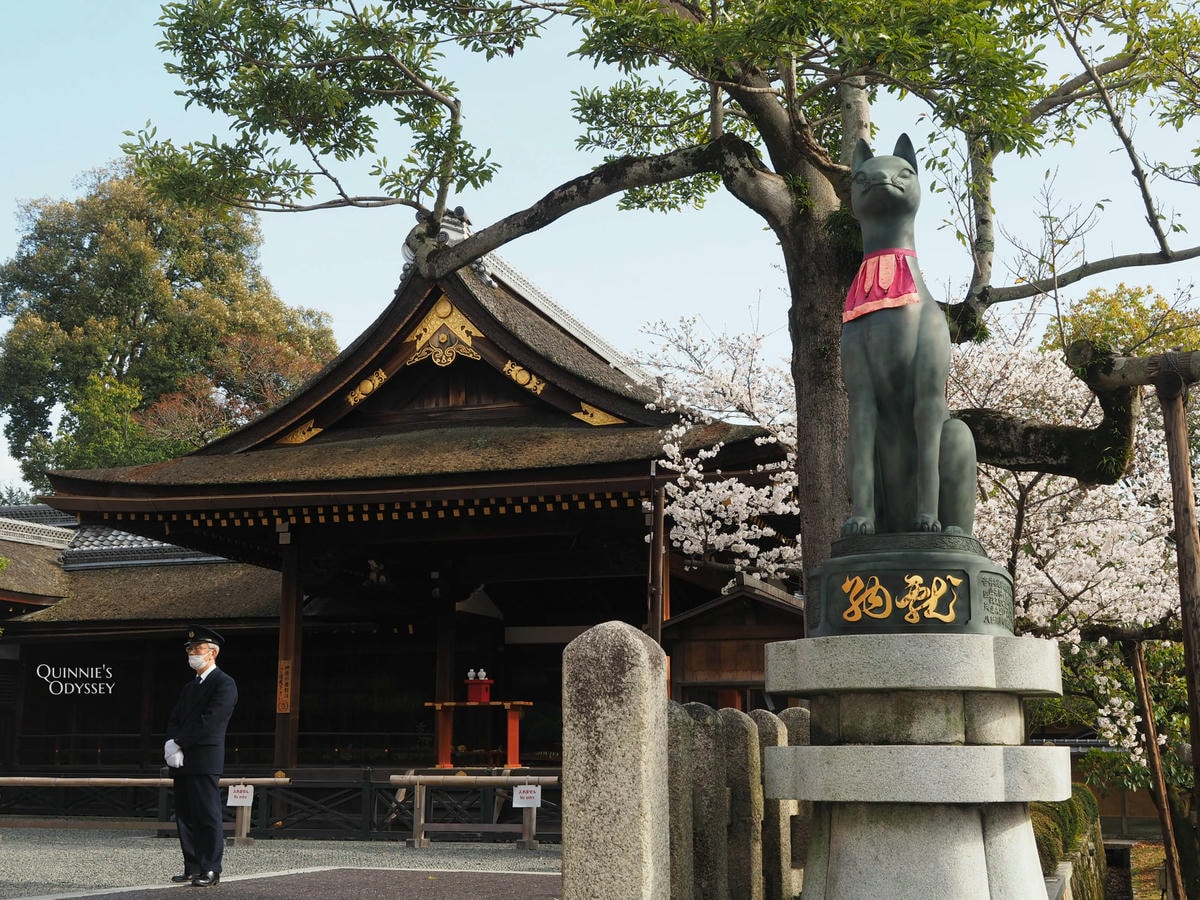
Foxes hold deep symbolic importance here, they are the messengers of Inari, the deity who governs rice cultivation and serves as the guardian of harvests, wealth, and commerce.
According to legend, the Inari deity was originally brought to Japan from China, where it was known as the “Flying Celestial Emperor.” Over time, it merged with local beliefs to form the Inari faith as it exists today. The fox statues in Inari shrines are typically adorned with red scarves and bells, symbolizing divine blessing.
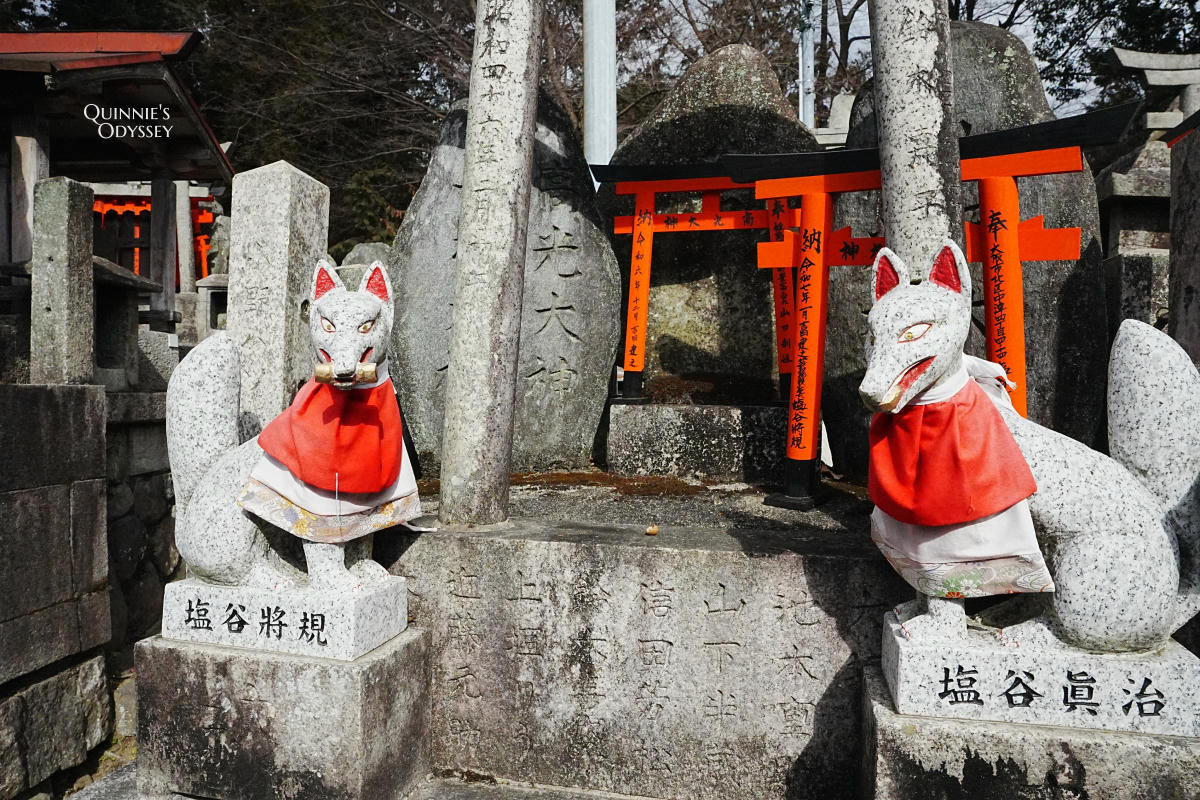
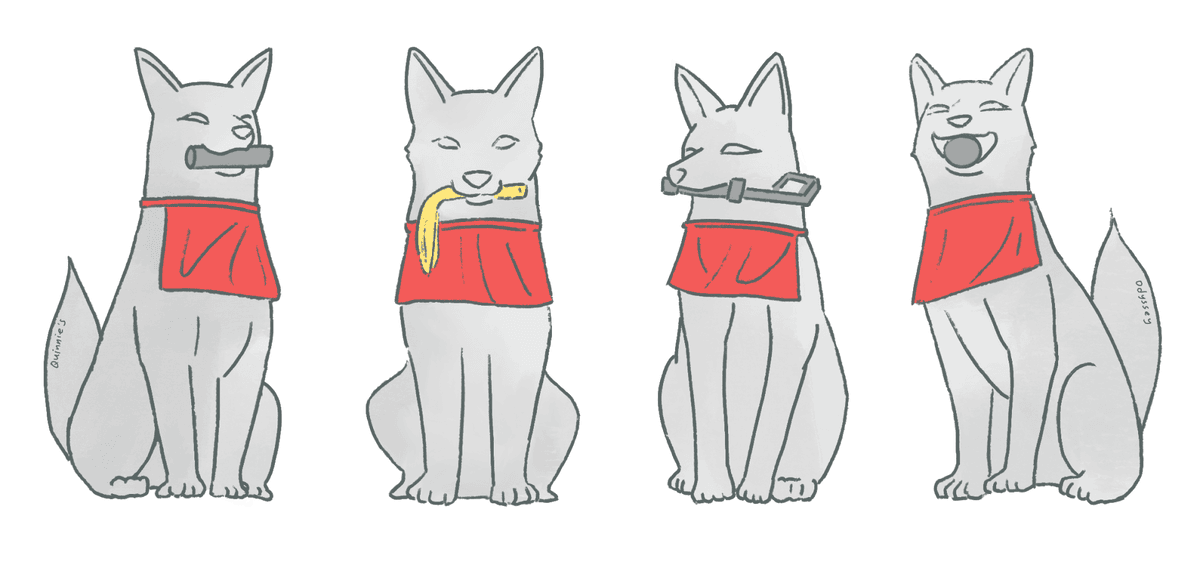
What each fox holds in its mouth also carries meaning: a key to a granary represents wealth and abundance, a sheaf of rice represents a bountiful harvest, and a scroll represents wisdom.
A personal favorite: the bronze fox water spout at Ganriki-sha, it’s especially atmospheric at night.

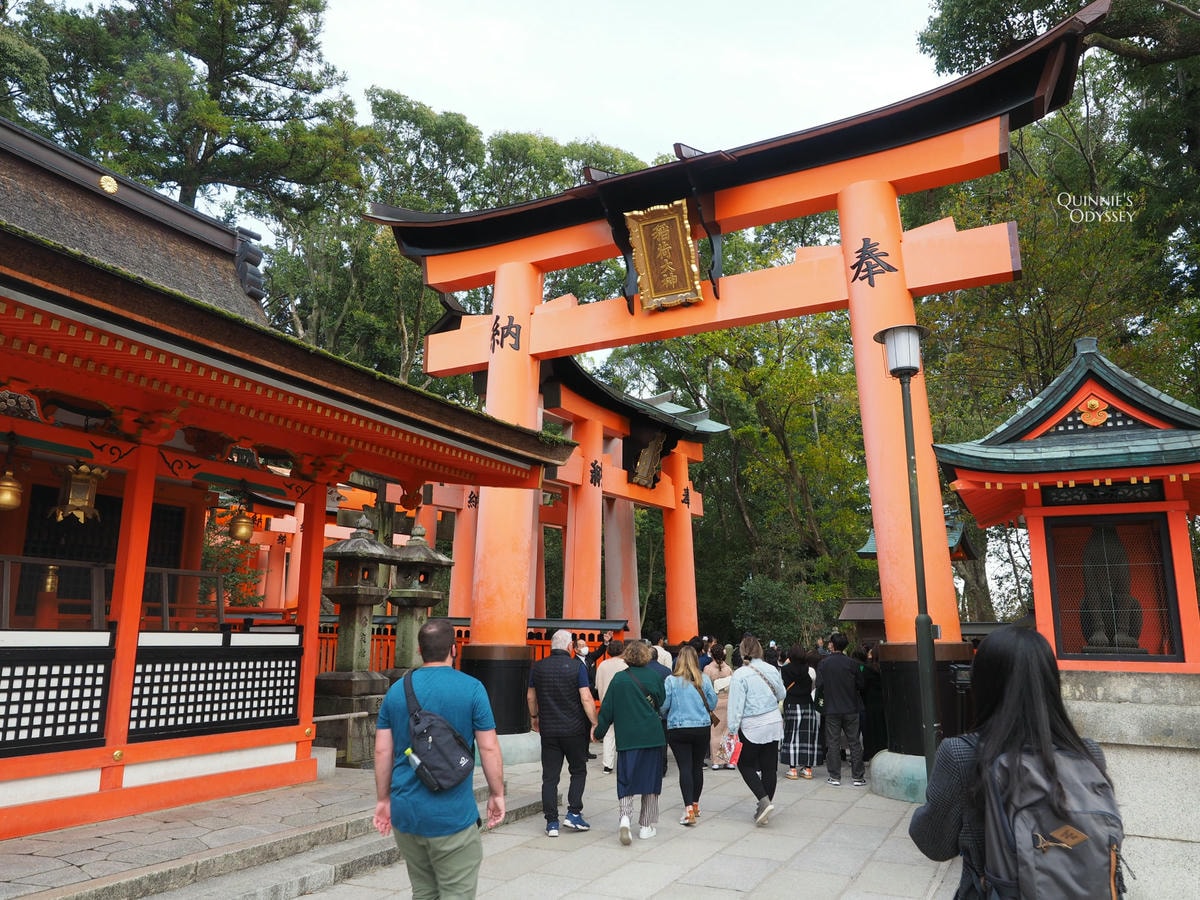
The shrine’s most iconic feature is its seemingly endless corridor of vermillion torii gates. Walking through them creates a disorienting, dreamlike sensation, as though you’re passing through a portal into another world.
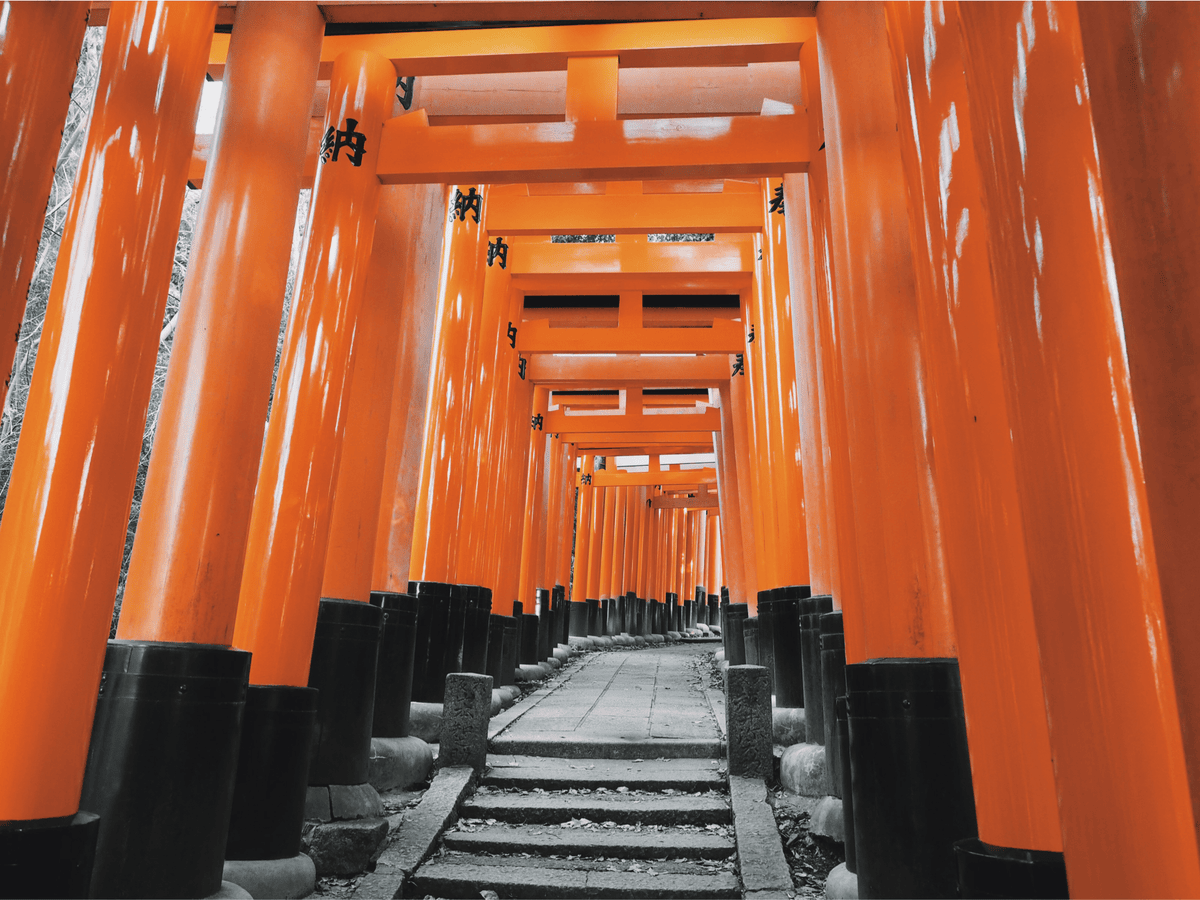
Vermillion has long been considered a color that wards off evil, and devotees donate torii gates either to pray for wishes to be granted or to give thanks after their prayers come true. With offerings accumulating over centuries, the total number of gates on the mountain is now estimated at around 10,000.
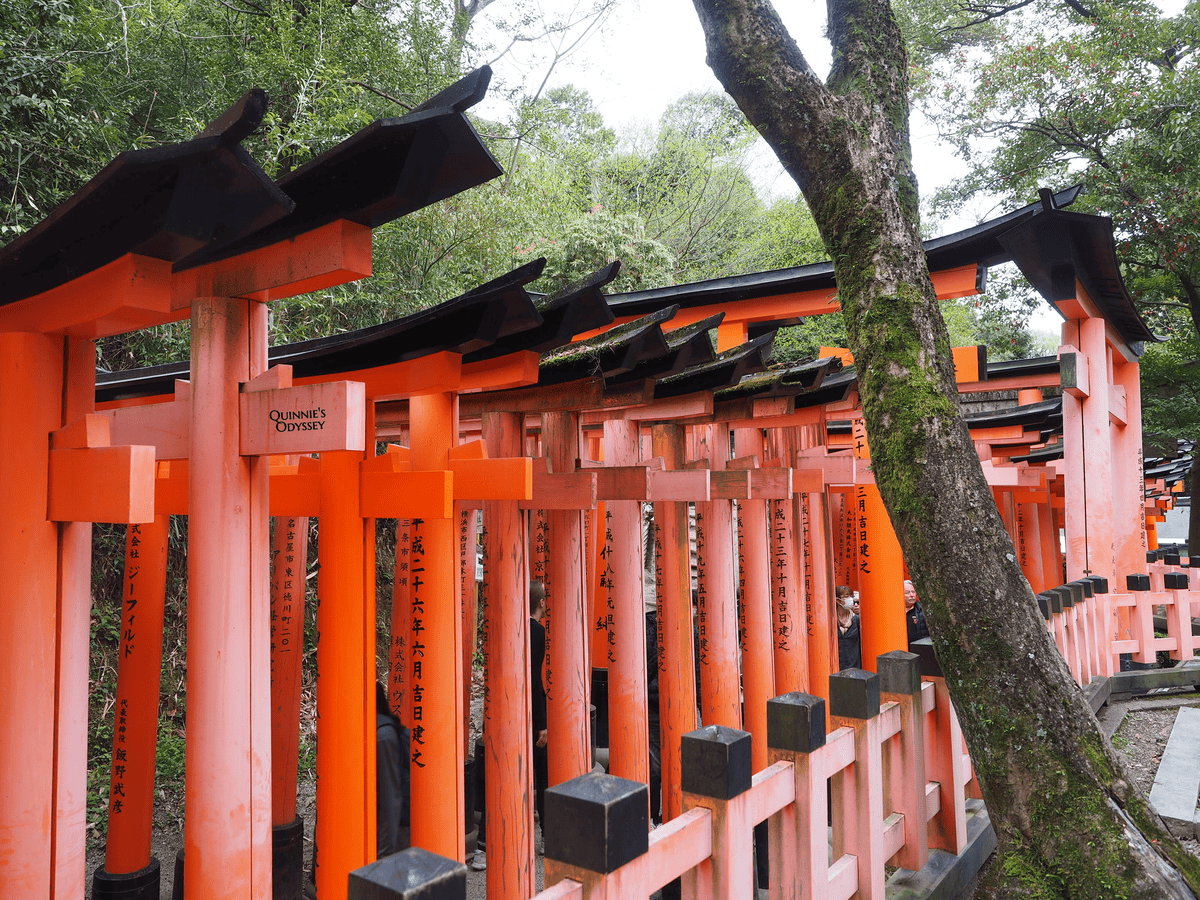
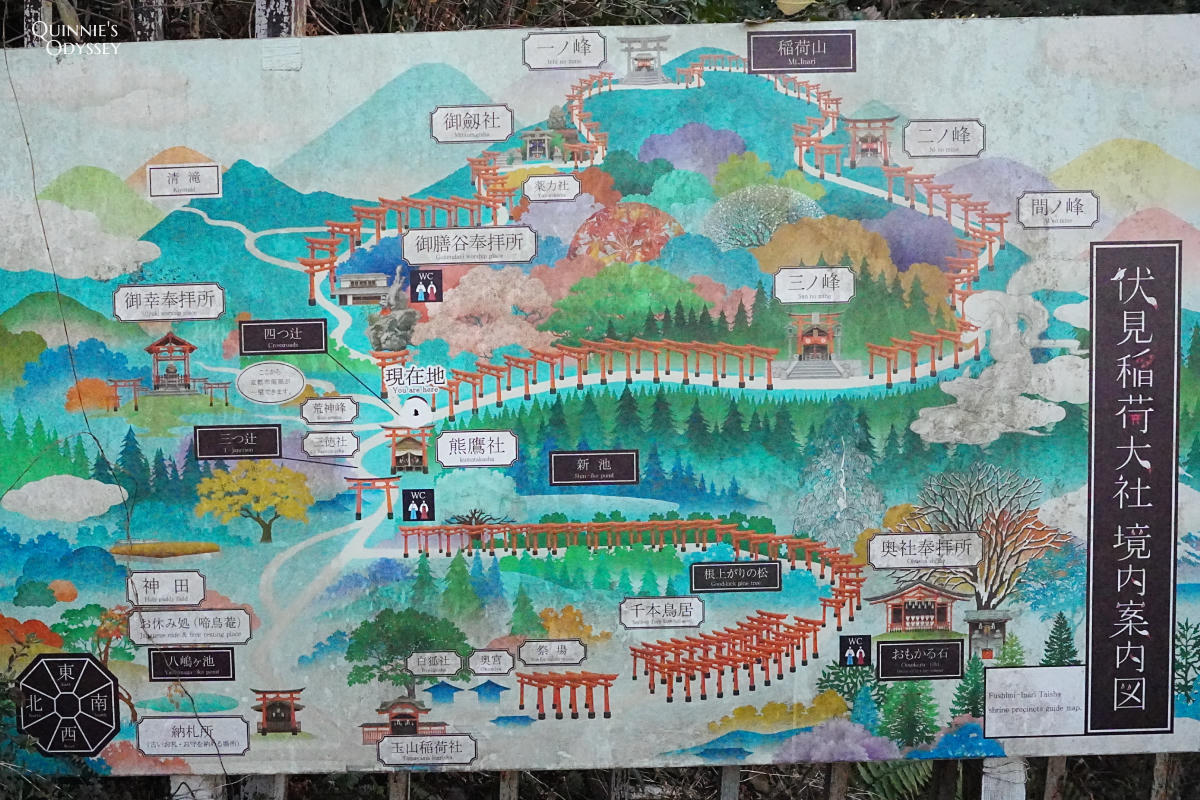
Near the entrance, the crowds can be so thick you’ll need to queue just to walk through. The irony isn’t lost on anyone, this is supposedly one of Kyoto’s most powerful energy spots, yet fighting through the crowds feels more draining than energizing. The good news: once you pass Kumataka-sha, the numbers start to thin considerably.

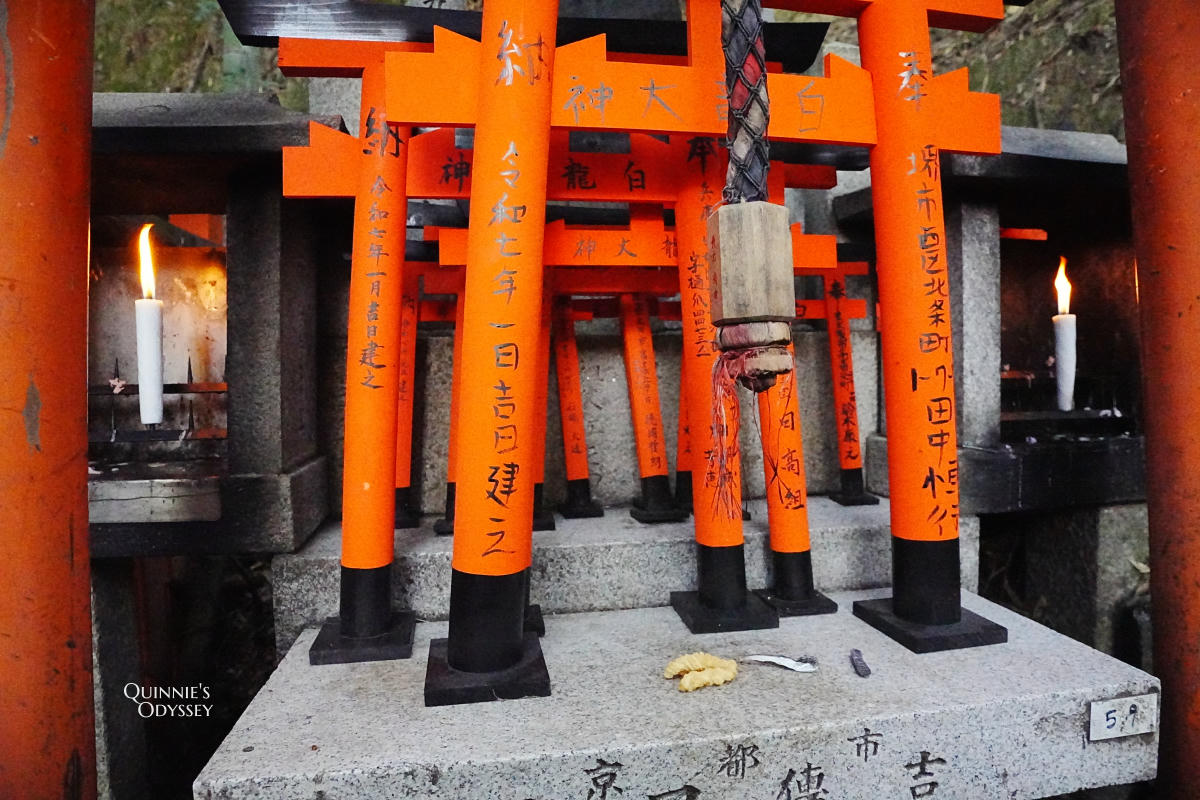
Along the trail, you’ll pass countless otsuka, stone monuments dedicated to individual deities, each inscribed with names like “○○ Inari Daimyojin.”
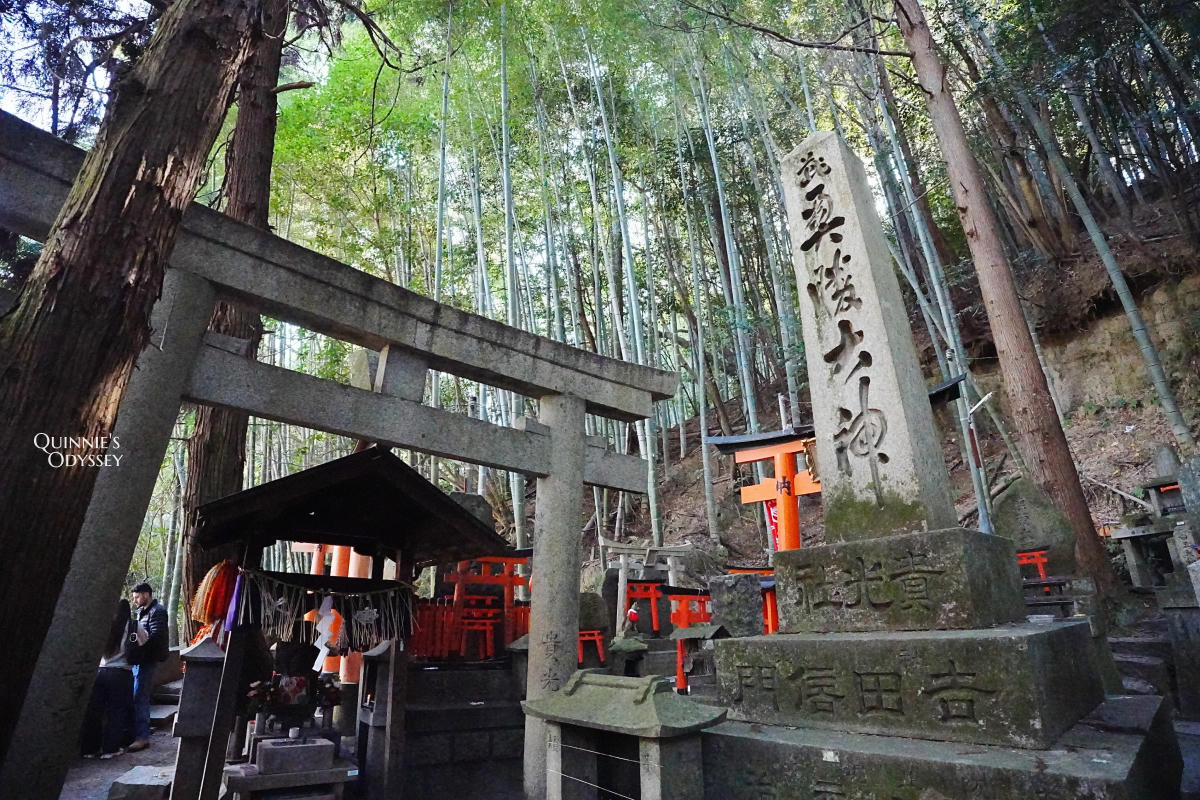
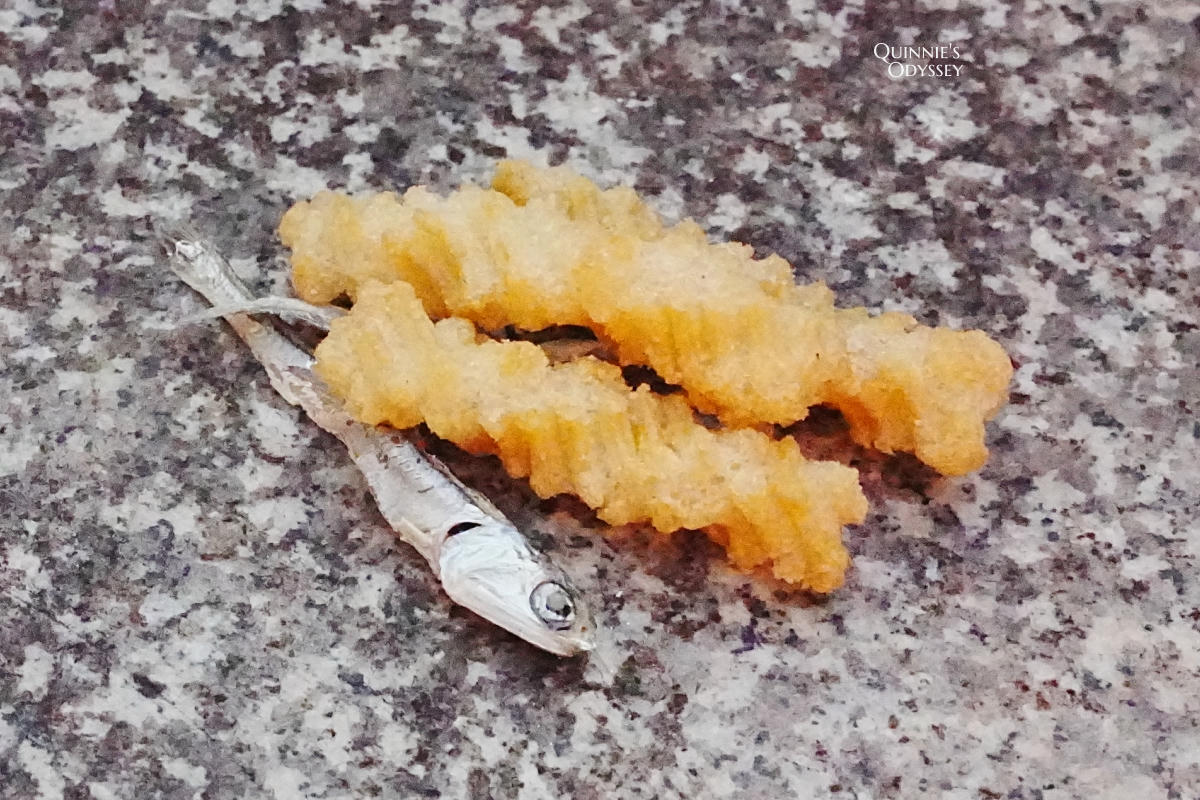
People have placed these stones over generations to give thanks for divine blessings, or to pray for safety at home, business prosperity, or personal wishes. There are now over 10,000 of these stones on Inari-yama alone, forming a dense, silent record of human hopes and gratitude. Many are still actively tended to, and you’ll notice offerings of dried fish and crunchy snacks left on the altars, apparently the foxes have good taste.
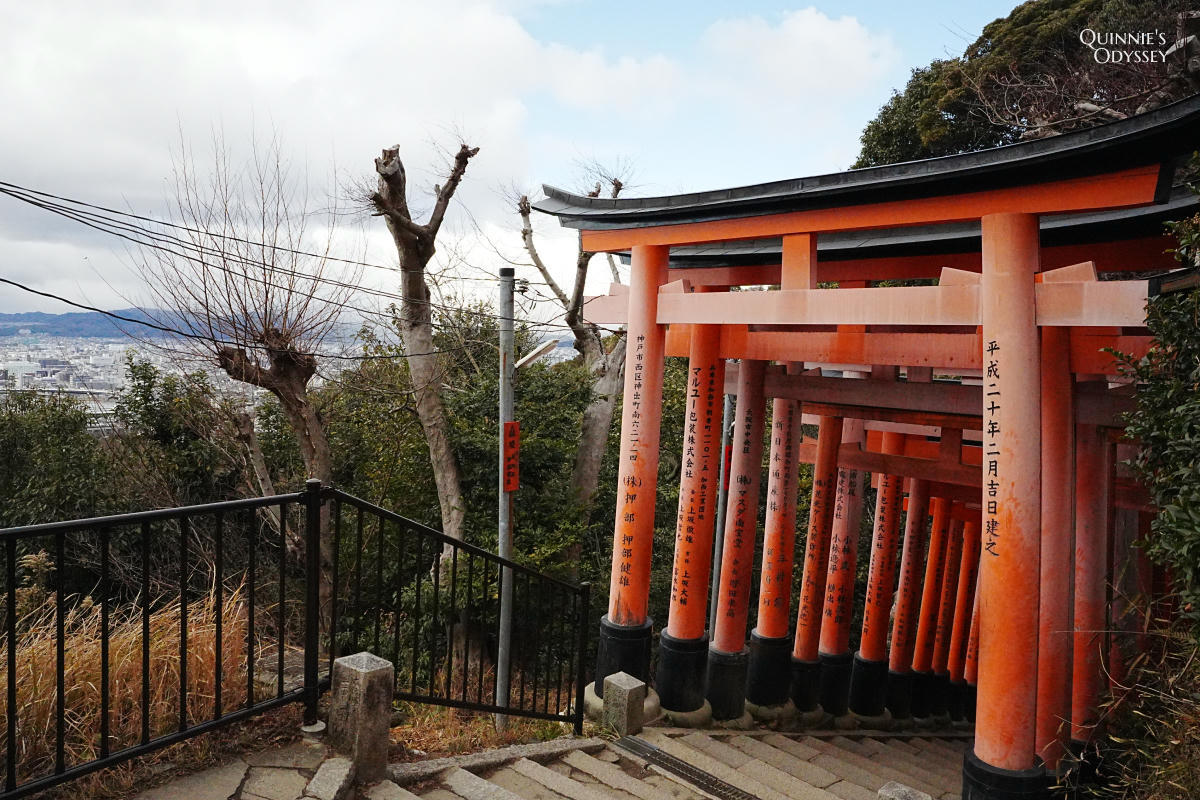
About halfway up the mountain, you’ll reach Yotsutsuji, a four-way intersection that serves as a major rest stop and one of the best viewpoints on the entire trail.
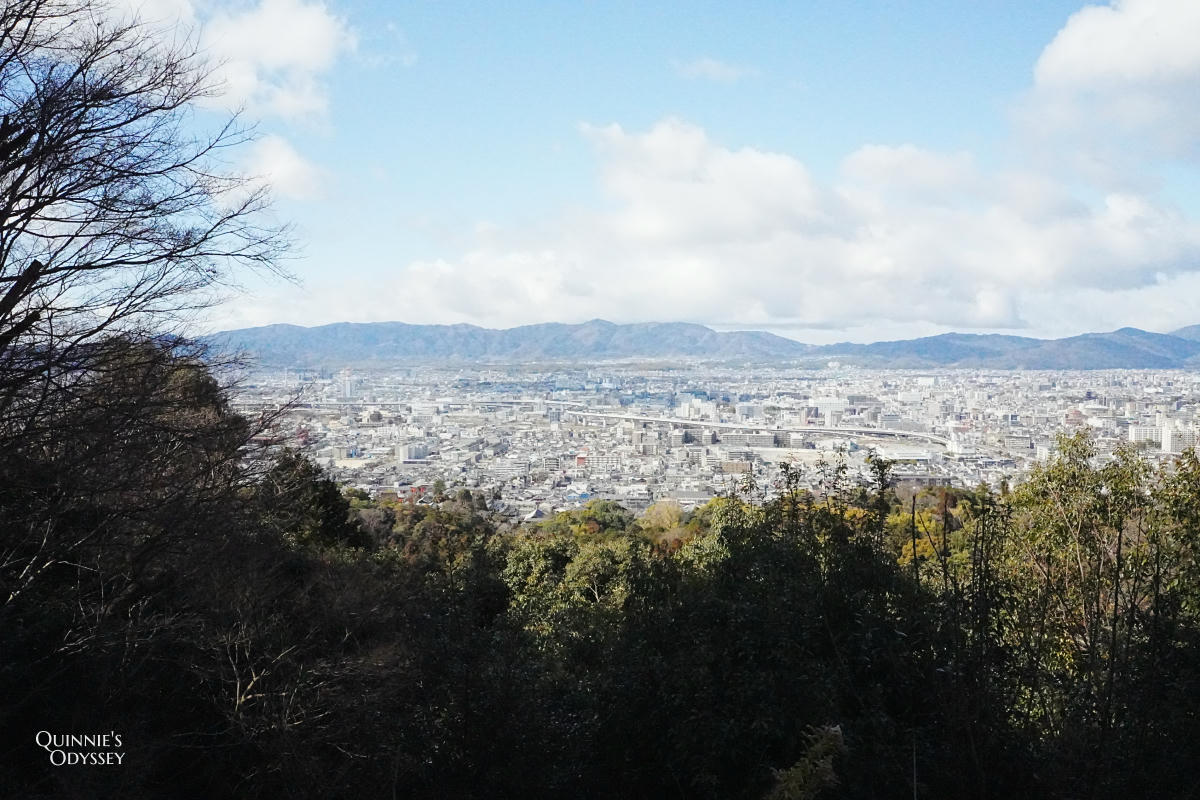
From here, you can look out over the Kyoto cityscape, with rooftops stretching all the way to the distant mountains. On a clear day, the view is expansive and the mountain breeze makes it a genuinely refreshing pause after the climb.
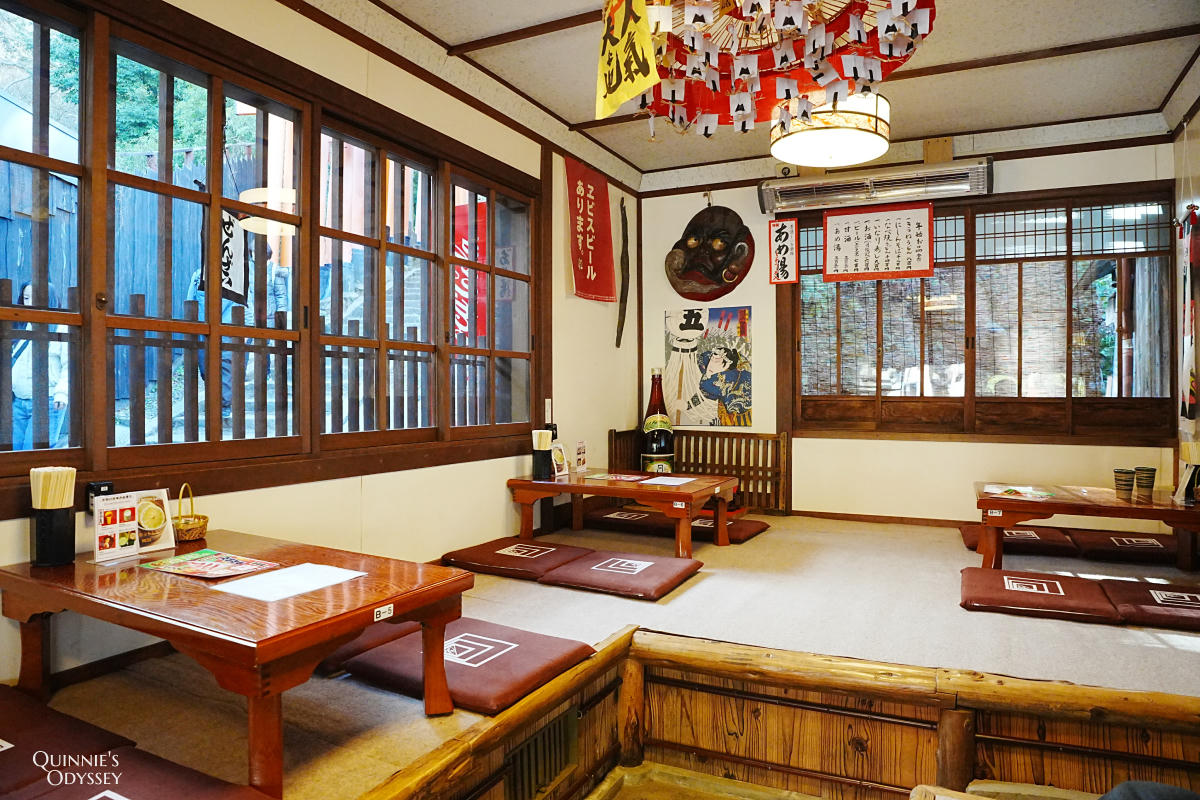
Many hikers stop here to sit, eat, and recharge. If you haven’t brought your own snacks, there’s a teahouse nearby, Gotayu Okumura-tei, where you can rest and grab something to eat.
Explore More Things to Do 👉👉 GetYourGuide, Fushimi Inari Taisha
This sub-shrine, dedicated to the deity Kumataka Okami, sits beside a tranquil pond surrounded by trees and mountain scenery.
The pond reflects the lush greenery, torii gates, and ancient trees above it, making it a beautiful mid-trail rest point.
Many visitors turn around here, which means the path beyond becomes noticeably quieter.
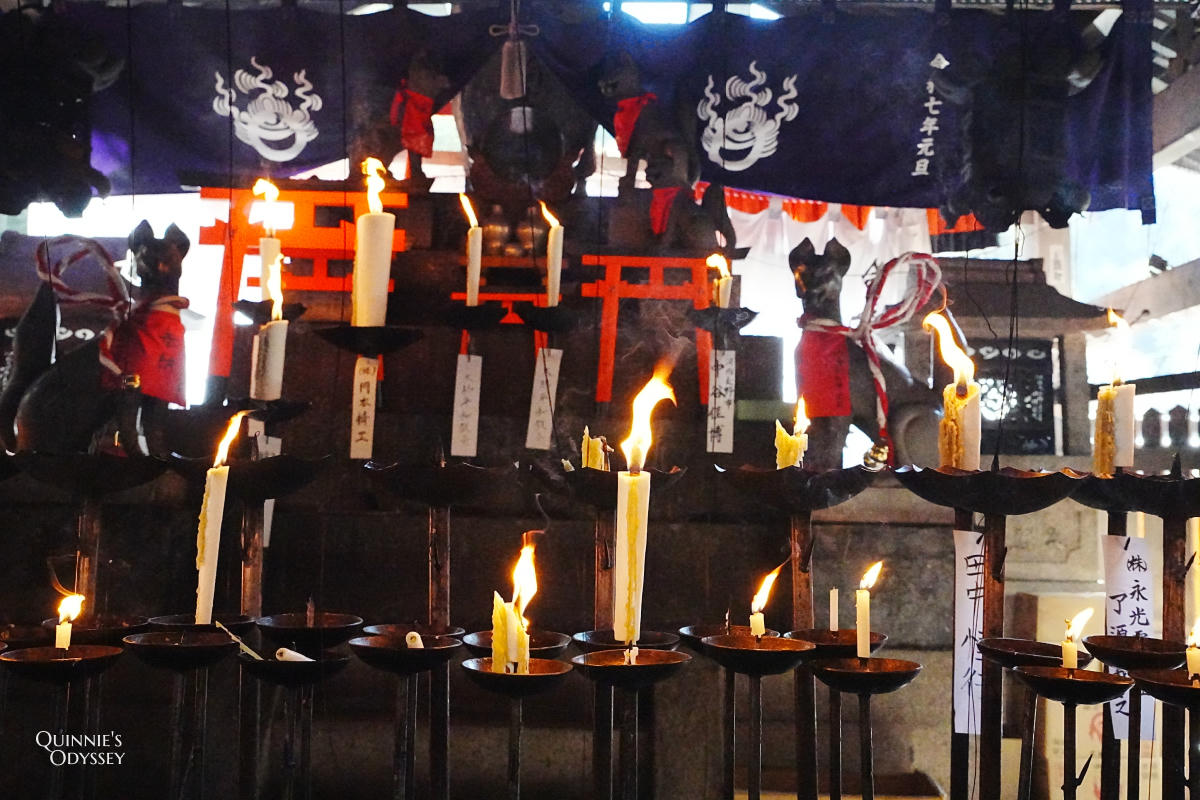
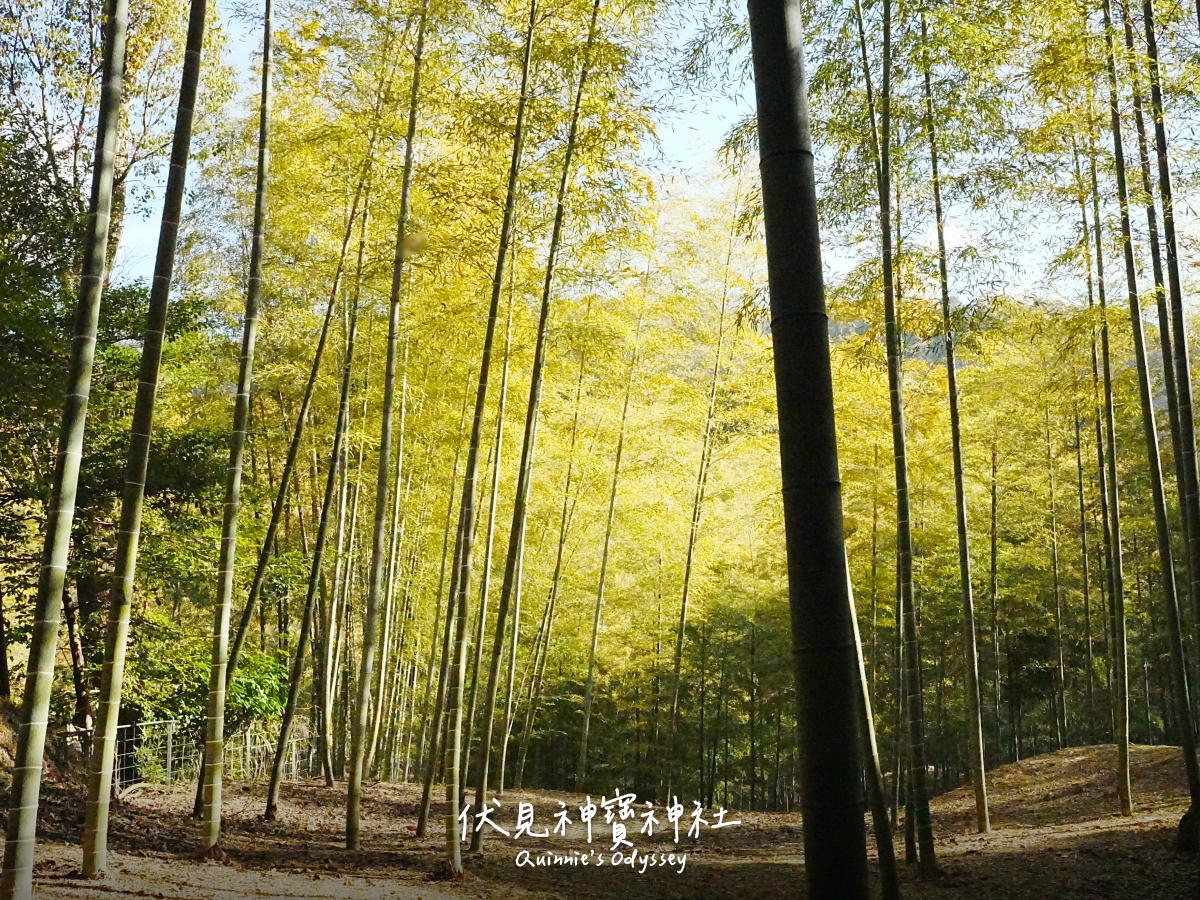
Turn off the main path and follow a small earthen trail, and you’ll find yourself at Fushimi Kandakara Shrine, a world away from the crowds below. This independent shrine within the Fushimi Inari complex is refreshingly serene.
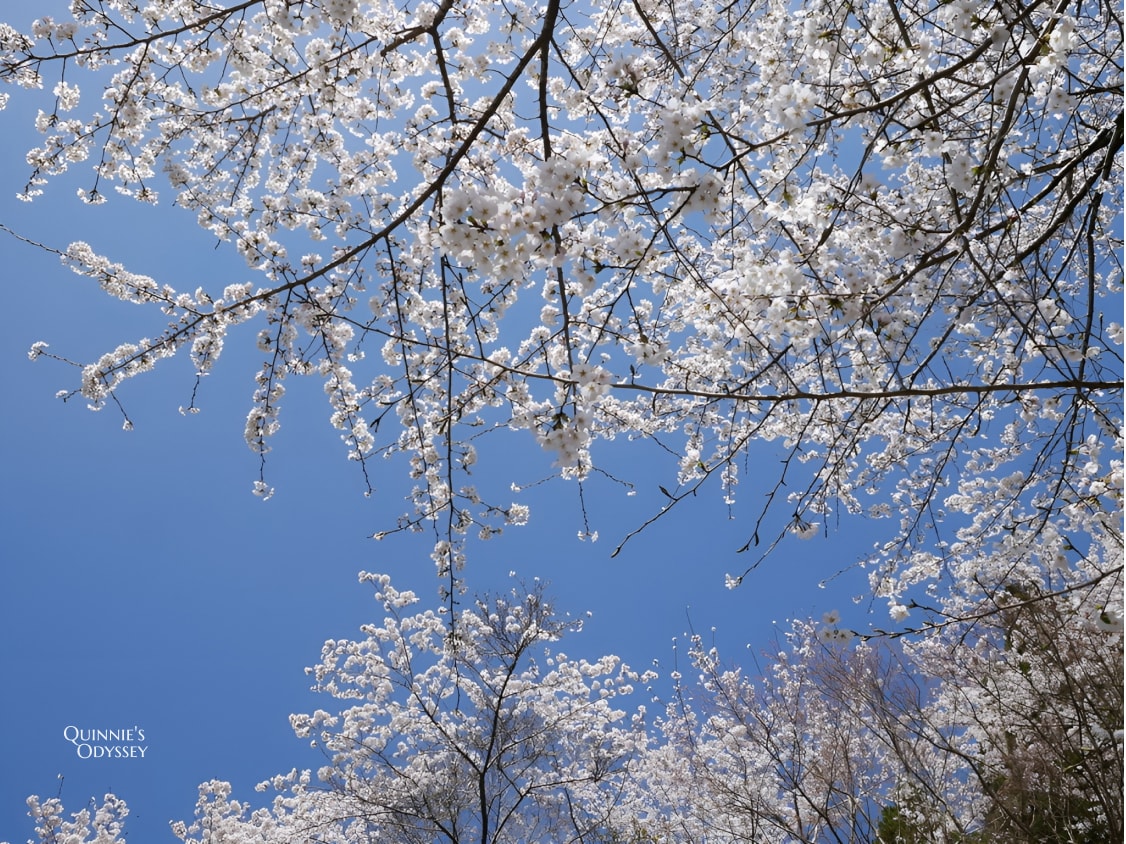
In spring, cherry blossoms bloom among pale torii gates, stone lanterns, and ancient markers, creating an atmosphere of quiet purification.
Behind the shrine, a bamboo grove path filters sunlight into shifting patterns, genuinely magical.
👉👉 Fushimi Kandakara Shrine: The Hidden Bamboo Forest of Mount Inari
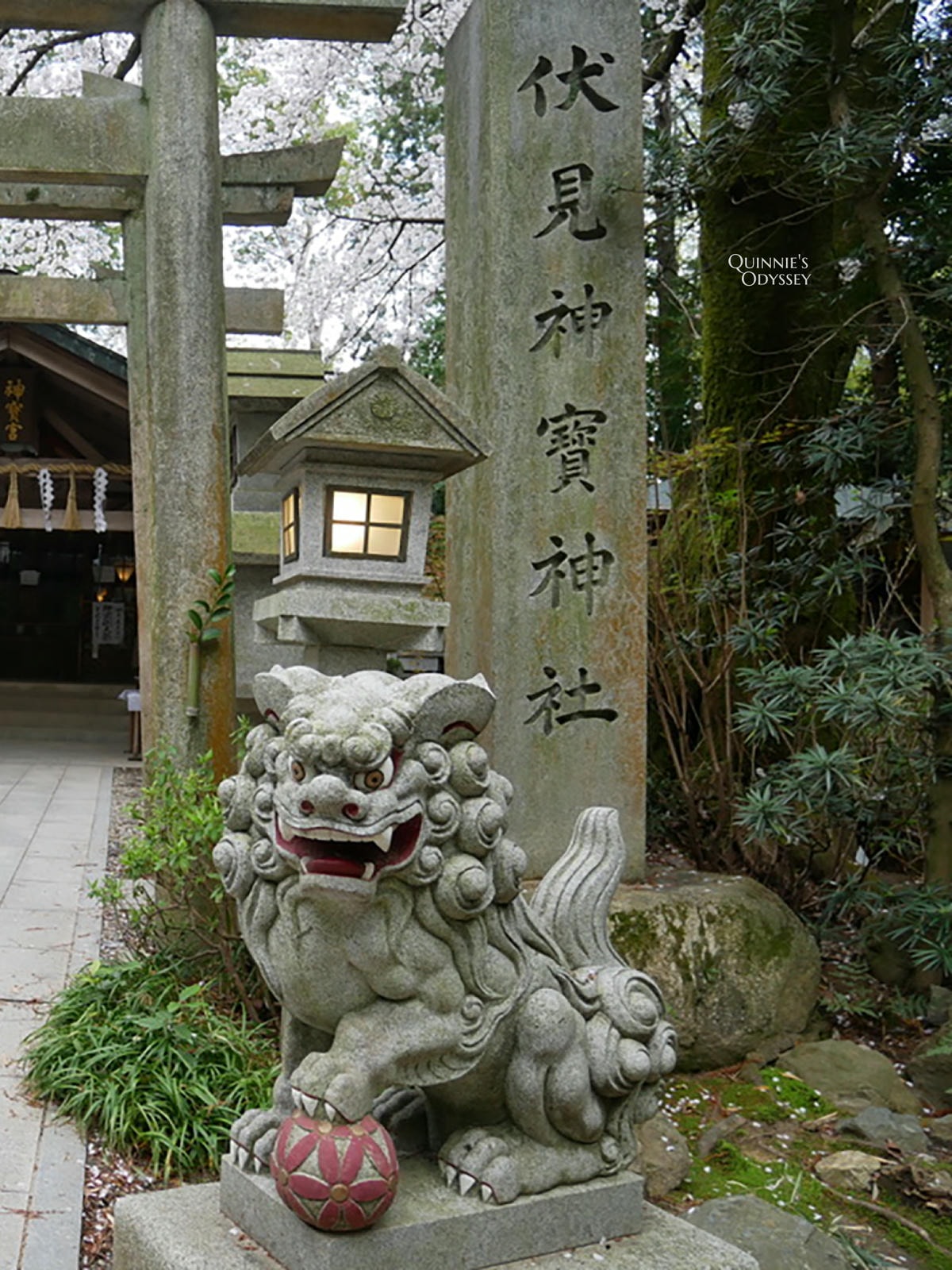
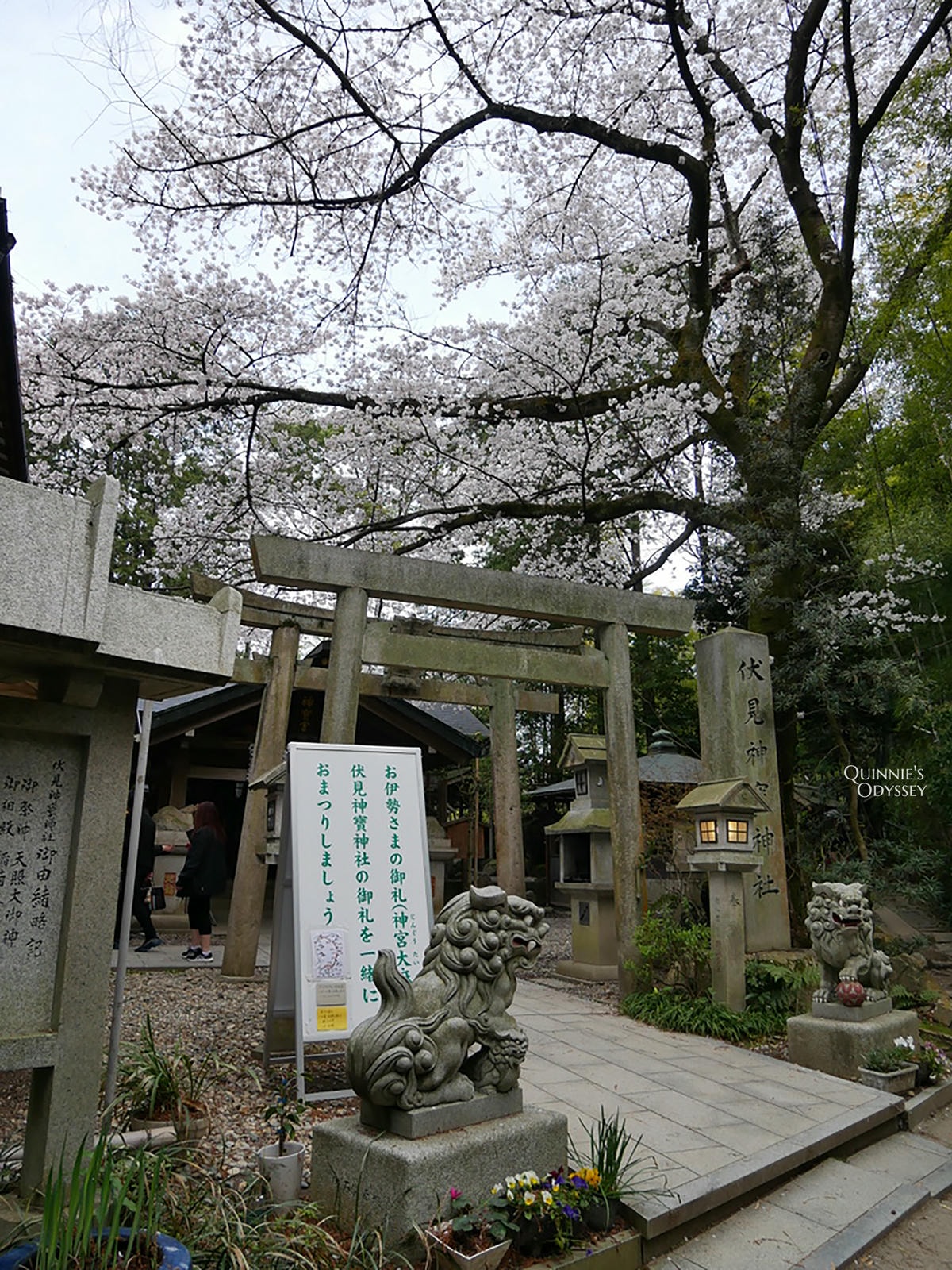
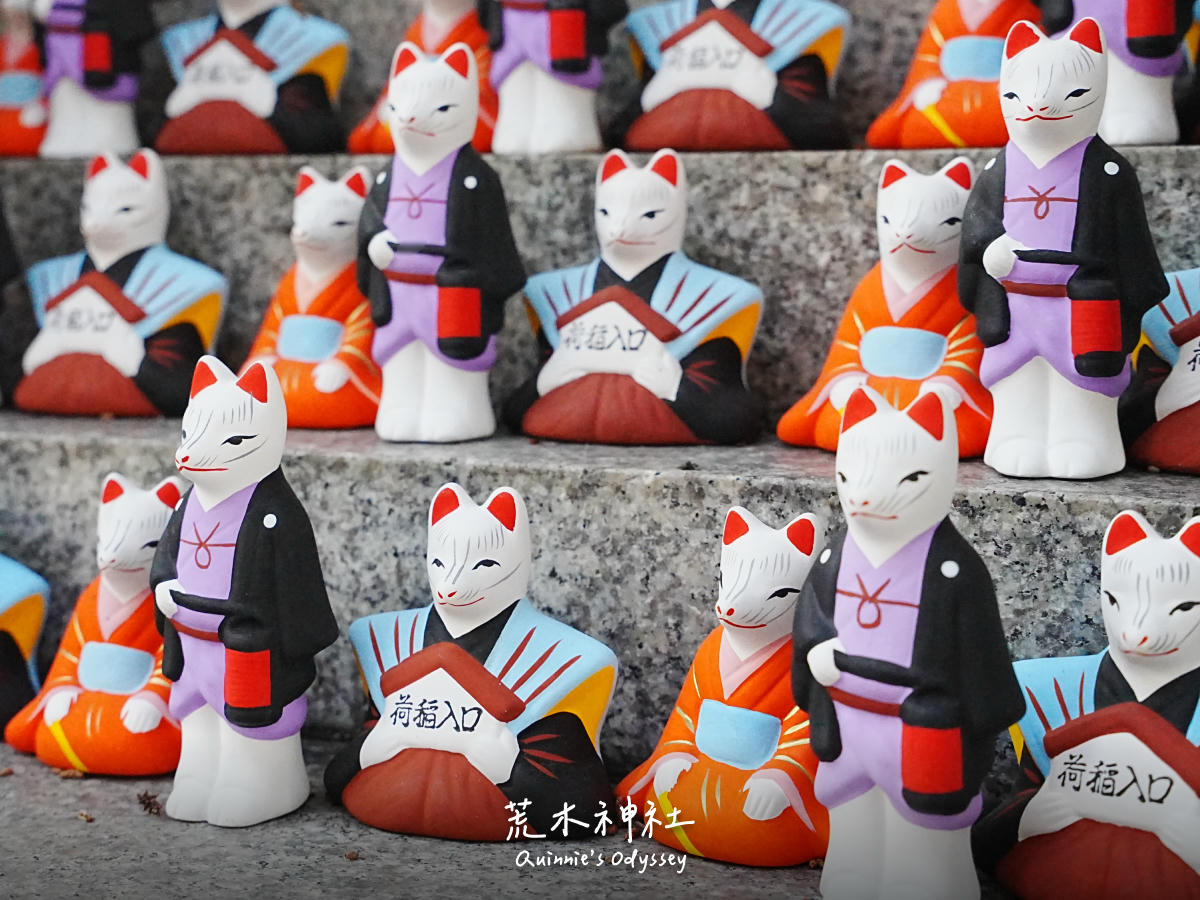
Easy to overlook, but absolutely worth seeking out. Araki Shrine is perhaps best known for its kitsune kuchire ningyō, small fox figurines that are charming and deeply endearing.
These clay foxes represent the deity Kuchire Inari Okami and are said to bring blessings in relationships, love, job hunting, and academic success. They come in sets of three: take them home after praying, then return to give thanks once your wish is fulfilled, or keep them with you as ongoing guardians.
👉👉 Araki Shrine: Discover the Most Adorable Fox Figurines at Fushimi Inari

Fushimi Inari Taisha hosts numerous festivals throughout the year. Here are five of the most significant:
|
Festival Name |
Date |
Highlights & Features |
|---|---|---|
|
Saitan-sai |
January 1st |
The first ritual of the year. A perfect time to experience Hatsumode, the authentic Japanese tradition of the first shrine visit of the New Year. |
|
Hatsuuma Taisai |
First Horse Day of February |
Commemorates the descent of the deity Inari Okami onto the mountain peaks. It is considered the most significant annual festival at the shrine. |
|
Inari-sai |
April to early May |
A grand celebration lasting about two weeks, featuring Fushimi Inari’s largest procession of portable shrines (mikoshi). |
|
Motomiya-sai |
Day of the Ox in midsummer (July) |
Thousands of red lanterns are hung across the entire mountain. At night, they are lit simultaneously, bathing Mount Inari in a mystical crimson glow. |
|
Ohitaki-sai |
November 8th |
A powerful fire ritual where hundreds of thousands of prayer sticks (Gomagi) are burned, creating spectacular soaring flames. |
The Hatsuuma Taisai is regarded as one of the most significant festivals at Fushimi Inari Taisha, occurring annually on the “First Horse Day” in February. The festival’s origins are rooted in local legend; it is believed that on this specific day in 711 AD, the deity Inari Okami first descended to Mount Inari, marking the official founding of the shrine.
Each year, people gather to participate in rituals, seek blessings, and join the celebration. With vast numbers of worshippers and locals filling the grounds, the atmosphere is far more vibrant than usual, making it one of the most active moments to experience the vitality of Inari culture and traditional folk beliefs.
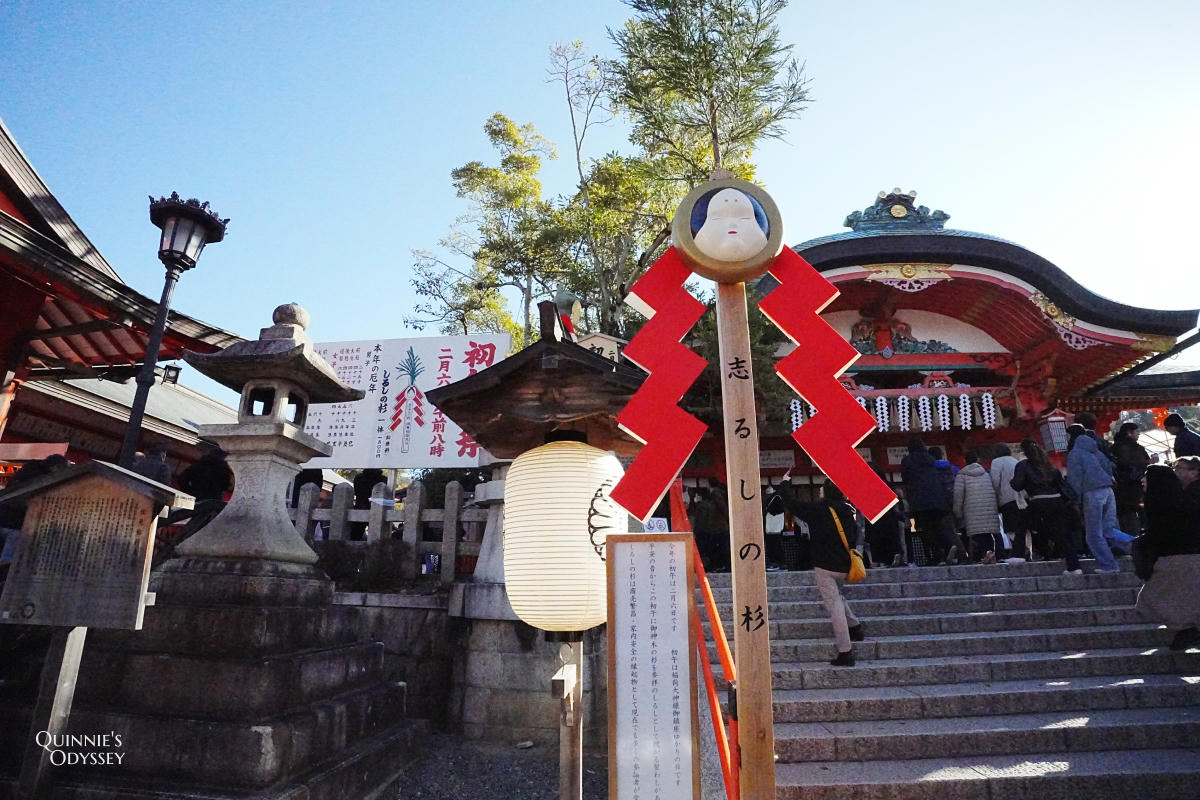
The Motomiya-sai is held annually at Fushimi Inari Taisha on a weekend in July. Established during the Showa era, the festival’s primary purpose is to bring together followers from across Japan to the head shrine to offer collective thanks for the deity’s protection and grace throughout the past year.
During the evening, the entire shrine and the surrounding slopes of Mount Inari are illuminated by thousands of lanterns and lamps. This light bathes the historic stone lanterns, Torii gates, and forest paths in a warm glow, creating a uniquely mystical and dreamlike spectacle.
If you’re visiting during the day and want cleaner, less crowded photos, there’s really only one strategy: keep going up. Most tourists turn back well before reaching the summit. By the time you reach Yotsutsuji, and certainly beyond it, the crowds thin out dramatically.
You’ll still encounter other visitors, but nothing like the chaos at the base. With a little patience, getting a clear shot of the torii gates becomes very achievable.
If crowd-free visuals genuinely matter to you, set your alarm. Arriving around 7:00 AM, or even earlier, transforms the experience entirely.
The air is fresh, the light is soft and golden, and the quiet between the torii gates feels profound. You can walk at your own pace, take your time with photos, and absorb the atmosphere without constantly waiting for crowds to clear. For anyone who values stillness over convenience, early morning is easily the best time to visit.
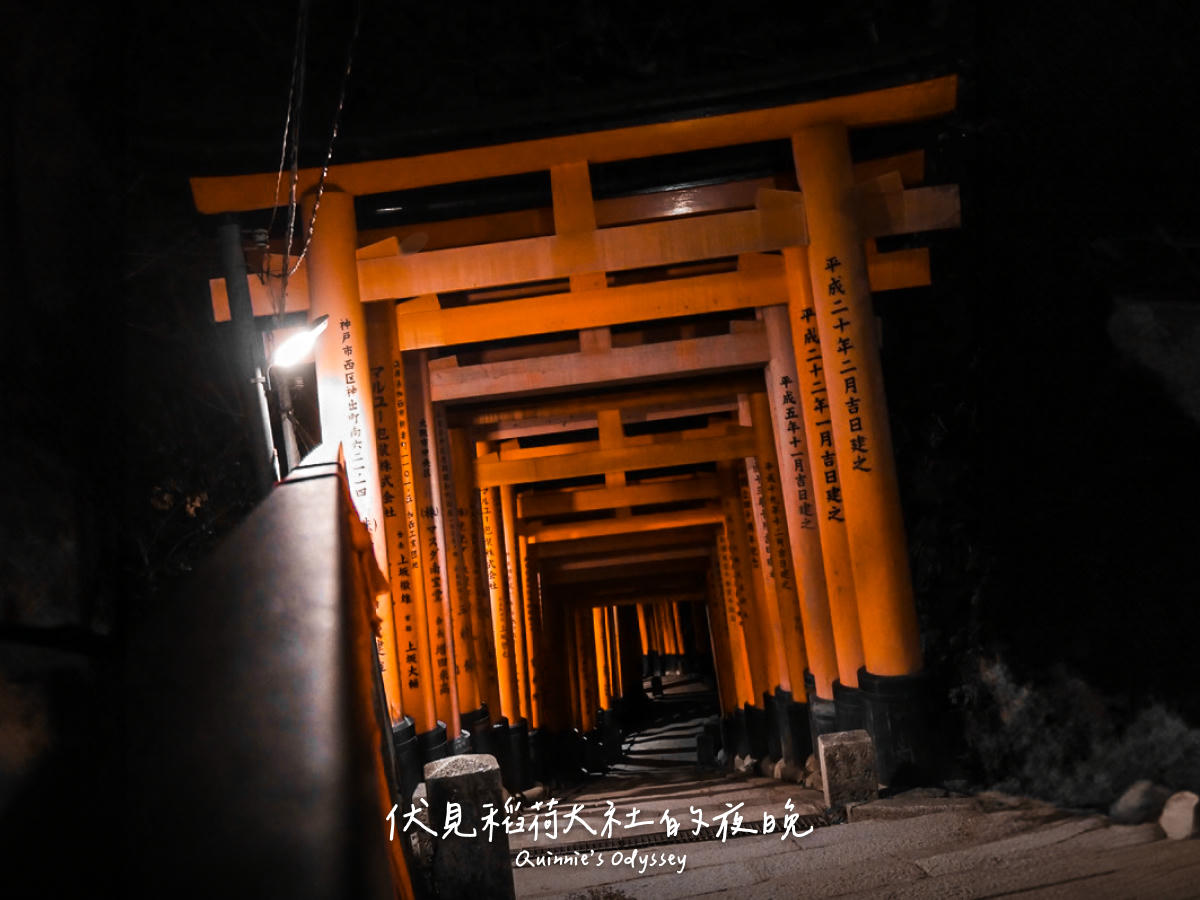
If you’re drawn to mystery and a slightly adventurous atmosphere, nighttime is extraordinary. The shrine empties out almost completely, and the torii gates take on an entirely different character under the lantern light, a little eerie, undeniably atmospheric.
Walking through the gates at night, your own footsteps echo loudly in the silence. It’s completely unlike the daytime experience, and for those who don’t mind the dark or the occasional rustling of small animals in the trees, it flows beautifully.
👉👉 Fushimi Inari at Night: Is It Actually Eerie? My Honest Review
▼ Exclusive Deal for Sika Readers ▼
Use code【DNBDRT】👉👉 Save ¥3,000on your TOCOO! car rental(view guide)
Fushimi Inari Taisha is much larger than most people expect, as it extends all the way up the mountain.
Set aside around 3-4 hours. Walking, photographing, resting, and exploring the smaller shrines along the way adds up, but the sense of accomplishment at the top (and on the way back down) is very much worth it.
If you’re only interested in the Senbon Torii and a partial ascent, two hours should be sufficient.
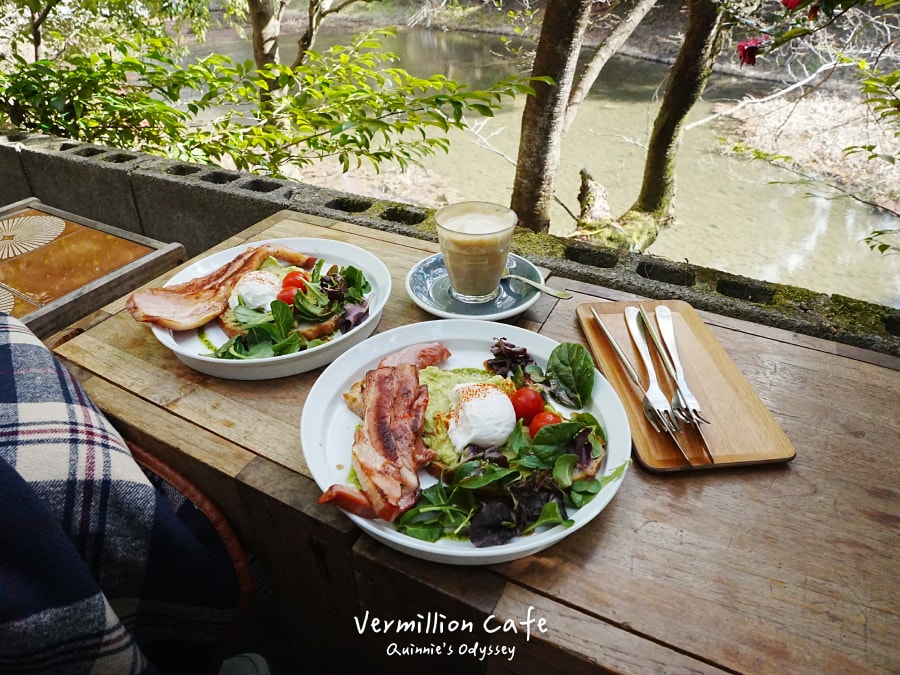
There are several cafés and restaurants in the area worth visiting before or after your hike. One I’d personally recommend is Vermillion Café. Rather than backtracking through the main entrance after completing the torii loop, take the quieter outer path, the crowd thins out, the surroundings settle into stillness, and you’ll find Vermillion tucked away with semi-outdoor seating overlooking a small lake. Sitting there with the breeze and the water in front of you is a genuinely restorative way to end the visit.
👉👉 Vermillion Cafe Kyoto: The Hidden Forest Café Next to Fushimi Inari Shrine
Fushimi Inari’s location is excellent, well-connected and within easy reach of several other worthwhile destinations.
|
Destination |
Travel Time |
Transportation Method |
|---|---|---|
|
Fushimi Jukkoku-fune |
Approx. 20 mins |
Take the Keihan Main Line to Chushojima Station, followed by a 6-minute walk. |
|
Uji |
Approx. 20 mins |
Take the JR Nara Line directly to Uji Station. |
|
Kyoto Station Area |
Approx. 7 mins |
Take the JR Nara Line directly to Kyoto Station. |
|
Kiyomizu-dera Area |
Approx. 35 mins |
Take the Keihan Main Line to Kiyomizu-Gojo Station, then walk or take Bus 202 or 84. |
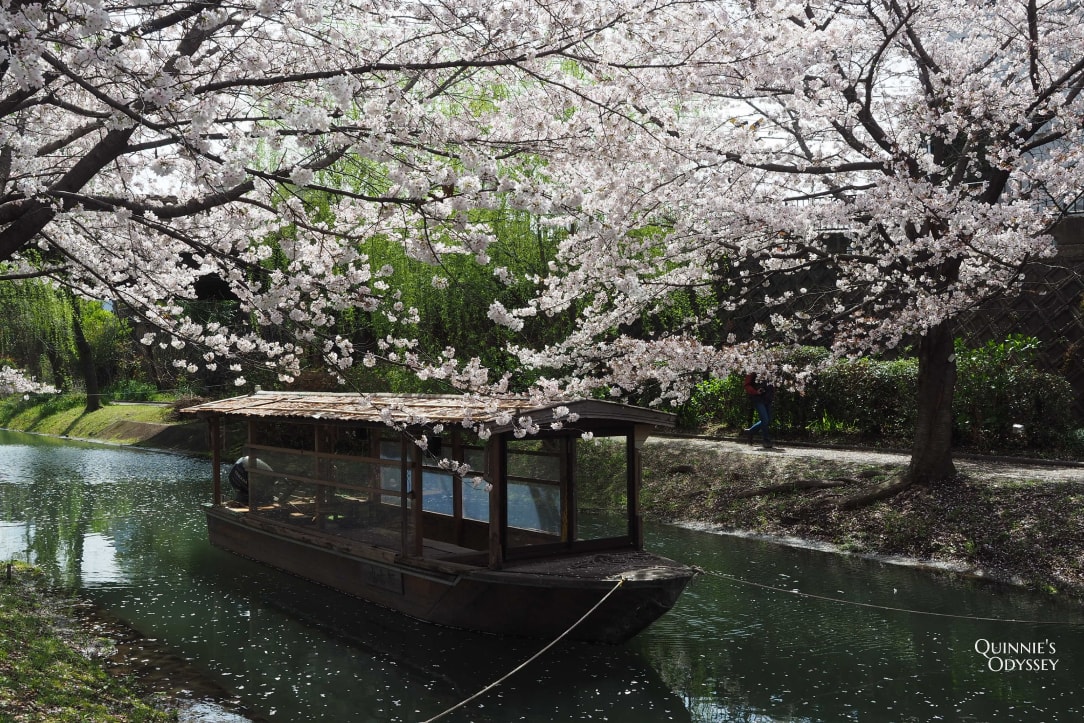
If you’re visiting during cherry blossom season, this is an absolute highlight. Take the Keihan Line to Chushojima and walk about six minutes to reach the canal boats. Drifting slowly under arching rows of cherry blossoms is one of the most dreamlike experiences Kyoto has to offer in spring.
👉👉 Fushimi Jukkokubune Cherry Blossom Cruise 2026: A Dreamy Kyoto Experience
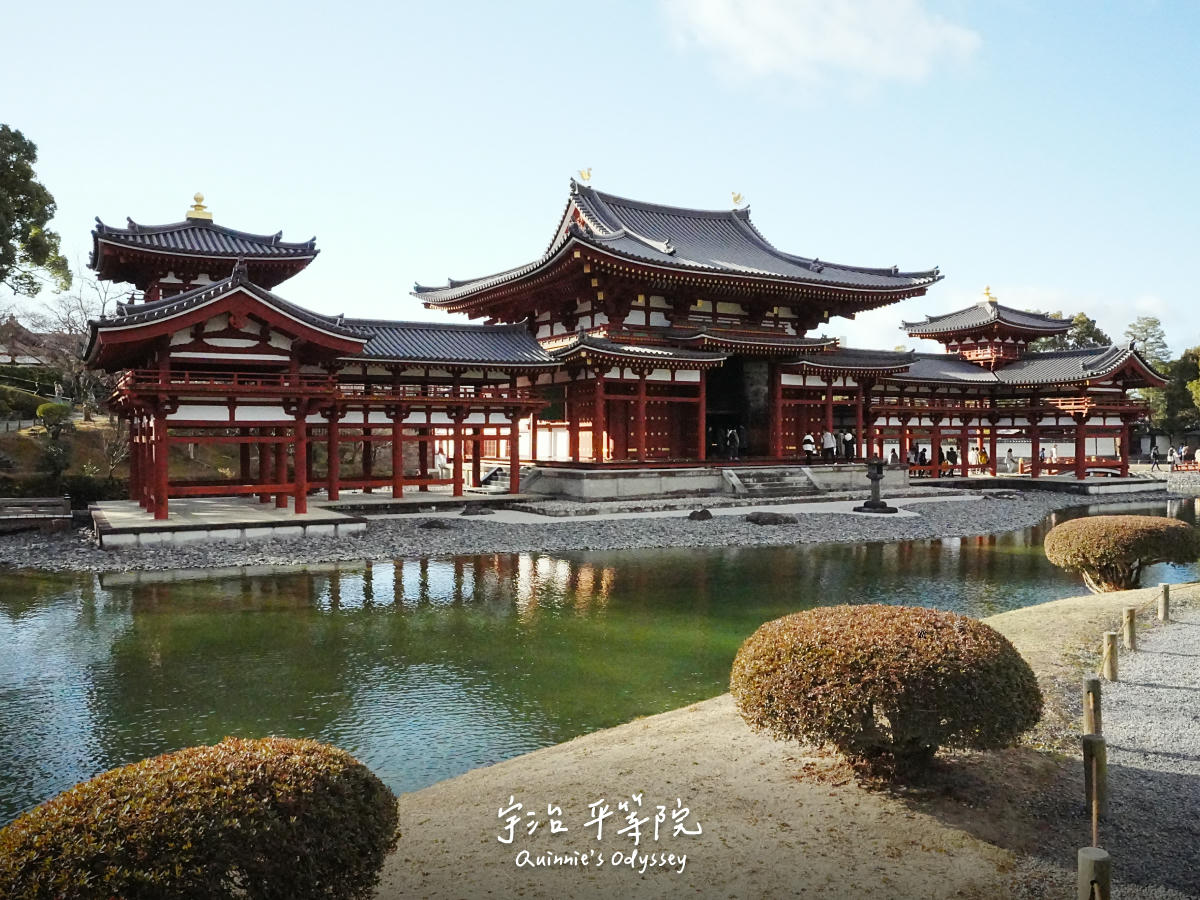
A quick JR Nara Line ride brings you to Uji, home to Byodoin Temple, excellent matcha sweets, and a lovely riverside walk. After a full morning on the mountain, spending the afternoon in Uji sipping matcha and strolling by the river is a near-perfect combination.
👉👉 Byodo-in Temple Uji: Discover Kyoto’s Most Iconic UNESCO World Heritage Site
Incredibly close. If you schedule Fushimi Inari in the morning, heading back to the station area for lunch, souvenir shopping, and an afternoon browse through the department stores is the most effortless possible follow-up.
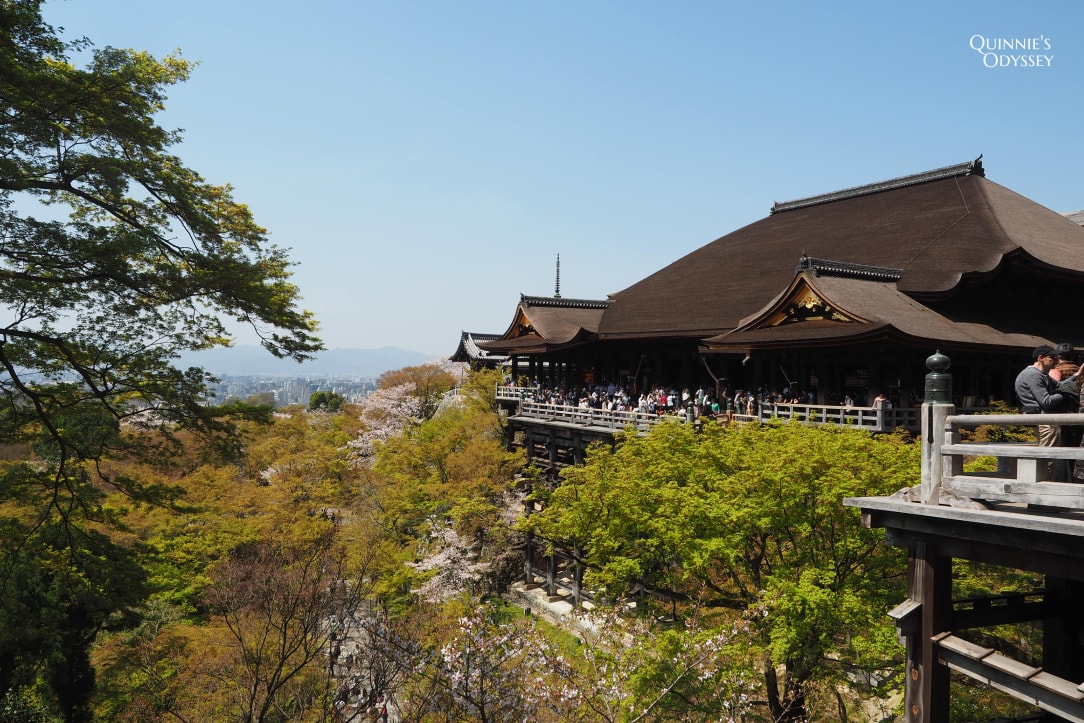
From Fushimi Inari, take the Keihan Line to Kiyomizu-Gojo and walk or take bus 202 or 84 up to the temple. The whole area, Kiyomizudera, Ninenzaka, Sannenzaka, Yasaka Shrine makes for a full and deeply Kyoto afternoon of old streets, snacks, and atmospheric scenery.
Is Fushimi Inari Taisha worth visiting?
Absolutely, and not just because of the famous torii gates or its reputation. What makes it genuinely special is the way the experience changes as you move through it.
From the bustling entrance to the quiet mountain paths, from the bright afternoon sun to the soft glow of stone lanterns at dusk, every altitude and every hour of the day feels like a different world.
You can approach it like a tourist, ticking off the photo spots. Or you can slow down, climb the mountain, and let yourself get a little lost in the atmosphere. Both are valid, but only one of them stays with you.
Fushimi Inari Taisha is the kind of place you’ll want to return to, at a different time of day, in a different season, with a different mood. If you’re coming to Kyoto, make sure it’s in your itinerary. Then give yourself a little extra time, and walk slowly up the mountain.
Explore More Things to Do 👉👉 GetYourGuide, Fushimi Inari Taisha
▼ Kyoto Travel Essentials ▼

Thanks for reading!
If you’re interested in my stories, feel free to follow me on Instagram.
👉👉 IG: @sika_artist 👈👈