Physical Address
304 North Cardinal St.
Dorchester Center, MA 02124
Physical Address
304 North Cardinal St.
Dorchester Center, MA 02124

This 5-day snowboarding trip to Lotte Arai Resort in Myoko, Niigata was my very first time ever standing on a snowboard.
I stayed at the luxurious Lotte Arai Resort, right at the base of the mountain, and had an instructor guiding me throughout the trip. With ski-in convenience and a five-star hotel stay, the whole experience felt incredibly comfortable and honestly kind of dreamy.
This article is based on my personal experience, especially for those who are curious about snowboarding for the first time, or are considering visiting Lotte Arai Resort.
▼ Exclusive Deal for Sika Readers ▼
Use code【DNBDRT】👉👉 Save ¥3,000on your TOCOO! car rental(view guide)
If you’re new to snowboarding, you might be wondering what you actually need to prepare, and whether you have to buy a lot of gear.
Here’s the good news:
At Lotte Arai Resort, you can rent almost everything on-site, including snow jackets, snow pants, protective gear, goggles, and helmets. So there’s no need to bring your own bulky equipment.
However, there are a few things you must bring yourself:
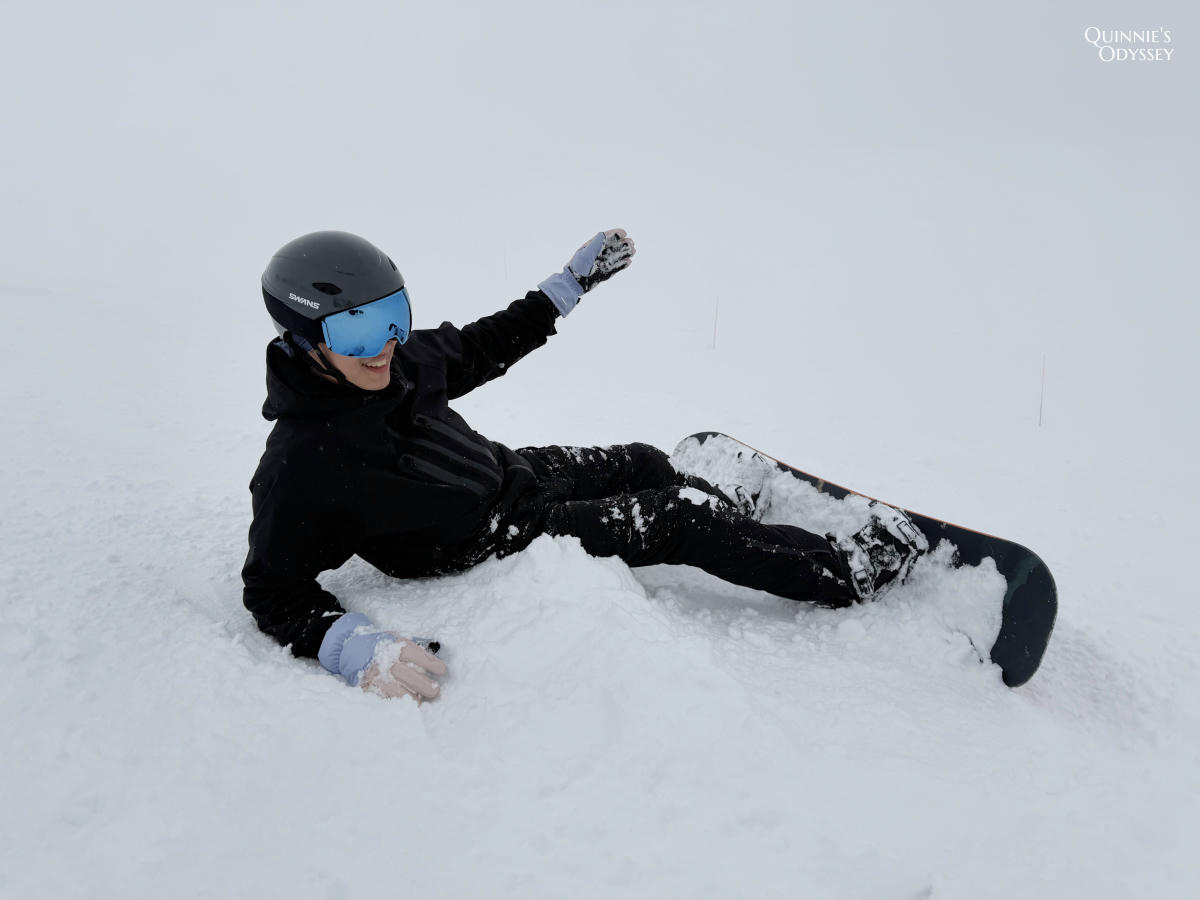
On my first day, I wore: a thermal base layer + a hoodie + a rental snow jacket + a neck warmer.
But after just one morning lesson, I was already overheating. During lunch break, I had to take off my thermal layer, and even with just a hoodie and snow jacket, I still felt hot.
I visited in mid-March, when the temperature was around 0–4°C (32–39°F). However, snow jackets are extremely warm, and since snowboarding is a very active sport, your body generates a lot of heat. You’ll likely end up sweating quite a bit, some people in my group were even wearing just a T-shirt underneath.
My recommendation:
If you’re visiting in similar temperatures (around 0–4°C), a light, moisture-wicking base layer plus a snow jacket is more than enough.
Lotte Arai Resort is located on Mount Okenashi in Myoko, Niigata, and it’s known as one of the snowiest ski resorts in Japan.
The resort features 14 ski runs with a well-balanced range of difficulty levels:
36% beginner, 36% intermediate, 21% advanced, and 7% expert.
The longest run stretches up to 7 km, with a vertical drop of about 951 meters.
But what really makes this place unforgettable is the snow quality.
Thanks to its unique location, Mount Okenashi receives an incredible amount of snowfall. Above mid-mountain, most of the slopes are covered in soft, fluffy powder snow, which feels completely different from the hard, compact snow you might see elsewhere.
For beginners, this is honestly a blessing, falling doesn’t hurt nearly as much, so you can practice more confidently without fear.
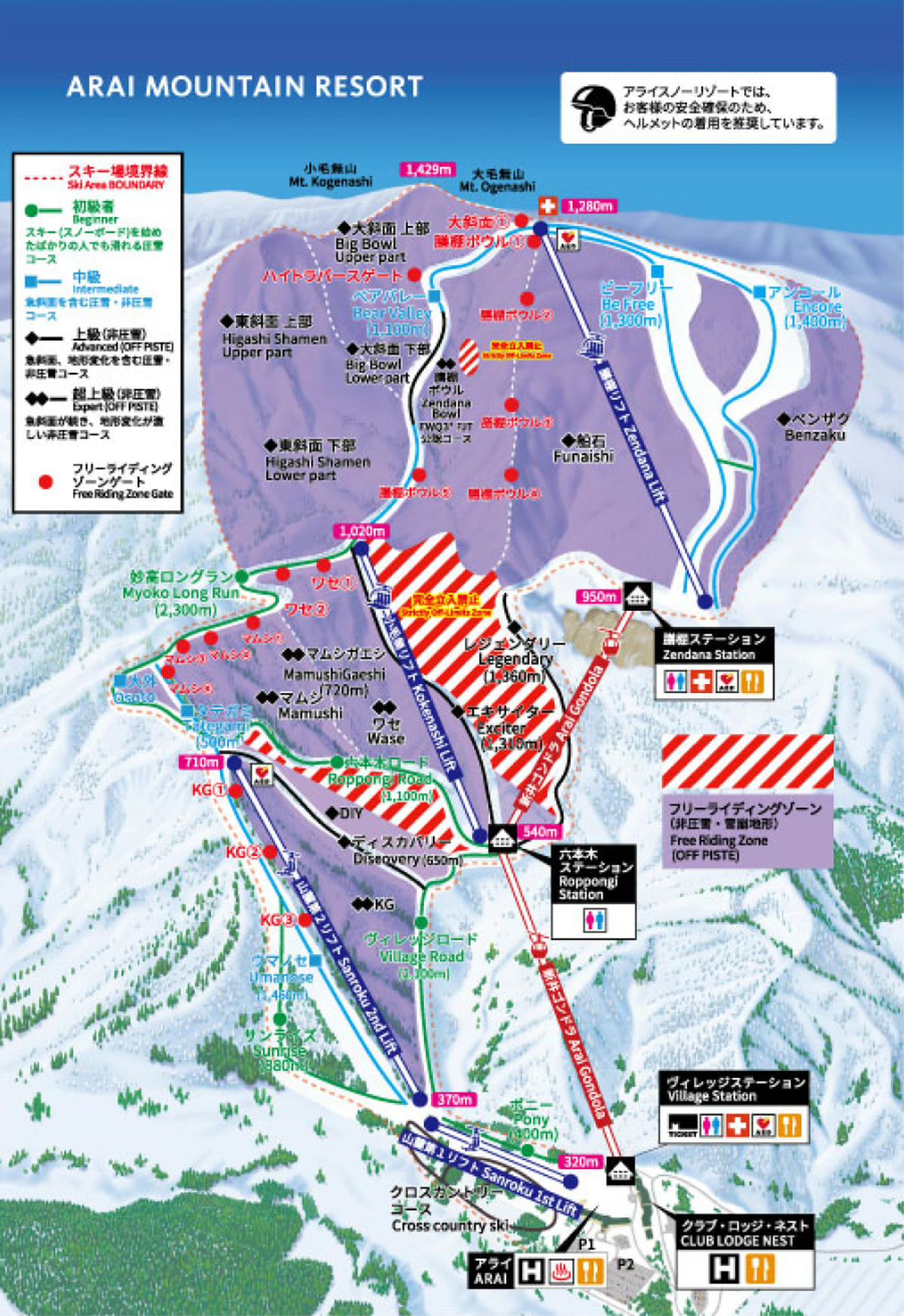
During these two days, I got to experience three different runs:
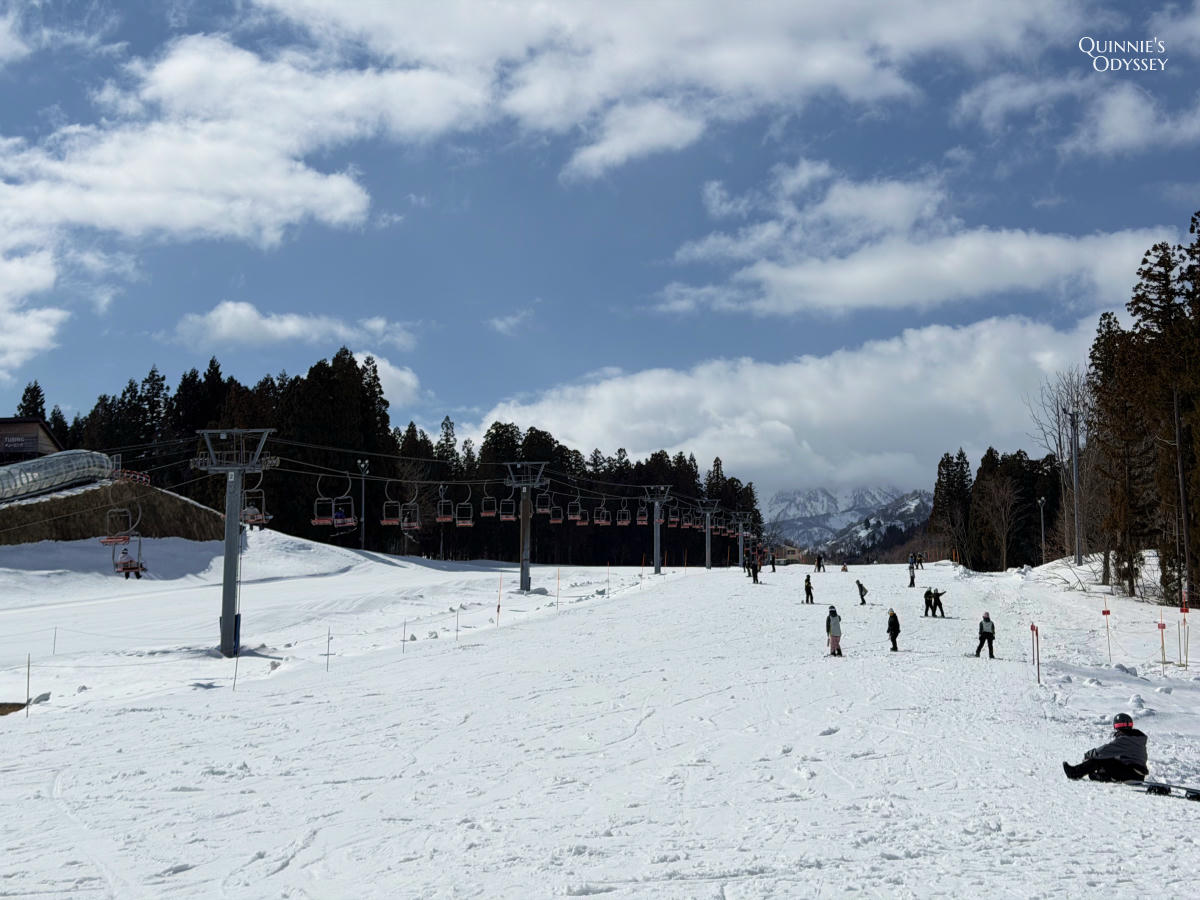
Located right next to the ski center, this is the gentlest slope in the entire resort, with just the right length for beginners.
I spent the mornings of both Day 1 and Day 2 here, repeatedly practicing basic techniques like heel side and toe side turns.
Take the lift up, ride down, repeat. And slowly, you start to get the hang of it.
If it’s your very first time on a snowboard, Pony is the perfect place to start.
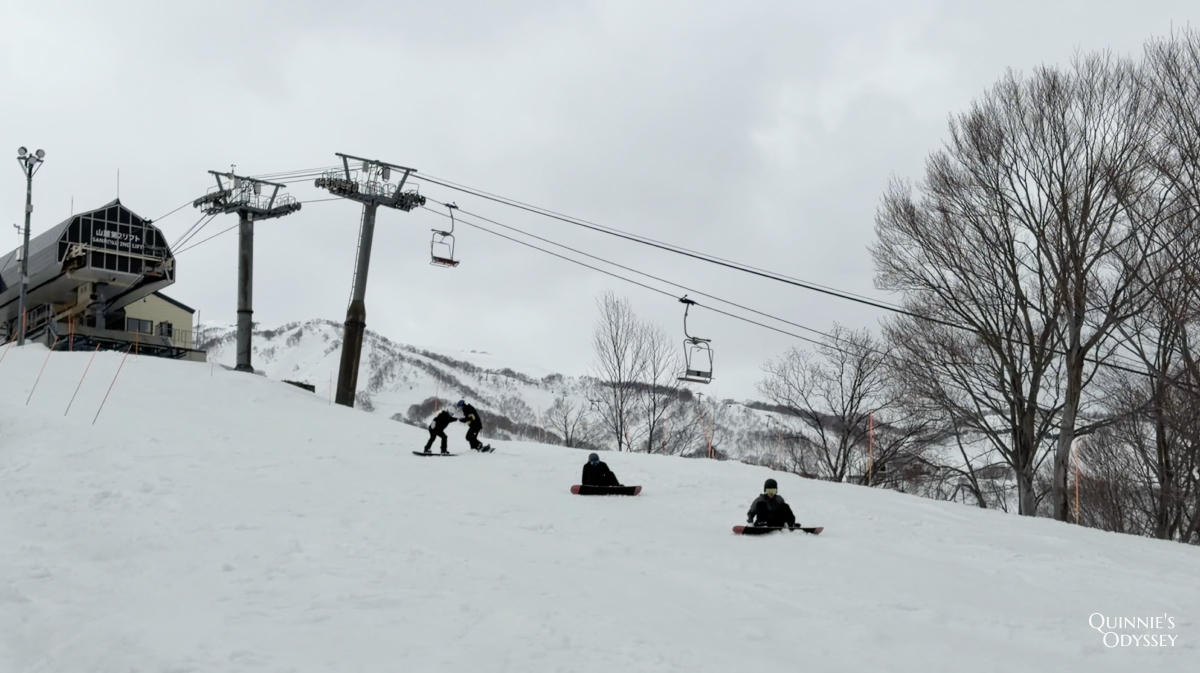
On the afternoon of Day 1, our instructor brought us here.
Even looking up from the bottom, the slope already seemed pretty steep. But once you’re standing at the top, looking down… it’s on a completely different level compared to Pony.
It’s a long, steep run, and you can’t even see where it ends from the top.
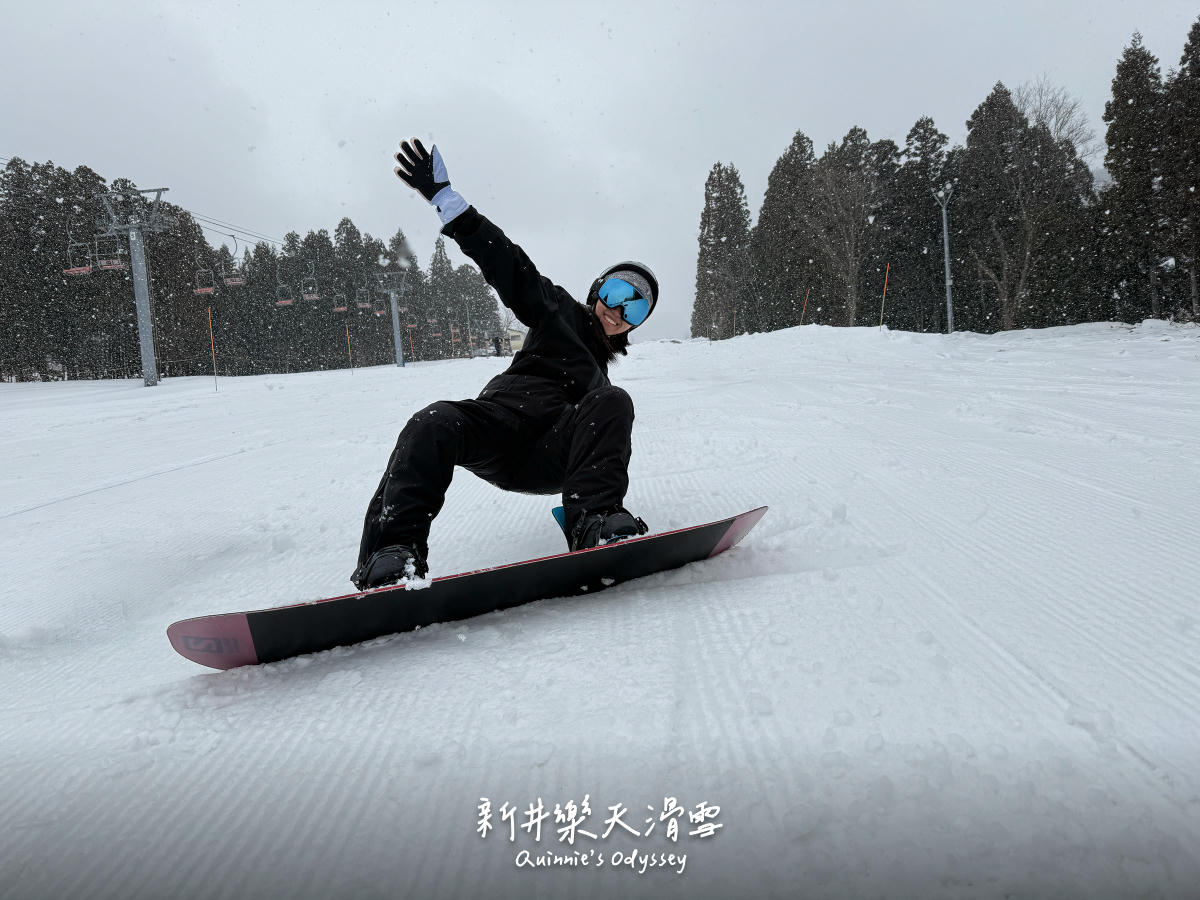
Thankfully, the powder snow made all the falls much less painful. This was the moment I truly realized, snowboarding is actually so fun and exciting.
This was our slope for the afternoon of Day 2.
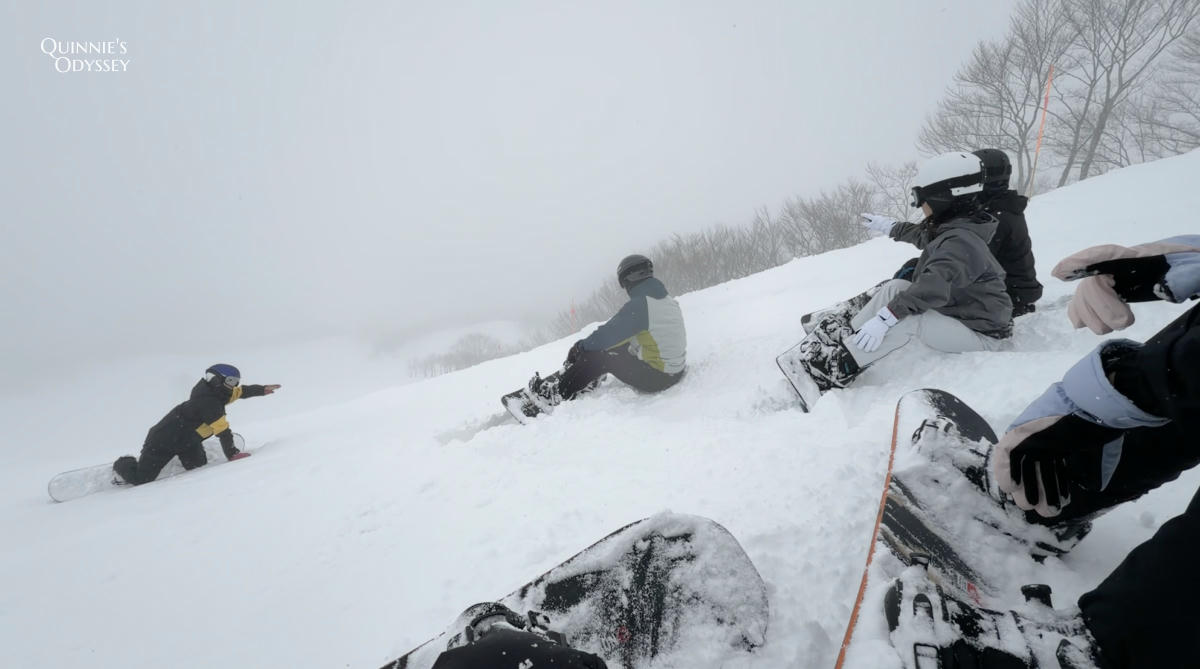
The weather wasn’t great, heavy snow was falling, visibility was low, and everything around me looked like a white blur. It definitely added a layer of nervousness to the experience.
The final stretch near the lift station was incredibly steep…
I honestly just ended up sitting down and sliding my way to the bottom 😅
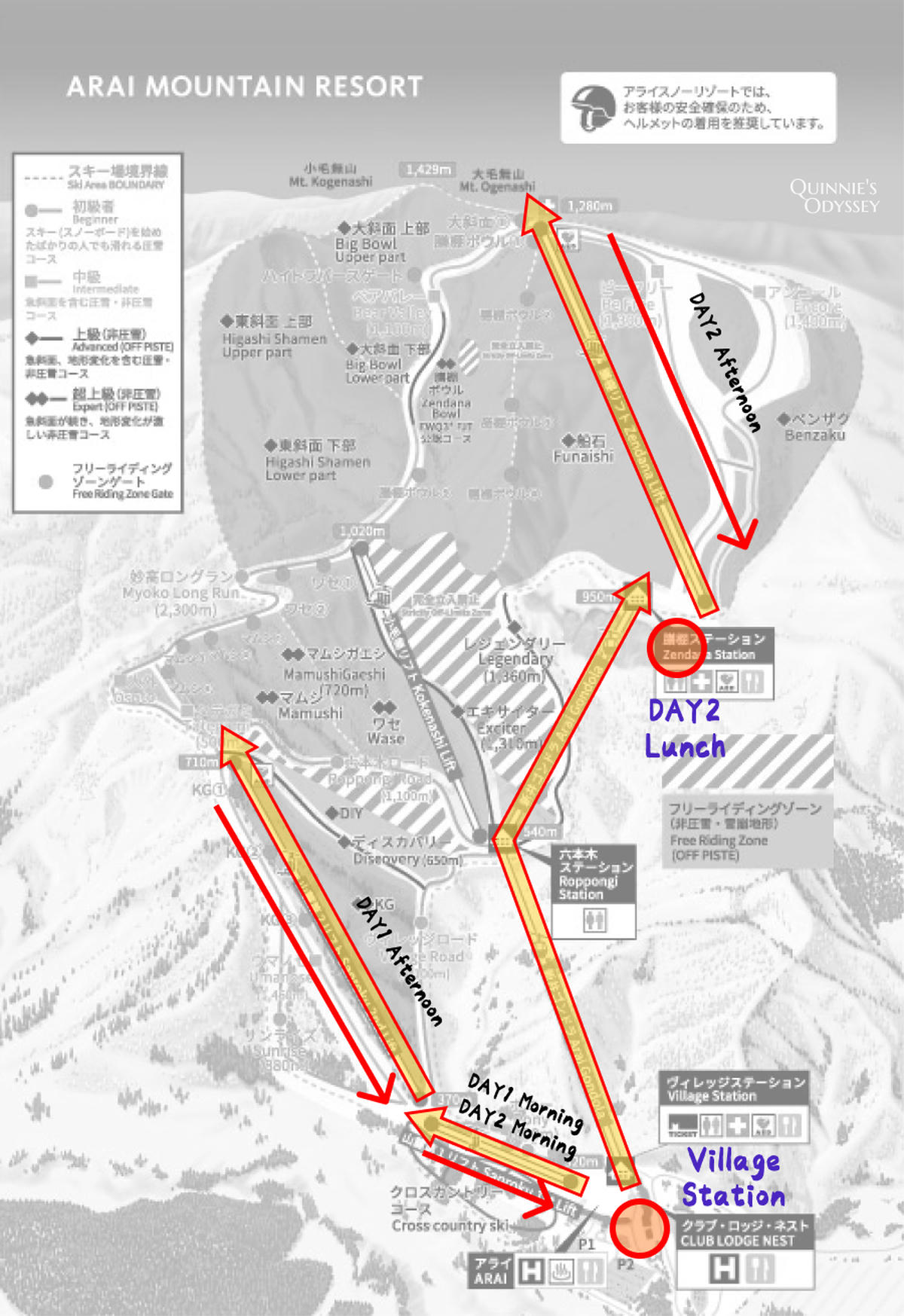
This image shows the routes we took over those two days 👇
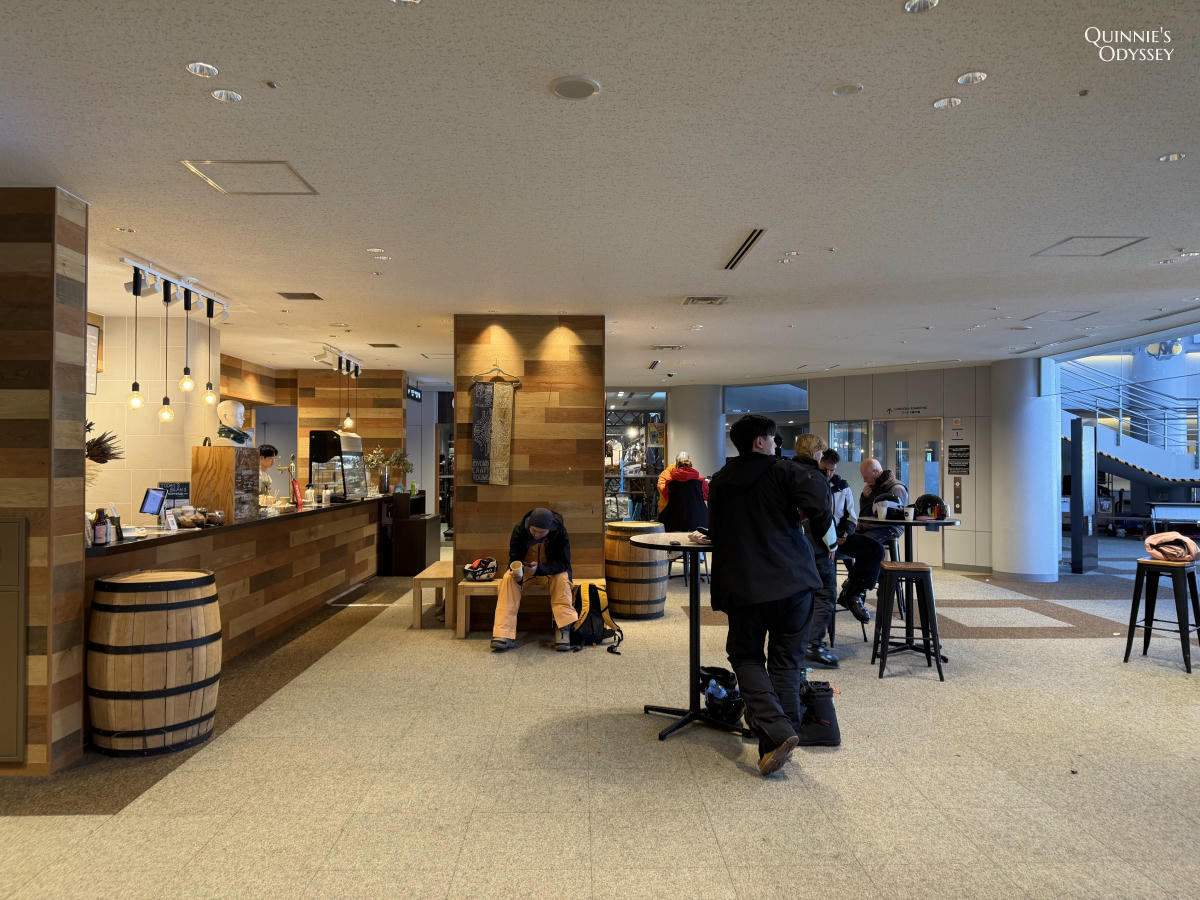
Inside the ski center, there are a few simple dining options.
On one side, there’s a small café counter where you can grab coffee, hot chocolate, or light snacks.
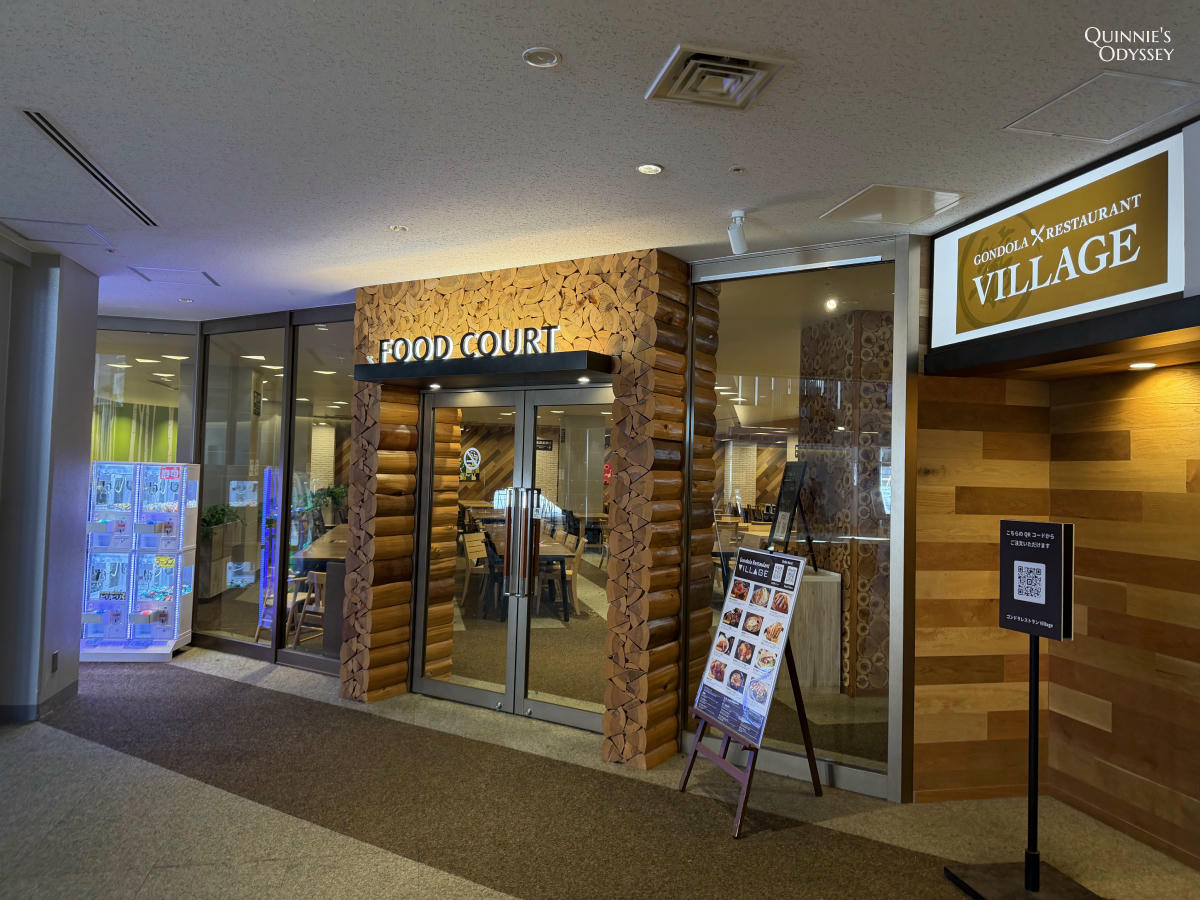
On the other side, there’s a food court-style area offering hot meals like rice bowls and ramen, perfect for warming up after a cold session on the slopes.
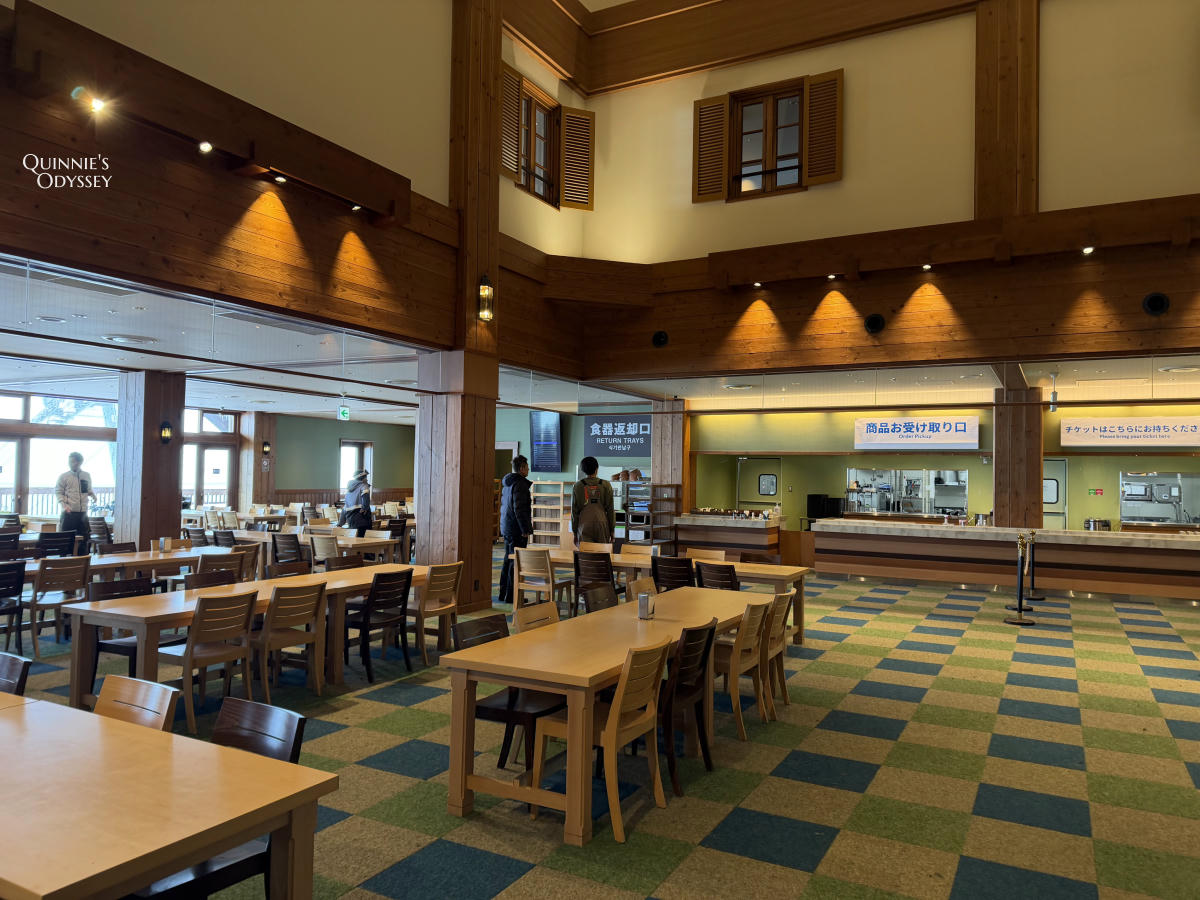
The Zendana Station restaurant has a spacious seating area and operates fully self-service.
You order from a machine, pick up your food, and return your tray when you’re done.
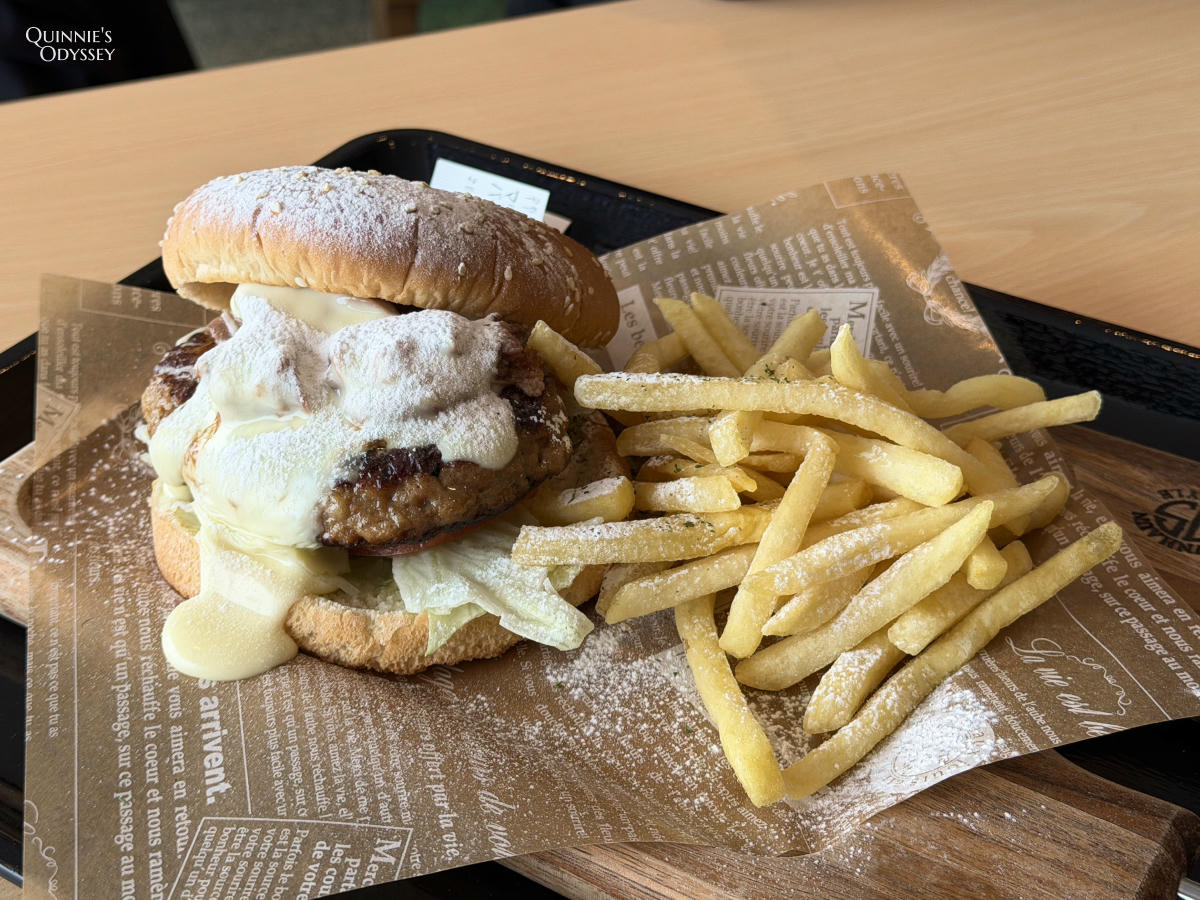
Almost everyone in our group ordered the same thing: the Snow Mountain Burger.
Melted cheese flows down from the top like a waterfall, and it’s dusted with a layer of white powder, making it look just like a tiny snow-covered mountain.
I think the powder was some kind of special seasoning, it didn’t have a particularly strong flavor, but visually, it really nailed that “snowy mountain” vibe.
Time: 8:30–10:30
Slope: Pony | Beginner | 400m
We met at the equipment room at 7:45 AM on the first day. After finding the staff, they helped us get properly fitted gear.
Everyone geared up – snow jacket, snow pants, boots, protective gear, goggles – and locked personal belongings and regular clothes in a locker before heading to the lobby to meet the instructor.
(Quick tip: don’t lock your room key inside your locker… you might get so exhausted during breaks that you just want to go straight back to your room and crash 😆)
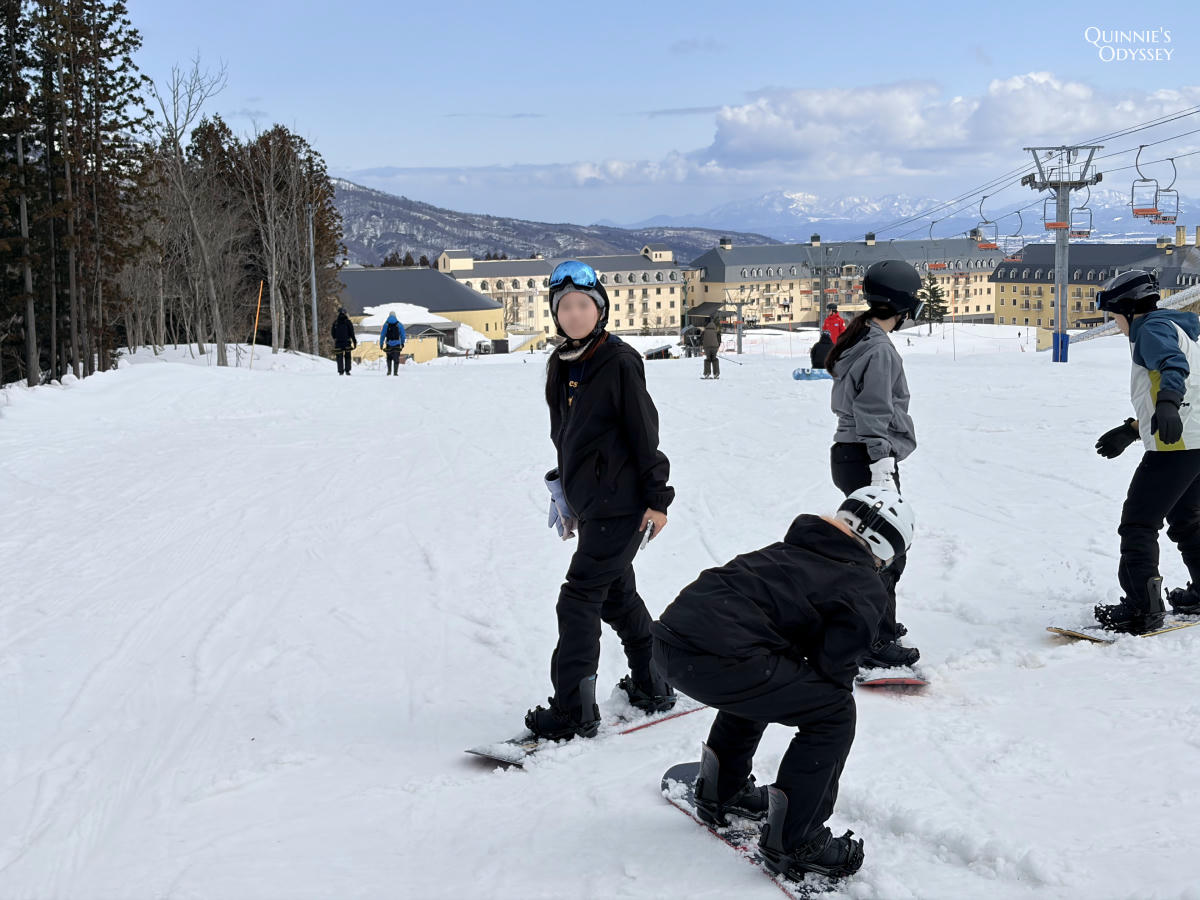
Around 8:30, we started our lesson on the beginner slope.
The instructor-to-student ratio that day was 1:5.
We began at the flattest area at the bottom of the slope. Since we were learning snowboarding, the first step was figuring out which foot felt more natural in front.
Once strapped in, we started getting used to standing on the board, feeling the balance, adjusting the angle, and making small movements.
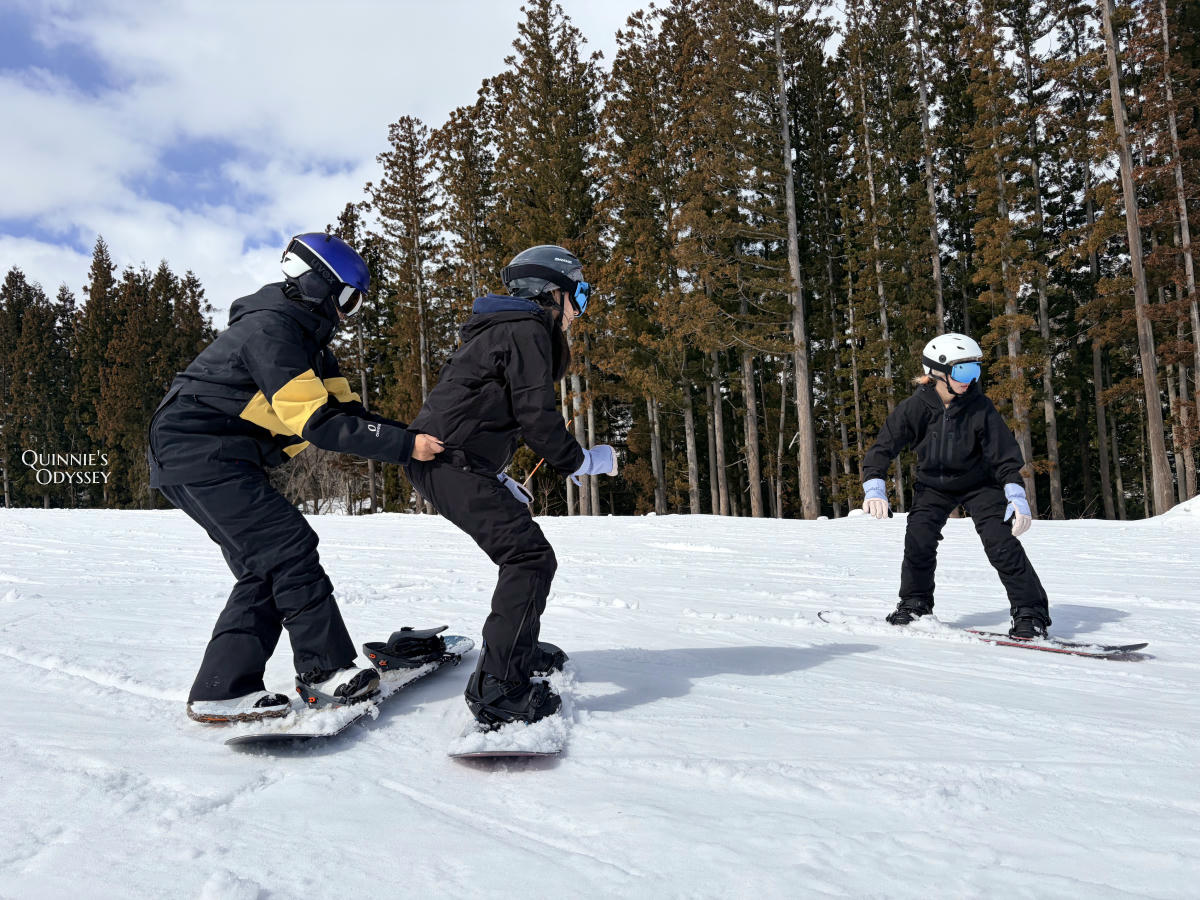
To be honest, I was pretty nervous at the beginning.
I remembered trying an indoor ski simulator before, where I could barely let go of the support bar without losing balance. So I was fully expecting to fall a lot on a real slope.
And… I was right 😅
Within the first few tries, I had already fallen multiple times.
Luckily, the slope was gentle, the speed was slow, and the snow was soft enough that the falls didn’t hurt too much.
The instructor taught us three basic skills:
gliding straight, heel-side braking, and toe-side braking.
We practiced these repeatedly on the flat area, and once we got a bit more comfortable, it was time to take the lift up.
At the beginner slope, we carried our boards by hand when taking the lift, since we weren’t familiar with it yet.
Later on, at intermediate slopes, you’ll need to ride the lift with one foot strapped in, so this is something you’ll eventually have to learn.
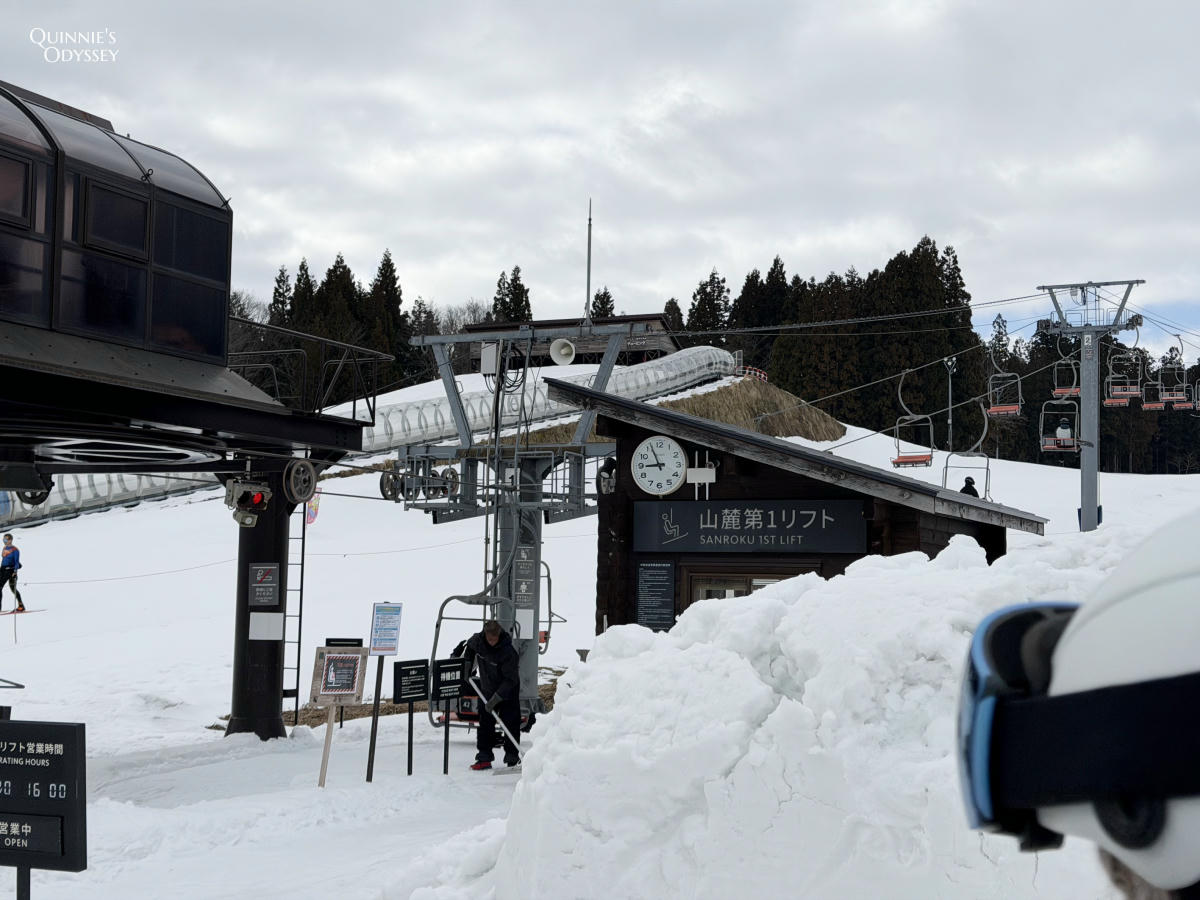
If you’re nervous, don’t worry. The instructor will usually accompany you the first time and guide you through getting on and off the lift with your board.
Even if you try it on your own later, it’s not too scary.
There are always staff members at the lift station. If you fall when getting off, they’ll stop the lift temporarily so you can get up safely, so no one behind you will crash into you.
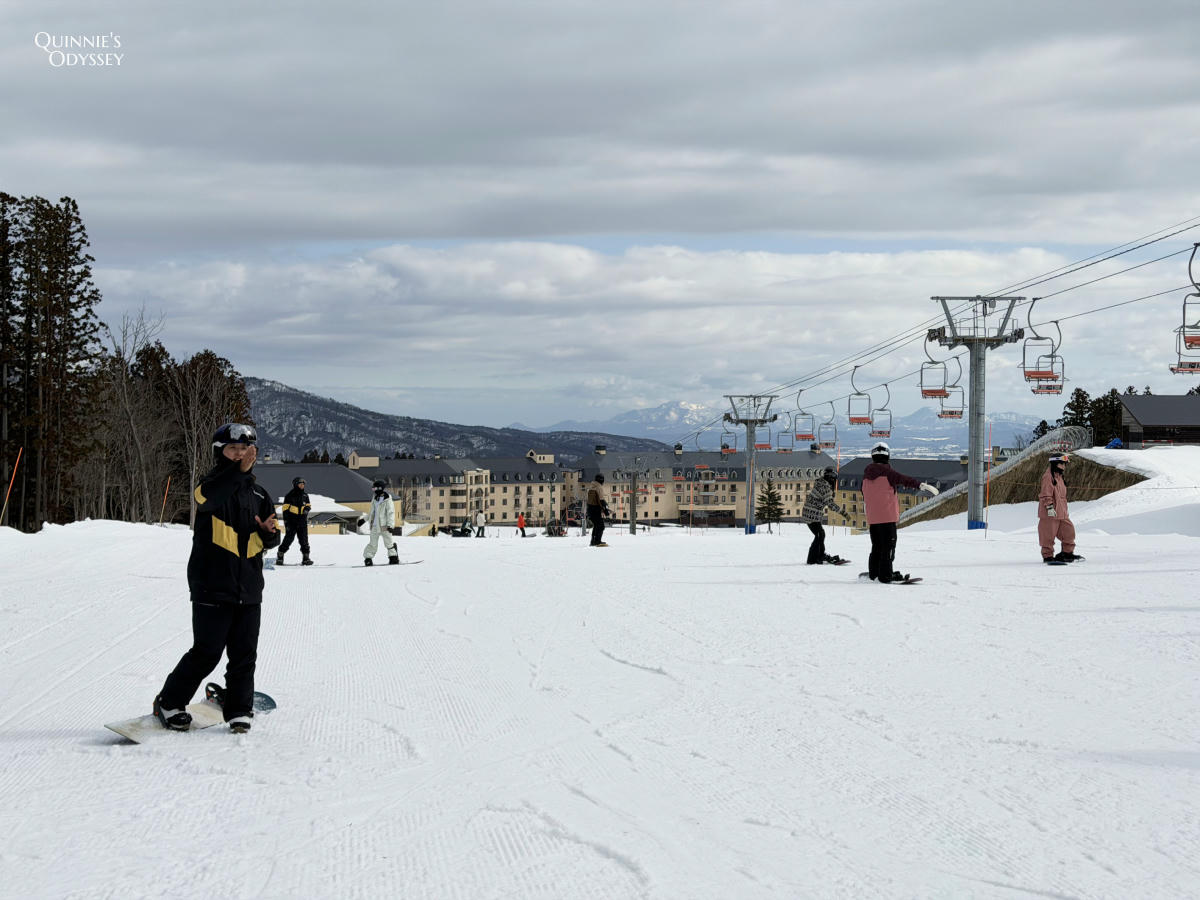
From the top of the beginner lift, you get a great view overlooking the resort 👇
After two full hours of practice, I felt completely drained.
Like… all my energy had been squeezed out of me.
Time: 12:30–14:30
Slope: Umanose | Intermediate | 1,460m
I didn’t expect the difficulty to jump so much in the afternoon.
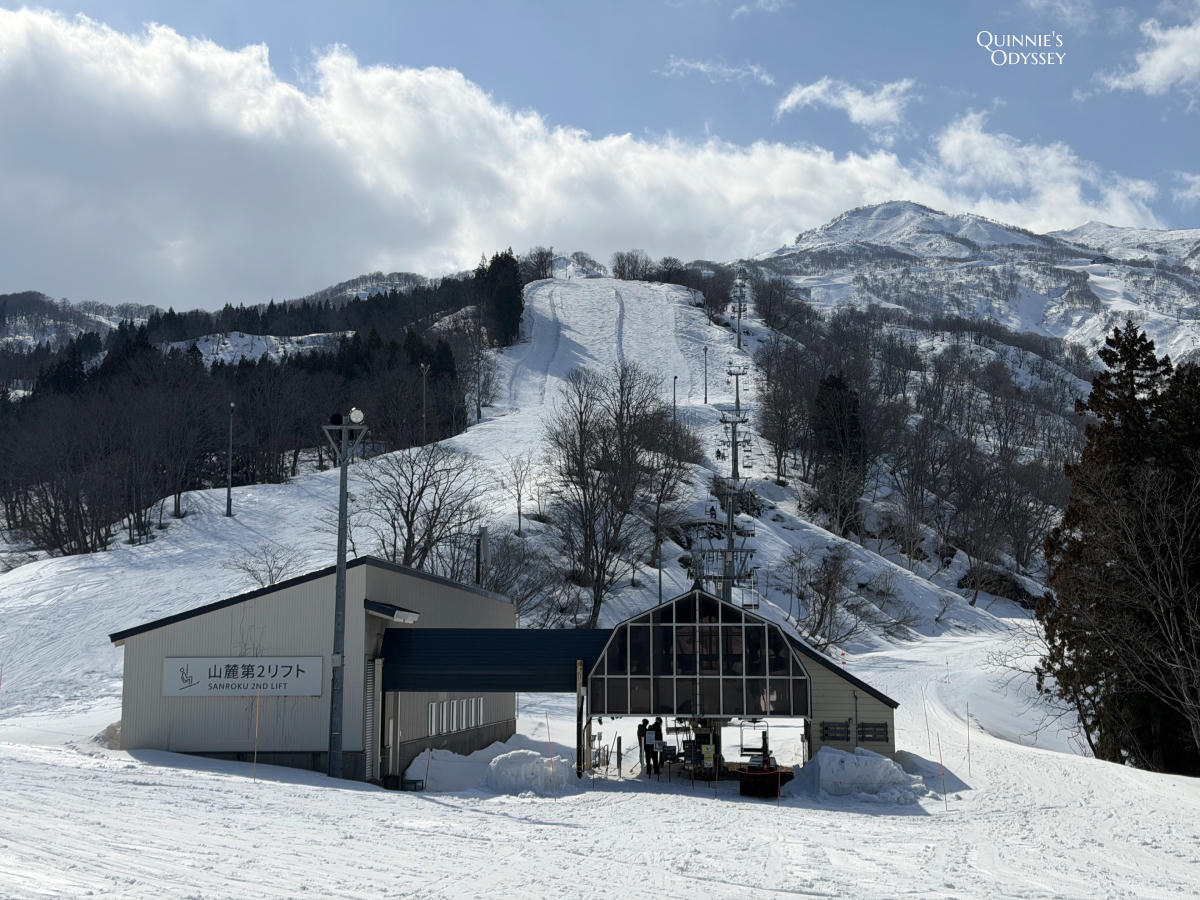
Our instructor took us up to a higher area to try an intermediate slope.
This time, we had to take the lift with one foot strapped onto the board.
Since it was my first time, the board just hung there, pulling down with its weight, it felt a bit nerve-wracking.
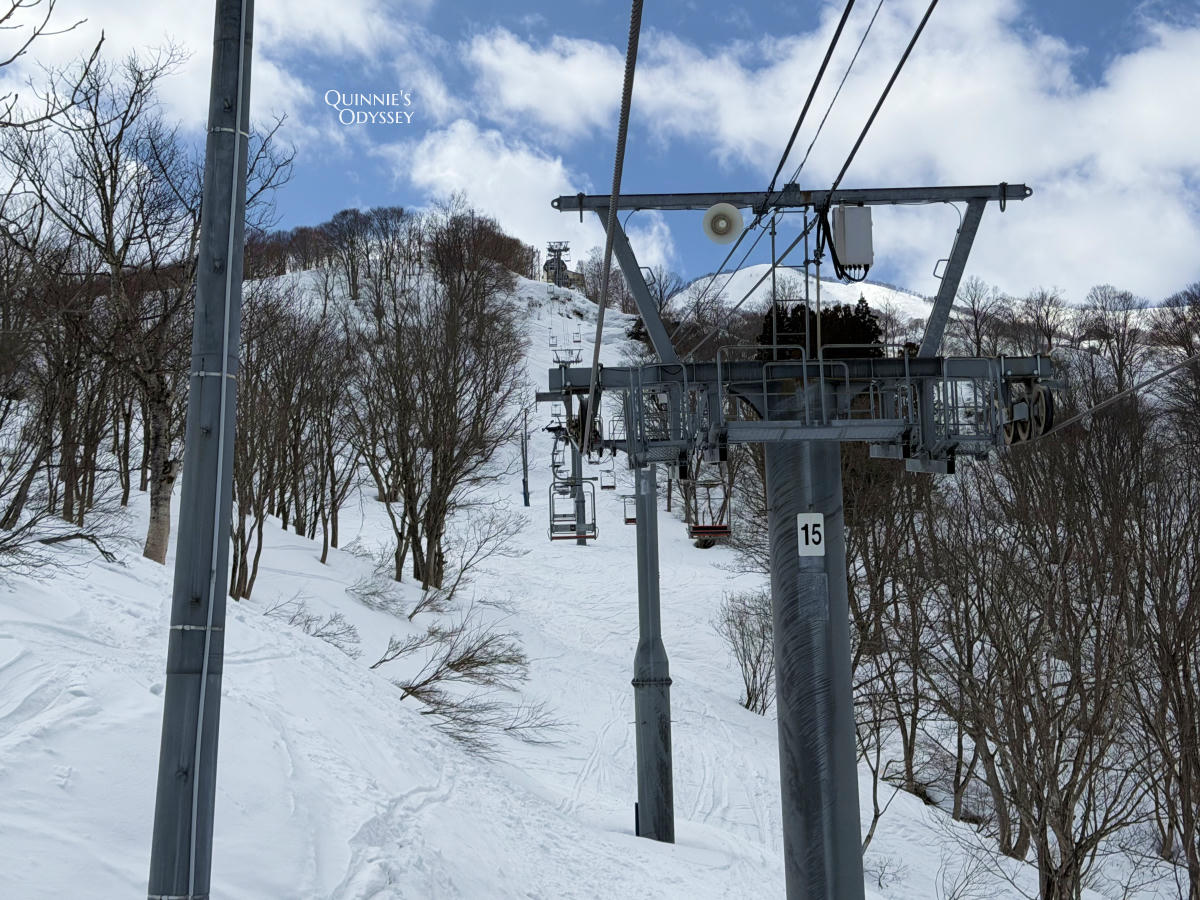
When we reached the top and looked down… everyone gasped.
The slope was steep. Like, really steep.
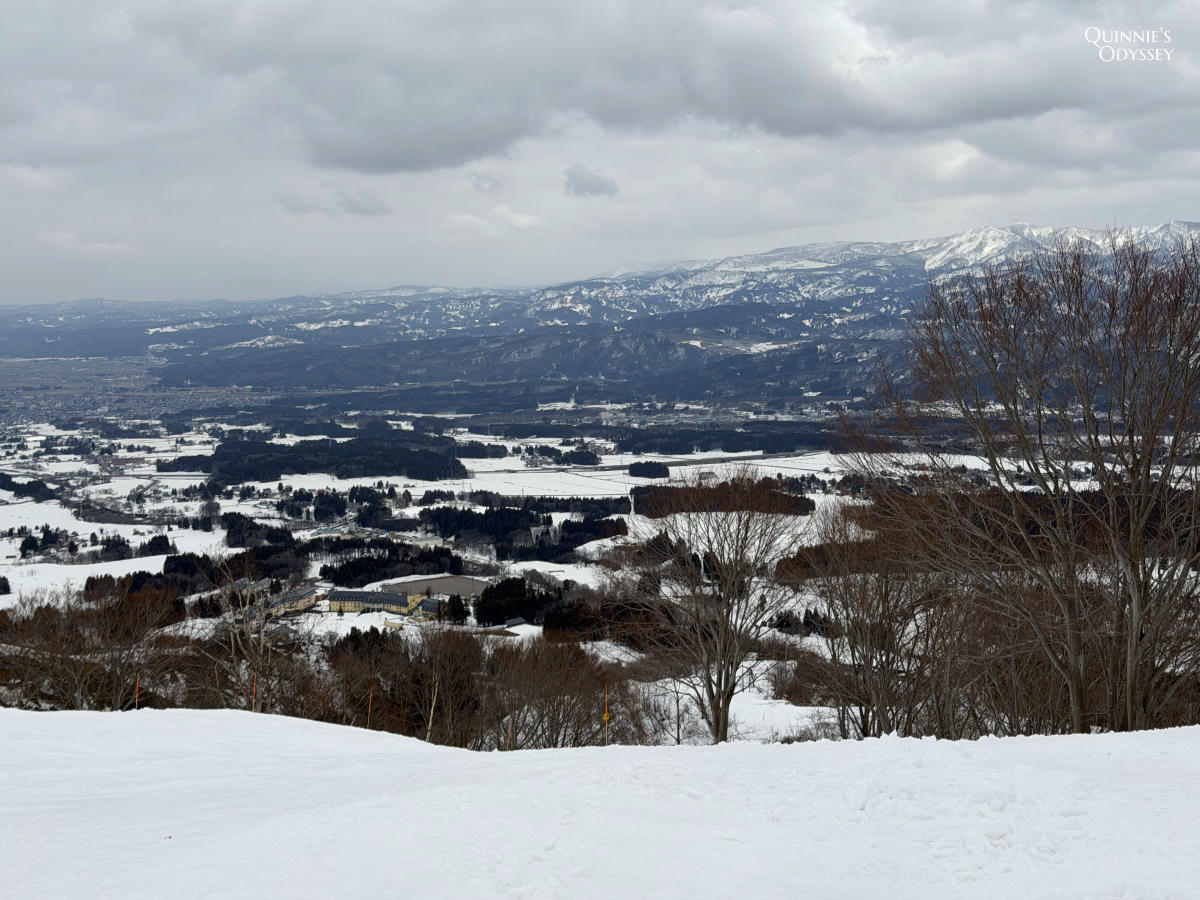
The instructor told us to slowly descend using heel-side turns, traversing across the slope to control speed.
Sounds simple, but for beginners facing this kind of slope for the first time, it was basically a nonstop falling session.
Thankfully, the snow was still soft powder (even in mid-March), so falling didn’t hurt much.
I fell forward, backward… and at one point, I even face-planted straight into the snow, literally got a mouthful of it.
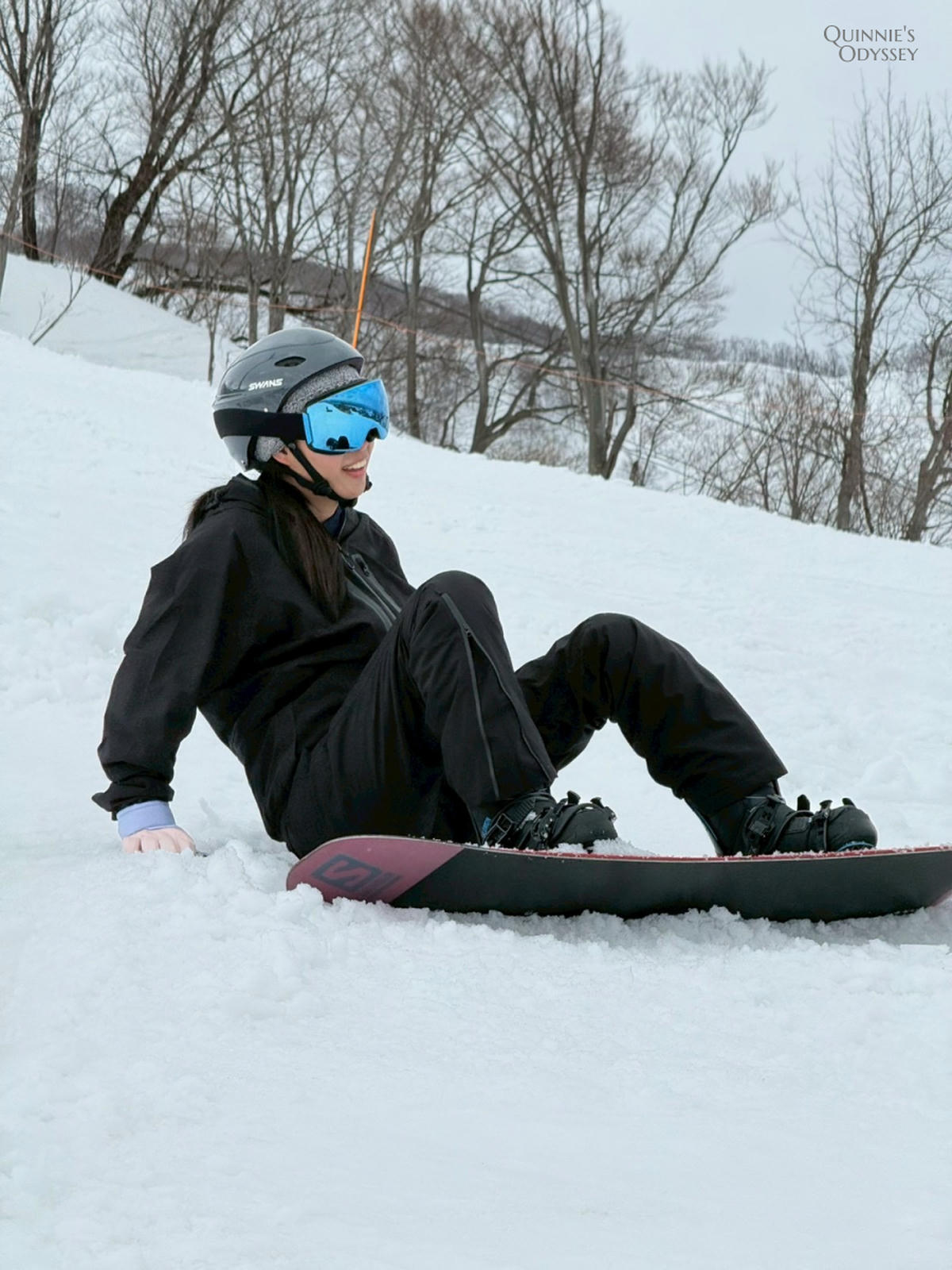
But as I kept going, my body slowly started to find its rhythm.
There were moments when I let the board point slightly downhill, picked up speed, and then used heel-side turns to slow down.
That drifting, leaf-like motion down the slope… was honestly the most unforgettable part of the whole trip.
That’s when I truly understood why people get addicted to snowboarding.
That feeling of accelerating downhill – it’s so satisfying.
At one point, I managed to go quite a long distance without falling, and the sense of achievement was incredible.
Snowboarding turned out to be way more fun than I expected.
After just one lesson, I was already hooked.
That feeling of gliding downhill and finding your balance – it’s seriously addictive.
But at the same time, it’s physically exhausting.
After about two hours, I was completely wiped out.
Since we were continuing on Day 2, we stored our snowboards in the lockers next to the Arai lobby.
You just tell the staff you want to store your board, and they’ll give you a locker number and code. Then you place your snowboard inside.
As for gear like snow jackets, pants, and goggles, we just wore them back to the room and used them again the next day.
Time: 8:30–10:30
Slope: Pony | Beginner | 400m
We met again at 8:30 AM.
The weather was completely different from the day before, it started snowing, so we got to experience both sunny and snowy conditions.
The morning lesson was back on the beginner slope.
We took the lift up and practiced the same basic skills from Day 1, over and over again.
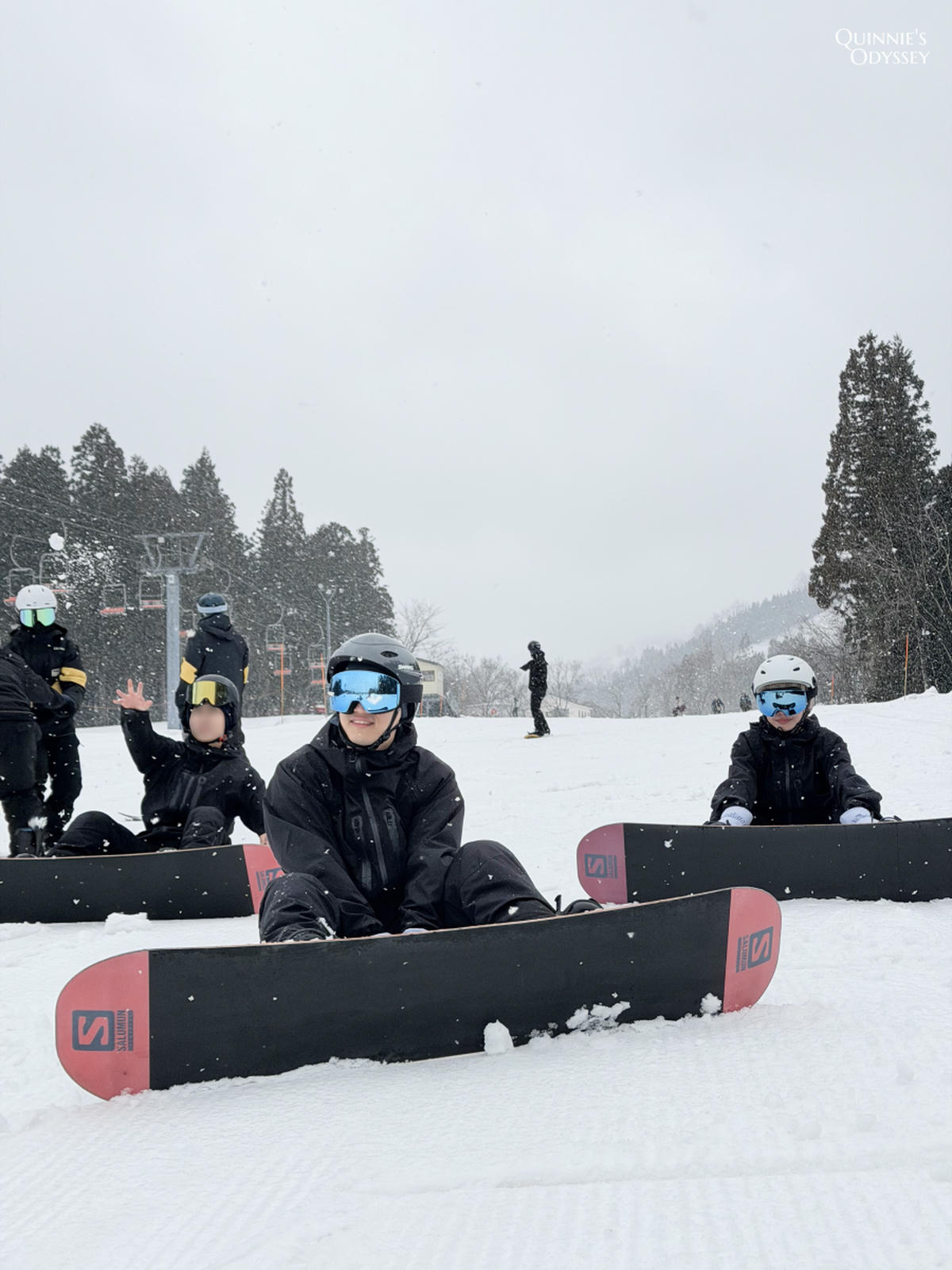
Surprisingly, after just one night, the feeling I had finally found the day before… was kind of gone.
As soon as I got on the board, I started falling again.
So the entire morning was basically about slowly regaining that lost muscle memory.
Time: 12:30–14:30
Slope: Be Free | Intermediate | 1,300m
After a two-hour lunch break to recharge, we headed up again from Zendana Station to an even higher area.
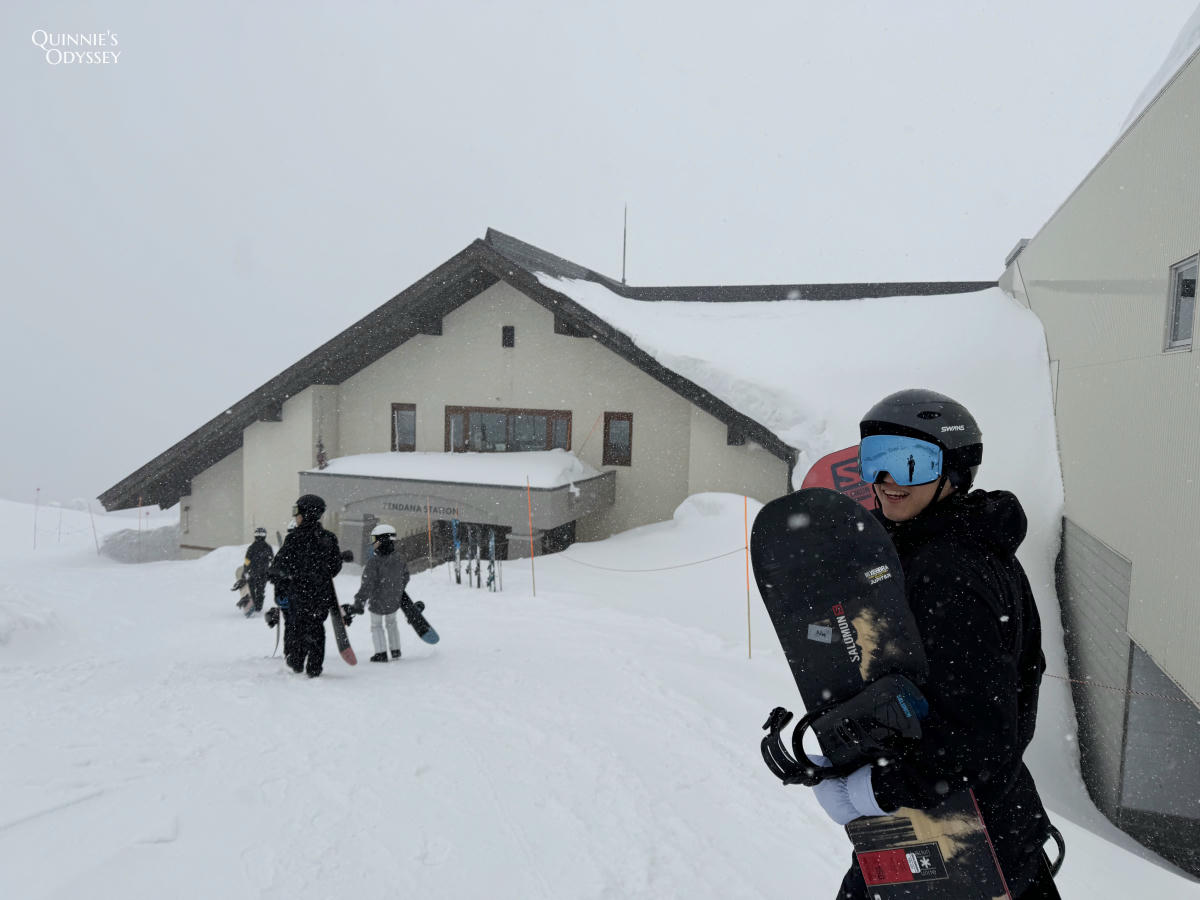
The weather wasn’t great, heavy snow was falling all day, and visibility was extremely poor.
Standing on the slope, everything in front of me looked completely white. I could barely see anything in the distance.
Combined with the already steep terrain, it definitely made things more nerve-wracking.
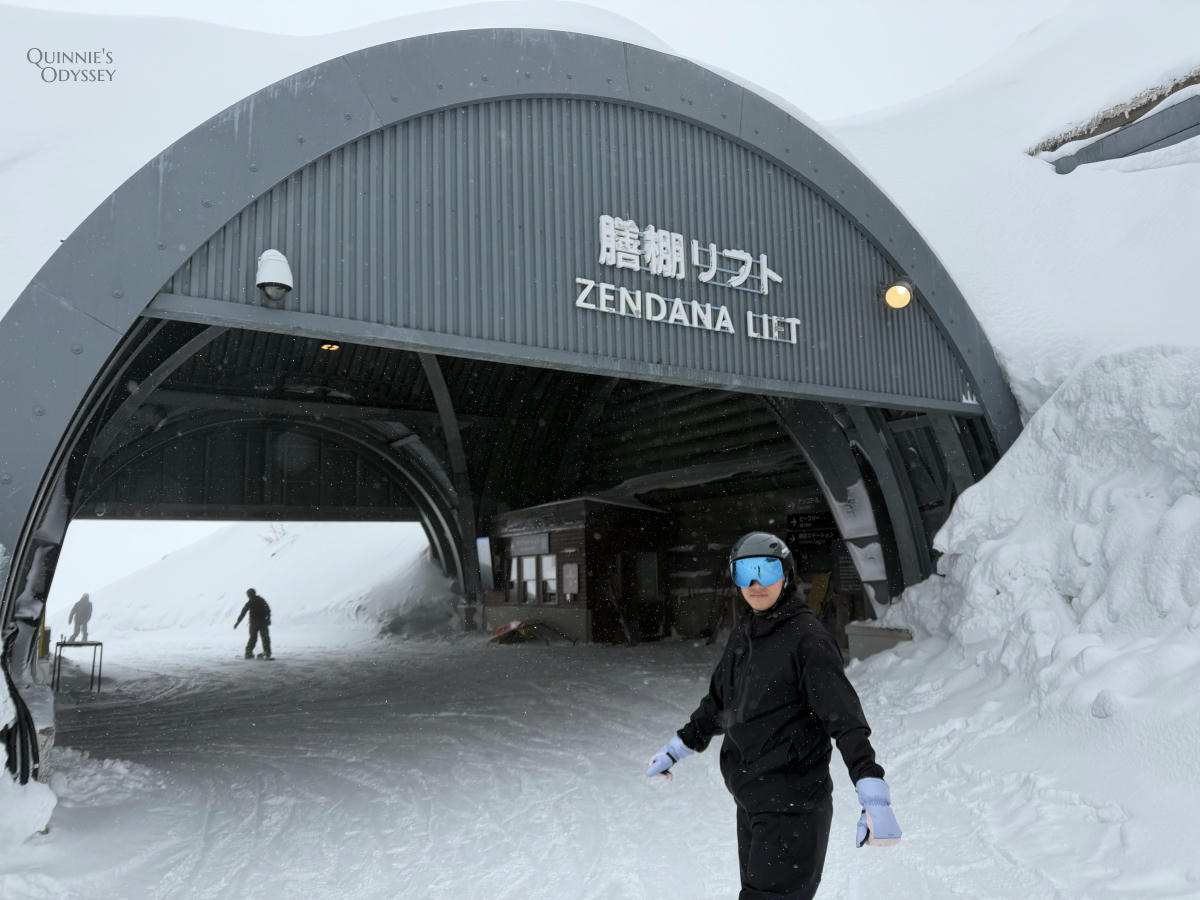
That day, our instructor guided a group of seven.
We would snowboard down in sections, each person stopping at designated points and waiting for everyone to regroup before continuing.
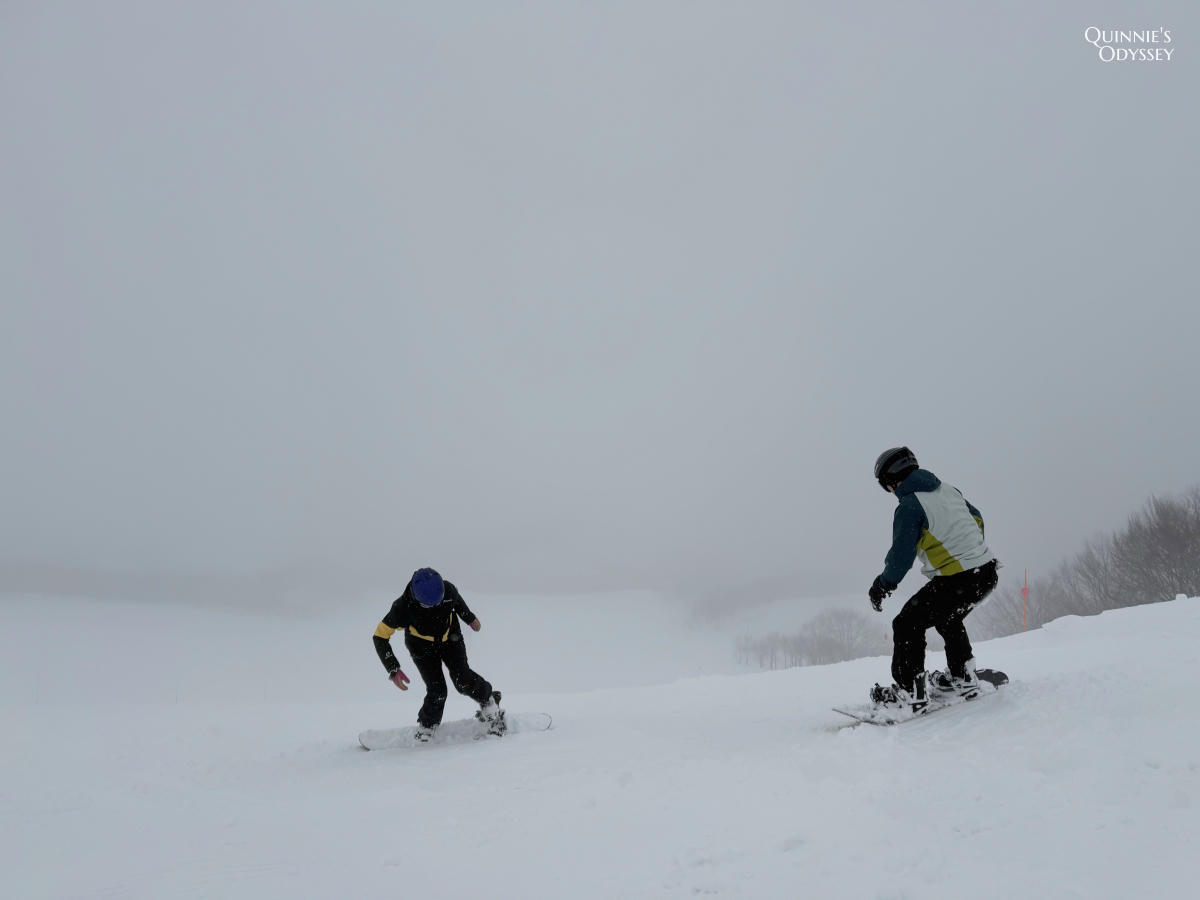
The entire slope was covered in fresh snow, and with everything looking white, it was honestly a bit scary for a beginner like me.
The final section was especially steep.
At that point, I gave up trying to ride it properly and just sat down and slid all the way to Zendana Station.
I was completely exhausted, physically and mentally.
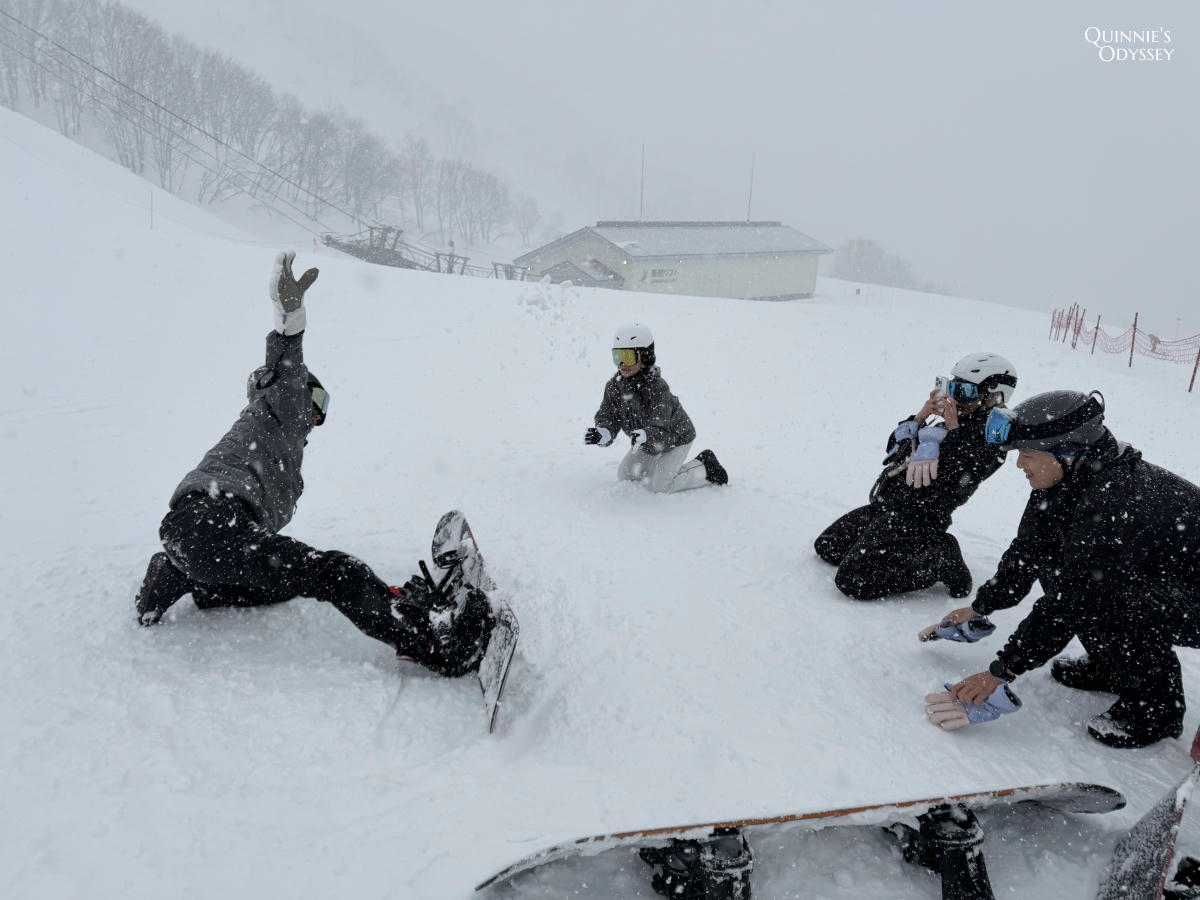
Outside, the snow was still falling heavily.
We ended up taking a bunch of cool snowboarding photos in front of Zendana Station, just to capture the memory of this fun but exhausting experience.
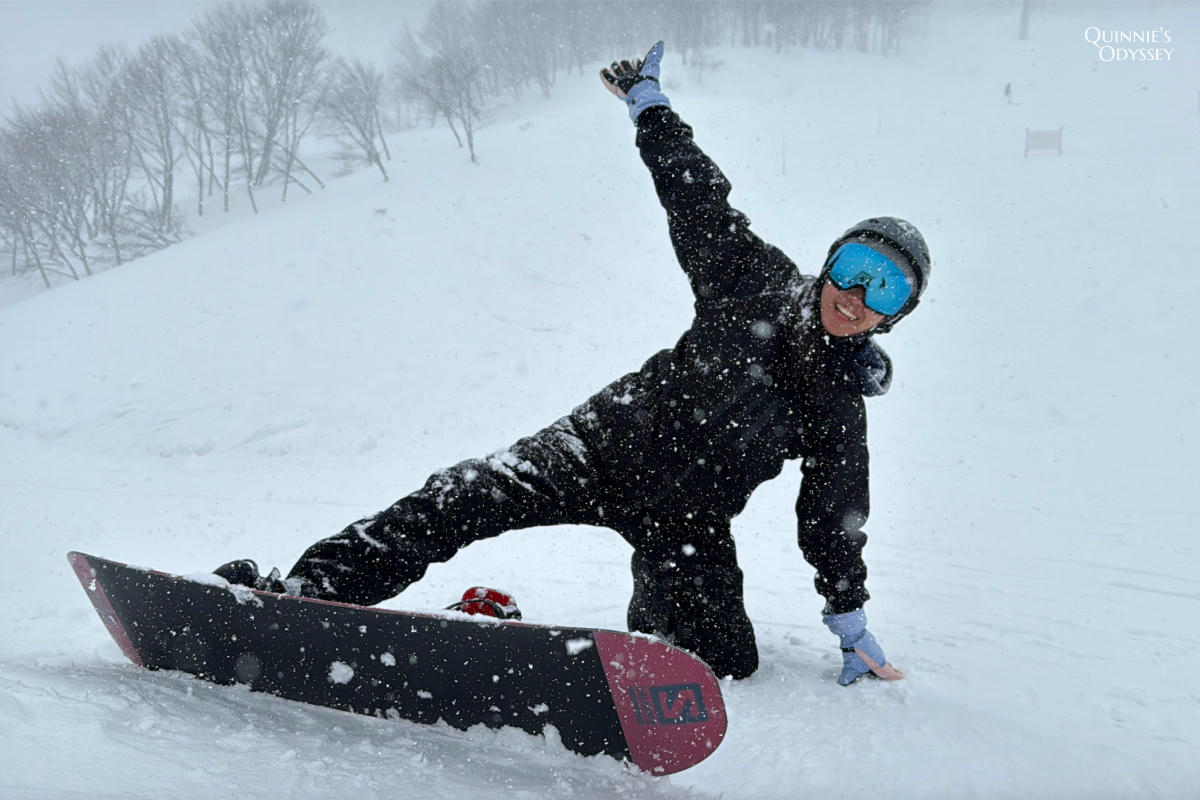
After that, we went inside to rest.
After sitting for a while, someone suddenly said, “The snow stopped!”
We looked outside, and the view had completely changed.
What was once a white blur suddenly became clear.
The mountains in the distance and the entire slope were finally visible again.
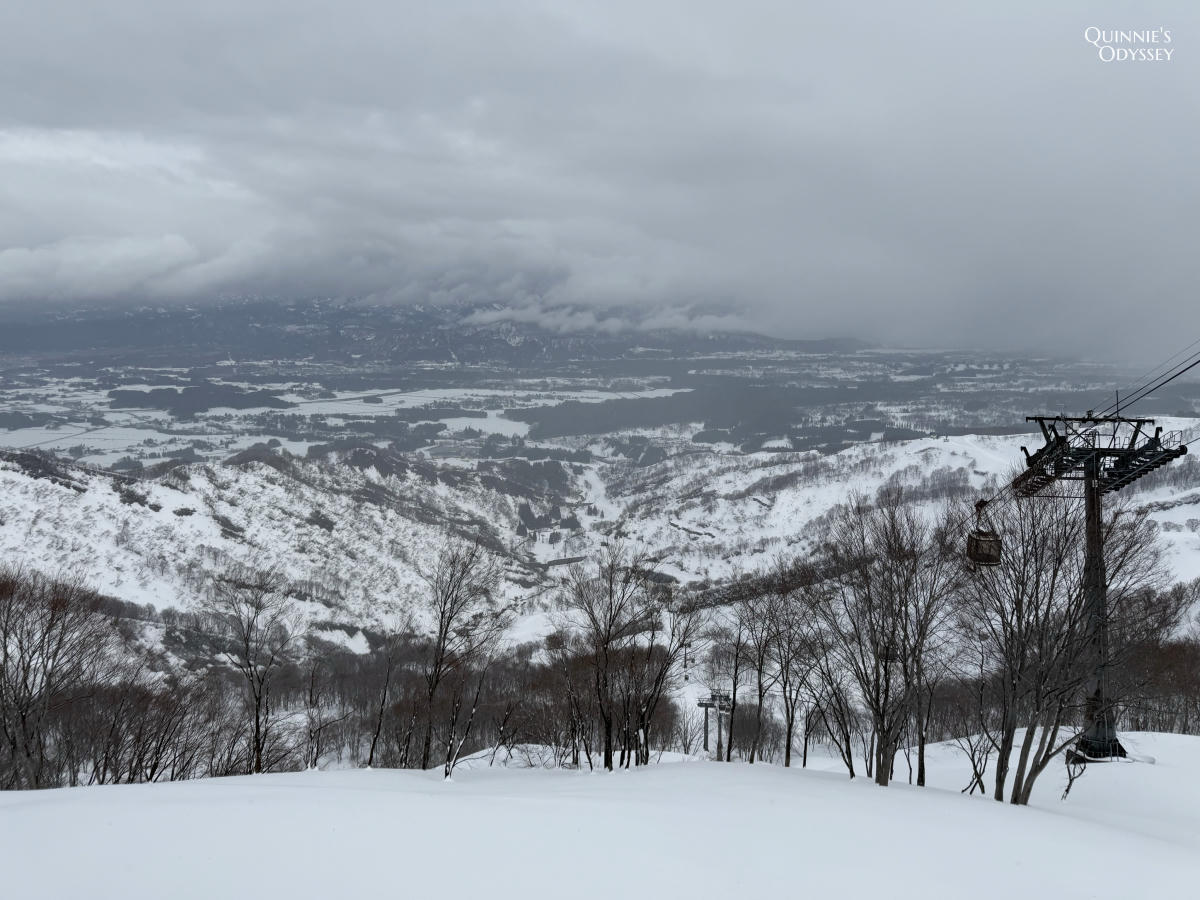
After 2:30 PM, it was free snowboarding time.
If you still had energy, you could keep riding until 4:30 PM.
But if you were completely exhausted (like me), it was also perfectly fine to call it a day and just rest.
When people hear “snowboarding in March,” the first question is usually:
“Is there still snow? Won’t it be icy?”
I had the same concerns before this trip. But after experiencing it myself, my answer is:
Absolutely worth it, and it even comes with some advantages you don’t get during peak season.
March is already close to the end of the snow season, so the number of visitors – especially on weekdays – is much lower compared to peak months.
When we went, there was almost no wait for the lifts.
You could finish a run and hop right back on.
The slopes were also much less crowded, which is incredibly beginner-friendly.
For example, when you fall (and you will fall 😆), you don’t have to worry too much about someone speeding down right behind you.
I’ve heard that during peak season, slopes can get quite crowded, and lift lines can be long. You end up spending a lot of time and energy just waiting.
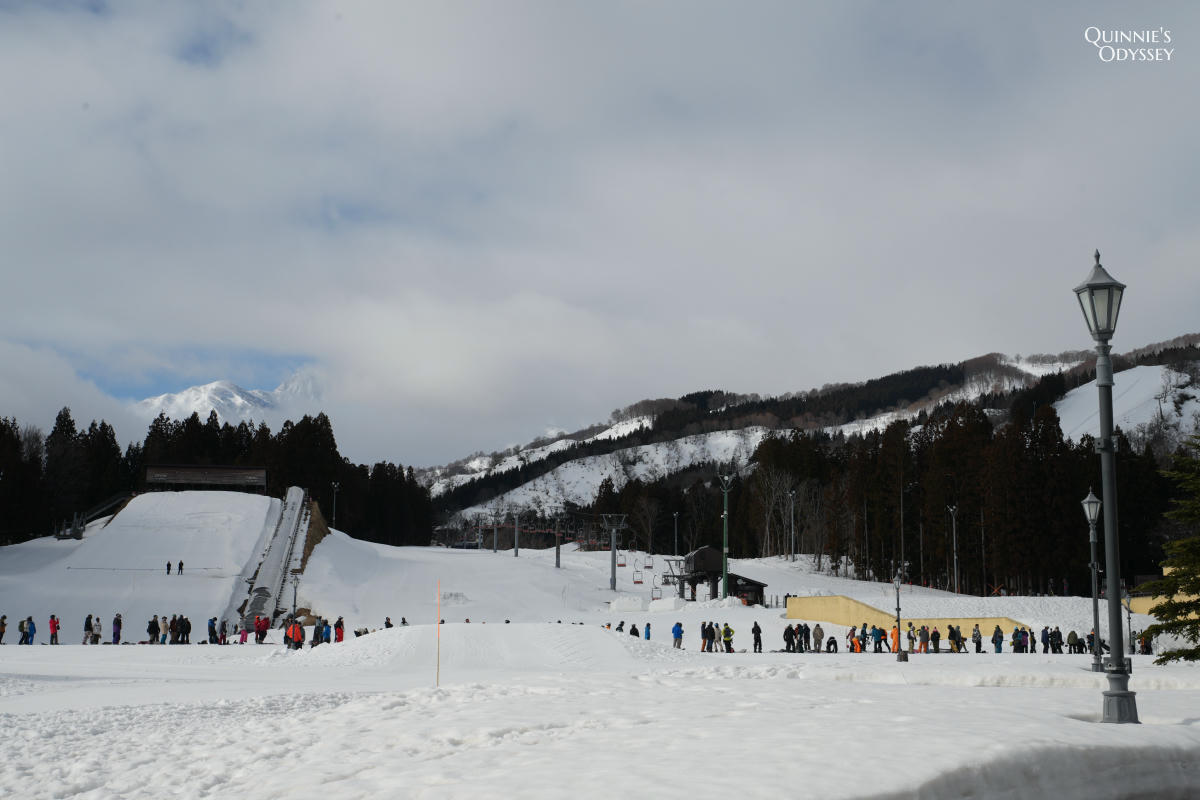
That said, one thing to keep in mind: try to avoid weekends if possible.
We snowboarded on weekdays with barely any crowds, but when we passed by the resort on the weekend, the lift lines were much longer, completely different from our experience.👇
The biggest concern about snowboarding in March is definitely the snow quality.
A lot of people worry that the snow might be icy and hard, making falls more painful.
Luckily, we had pretty good conditions during our trip.
The temperature stayed around 0–4°C (32–39°F), and overall the snow quality was great.
Especially on higher slopes, we even got to experience powder snow.
Powder snow feels completely different from the icy, compact snow people often imagine. It’s soft and fluffy, almost like stepping into fine powder, and falling on it doesn’t hurt as much.
Of course, snow conditions in March can vary depending on the weather.
If temperatures suddenly rise, the snow can become harder and icier, which makes falling more uncomfortable.
We were definitely lucky to catch good conditions during our trip.
My answer is simple: Yes – absolutely worth it.
Before the trip, I had a lot of worries since I had never tried snowboarding before.
But once I actually got there, I realized I didn’t need to stress so much.
Joining a guided group made everything super easy.
The instructors guide you step by step, all the equipment is ready for rental, and you stay in a five-star hotel right at the base of the mountain.
Honestly, you can just follow along without overthinking anything.
The whole experience felt comfortable, safe, and way more fun than I expected.
There’s something magical about that first moment – when you glide down the slope, pick up speed, and feel your body and the board start to move as one.
That’s when you understand why so many people come back to snowboard every year.
So if you’re a beginner, don’t overthink it.
You don’t need courage, you just need to sign up and go.
▼ Exclusive Deal for Sika Readers ▼
Use code【DNBDRT】👉👉 Save ¥3,000on your TOCOO! car rental(view guide)
A: It depends on what you value more: looking cool or minimizing frustration.
Skis: Easier to learn, smoother start
Skiing movements are more similar to walking. Most beginners can learn how to slow down (snowplow) and move on gentle slopes within the first day, so it’s less frustrating.
If you want to quickly enjoy the feeling of moving around the resort, skis are a great choice.
Snowboard: Cooler, but steeper learning curve
Let’s be honest, snowboarding just looks way cooler. Every photo feels like a street-style sports shoot.
But the learning curve is tougher at the beginning.
You’ll probably spend your first day falling… a lot.
If you’re okay with struggling at first and want those amazing photos, snowboarding is the way to go.
A: Even though Lotte Arai is famous for its deep powder and steeper terrain, it also has wide and well-designed beginner slopes at the base area.
With a professional instructor, the soft snow here can actually make falls less painful, making it a surprisingly good place for beginners.
A: At Lotte Arai Resort, you can rent everything you need on-site, including:
snow jackets, snow pants, protective gear, goggles, and helmets.
Things you should bring yourself: gloves, a beanie, and ski socks.
A: It depends on what you’re looking for: perfect snow or a more relaxed experience.
January to February: Peak powder season
This is when Niigata gets the most snowfall, and you can experience the famous “powder snow” at its best.
However, it’s also the busiest time, with crowded slopes and long lift lines, which can be stressful for beginners.
March: Fewer crowds, more relaxed, beginner-friendly
While the snow may not be as deep as peak season, based on my experience, it’s still soft enough, and falling doesn’t hurt much.
The biggest advantage is the reduced crowds.
The slopes feel more open, and you can practice without constantly worrying about bumping into others.
Thanks for reading!
If you’re interested in my stories, feel free to follow me on Instagram.
👉👉 IG: @sika_artist 👈👈