Physical Address
304 North Cardinal St.
Dorchester Center, MA 02124
Physical Address
304 North Cardinal St.
Dorchester Center, MA 02124

Just a 20-minute ride from Narita Airport, you’ll find Naritasan Shinshoji, a temple with over 1,000 years of history.
Every year, it ranks among the top three most visited temples and shrines in Japan for Hatsumode (New Year’s visit), second only to Meiji Shrine, and on par with Kawasaki Daishi.
If you’re flying in or out of Narita, all it takes is a few extra hours to step into a place where history spans over a millennium, and where a sacred fire ritual has never been extinguished.
And once you get there, you’ll probably realize the same thing I did:
the temple grounds are much bigger than expected, and there’s a lot more to explore.
It’s definitely worth setting aside more time for this place.
▼ Exclusive Deal for Sika Readers ▼
Use code【DNBDRT】👉👉 Save ¥3,000on your TOCOO! car rental(view guide)
The origins of Naritasan Shinshoji date back to the Heian period, during a major uprising that threatened imperial rule.
In 939, the samurai Taira no Masakado led a rebellion in the Kanto region. In response, Emperor Suzaku sent a monk to pray for victory, bringing a statue of Fudo Myoo said to have been carved by Kobo Daishi (Kukai). A goma fire ritual was performed in Narita, and just days later, the rebellion was suppressed.
Believed to be the power of Fudo Myoo, the statue was enshrined here, marking the beginning of Naritasan Shinshoji. The name “Shinshoji” means “new victory temple,” commemorating this event.
Since then, the goma fire ritual has continued daily for over 1,000 years without interruption, one of the reasons Naritasan is considered one of Japan’s most important temples.
By the Edo period, its fame had spread nationwide, helped by kabuki actor Ichikawa Danjuro, and it became a must-visit pilgrimage site.
Naritasan Shinshoji is the head temple of the Chisan branch of Shingon Buddhism. Its main deity is Fudo Myoo, a powerful guardian figure enshrined in the Main Hall.
He’s often depicted with a fierce expression, holding a sword and a rope, but this “anger” represents the power to cut through obstacles and burn away negativity with the fire of wisdom.
Because of this, people come here to pray for many things, such as:
Whatever the wish, Naritasan is a place to reset, seek protection, and move forward with renewed strength.
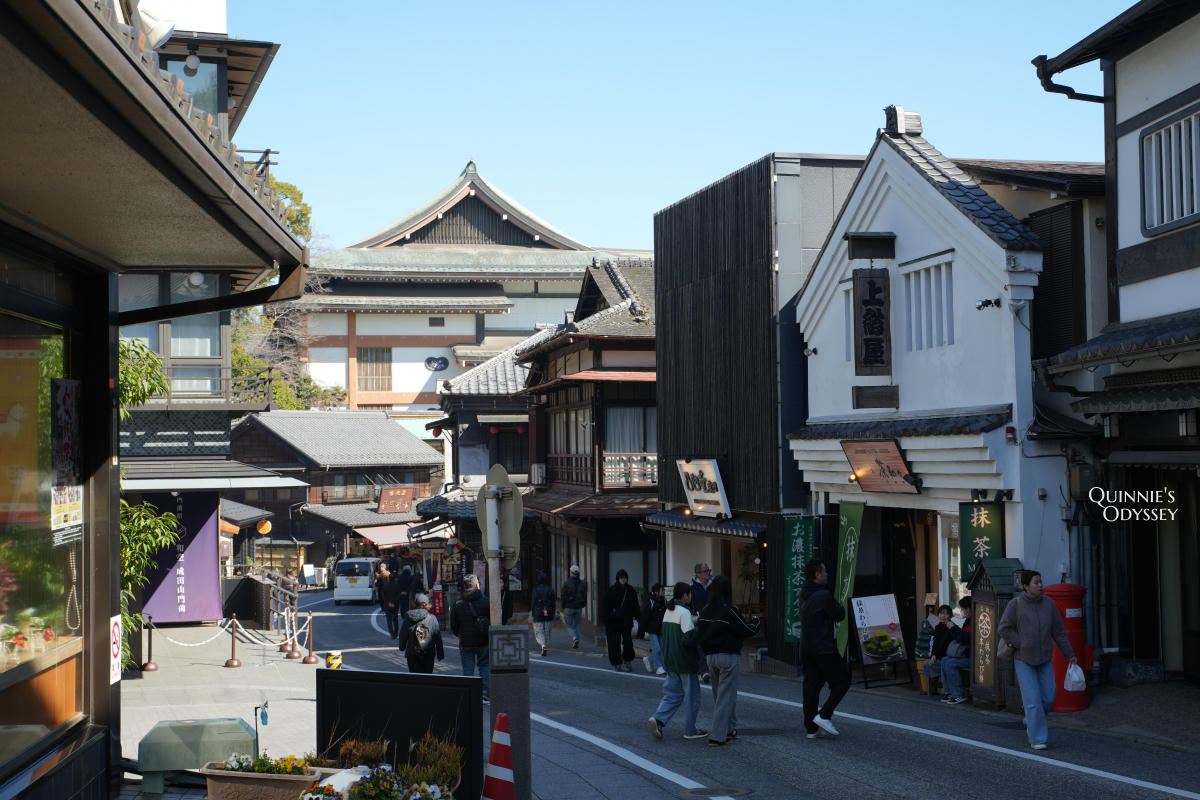
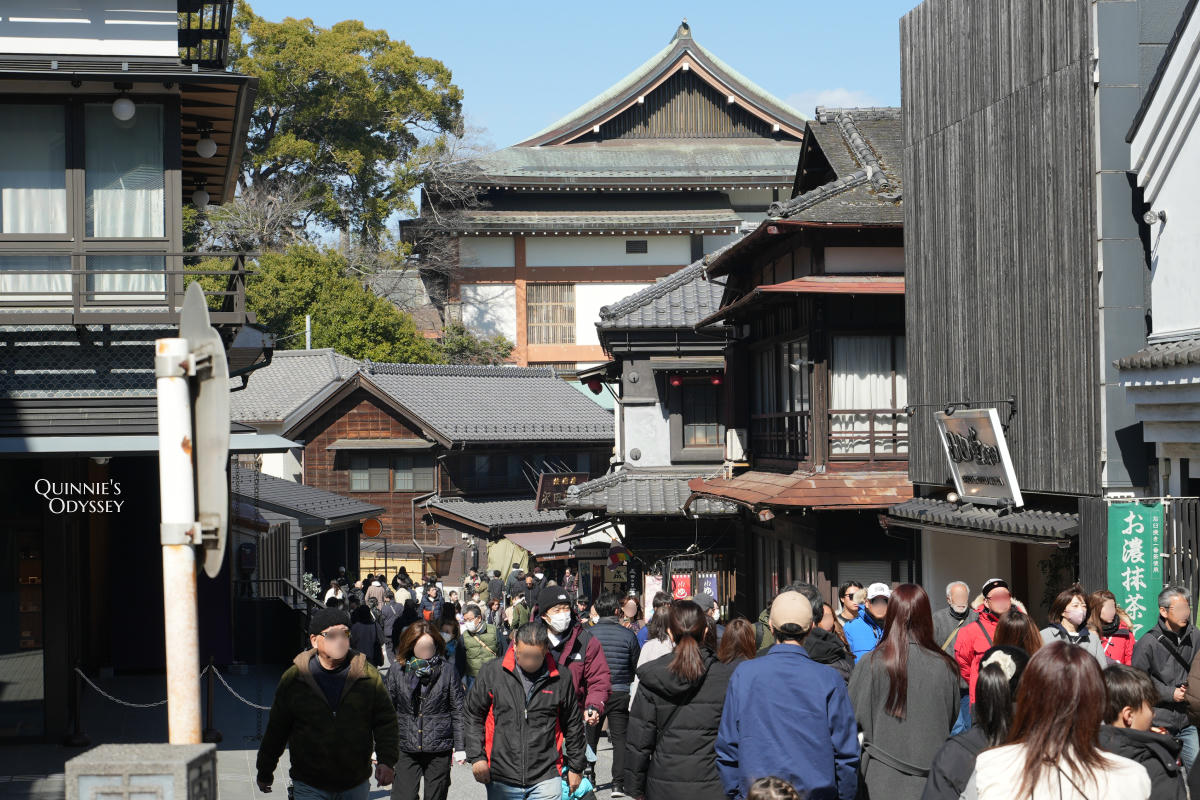
Just a short walk from JR or Keisei Narita Station, you’ll arrive at the Naritasan area.
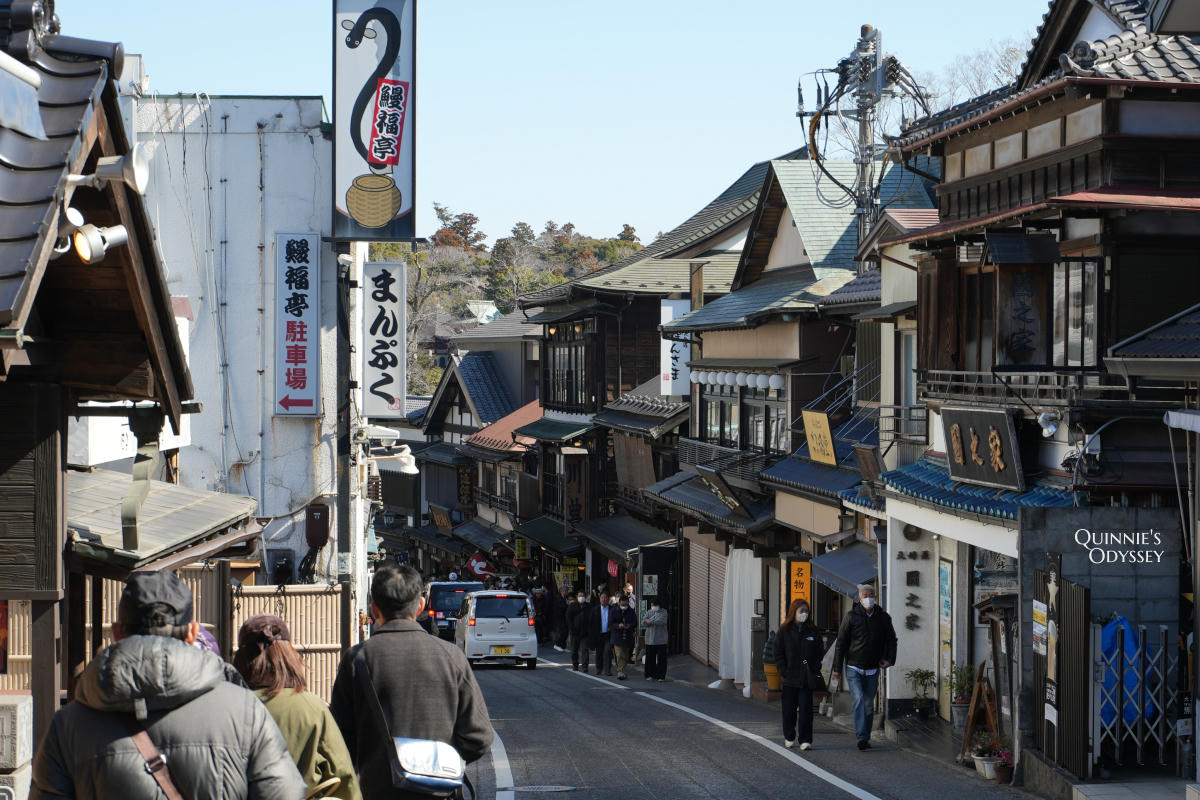
The Omotesando street leading up to the temple is about 600 meters long. Around a decade ago, all power lines were moved underground, giving the street a much cleaner and more traditional feel.
Both sides are lined with well-preserved Edo-style buildings, creating a strong sense of history.
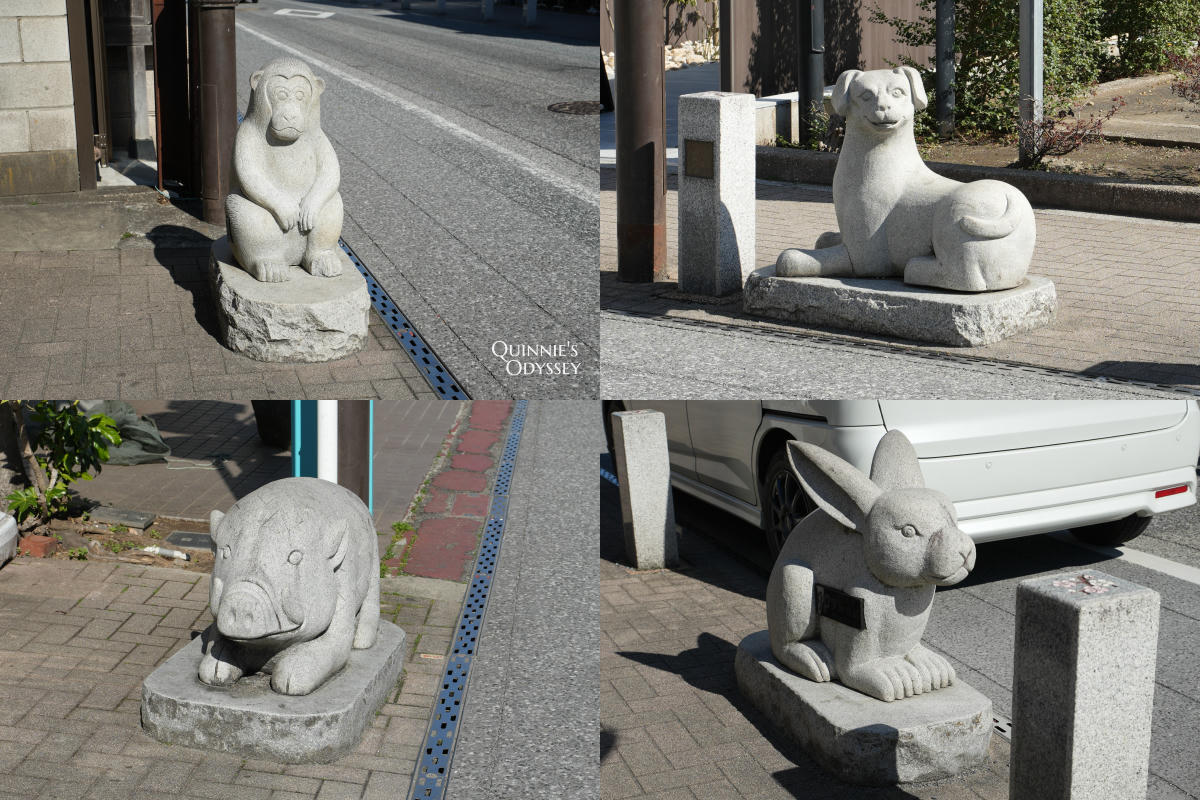
Along the street, you’ll find stone statues of the 12 zodiac animals.
They add a fun touch to your walk, you can try spotting your own zodiac sign as you go.
One thing you’ll quickly notice is how many unagi restaurants there are.
This dates back to the Edo period, when locals served eel to travelers visiting the temple. Over time, it became Narita’s signature dish.
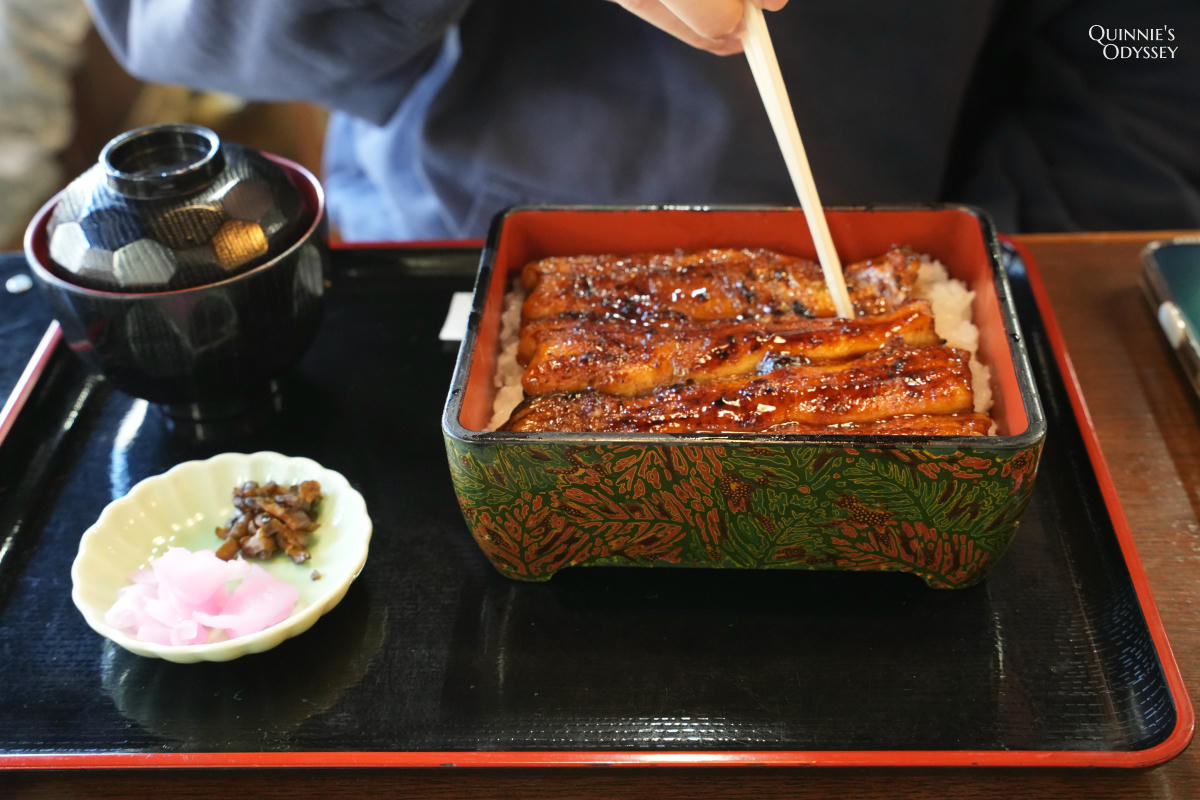
Narita-style unagi follows the Kanto method – steamed first, then grilled – giving it a soft texture with a rich, savory flavor.
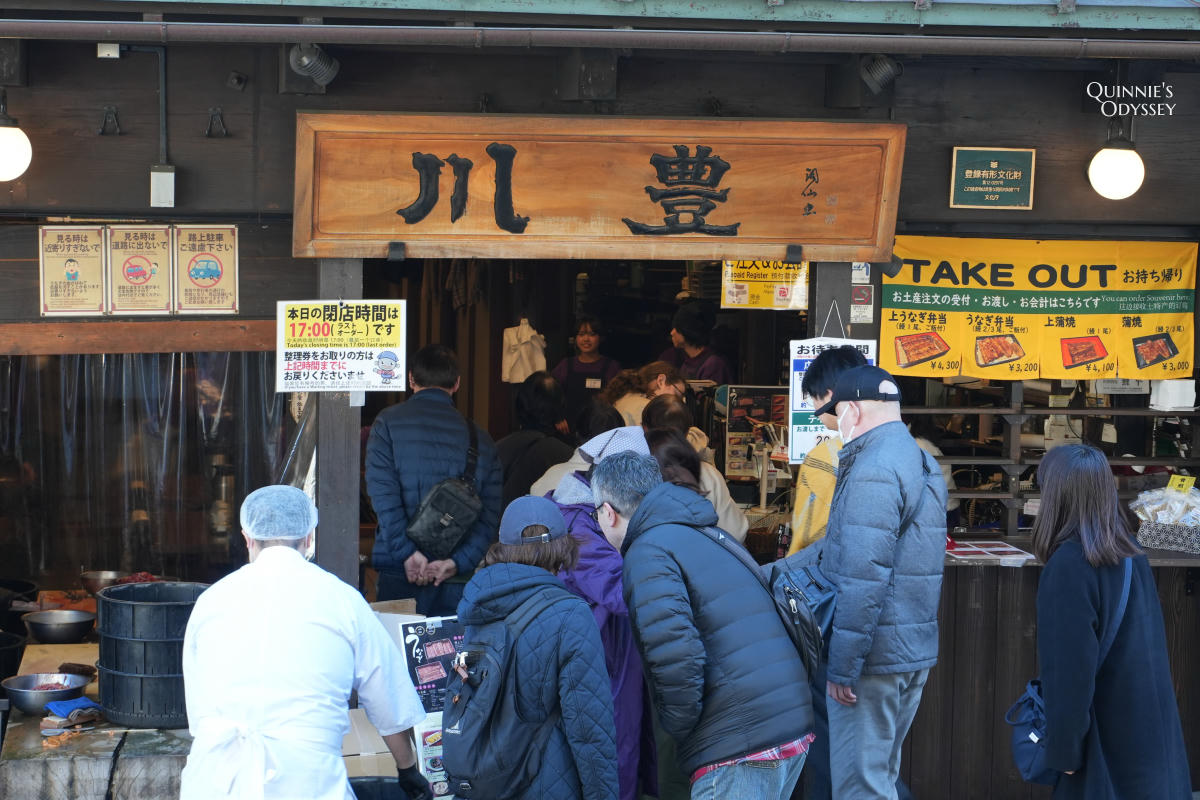
Famous spots like Kawatoyo Honten and Surugaya are popular choices. If you have time, it’s worth trying one.
The main route is simple: pass through the Grand Gate, then the Niomon Gate, and you’ll reach the Main Hall plaza.
But once inside, you’ll realize the temple is much bigger than expected, with plenty to explore.
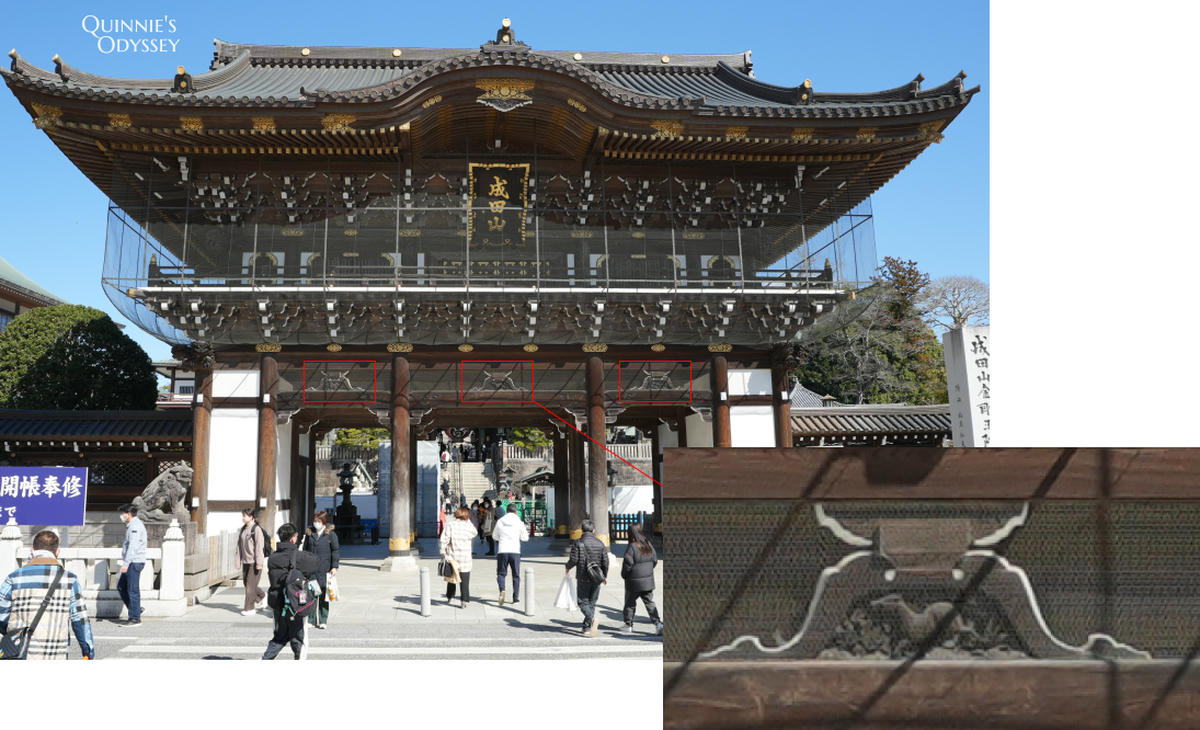
At the end of Omotesando, you’ll reach the Grand Gate, known as the Somon.
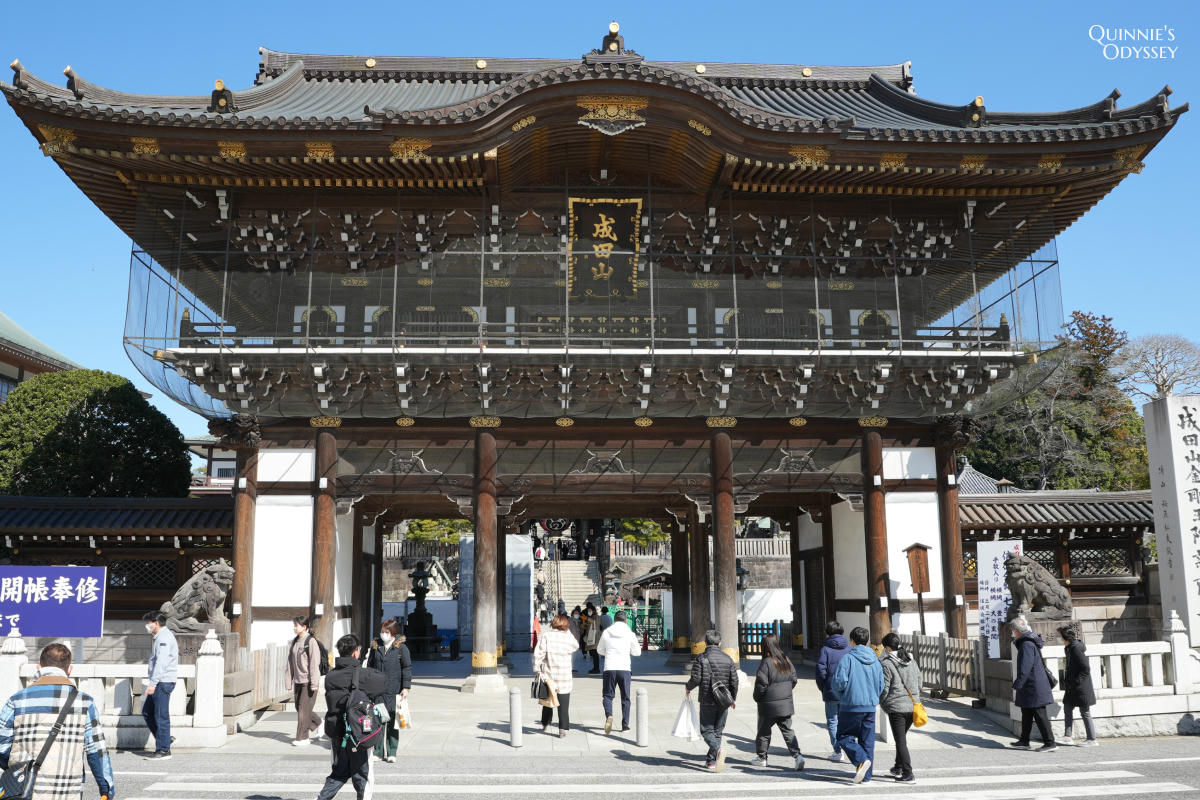
It was completed in 2007 to commemorate the 1,070th anniversary of the temple’s founding.
Built entirely from zelkova wood and standing about 15 meters tall, the gate has a very impressive presence.
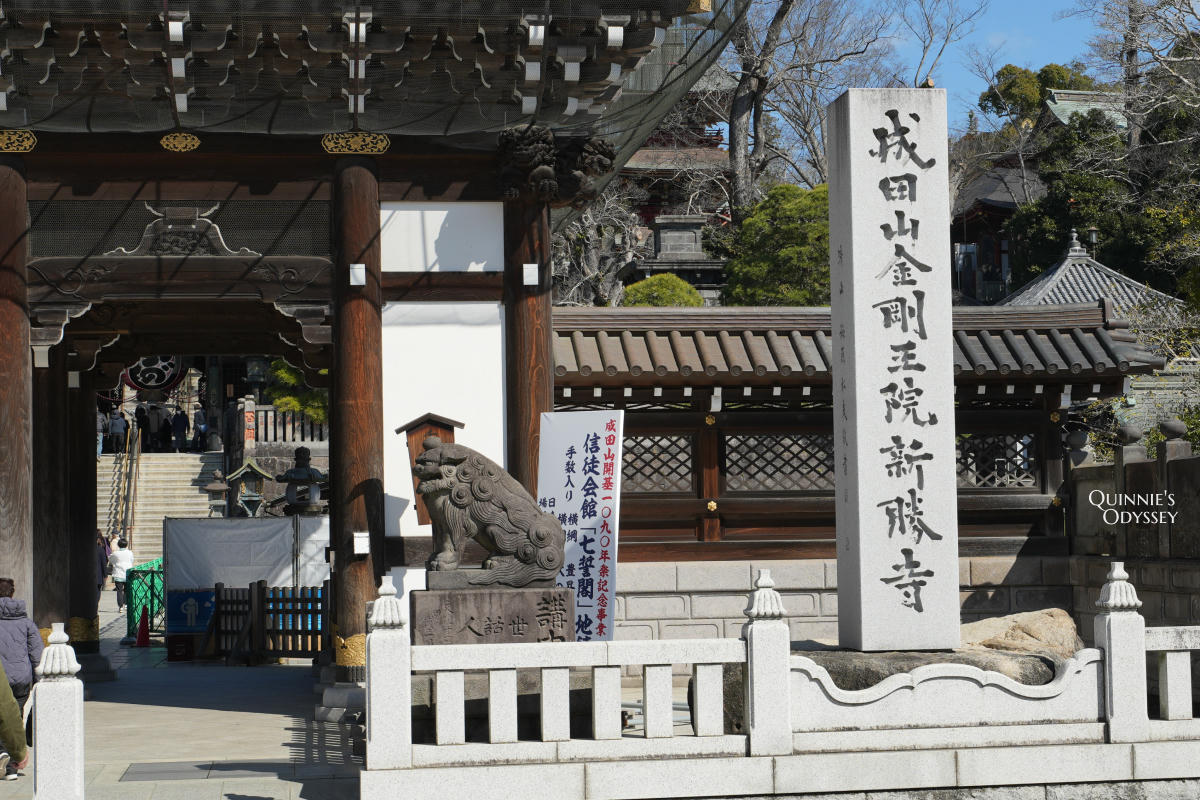
There’s also a fun detail here, don’t forget to look up as you walk through.
On the decorative brackets (called kibana), you’ll find carvings of the 12 zodiac animals. It’s said that if you walk through directly under your own zodiac sign, you’ll receive a bit of extra good luck.
If you happen to visit on the 28th of any month, you might also catch the “Good Fortune Fudo Market,” which feels a bit like an antique flea market.
Once you pass through this gate, you officially enter the central area of Naritasan.
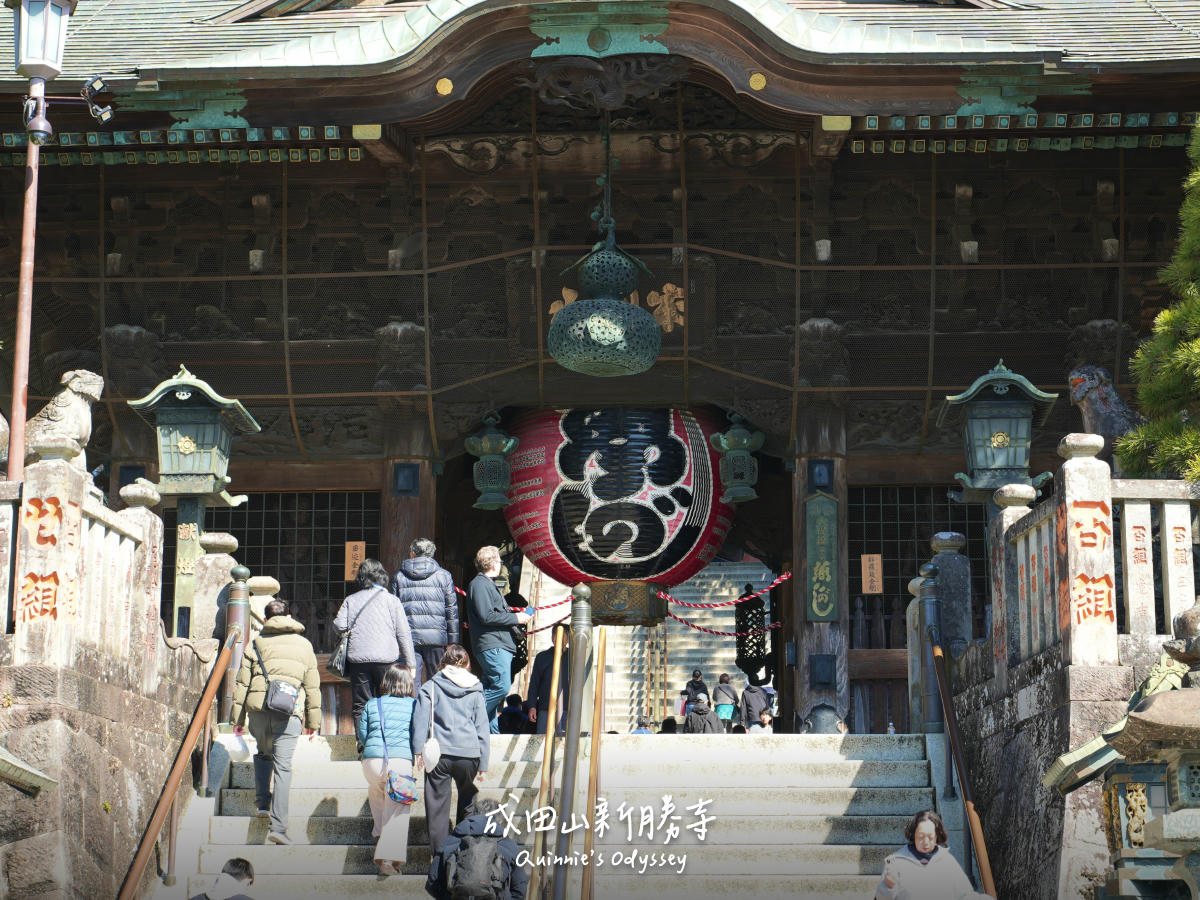
The Niomon Gate was built in 1831 and is designated as an Important Cultural Property of Japan.
As you approach, it’s hard to miss the massive red lantern hanging at the front.
It stands about 2.8 meters tall and weighs around 800 kilograms.
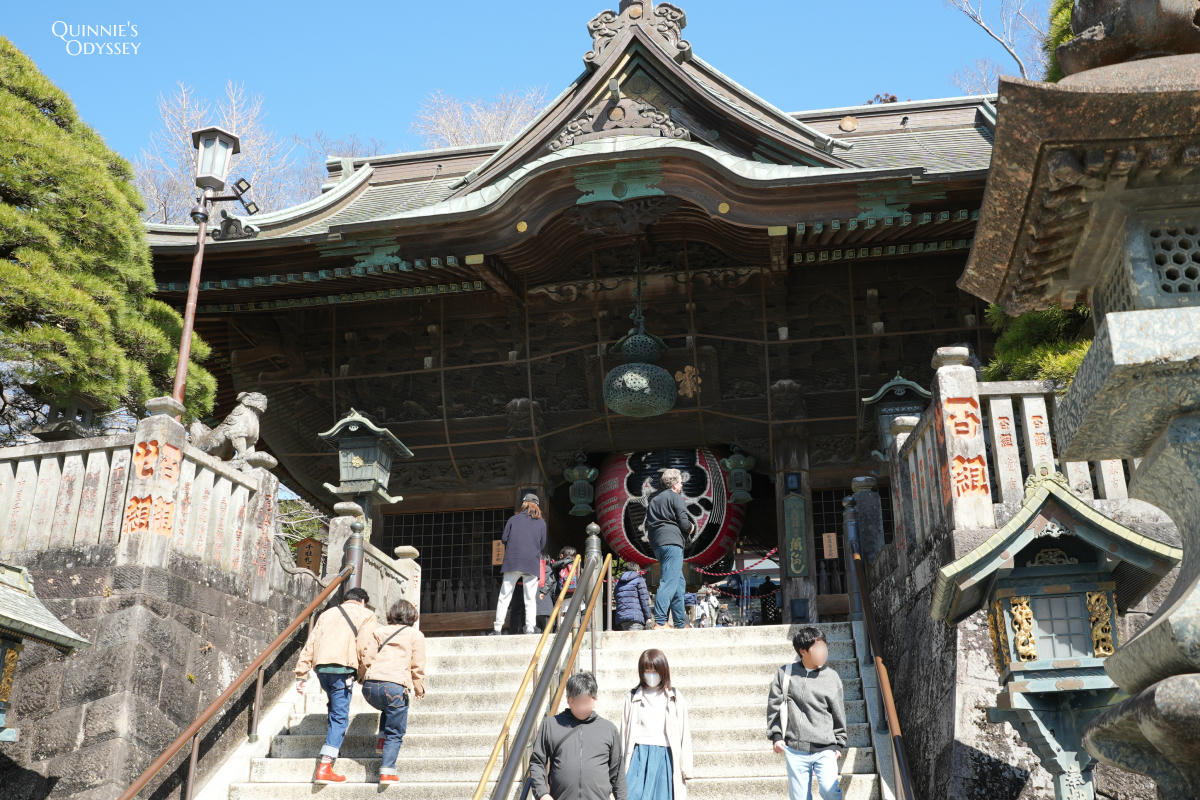
If you look closely, you’ll notice the words “Uogashi” (fish market) written on the lantern.
It was donated by fish merchants from Edo, who prayed to Fudo Myoo for safe voyages and successful business
If you look underneath, you’ll see a carved dragon, symbolizing water and protection against fire.
Fun fact: the lantern is replaced roughly every 10 years to keep its bright, vivid red color.
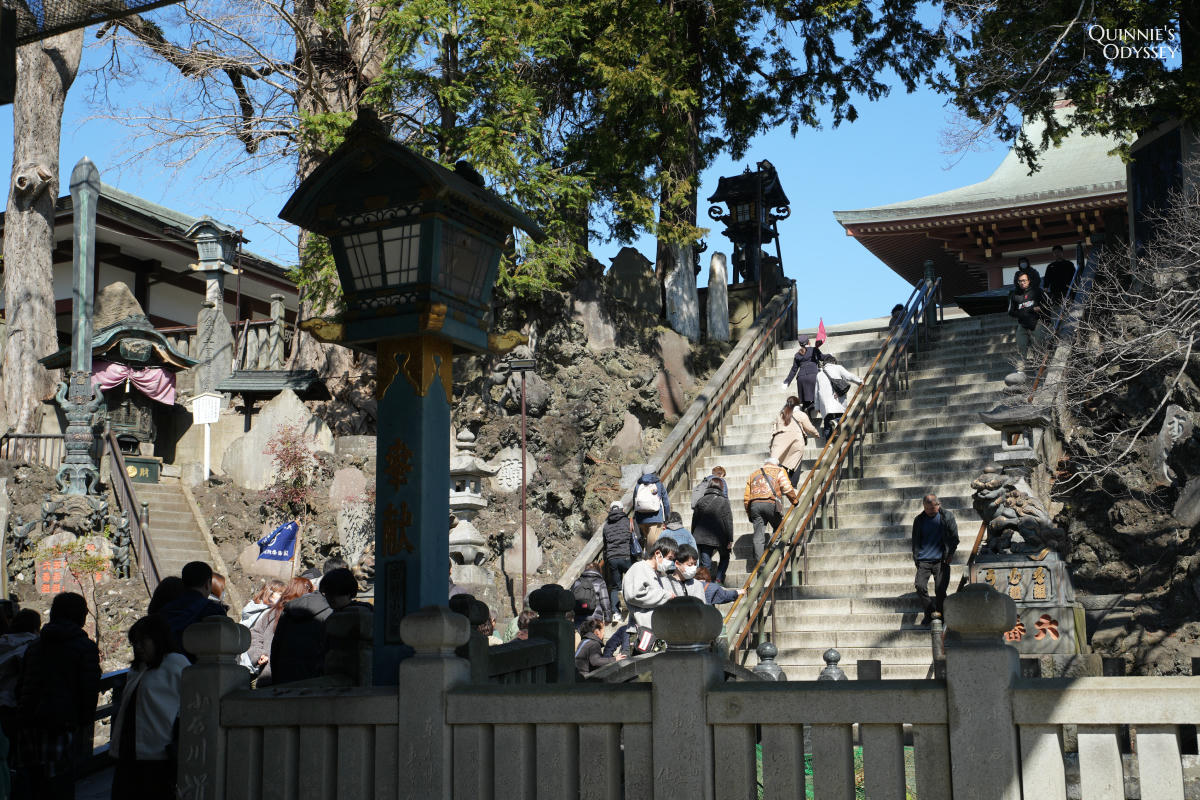
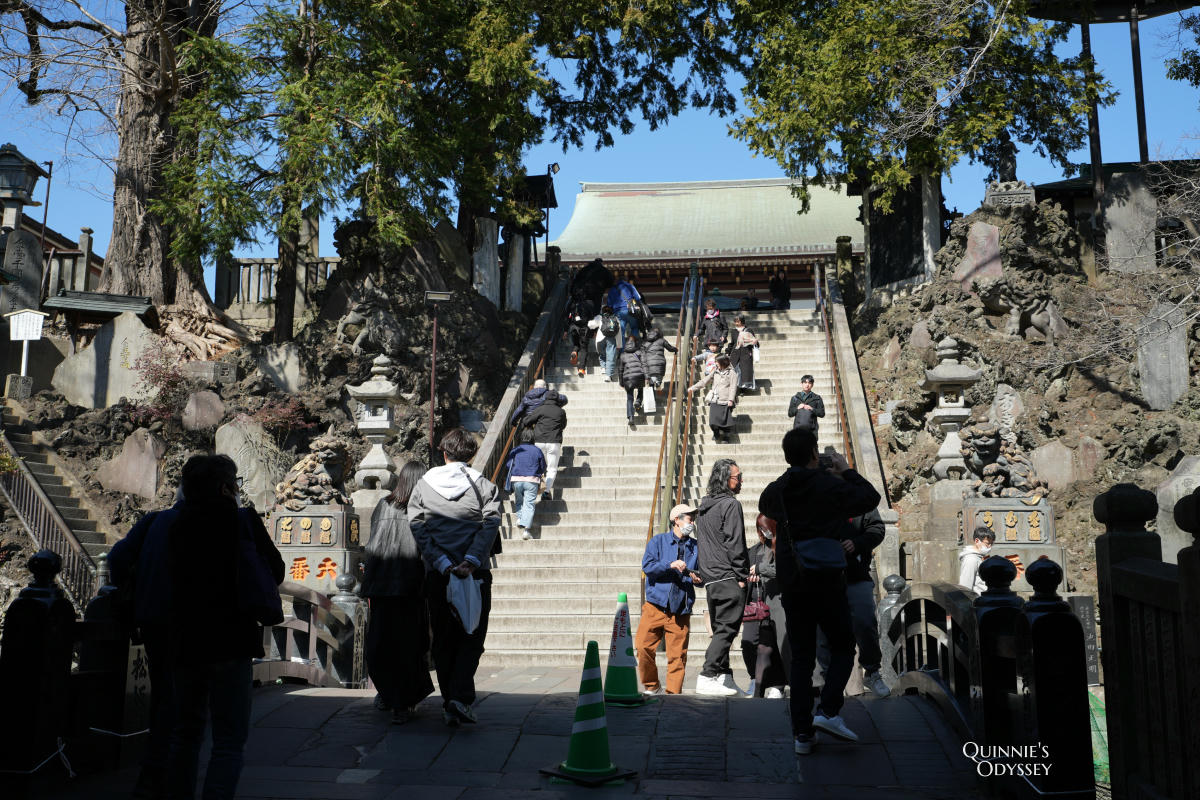
After passing through the Niomon Gate, you’ll walk up a stone staircase toward the Main Hall, lined with stone monuments and lion statues.
These monuments bear the names of past donors, worshippers and merchants, showing their devotion to Fudo Myoo.
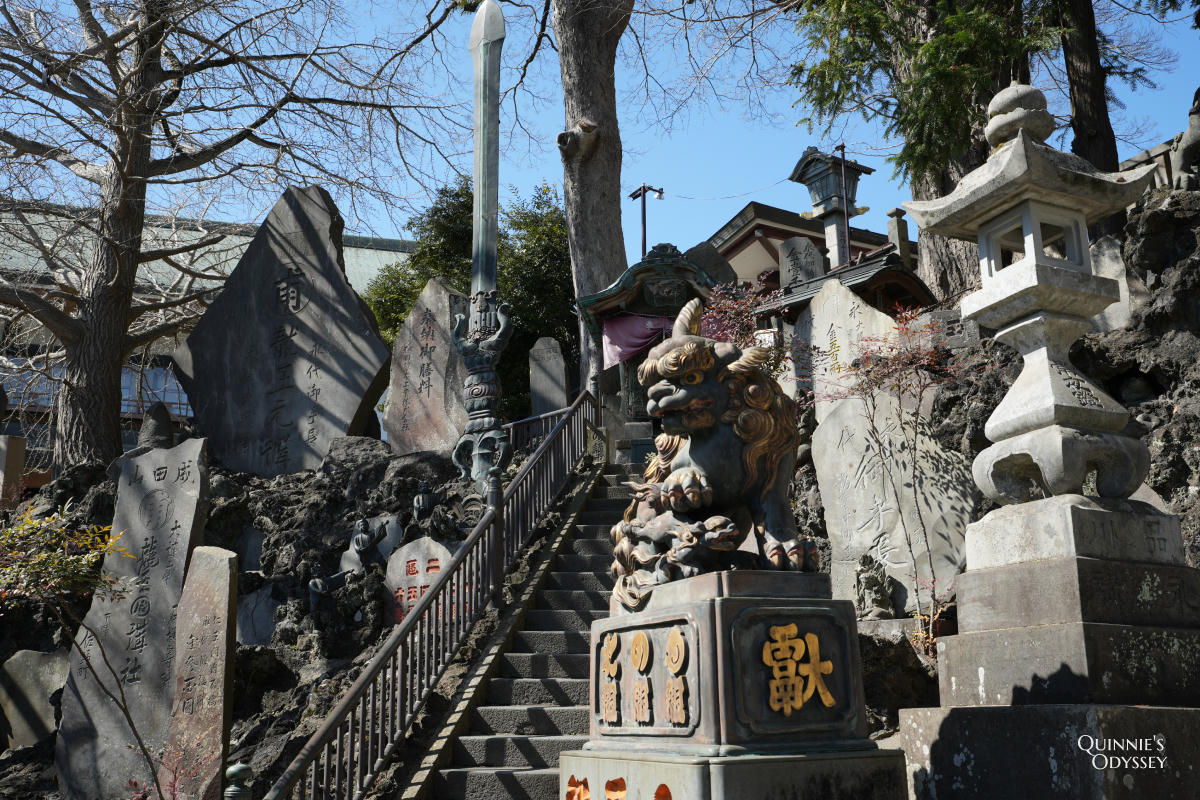
In the Edo period, having your name engraved here was a great honor and a symbol of prosperity and blessing.
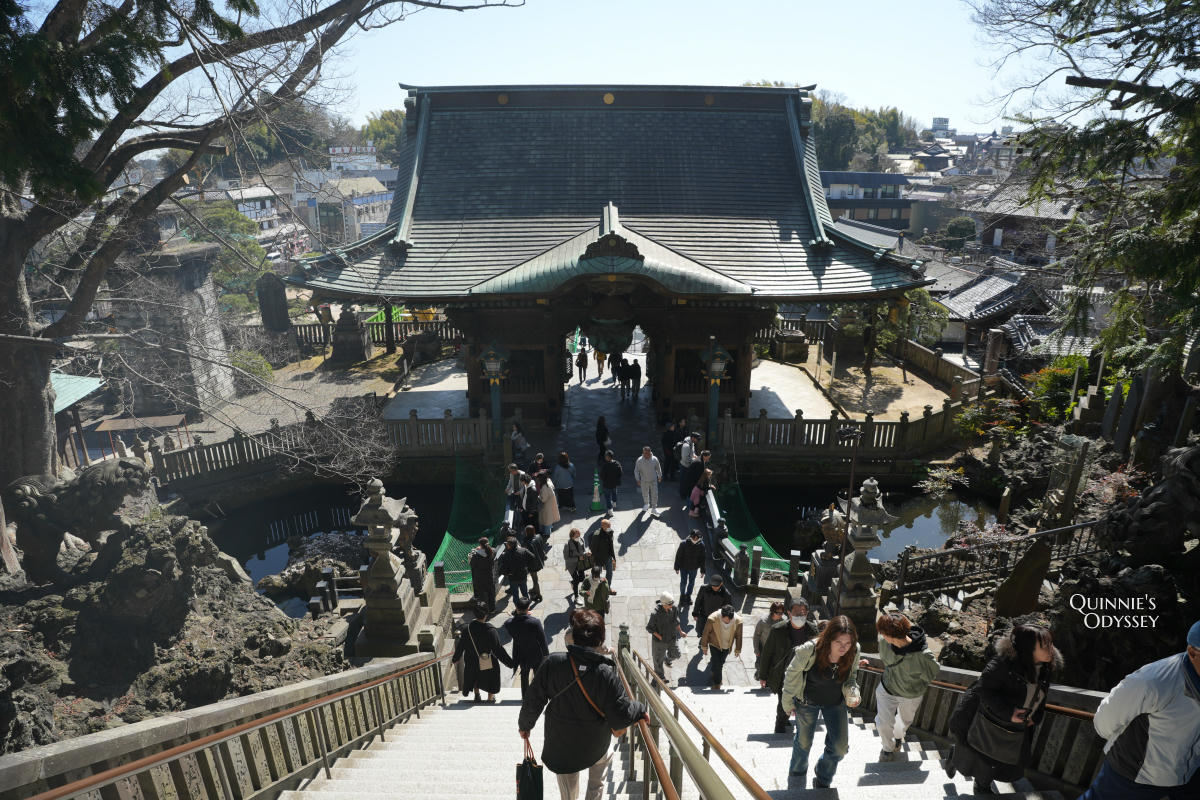
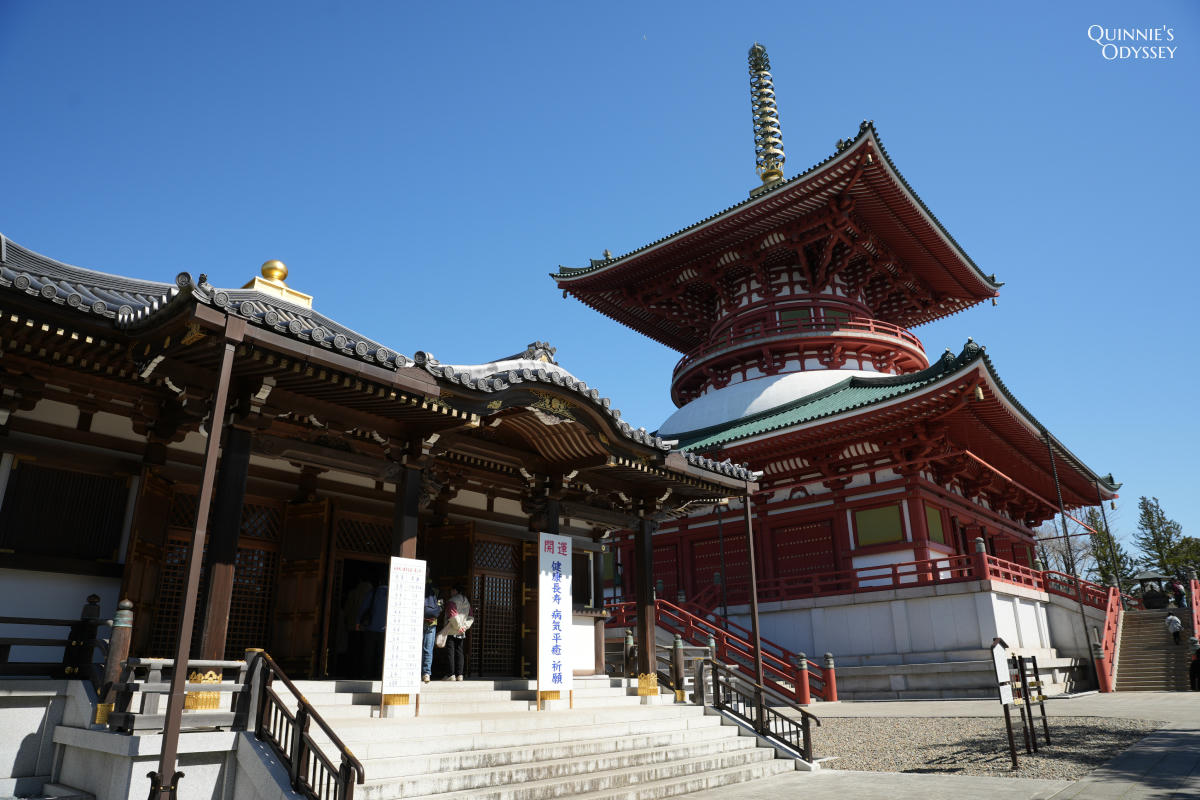
The Main Hall, built in 1968, is the spiritual center of Naritasan.
It enshrines Fudo Myoo and is where the goma fire ritual takes place.
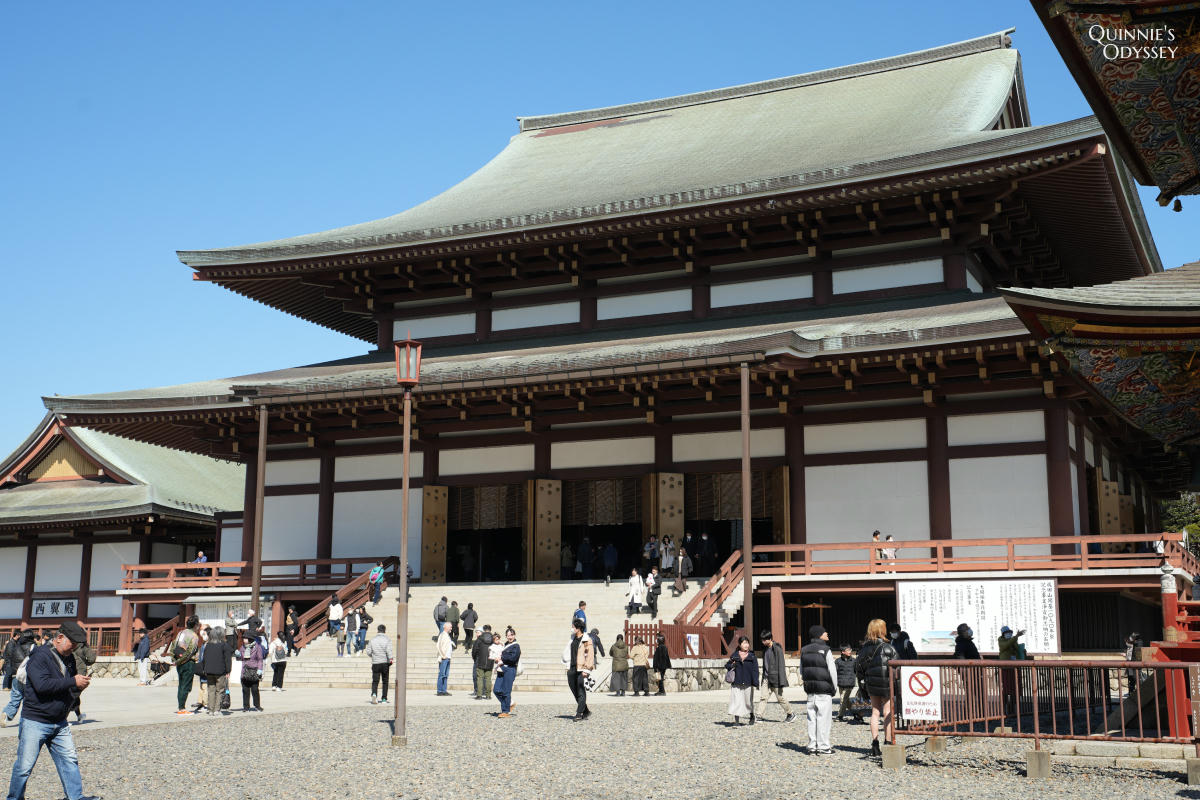
This ritual has been performed daily for over 1,000 years. Monks burn wooden prayer sticks in a sacred fire, symbolizing the removal of obstacles and negative energy.
The deep sound of drums fills the hall, creating a powerful atmosphere, even for non-believers.
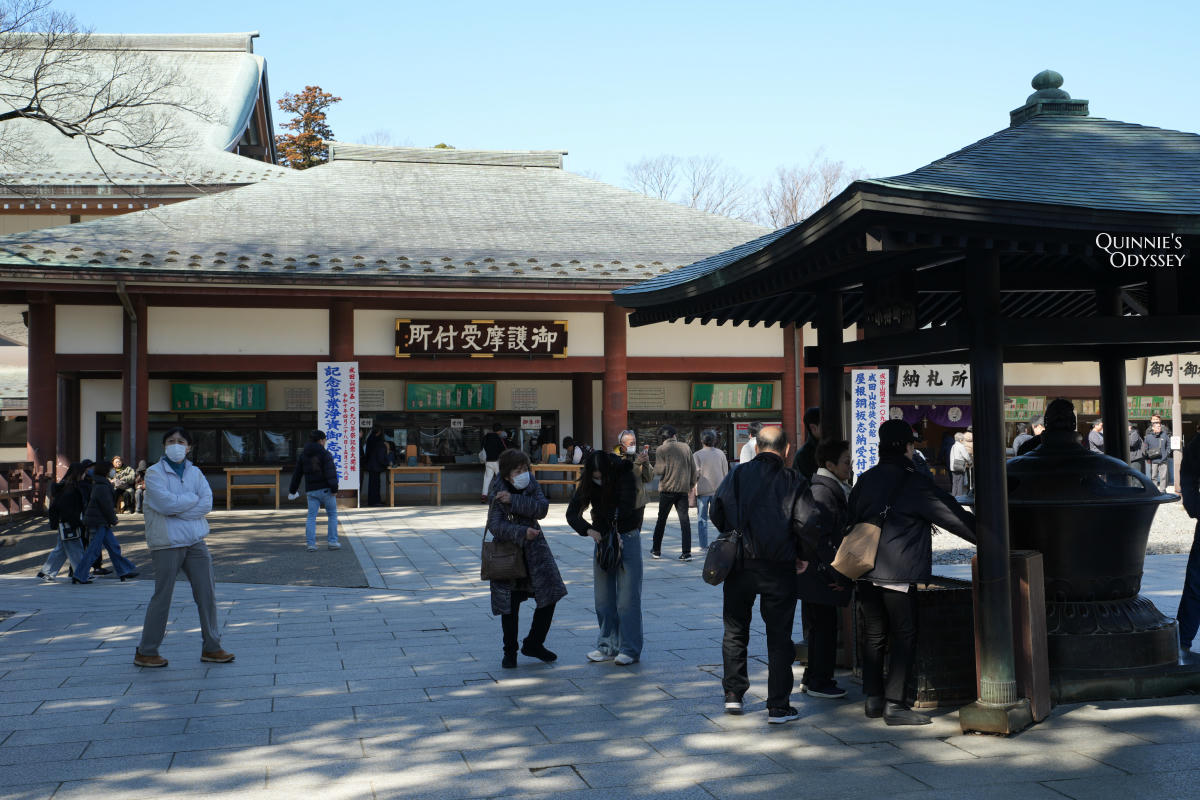
At the end, visitors can have their bags or wallets blessed by passing them through the smoke.
It’s said that this sacred fire has never gone out for over a thousand years, leaving a faint smoky scent that reflects the passage of time.
👉👉 Naritasan Shinshoji Main Hall Goma Ceremony Schedule
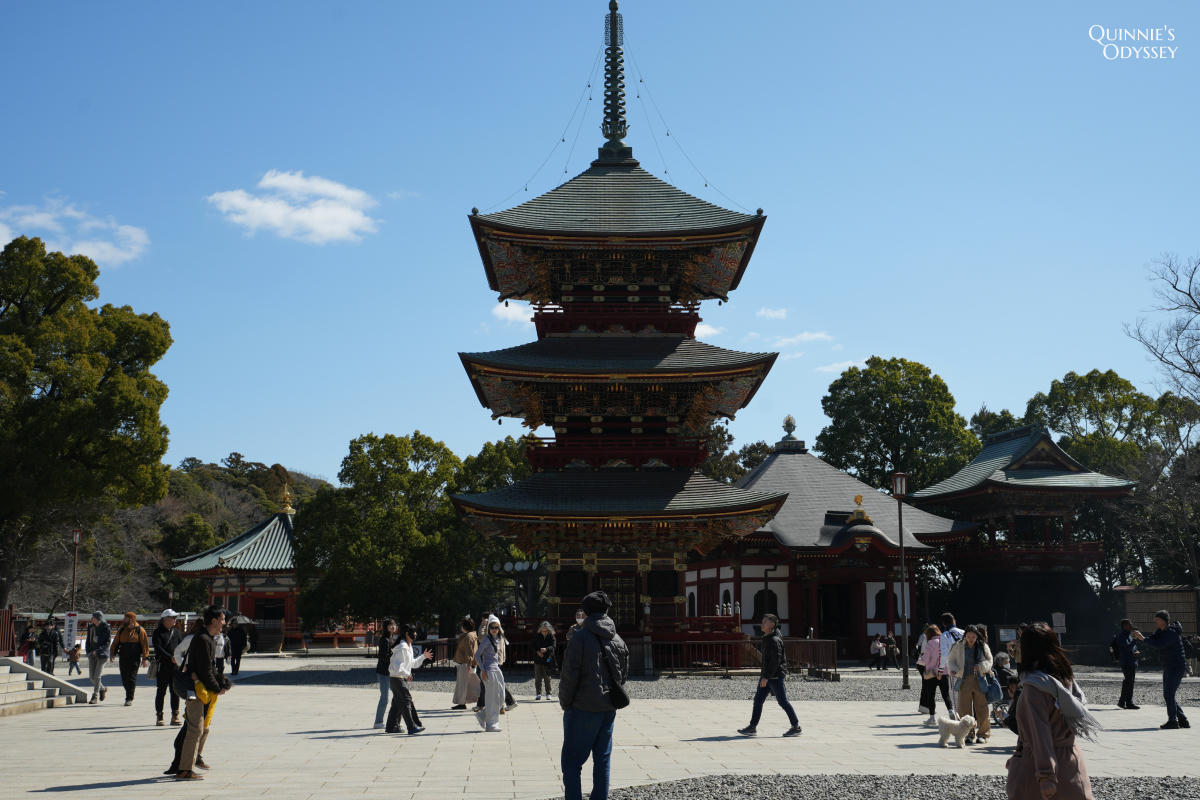
The Three-Story Pagoda at Naritasan stands out with its vibrant, decorative style – bright reds and greens accented with gold details.
Built in 1712, it’s over 300 years old. Beyond its elegant appearance, the structure is incredibly stable thanks to a central pillar running through the entire tower, helping it withstand earthquakes.
This traditional design even inspired modern architecture, including earthquake-resistant concepts used in structures like Tokyo Skytree.
At around 25 meters tall, it may not seem very high today, but at the time, it was an impressive landmark.
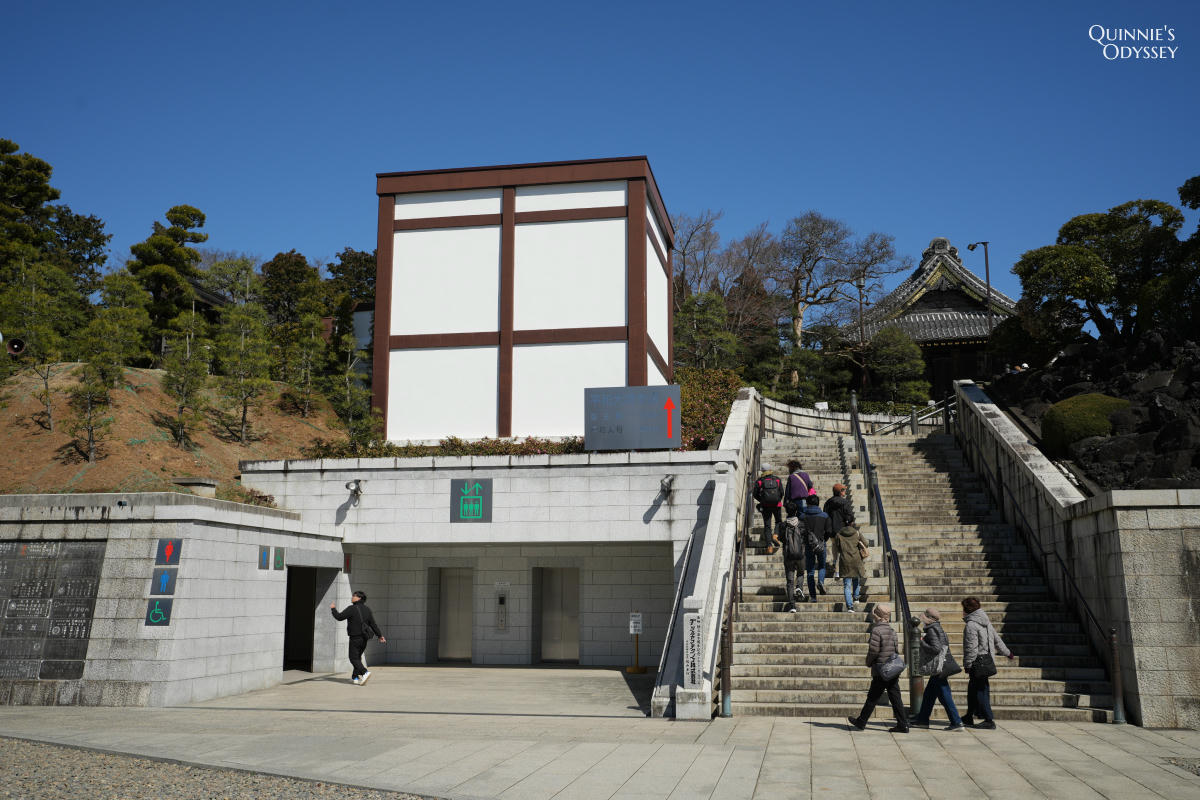
To reach the Great Pagoda of Peace, you’ll go up a short set of stairs. There’s also an elevator, making it accessible for everyone.
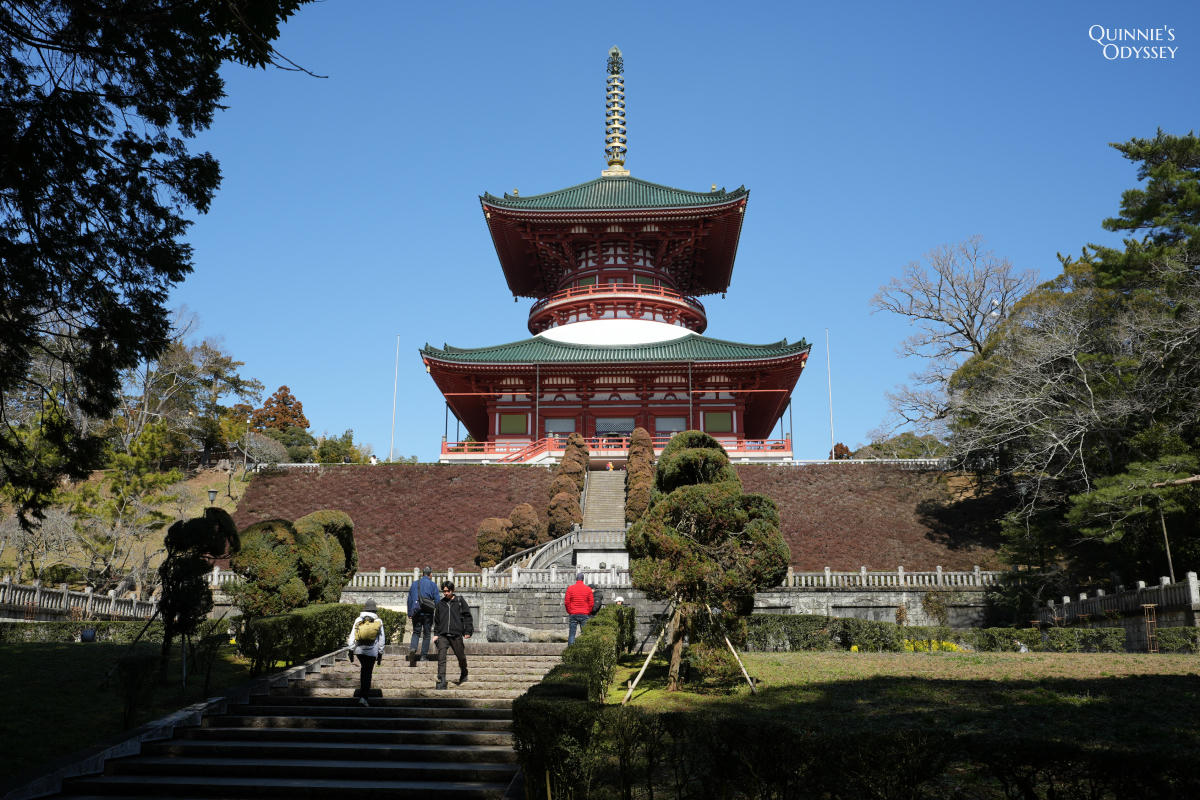
Built in 1984 and standing about 58 meters tall, it’s one of Naritasan’s most symbolic buildings.
Although it looks like a two-story structure from the outside, it actually has five floors inside, and visitors are welcome to explore (you’ll need to remove your shoes from the second floor up).
Each level offers something different:
There’s also a unique detail – a time capsule buried beneath the tower, containing messages of peace from world leaders, set to be opened in the year 2434.
Built in 1888, Shusse Inari Shrine is known for prayers related to career success, good fortune, and protection from fire.
It’s located to the left of the Main Hall, up a short flight of stairs. Compared to the main area, it feels quieter and more peaceful, though you’ll still see people lining up to pray.
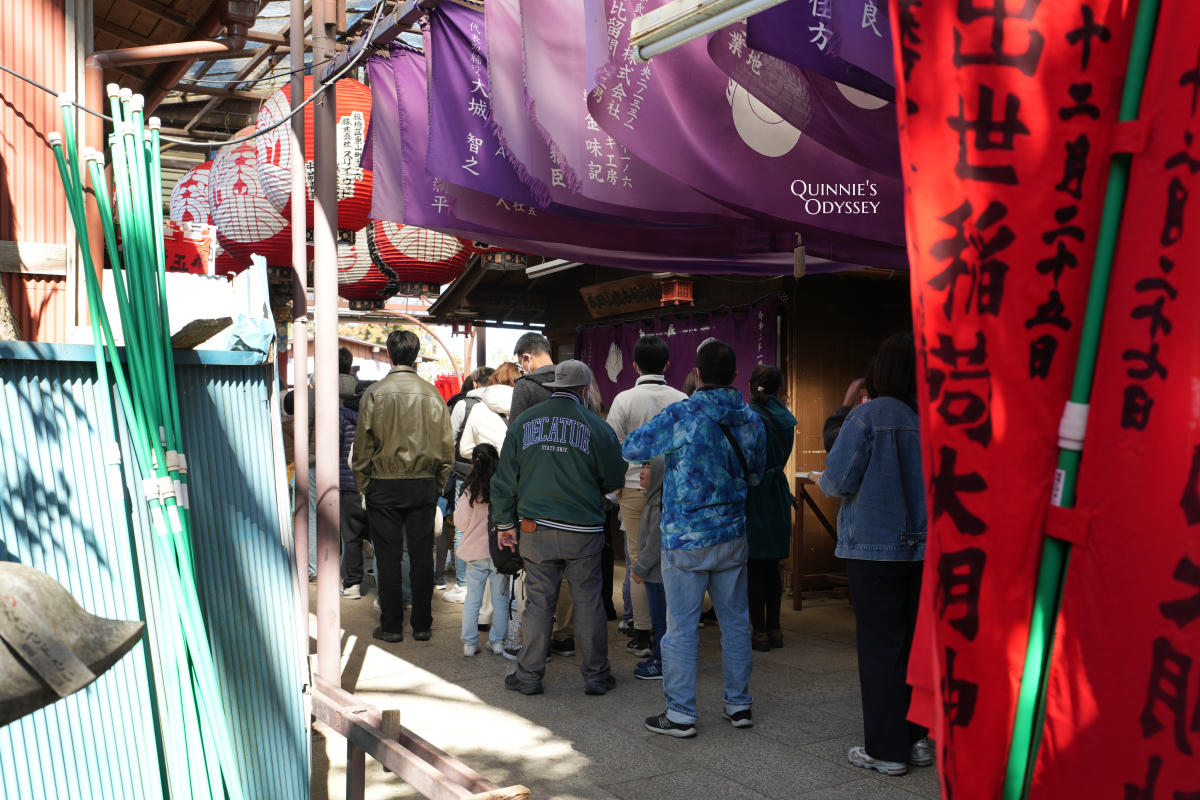
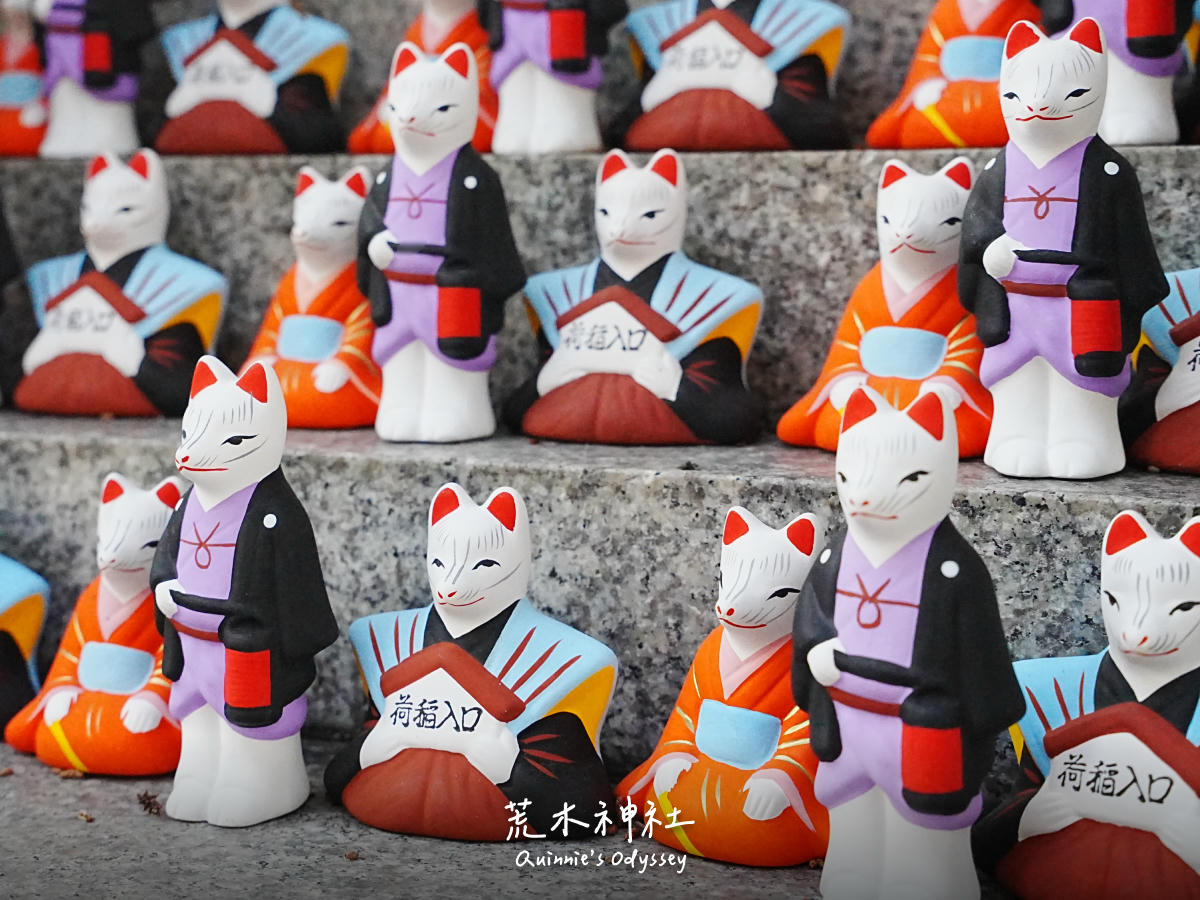
The shrine is lined with fox statues, each showing signs of age and history.
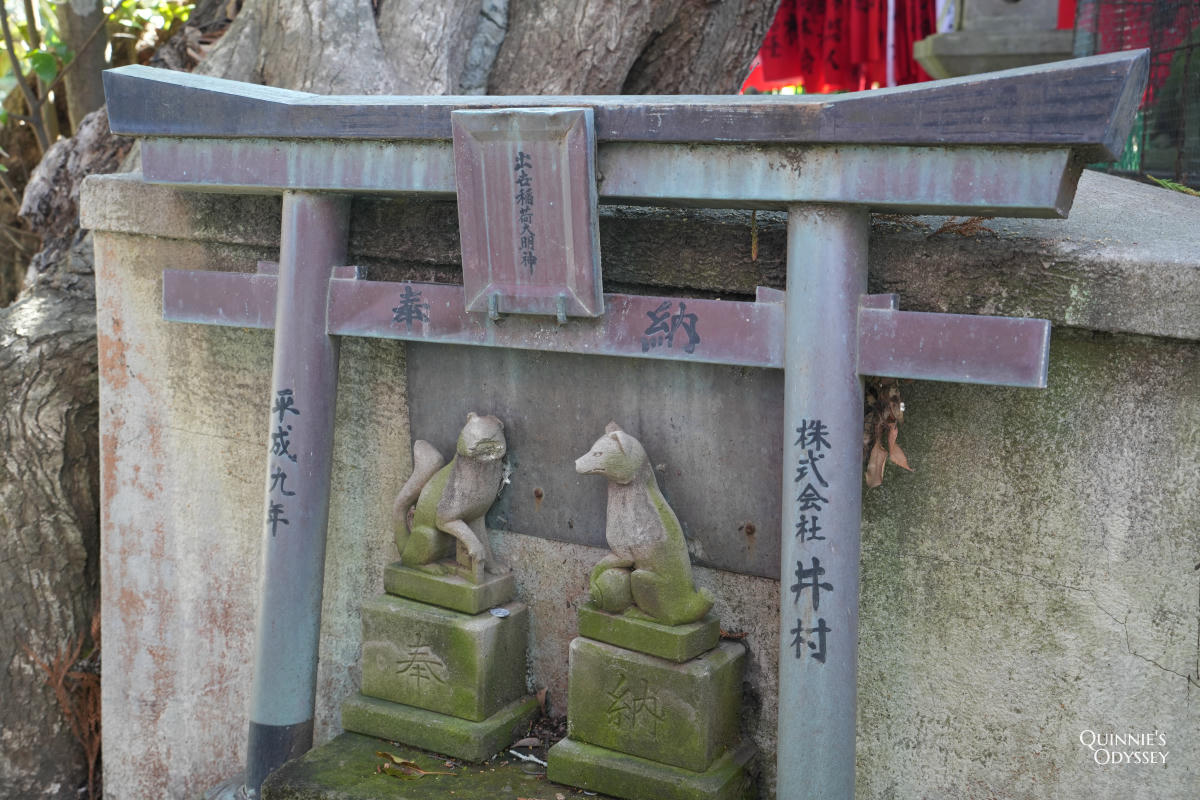
A unique custom here is offering business cards.
Visitors place their cards on designated boards or ema plaques to pray for career advancement or success. If you plan to visit, it’s a good idea to bring a few cards with you.
From the slope leading up to the shrine, you can also enjoy a nice view of the surroundings. 👇
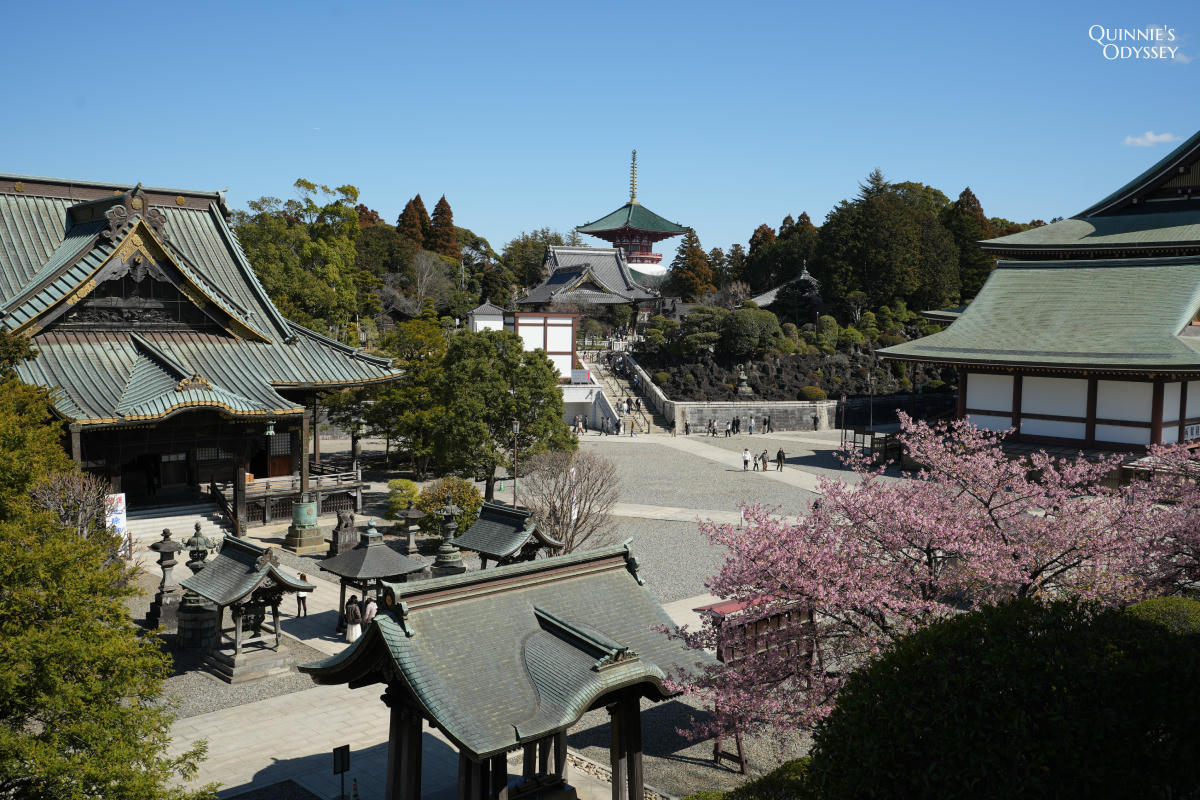
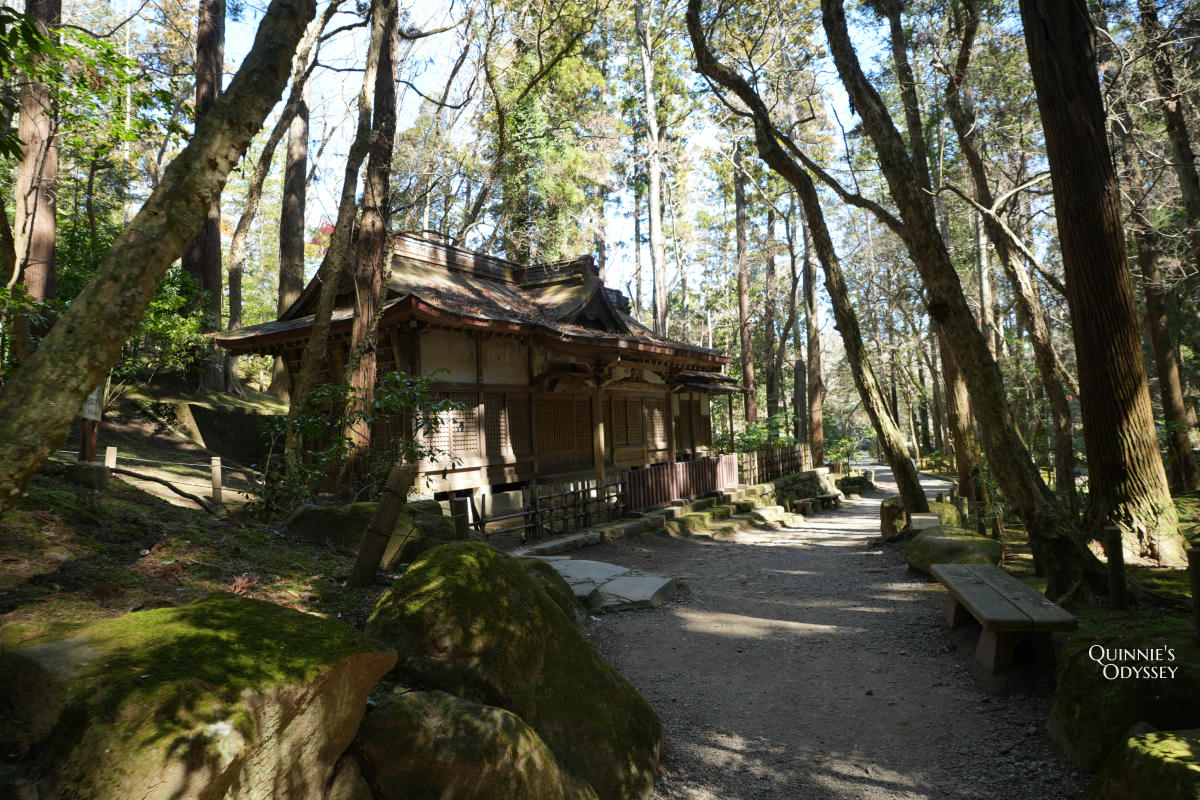
Located near the Great Pagoda of Peace, Naritasan Park is a great place to unwind after exploring the temple.
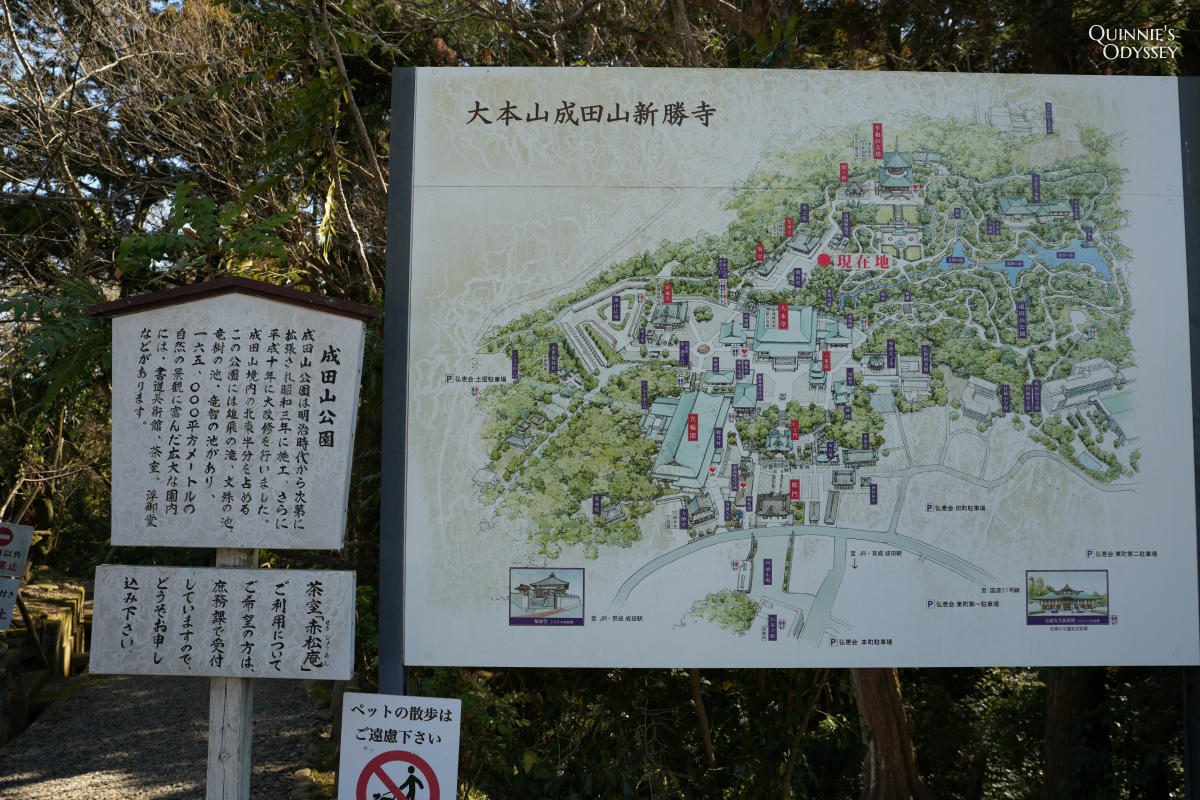
The park is about 165,000 square meters (roughly 3.8 Tokyo Domes). Once inside, the atmosphere shifts completely, offering a calm, nature-filled escape.
At the center are three connected ponds: Monju Pond, Ryuchi Pond, and Ryujyu Pond. One of the most iconic sights is the hexagonal pavilion floating over Ryuchi Pond, beautifully reflected in the water.
You’ll also spot large koi fish and occasionally herons along the shore, adding to the peaceful vibe.
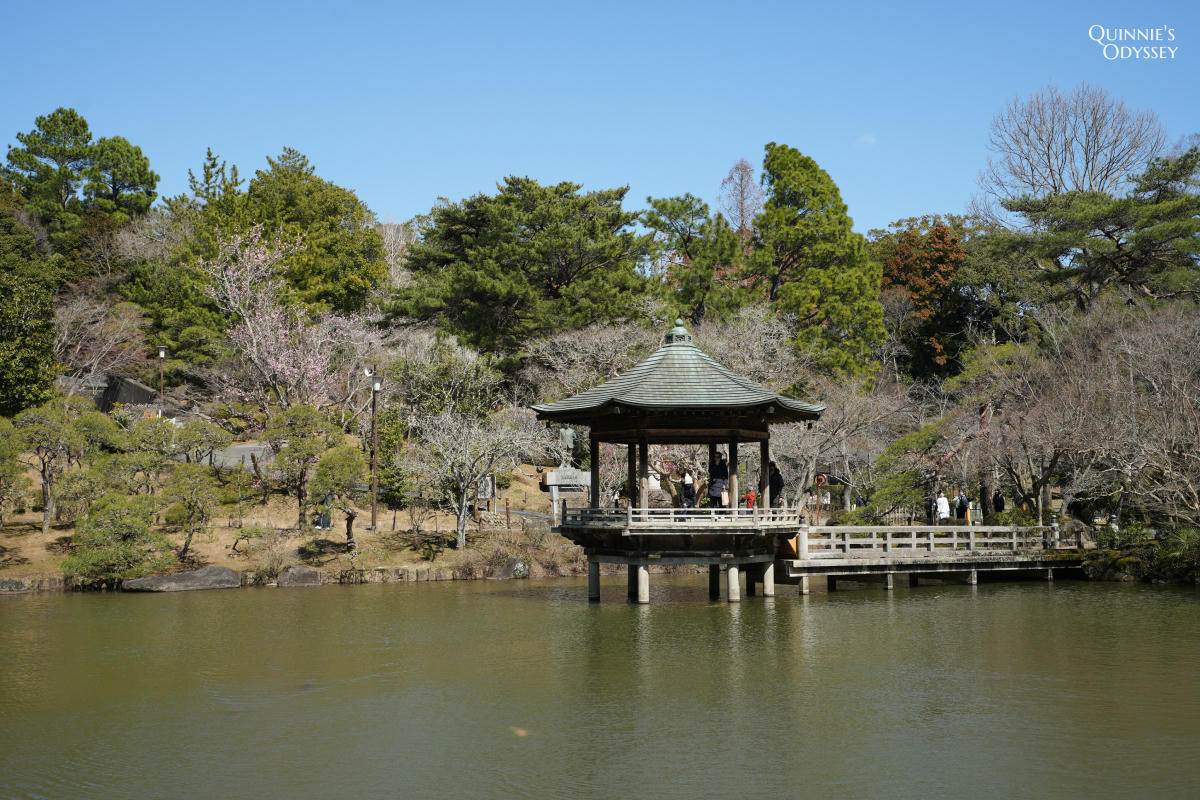
The park is beautiful year-round, plum blossoms and cherry blossoms in spring, and vibrant autumn foliage later in the year.
Further in, you’ll find Yuhiga Falls, a small waterfall surrounded by moss. The sound of flowing water and the forest setting make it especially refreshing, particularly in summer.
From either station, you’ll be right at Omotesando. A leisurely walk through the street takes about 20 minutes to reach the temple.
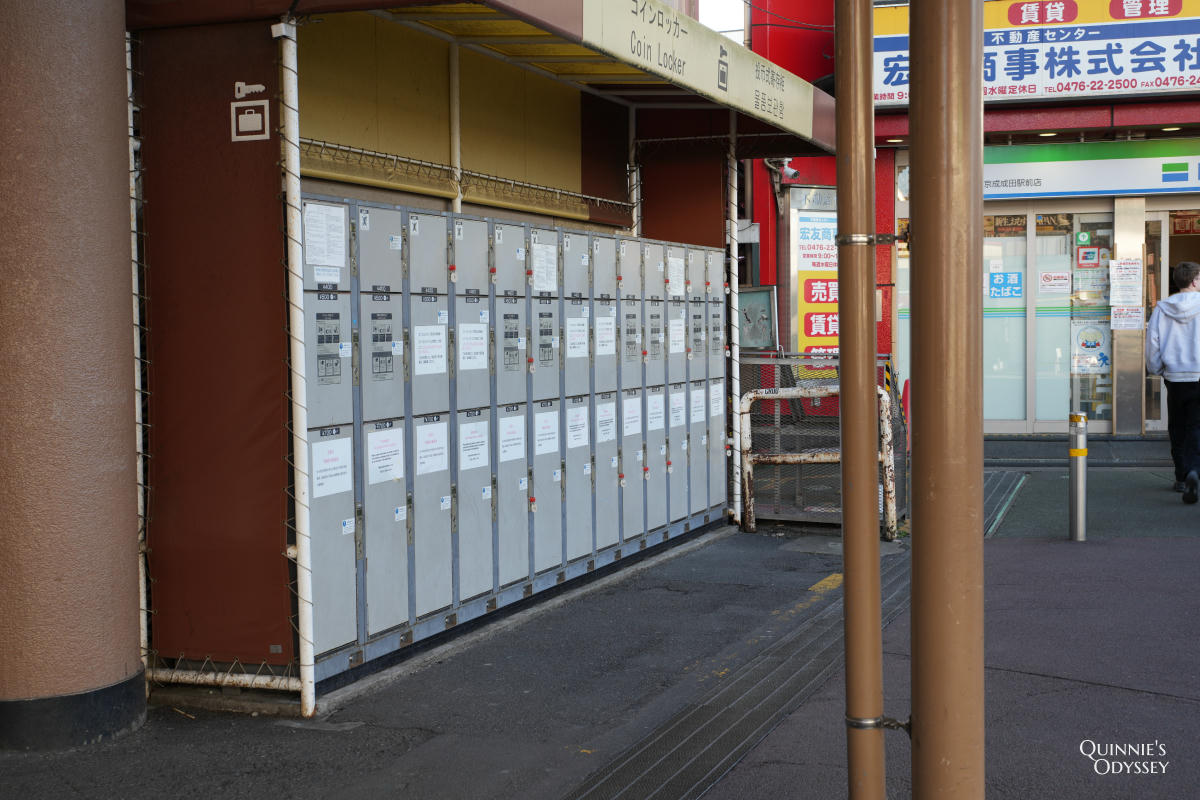
Both JR Narita Station and Keisei Narita Station have coin lockers, which are very convenient if you’re traveling with luggage.
At Keisei Narita Station, lockers require coins only, and nearby shops may not provide change, so it’s best to prepare coins in advance.
Prices are typically 400 / 500 / 700 yen depending on size.
|
Visiting Time |
Itinerary |
|
2–3 hours |
Omotesando stroll + main temple highlights |
|
Half day (4–5 hours) |
Add Naritasan Park and goshuin (stamp collecting) |
|
Full day |
Explore everything at a relaxed pace + enjoy unagi |
▼ Exclusive Deal for Sika Readers ▼
Use code【DNBDRT】👉👉 Save ¥3,000on your TOCOO! car rental(view guide)
▼ Tokyo Travel Essentials ▼

Thanks for reading!
If you’re interested in my stories, feel free to follow me on Instagram.
👉👉 IG: @sika_artist 👈👈