Physical Address
304 North Cardinal St.
Dorchester Center, MA 02124
Physical Address
304 North Cardinal St.
Dorchester Center, MA 02124

Japan is home to many historic temples, but very few have drawn people from all over the country for over a thousand years, people who were willing to cross mountains and walk for weeks just to visit once. Zenkoji Temple is one of those rare places.
There’s a well-known saying in Japan:
“You should visit Zenkoji at least once in your lifetime.”
This belief has been passed down since the Edo period.
At Zenkoji, anyone who sincerely prays and chants, regardless of gender, social status, or religious background, is welcomed. The temple embraces all visitors equally and promises to guide them toward the Pure Land.
Because of this, Zenkoji has attracted countless pilgrims throughout history. Even today, it receives around 7 million visitors every year.
▼ Exclusive Deal for Sika Readers ▼
Use code【DNBDRT】👉👉 Save ¥3,000on your TOCOO! car rental(view guide)
The idea that “you should visit Zenkoji at least once in your life” has been shared for generations.
What makes Zenkoji truly unique is that it doesn’t belong to a single Buddhist sect, unlike most temples in Japan.
Its main object of worship, the Ikko Sanzon Amida Nyorai, is believed to be one of the oldest Buddhist statues in Japan, often considered the starting point of Japanese Buddhism itself.
That’s why visiting Zenkoji isn’t tied to any specific sect.
It’s a place where anyone can come, and everyone is accepted.
Because of this, Zenkoji has long held a core belief:
as long as you pray with sincerity, you plant a seed for your own path toward the Pure Land.
For many people, this belief carries deep spiritual meaning and serves as a powerful source of comfort.
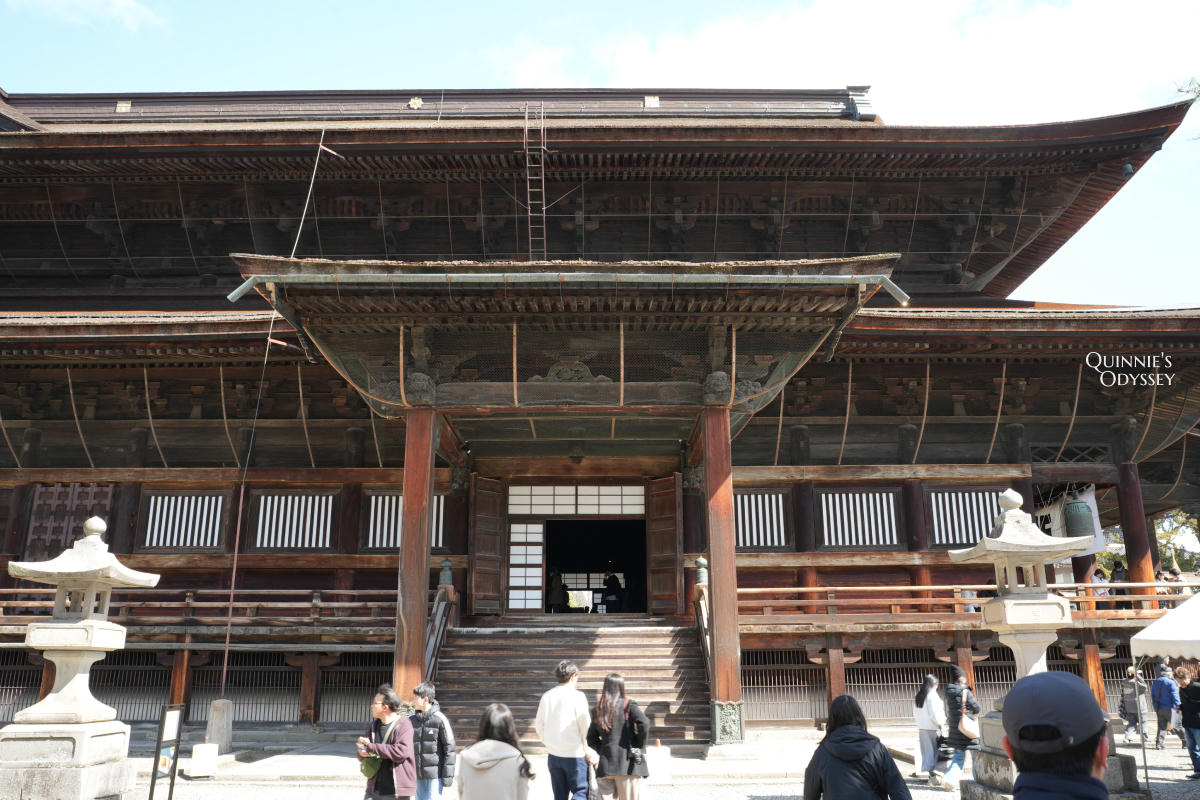
Back in the Edo period, visiting Zenkoji was no easy task.
There were no bullet trains or convenient transportation. Many people had to walk for weeks or even months, facing all kinds of challenges along the way.
So the phrase “once in a lifetime” wasn’t just poetic, it was something that required real determination, and often the support of an entire family.
And because it was so difficult, the journey itself carried even more meaning.
Another remarkable thing about Zenkoji is how welcoming it has been to women since early times.
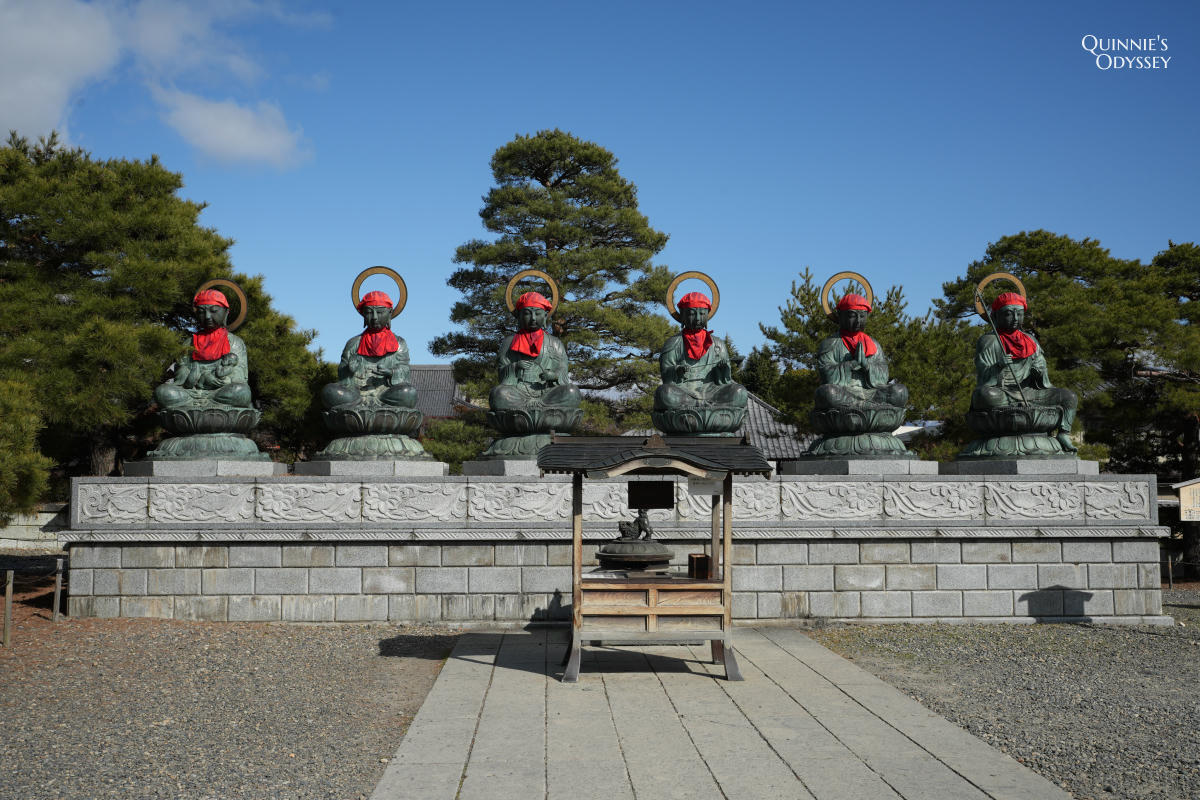
In the past, many famous temples in Japan, such as Enryakuji on Mount Hiei and Kongobuji on Mount Koya, had strict rules prohibiting women from entering.
At the time, certain Buddhist beliefs suggested that women were spiritually limited and could not attain enlightenment in their current form.
But Zenkoji was different.
Not only did it allow women to enter and worship, but its origin story is also closely connected to a female figure named Nyoze.
Her story marks the beginning of Zenkoji’s faith and symbolizes the idea that salvation is open to everyone, regardless of gender.
In addition, Zenkoji’s Daihongan Temple is a nunnery, and its head priests have traditionally been women, something quite rare in Japanese religious history.
At a time when many temples excluded women, Zenkoji had already opened its doors to them, offering a place where they could freely pray and seek spiritual comfort.
Because of this, Zenkoji has long been seen as a temple that is especially meaningful and welcoming for women.
Another fascinating thing about Zenkoji is that it is officially a non-sectarian temple.
But of course, daily operations and religious ceremonies still need to be managed by someone.
At Zenkoji, this responsibility is shared by two completely different Buddhist sects:
the Tendai sect’s Daikanjin and the Jodo (Pure Land) sect’s Daihongan.
This system is known as “one temple, two sects”, and it’s extremely rare in Japanese Buddhism.
Daikanjin oversees 25 sub-temples, while Daihongan has 14 affiliated temples, making a total of 39 temples surrounding the main hall of Zenkoji.
The two groups share leadership responsibilities, and ceremonies and rituals are conducted in rotation between them.
What makes this even more remarkable is that Tendai and Pure Land Buddhism have quite different teachings. In most places, they wouldn’t coexist like this.
And yet, at Zenkoji, they’ve been working together like this for over 1,000 years, which is honestly incredible.
As you walk along the approach to Zenkoji, you’ll notice a grand gate with the name Daikanjin written on it.
Daikanjin is one of the key centers of Zenkoji. The term “kanjin” originally meant encouraging people to do good and practice Buddhism, but it eventually became the name of the temple itself.
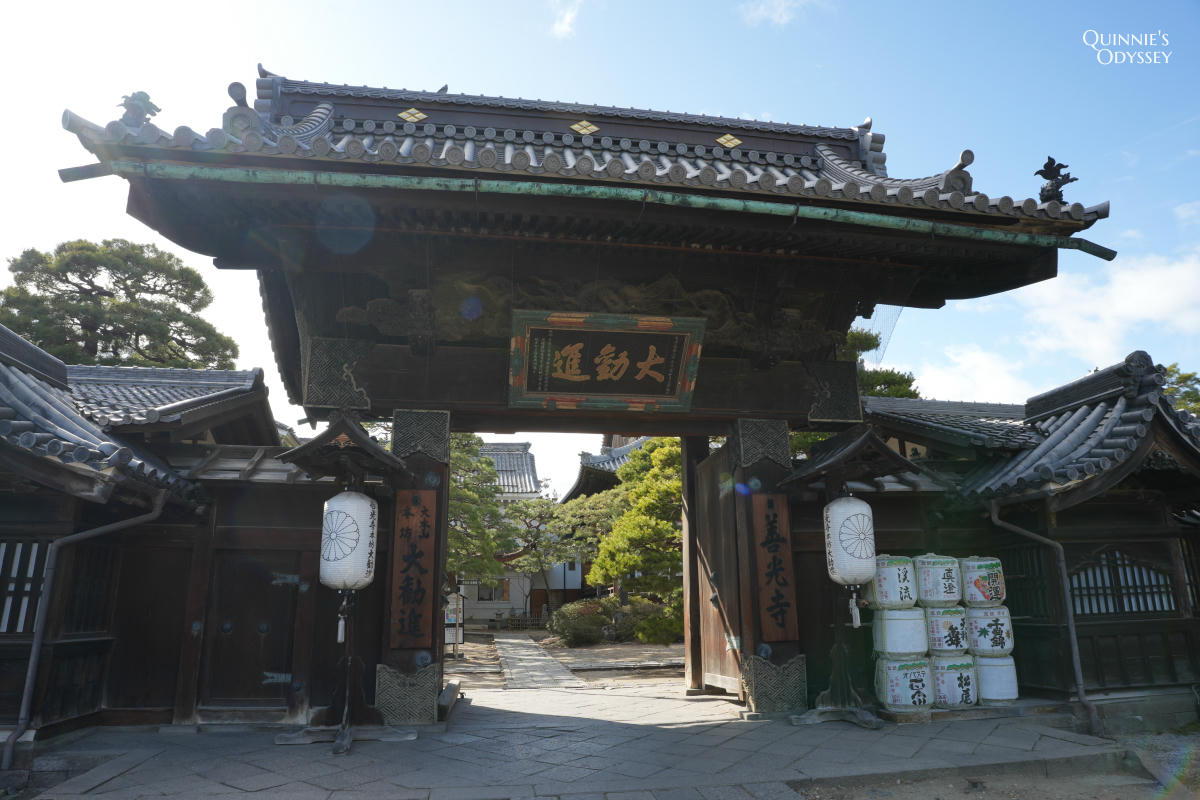
The head priest here is called the Kancho, who is selected from major Tendai temples and also serves as one of Zenkoji’s chief priests.
Visitors are welcome inside. There are beautiful gardens, temple halls, and even lodging (shukubo) available.
If you want a deeper experience, you can stay overnight and join the early morning ceremony called O-Asaji, where the head priest personally leads the prayers at dawn.
Daihongan is the head temple of the Pure Land sect at Zenkoji and has existed since the temple was first established.
It is also a nunnery, meaning it is led by women. The head priest here is known as the Zenkoji Shonin, and traditionally, this role has been held by women of noble lineage, something quite rare among major temples in Japan.
Today, Daihongan is also open to visitors and offers temple lodging.
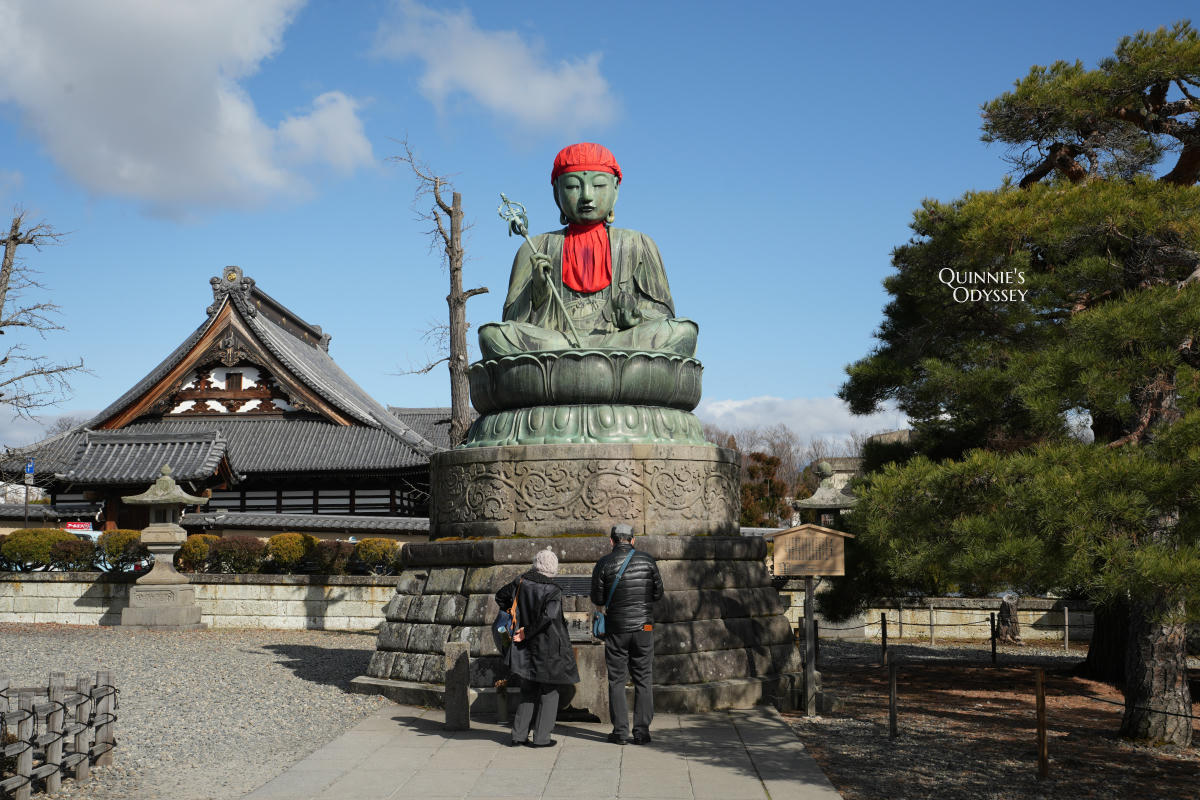
In 552, a statue of Amida Buddha was brought to Japan, marking the introduction of Buddhism.
However, it quickly became caught in political conflict. When an epidemic broke out, opponents blamed the statue and threw it into a canal in Osaka.
Years later, a man named Honda Zenko heard a voice calling from the river.
He saw the statue rising from the water, glowing.
The Buddha said, “I’ve been waiting for you. Take me with you.”
Zenko brought it back to Shinano, and in 642, a temple was built in its honor, this became Zenkoji.
In 1555, during wartime, Takeda Shingen moved Zenkoji’s sacred statue to Kofu to protect it.
What was meant to be temporary turned into a journey of over 40 years.
The nuns followed the statue as it moved across regions, while the monks stayed behind to guard the temple.
After passing through the hands of powerful warlords, the statue eventually reached Toyotomi Hideyoshi in Kyoto.
In 1598, after more than four decades away, it was finally returned to Zenkoji.
The Niomon Gate is the first major gate you’ll pass through when entering Zenkoji.
It was originally built in 1752, and the current structure was rebuilt in 1918.
What immediately catches your eye are the powerful guardian statues on both sides.
On the left is the “Agyo” statue, with its mouth open, forming the sound “A,” symbolizing the beginning of all things.
On the right is the “Ungyo” statue, with its mouth closed, representing “Un,” symbolizing the end.
Together, they represent the start and end of the universe.
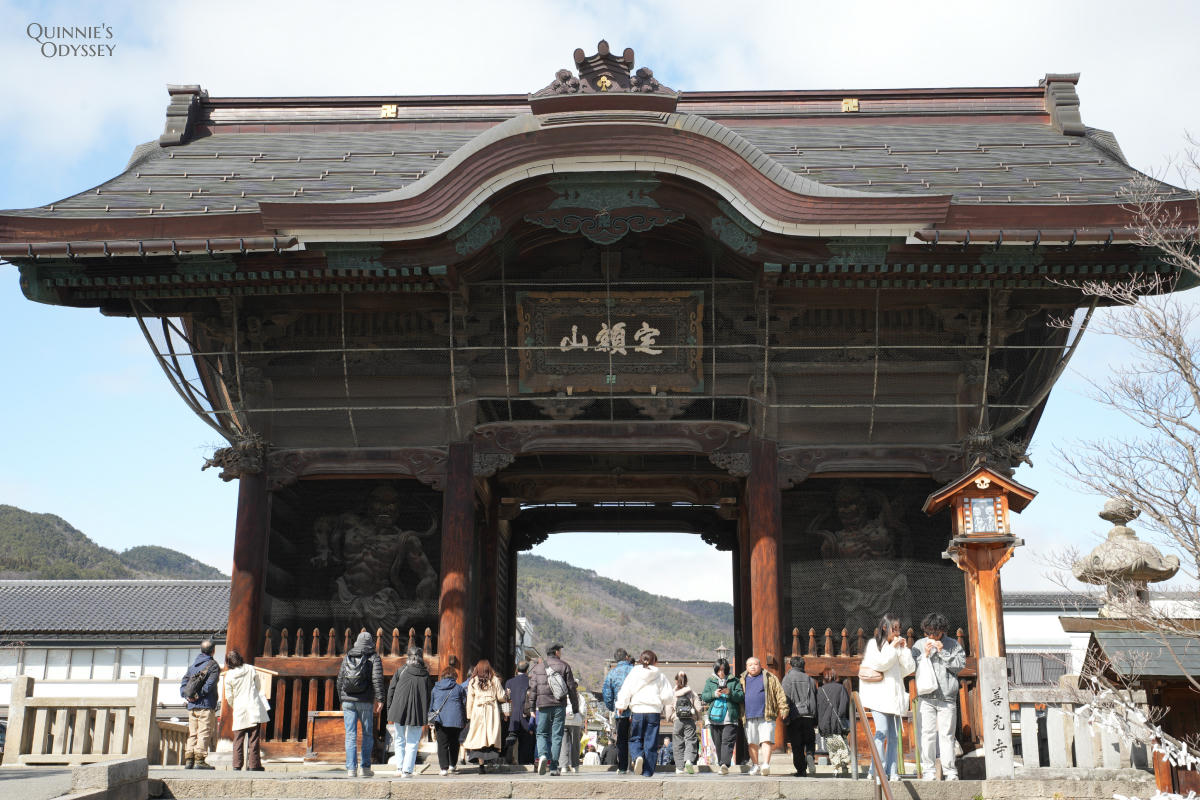
These statues were created by renowned Japanese sculptor Kōun Takamura and his student Unkai Yonehara.
Takamura is also the artist behind the famous statue of Saigo Takamori in Ueno Park, making this gate even more significant.
Next to the gate, you’ll also notice two giant straw sandals.
These are offerings from worshippers, symbolizing the tradition of walking long distances in straw sandals to visit the temple, and also a prayer for strong, healthy legs.
The Sanmon Gate, built in 1750, features a large plaque in the center that reads “Zenkoji.”
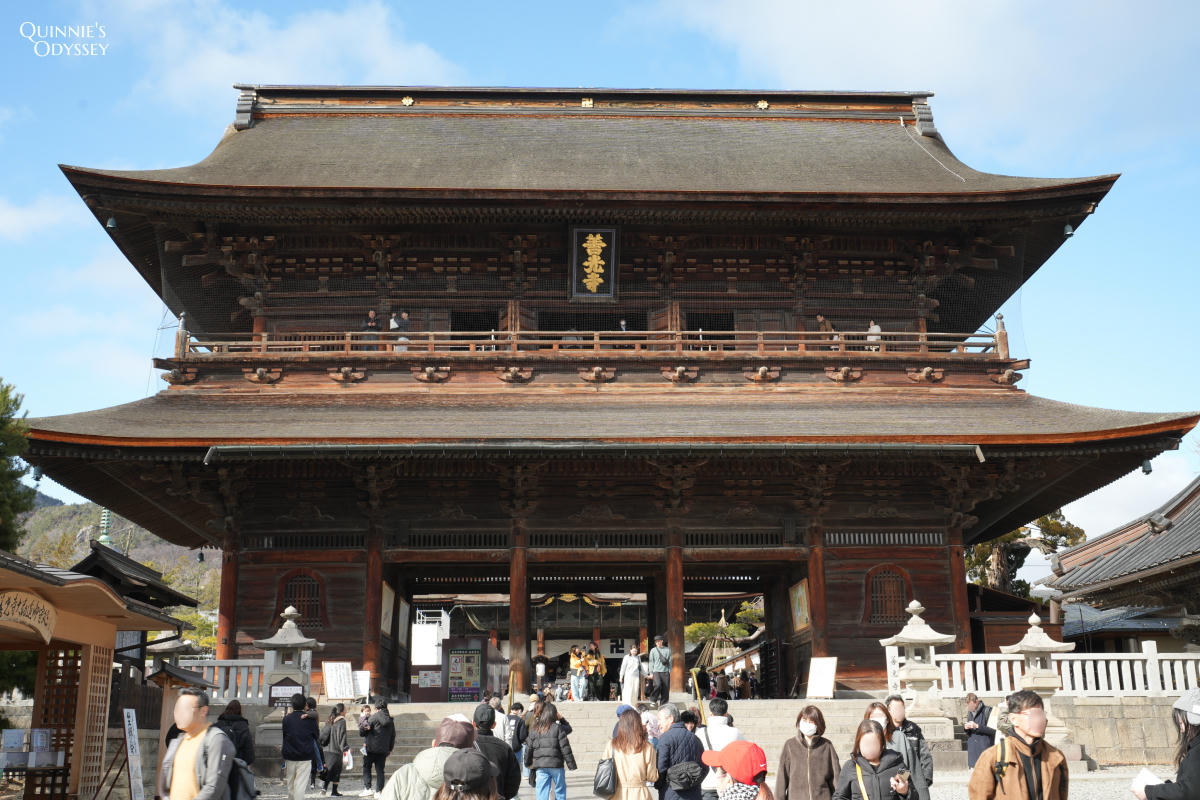
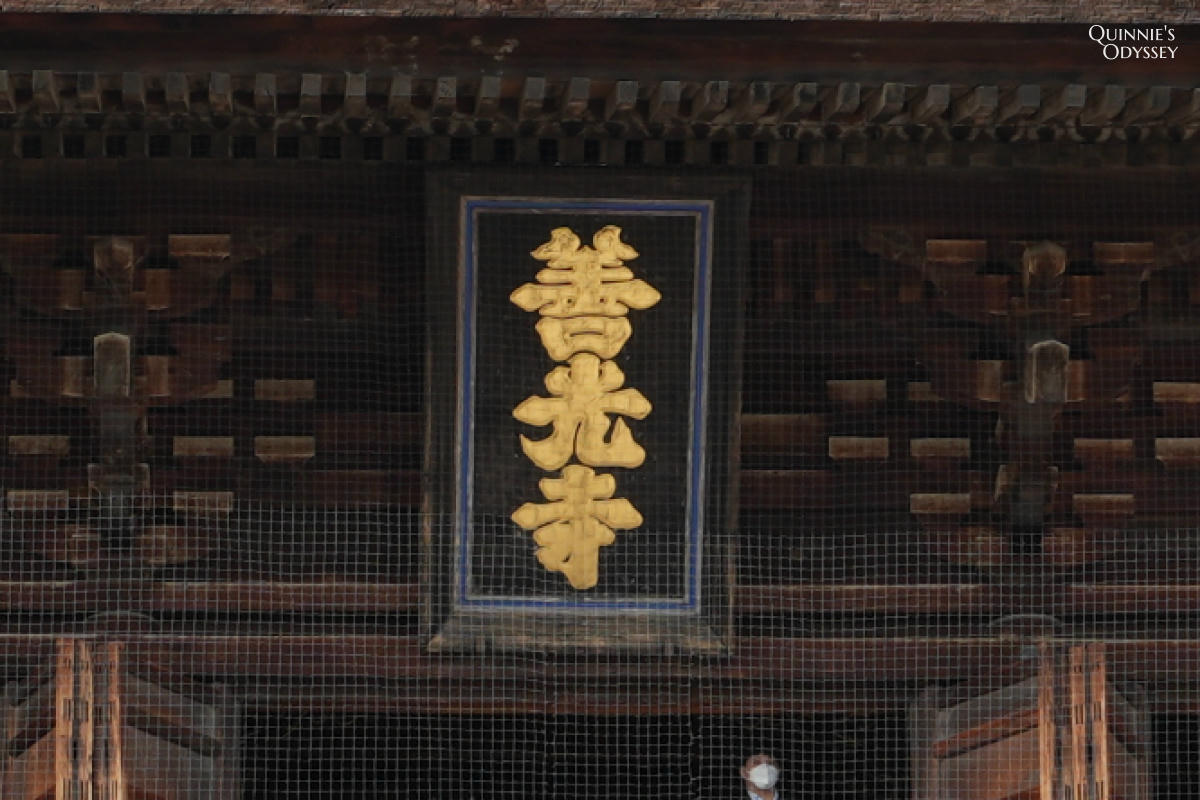
If you look closely, there’s a fun hidden detail – five pigeons are cleverly embedded within the characters.
Even more interesting, the character 「善」 is said to resemble a cow.
I stared at it for quite a while, and… I can kind of see it too!
(It looks like a squinty-eyed cow-what do you think?)
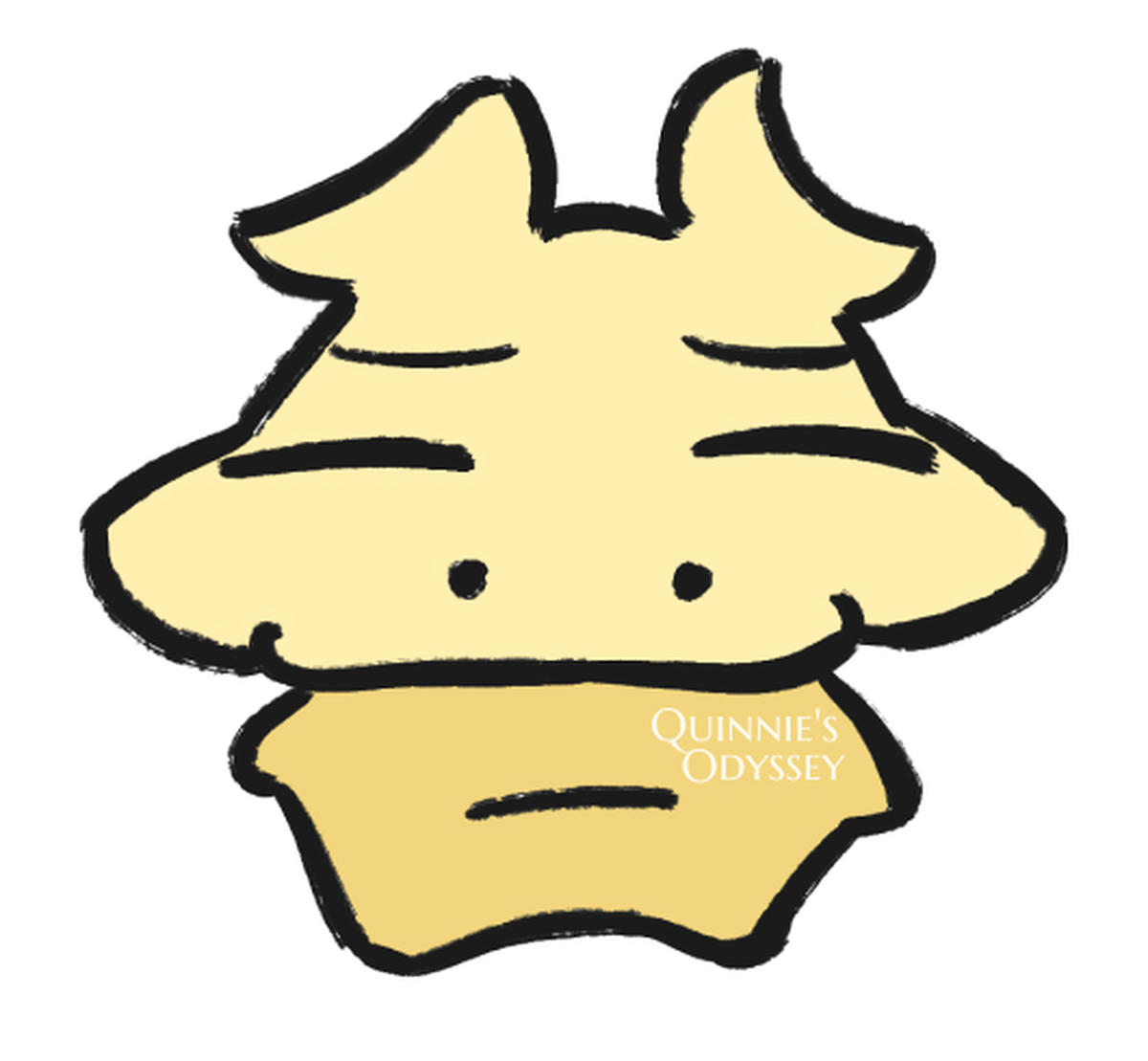
This “cow” ties into a famous Japanese saying:
“Led by a cow to Zenkoji” (牛に引かれて善光寺参り)
The story goes that a woman who didn’t believe in Buddhism once chased after a cow that had taken her cloth, and ended up at Zenkoji. That unexpected visit led her to faith.
It’s a reminder that even arriving here by chance can become a meaningful spiritual experience.
So when you pass through the gate, take a closer look, it’s surprisingly fun.
The current Main Hall was built in 1707 and is designated as a National Treasure. It is one of the largest wooden Buddhist structures in Japan.
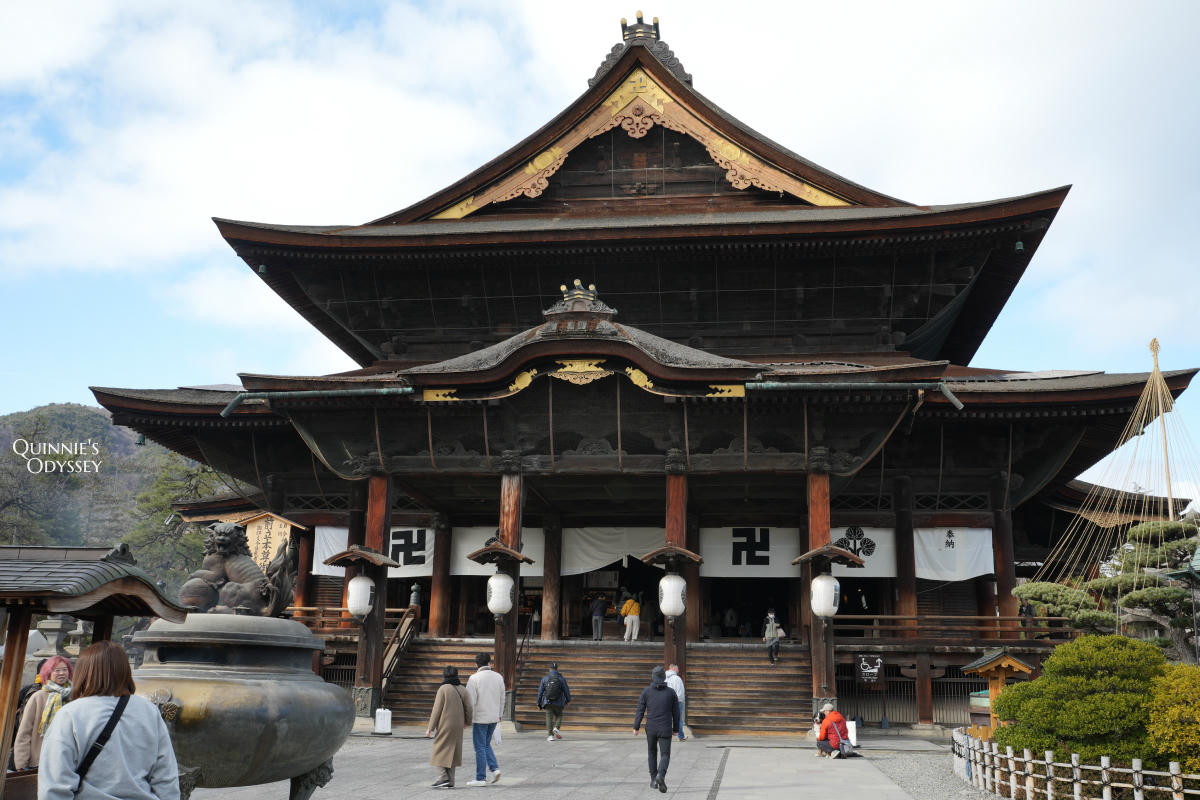
Inside, you’ll find a statue of Binzuru Sonja.
It’s believed that if you touch the part of the statue that corresponds to a part of your body that hurts, it may help with healing.
After being touched by countless visitors over the past 300 years, the statue has become smooth and polished.
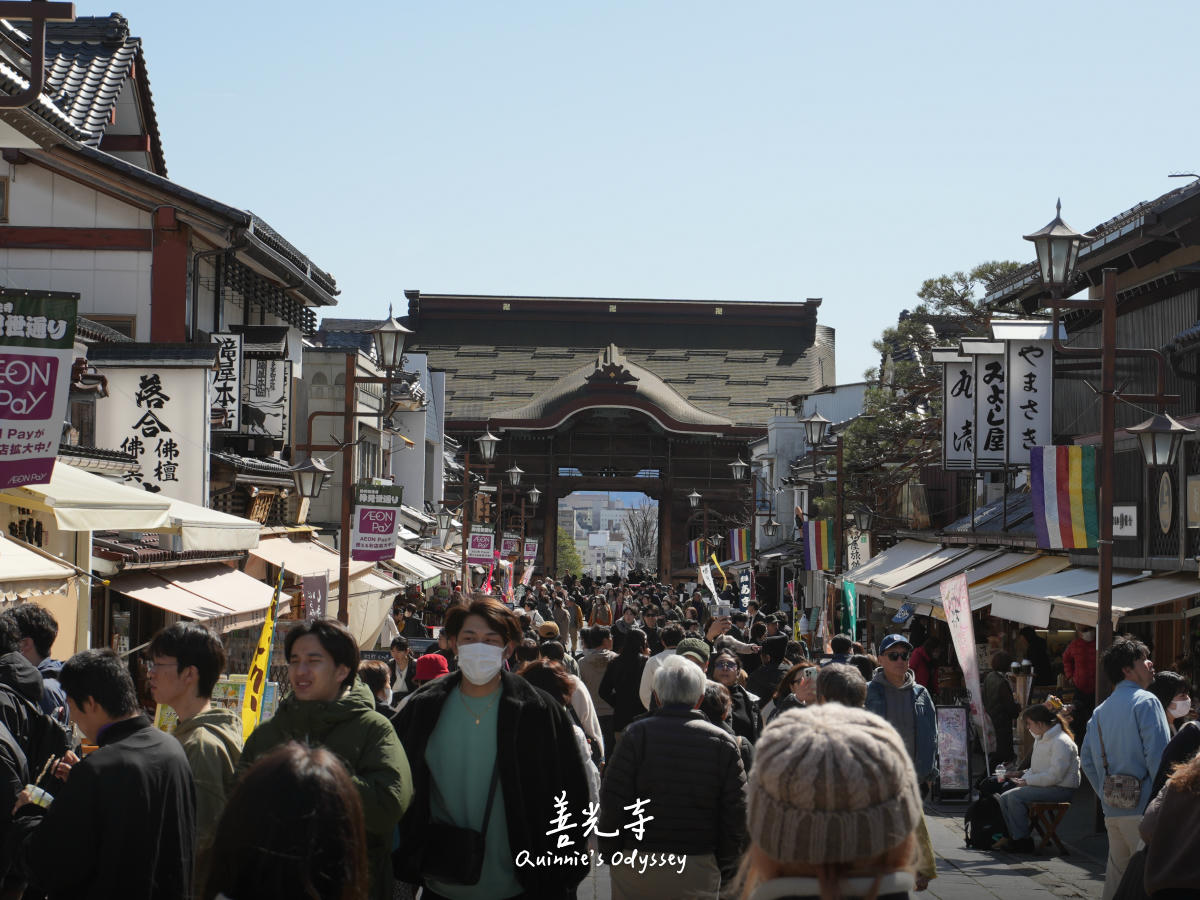
The path from Niomon Gate to the Main Hall, known as Omotesando and Nakamise Shopping Street, is the liveliest area around Zenkoji.
Both sides are lined with shops selling all kinds of Nagano specialties, such as oyaki, nozawana pickles, Shinshu miso, soba products, shichimi spice, and apple desserts.
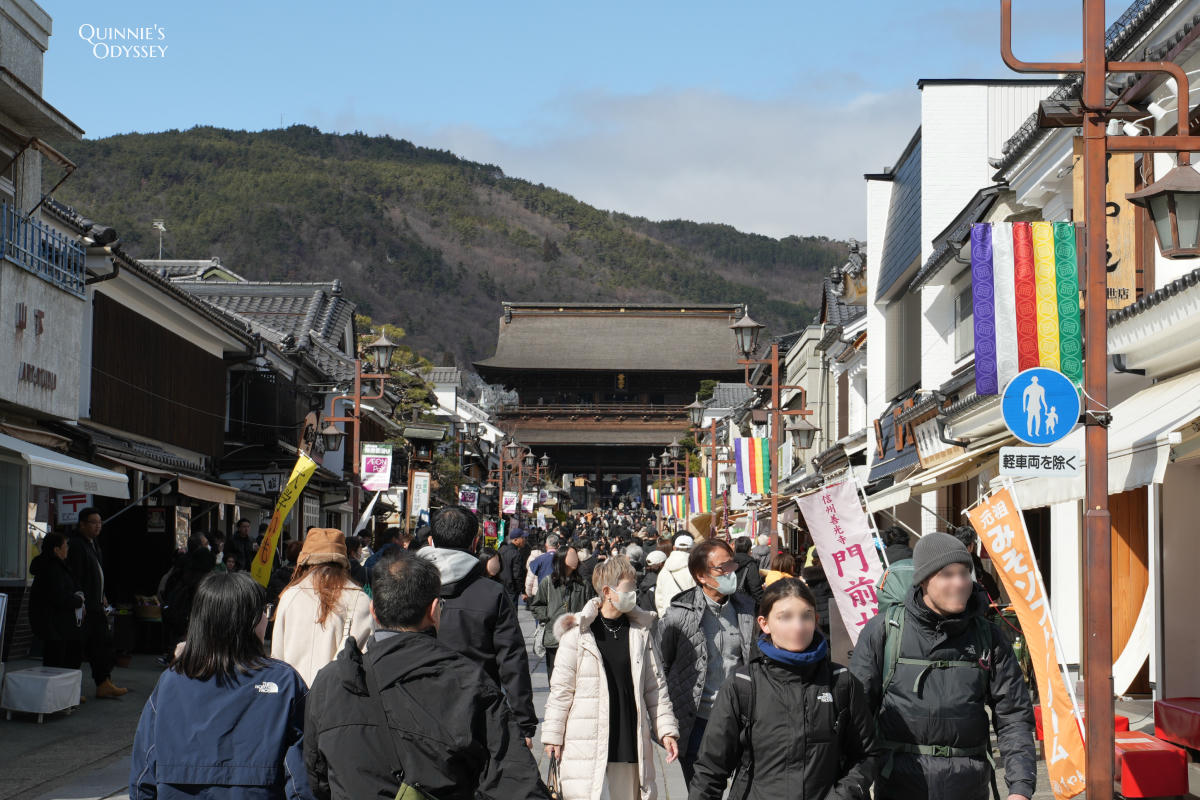
As you walk along the street, you’ll notice that oyaki shops are everywhere.
At some point, you might even wonder, is this Nagano’s staple food?
Well… in a way, it kind of is.
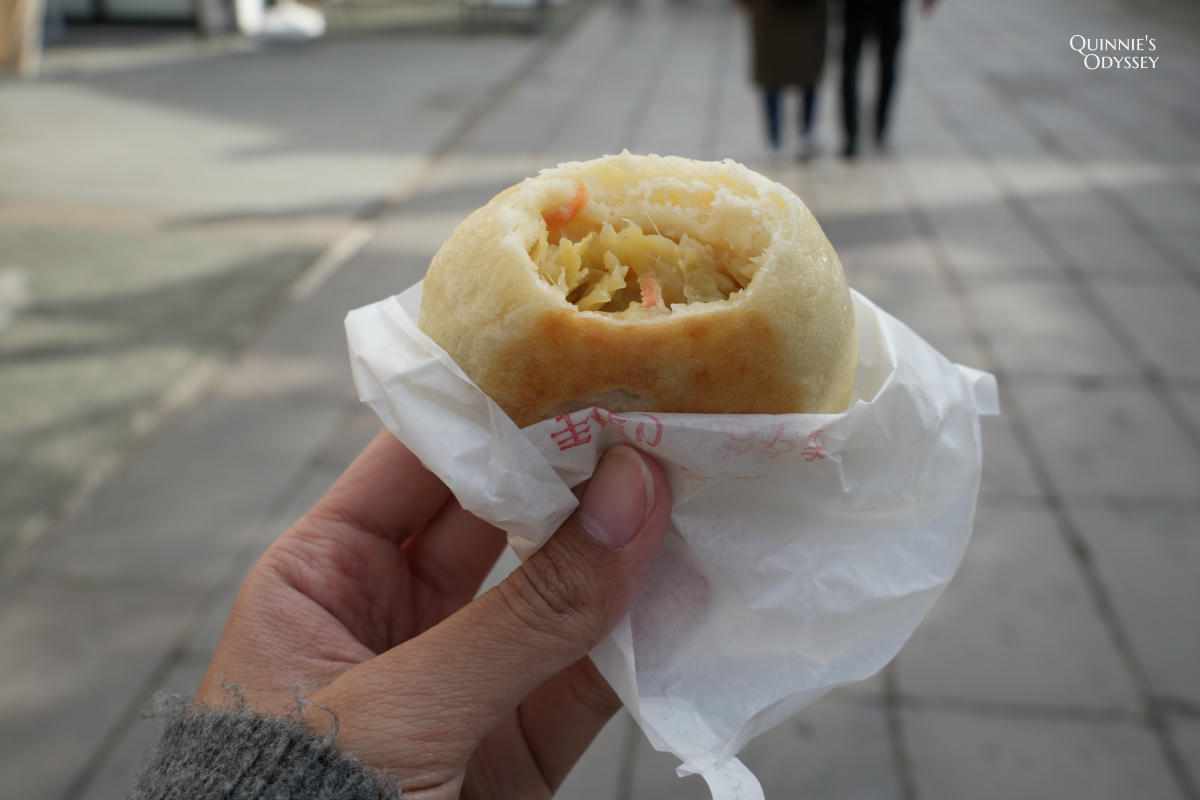
Oyaki is a traditional stuffed dumpling made with dough filled with ingredients like vegetables or sweet red bean paste, then either grilled or steamed.
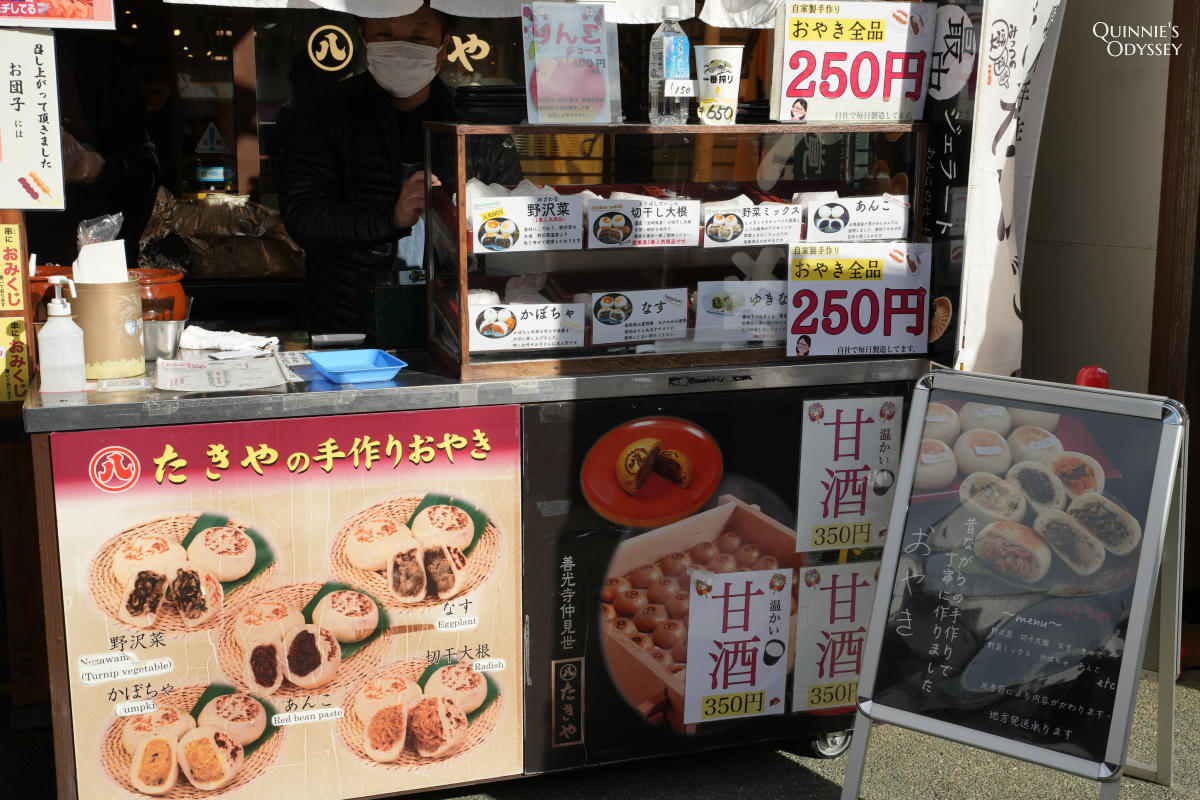
Common fillings include nozawana greens, pumpkin, dried radish, and red bean.
The texture of the outer layer varies, some are crispy, others are chewy, and each shop is a bit different, so choosing where to buy really matters.
Honestly, my first one was a bit disappointing…
Not much filling, average taste, and it cost 270 yen.
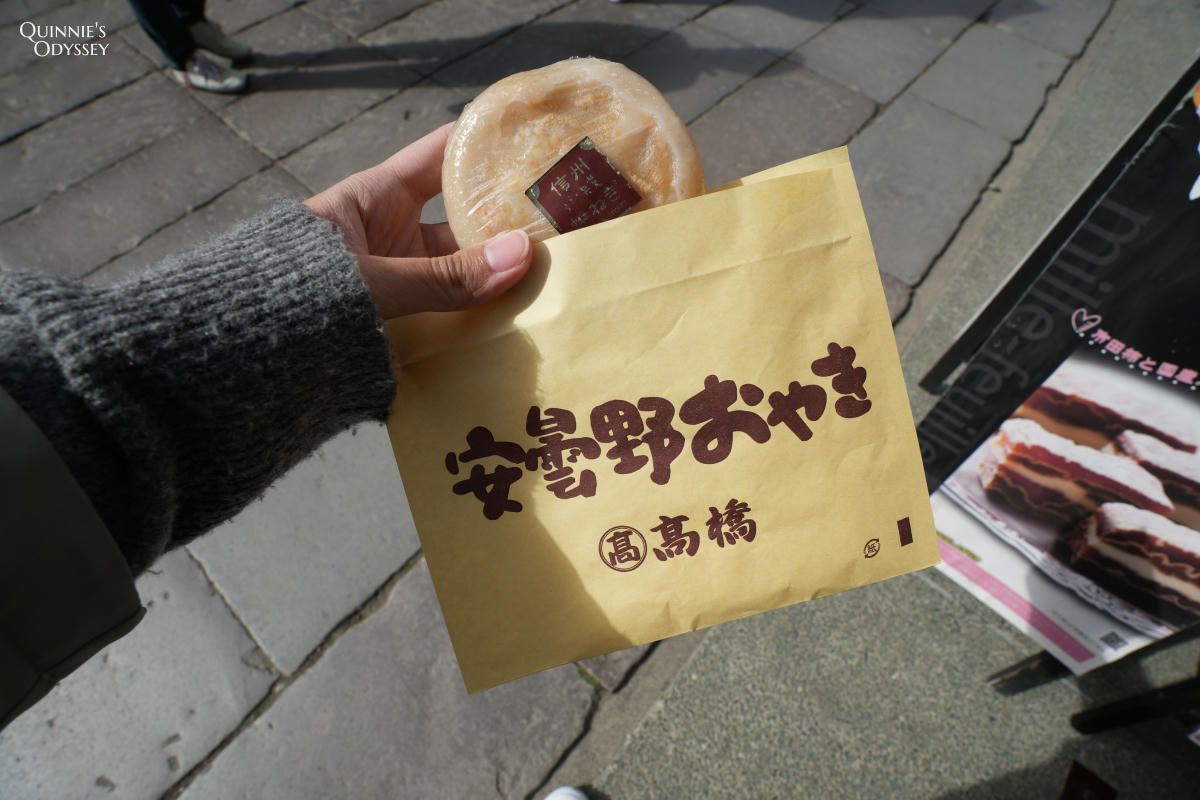
But the second one I tried (250 yen) was much better, thicker, chewier, and with plenty of filling. Totally worth it!
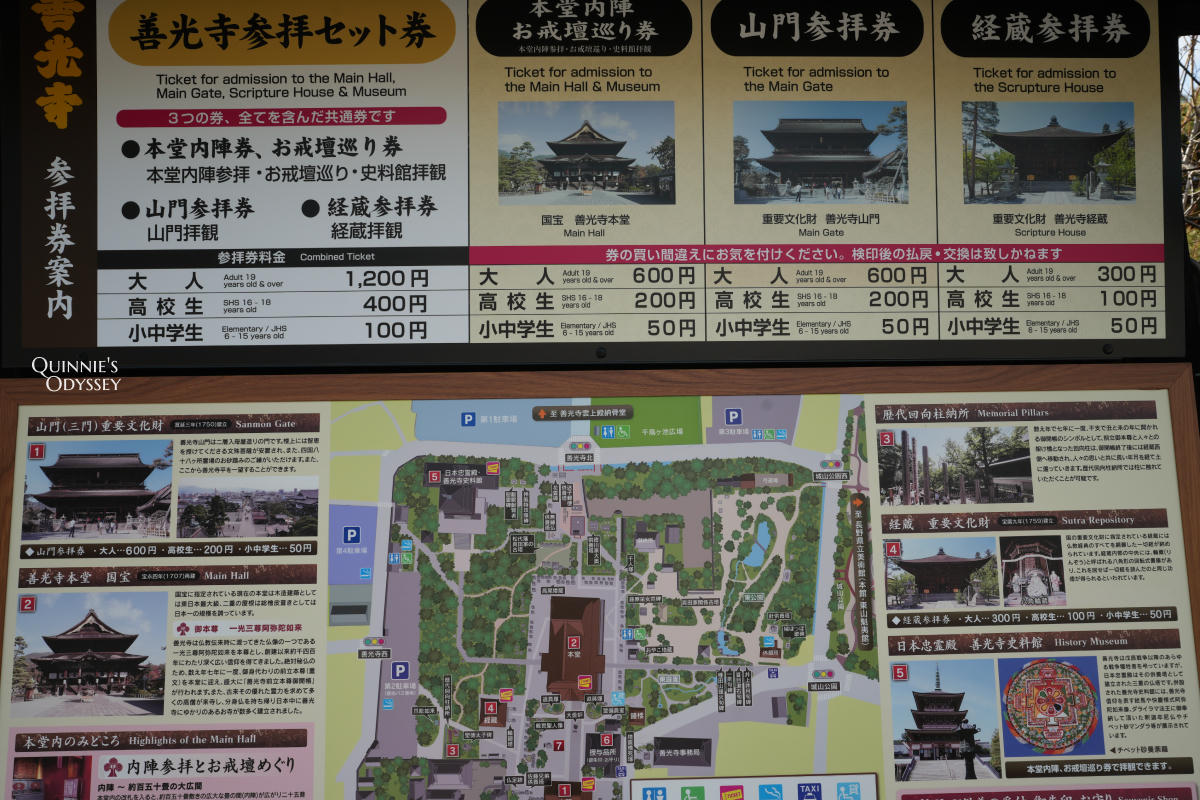
Opening hours vary depending on the season and specific areas within the temple, so it’s a good idea to check in advance.
|
Area |
Hours |
|
Main Hall Inner Sanctuary |
Opens 1 hour before morning prayers |
|
Main Gate, Sutra Repository & Museum |
9:00-16:00 |
There are several ticket options depending on what you want to see.
If you plan to visit multiple areas, the combined ticket is usually the best value.
|
Tickets |
Price (Adult / High School / Child / Preschool) |
Includes |
|
Combined Ticket |
1200 / 400 / 100 / free (yen) |
Main Hall inner area, underground passage, Sanmon Gate, Sutra Repository, Museum |
|
Main Hall + Underground Passage |
600 / 200 / 50 / free (yen) |
Main Hall & passage |
|
Sanmon Gate Ticket |
600 / 200 / 50 / free (yen) |
Access to 2nd floor |
|
Sutra Repository Ticket |
300 / 100 / 50 / free (yen) |
Inside the repository |
Take the JR train to Nagano Station, then walk about 30 minutes to Zenkoji
(around 20 minutes to Omotesando Street)
Take the JR train to Nagano Station, then board a bus from Stop No.1 heading toward Zenkoji. Get off at “Zenkoji Daimon”.
After learning about Zenkoji’s history, it becomes clear why it holds such an important place in Japan.
From surviving the turmoil of the Sengoku period, to being jointly maintained by two different sects despite being non-sectarian, to welcoming women at a time when many temples did not.
These were not easy things to achieve, yet Zenkoji has carried these traditions forward for centuries.
And that’s exactly why the saying still lives on today:
“You should visit Zenkoji at least once in your lifetime.”
▼ Exclusive Deal for Sika Readers ▼
Use code【DNBDRT】👉👉 Save ¥3,000on your TOCOO! car rental(view guide)
▼ Nagano Travel Essentials ▼

Thanks for reading!
If you’re interested in my stories, feel free to follow me on Instagram.
👉👉 IG: @sika_artist 👈👈