Physical Address
304 North Cardinal St.
Dorchester Center, MA 02124
Physical Address
304 North Cardinal St.
Dorchester Center, MA 02124

Most people who come to Arashiyama never make it this far. The bamboo forest gets the crowds, the bridge gets the photos, and Otagi Nenbutsuji Temple, tucked away at the end of the Toriimoto street, gets the quiet.
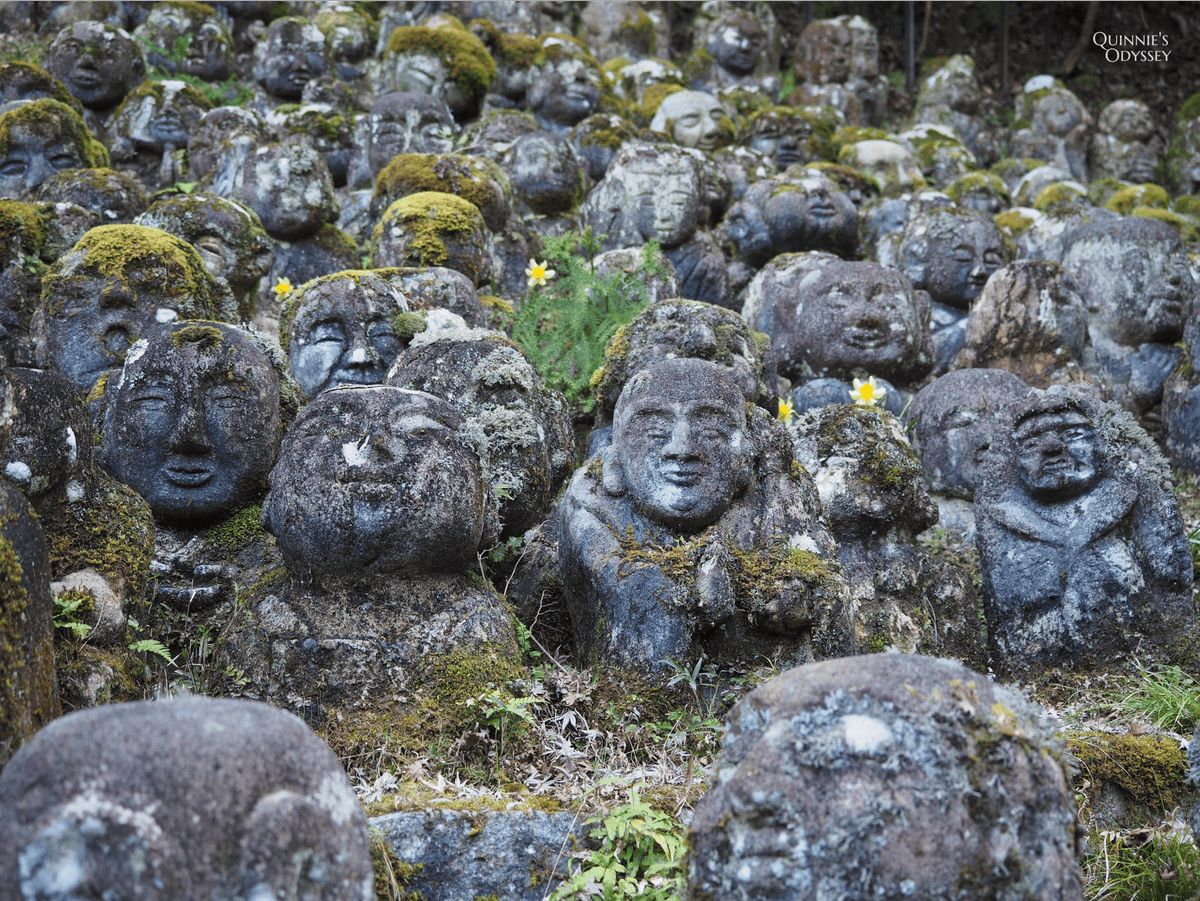
But the moment I walked through the gate and saw 1,200 moss-covered stone statues staring back at me from every direction – some laughing, some sulking, one screaming into the sky – I understood why people who do make the trip almost always say it was their favorite part of Arashiyama.
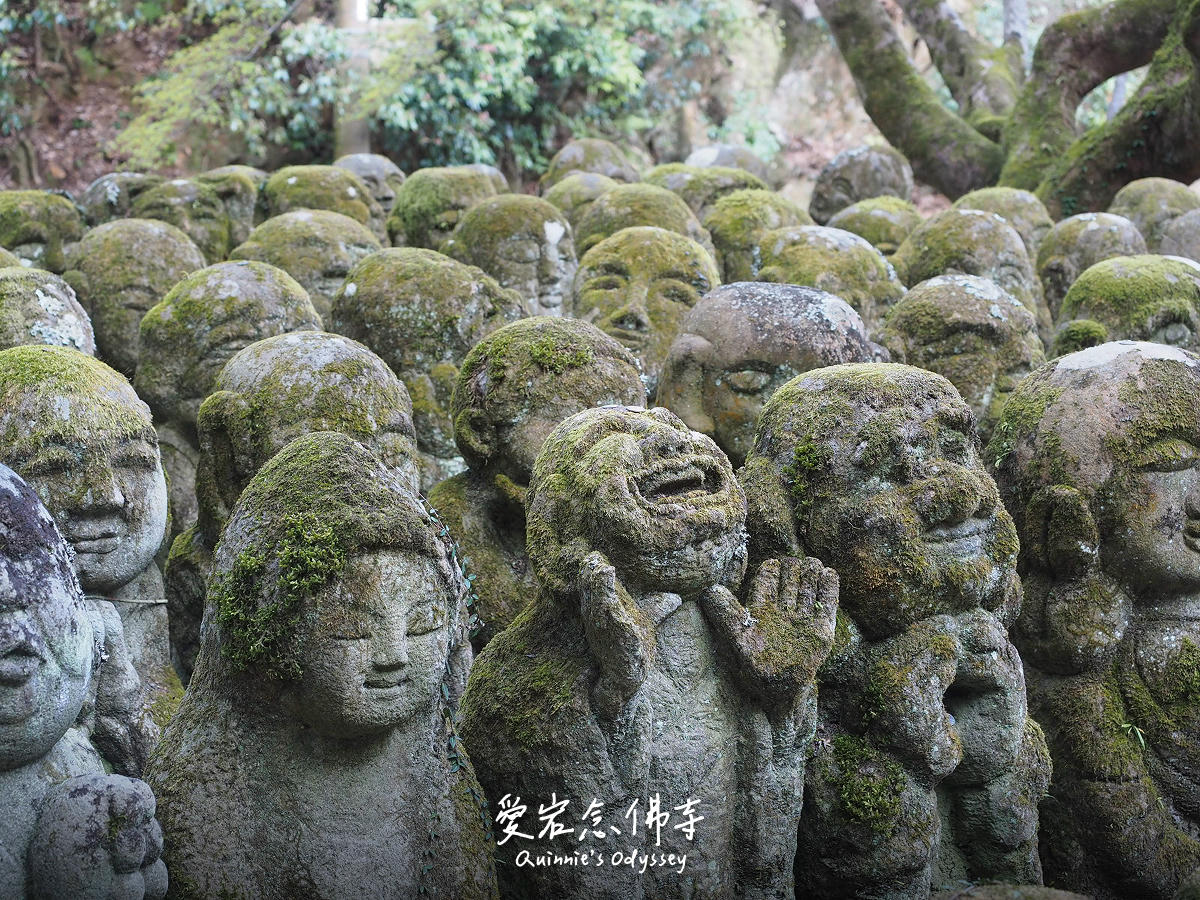
This is one of the most genuinely surprising temples in Kyoto. The entrance fee is ¥1,000 for adults, the atmosphere stays calm even on busy days, and the statues are unlike anything else in the city. In this guide, I’ll walk you through what to see, the history behind those strange and wonderful stone figures, tips for making the most of your visit, and how to get there from Arashiyama.
Otagi Nenbutsuji Temple is a Buddhist temple in the Toriimoto area of Sagano, Kyoto, famous for its 1,200 hand-carved Rakan stone statues – each one sculpted by a different person, with a completely unique expression and personality. It sits at the northern edge of the Arashiyama district, away from the bamboo forest crowds, which means the atmosphere here stays genuinely peaceful even in peak season.
The statues are scattered along mossy slopes and stone pathways throughout the grounds. Some look serene. Some look like they’re mid-argument. One famous figure tilts his head all the way back, mouth open wide, as if screaming at the sky. Walking among them feels less like visiting a temple and more like wandering into a garden of stone personalities – each one holding a memory from the person who carved it.
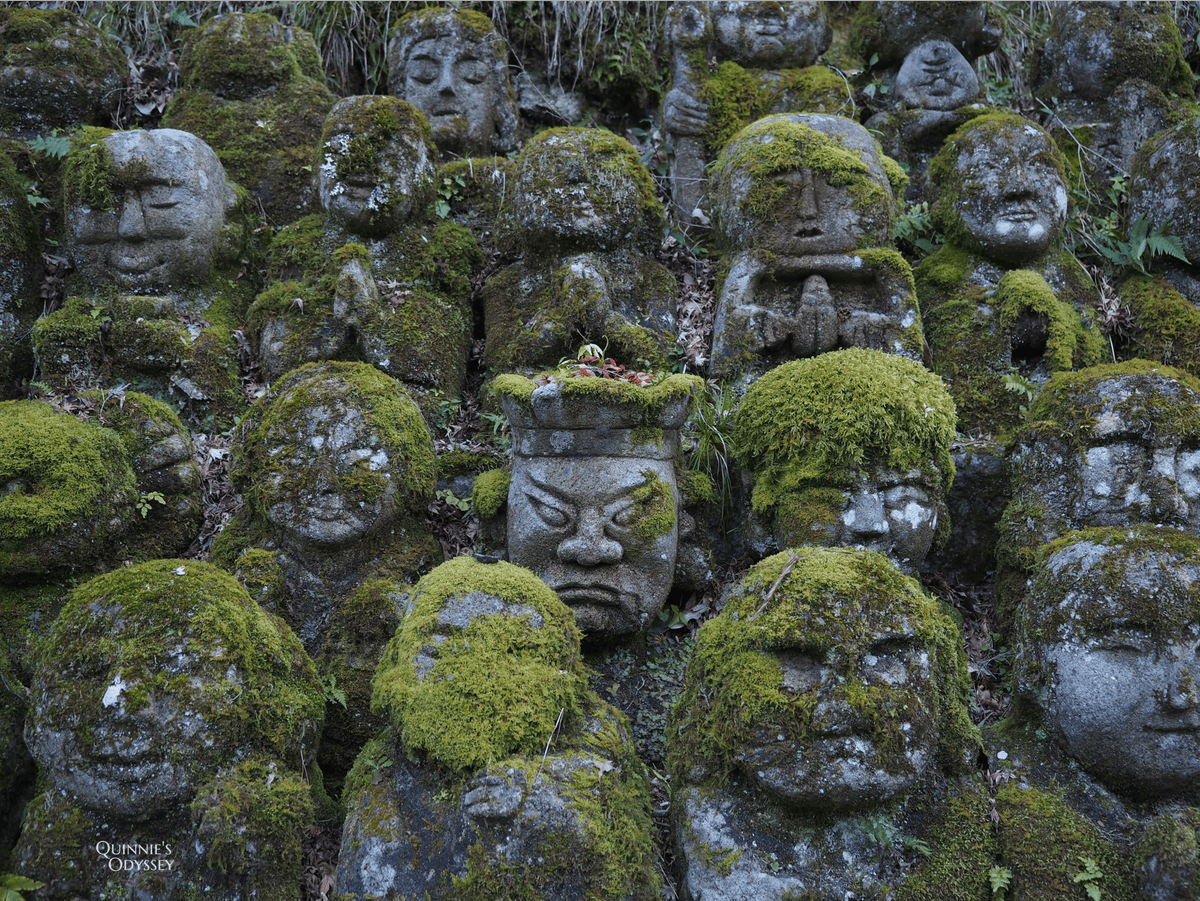
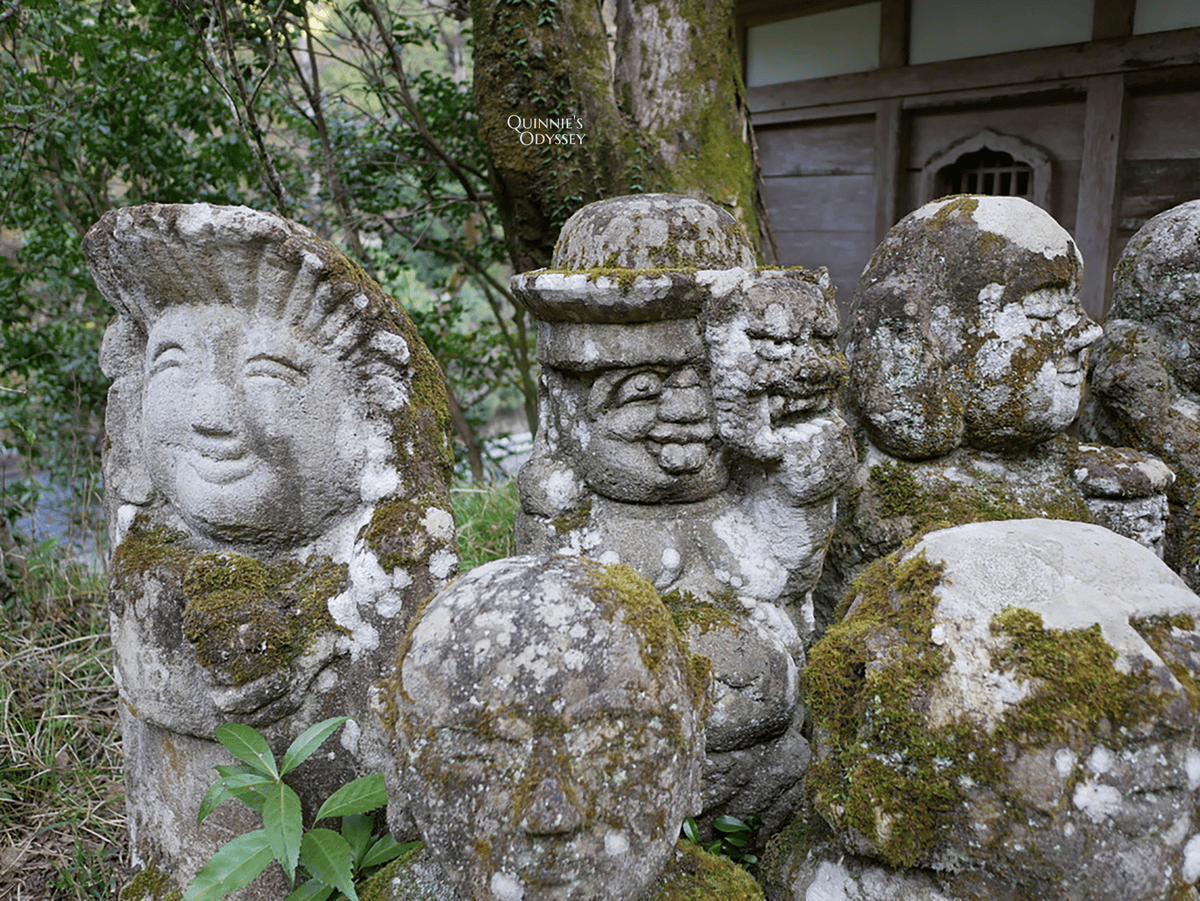
Otagi Nenbutsuji has one of the stranger origin stories among Kyoto’s temples – it moved cities, was destroyed by flooding, survived a typhoon, and was essentially rebuilt from scratch by volunteers with no formal training.
The temple was originally founded in 770 CE in Higashiyama, on the eastern side of Kyoto. Repeated flooding from the Kamo River eventually destroyed it, and the surviving structures were relocated several times across the centuries. By 1922, only three original structures remained, and they were moved to the current location in the Sagano hills.
Then a typhoon hit in 1950. The temple fell into disrepair and was largely abandoned.
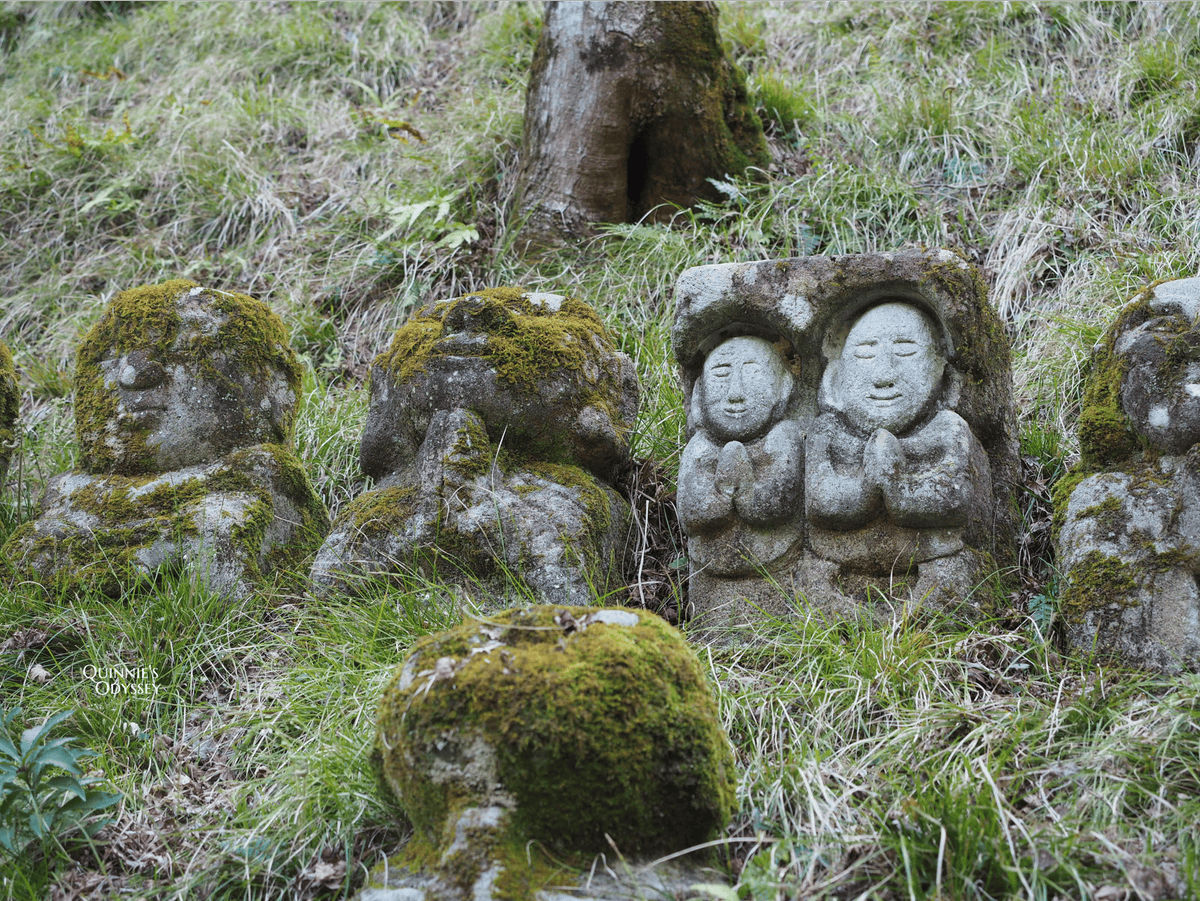
The revival began in 1955 under priest Kōchō Nishimura, himself a trained Buddhist sculptor. He spent years restoring the temple, but the real transformation came in 1979, when he launched a community carving project and invited ordinary people across Japan to come and carve their own Rakan statue.
No formal sculpting experience required. Participants were given stone and tools, and free to carve however they wished – embedding personal memories, hopes, and even humor into the rock. The project ran until 1991, producing 1,200 individual statues. They’re all still there, aging among the moss and tree roots.
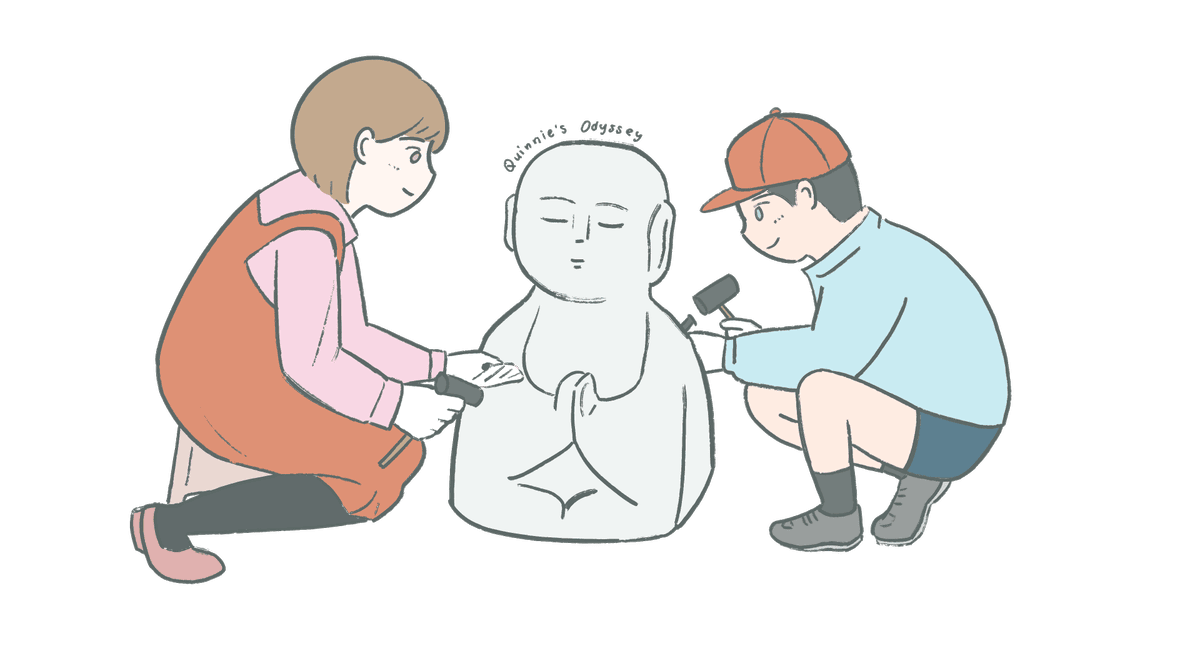
That’s why the collection feels so different from typical temple art. These weren’t made by monks following strict iconographic rules – they were made by farmers, office workers, grandmothers, and students. You can feel it when you look closely.
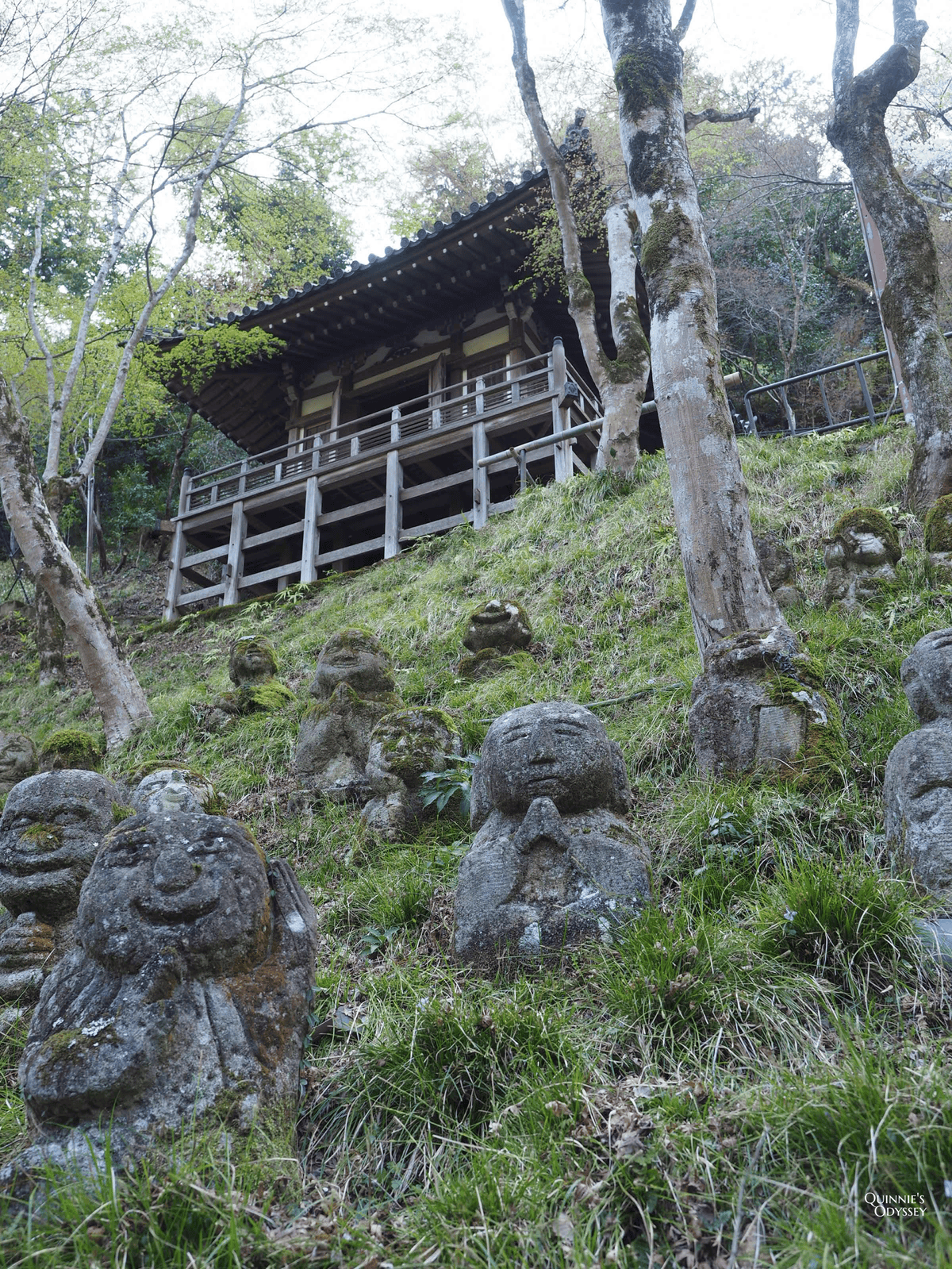
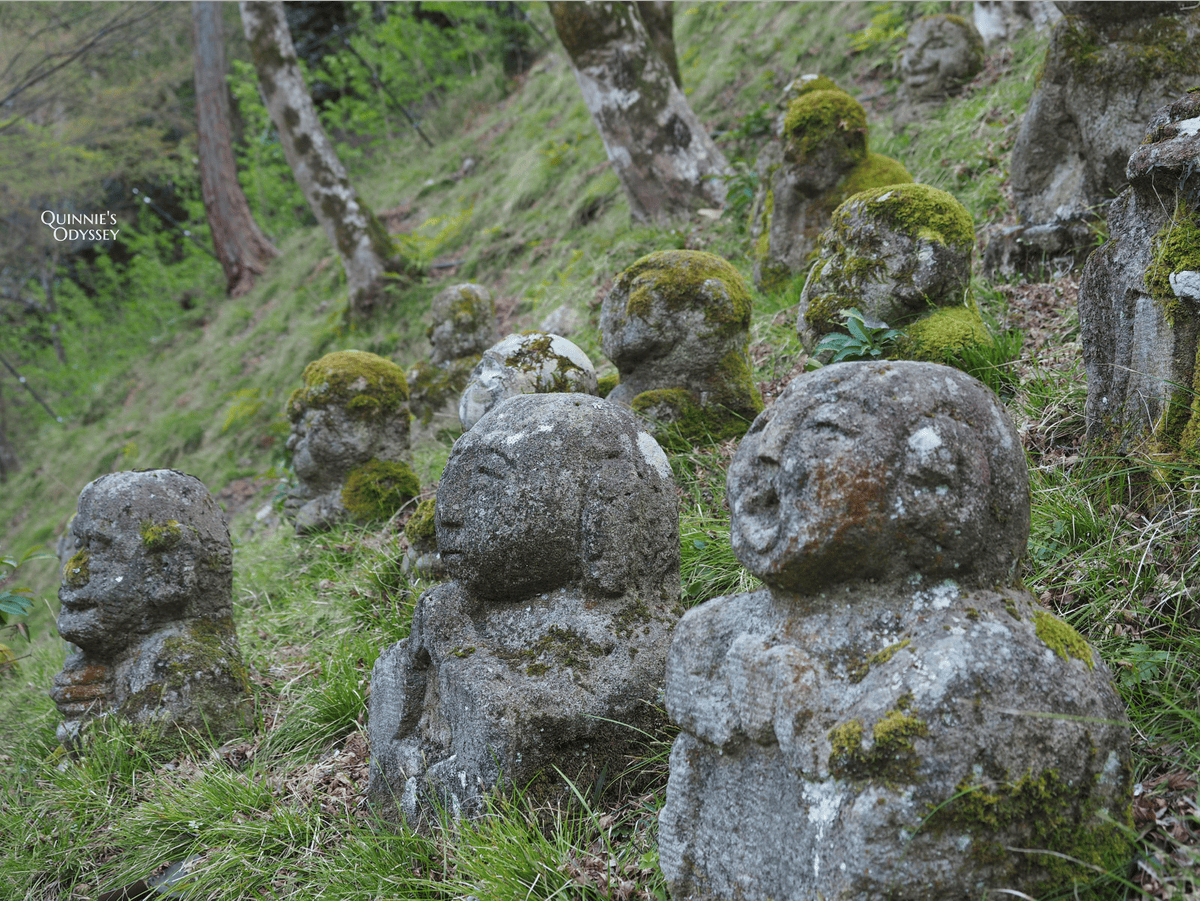
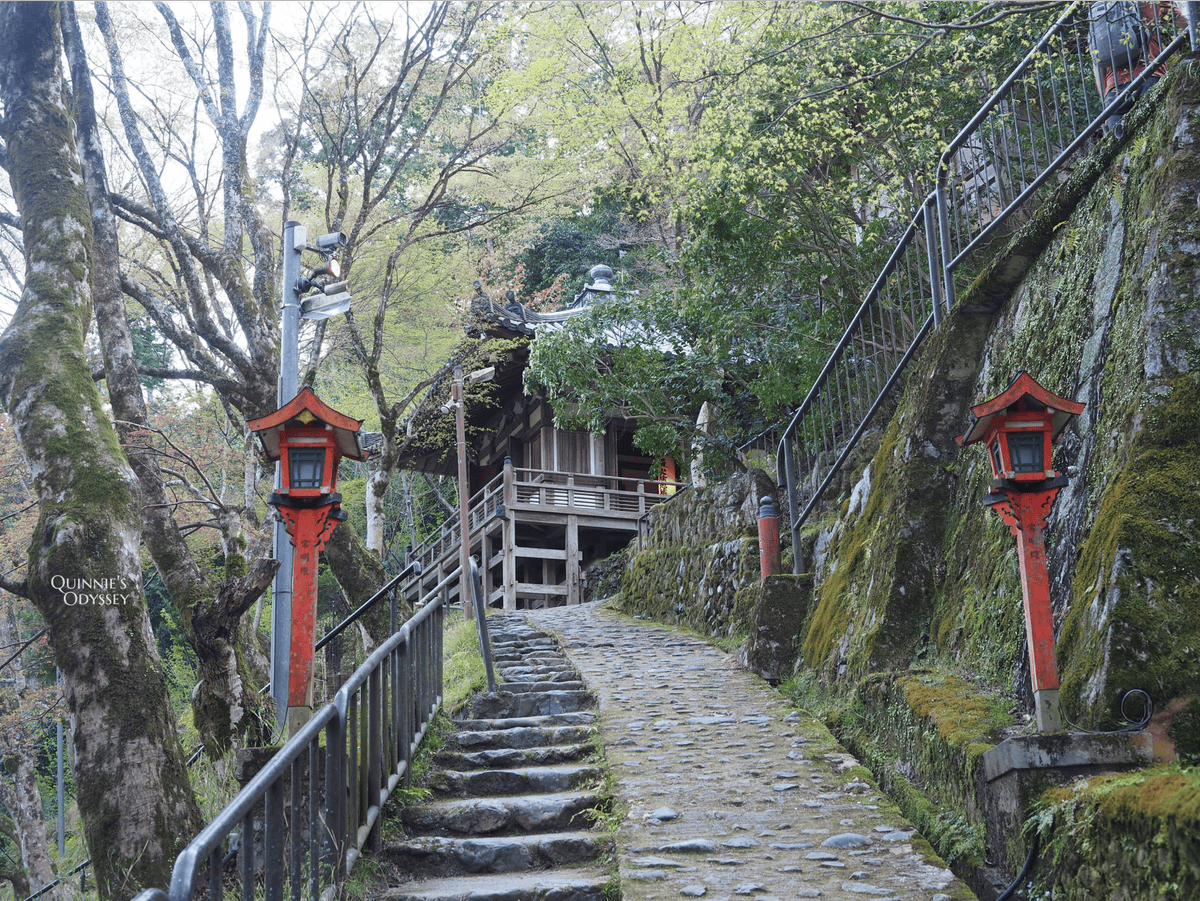
The path slopes upward from the gate, with statues beginning to appear almost immediately on both sides. It sets the tone right away, you’re not in a typical temple.
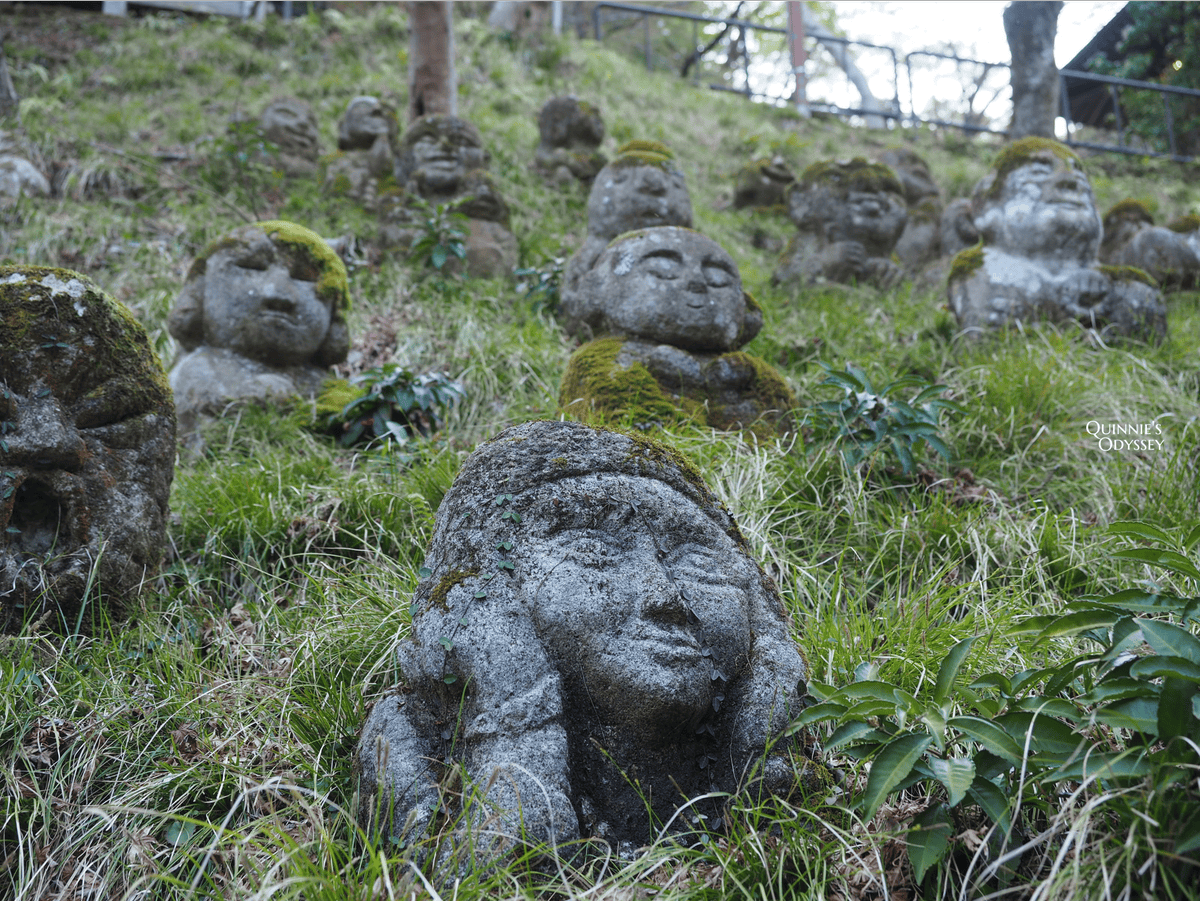
This is the heart of the visit. The 1,200 statues are arranged along the main paths and hillside, and no two look alike.
Expressions range from serenely peaceful to completely baffling. There’s the famous one with his face angled straight up at the sky, mouth open, mid-shout.
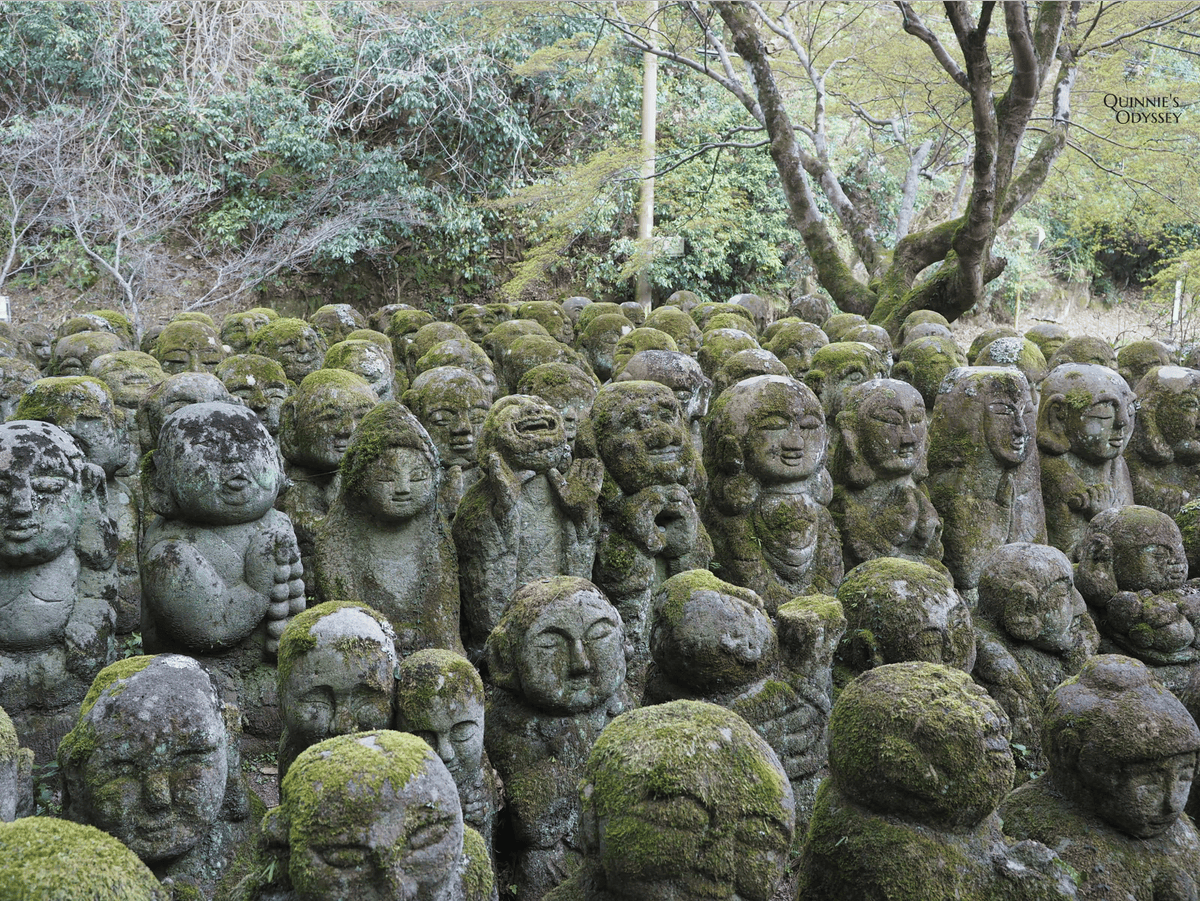
There are statues holding tennis rackets, looking genuinely worried, wearing what seems to be a medieval helmet.
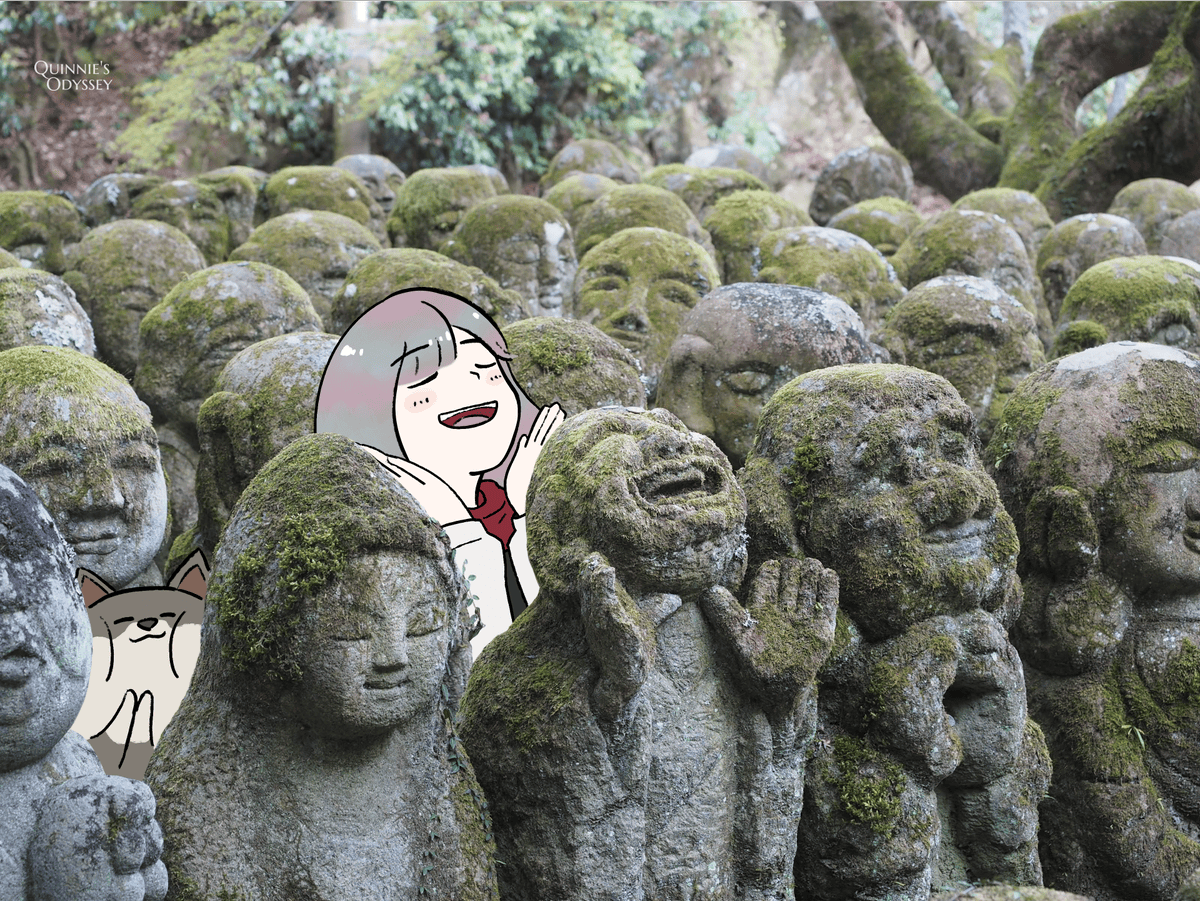
Many visitors play a quiet game: find the statue that looks most like someone you know, or yourself.

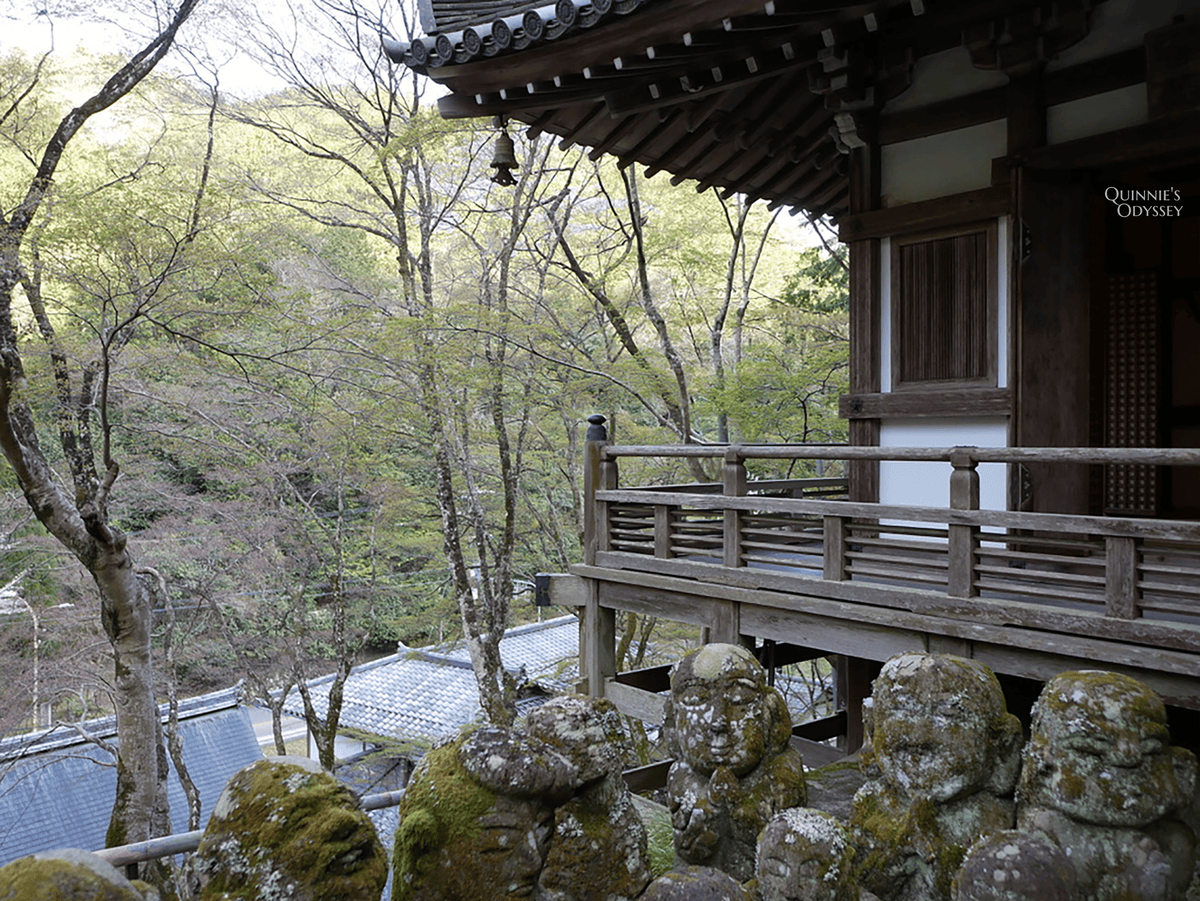
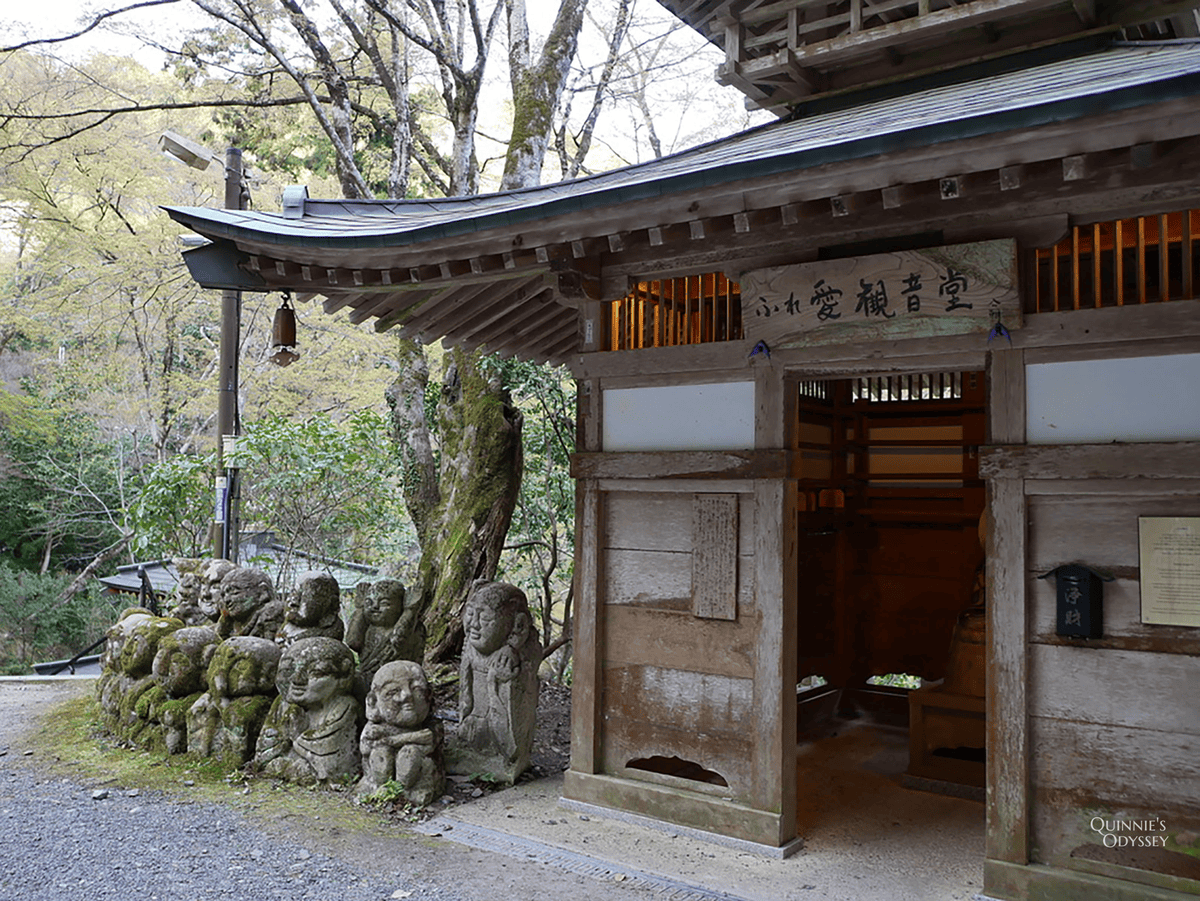
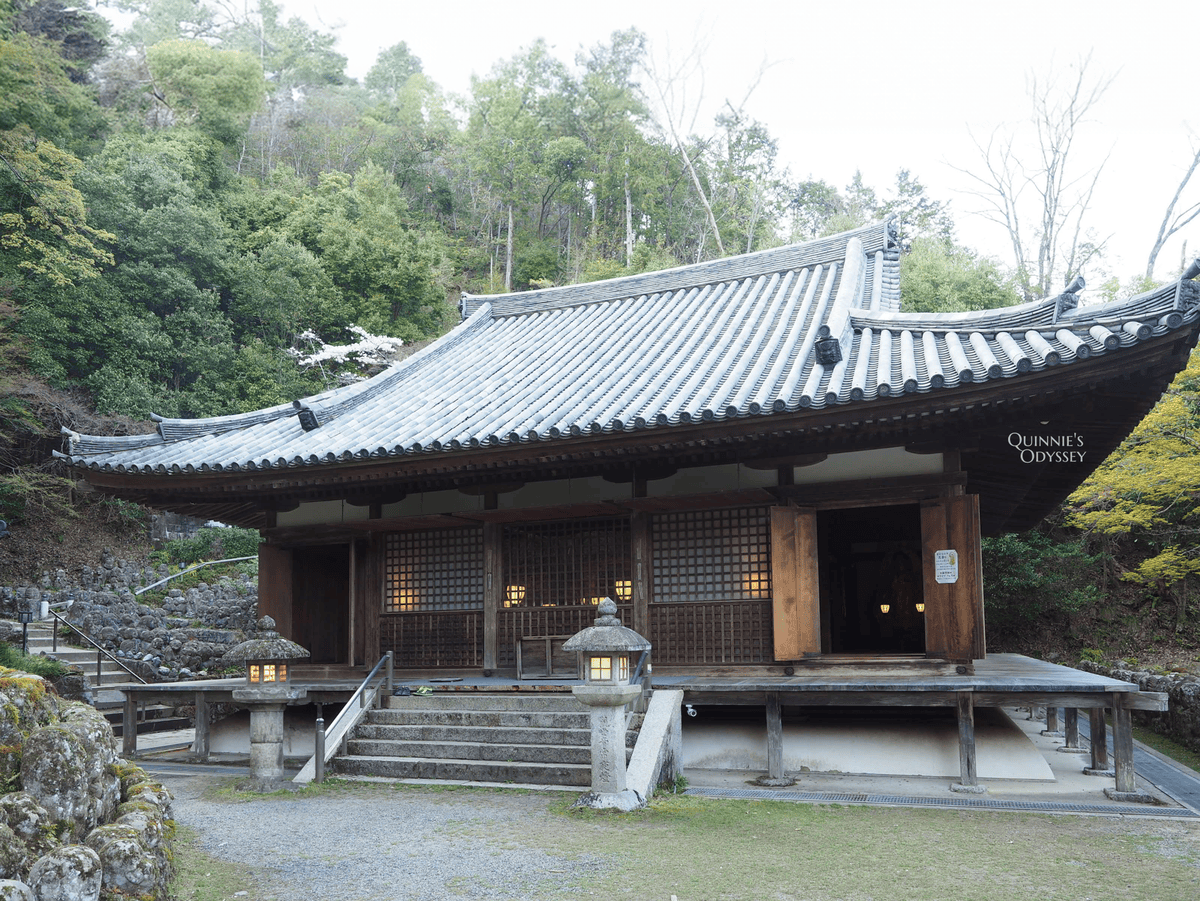
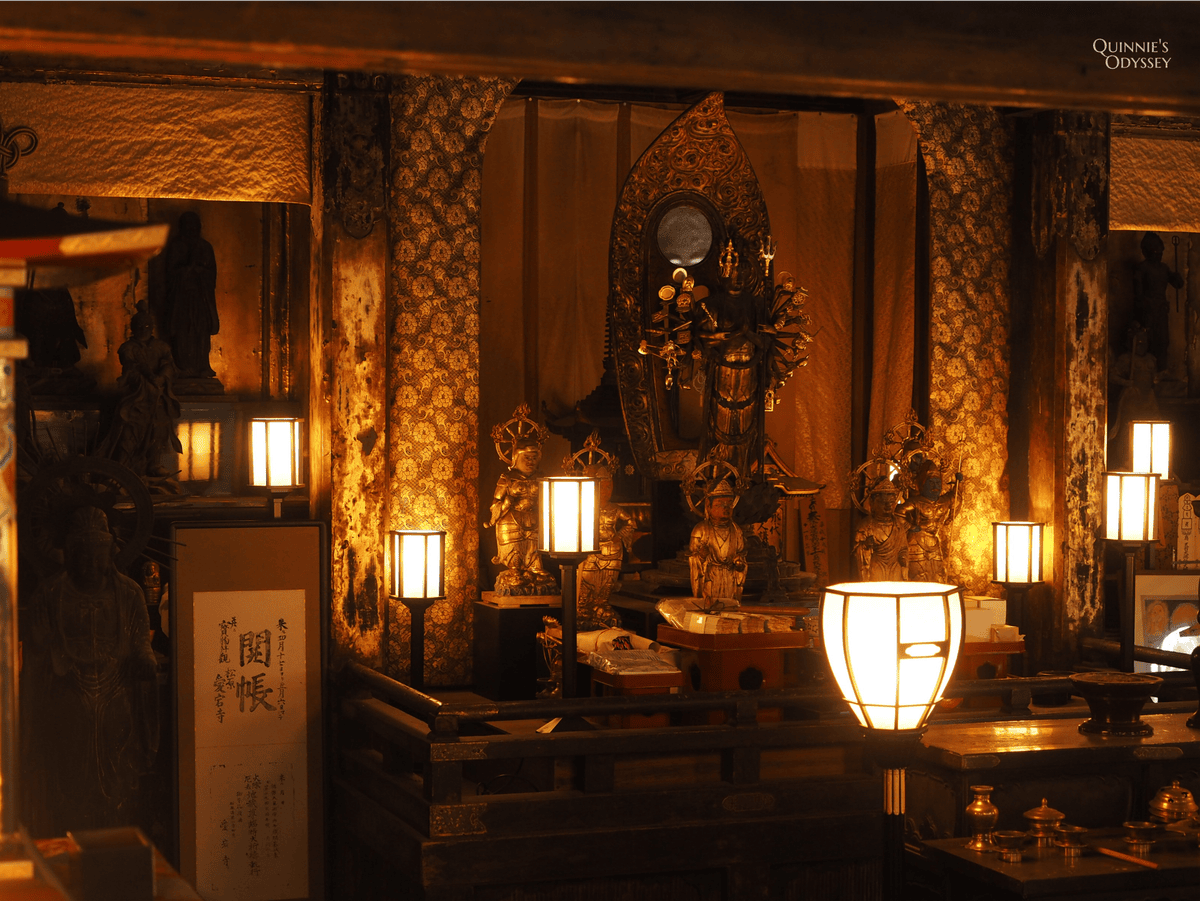
The Main Hall enshrines Senju Kannon, the Thousand-Armed Bodhisattva of Compassion. It’s a calm, slightly darker space, a good contrast after the open-air statue garden outside.
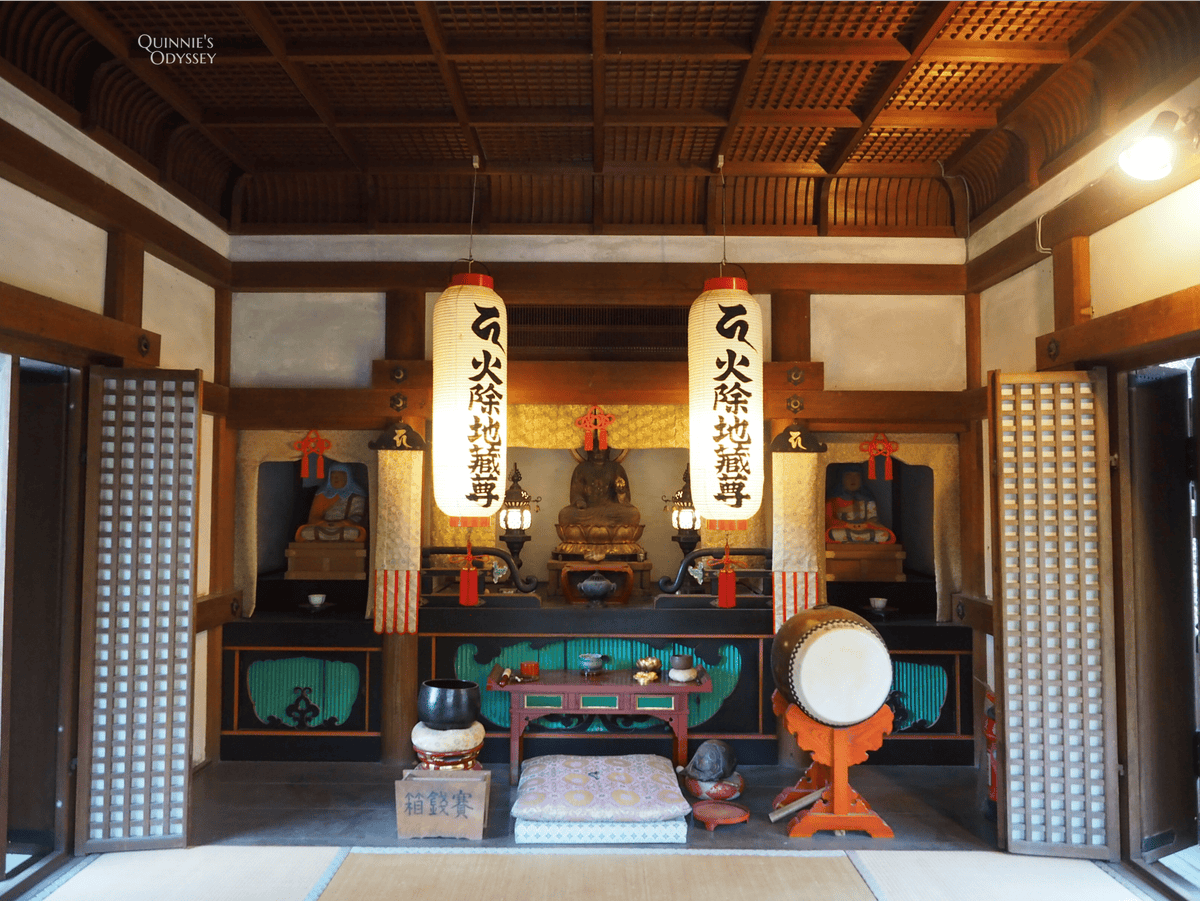
The Jizō Hall houses Atago Honzan Butsumetsu Kaji Jizō, traditionally believed to extinguish fire, not just literal flames, but inner anger, suffering, and the difficulties of daily life. Worth a quiet moment here if you’re in the right headspace.
Follow the path to the back of the grounds and you’ll find more statues tucked between tree roots and rocks, with a wider view of the surrounding hills. This area is easy to skip if you’re moving quickly. It’s the most secluded part of the temple and one of my favorites.
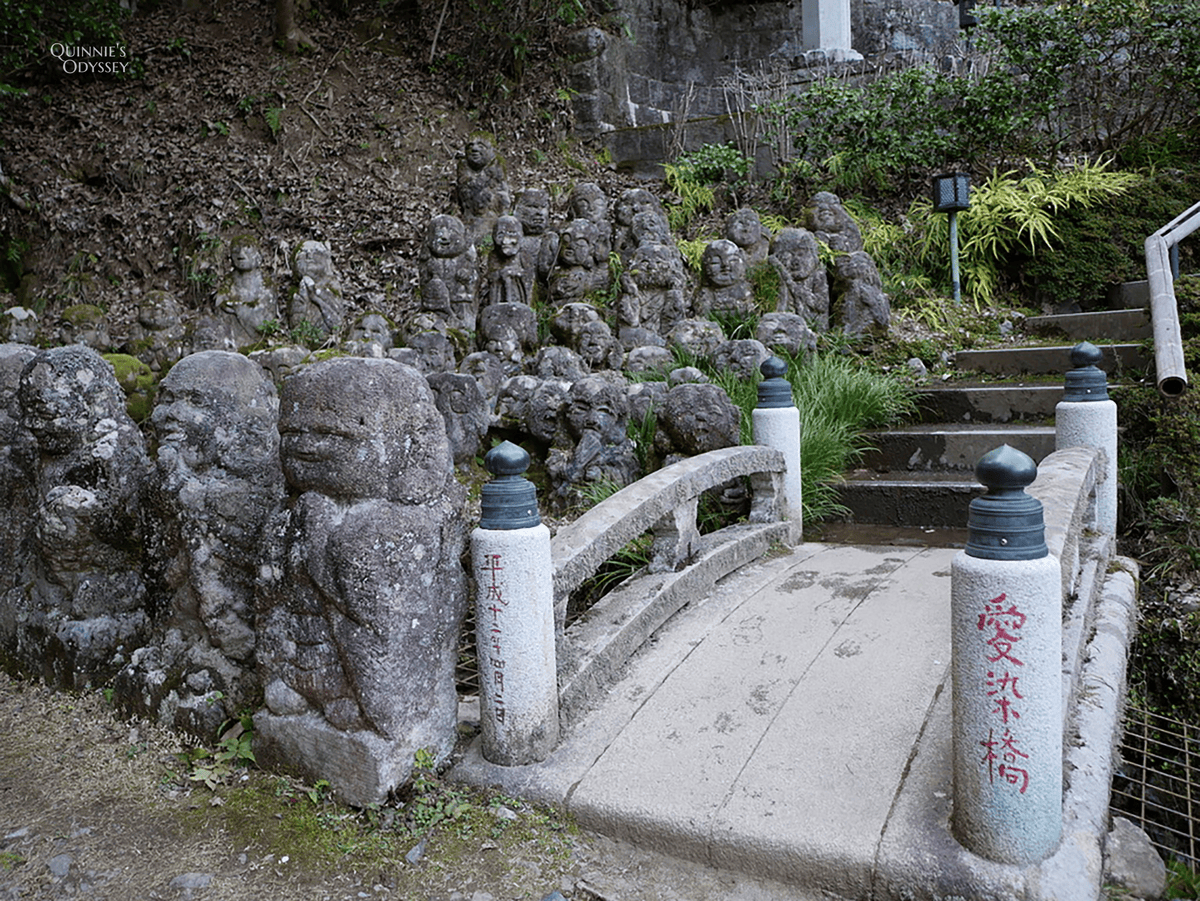
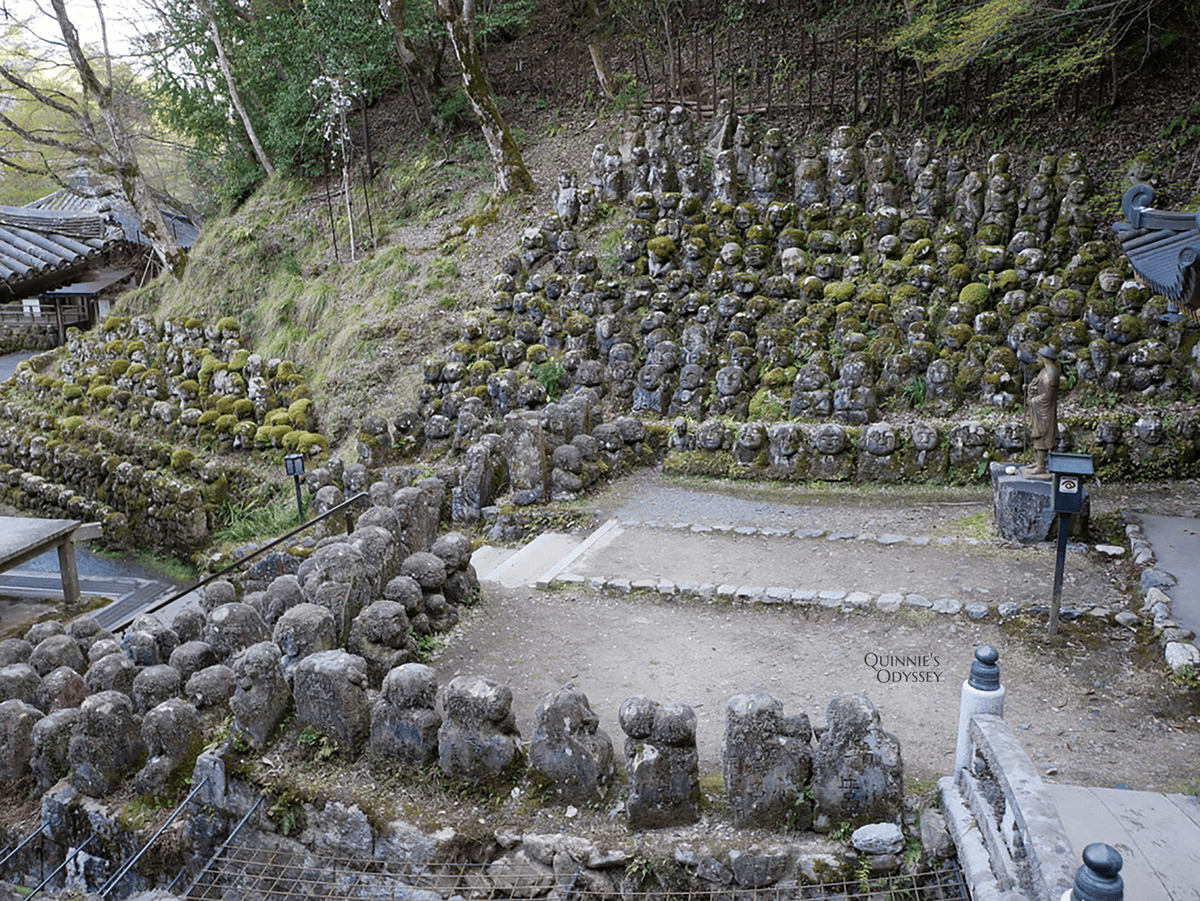
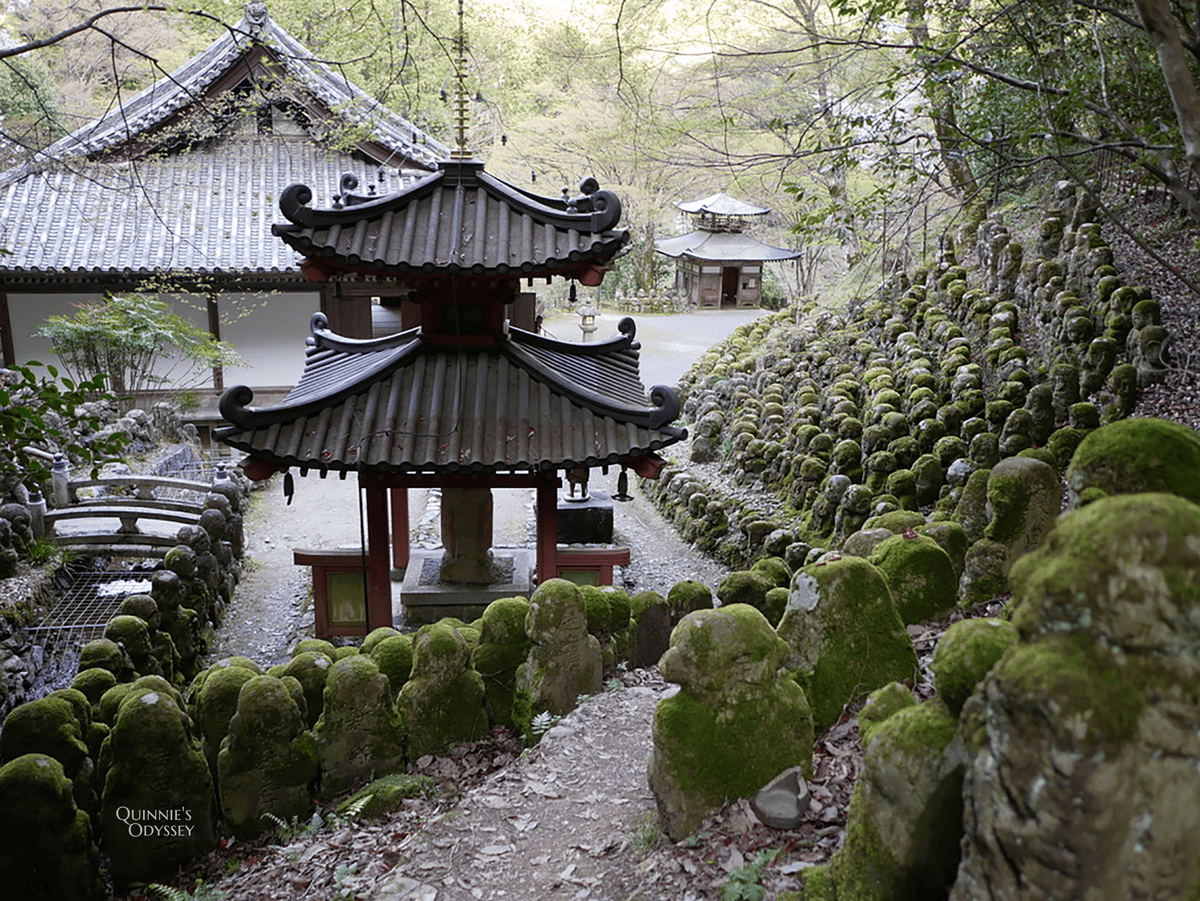
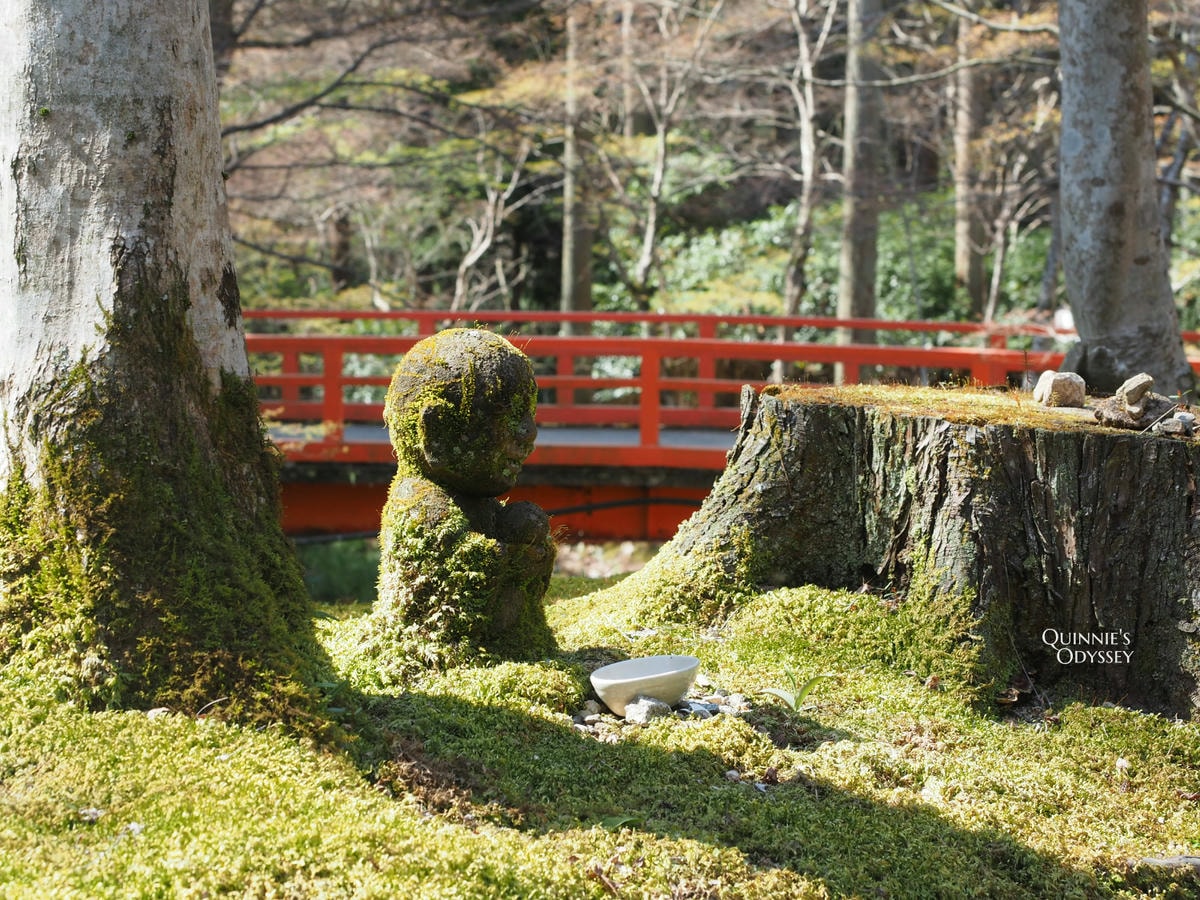
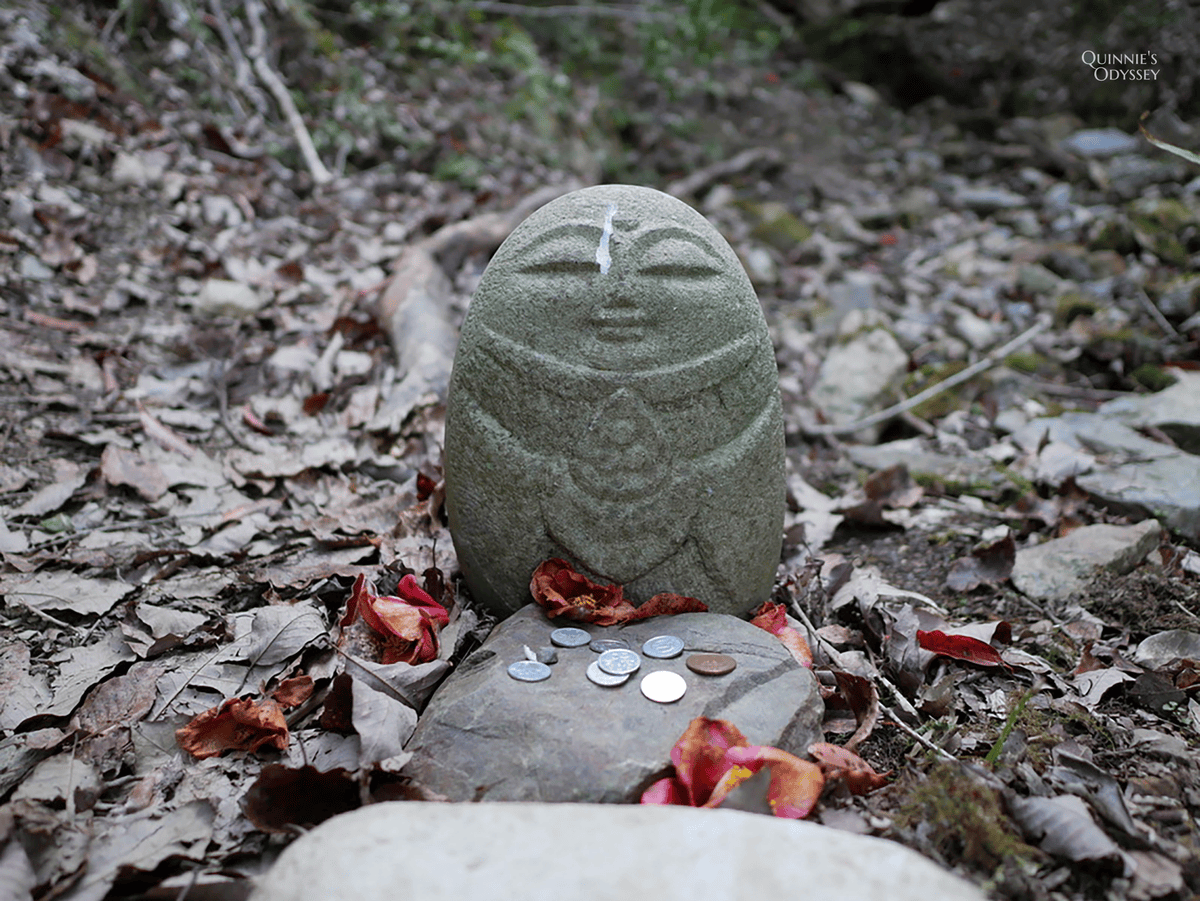
There is also a small round stone statue tucked away in a corner, which looks quite adorable.(And as for the white mark above it… it seems to be bird droppings 😓)
Getting here takes a little more effort than most Arashiyama attractions, which is exactly why it stays uncrowded.
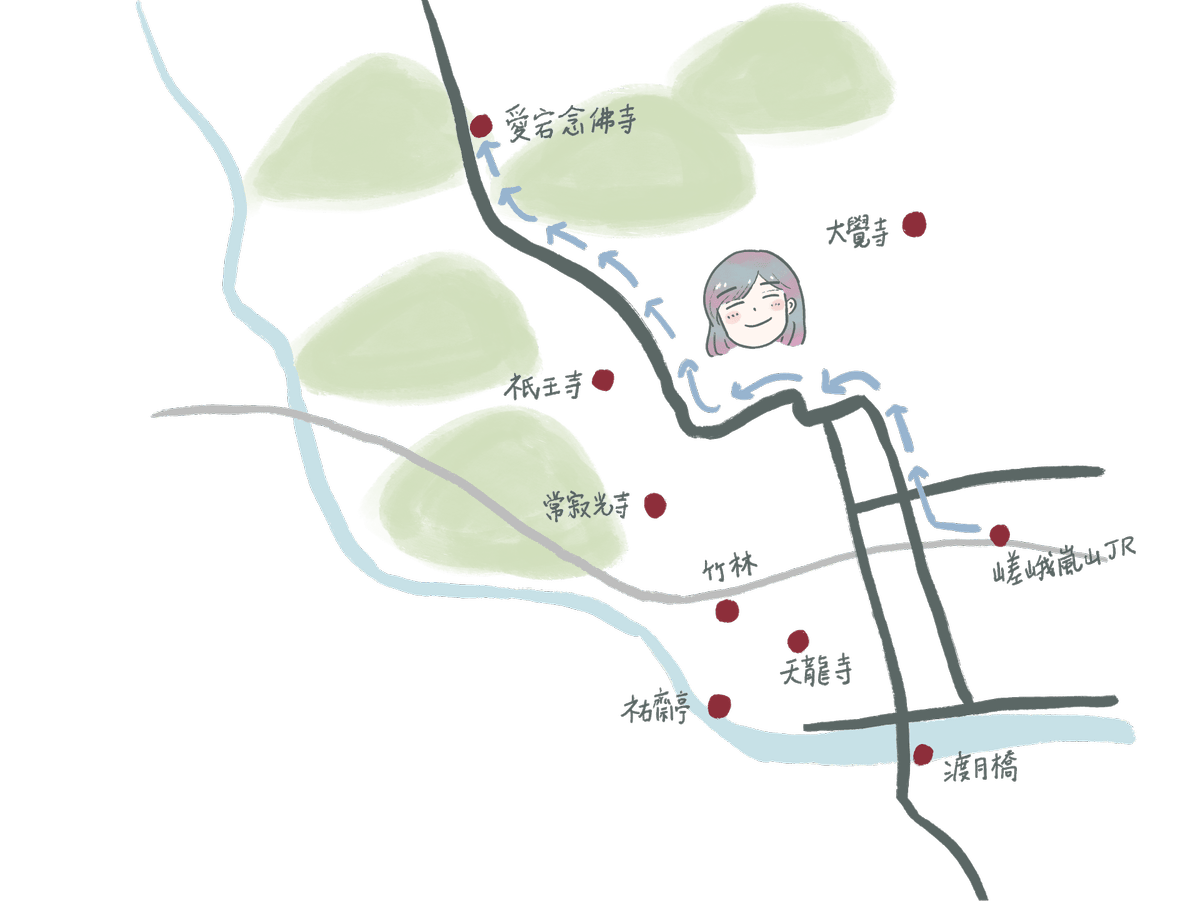
There are two main ways to reach Otagi Nenbutsu-ji from Arashiyama: by bus or on foot. I personally walked one way and took the bus back.
From around JR Saga-Arashiyama Station, take bus routes 62, 92, or 94 and get off at Atago-dera Mae. The temple entrance is right across the street. The ride takes about 10–15 minutes.
However, bus services are not very frequent, so it’s important to check the timetable in advance.
Bus timetable 👉👉 Otagi Nenbutsu-ji access schedule
Walking from Arashiyama Station takes about 40-50 minutes at a faster pace, or over an hour if you walk slowly and explore along the way.
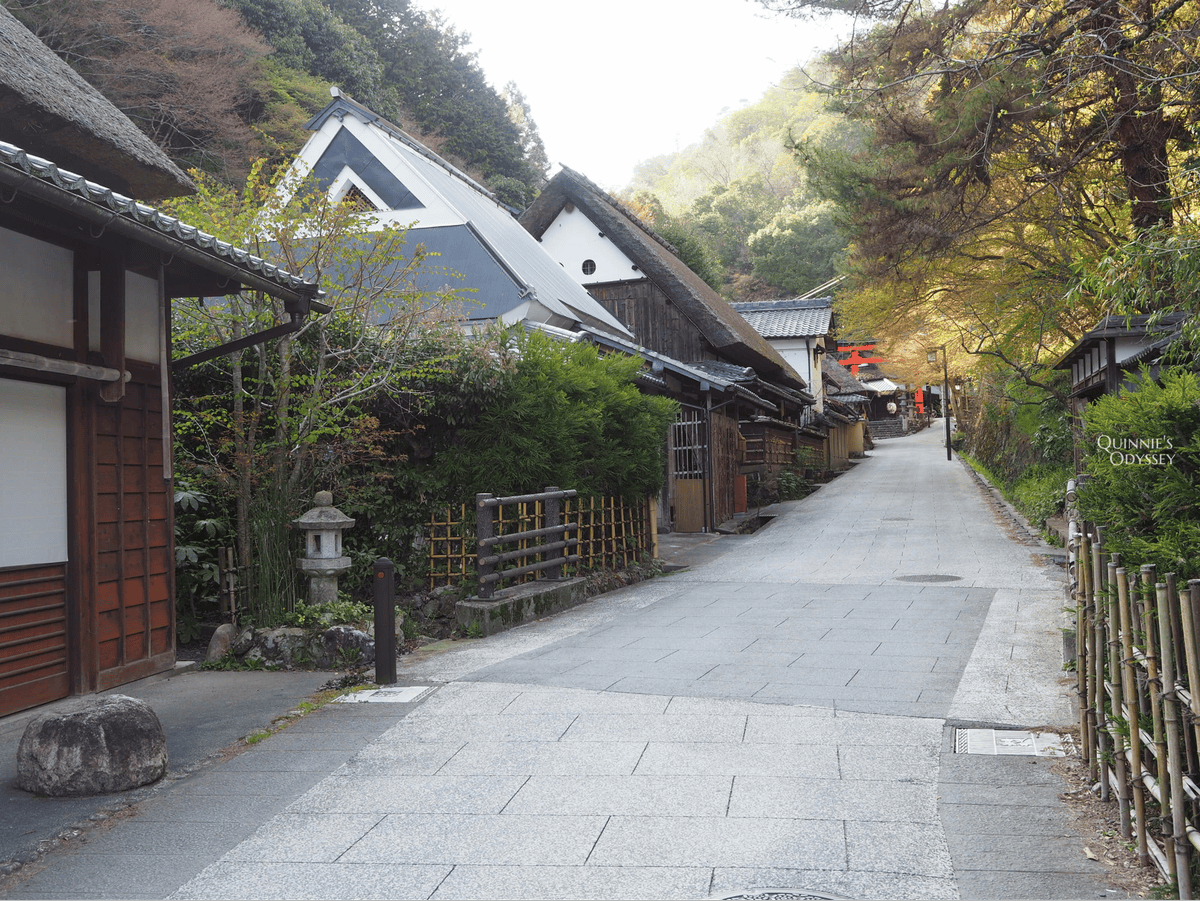
The route is part of the experience itself. You’ll pass quiet streets with traditional Japanese houses, small thatched-roof homes, and rural scenery that feels far removed from central Arashiyama.
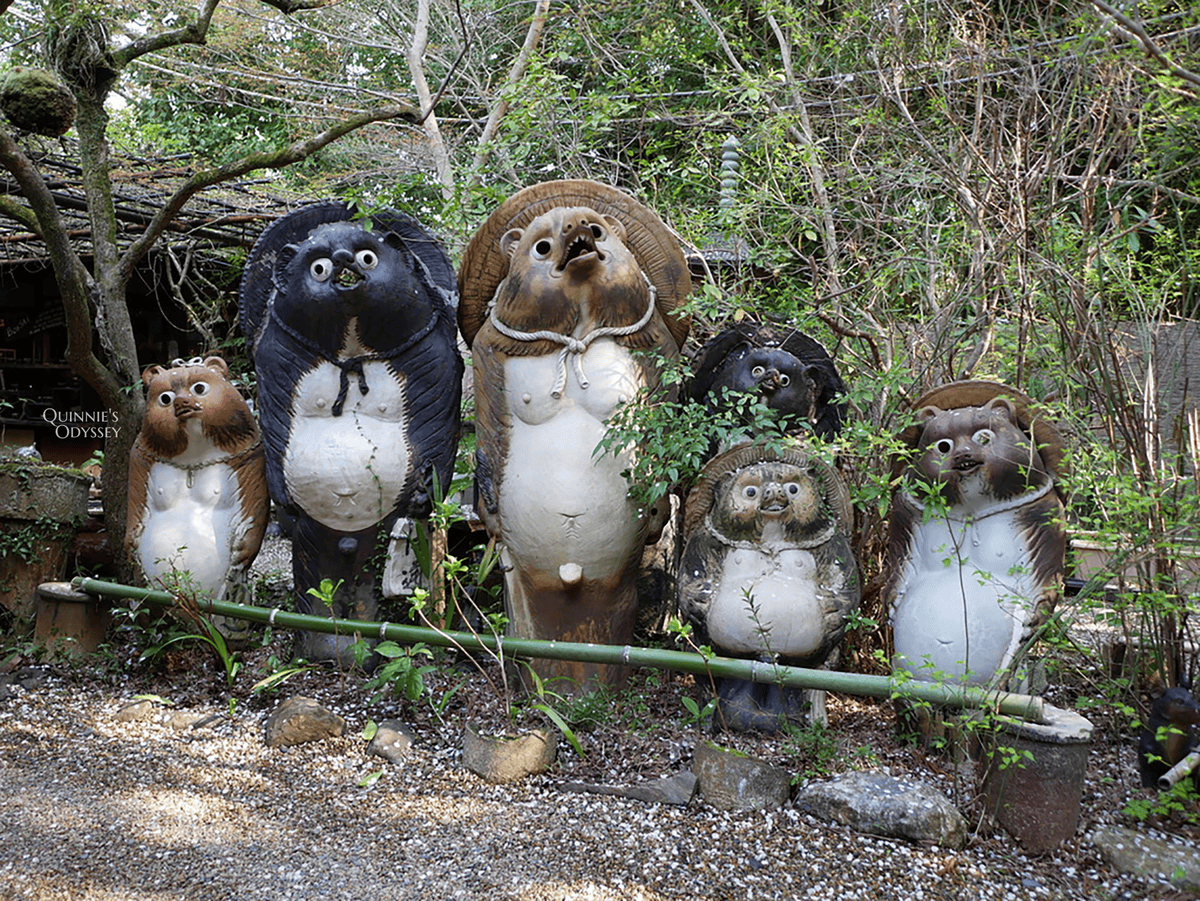
Along the way, you might also see tanuki (raccoon dog) statues and small quirky roadside signs that add a bit of charm to the walk.
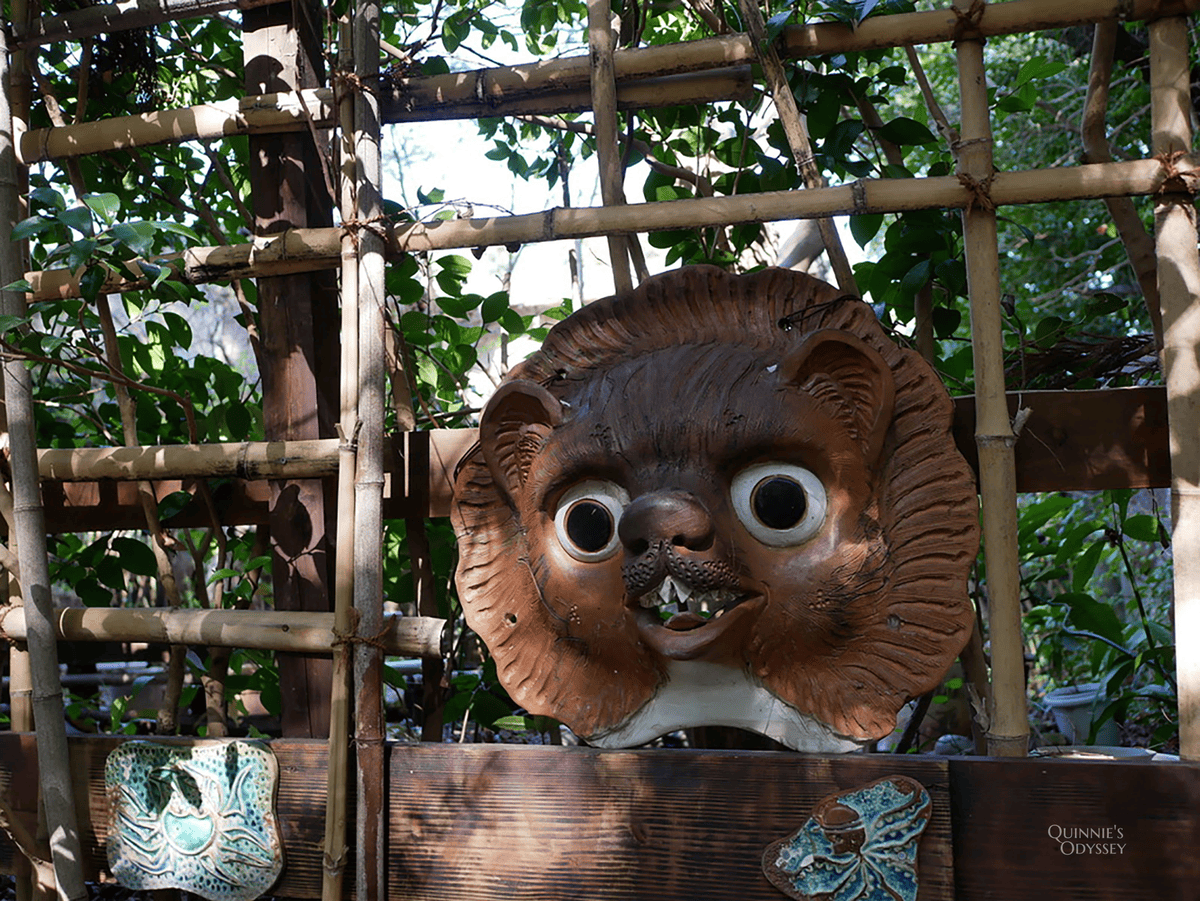
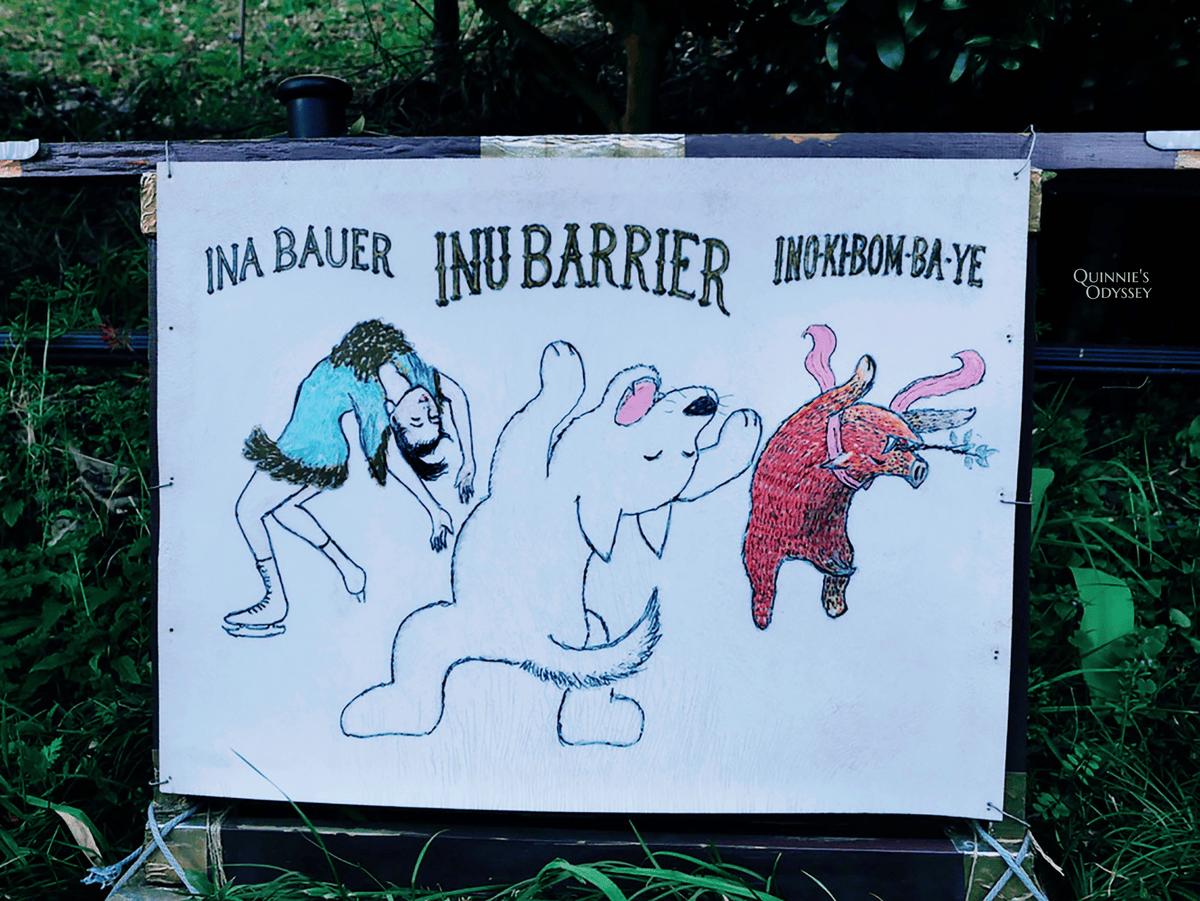
Although the walk is longer, it’s surprisingly enjoyable.
If you ask me whether it’s worth it, I’d say absolutely yes.
The Sagano backstreets are peaceful and highly photogenic, with very few people compared to the busy Arashiyama main area. It feels like entering a completely different world.
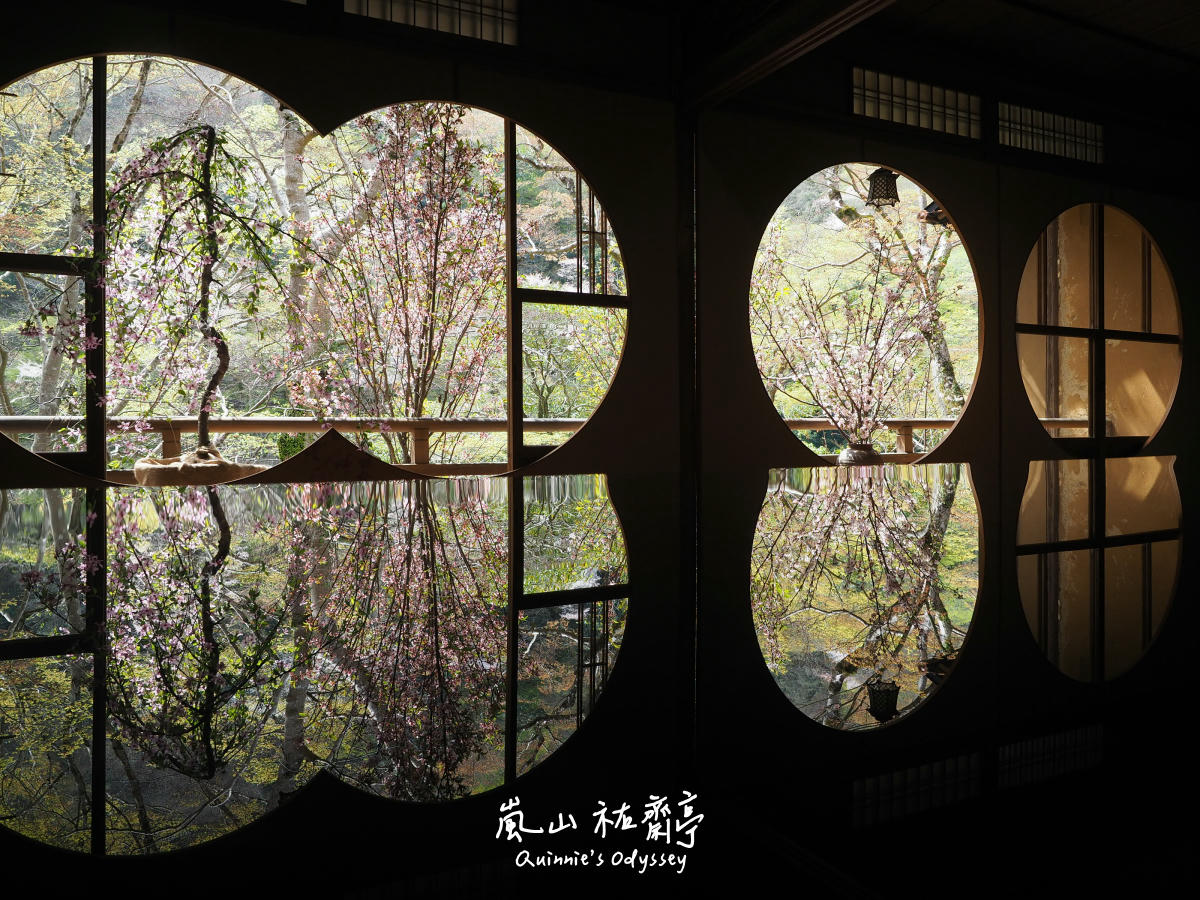
If you enjoy quiet and hidden spots in Kyoto, you may also like Yusai-tei in Arashiyama, known for its seasonal reflections through window views. Another great option is Ohara Sanzen-in, a peaceful temple surrounded by nature that is beautiful in every season.
Go early or on a weekday.
The temple opens at 8:00 a.m., and the first hour is usually very quiet. Weekdays outside of cherry blossom season are even better, you may have the whole place almost to yourself.
Give yourself at least 45 minutes.
Most people spend 30-60 minutes here. If you rush, you’ll miss the back mountain area and the small details on individual statues that make this place worth the trip.
Walk from Arashiyama if you have the energy.
The 40-minute walk passes through the Saga-Toriimoto preserved street – traditional townhouses, small shops, almost no crowds. It’s one of the nicest walks in Kyoto. The bus gets you there faster, but you’ll miss most of the charm.
Pair it with nearby hidden temples.
Gioji Temple is a 17-minute walk away, and Nison-in is about 18 minutes on foot, both are equally off the beaten path and worth adding to the same day.
▼ Kyoto Travel Essentials ▼

Thanks for reading!
If you’re interested in my stories, feel free to follow me on Instagram.
👉👉 IG: @sika_artist 👈👈
No. The entrance fee is ¥1,000 for adults. Children under 10 enter free. There are no additional charges once you're inside the temple grounds.
The temple is open from 8:00 a.m. to 4:30 p.m. Arriving early is worth it, the first hour of the day is noticeably quieter than the rest.
On foot, the walk takes about 40–50 minutes from JR Saga-Arashiyama Station. By bus (routes 62, 92, or 94), it's about 10–15 minutes to the Atago-dera Mae stop.
Each of the 1,200 Rakan statues was carved by a different person, mostly ordinary members of the public, between 1979 and 1991. No two statues look the same, and many have playful or unexpected expressions that you won't find in any other Buddhist temple.
Yes. Gioji Temple is a 17-minute walk from Otagi Nenbutsuji, and Nison-in is about 18 minutes on foot, both are easy to combine in the same afternoon. The walking route from Arashiyama also passes through the Saga-Toriimoto preserved street, which is worth taking slowly.