Physical Address
304 North Cardinal St.
Dorchester Center, MA 02124
Physical Address
304 North Cardinal St.
Dorchester Center, MA 02124

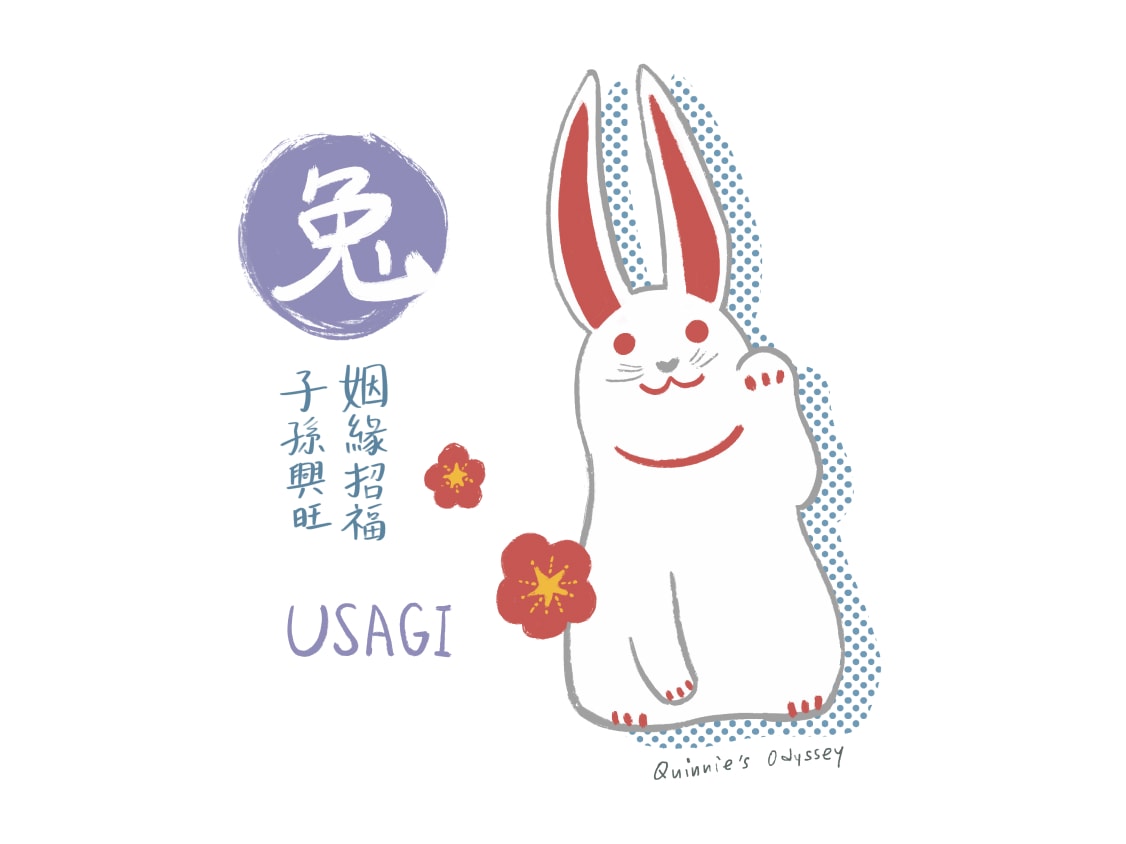
In Japanese culture, rabbits are symbols of fertility, good luck, and family prosperity, which is exactly why Kyoto’s Okazaki Shrine is completely covered in them.
Okazaki Shrine is Kyoto’s most famous rabbit shrine, founded in 794 AD in the Higashiyama area.
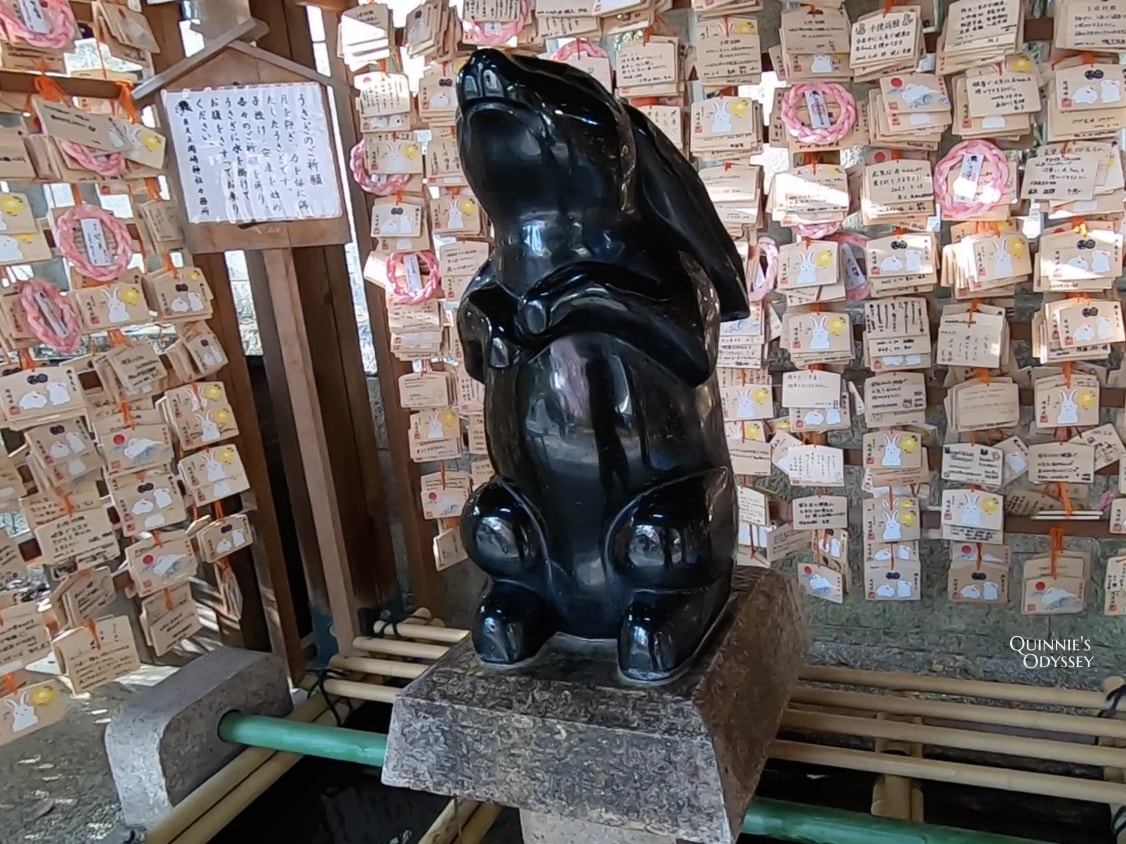
The grounds are filled with rabbit statues, rabbit-shaped omikuji fortune slips at 500 yen each, and a black granite Fertility Rabbit at the purification fountain, pour water over it and rub its belly to pray for pregnancy and safe delivery.
Emperor Takakura himself visited during the Heian period to pray for his consort’s safe delivery, and the shrine’s reputation has held for over 800 years since.
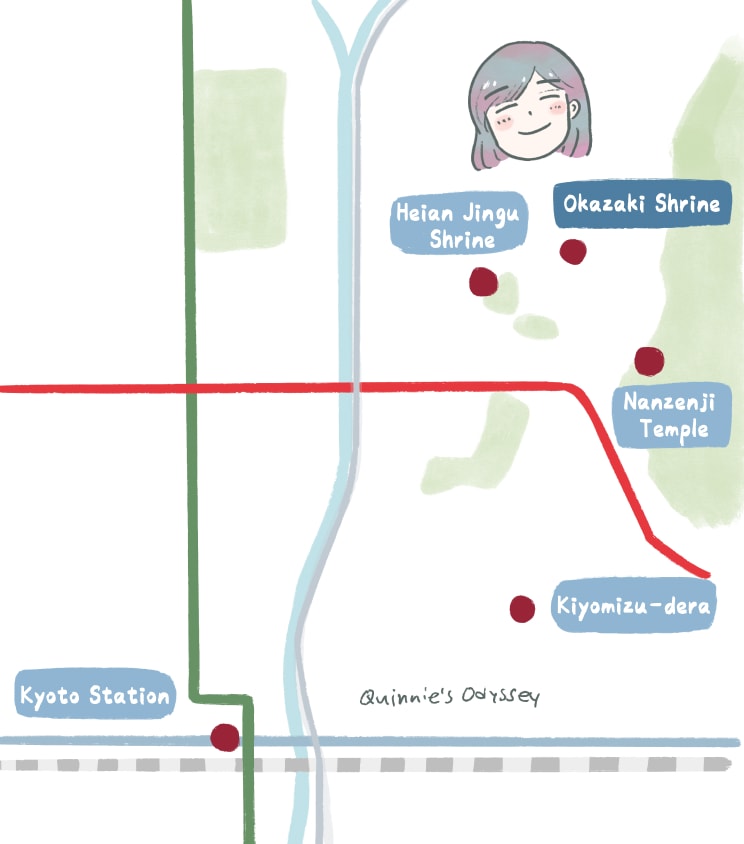
If you’re walking the Philosopher’s Path from Nanzen-ji to Ginkaku-ji, Okazaki Shrine sits right along the route. This guide covers the history, all the rabbit highlights, nearby spots, and how to get there.
Higashi Tenno Okazaki Shrine is a Shinto shrine founded in 794 AD, originally built as one of four guardian shrines to protect Kyoto’s ancient capital, Heian-kyo. Because it was positioned to guard the eastern direction, it earned the name “Higashi Tenno”, meaning “East Heavenly King.”
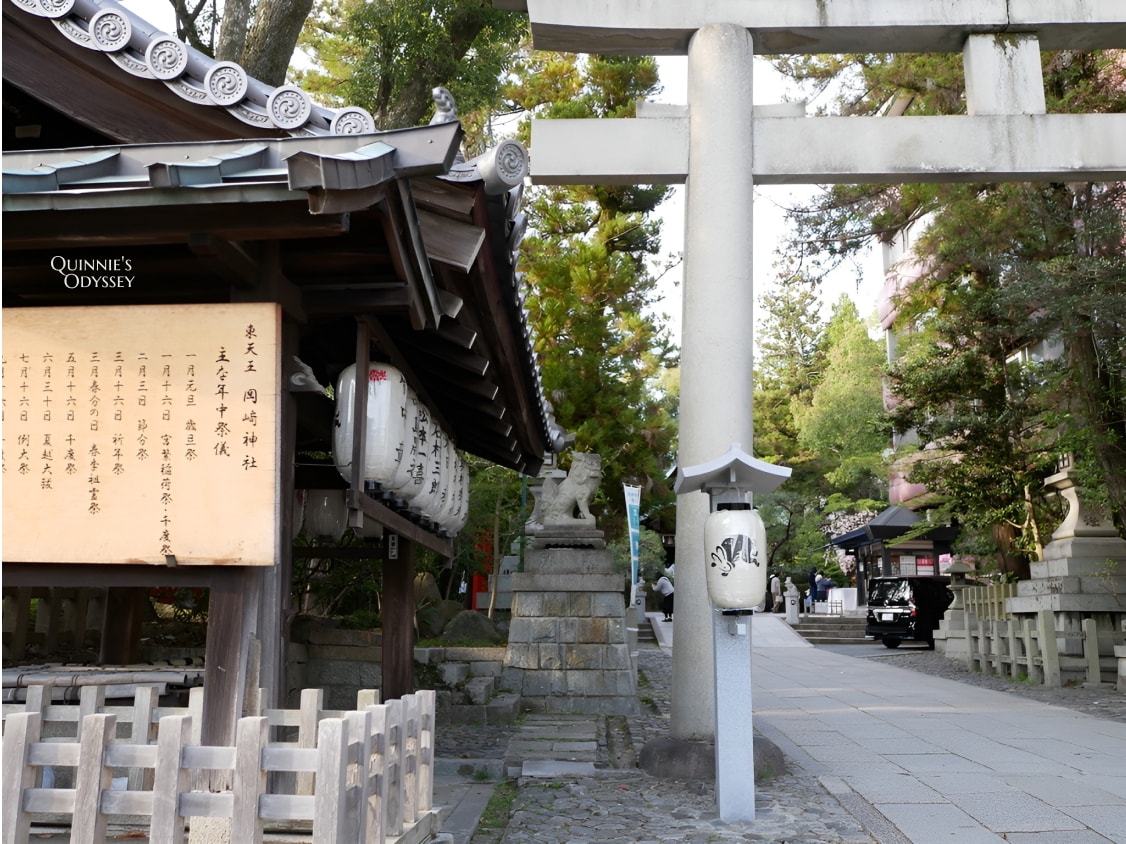
Here’s the rabbit connection: in the Chinese zodiac cycle, east is the direction of the Rabbit. A shrine guarding the east naturally had a tie to rabbits from the very start.
On top of that, the area around Okazaki Shrine used to be a habitat for wild rabbits. Since rabbits symbolize fertility and thriving descendants, they eventually became the shrine’s official messenger animals.
In Japanese folklore, there’s one more layer to this. Rabbits pounding mochi on the moon is a beloved image in Japan, and since the word for “moon” (tsuki) sounds just like the word for “luck” (tsuki), rabbits accumulated an extra layer of good fortune symbolism over centuries. All of these threads came together at Okazaki Shrine, and that’s why every corner of the grounds is full of them.
Okazaki Shrine enshrines Susanoo-no-Mikoto and his consort Kushiinadahime-no-Mikoto, a divine married couple representing love, harmony, and partnership. Their children, known as the Eight Offspring Deities, are associated with fertility and family prosperity.
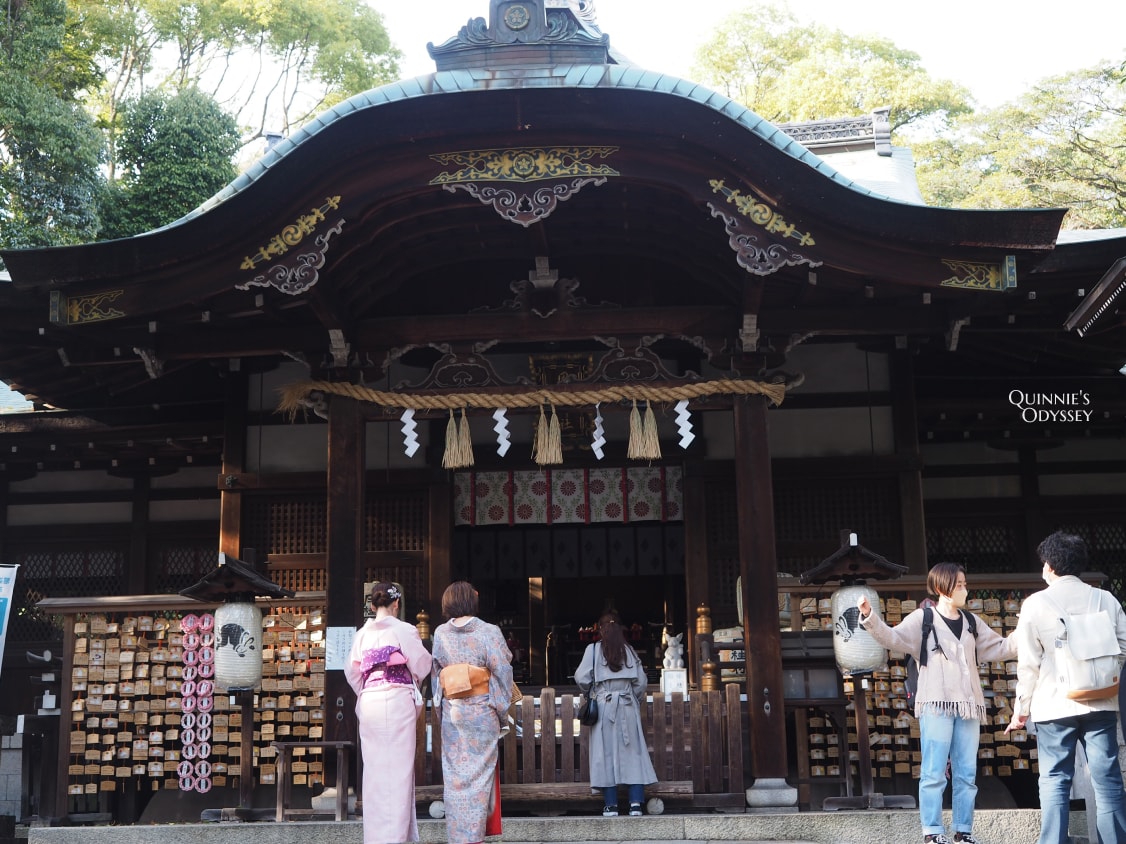
This is why the shrine is best known for three kinds of prayers:
The most well-known historical example is Emperor Takakura, who visited Okazaki Shrine during the Heian period specifically to pray for his consort’s safe delivery. His wish was granted, and the shrine’s reputation for easy and healthy childbirth has held for over 800 years since.
That said, you don’t need a specific wish to visit, the shrine is genuinely welcoming to everyone, whether you’re praying for love, good luck in general, or simply passing through on a walk.
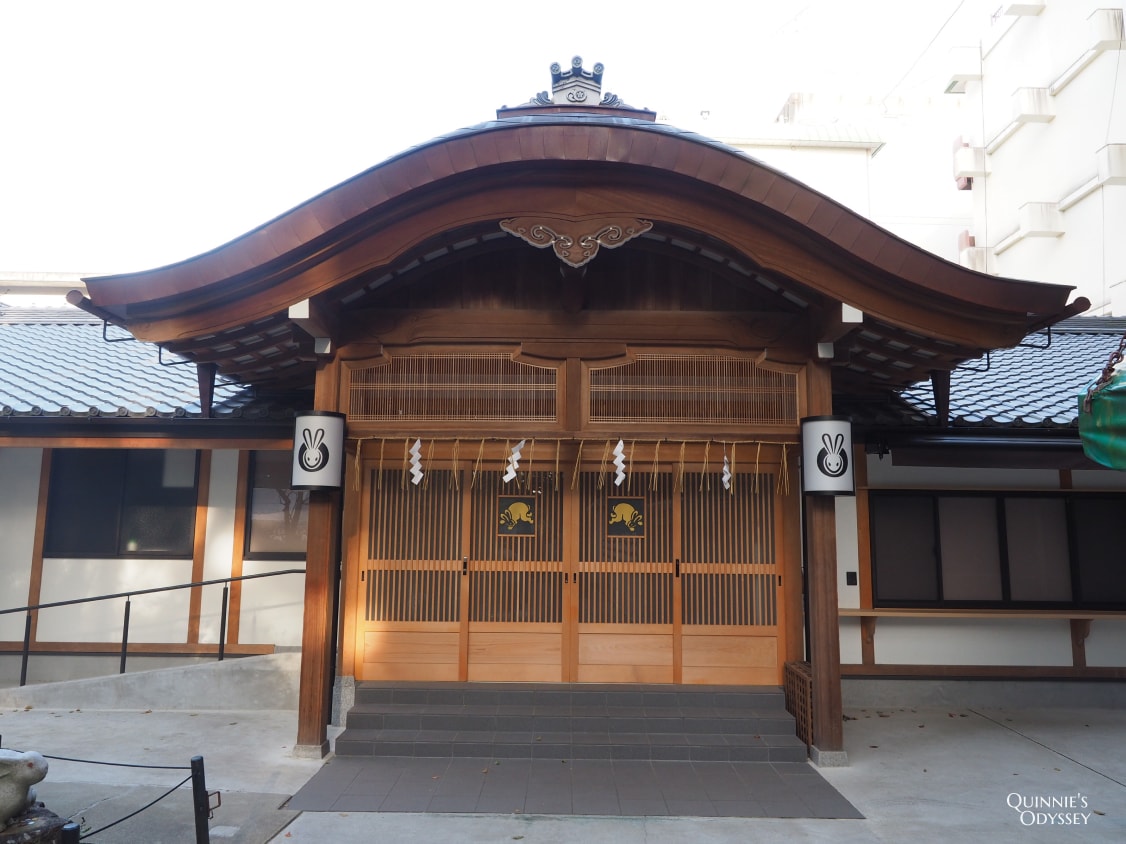
The grounds are small but packed with rabbit details. Here’s what to look for when you visit.
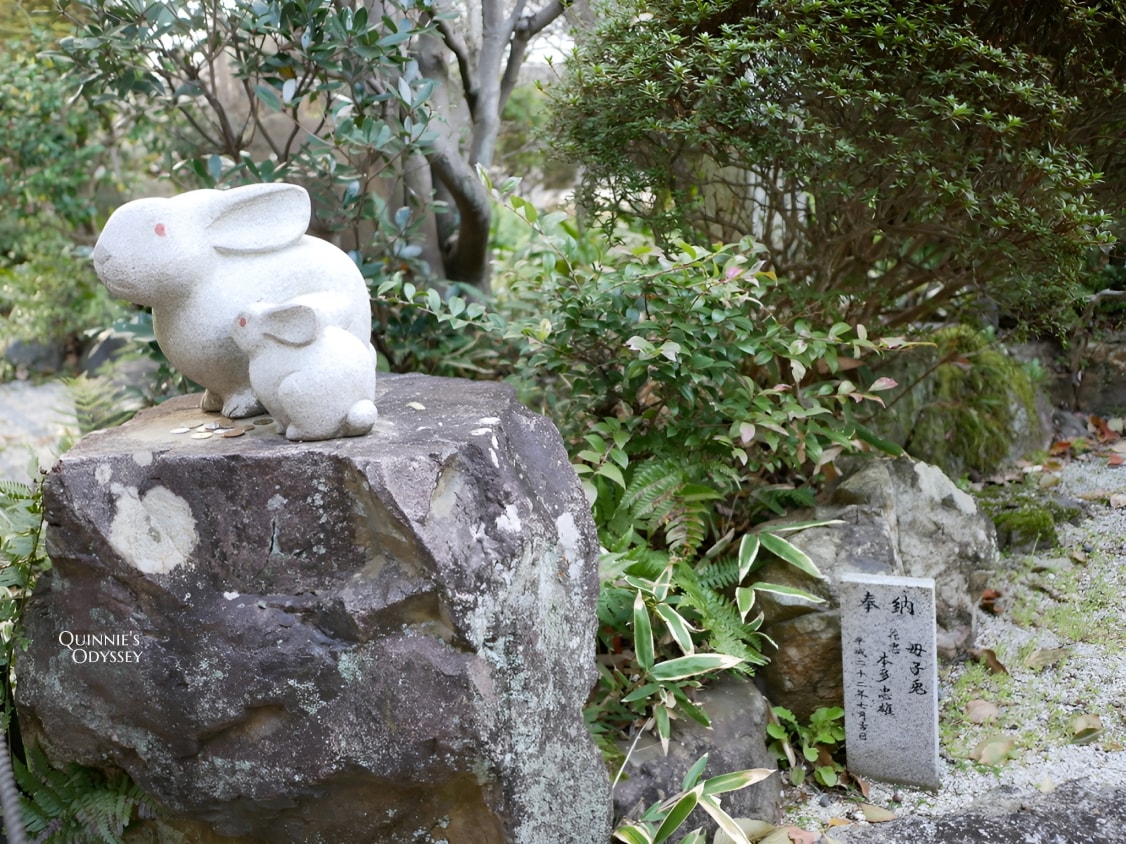
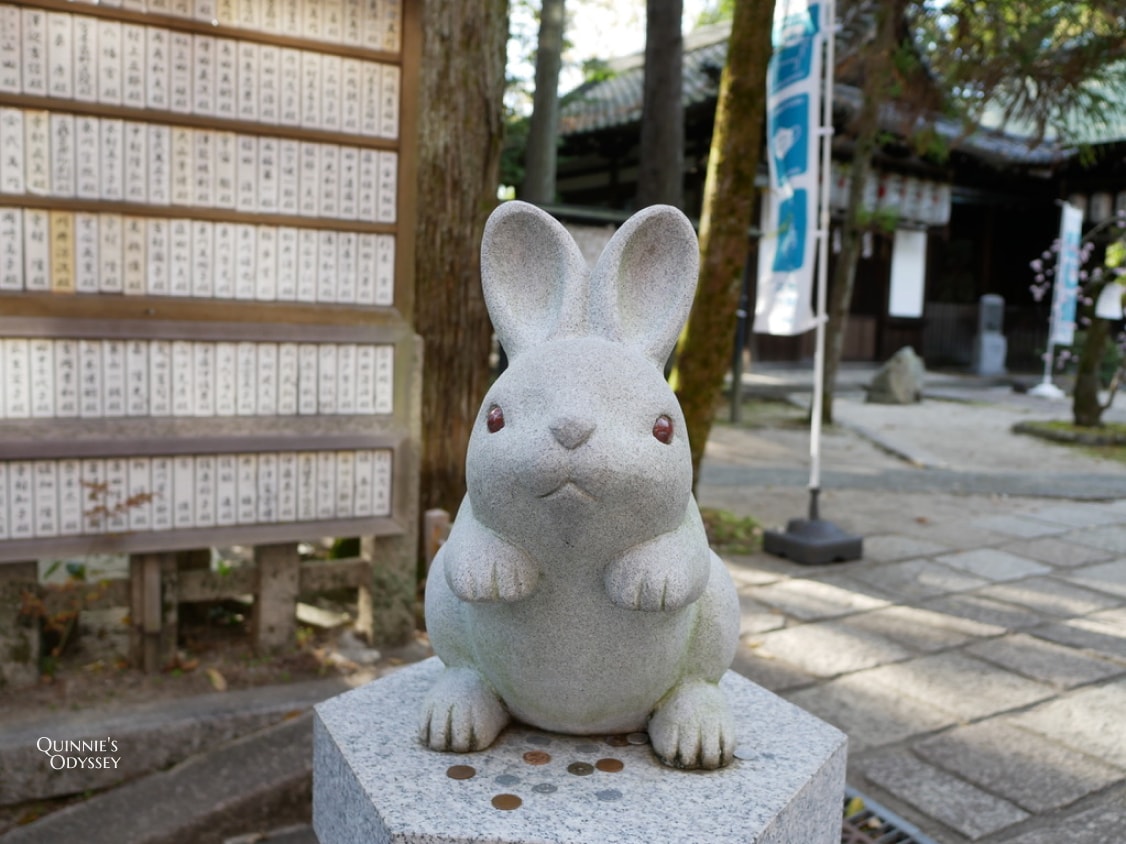
Right at the main entrance, you’ll see a pair of rabbit guardian statues, the koma-usagi. The one on the right is male and the one on the left is female. Together they symbolize a happy marriage and family harmony.
Their mouths follow the classic “A-un” pairing: one open, one closed. It represents balance and completeness, and a lot of visitors rub their heads before heading further into the shrine.
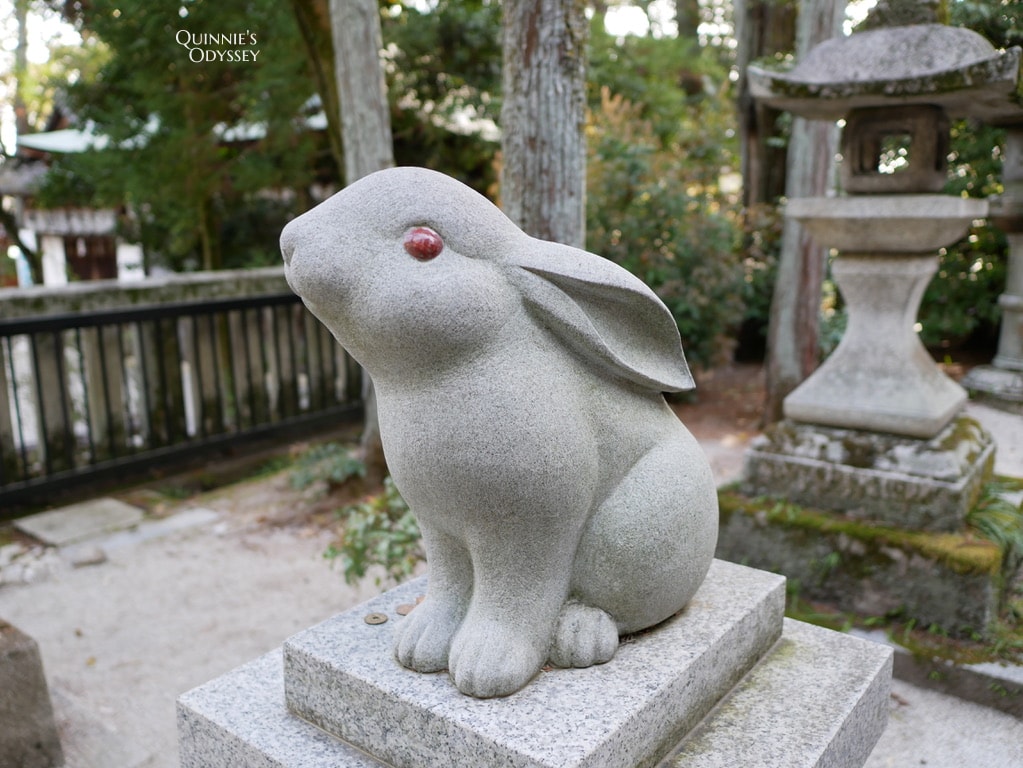
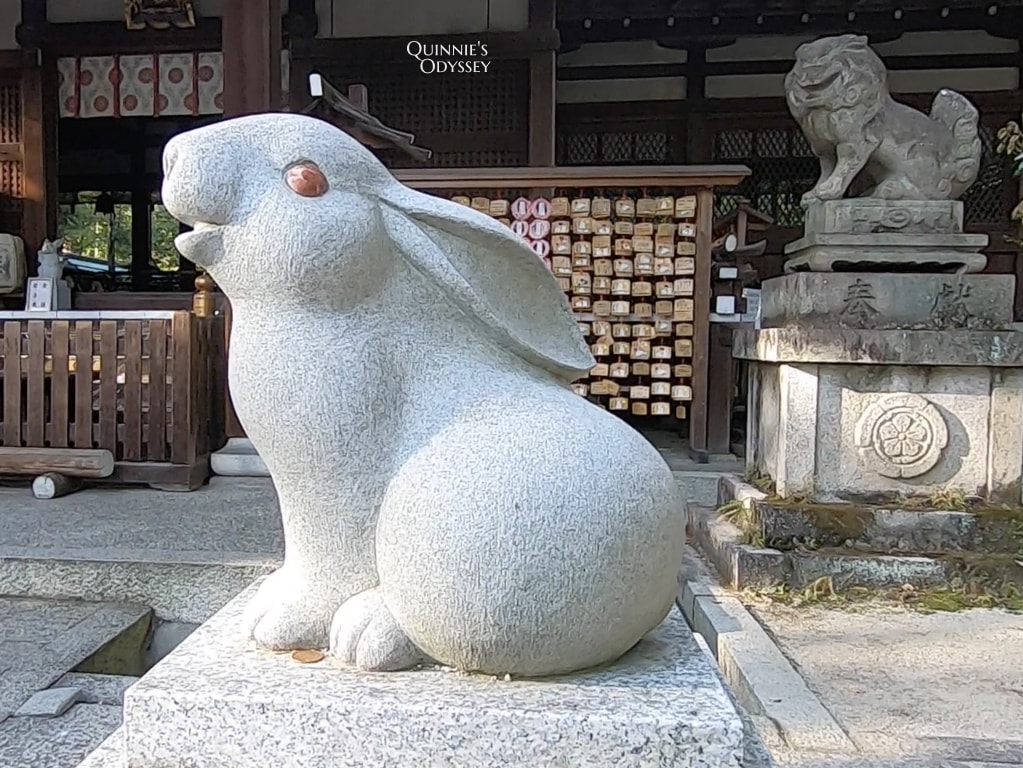
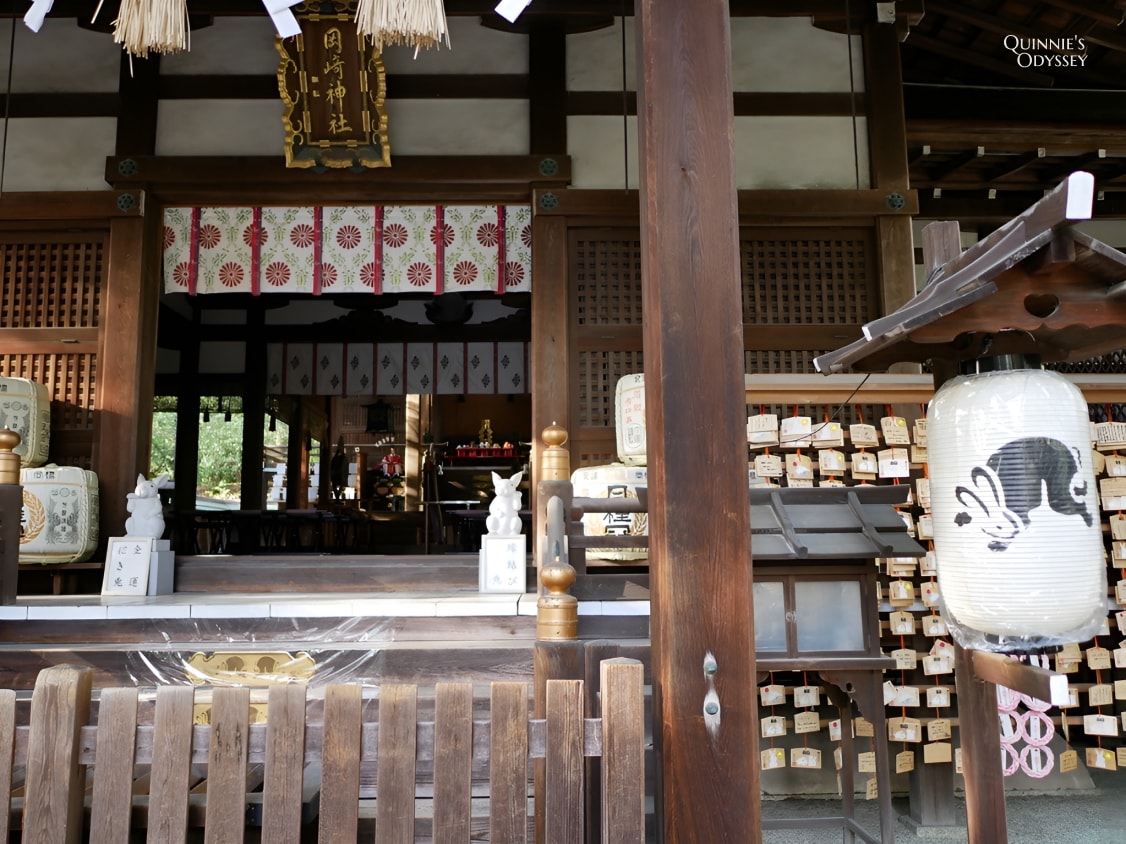
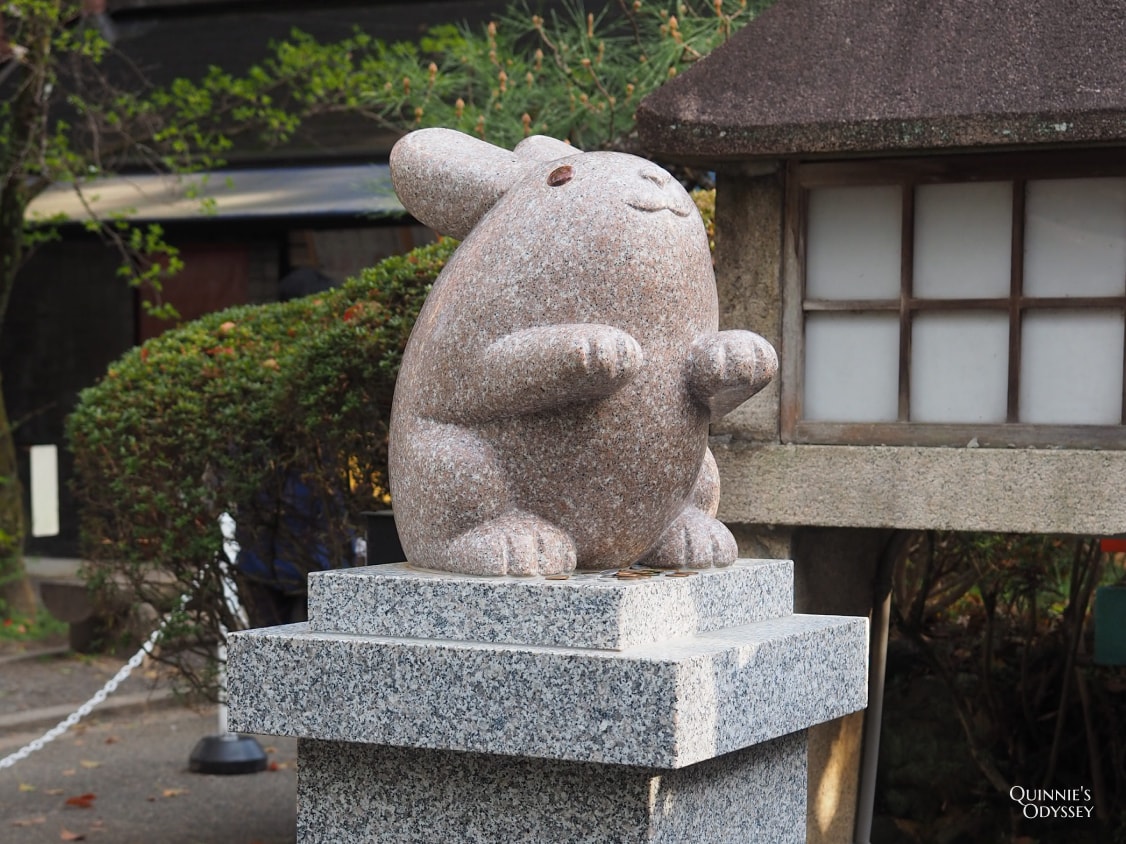
In front of the main hall, there’s another pair of rabbit statues with very specific jobs:
They’re popular photo spots. If you have a wish in mind, this is a natural place to pause.
This is the one most visitors come specifically for. At the purification pavilion, there’s a large black granite rabbit known as the Fertility Rabbit (子授けうさぎ). It gazes up toward the moon, and the whole statue gives off a quietly hopeful feeling.
The ritual: pour water gently over the rabbit, rub its belly, and pray for pregnancy and safe childbirth. If that’s the reason you’re here, give yourself a quiet moment, it’s one of the most meaningful spots in the shrine.
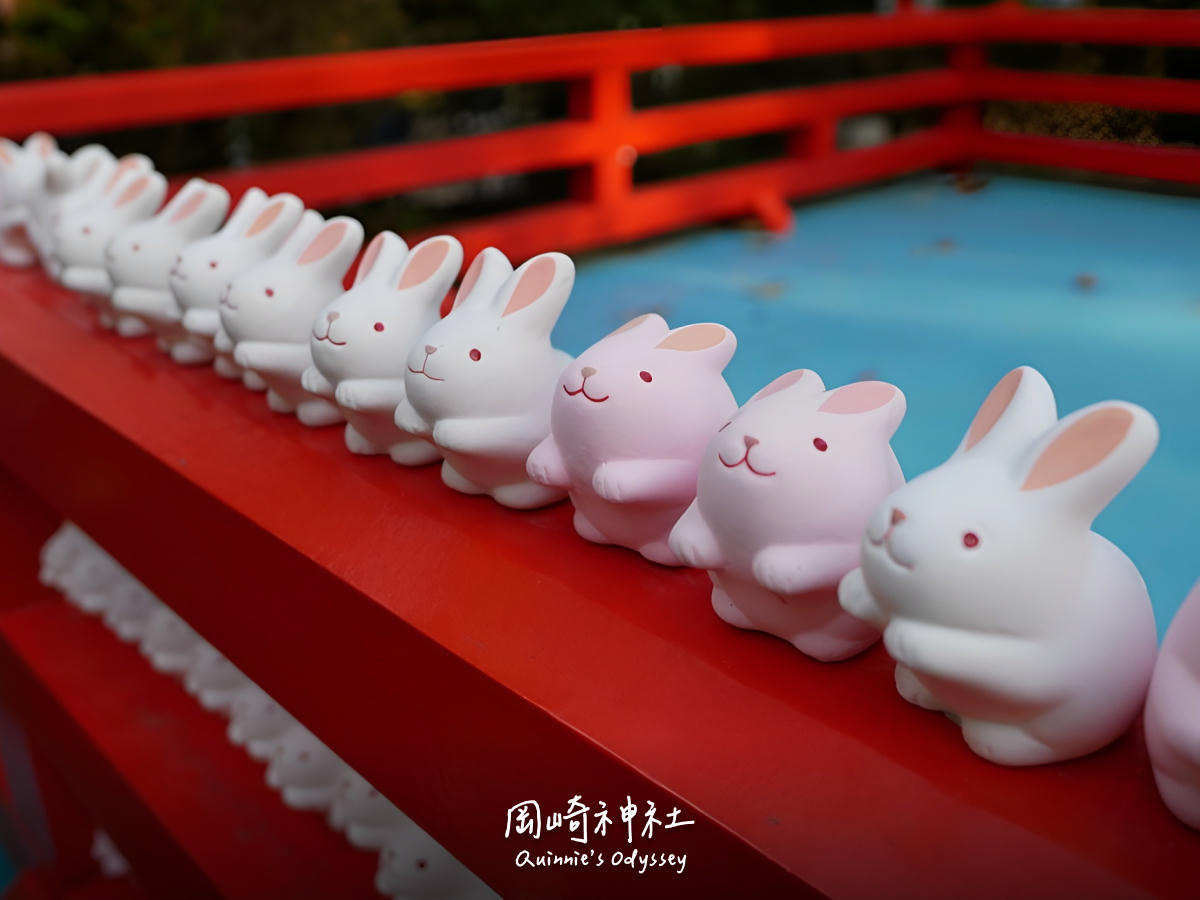
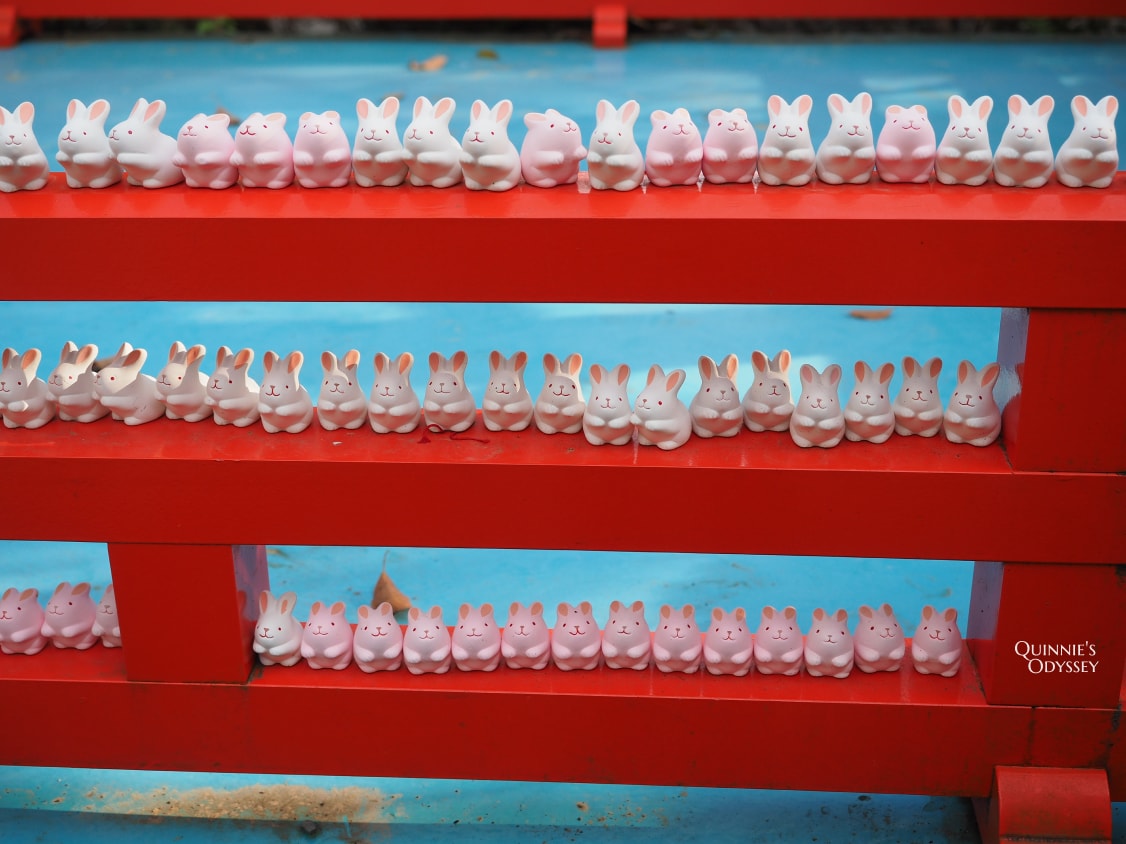
Around the shrine, you’ll see rows of small white and pink rabbit figurines, these are the rabbit-shaped omikuji (fortune slips). Each one costs 500 yen.
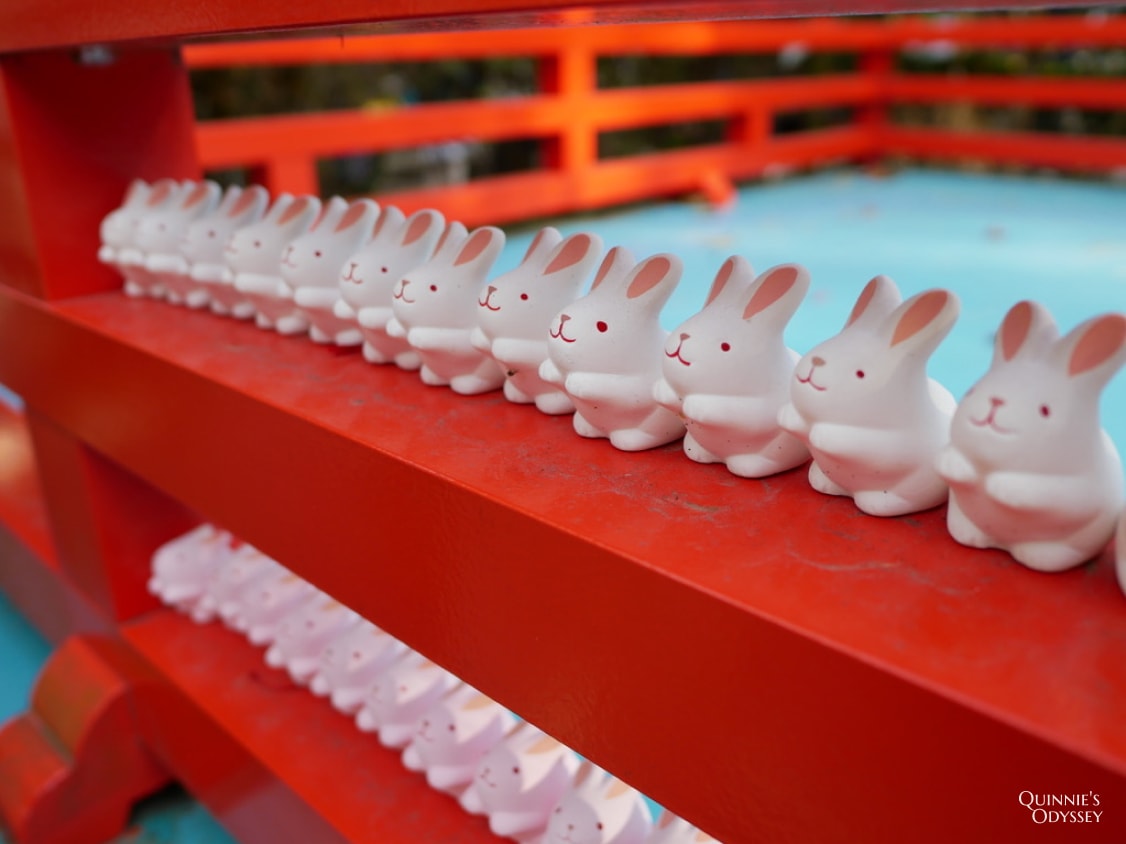
Some visitors read their fortune and leave the figurine at the shrine, adding to the charming rows of standing rabbits. Others take theirs home as a souvenir.
Watching the little rows of figurines lined up in front of the shrine is one of the most charming sights at Okazaki.
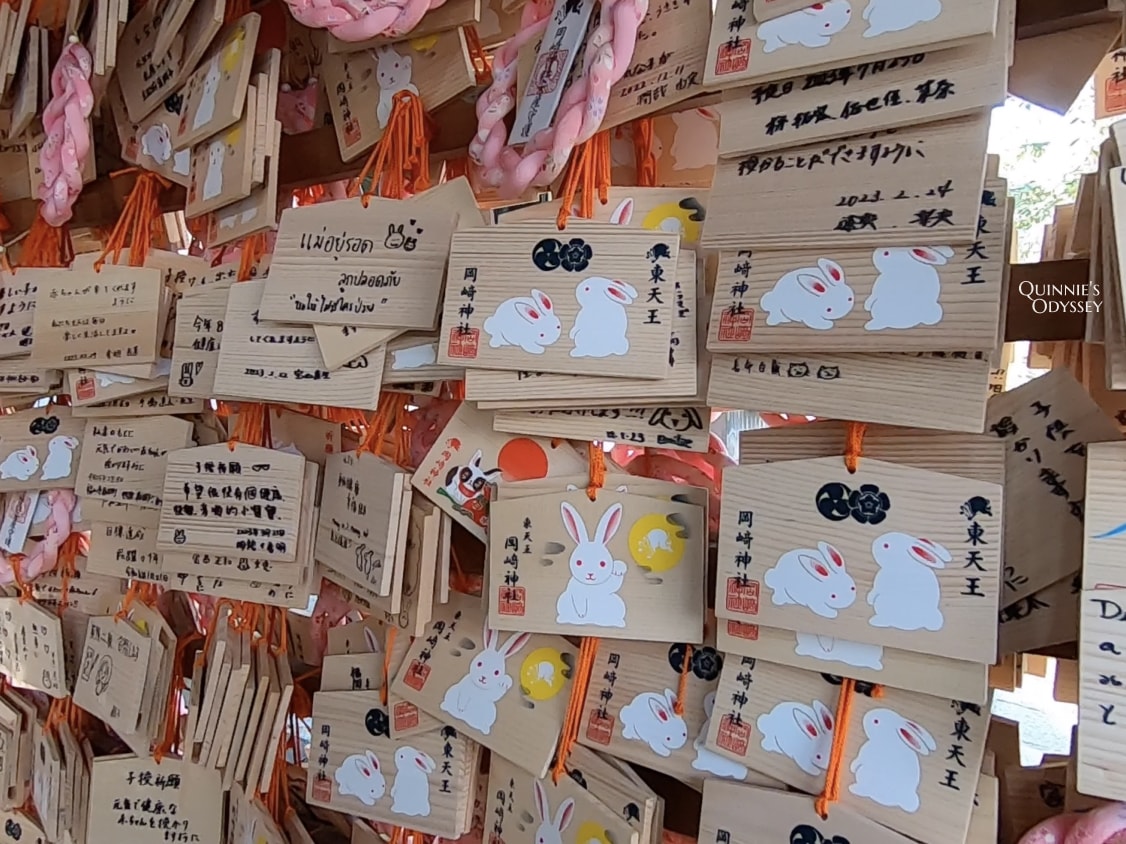
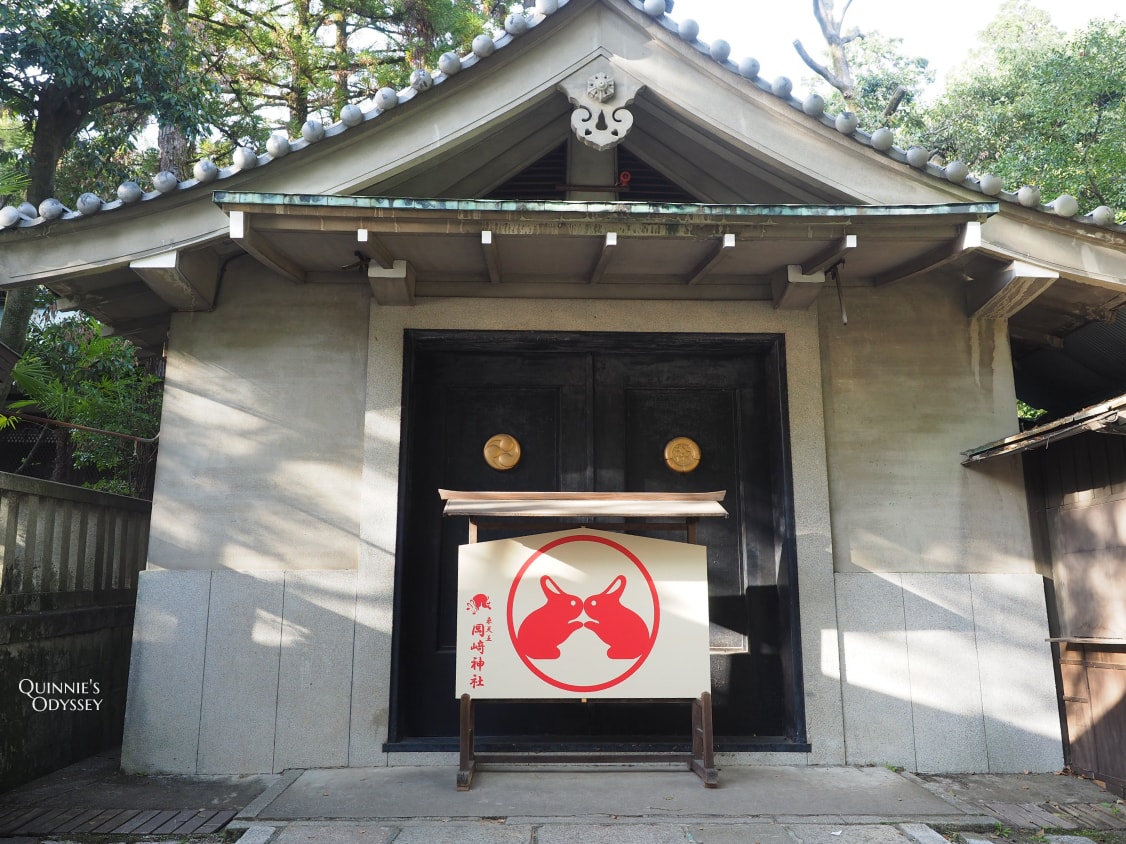
You can also buy rabbit-themed ema (wooden wishing plaques).
Write down your wishes and hang the plaque at the shrine to receive blessings.
As you walk around the shrine grounds, you’ll find lots of rabbit carvings and decorations tucked into corners.
Take your time exploring, you might spot some fun surprises!
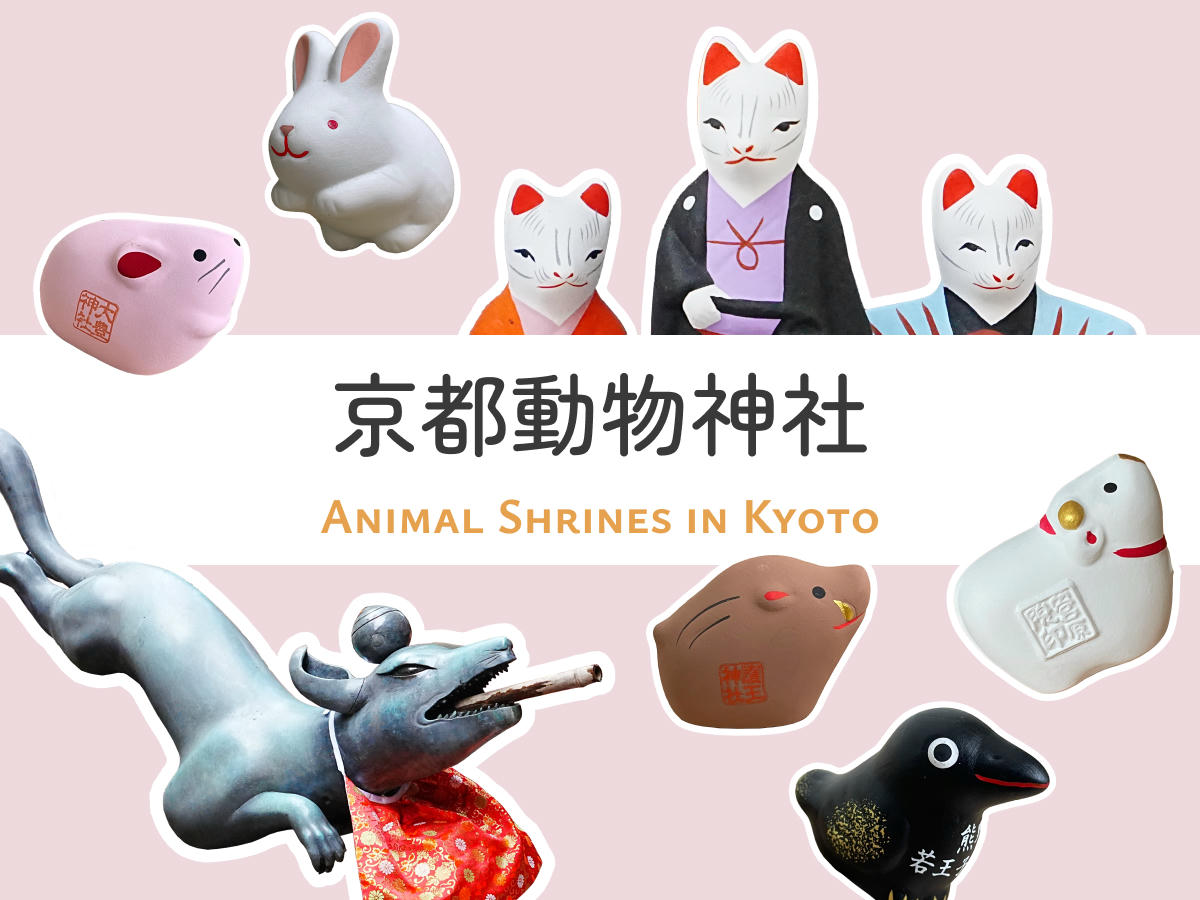
If you love collecting animal omikuji, don’t miss this guide 👉👉 Kyoto Animal Shrine Guide
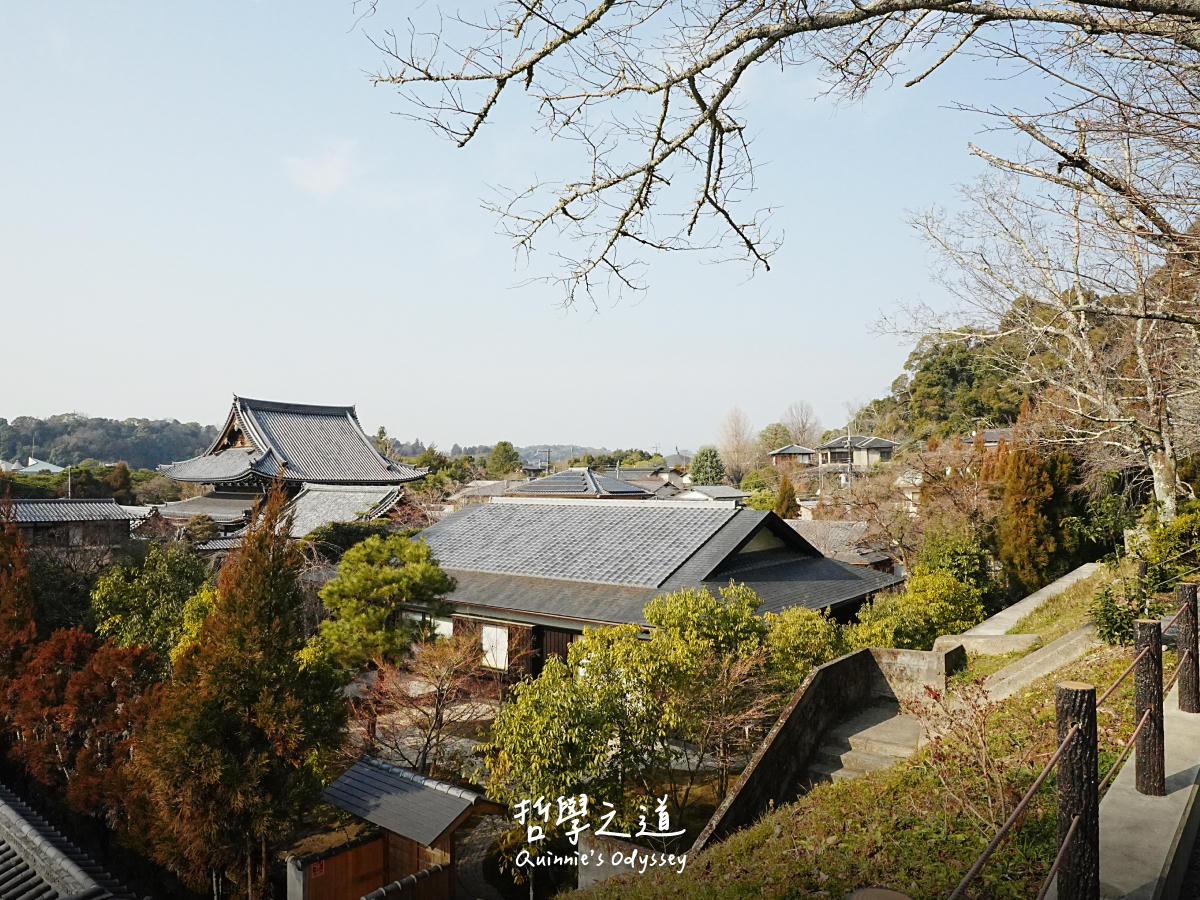
Okazaki Shrine sits right on the route of the Philosopher’s Path, a 2km canal-side walk connecting some of Kyoto’s most beautiful temples and shrines. If you’re visiting Okazaki Shrine, this walk is the natural thing to pair it with.
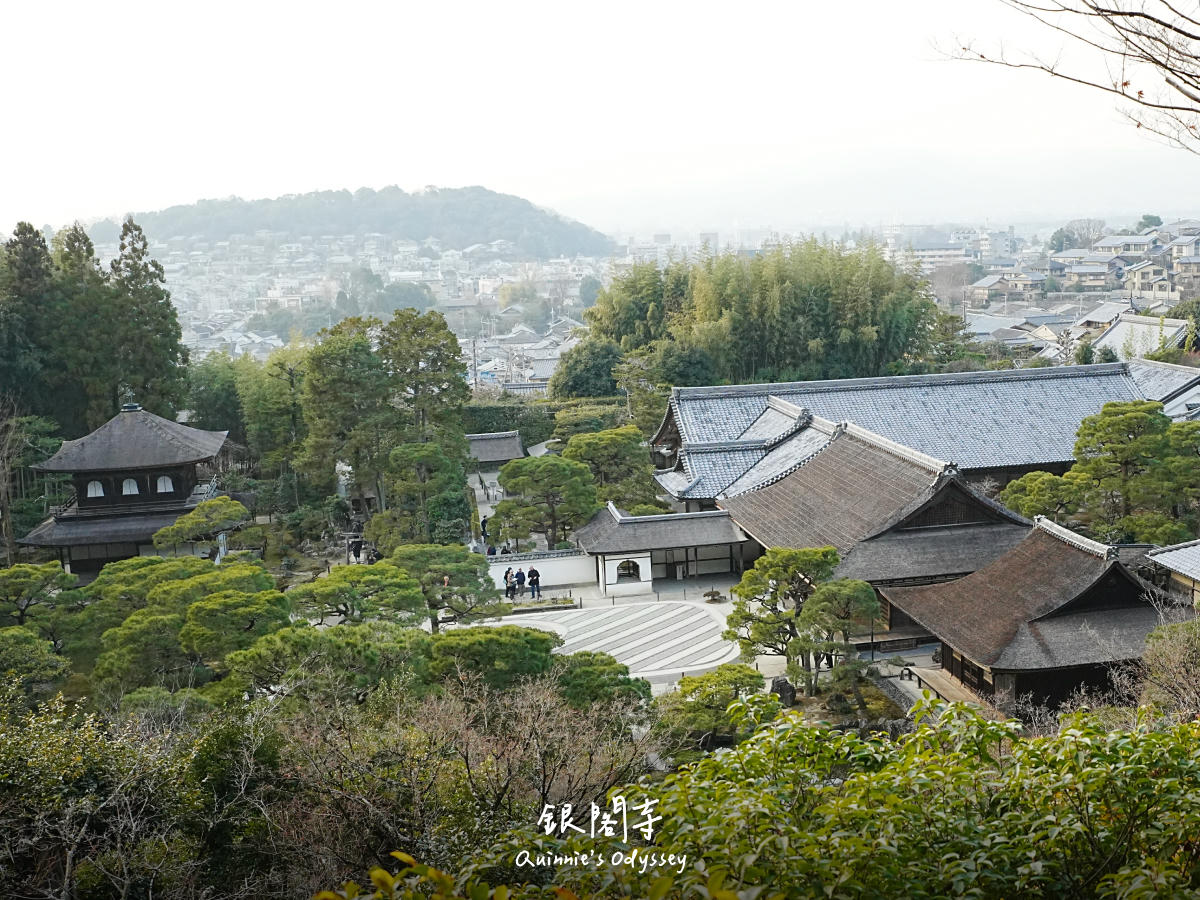
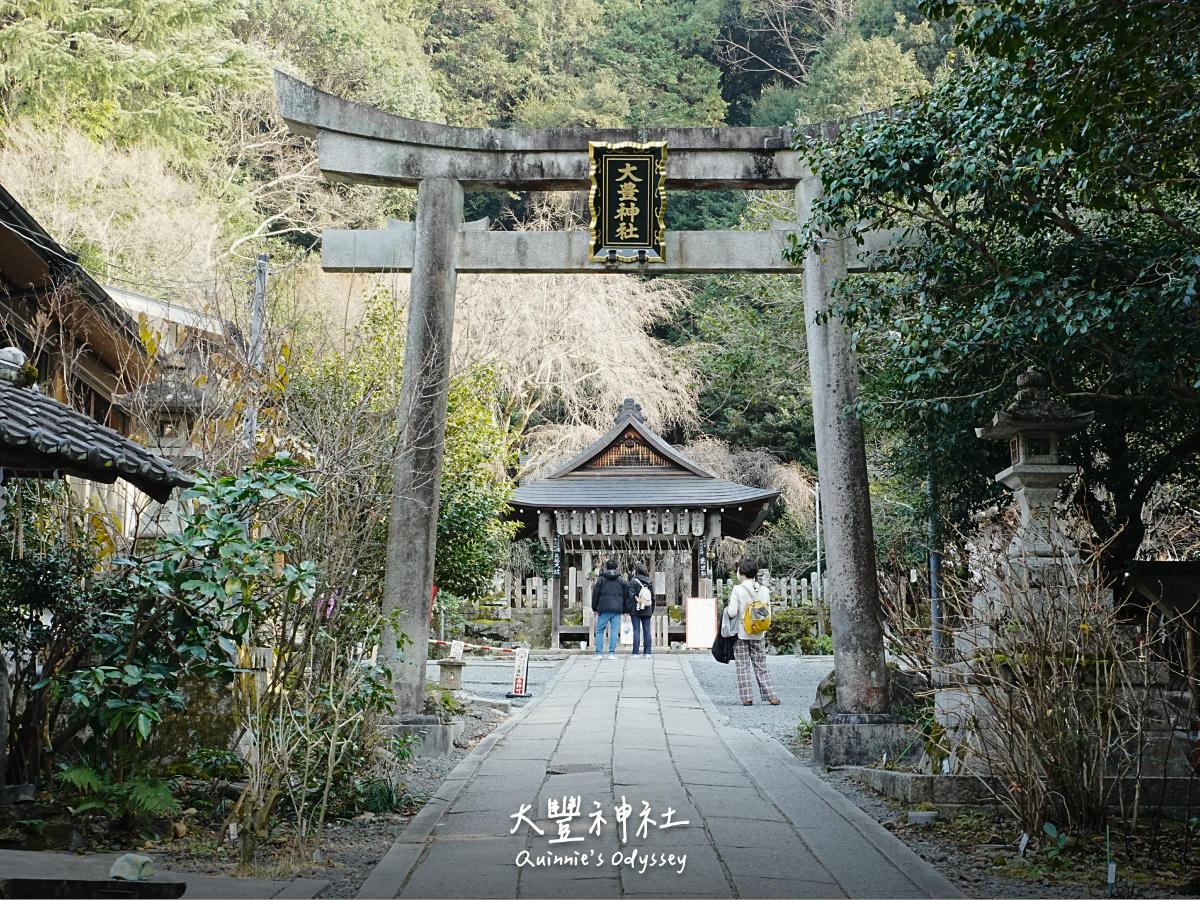
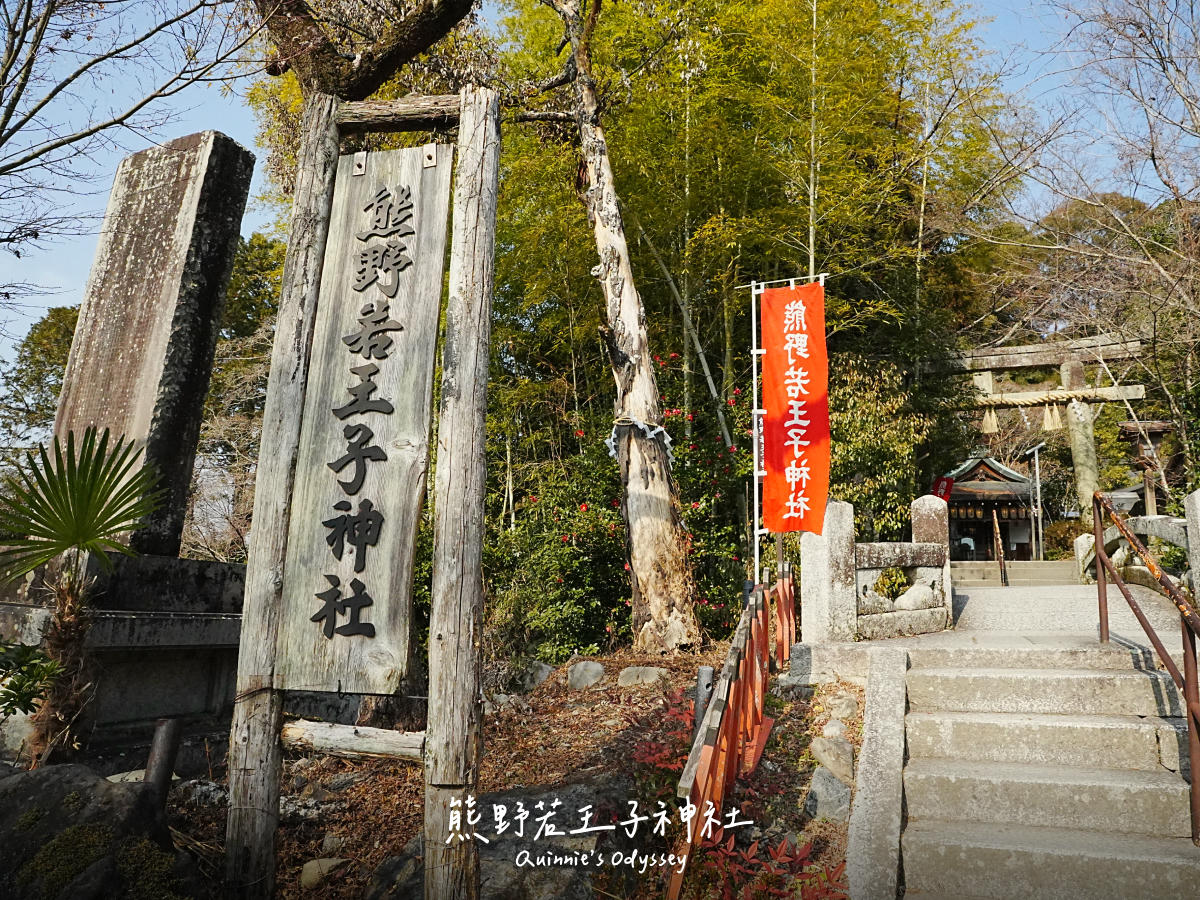
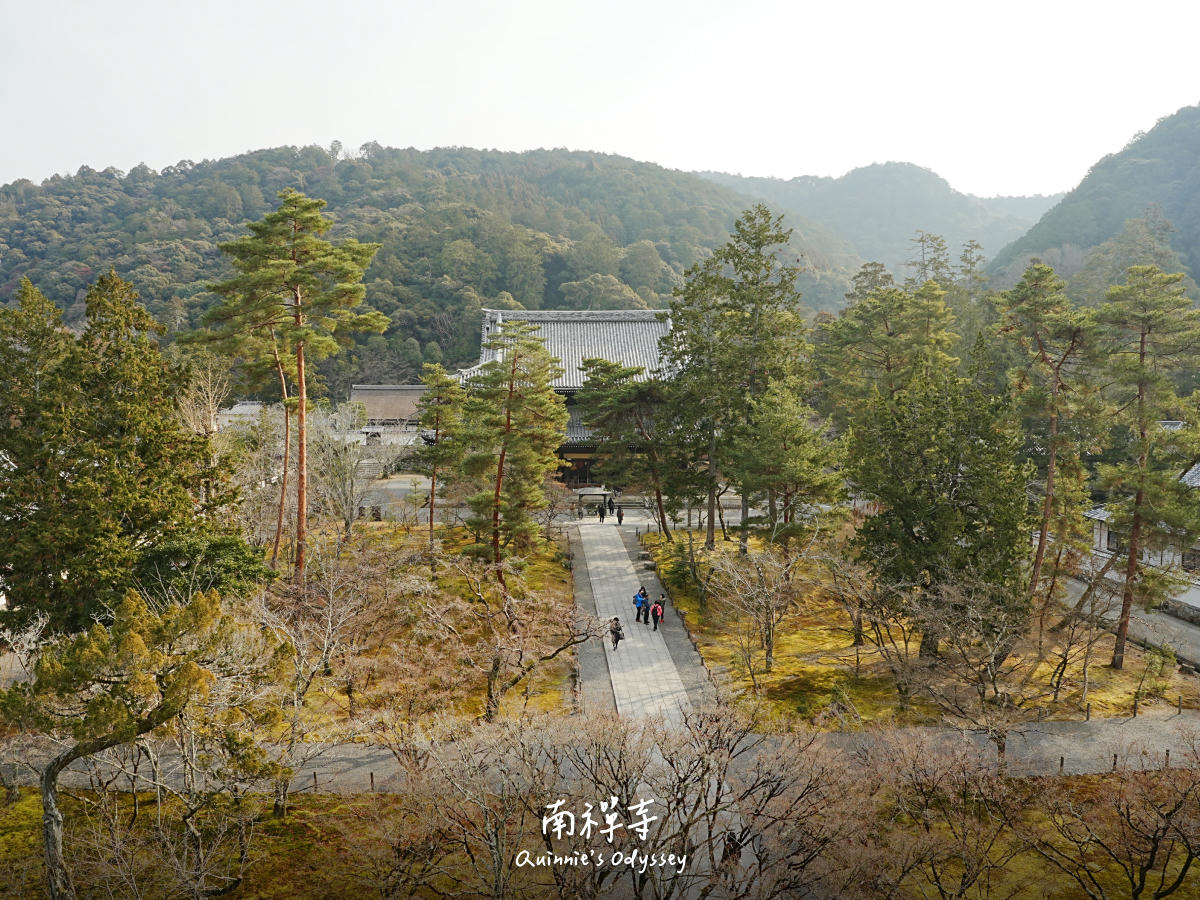
The classic south-to-north route: Nanzen-ji → Eikando → Okazaki Shrine → Kumano Nyakuoji Shrine → Otoyo Shrine → Honen-in → Ginkaku-ji
Nanzen-ji is about 15 minutes on foot from Okazaki Shrine — one of Kyoto’s most important Zen temples, known for its massive sanmon gate and a surprisingly photogenic 19th-century aqueduct cutting right through the grounds. If you can only visit one temple on this walk, make it this one.
Kumano Nyakuoji Shrine is a 5-minute walk and marks the start of the main canal path. It’s a crow shrine dedicated to the three-legged Yatagarasu, with one of the most distinctive omikuji setups in Kyoto — you pull a crow figurine and the head pops open to reveal your fortune.
Otoyo Shrine is a 10-minute walk further along and completely different in atmosphere — it’s Japan’s only mouse shrine, tucked up a quiet forested lane. Two small stone mice guard the inner hall. It’s a nice contrast to the rabbit energy at Okazaki.
The whole south-to-north walk takes around 2 to 3 hours at a relaxed pace. I’d suggest starting at Nanzen-ji in the morning before the crowds build up.
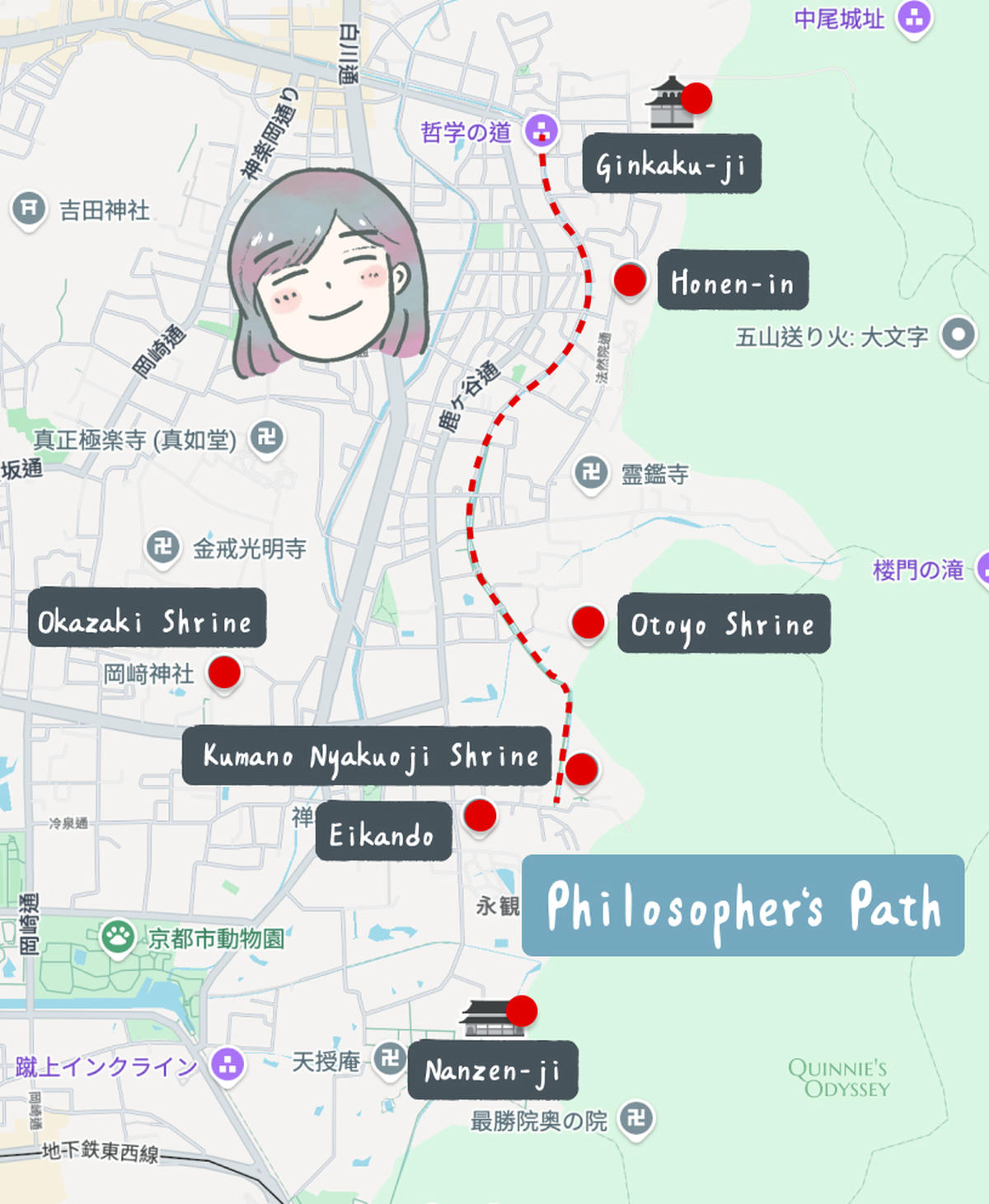
Okazaki Shrine is located in Kyoto’s Sakyo Ward, close to famous spots like Heian Shrine, Nanzen-ji, and Eikan-do.
It’s a peaceful area, perfect for travelers who want to escape the city noise and enjoy a quiet stroll.
Here are the transportation options:
Further Reading
Source
▼ Kyoto Travel Essentials ▼

Thanks for reading!
If you’re interested in my stories, feel free to follow me on Instagram.
👉👉 IG: @sika_artist 👈👈
Okazaki Shrine is famous for being Kyoto's most beloved rabbit shrine, dedicated to the deities of love and fertility. The grounds are filled with rabbit statues, rabbit-shaped omikuji fortune slips at 500 yen each, and a black granite Fertility Rabbit at the purification fountain where visitors pray for pregnancy and safe childbirth.
Anyone can visit. While the shrine is best known for fertility and childbirth prayers, it welcomes visitors praying for love, good relationships, general good fortune, or simply those who want to explore one of Kyoto's most charming spots.
At the purification fountain, gently pour water over the black granite Fertility Rabbit (子授けうさぎ), then rub its belly while making your wish for pregnancy or safe childbirth.
Each rabbit-shaped omikuji costs 500 yen and comes in white or pink. You can leave it at the shrine after reading your fortune, or take it home as a souvenir.
The easiest way is by Kyoto City Bus, take Bus #32, 93, 203, or 204 and get off at Okazaki Jinja-mae (about 1 minute walk). From Keage Subway Station (Tozai Line) it's 15 to 18 minutes on foot.