Physical Address
304 North Cardinal St.
Dorchester Center, MA 02124
Physical Address
304 North Cardinal St.
Dorchester Center, MA 02124

I visited Fushimi Inari Taisha starting at 3:30 PM and stayed until past 7 PM, walking through the afternoon crowds, through dusk, through the golden hour, and into full darkness. Here’s what it’s actually like.
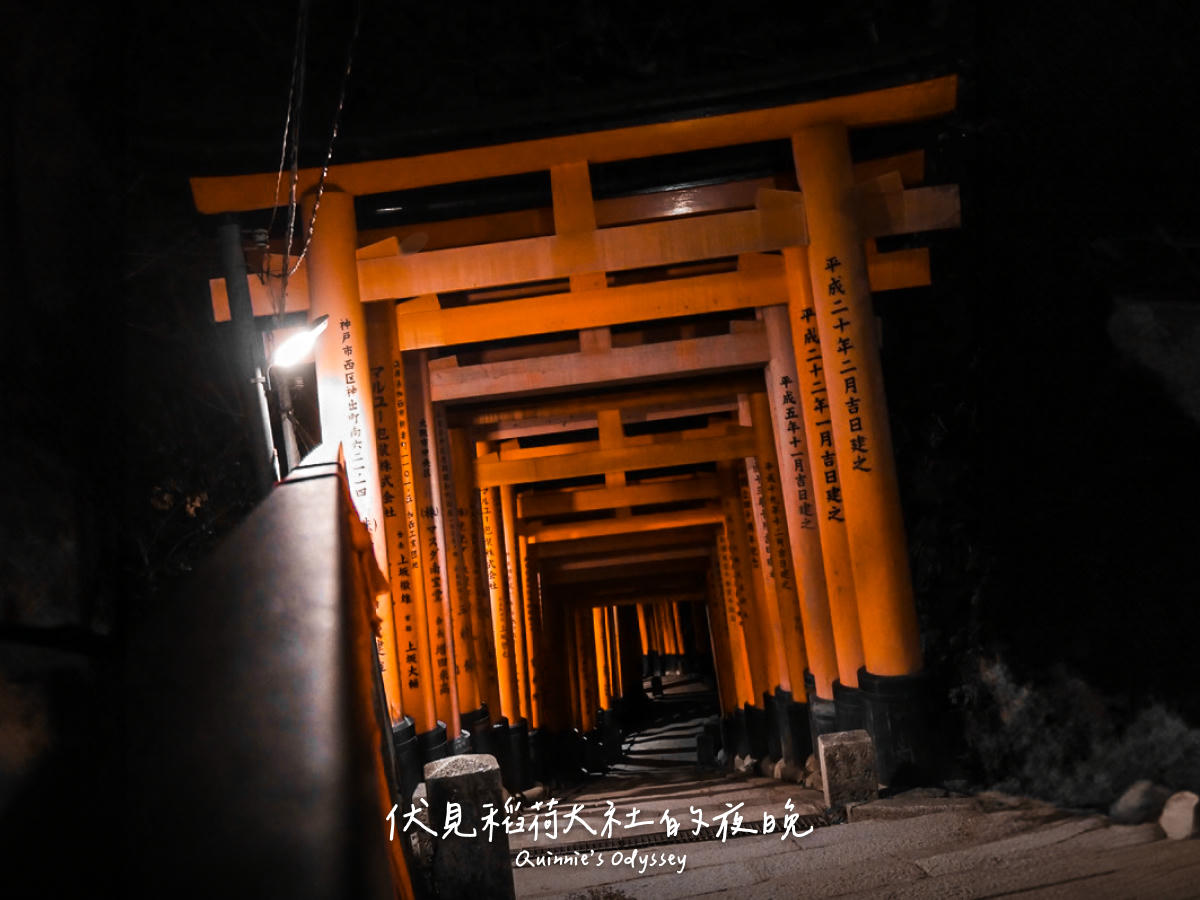
Fushimi Inari opens its gates to the public 24 hours a day, 365 days a year, and there is no admission fee. The hike to the summit and back takes roughly 2 to 3 hours.
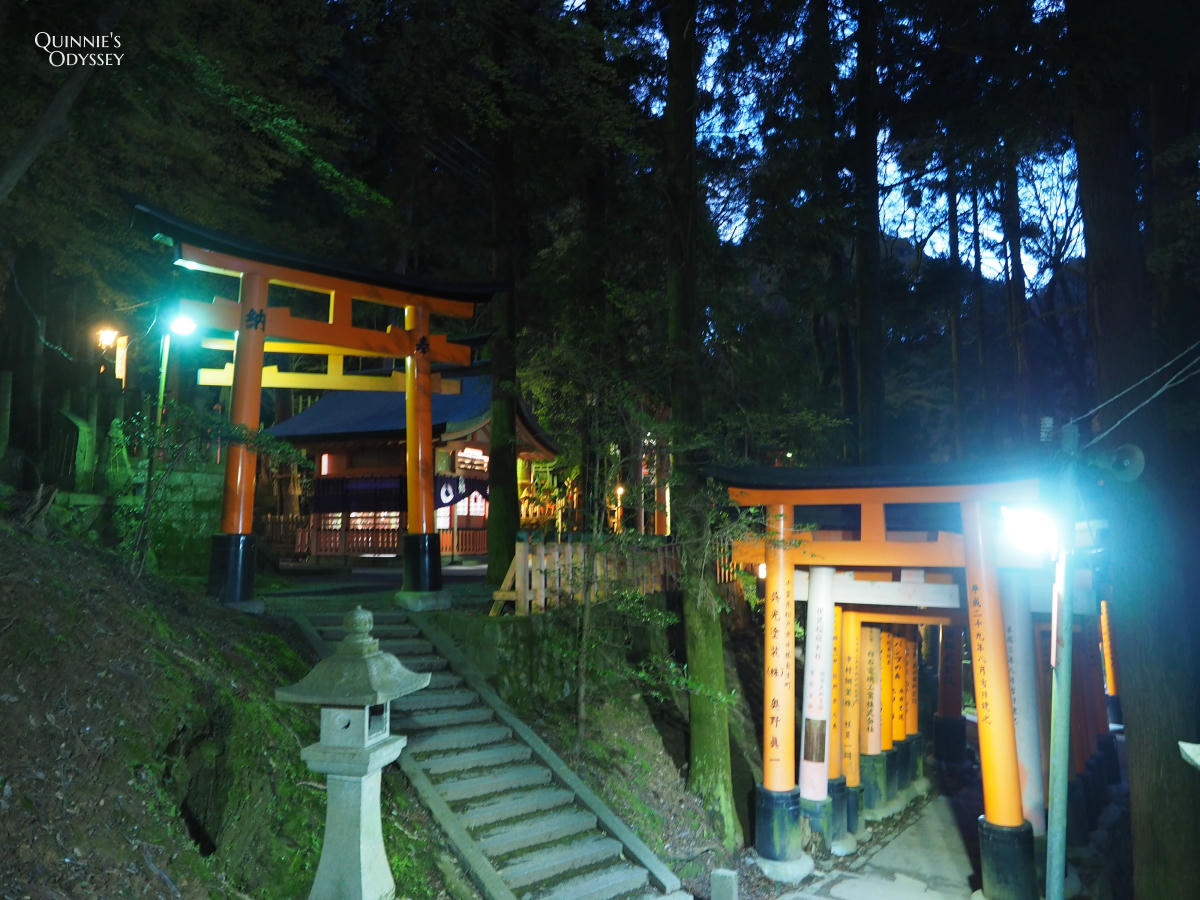
The stone lanterns along the main path stay lit through the night, and the lower sections of the trail remain illuminated all the way up to the Yotsutsuji intersection, about halfway up the mountain.
This post covers the atmosphere, the legends, the spots worth seeking out after dark, and a few practical things to know before you go.
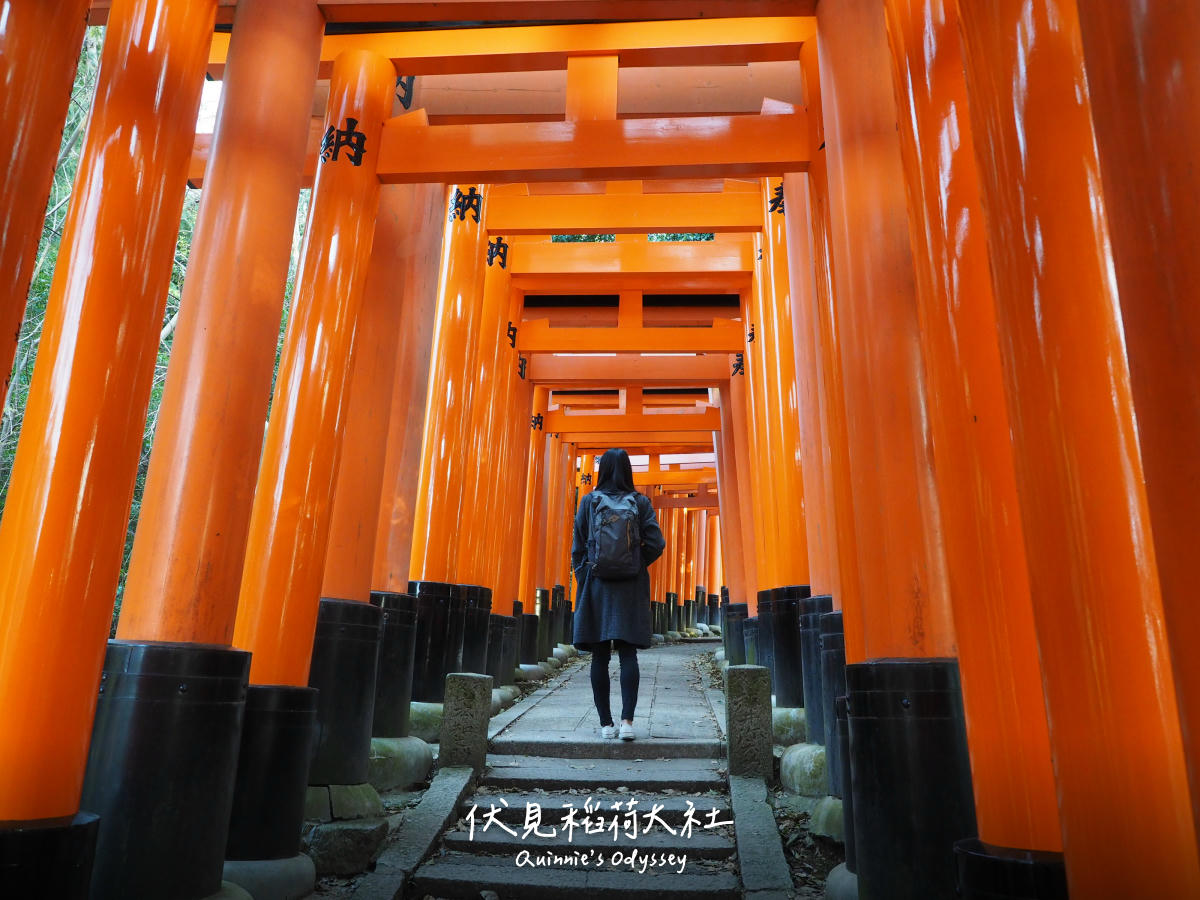
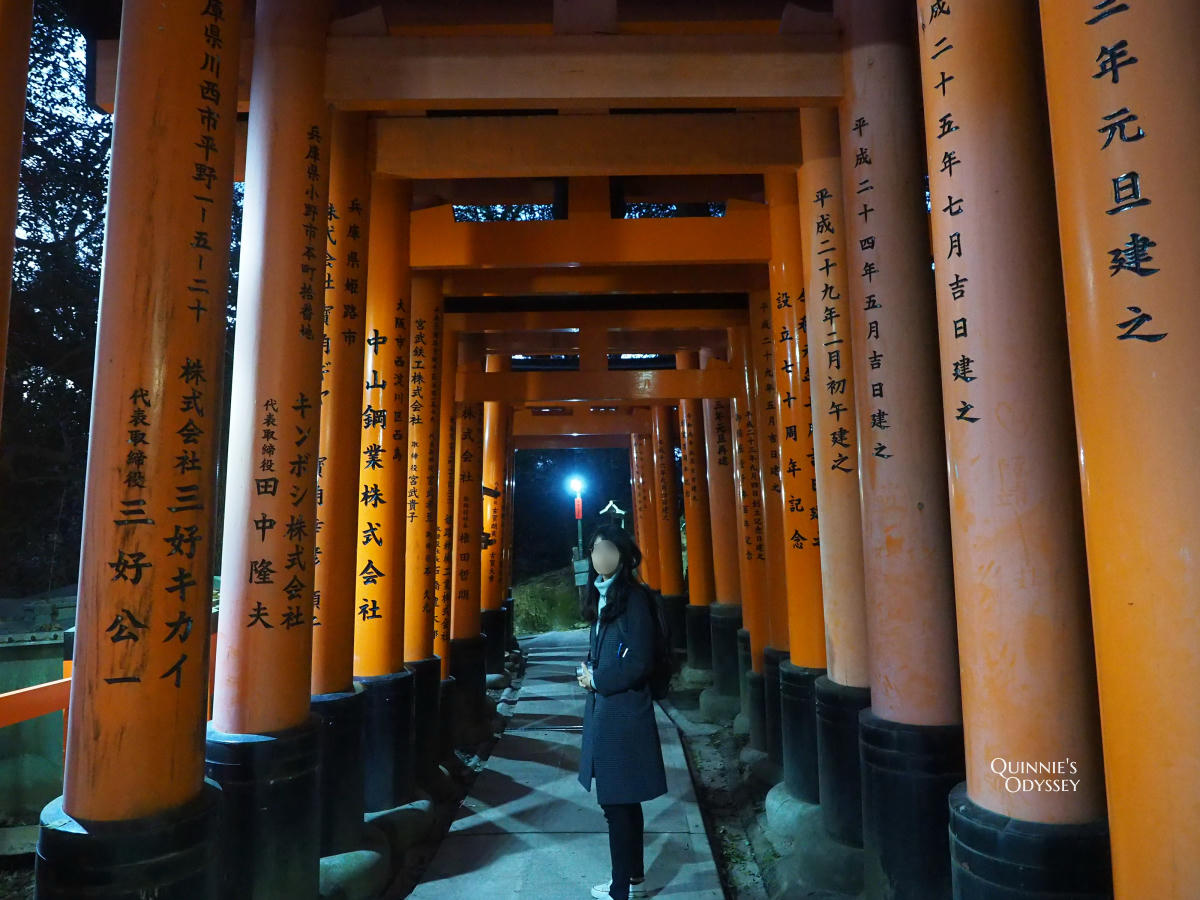
Fushimi Inari Taisha at night is the quietest, most atmospheric version of one of Japan’s most visited shrines – thousands of torii gates, fox statues, and stone lanterns lining the mountain paths after dark, wrapped in a stillness that feels genuinely sacred.
The shrine sits at the base of Mount Inari in the Fushimi district of southern Kyoto, dedicated to Inari, the kami of rice, sake, and good fortune. During the day it belongs to the tourists. After sunset, it starts to feel like it belongs to something else entirely.
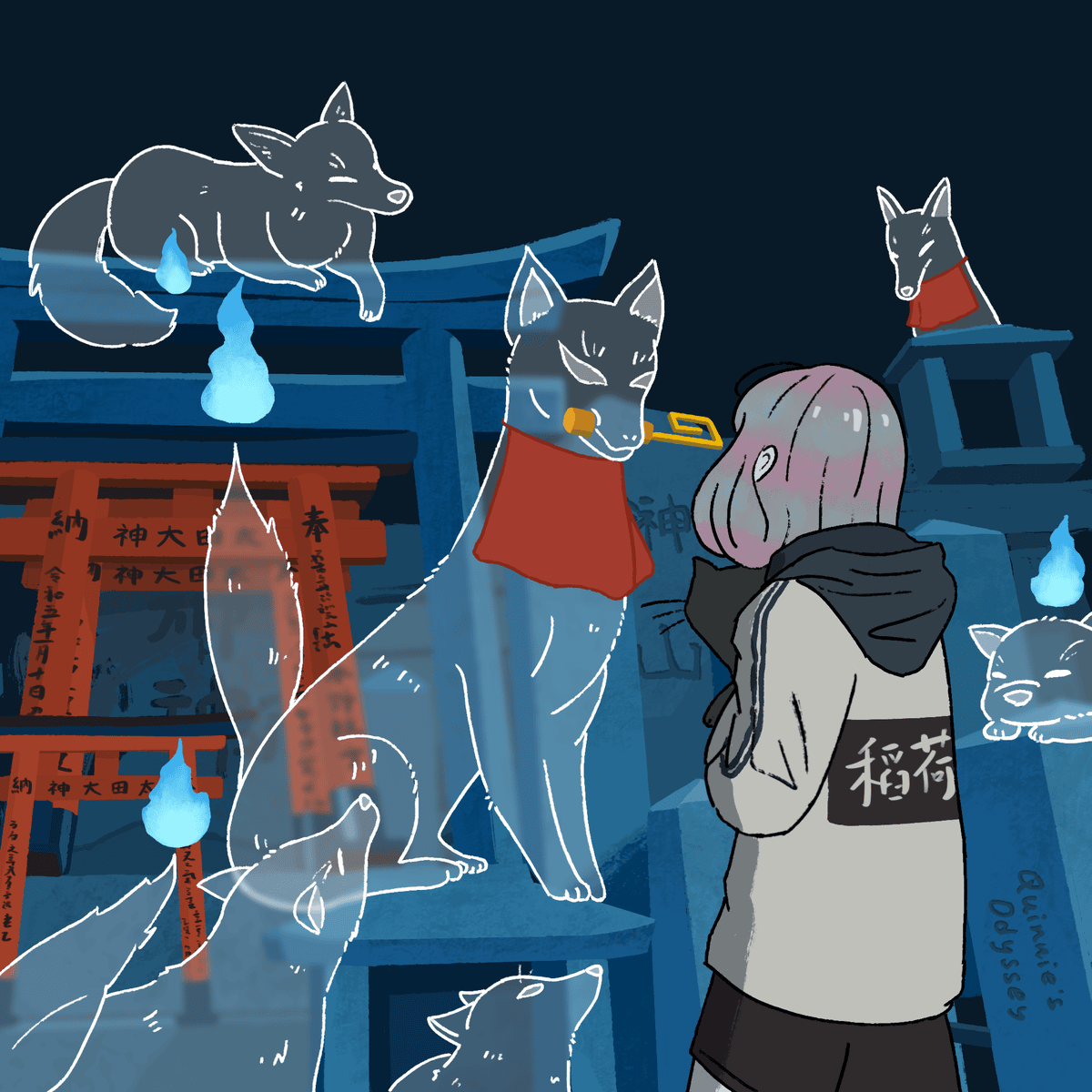
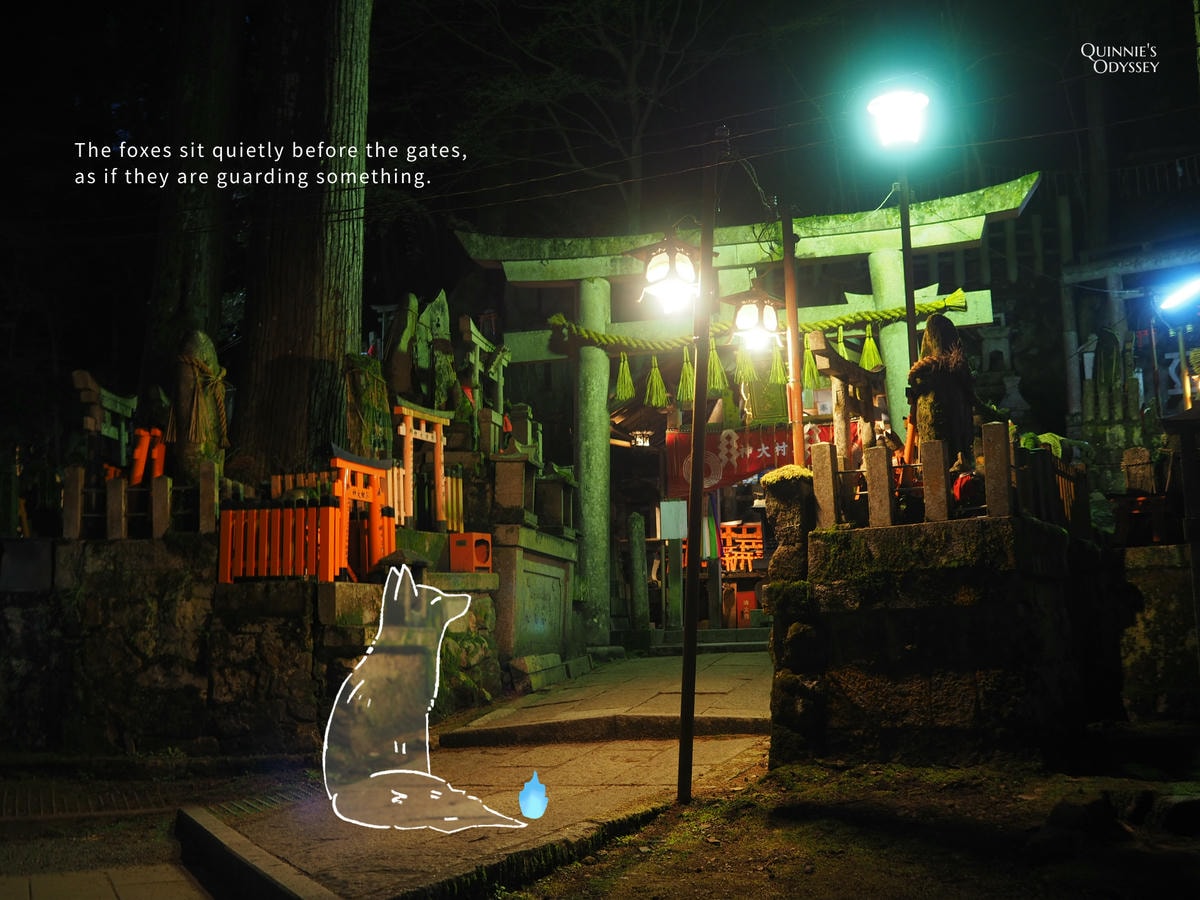
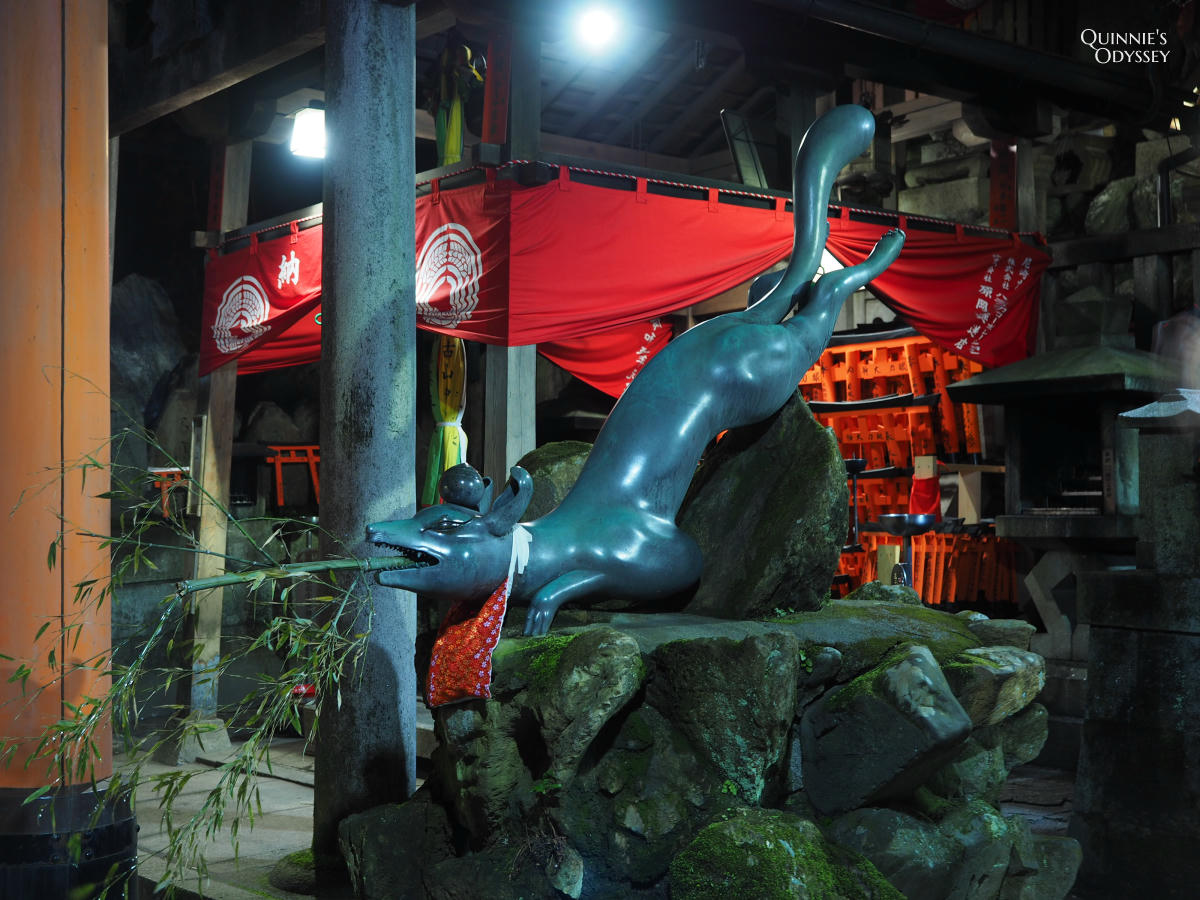
The white fox statues you’ll see at every turn – some wearing red bibs, some holding scrolles in their mouths – are divine messengers, kitsune, not the shrine’s primary deity. That distinction matters at night, when their stillness stops reading as decorative and starts reading as watchful.
If you want a comprehensive look at the shrine itself, including maps, hiking times, and the full daytime experience, I wrote a separate complete guide: 👉👉 The Ultimate Fushimi Inari Taisha Guide
Arriving at 3:30 PM turned out to be nearly perfect. I stopped first at Fushimi Inari Sando Chaya, the tea house along the approach, for tea and a small snack. By the time I’d finished, the larger tour groups were already filing back down toward Inari Station.

At four in the afternoon, the lower mountain was still packed. The red torii gates stretched on endlessly, and I found myself shuffled along by the crowd, squeezing through whatever gaps I could find.
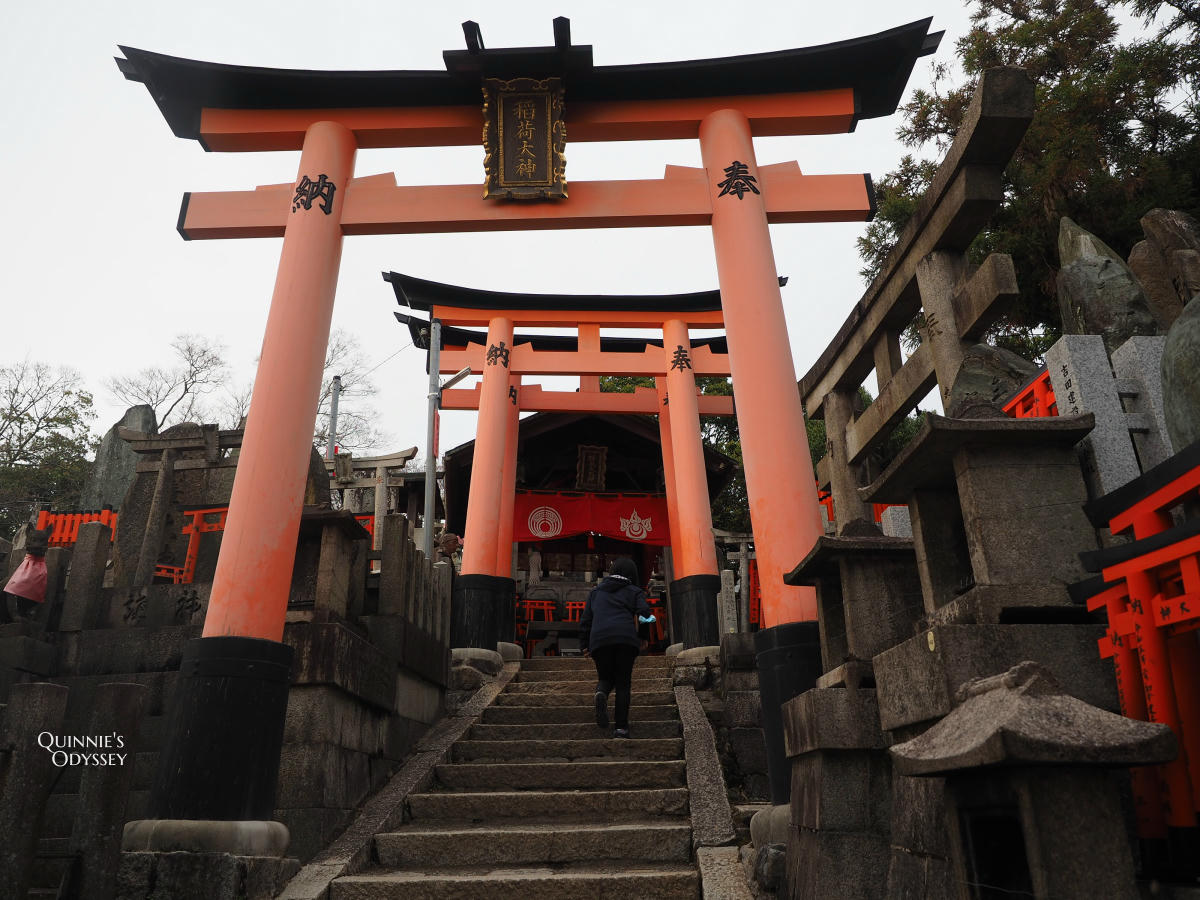
But past the Senbon Torii, past Kumataka-sha, the crowds finally began to thin. The air grew quieter, footsteps less chaotic, until eventually all I could hear was the sound of my own feet on stone steps.
A few cats lounged quietly beside the path, completely unbothered by the handful of visitors still wandering through. They seemed entirely at home among the shrines and torii and the strange hours between afternoon and evening.
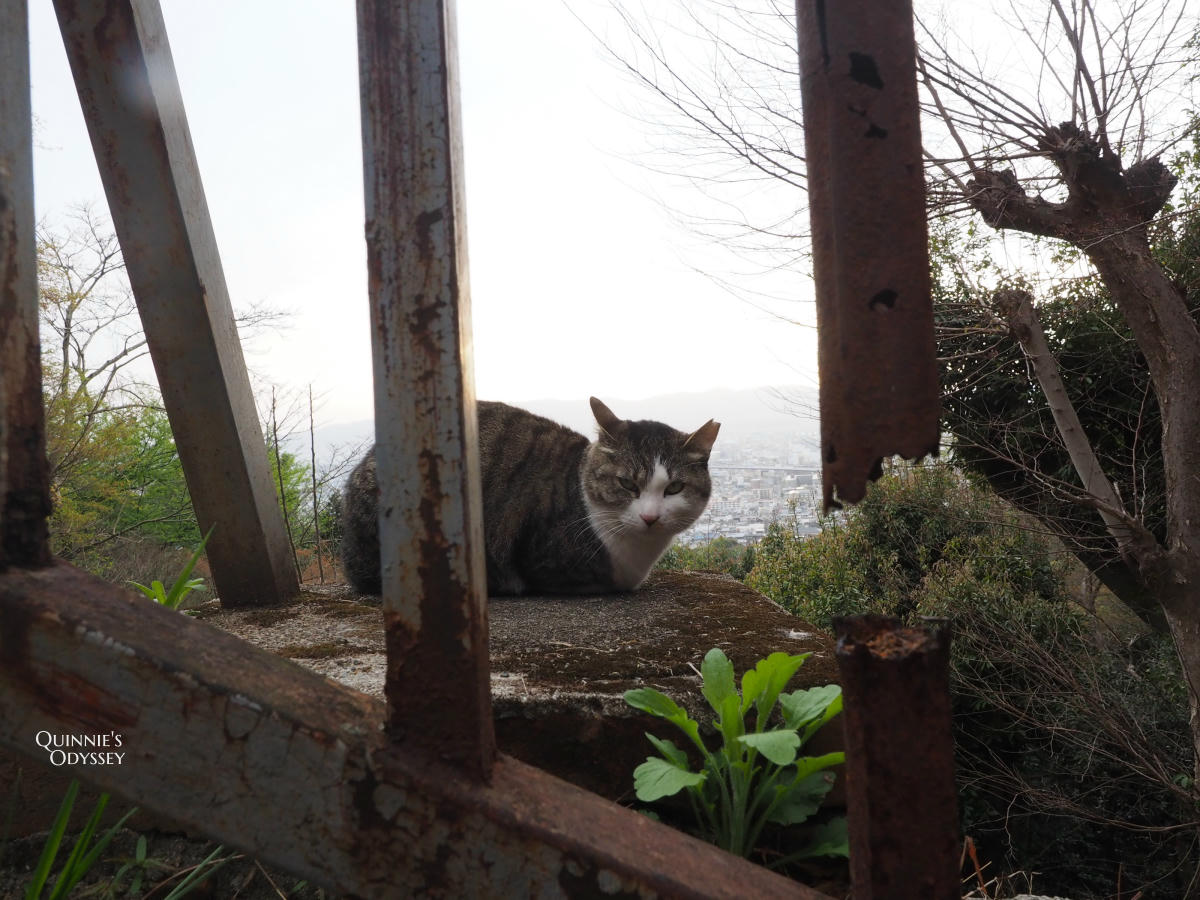
By 5:30 PM, the mountain was nearly mine.
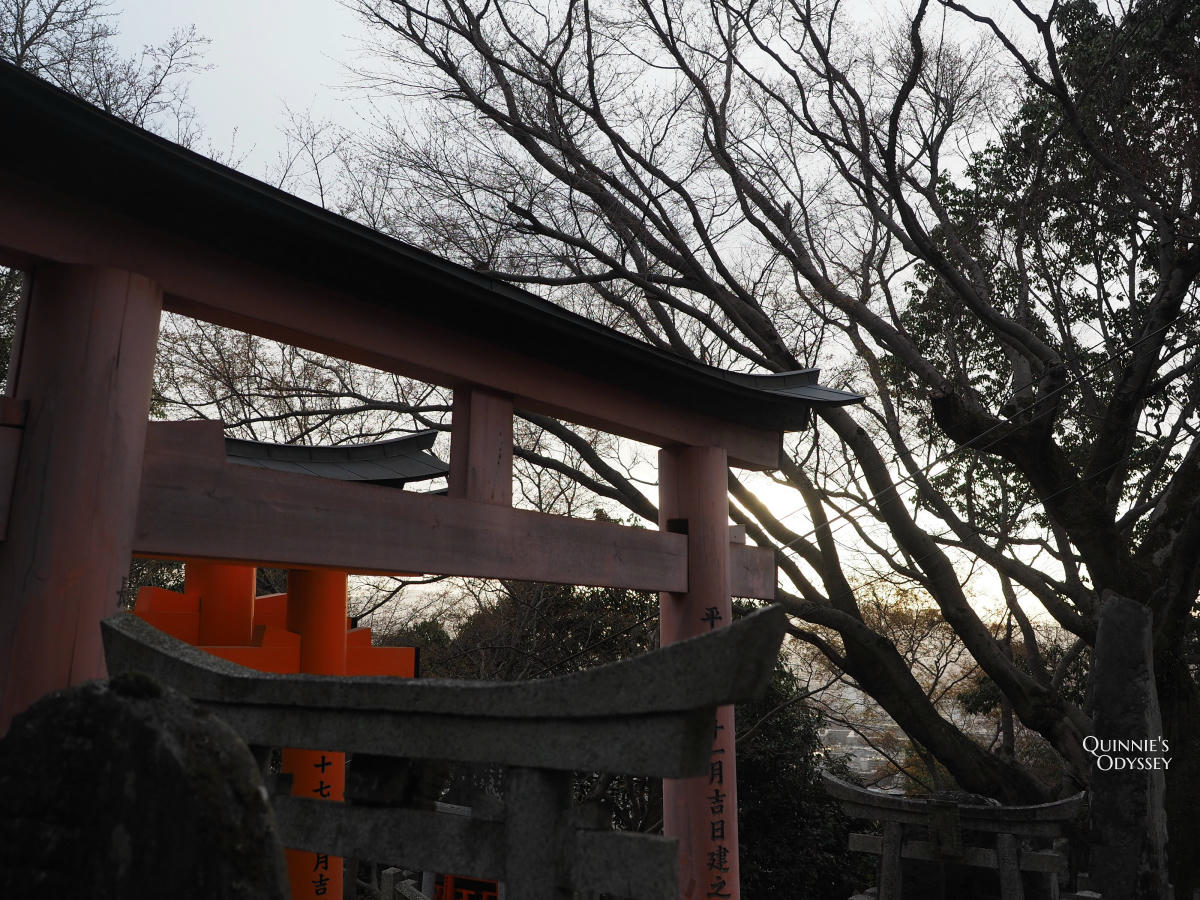
When I reached the upper areas, the sky had already begun turning gold. The sun was sinking, painting the entire horizon in shades of orange and amber – and then it hit that in-between state the Japanese call ōmagatoki: the liminal hour when light is no longer bright but darkness hasn’t yet arrived.
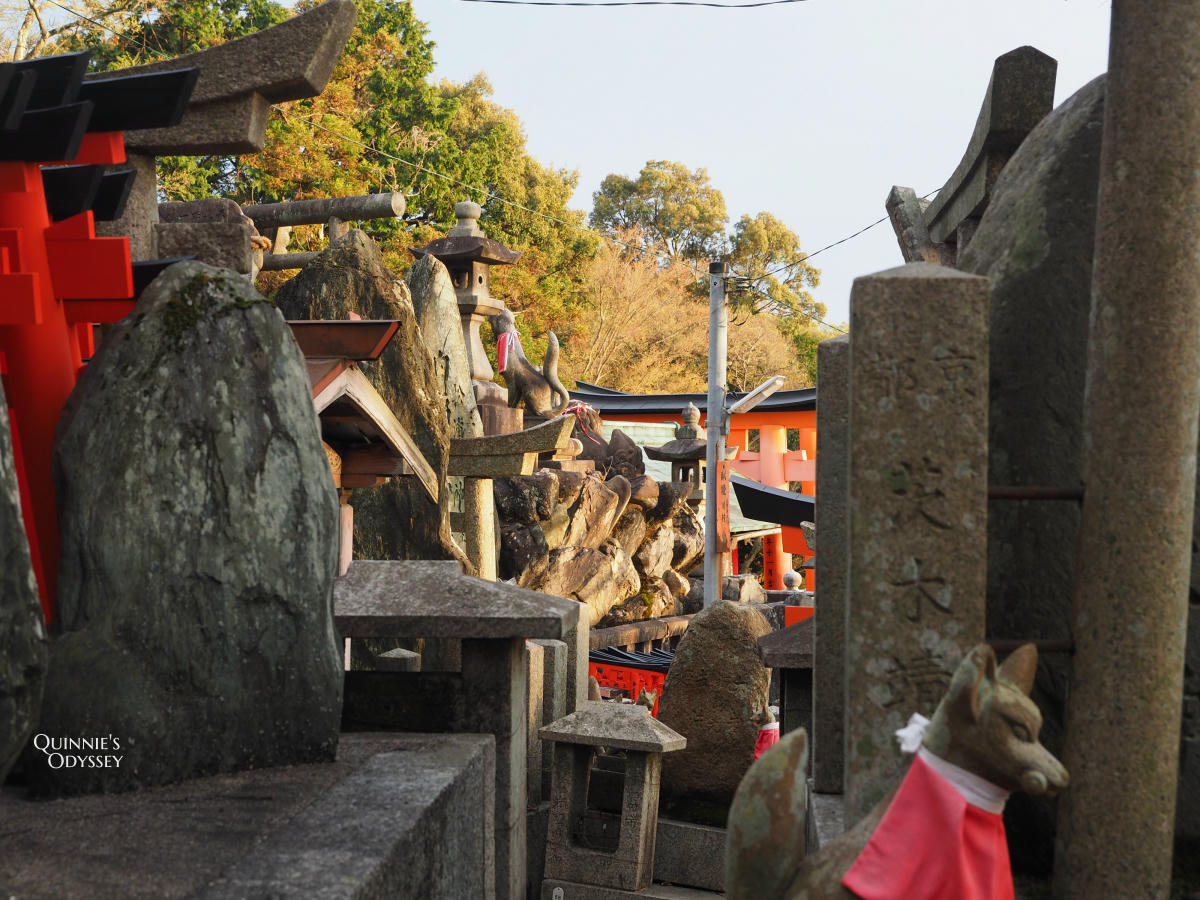
Legend has it that this is when the hyakki yagyō – the night parade of a hundred demons – takes place. Whether you believe that or not, the hour earns its name. In a place like Inari mountain, where every gate and every stone monument carries centuries of meaning, the timing feels less like folklore and more like accurate description.
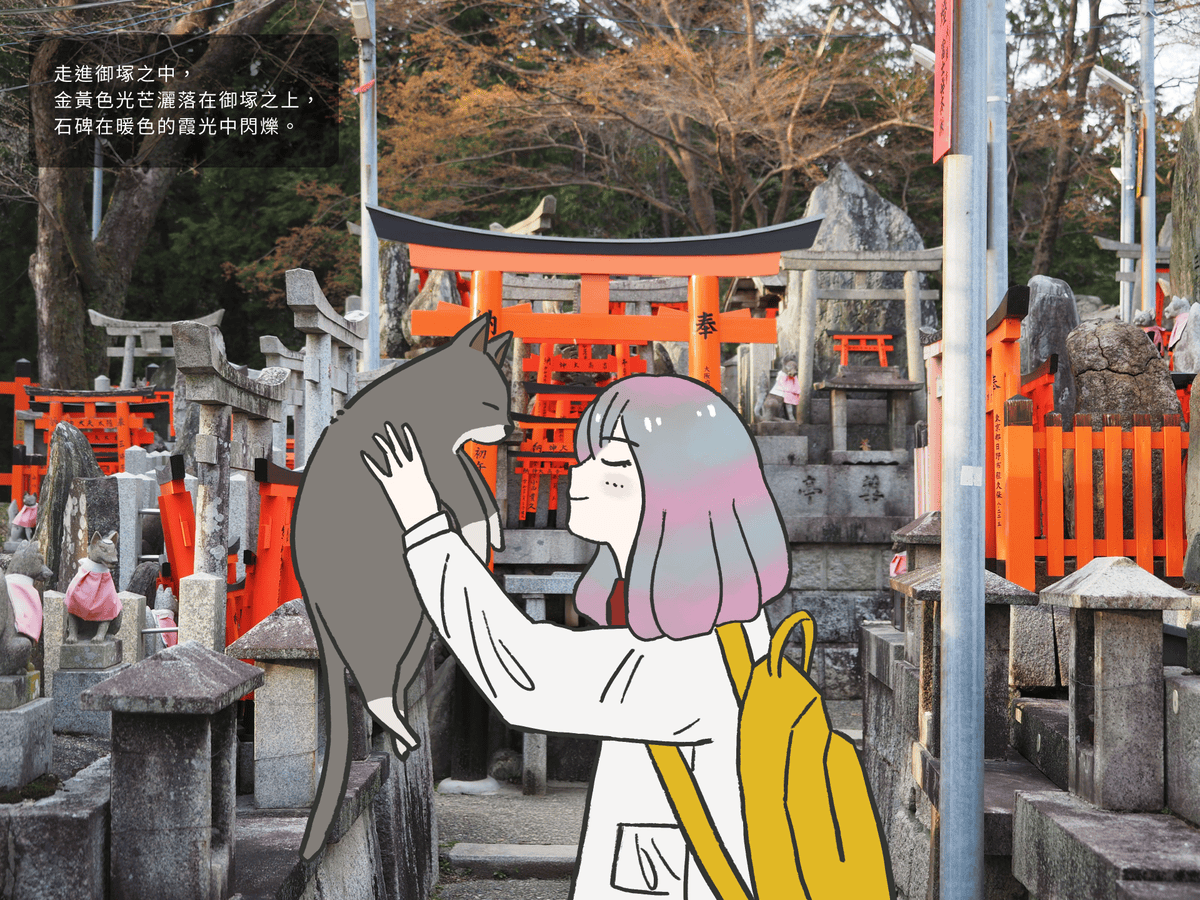
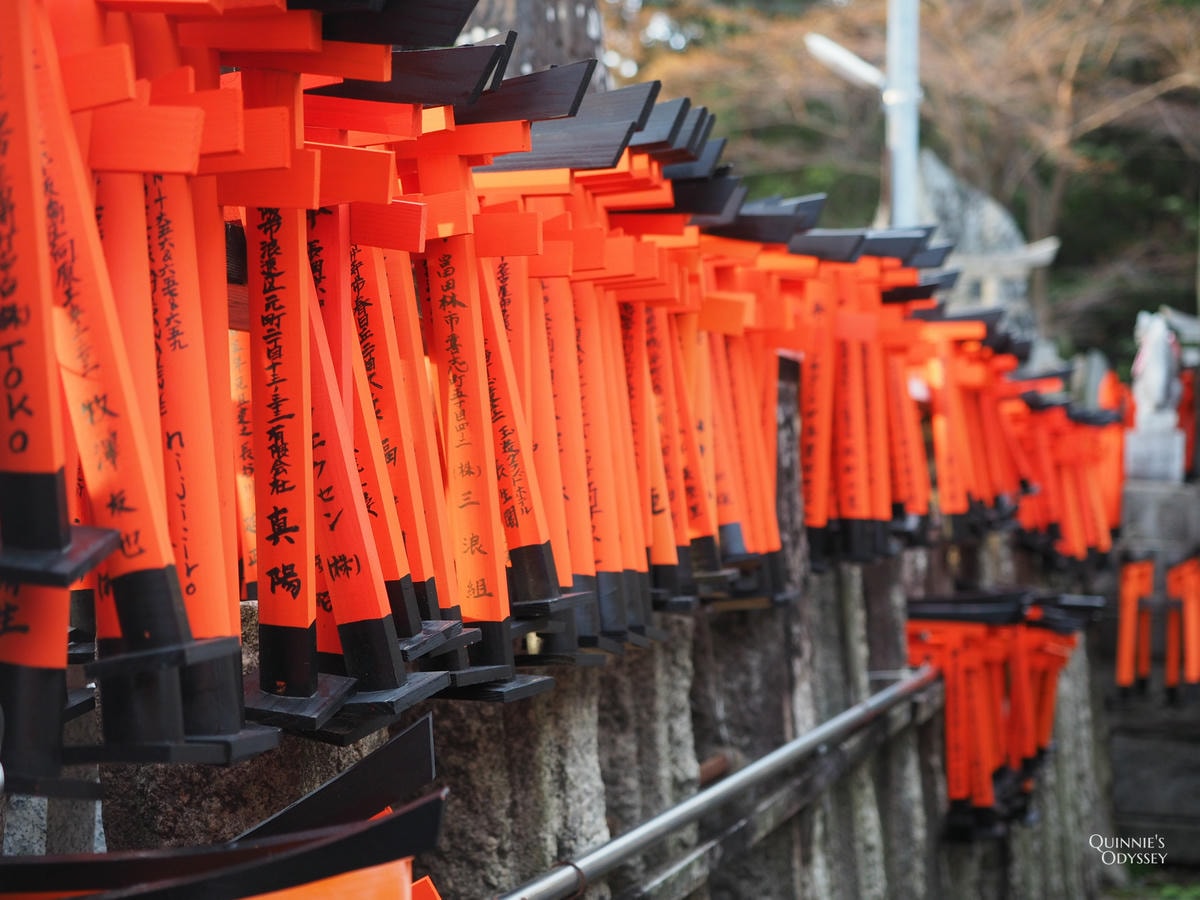
The evening light fell diagonally across the stone markers in the otsuka area – the stretch of mountain lined with hundreds of monuments offered by families and businesses over generations. The warmth of that light was beautiful and slightly uncanny at the same time. Fox statues stood silently on either side, their shadows stretched long across the ground. Not frightening, exactly. But there’s an unmistakable presence that makes you slow your pace and lower your voice, as if speaking too loudly might disturb something you can’t quite name.
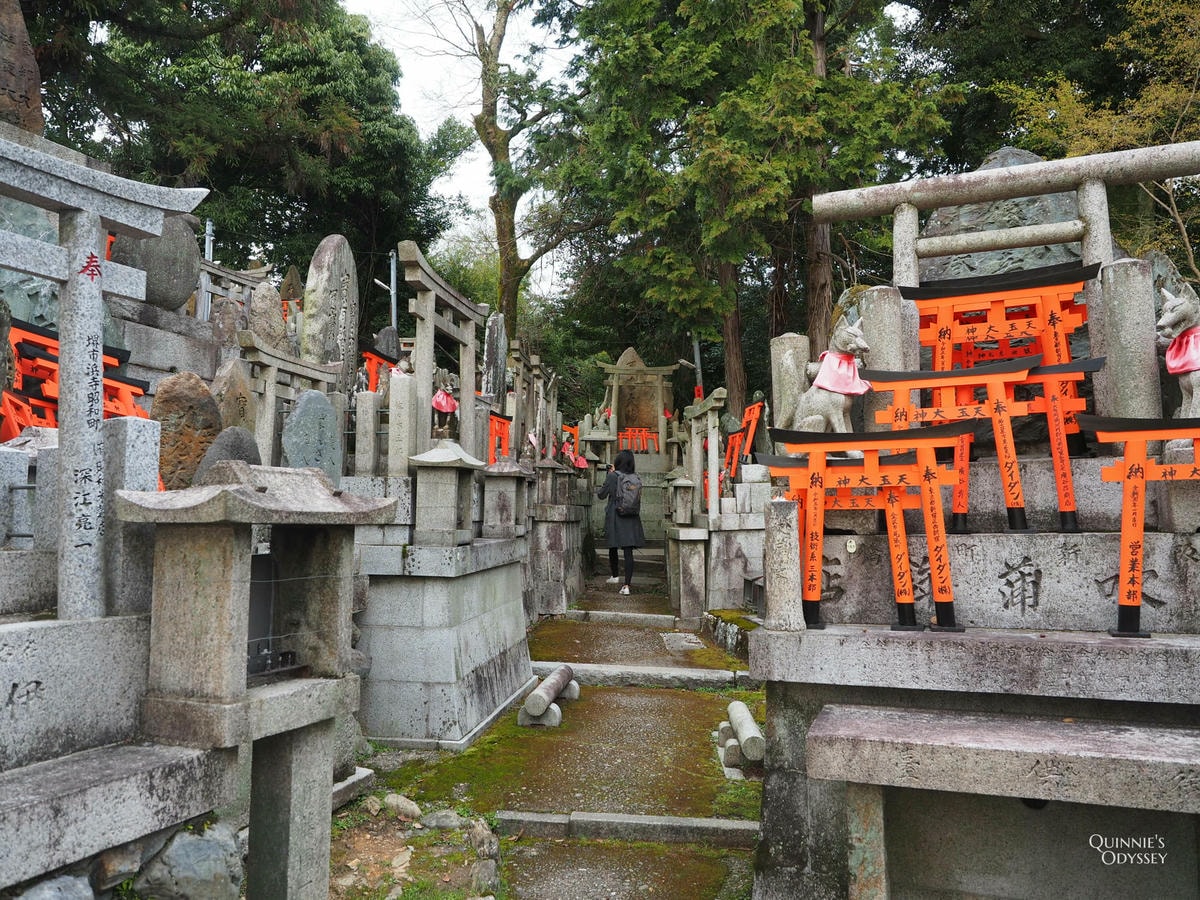
By around 7 PM, the sky had gone completely dark. The mountain was very still. The daytime noise of tourists had almost entirely faded, replaced only by wind and the sound of my own footsteps.
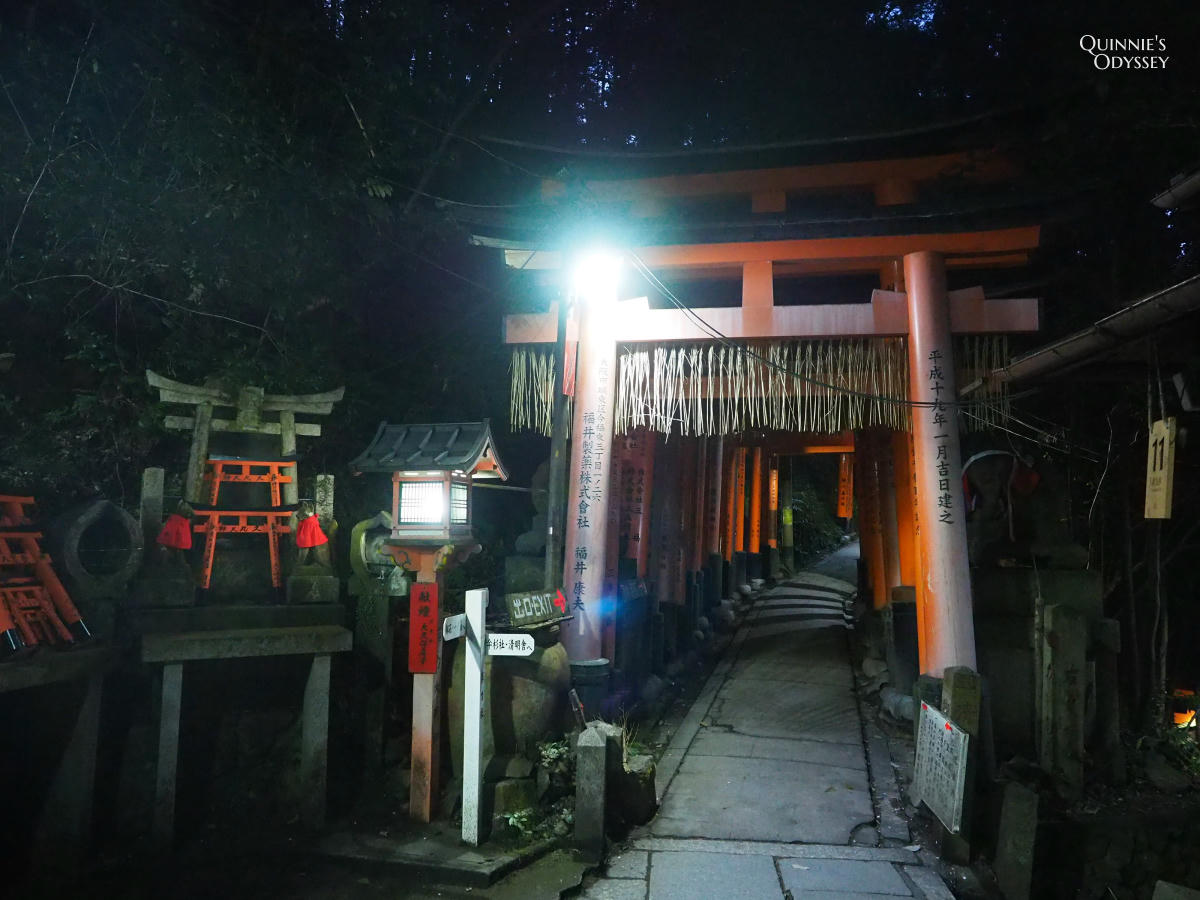
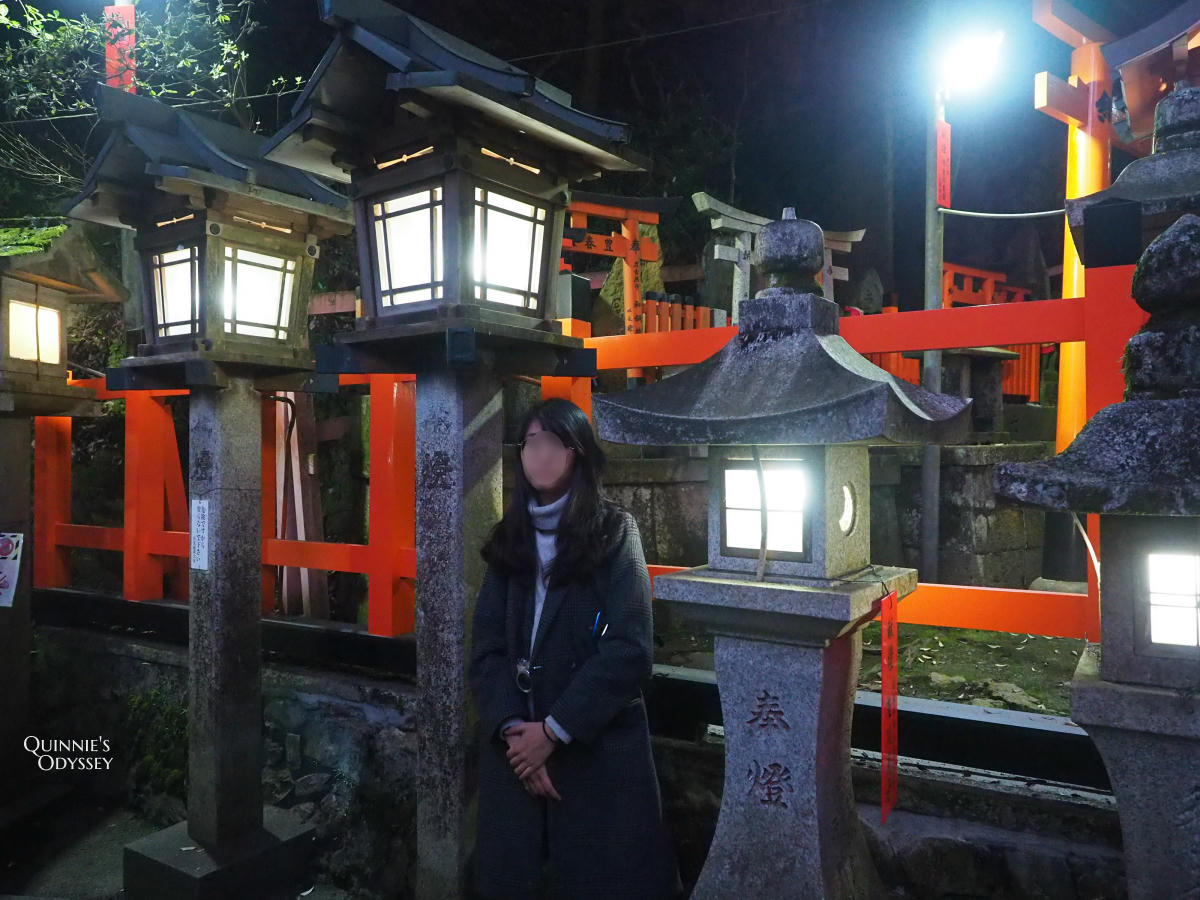
Stone lanterns cast a faint amber glow across the red torii gates and fox statues, and the whole shrine was wrapped in a quiet, mysterious atmosphere – the kind of silence that makes your imagination run wild with the stories you’ve read about this place.
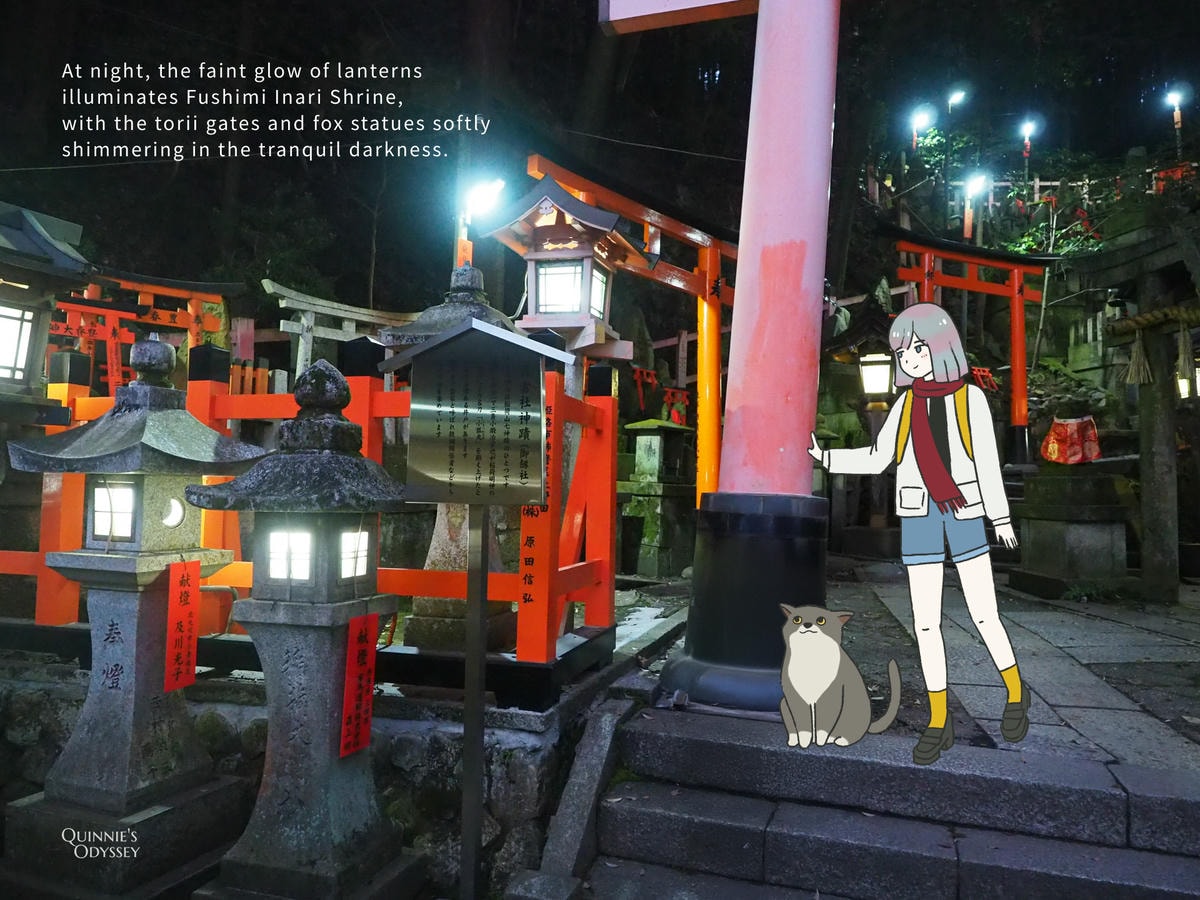
Is it actually frightening to walk Fushimi Inari at night?
Honestly, it depends. I wasn’t scared, but I was also walking with a companion, and I think that made all the difference. If I’d been alone, I suspect my courage would have been significantly reduced on the spot.
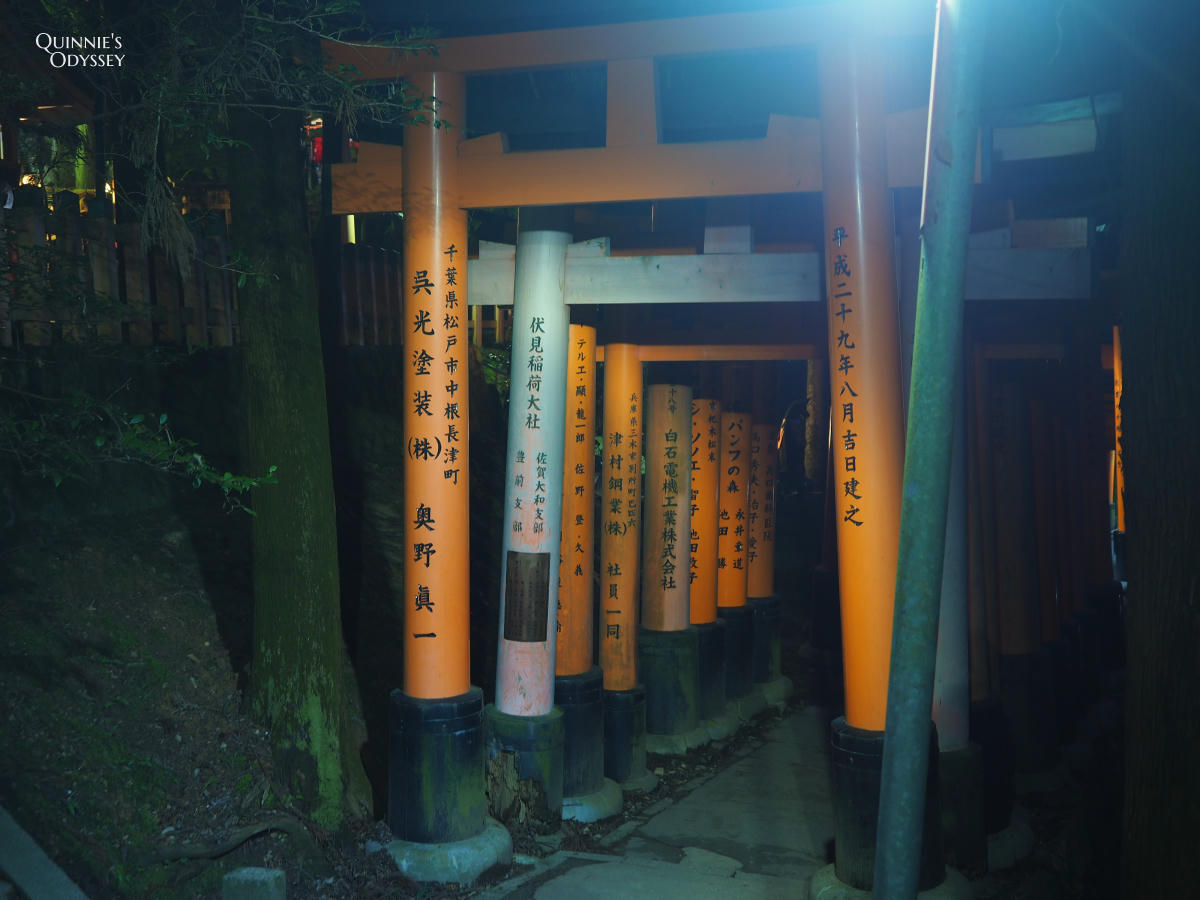
The mountain at night has a weight to it: the silence, the shadows between the lanterns, the fox statues watching from every angle. None of it is threatening exactly, but it’s the kind of atmosphere that turns small sounds into something your imagination immediately takes over.
👉👉 Get Your Guide – Kyoto Fushimi-Inari Night Walking Tour
The most famous legend is kitsunebi, fox fire. According to the stories, a fox can set its tail alight to create a blue flame – and may use this light either to guide travelers or to lure them deep into the forest, where they lose their way and cannot find their way back out.
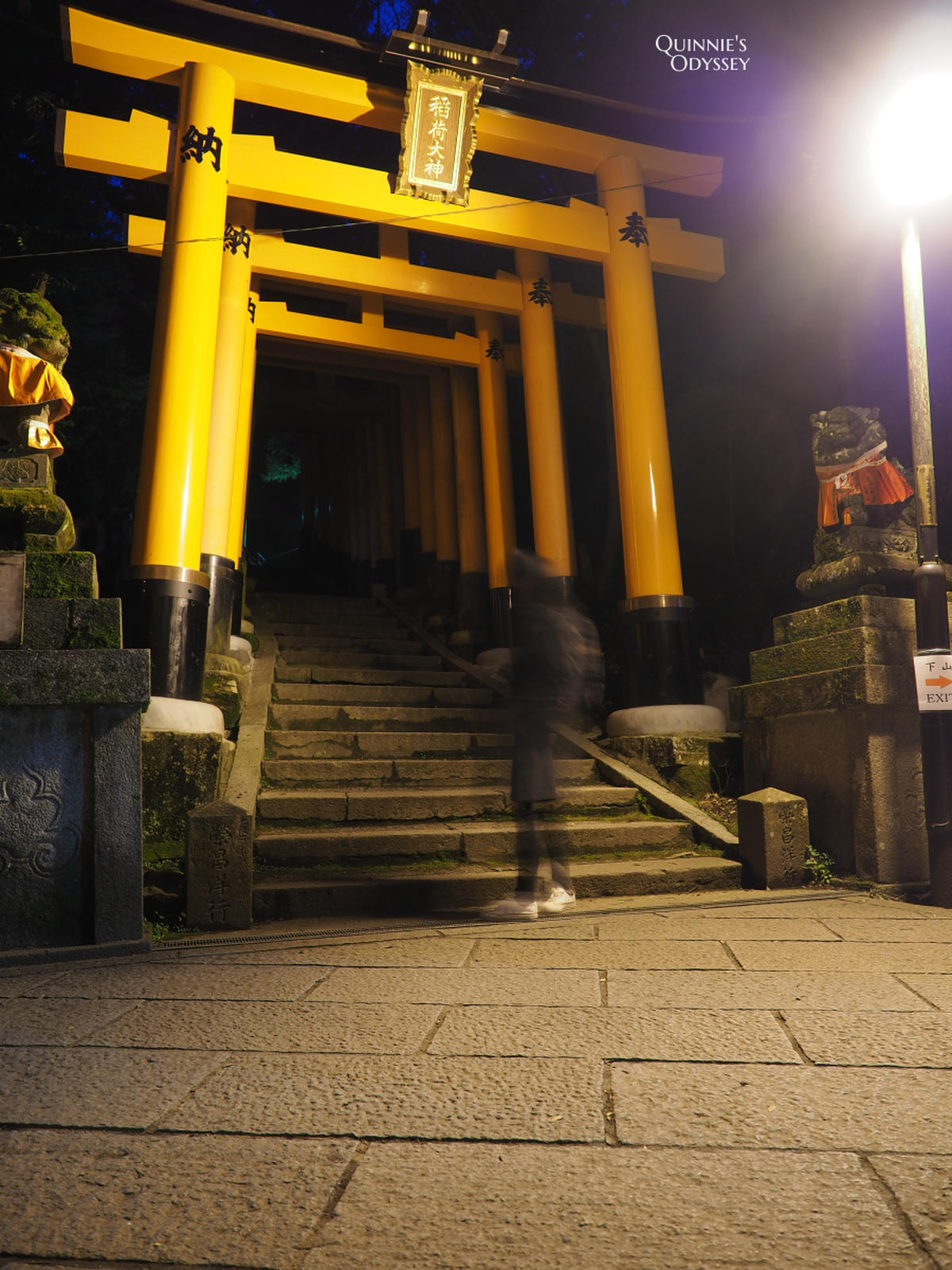
There are also tales of kamikakushi, people who wandered the back mountain trails after dark and simply vanished. Others came back, but with no memory of what had happened.
As for me, I’m a complete skeptic. I didn’t sense anything out of the ordinary.
One practical thing worth knowing: wild boar inhabit the mountain.
Sightings happen occasionally, especially off the main trail. Stay on the illuminated paths after dark, don’t go off-trail, and you’ll be fine. They’re not something to panic about, but they are real.
Don’t turn back the moment it gets fully dark.
A few specific places are worth the extra time.
Under night lighting, this fox water spout takes on a completely different quality. The lamp casts a deep, steady gleam across the metal surface, and what looks decorative in daylight looks genuinely mysterious at night. Easy to walk past during the day. At night, it stops you.
This stretch of mountain – lined with monuments offered by families and businesses over hundreds of years, each one carved with names – feels most itself after dark. The lantern light plays across the carved surfaces in a way that’s genuinely hard to put into words. If you want to understand what kind of place this is, this is where to stand quietly for a few minutes.
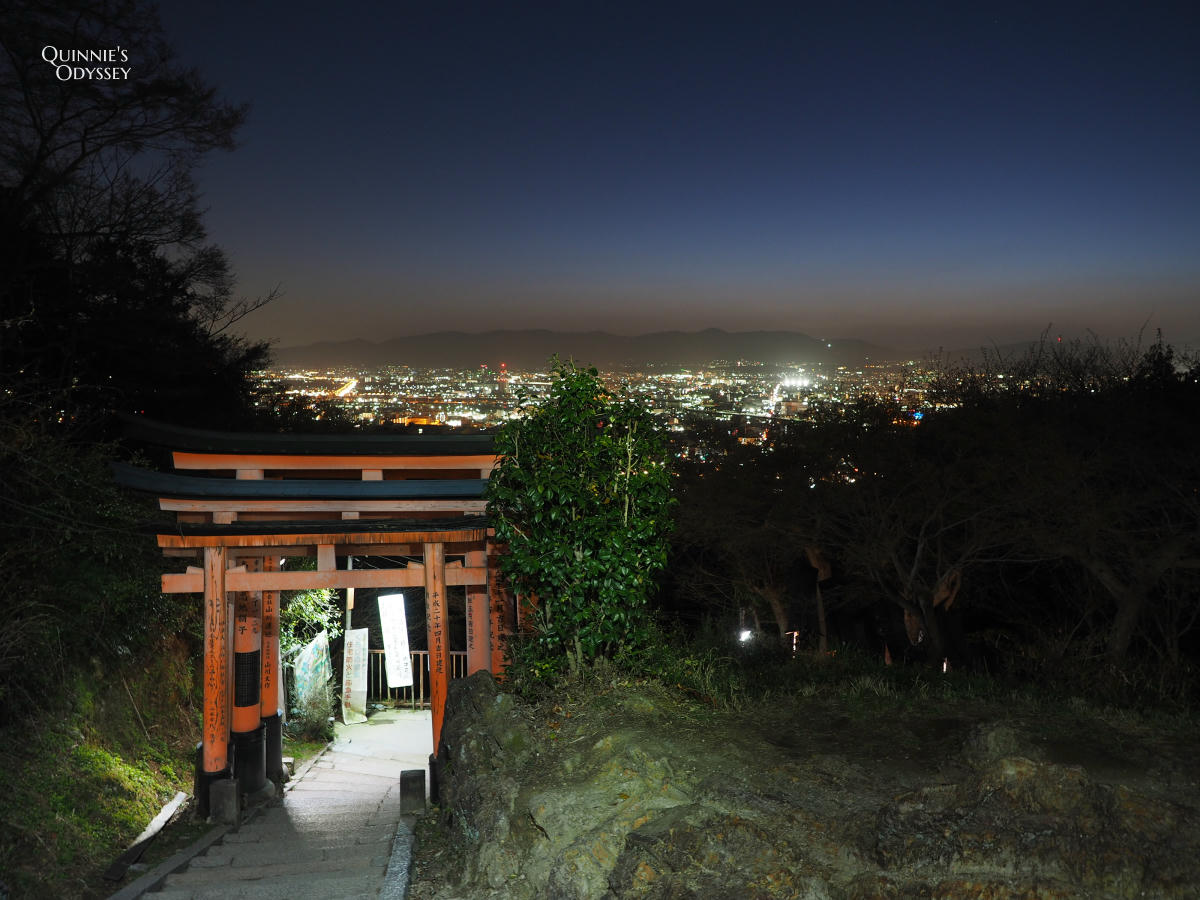
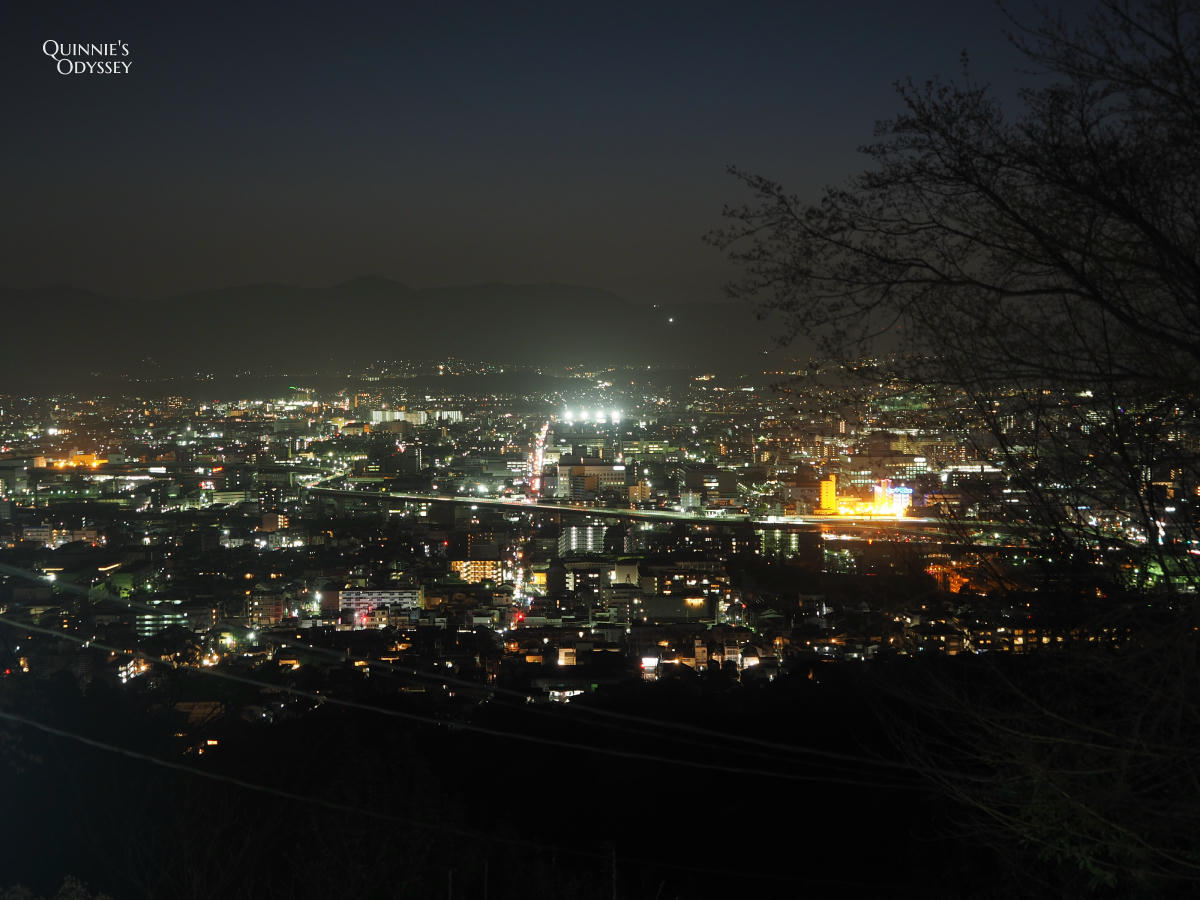
Sit somewhere on the mountainside and look out over the city. The lights of Kyoto glittering below, the sky clear above, the mountain completely quiet around you – it’s one of those moments that feels like a privilege.
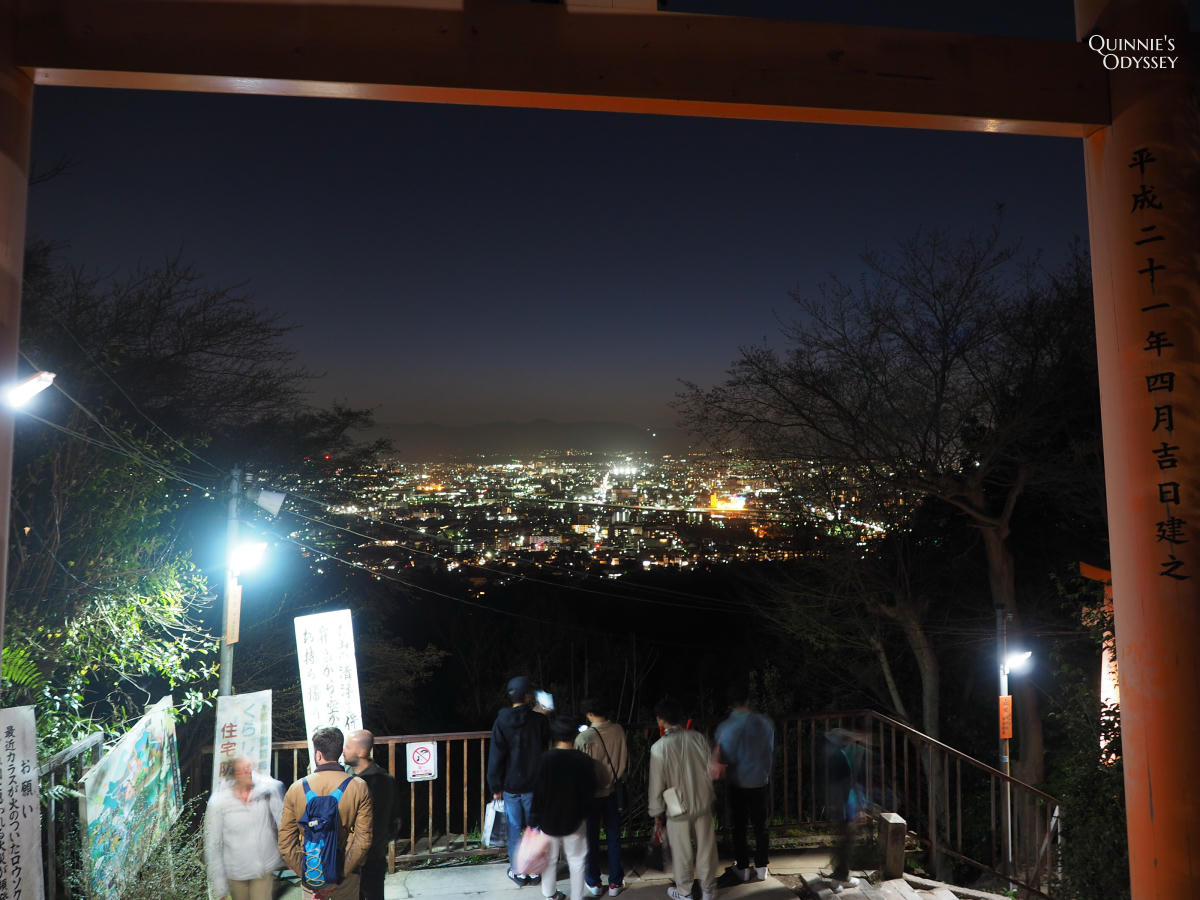
Even late in the evening, the occasional visitor was still making their way up. That surprised me, and it made me wonder: what does this mountain become at midnight?
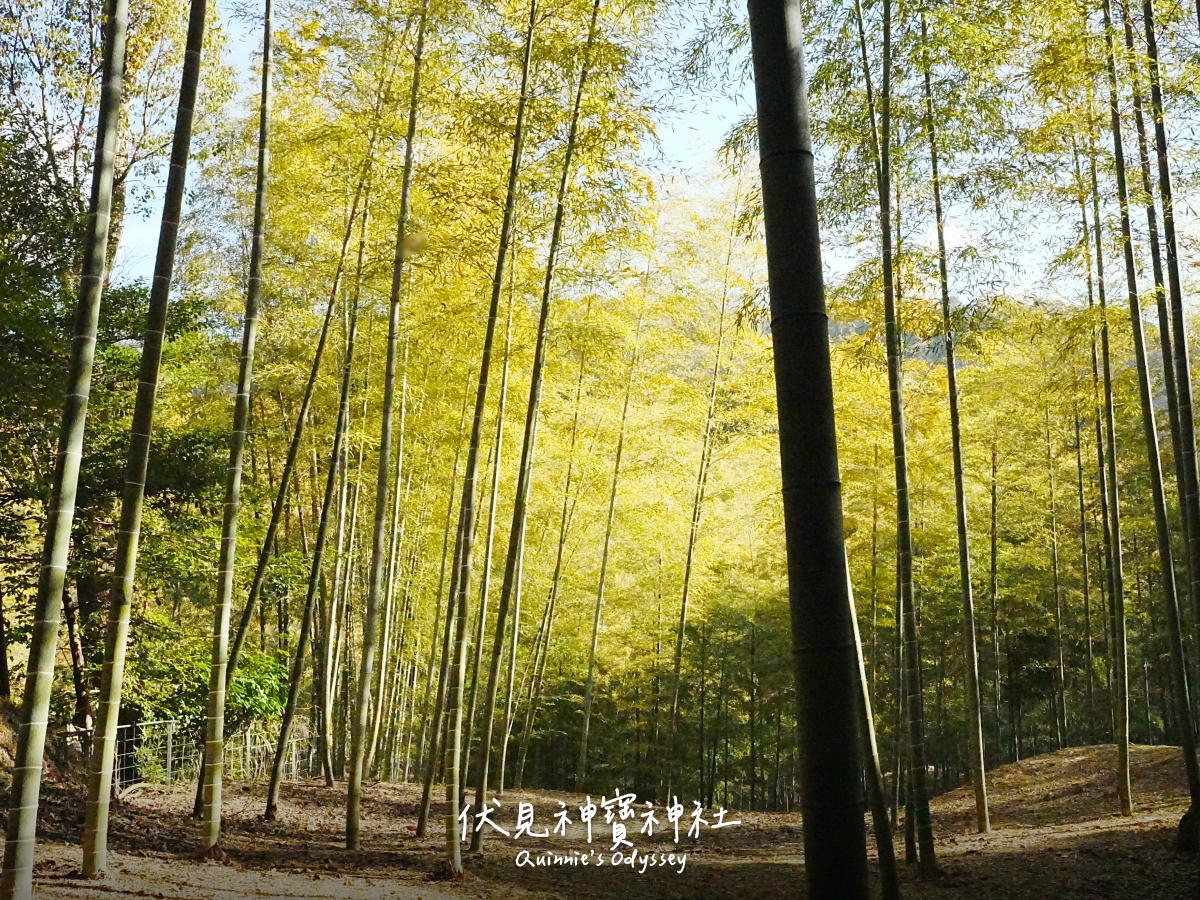
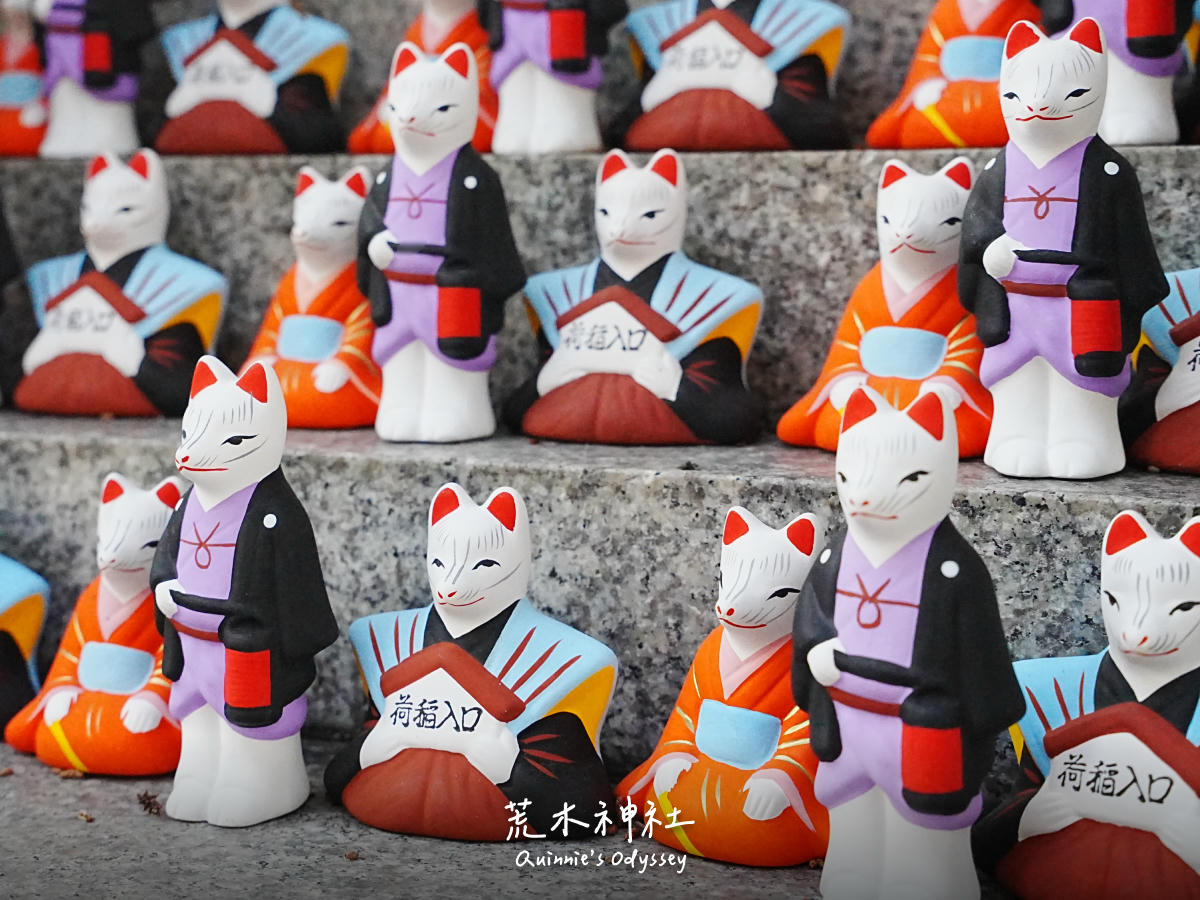
While you’re in the area, two other shrines on Mount Inari are worth adding to your list: Araki Shrine, known for its extraordinary collection of small fox figurines, and Fushimi Kandakara Shrine, tucked into a quiet bamboo forest partway up the mountain.
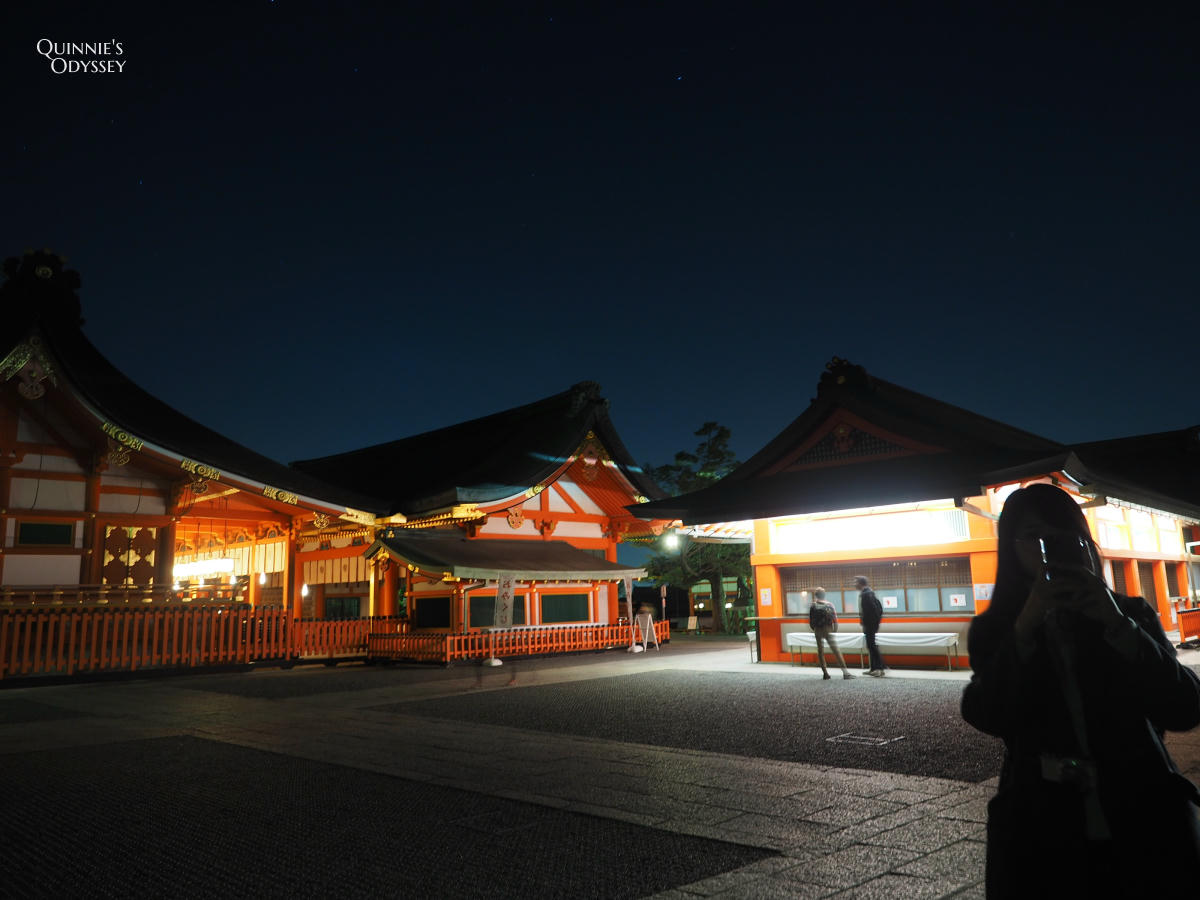
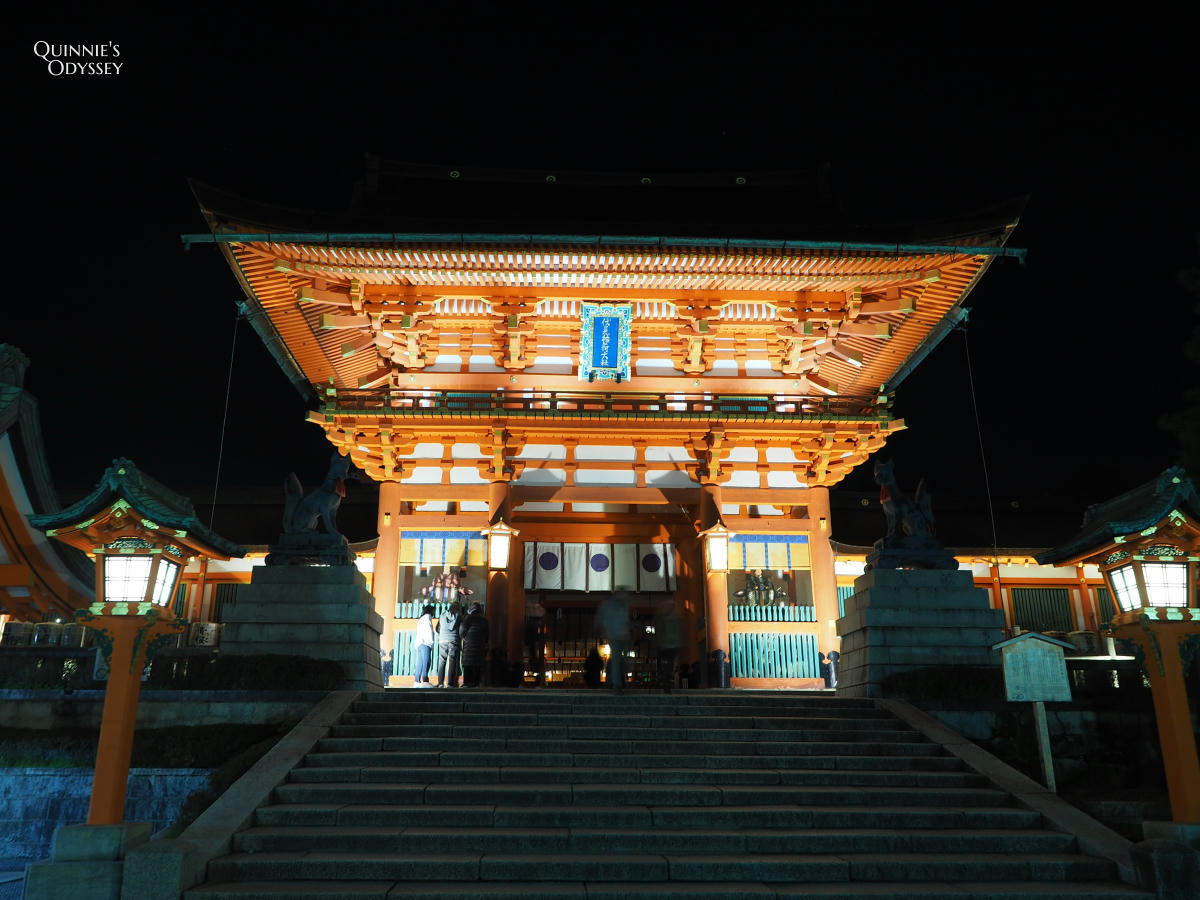
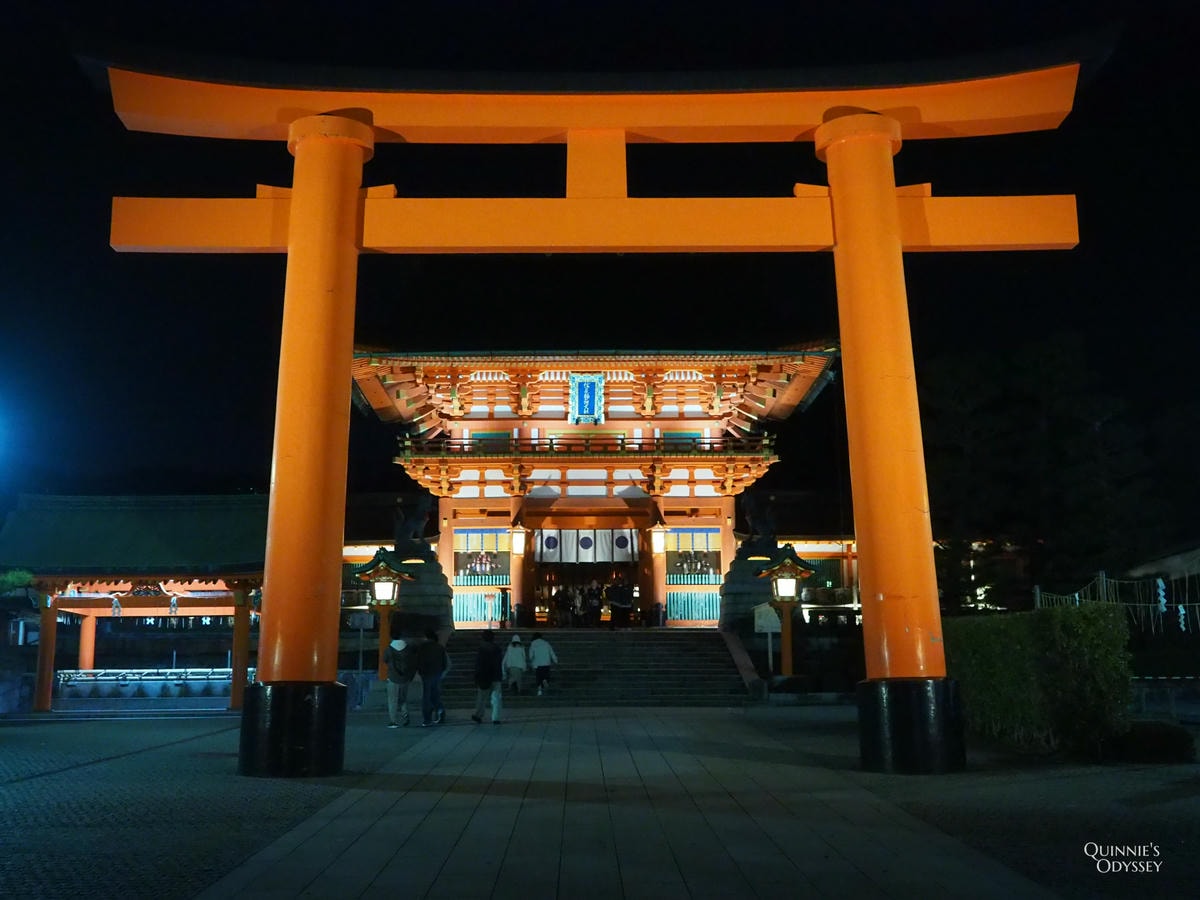
By the time I descended to flat ground, the main shrine area was still illuminated, its red structures standing vivid and striking against the night. A few people still wandered quietly through.
The omamori charm shop closes at 4:30 PM, so buy anything you want before dark.
2 minutes’ walk from Inari Station (JR Nara Line), or about 5 minutes from Fushimi Inari Station (Keihan Main Line). There is no parking at the shrine.
The main path is well-lit up to the Yotsutsuji intersection. Beyond that, the trail gets significantly darker — bring a fully charged phone or a small flashlight for the upper sections.
Real, present, and not friendly. Stay on the main trail after dark. Do not approach them.
Closed-toe walking shoes — the stone steps are uneven and can be slippery. The mountain cools down considerably after sunset, so bring a layer.
Night tours typically run around ¥3,000–¥5,000 and cover the lower shrines, the lantern-lit Senbon Torii, and the legends behind the space. Worth considering if you want someone who knows the stories.
Check the tour here 👉 Get Your Guide – Kyoto Fushimi-Inari Night Walking Tour
If you’re drawn to mystery, to that atmosphere that hovers somewhere between the real world and the realm of legend, you will absolutely fall in love with Fushimi Inari after dark.
If you ask me whether climbing Inari Mountain at night is scary, I’d say this: it’s probably the closest you’ll ever get to the divine.
You Might Also Like
A: Yes. Fushimi Inari Taisha is open 24 hours a day, 365 days a year, and there is no admission fee at any hour. Note that the omamori (charm) shop closes at 4:30 PM, so pick up anything you want before sunset.
A: Plan for about 2 to 3 hours for the full round trip to the summit. If you’re only going to the Yotsutsuji intersection (halfway), allow around 45 minutes each way. The paths are uneven stone steps, so pace yourself.
A: A fully charged phone or small flashlight (for the upper sections past the Yotsutsuji intersection), comfortable closed-toe shoes with grip, a light jacket (the mountain gets cool after dark), and water.
A: Mid-to-late afternoon – around 3:00 to 4:00 PM – is ideal. You’ll catch the last of the tour groups heading down, the golden-hour light, and the ōmagatoki (dusk transition) as you climb. By 7 PM the mountain is nearly empty.
A: It’s generally considered safe — the paths are well-lit up to the Yotsutsuji intersection, and other visitors are usually present, especially foreign travelers. That said, going with a companion makes the experience more comfortable, particularly if you’re heading above the intersection. If you’re going solo and want extra peace of mind, a guided night tour is a good option.
👉👉 Get Your Guide – Kyoto Fushimi-Inari Night Walking Tour
▼ Kyoto Travel Essentials ▼

Thanks for reading!
If you’re interested in my stories, feel free to follow me on Instagram.
👉👉 IG: @sika_artist 👈👈