Physical Address
304 North Cardinal St.
Dorchester Center, MA 02124
Physical Address
304 North Cardinal St.
Dorchester Center, MA 02124

Located inside Nara Park, Tōdai-ji is one of Japan’s most iconic Buddhist temples.
It was originally built in the mid-8th century, which means it has a history of more than 1,200 years.
Not only is it a symbol of Nara, but it was also registered as a UNESCO World Heritage Site in 1998.

Todai-ji covers a huge area, including several famous buildings such as the Great Buddha Hall, Nigatsu-do, and the Shōsō-in treasure house.
It’s close to other well-known attractions like Kasuga Taisha and Kōfuku-ji, so it’s perfect for planning a full day of sightseeing.
The temple is an important landmark in Japanese Buddhist history.
It was founded during the Nara period under the order of Emperor Shōmu, who built it to pray for peace and stability throughout the country.
The temple enshrines the Great Buddha (Daibutsu), a 15-meter-tall bronze statue of Vairocana Buddha, and one of the largest bronze Buddha statues in the world.
Despite being destroyed and rebuilt multiple times due to wars and natural disasters, Todai-ji still maintains its ancient grandeur and attracts countless visitors every year.
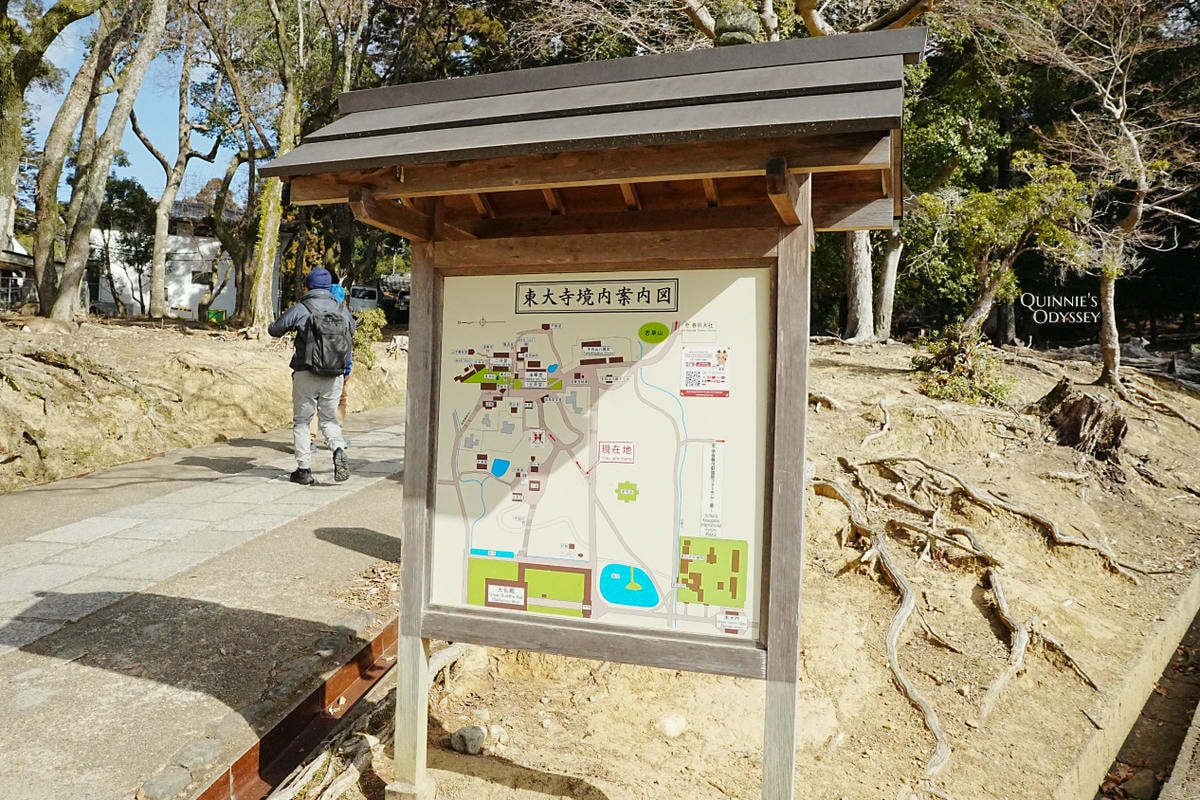
There are many places worth checking out within the temple grounds.
Their official website lists even more spots, but below are some of the most famous ones.

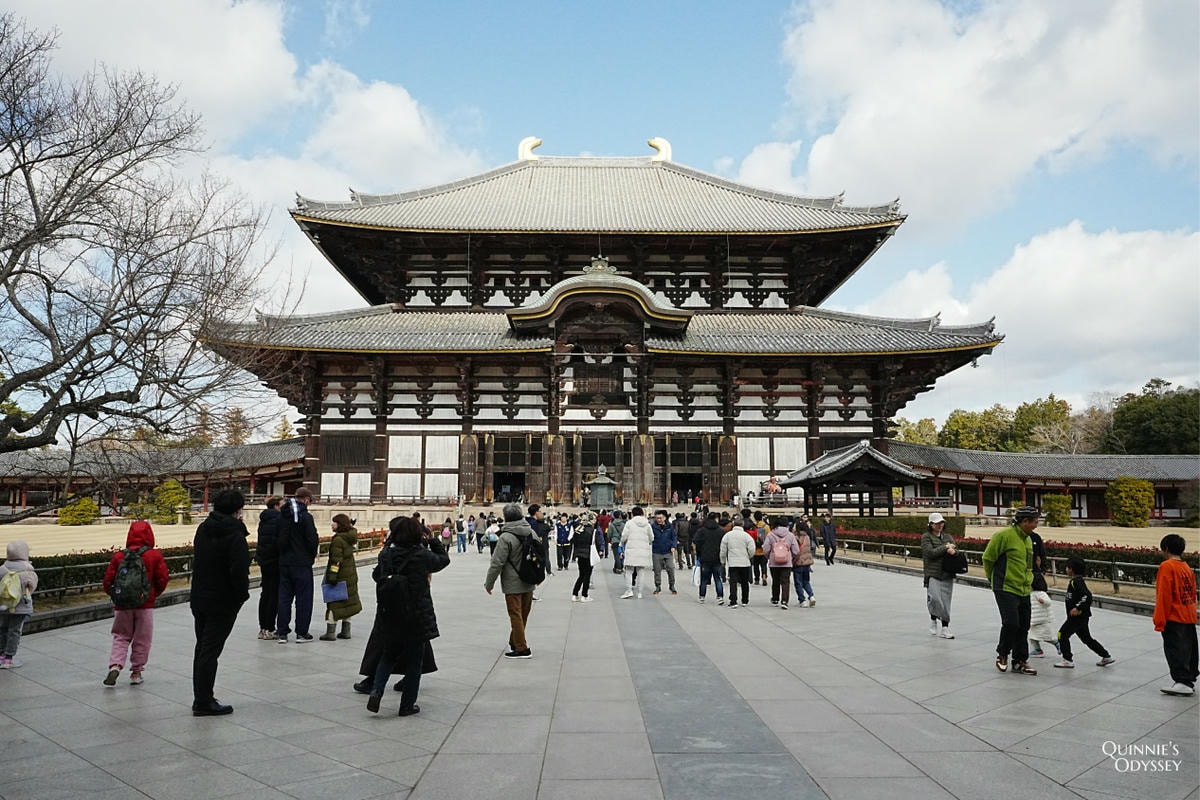
The most iconic landmark, the Great Buddha, is located inside the Great Buddha Hall.
Maybe because of the festival crowds, the entire area around the hall was packed with people when I visited.
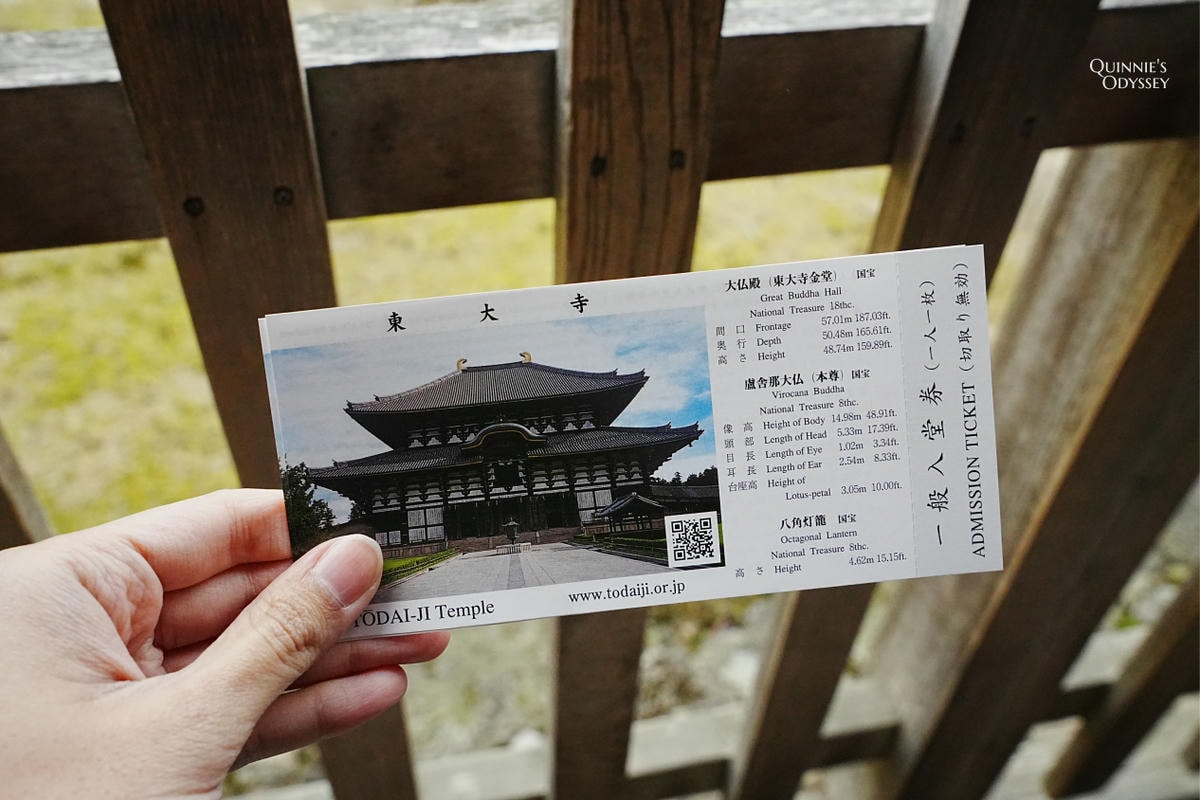
There’s an admission fee to enter the Great Buddha Hall: 800 yen for adults.
On the right side outside the hall, you’ll notice a wooden statue wearing a red hat and a red cloth.
This is Pindola Bharadvaja, one of Buddha’s disciples and considered the leader of the Sixteen Arhats.
According to legend, he has healing powers, touching the part of the statue that corresponds to your own ailments is said to help improve your health.
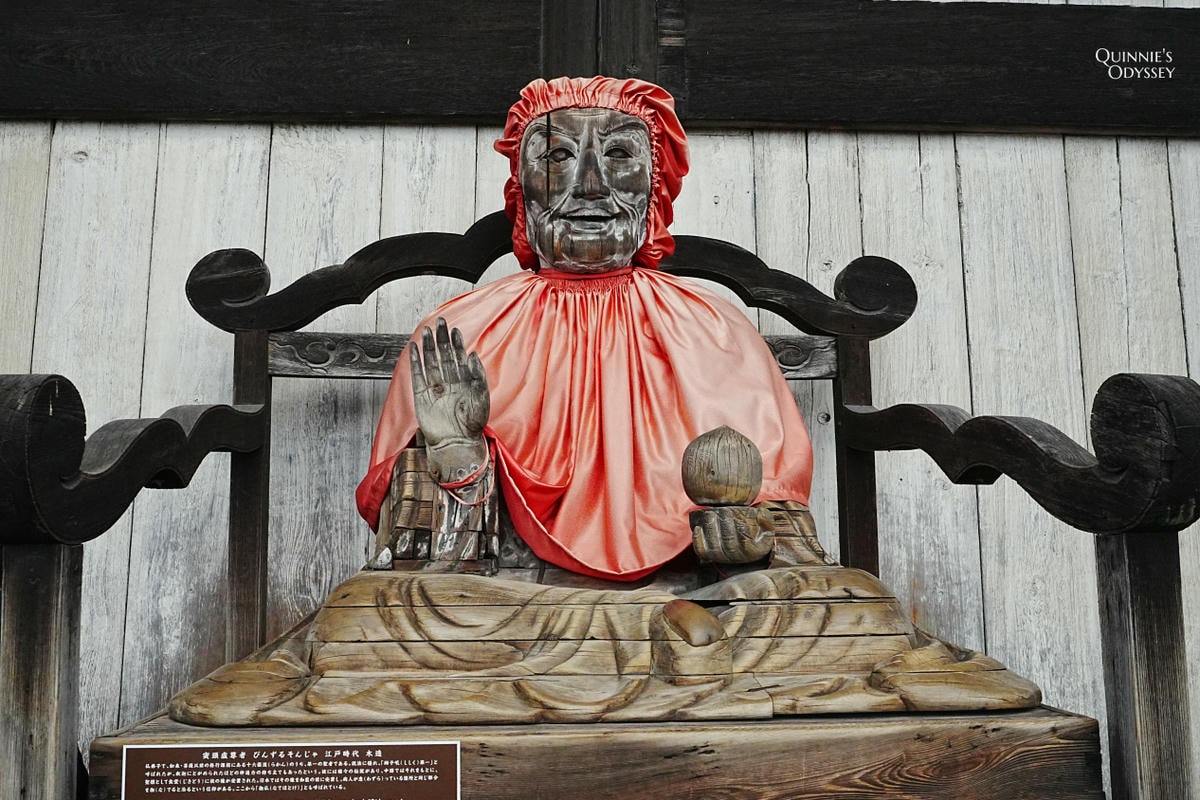
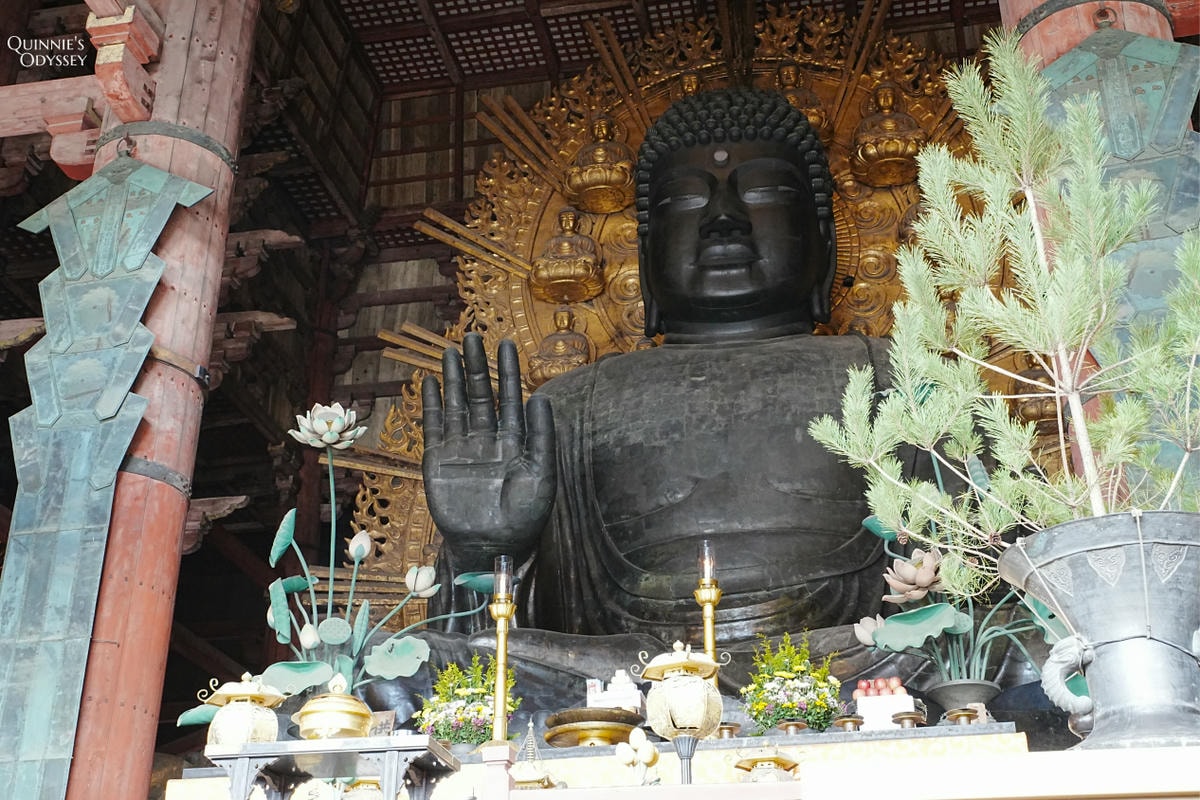
Once you step inside, you’re immediately greeted by the imposing figure of the Great Buddha.
Standing about 15 meters tall, it’s one of the largest bronze Buddha statues in the world. Seeing it up close is truly awe-inspiring. Standing in front of it makes you feel incredibly small.
If it weren’t so crowded, you could really feel the quiet, spiritual atmosphere of the hall.
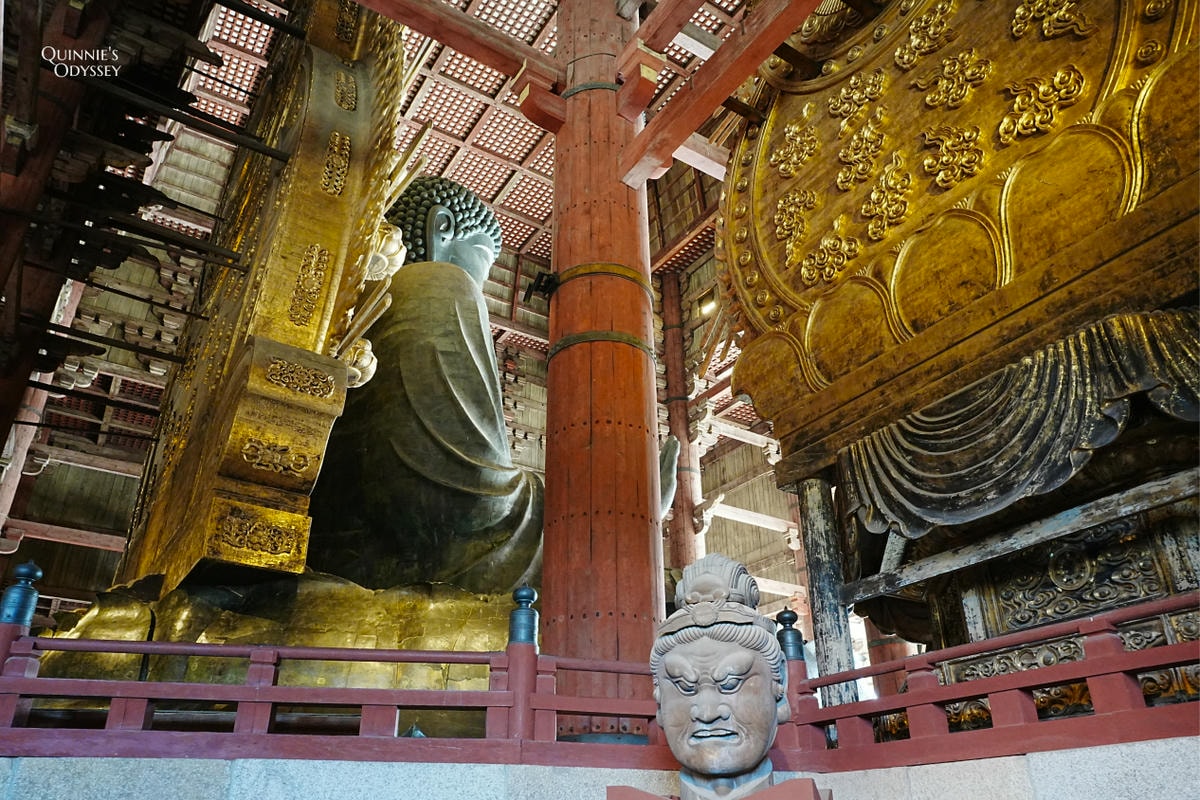
Looking up, the wooden structure of the Great Buddha Hall is just as impressive.
It’s one of the largest wooden buildings still standing in the world.
There’s also a famous pillar at the back with a hole at the bottom, the “Buddha’s Nostril.” They say that anyone who can crawl through it will receive good fortune. It was closed during the pandemic, but now it’s open again.
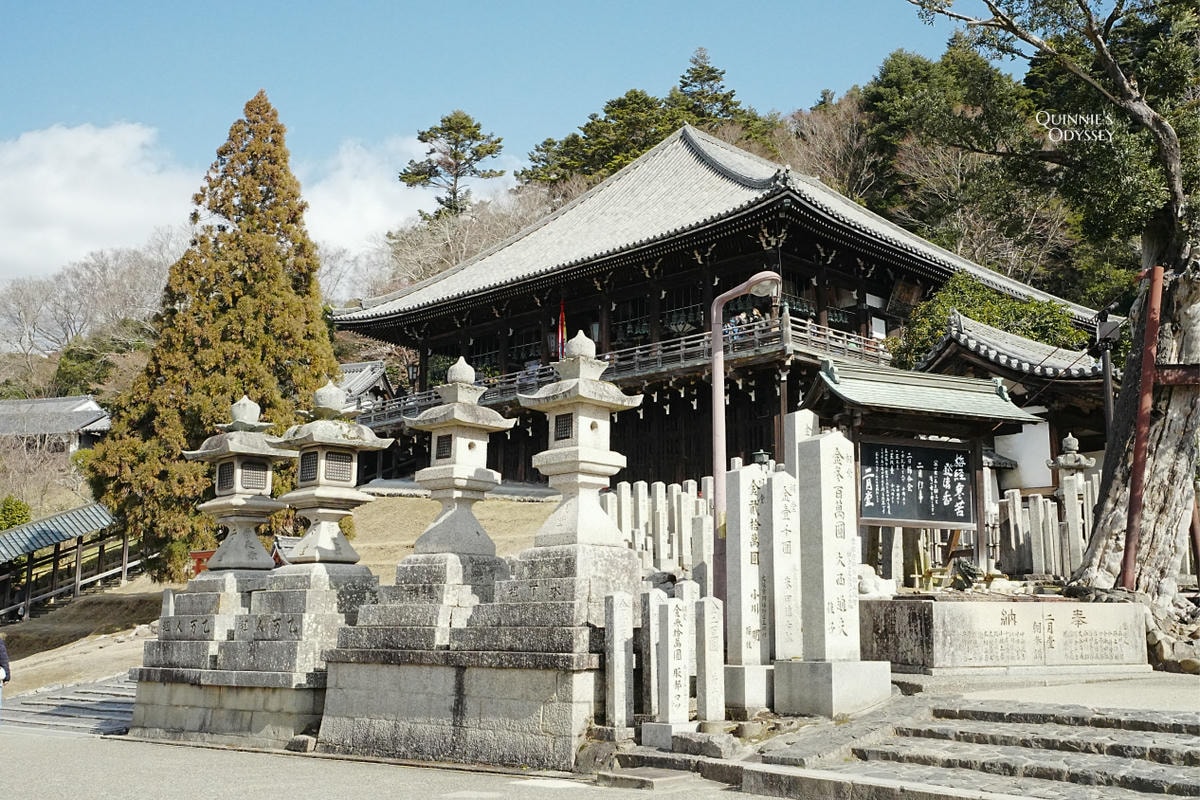
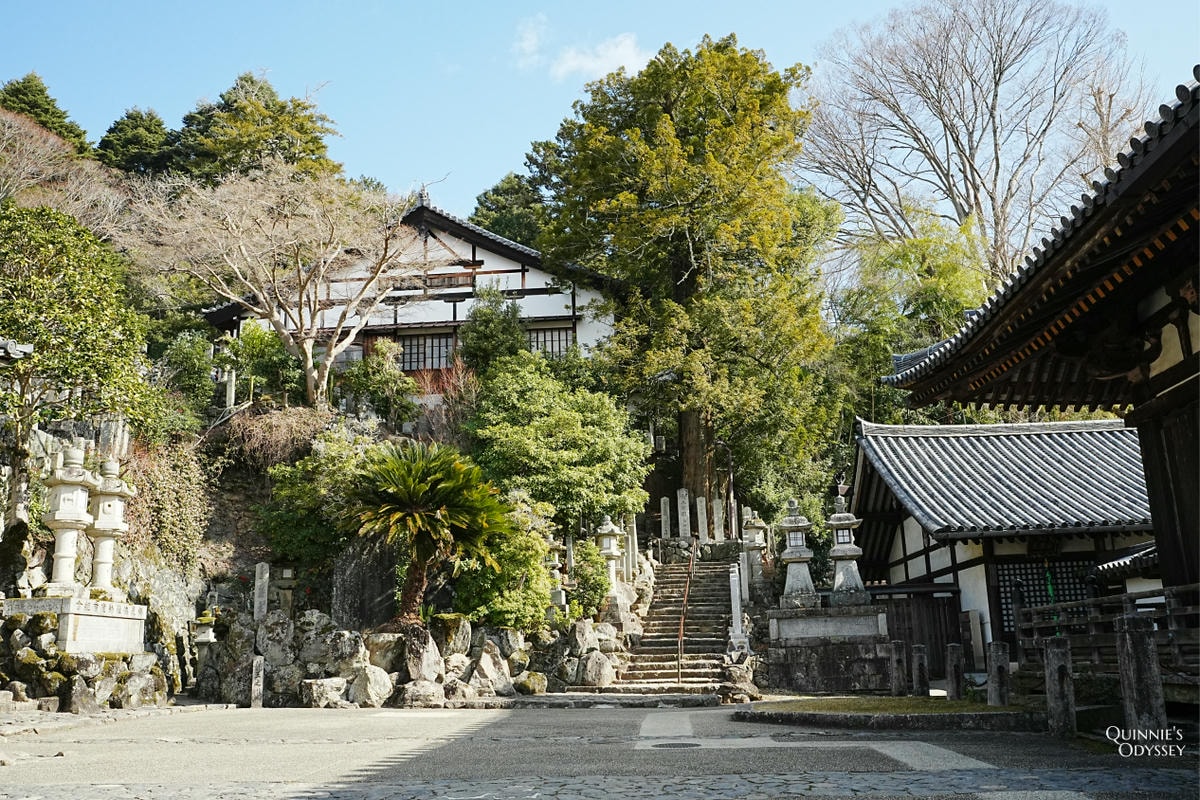
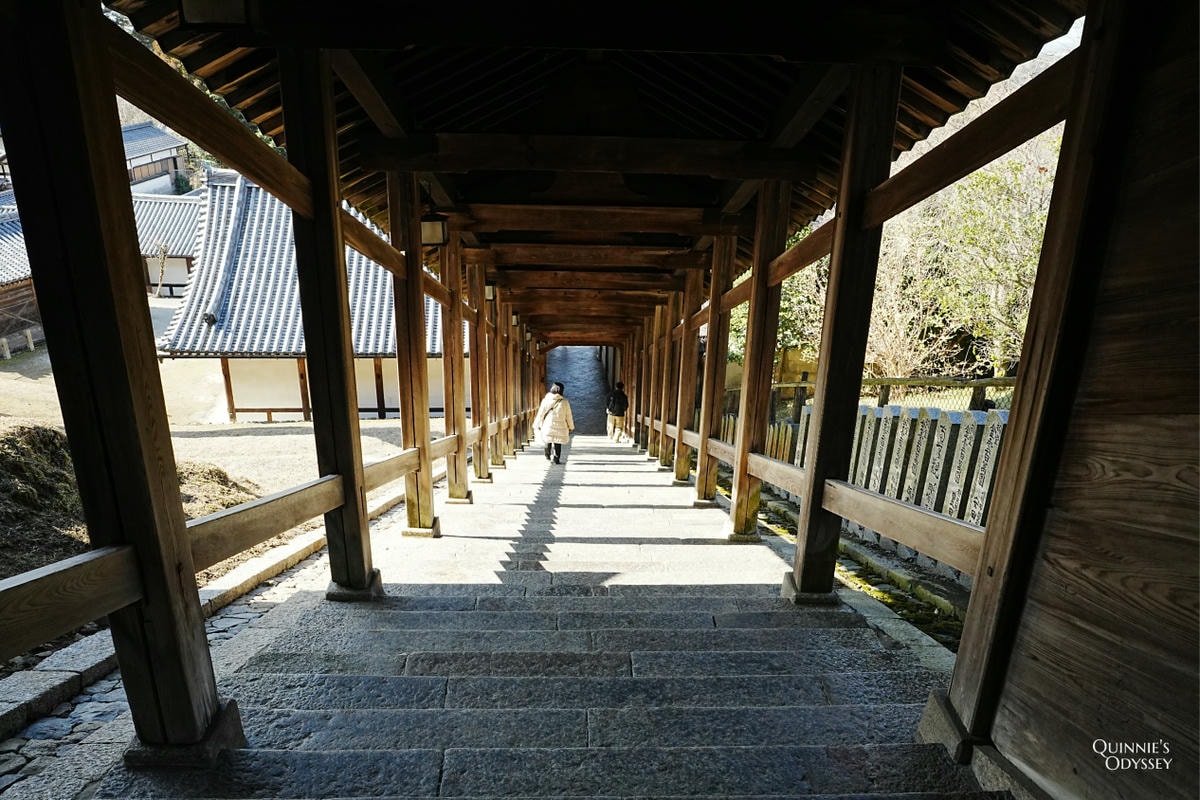
Nigatsu-dō is one of my favorite spots in Nara.
It sits on a small hill east of the Great Buddha Hall and offers a beautiful panoramic view of Nara City.
I visited in the morning, but I’ve heard the sunset here is amazing too.
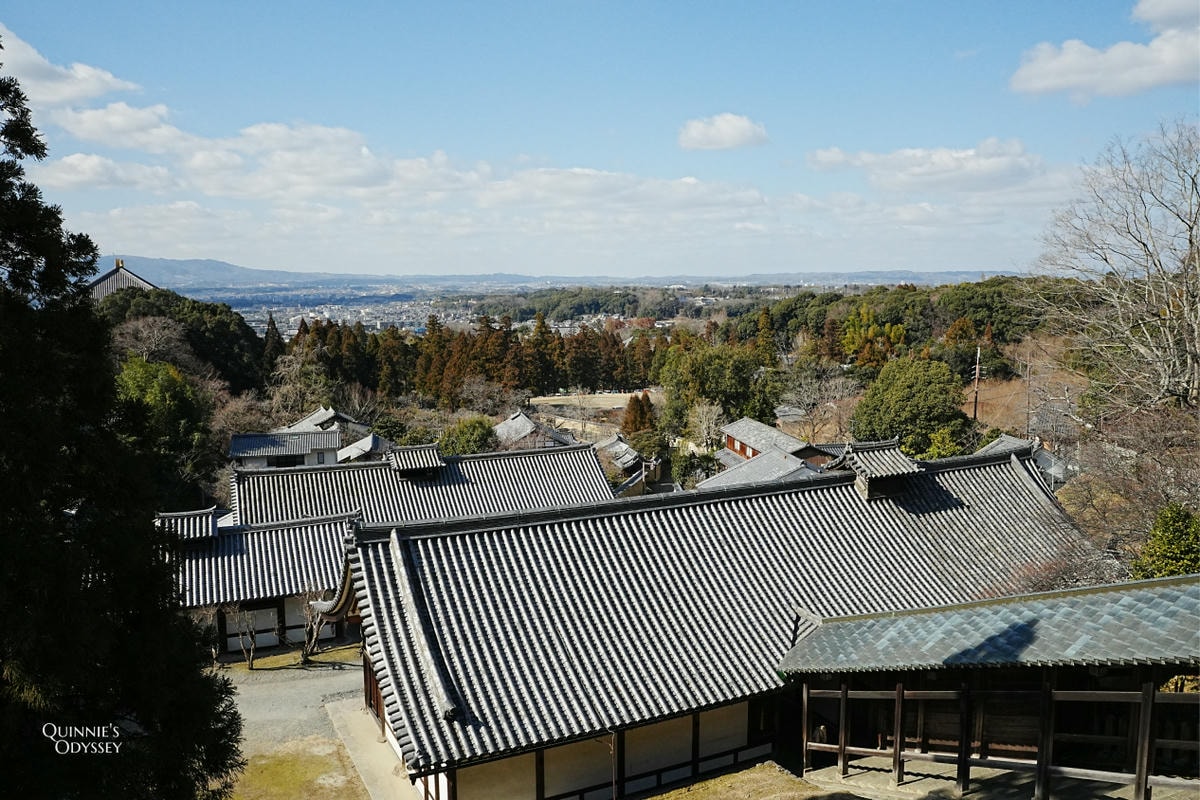
The structure of Nigatsu-dō is actually similar to the stage terraces at Kiyomizu-dera in Kyoto.
Both use a construction technique called “kakezukuri,” which allows buildings to be built on slopes or cliffs, providing dramatic views and strong structural support.
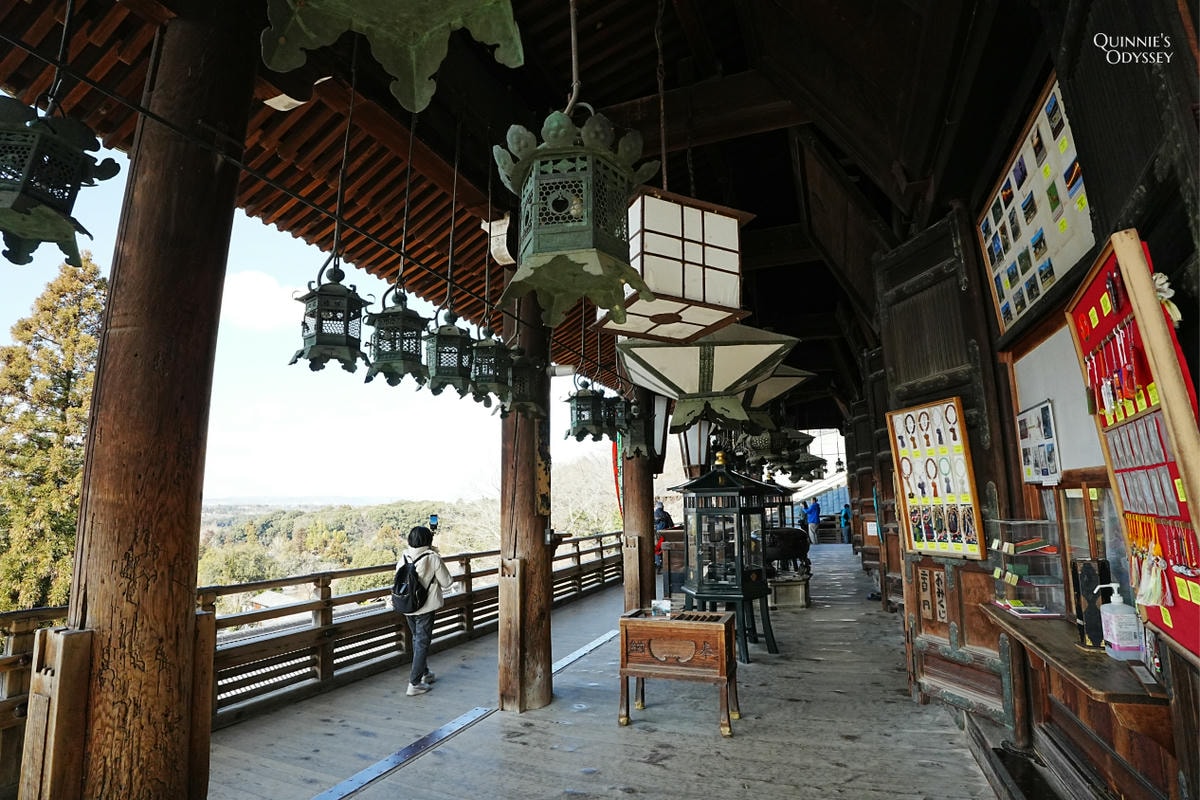
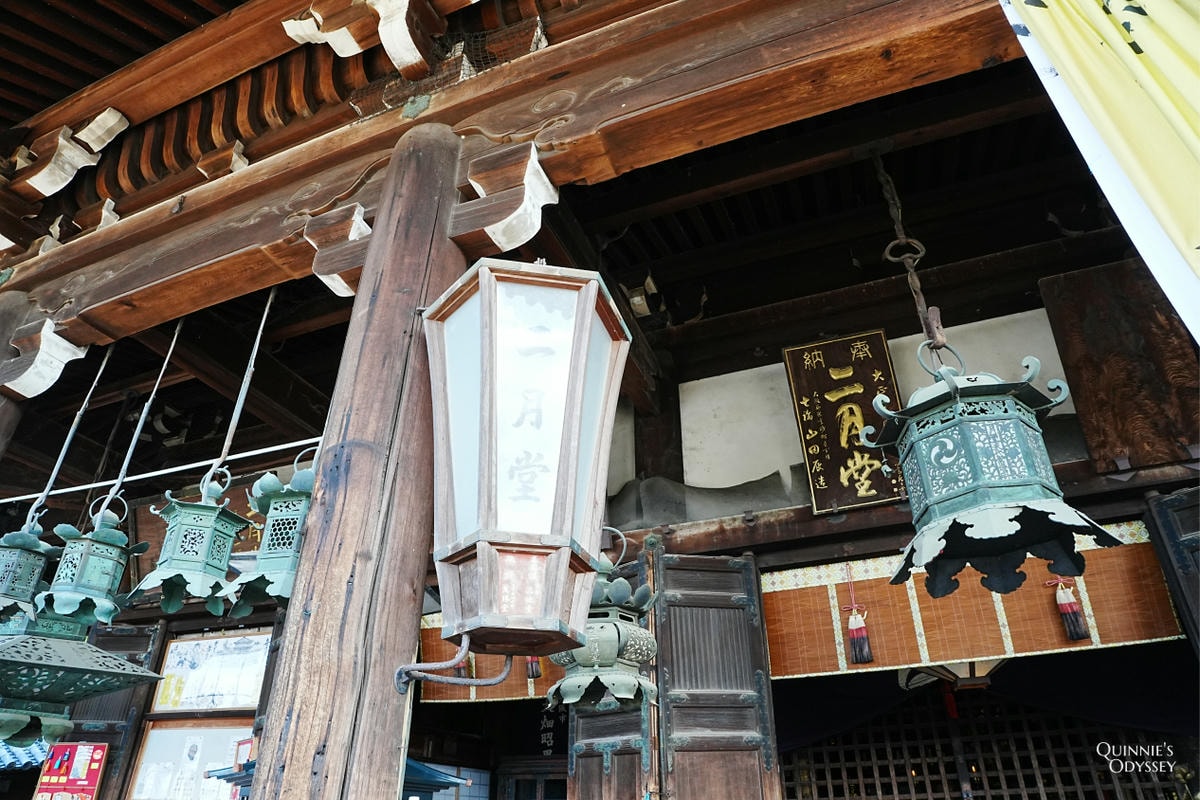
The original Nigatsu-dō was built in the 8th century, but the current building dates back to 1669 after the previous one was destroyed by fire.
Every year in the second lunar month, Nigatsu-dō hosts the famous Shuni-e ritual, which is where the building gets its name. The ceremony has been held annually since 752, over 1,270 years.
Its official name is Omizutori, and it’s a Buddhist ritual in which monks pray to the Eleven-Faced Kannon for peace and a good harvest, while also repenting for human sins.
The monks pray day and night throughout the event, showing the Buddhist spirit of reflection and repentance.
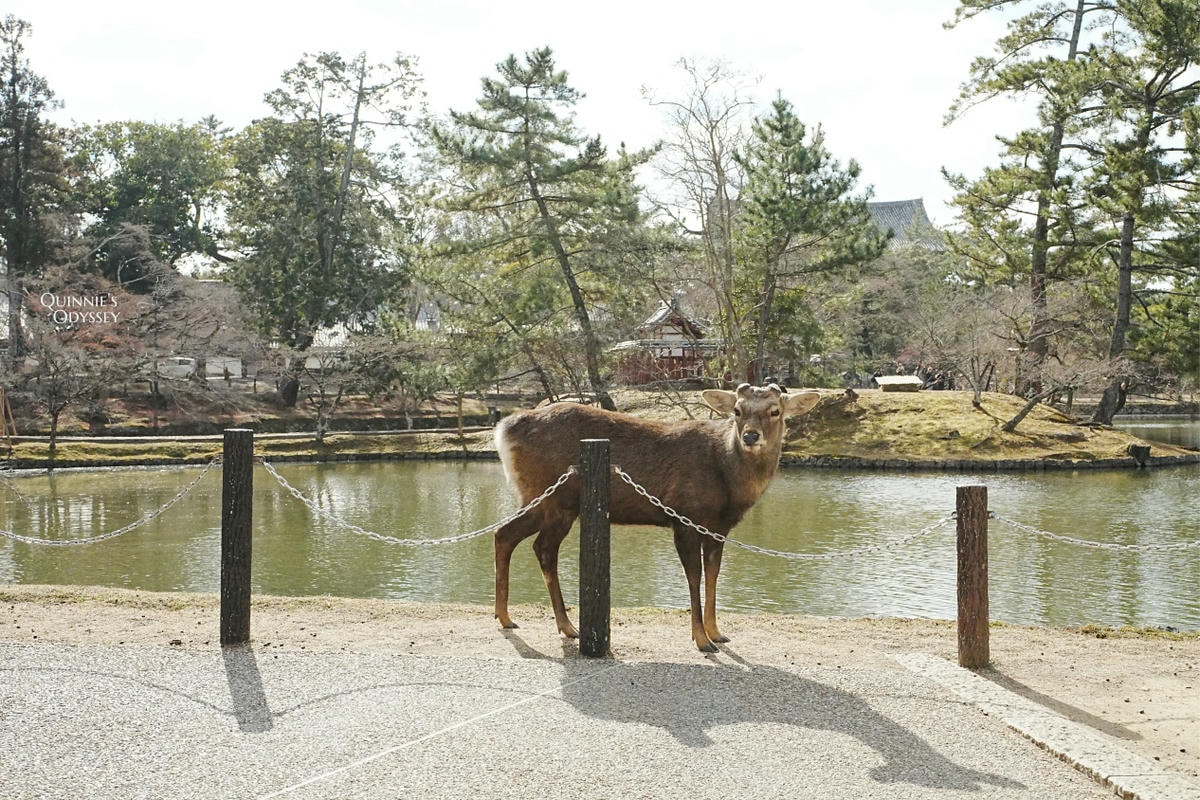
Throughout Tōdai-ji and Nara Park, you’ll see deer everywhere, sometimes in groups, sometimes wandering alone, and often surrounding tourists hoping for deer crackers.
Interacting with these deer is an essential part of the Nara experience.
Deer by Kagami Pond 👇
Deer among stone lanterns on the way to Kasuga Taisha 👇
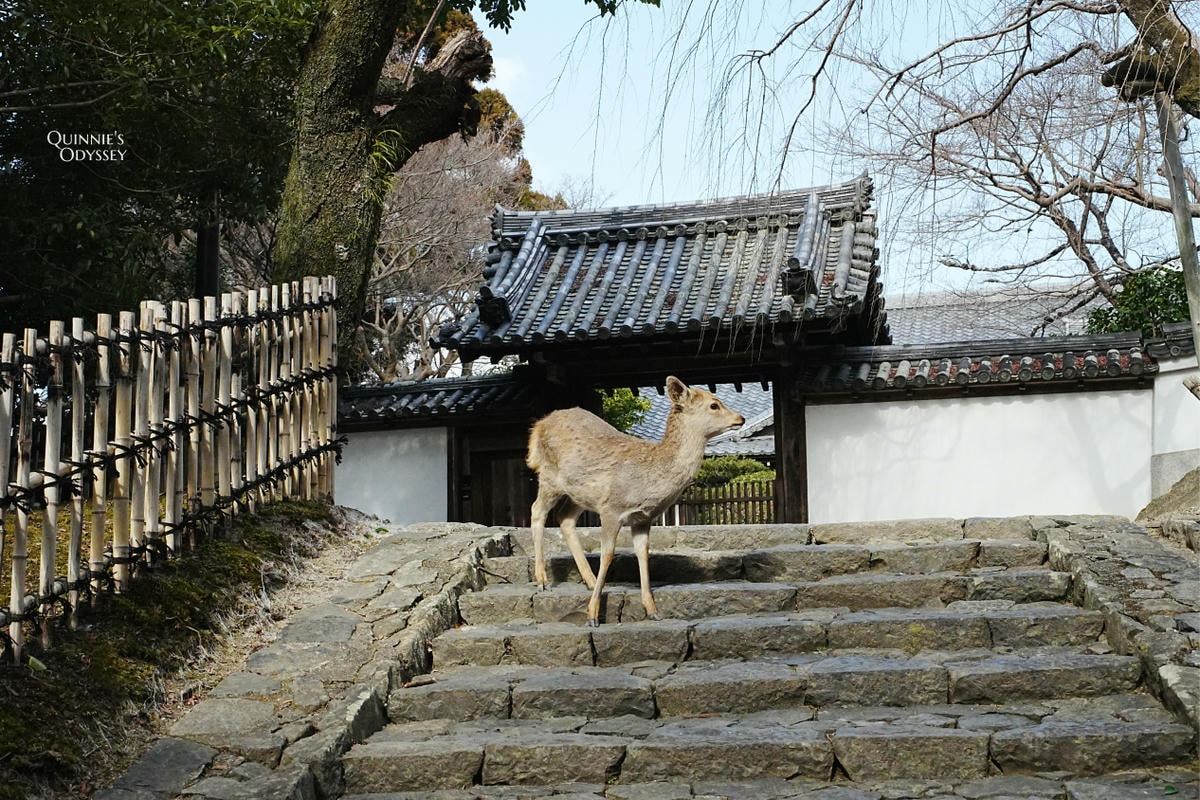
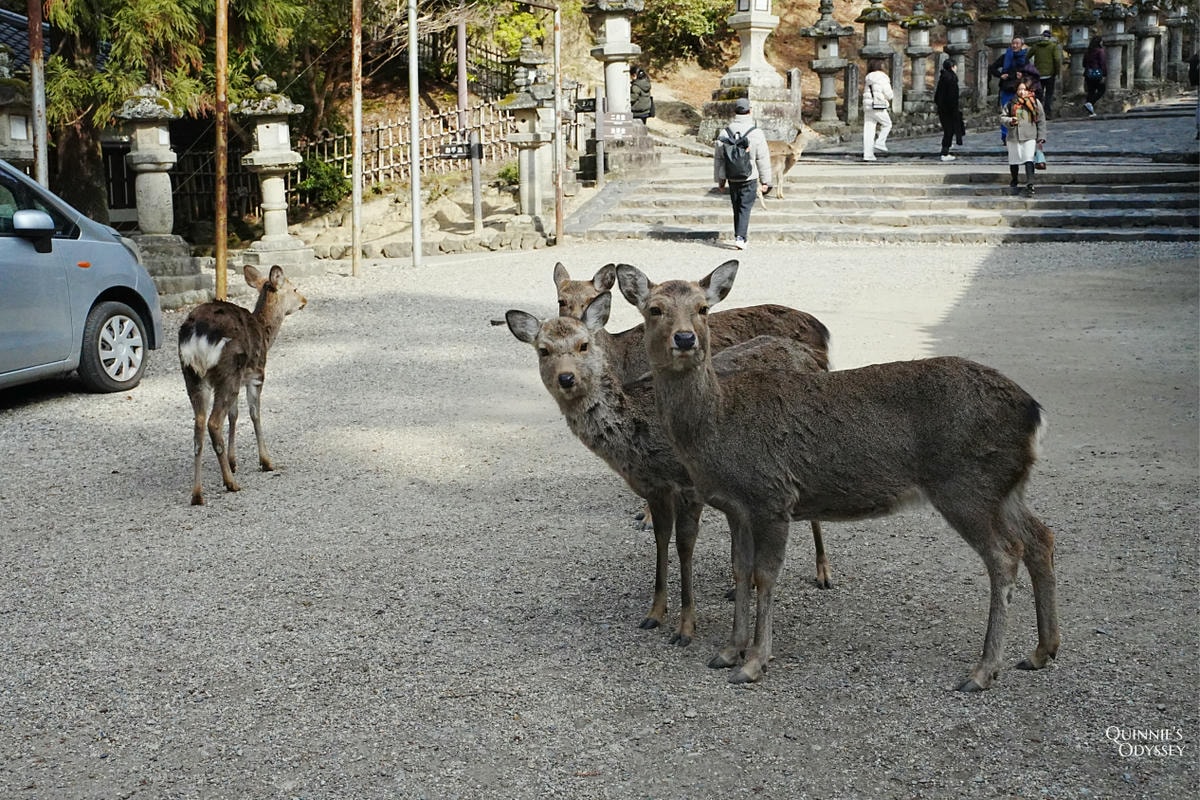
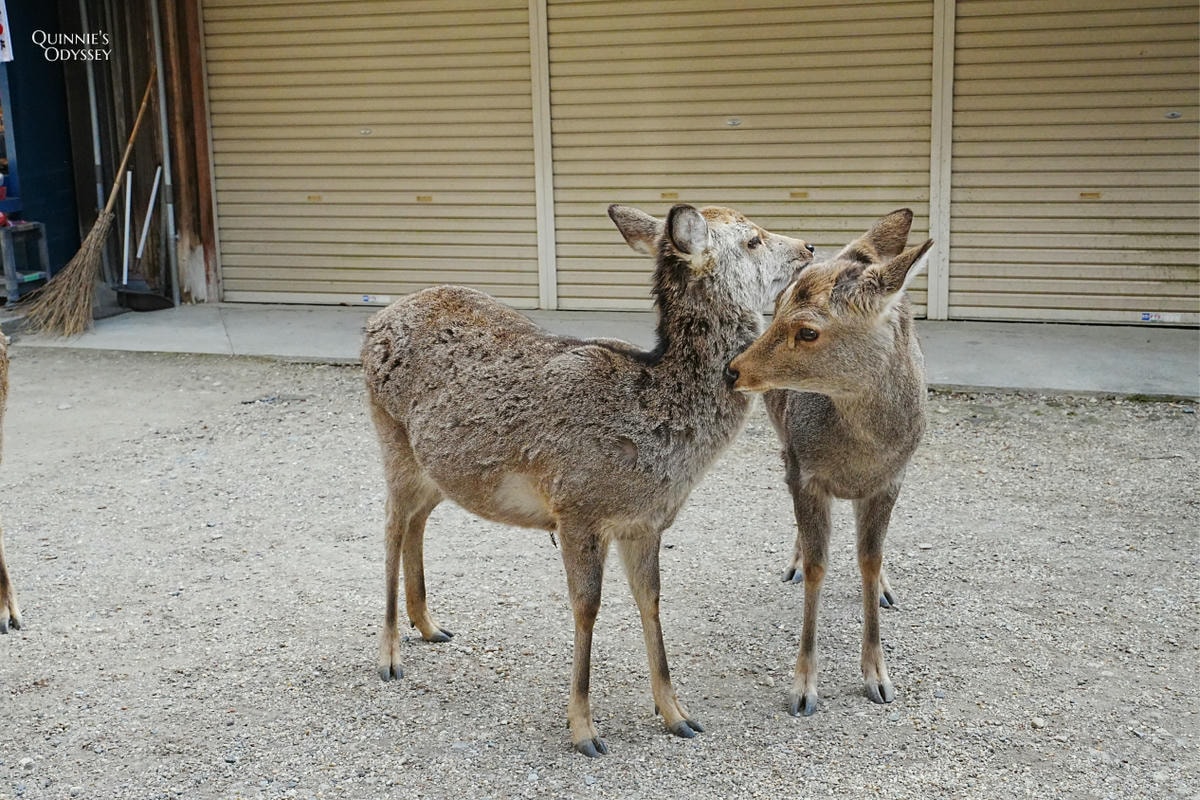
Even deer cuddling with each other, it’s too cute!
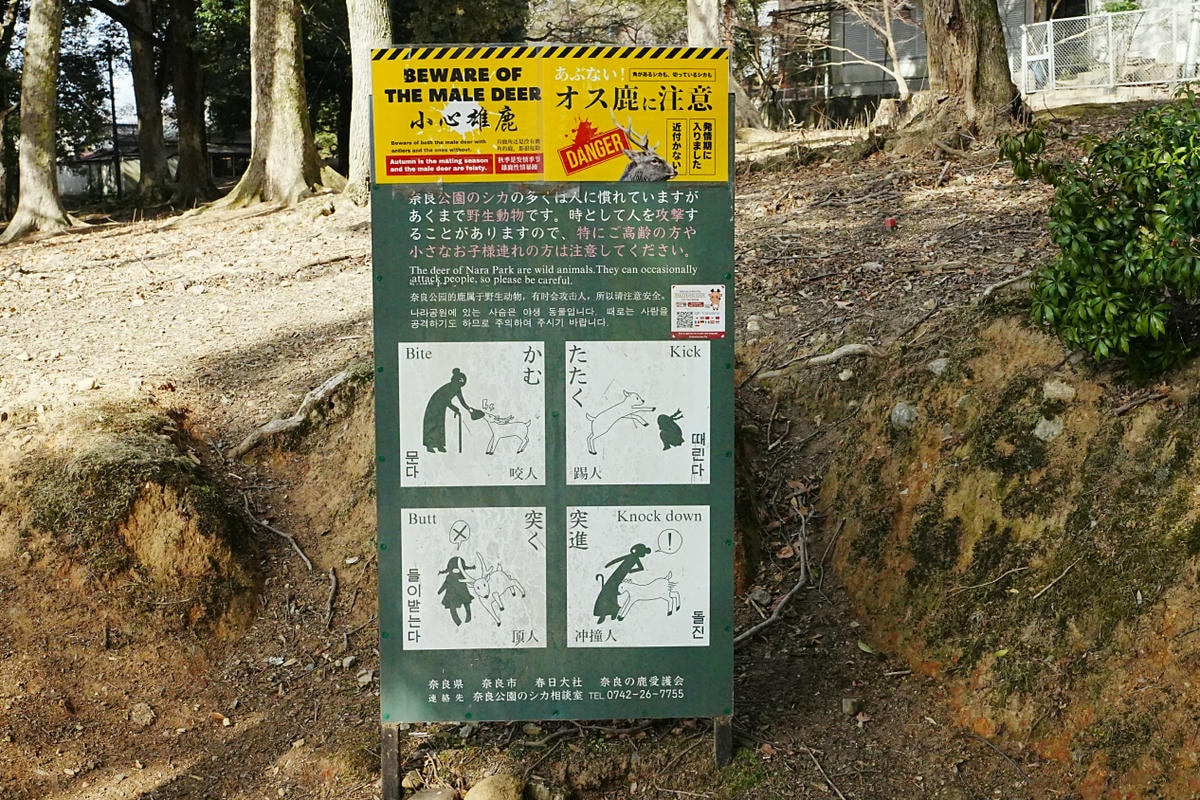
But do keep in mind that some deer can be aggressive, especially male deer during mating season or when they’re hungry.
Signs around the park warn that they may bite, kick, head-butt, or suddenly charge at visitors.
Nara was one of Japan’s earliest capitals, and it still preserves a rich and elegant historical atmosphere.
Standing inside the massive Great Buddha Hall, looking up at the world’s largest bronze Buddha; climbing to Nigatsu-dō for a quiet view over the ancient city; and meeting the deer that freely roam the area, all of these make Nara a place that feels peaceful and timeless, even though it can get crowded.
Do note that several buildings inside Tōdai-ji, such as the Great Buddha Hall, Hokke-dō, Kaidan-dō, and the Tōdai-ji Museum, require separate admission tickets.
For details, check their official website.
▼ Kyoto Travel Essentials ▼

Thanks for reading!
If you’re interested in my stories, feel free to follow me on Instagram.
👉👉 IG: @sika_artist 👈👈