Physical Address
304 North Cardinal St.
Dorchester Center, MA 02124
Physical Address
304 North Cardinal St.
Dorchester Center, MA 02124

Seimei Shrine is located in Kyoto’s Nishijin district.
It’s tucked inside a quiet residential area and isn’t very large, but the whole place feels mysterious and full of spiritual energy.
This shrine sits on the former home of Abe no Seimei, known as the most powerful Onmyoji (master of yin-yang divination) in Japanese history.
Seimei lived during the Heian period.
He was skilled in astronomy, divination, exorcism, and was believed to have the ability to predict the future and summon shikigami (spirit familiars).
He served six emperors, and even after a thousand years, his legends still influence Japanese culture today.
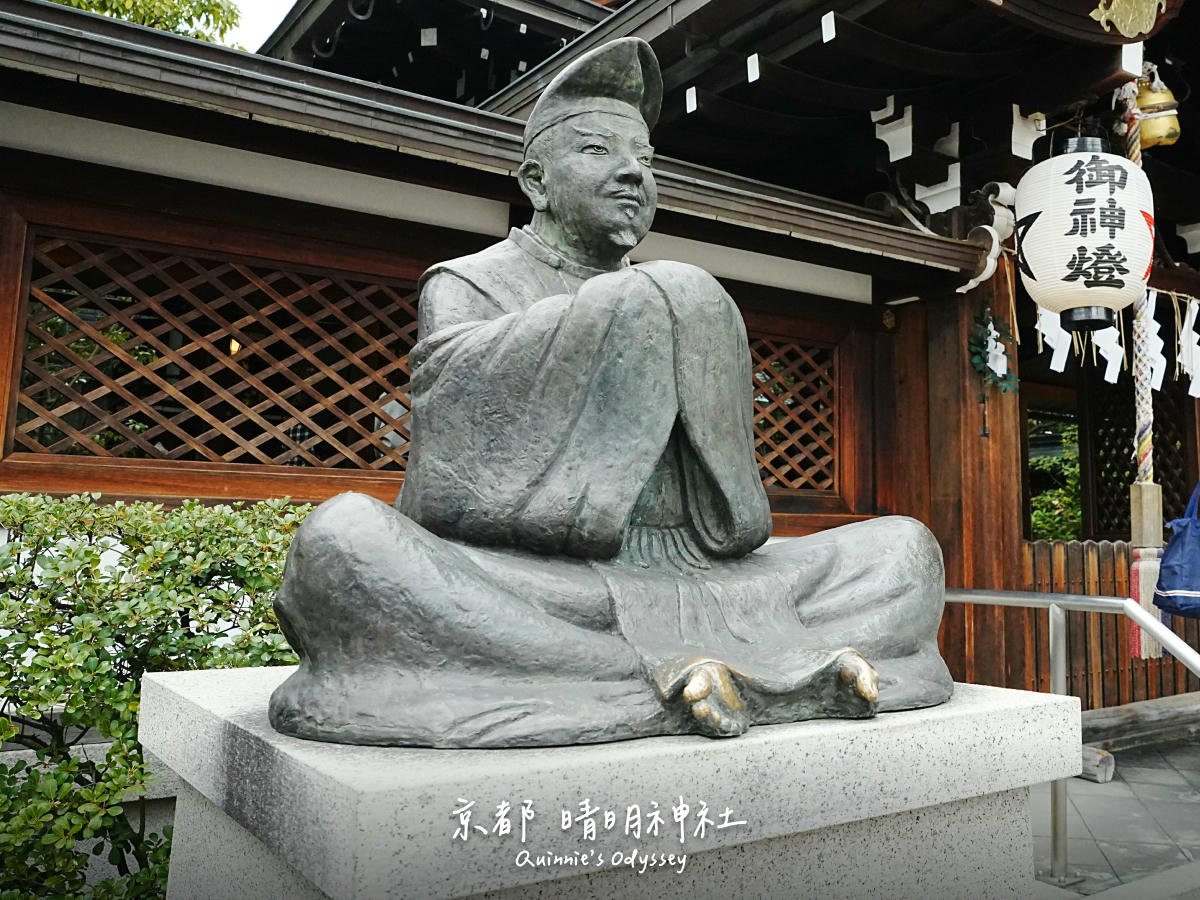
Seimei was born in Abeno, Osaka, where another Seimei Shrine stands to honor him.
His Kyoto residence, however, was located on the edge of ancient Heian-kyo, a place said to be close to the boundary between the human world and the spirit realm.
Onmyoji were believed to guard this boundary and keep the balance between the two.
The shrine remained fairly unknown for a long time, but after the success of the Onmyoji novels, films, and anime, it became a popular destination for fans of Japanese history, spirituality, and mysticism.
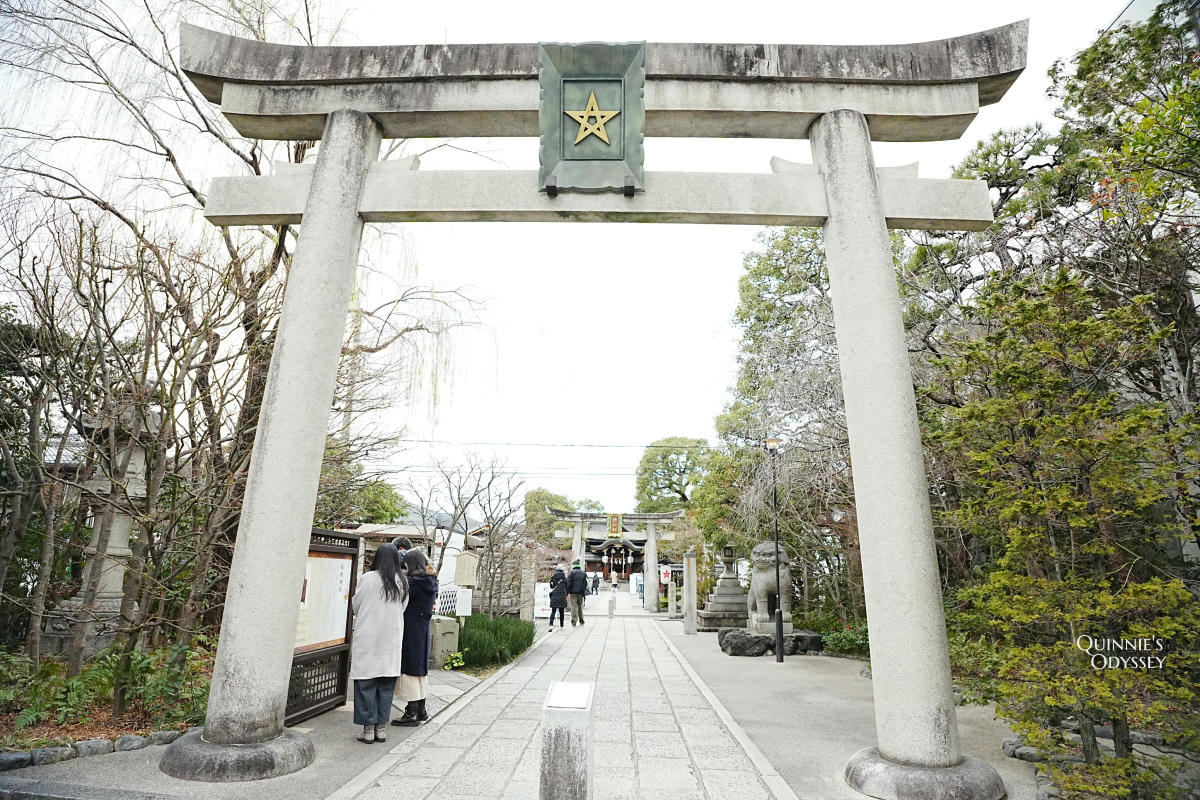
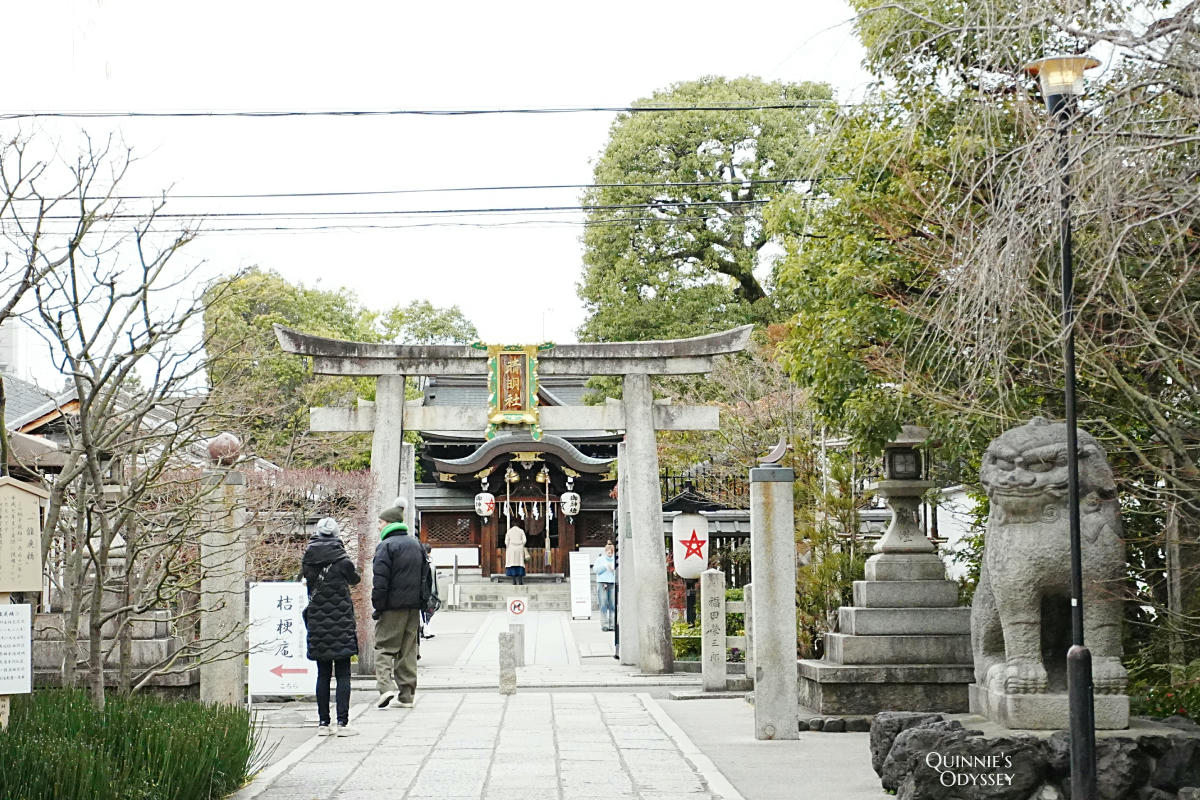
The first torii gate you see when entering Seimei Shrine is quite striking.
What stands out is the crest displayed at the center, not the name of the shrine, but the Seimei Kikyō crest, a five-pointed star.
This pentagram symbol was created by Abe no Seimei himself and is used in Onmyodo rituals for protection and purification.
Very few shrines in Japan place their crest on the torii like this, which shows how unique Seimei Shrine is.
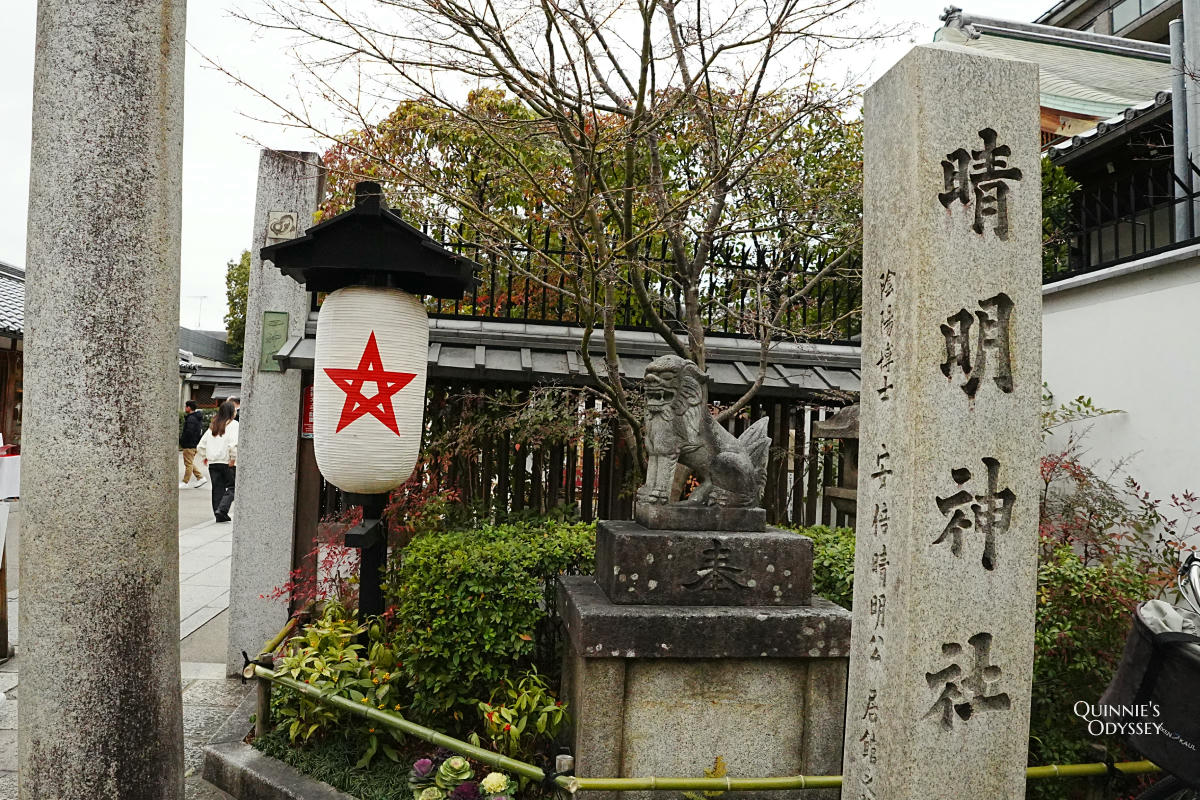
Before the second torii, you’ll find two stone pillars called the Sun and Moon Pillars.
They used to be part of the shrine’s main gate but were later moved to the pathway.
One pillar faces south and is inscribed with the character for “sun,” while the other faces north and carries the character for “moon.”
Together, they symbolize the balance of yin and yang.
The pillars also have an inscription commemorating the 900th anniversary of Seimei’s death in 1904.
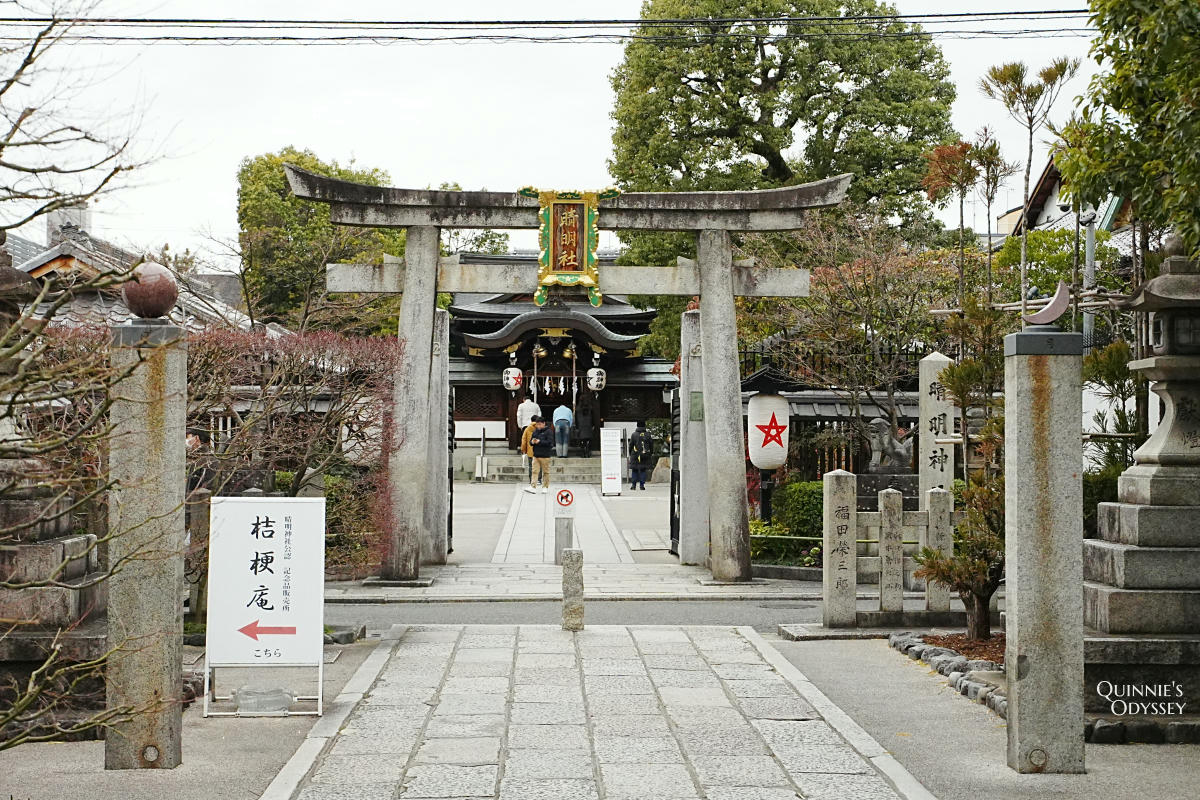
Inside the shrine is a small replica of Ichijo Modoribashi, the famous bridge often mentioned in ghost stories and legends. Next to it stands a statue of a shikigami.
This bridge is believed to connect the world of the living with the spirit world.
According to legend, Seimei’s wife was afraid of shikigami, so Seimei sealed them under the bridge.
People said that if you whispered messages toward the bridge, the shikigami would deliver them to Seimei.
The real Ichijo Modoribashi, located about 100 meters south of the shrine, was considered a boundary between life and death.
People going to war or getting married would avoid crossing it, fearing it might bring bad luck.
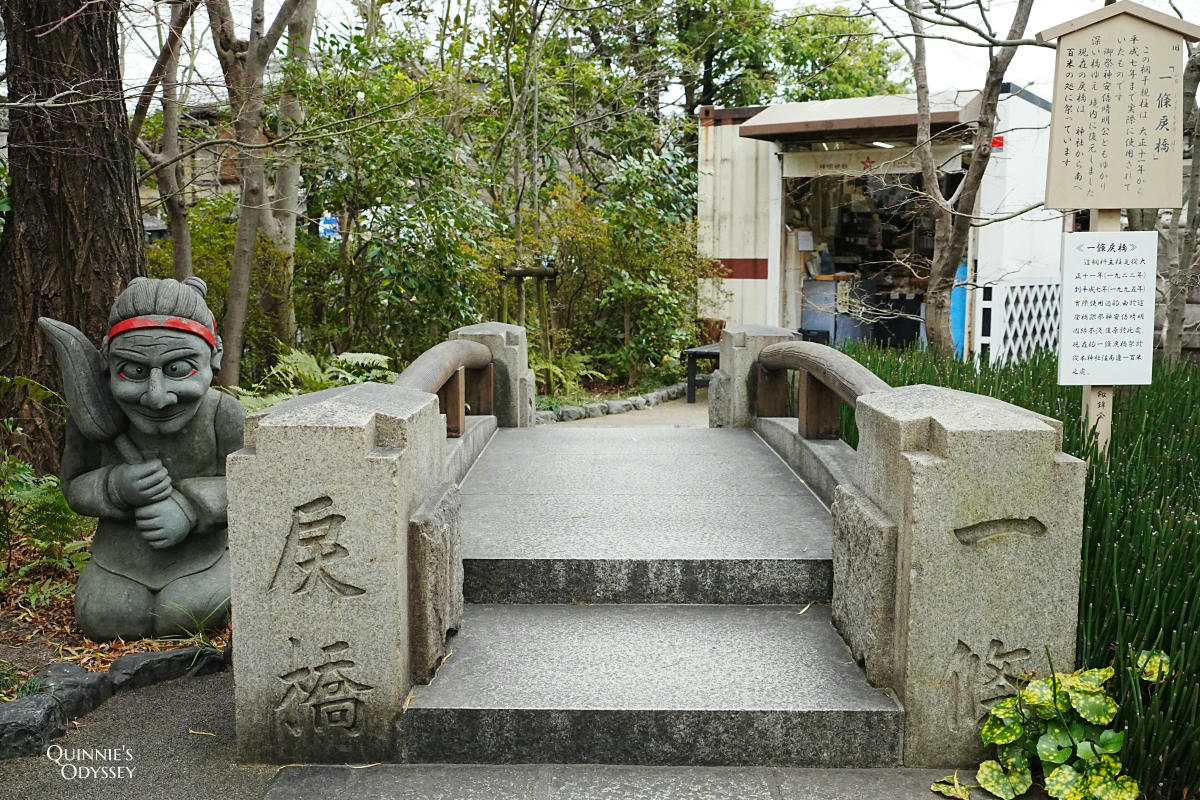
Passing the second torii marks the entrance to the shrine’s main precinct.
The plaque reads “Seimei-sha” and again features the pentagram symbol representing the balance of the five elements.
A large guardian dog statue stands next to the gate.
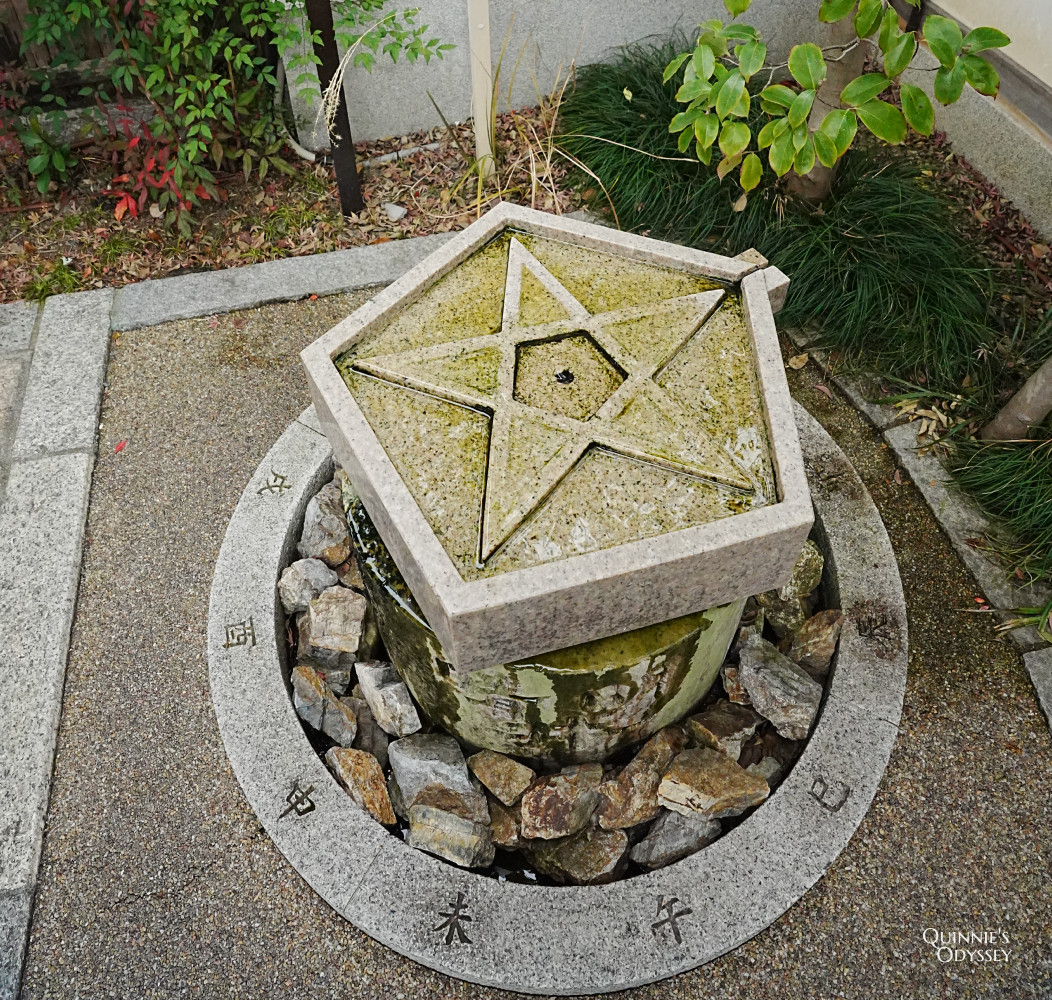
The Seimei Well is marked with Seimei’s pentagram crest.
Legend says Abe no Seimei made fresh water spring from this spot through spiritual power.
It’s said that Sen no Rikyu, the tea master, once used the water from this well to prepare tea. Today, the water is still drinkable and believed to bring good health and protection.
At the bottom of the well is a zodiac marker that shows lucky directions.
Every year on the first day of spring, the shrine rotates the direction of the well’s spout to pray for good fortune in the coming year.
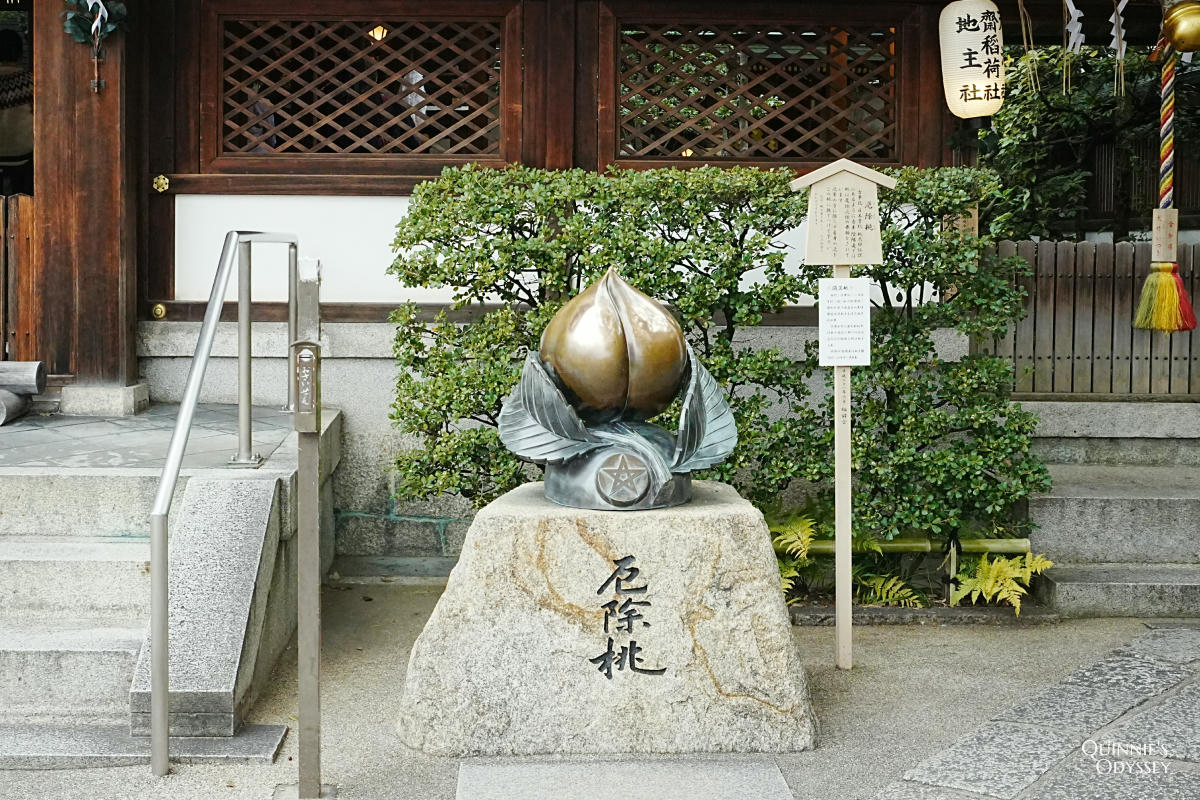
In Onmyodo, peaches are symbols of protection and exorcism.
Ancient Japanese texts mention peaches being used to drive away evil, and even the famous Momotaro legend originates from this belief.
At Seimei Shrine, you’ll find a large Peach of Protection statue.
Visitors touch it to transfer bad luck and illness away from themselves, wishing for safety and peace.
The main shrine hall was built in 1905.
Its doors are carved with star patterns, and the building is decorated with Seimei’s pentagram crest everywhere.
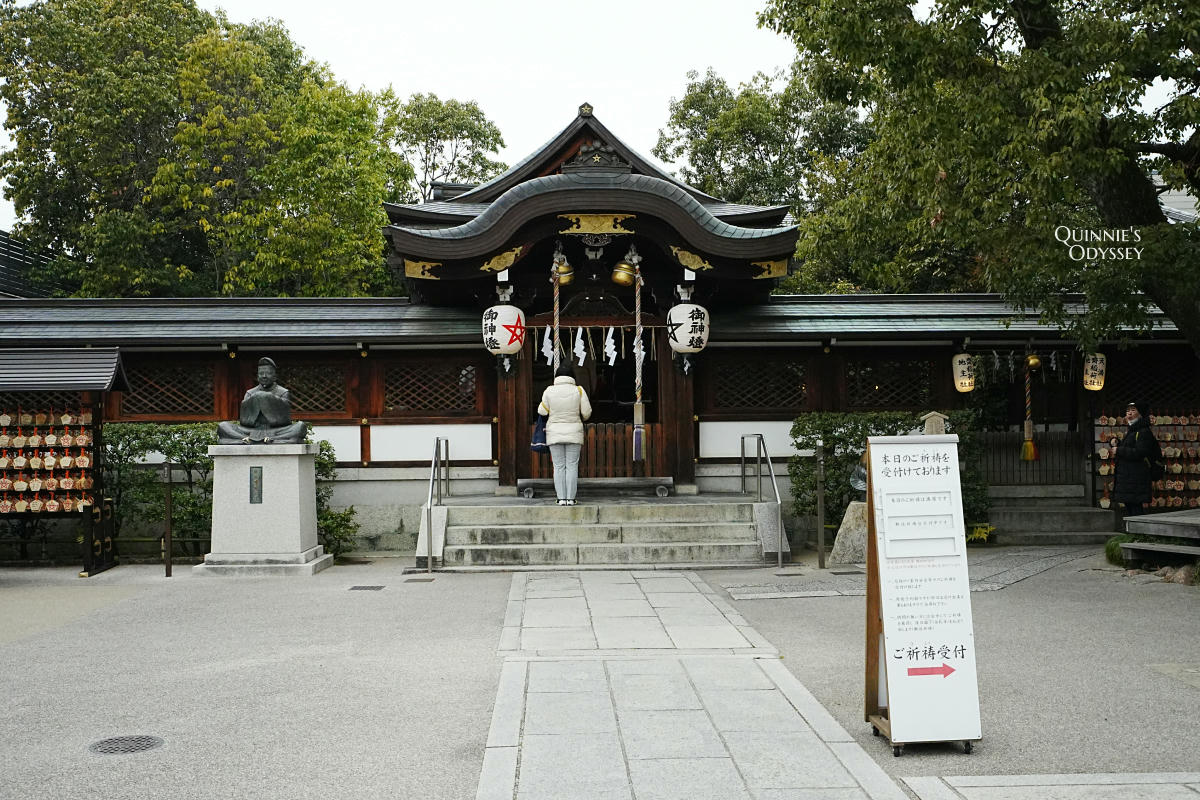
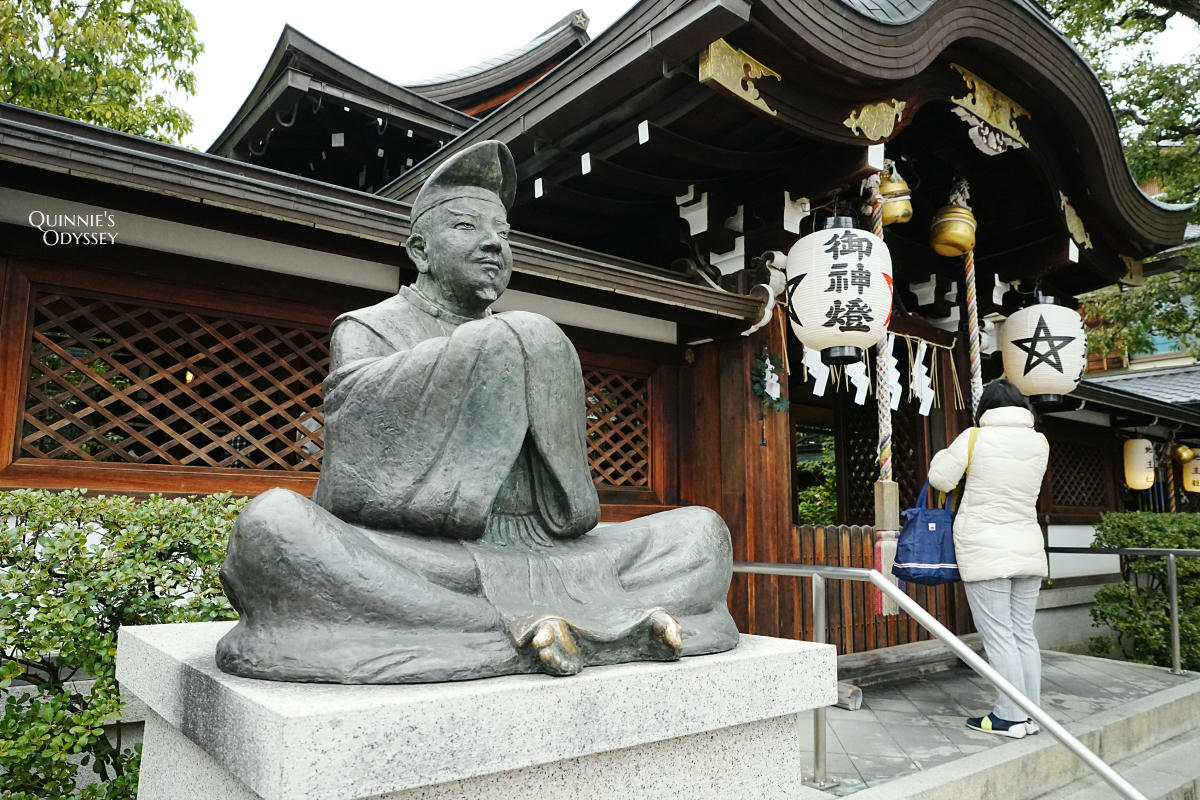
A statue of Abe no Seimei stands here, based on an old portrait.
He’s shown forming a mystical hand gesture while looking toward the sky, as if reading the movements of the stars.
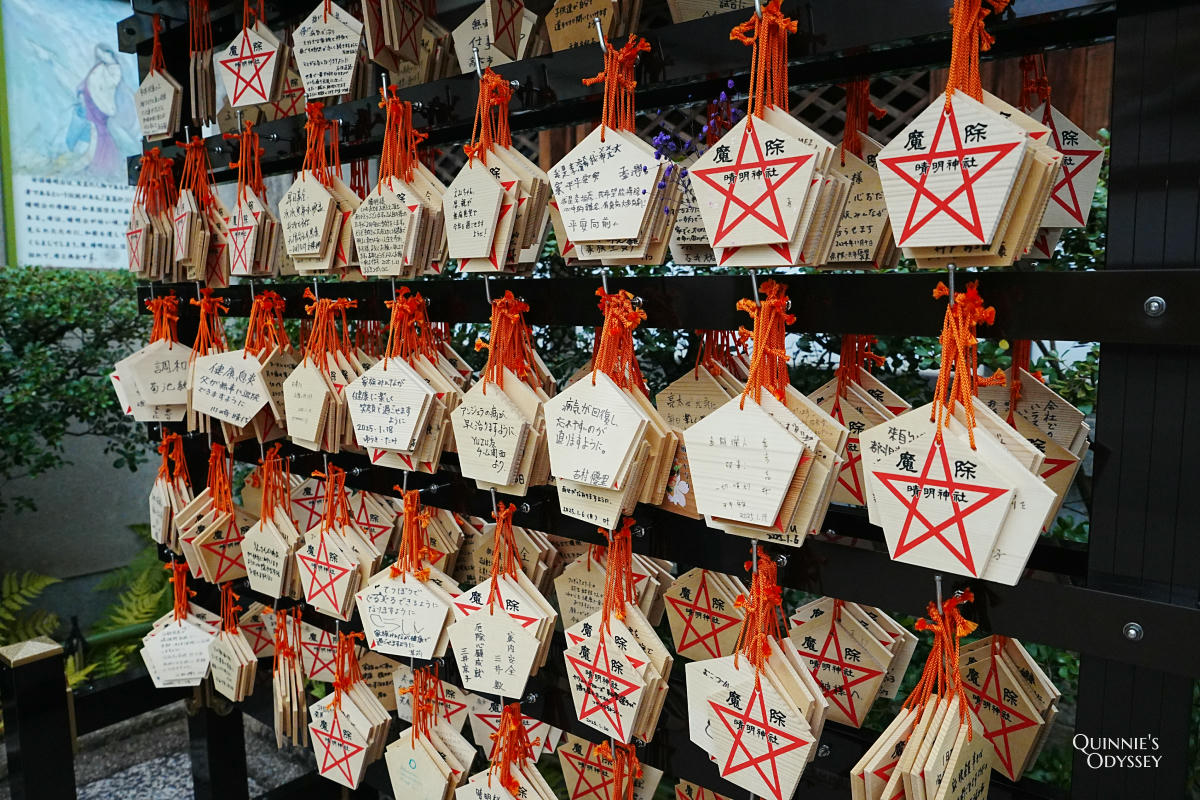
One of the most famous visitors here is figure skater Yuzuru Hanyu.
Before performing his Olympic free-skate program “SEIMEI” (inspired by the Onmyoji movie soundtrack), he came to the shrine to pray.
Fans later filled the ema boards with messages wishing him success, health, and victory.
Near the main hall is a wall of panels that share stories from Abe no Seimei’s life.
Here are summaries of the three stories shown in the photos:
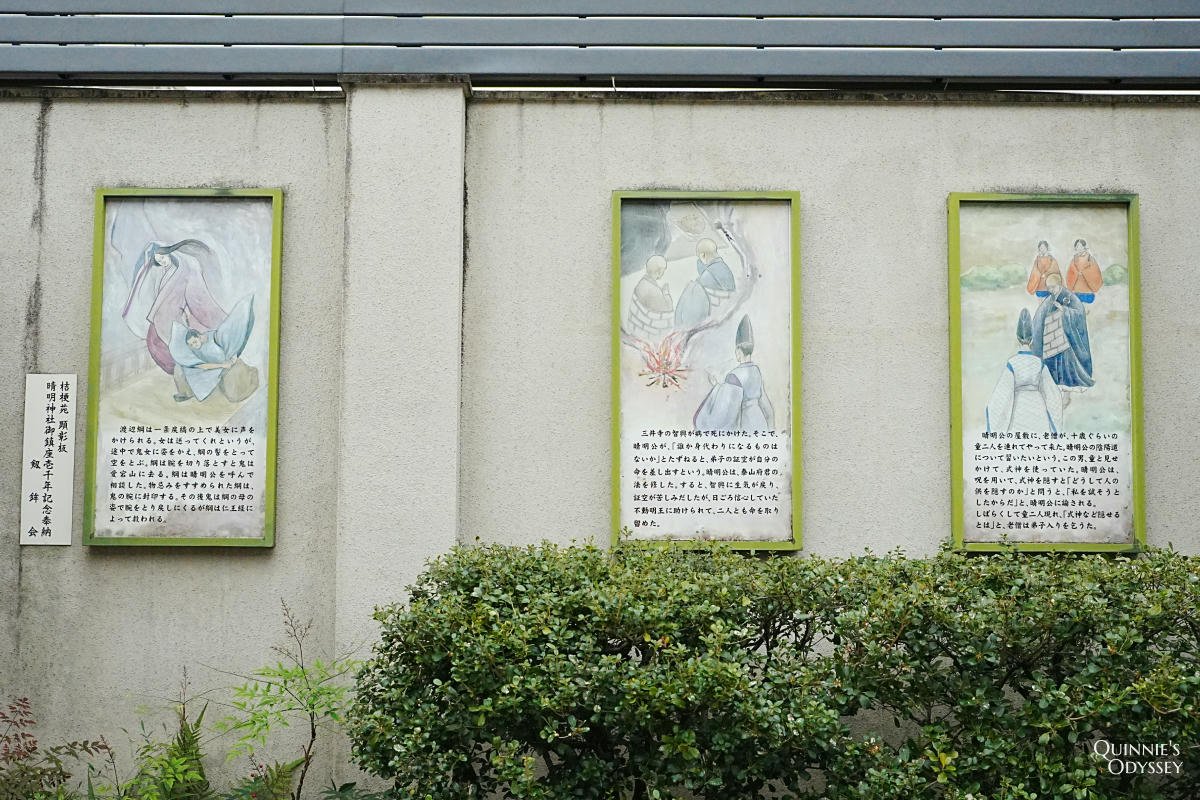
The Demon Arm at Ichijo Modoribashi
Warrior Watanabe no Tsuna was attacked by a demon disguised as a woman on the bridge. He cut off its arm and brought it to Seimei, who advised sealing it away.
Later, the demon disguised itself as Tsuna’s mother to retrieve the arm but failed thanks to protective chants.
Zenkū’s Sacrifice
A monk named Chikō was gravely ill.
Seimei asked if anyone would exchange their life for him.
A disciple named Zenkū volunteered.
After Seimei performed a ritual, Chikō recovered, and Zenkū was miraculously saved by a vision of Fudō Myōō.
The Child Who Tested Seimei
A young boy secretly used shikigami to test Seimei’s powers.
Seimei quickly exposed him and asked why he hid his shikigami.
The boy replied he wanted to see if Seimei was worthy of being his teacher, so Seimei accepted him as a disciple.
Before leaving, don’t miss the shrine shop.
They sell various charms, pentagram ema plaques, protective amulets, and special items themed around Abe no Seimei.
During the balloon flower (kikyo) season, you can even get a limited-edition charm.
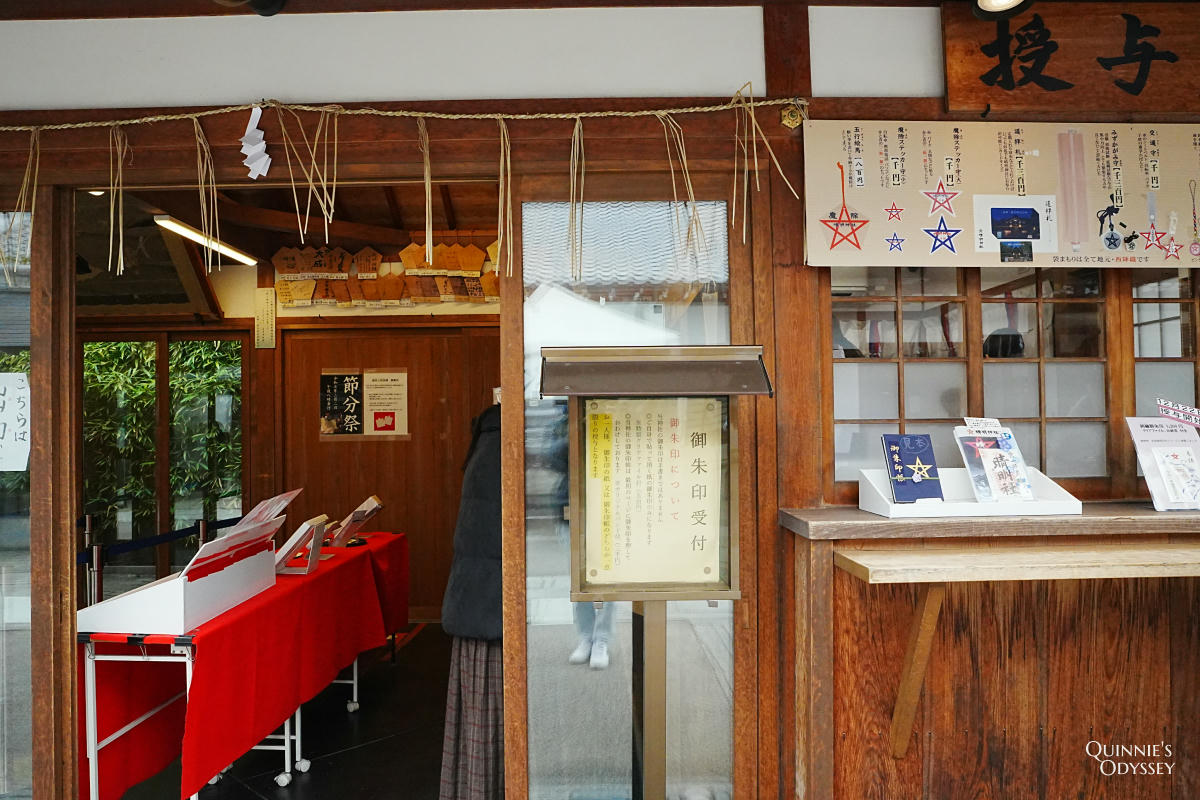
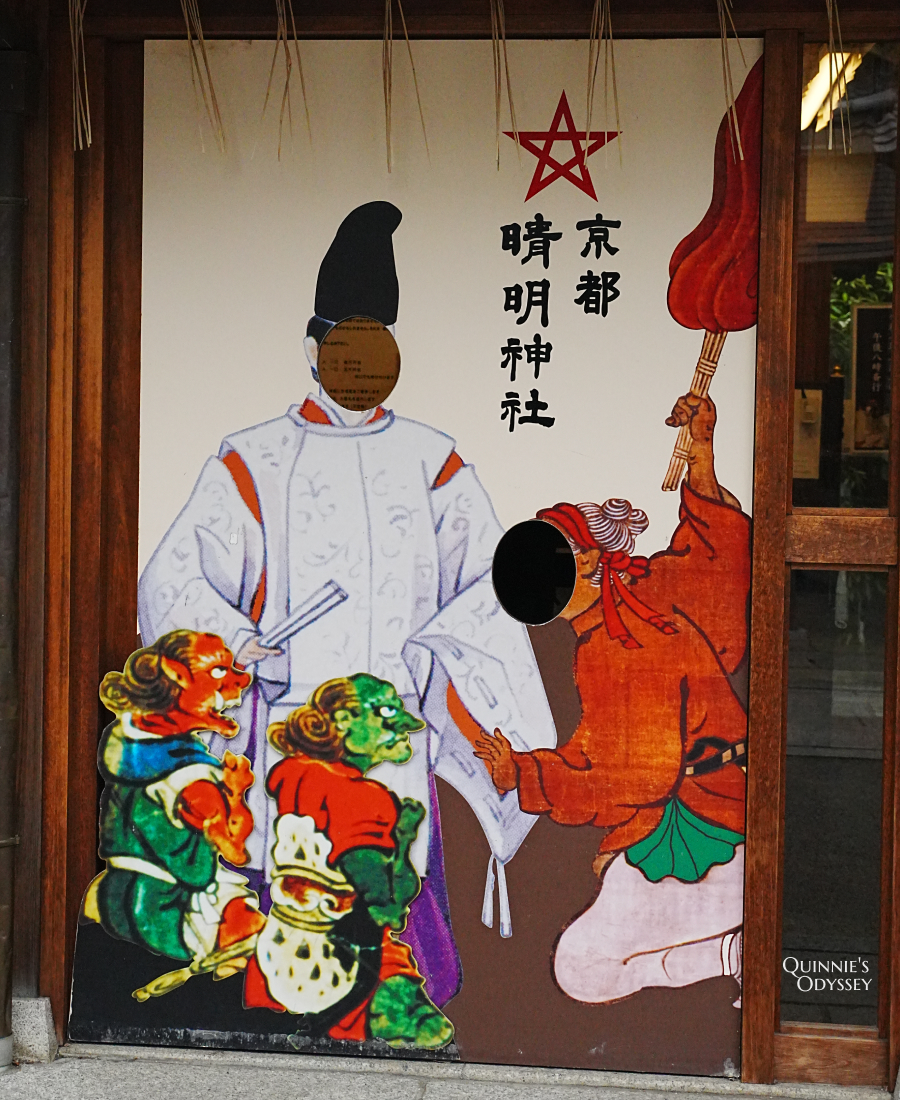
There’s also a stand where you can take photos with Seimei and his shikigami.
▼ Kyoto Travel Essentials ▼
Thanks for reading!
If you’re interested in my stories, feel free to follow me on Instagram.
👉👉 IG: @sika_artist 👈👈