Physical Address
304 North Cardinal St.
Dorchester Center, MA 02124
Physical Address
304 North Cardinal St.
Dorchester Center, MA 02124

If Koyasan is the spiritual heart of Japanese Buddhism, then Okunoin is the very soul of this sacred mountain.
This is where Kobo Daishi (Kukai), the founder of Shingon Buddhism, entered eternal meditation. It’s also the largest cemetery in Japan, where countless historical figures rest.
Okunoin has been on my bucket list for years, and this winter, I finally made my pilgrimage.
I even got lucky, a sudden snowfall turned the entire visit into something surreal and dreamlike.
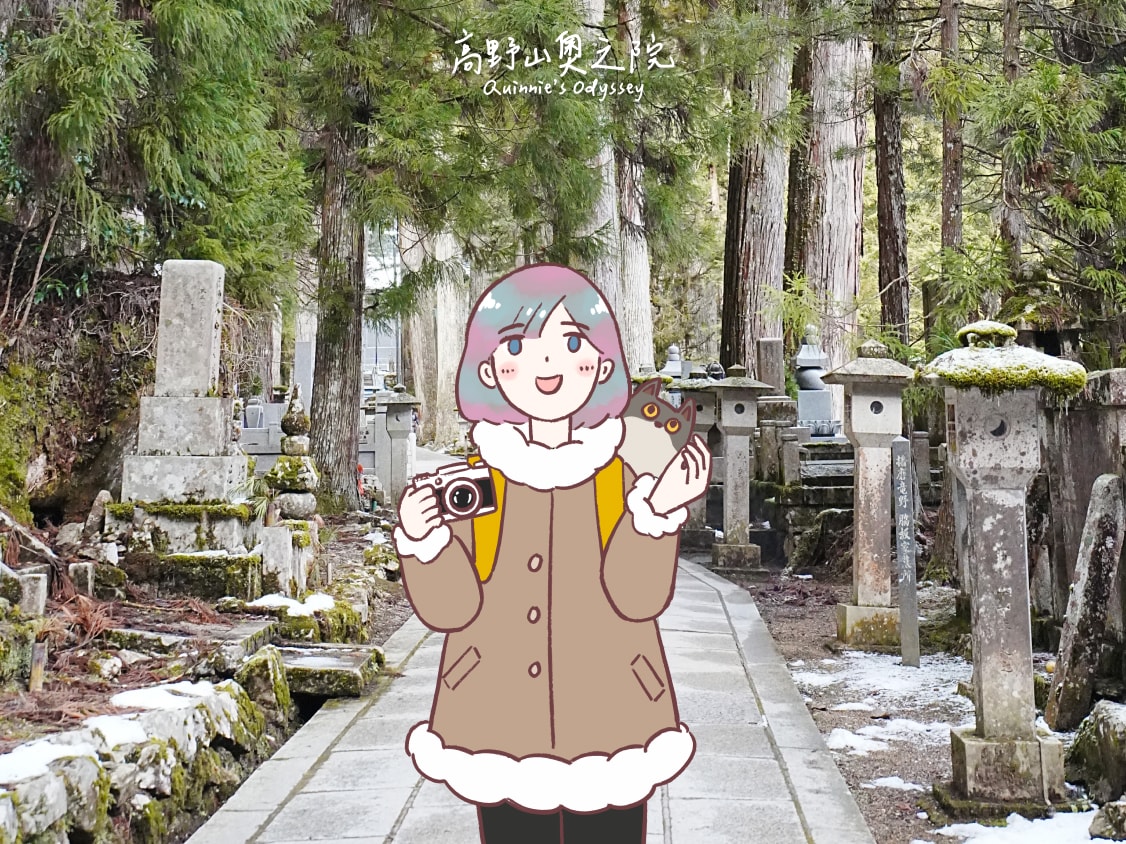
At the end of January, temperatures in Koyasan hover around 0°C, about 5–6 degrees colder than Kyoto or Osaka.
The air is freezing, but that crisp coldness makes the entire mountain feel even more pure and sacred.
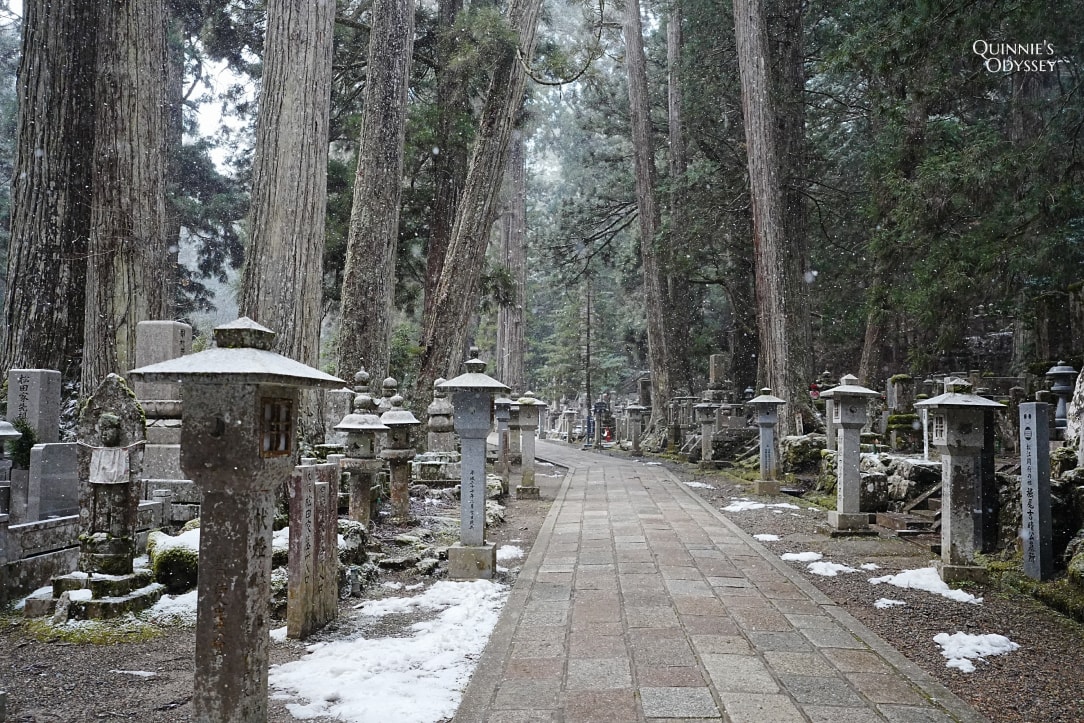
As you step into Okunoin, a long straight path appears before you, lined with ancient graves and mossy stone markers.
Even though it’s a cemetery, it never feels frightening.
Instead, there’s a deep sense of calm, dignity, and quiet.
Compared to cemeteries in Taiwan, Okunoin feels timeless, as if the entire world has paused.
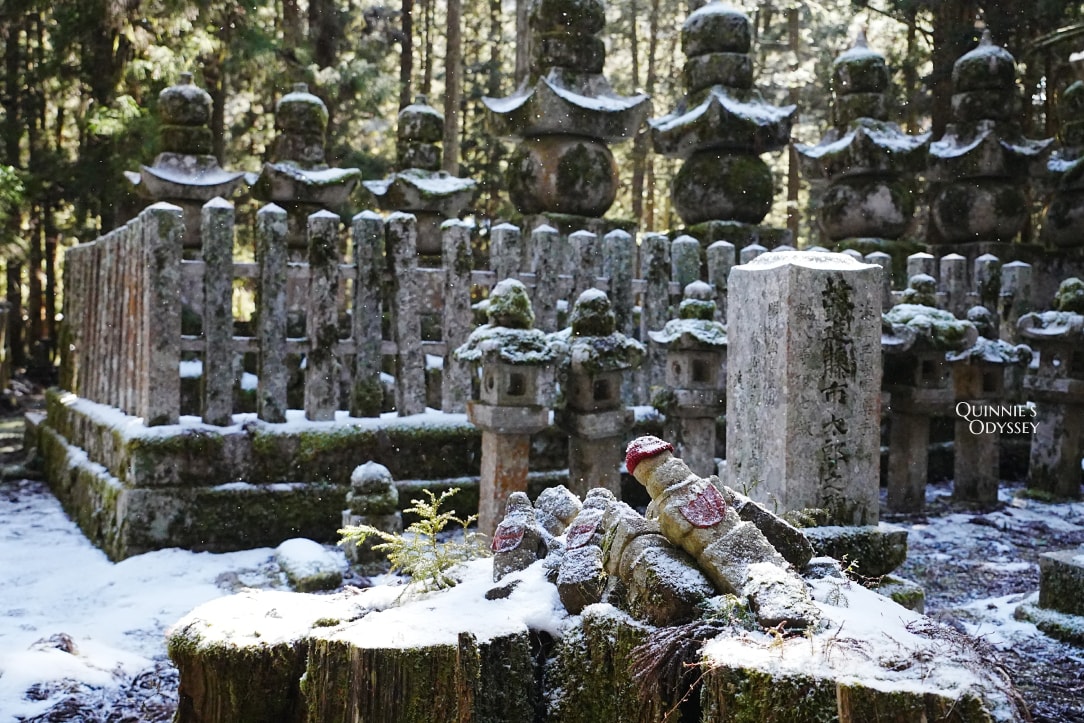
A thin layer of snow covered the ground, gravestones, and little statues, adding an extra touch of mystery and serenity.
Everything around me looked muted, painted in soft shades of gray and white, like a minimalist ink painting come to life.
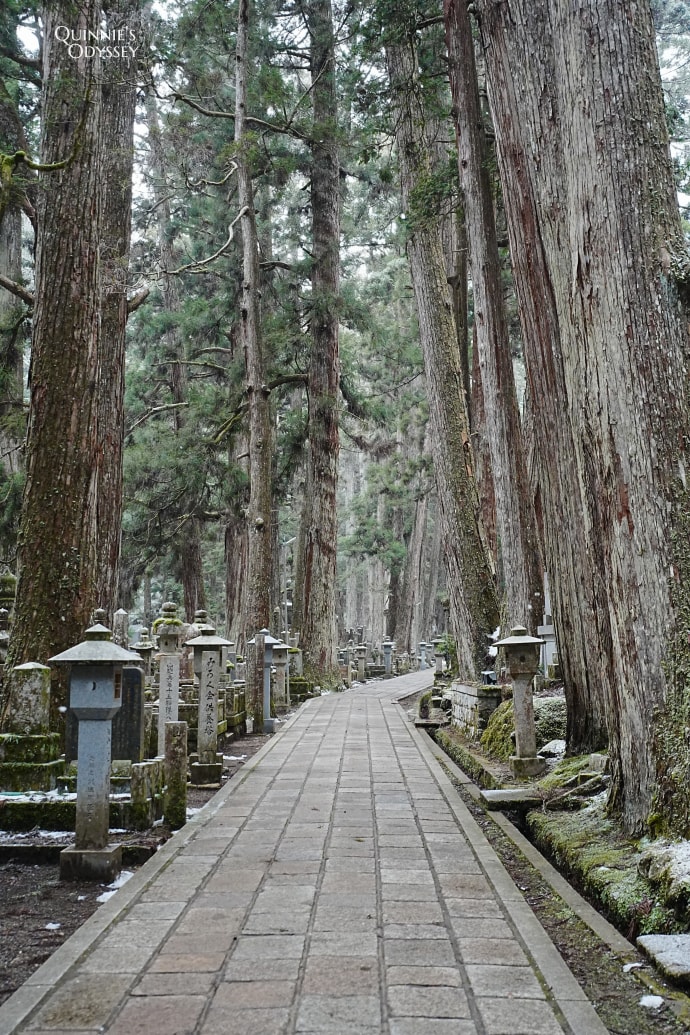
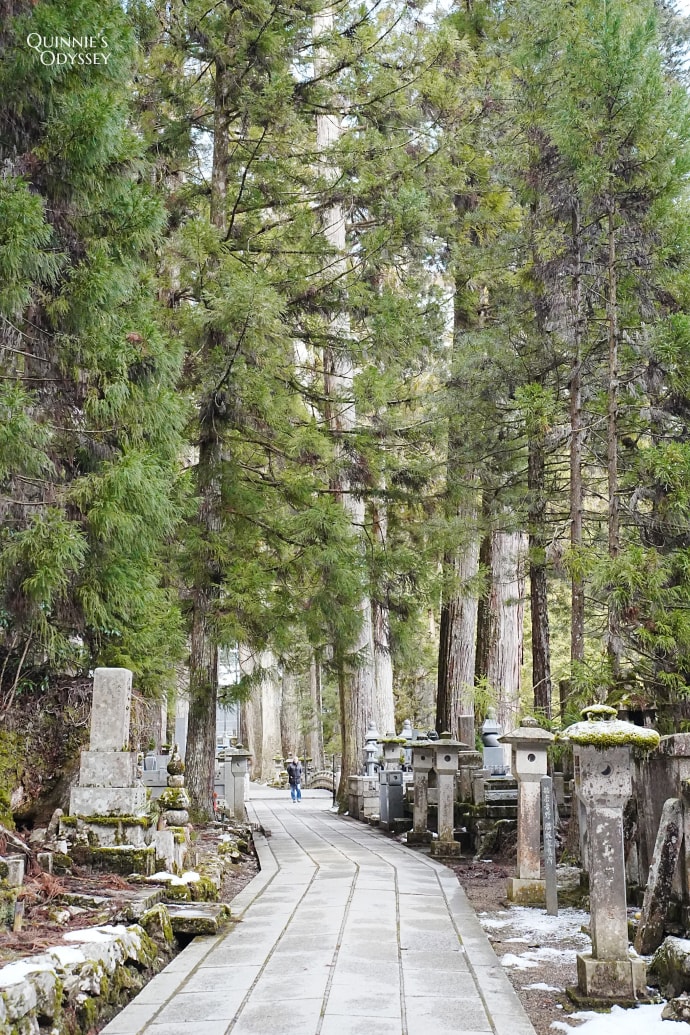
The path through Okunoin stretches for about 2 km, with over 200,000 gravestones and memorial stupa standing on both sides.
Many are for ordinary believers, but you’ll also find the graves or memorials of famous historical figures, even corporations and professional associations have built monuments here, praying for prosperity and protection.
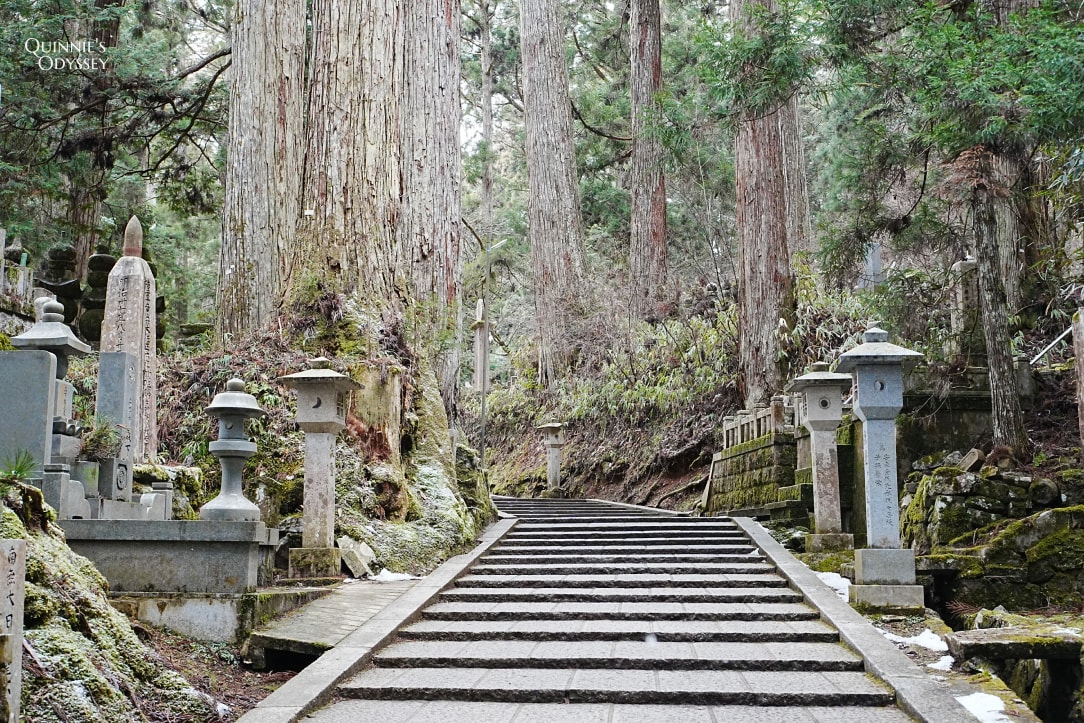
This has long been the preferred resting place for warriors, nobles, and historical icons.
During the Sengoku period, many famous figures: Oda Nobunaga, Toyotomi Hideyoshi’s family, Takeda Shingen, Uesugi Kenshin, had graves or memorials built here.
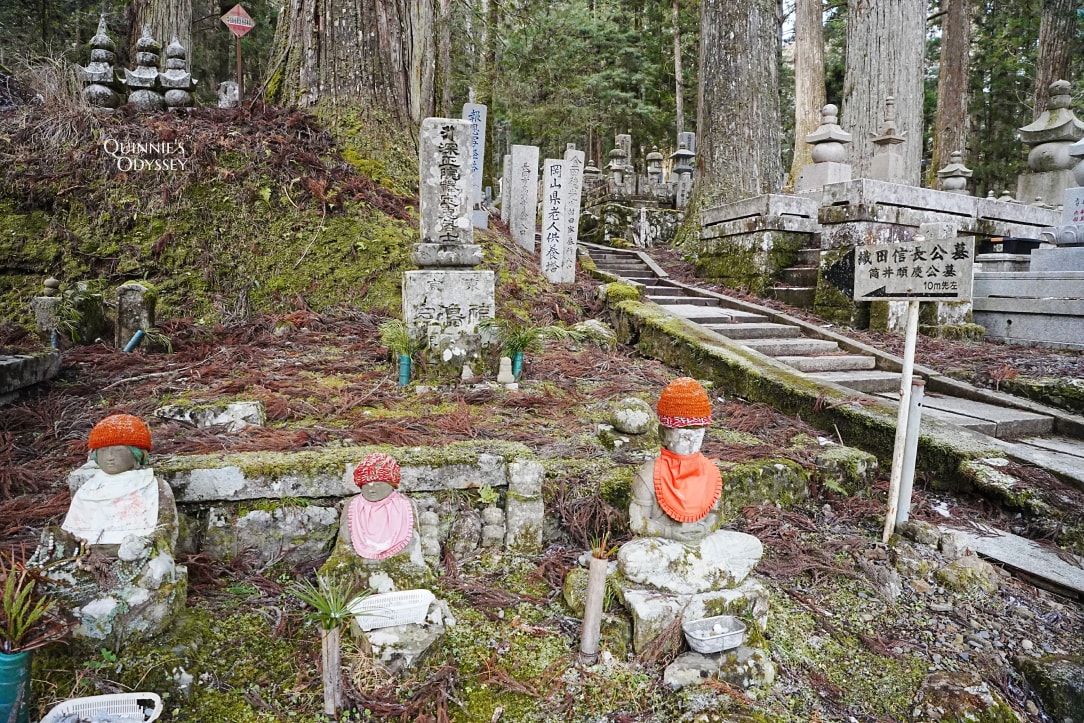
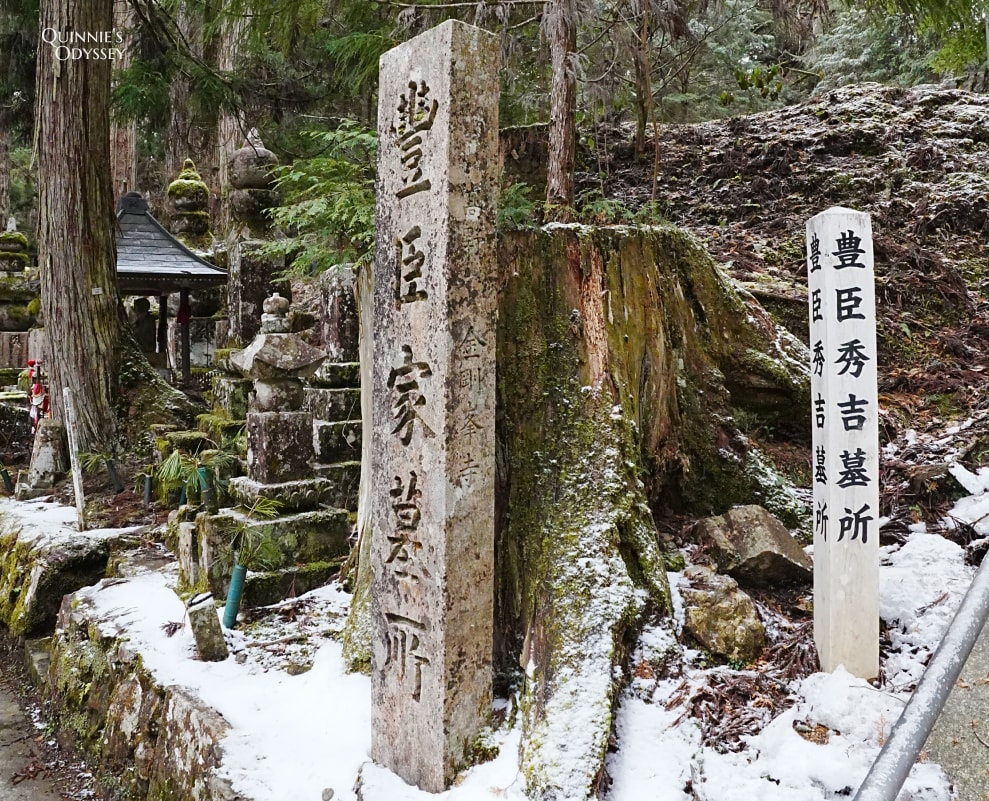
Some, like Tokugawa Ieyasu, weren’t actually buried in Okunoin, but their families still built memorial towers out of respect and devotion.
You will also find many corporate memorials, created by well-known Japanese companies such as Panasonic, Nissin Foods, UCC Coffee, and more.
These are meant to pray for the company’s continued success.
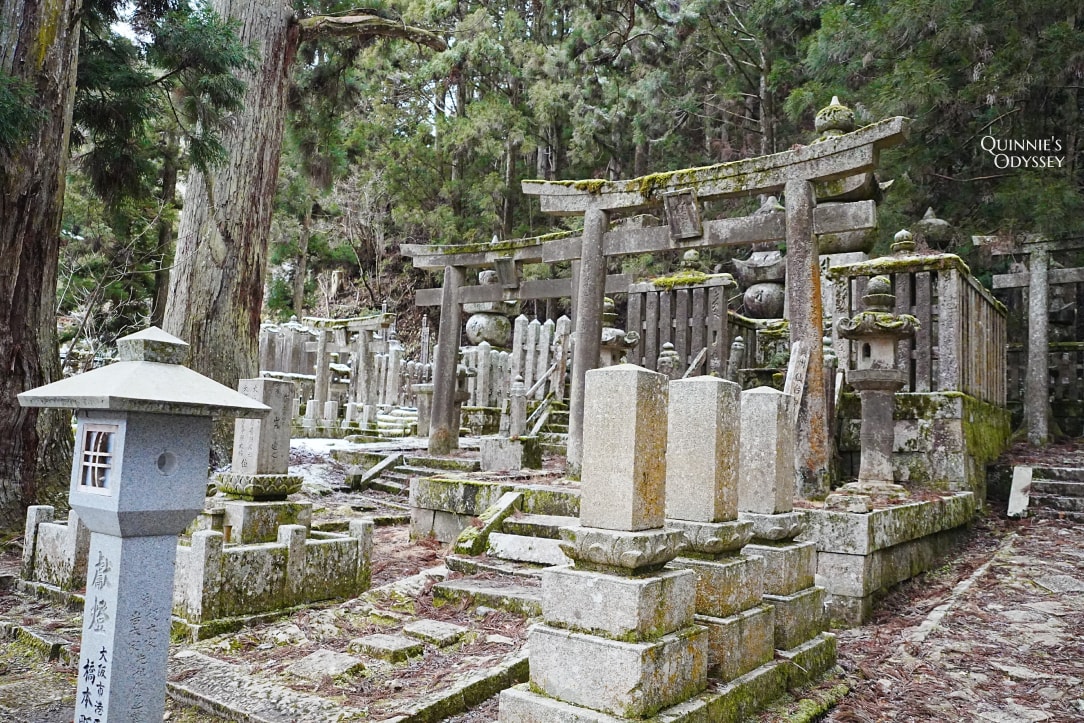
Other monuments have been built to commemorate victims of disasters, such as the 1923 Great Kanto Earthquake or the 2011 Tohoku Earthquake.
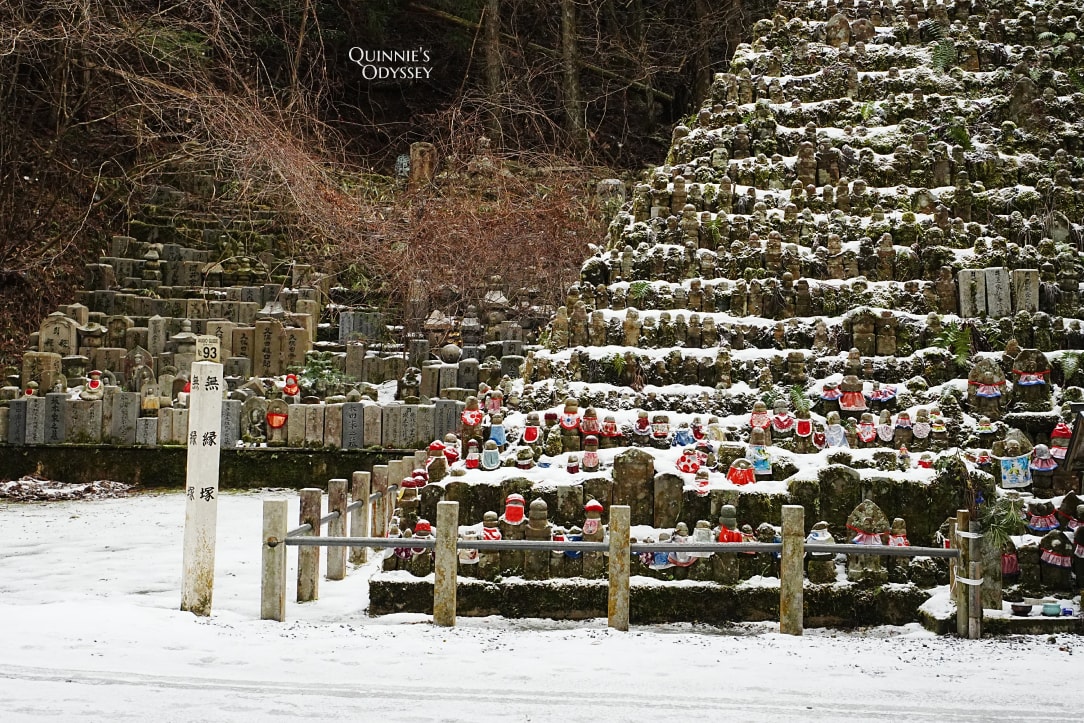
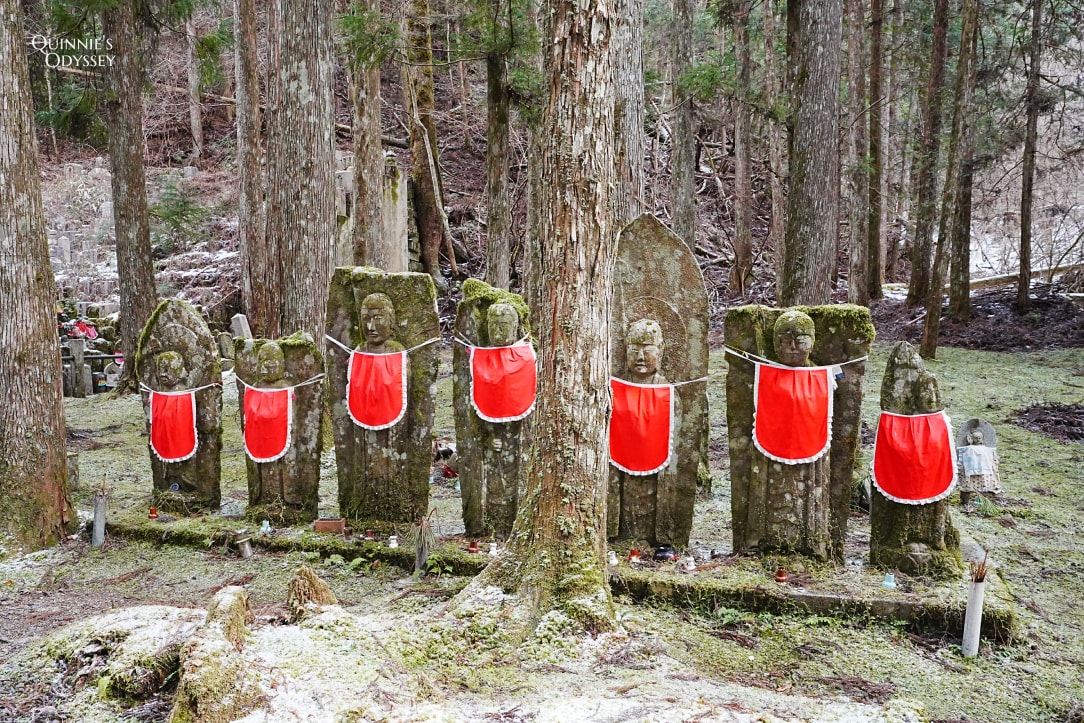
At the end of the pathway is the Gobyo Bridge.
Crossing this bridge takes you into the most sacred area of Koyasan, the mausoleum of Kobo Daishi.
This is the final destination for pilgrims walking the Shikoku Pilgrimage or visiting Koyasan.
It’s said that Kobo Daishi never truly passed away, instead, he entered deep meditation here, continuing to watch over the world.
Every day at 6:30 AM and 10:30 AM, monks bring meals to Kobo Daishi in a ritual called Osegaki (the “offering to the living”).
They carry food to the mausoleum as if he were still alive and practicing.
Photography is not allowed once you cross into the Gobyo area.
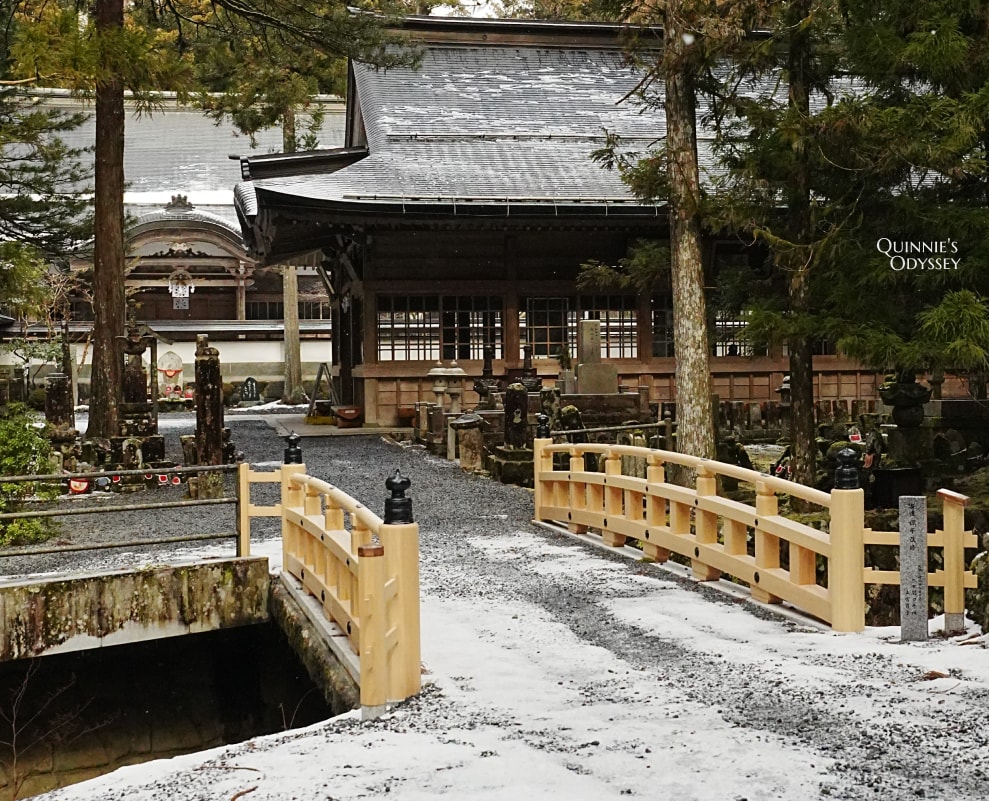
Just as I was taking in the silence around me, soft white flakes began to fall.
At first, I thought it was snow falling off the tree branches.
But little by little, the flakes grew heavier, it was actually snowing.
Snow settled on the trees, torii gate, and gravestones.
Everything became incredibly still, as if the entire world exhales and goes quiet.
It was beautiful in a way I can hardly describe, like walking through a dream.
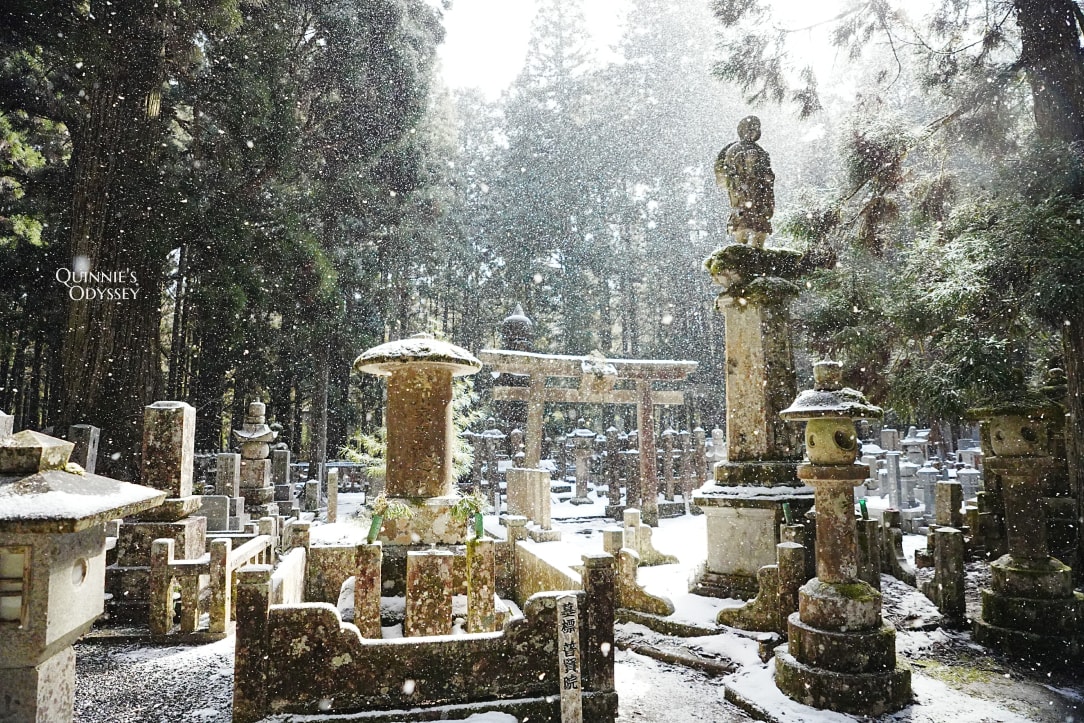
Even though the temperature was freezing, and my hands were numb from the cold, I couldn’t stop taking photos.
I wanted to capture every gravestone, every snow-covered statue, every tree dusted with white.
I didn’t want to miss a single moment.
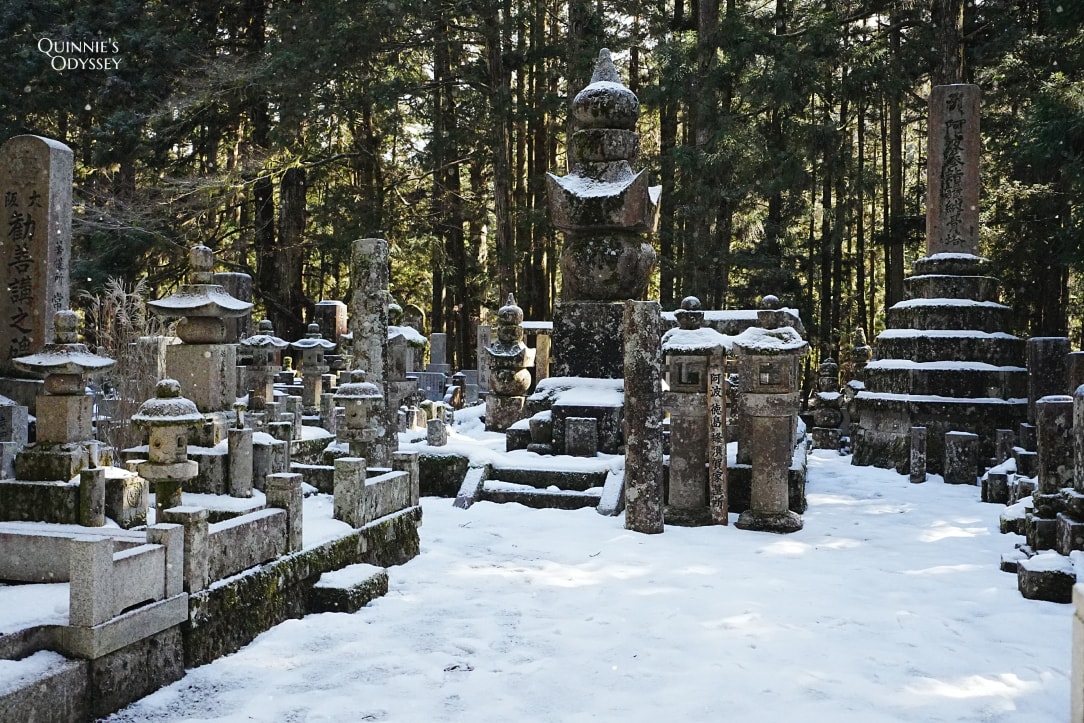
I had planned to explore more graves of the famous warlords, but there were simply too many.
In the end, I only found the graves of Toyotomi Hideyoshi and Oda Nobunaga.
Still, the emotions and sense of awe that Okunoin gave me far exceeded what I had expected.
More places to visit in Koyasan 👉👉 Koyasan Danjo Garan: The Most Sacred Shingon Buddhist Site in Japan
More about Koyasan 👉👉 Koyasan Day Trip Guide: Danjo Garan, Okunoin & Easy Transport Tips
▼ Koyasan Travel Essentials ▼

Thanks for reading!
If you’re interested in my stories, feel free to follow me on Instagram.
👉👉 IG: @sika_artist 👈👈