Physical Address
304 North Cardinal St.
Dorchester Center, MA 02124
Physical Address
304 North Cardinal St.
Dorchester Center, MA 02124

Nara is one of the birthplaces of Japanese history and culture.
It’s a relaxing city where you can enjoy nature, temples, shrines, and a rich cultural atmosphere all at once.
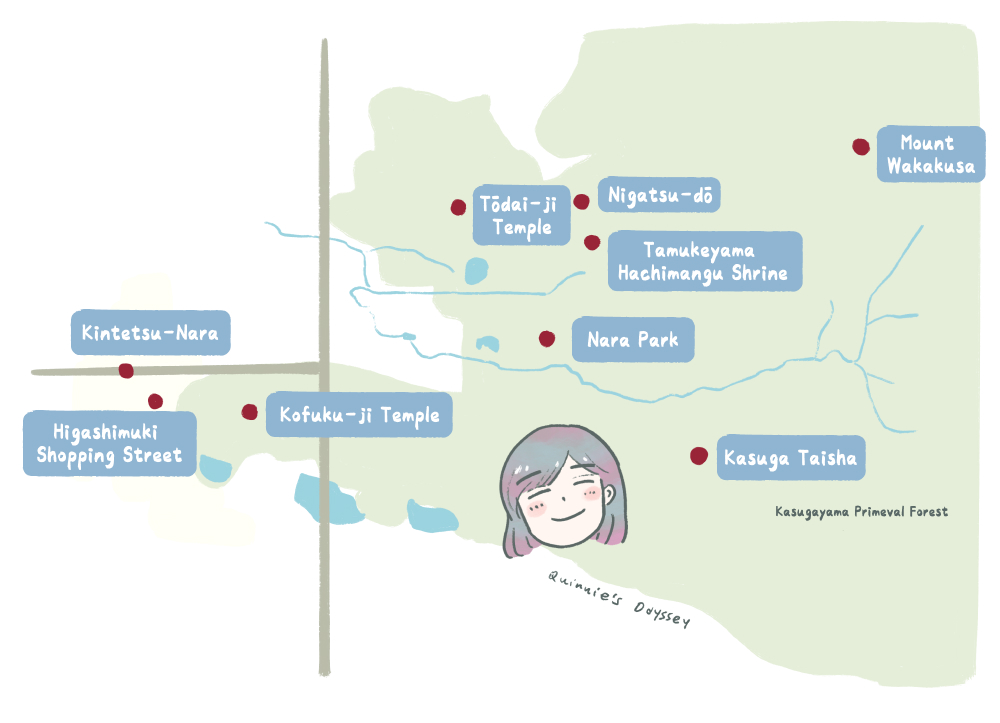
Most of the sights are close to each other, so you can take the Kintetsu Line to Nara and explore everything on foot.
As you wander through ancient temples, quiet shrines, and peaceful scenery, you’ll also meet Nara’s famous deer and feel the gentle charm of this old city.
When people think of Japan’s ancient capitals, Kyoto is usually the first place that comes to mind. But the truth is, Japan’s very first capital was Nara.
From the 3rd to 5th century, the Nara area was already the center of the Yamato State, where early Japanese politics and culture began to develop.
In 710, Empress Genmei moved the capital to Heijō-kyō (present-day Nara City), marking the start of the Nara Period (710–794).
During this time, Japan actively absorbed culture from China’s Tang Dynasty and developed its own unique Tenpyō culture, which shaped Japanese art, architecture, and religion for generations.
Heijō-kyō’s urban design was modeled after Chang’an, using a neat grid layout, showing how strongly Japan admired Tang culture.
This influence was especially clear in the spread of Buddhism.
The Chinese monk Jianzhen (Ganjin) brought authentic Buddhist precepts to Japan and helped promote the religion nationwide.
Nara quickly became Japan’s Buddhist center, and many major temples were built during this era, most famously Tōdai-ji, home to the iconic Great Buddha of Nara.
Nara is located in the Kansai region, about 40 minutes to 1 hour from Kyoto, depending on the train you take. If you’re staying in Kyoto, it’s one of the easiest day trips you can plan.
There are two main ways to get to Nara: Kintetsu or JR.
Most major attractions, like Nara Park and Tōdai-ji, are closer to Kintetsu Nara Station, so I recommend taking Kintetsu if that’s your plan.
👉👉 KKday Kintetsu Rail Pass | Klook Kintetsu Rail Pass
| Transportation | Train Type | Arrives At | Travel Time | Fare | Seats | Frequency |
|---|---|---|---|---|---|---|
| Kintetsu | Limited Express | Kintetsu Nara | ~35 min | ¥1,160 | Reserved seats | ~1 per hour |
| Express | Kintetsu Nara | ~50 min | ¥620 | Unreserved | 2–3 per hour | |
| JR | Miyakoji Rapid | JR Nara | ~45 min | ¥720 | Unreserved | 1–2 per hour |
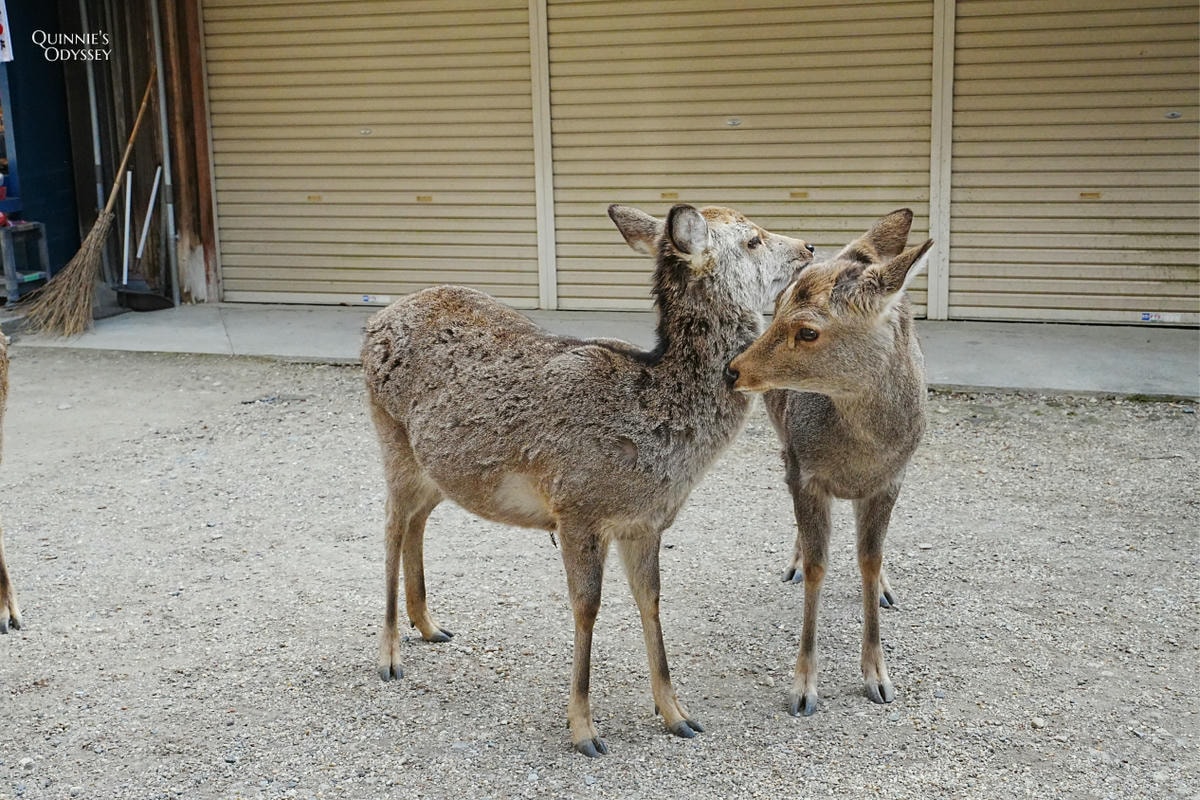
Nara’s deer are probably the first thing that comes to mind for most visitors.
These aren’t just ordinary wild deer, they’ve lived here for over 1,300 years and were once believed to be messengers of the gods.
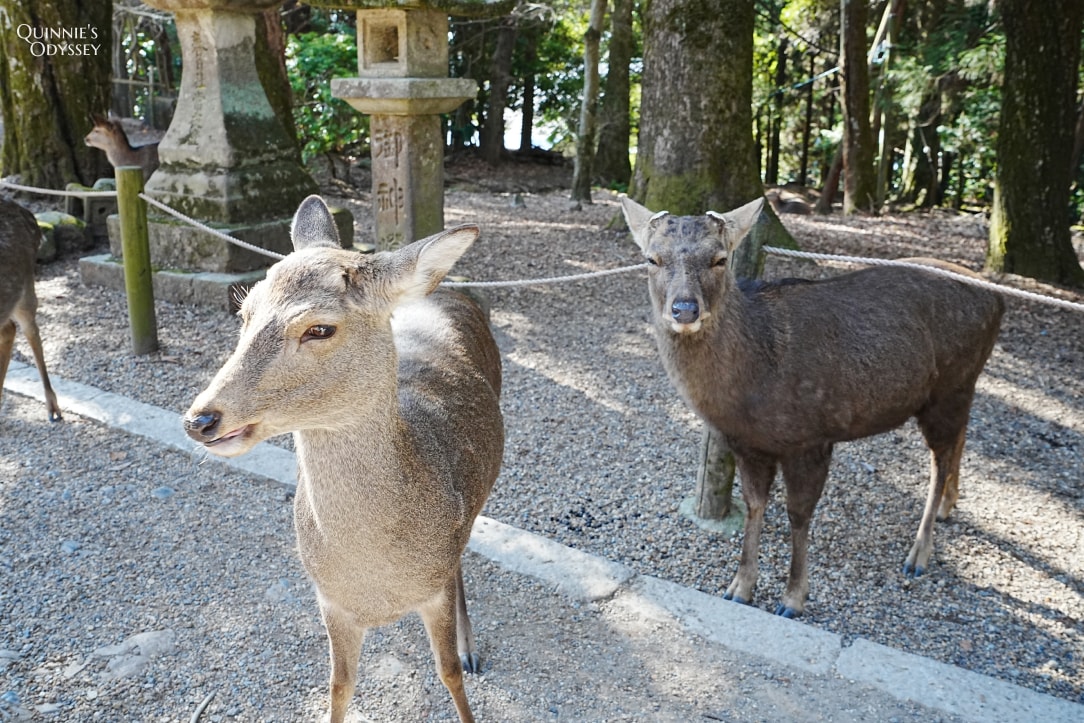
According to legend, when Kasuga Taisha Shrine was founded, the deity Takemikazuchi arrived from Kashima Shrine riding a white deer. From then on, deer were considered sacred. In the past, harming a deer was a serious crime, even punishable by death.
Today, Nara’s deer are protected as a National Natural Monument, and there are over 1,300 deer living in Nara Park.
You’re not allowed to feed them anything except the official “shika senbei” (deer crackers) sold around the park. These are natural and safe for them.
One cute thing: Nara deer “bow” for food!
When they see you holding a deer cracker, they often nod politely as if greeting you. It’s adorable 😍
Start your day at Nara Park.
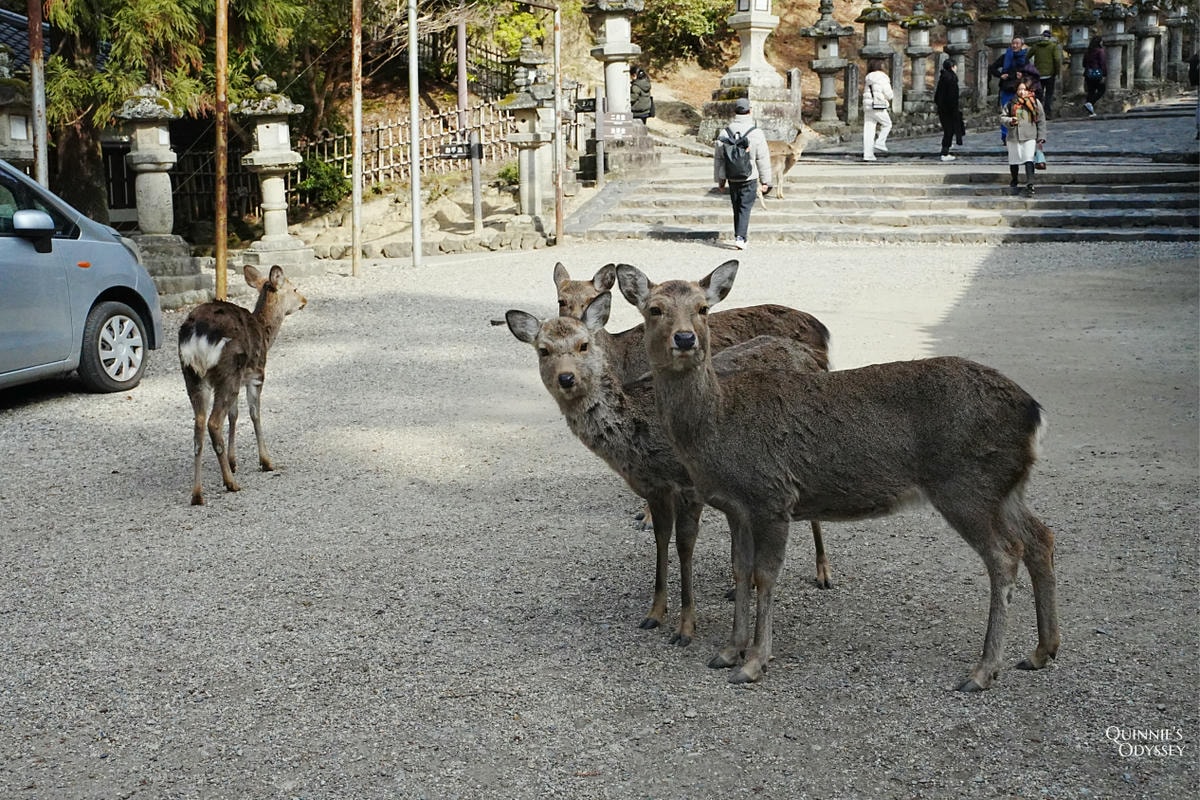
Once you walk out of Kintetsu Nara Station and head toward Kōfuku-ji, you’ll already see deer casually wandering around the streets.
Vendors sell deer crackers everywhere.
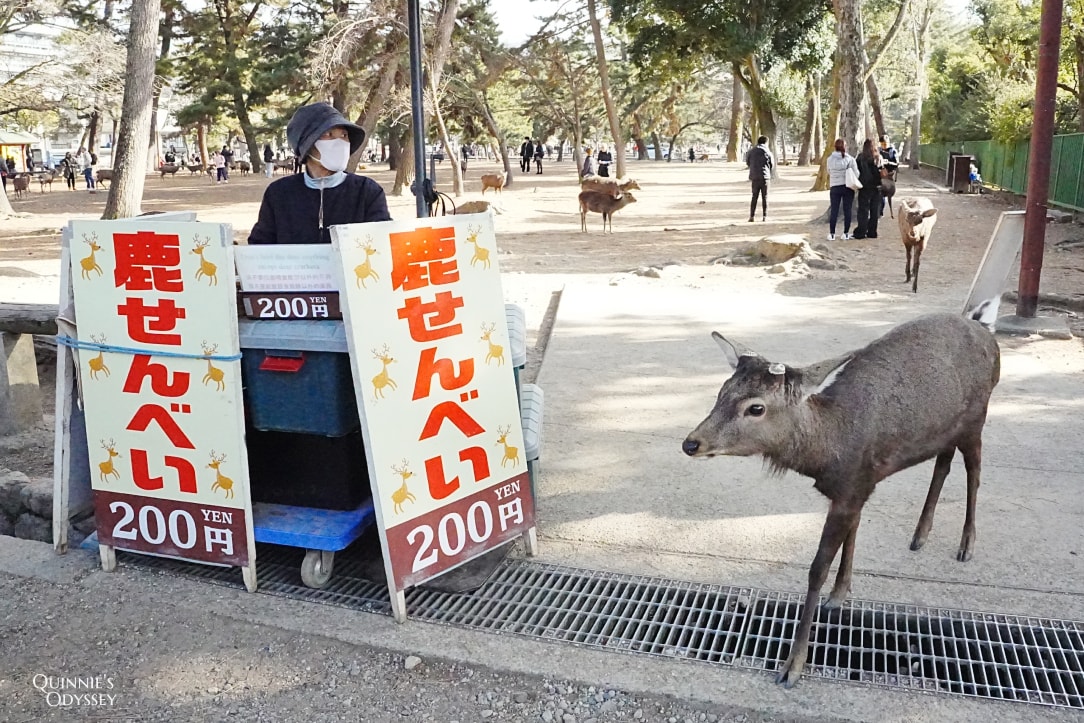
But be warned, the deer near the station and Kōfuku-ji can be a little aggressive.
Once they see you holding crackers, they might surround you quickly.
Some tourists panic and start running, which makes the deer chase after them 😂
When I visited, I bought the crackers and handed them to my mom, planning to just take photos. But even with empty hands, two deer bumped me from both sides, thinking I was hiding crackers!
Then another deer started chewing on my jacket… which ended up covered in deer drool.
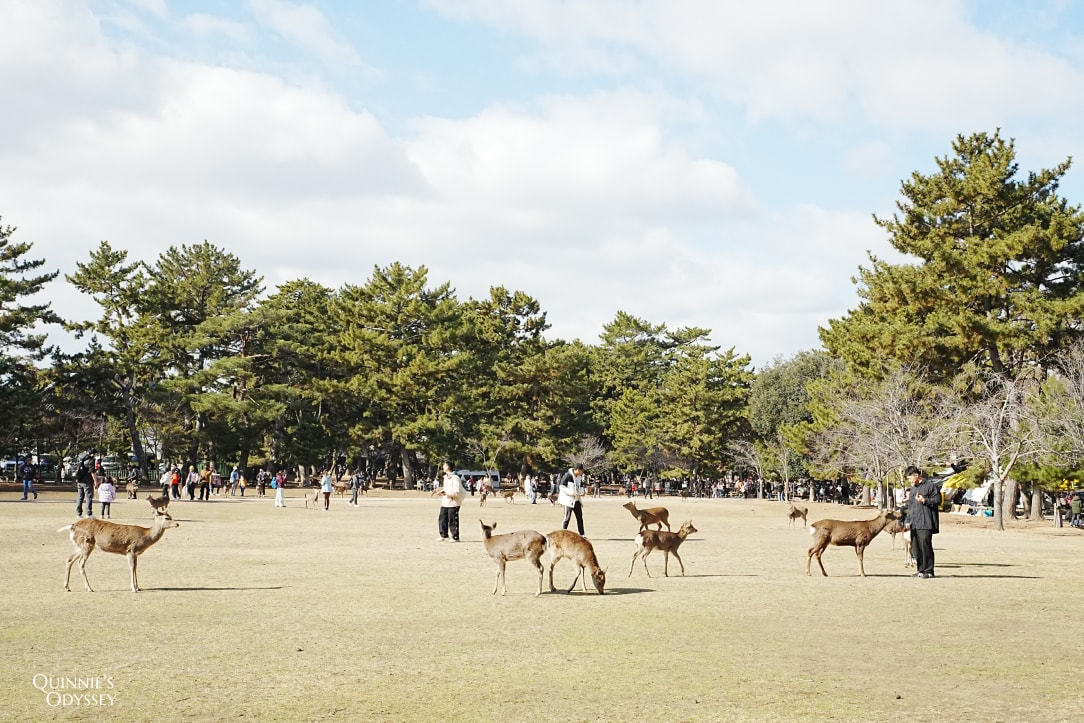
Farther inside the park toward Mount Wakakusa, the deer are much calmer.
They even bow politely for crackers. But still, I didn’t have any with me 😂
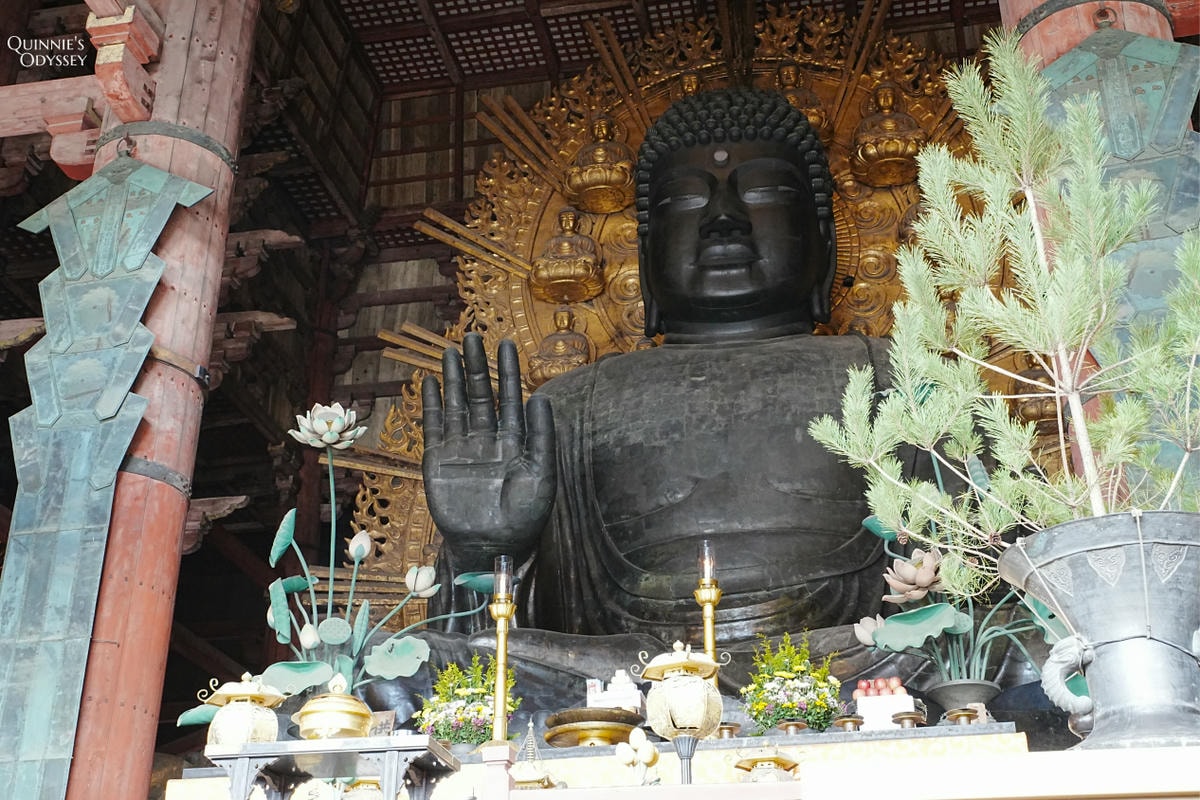
Tōdai-ji is one of Japan’s most important Buddhist temples.
It was built in the 8th century during the Nara Period under Emperor Shōmu.
Back then, Japan suffered from disasters, disease, and conflict.
The emperor believed Buddhism could protect the country, so he promoted the idea of creating temples nationwide.
Tōdai-ji became the head temple of all provincial temples.
The architecture shows strong influence from China’s Tang Dynasty, especially in its enormous main hall, the Great Buddha Hall (Daibutsuden).
Inside sits the Great Buddha of Nara (Rushanabutsu), one of the largest bronze Buddha statues in the world, standing 15 meters tall.
The hall itself is also one of the largest wooden structures on earth, even after multiple reconstructions.

Another must-visit spot inside the temple grounds is Nigatsu-dō.
It’s famous for the annual “Omizutori” fire ceremony in March, a tradition over 1,250 years old. At night, monks carry huge torches to pray for peace.
Nigatsu-dō is also located on a hill with a beautiful panoramic view of Nara City, one of my favorite spots of this trip.
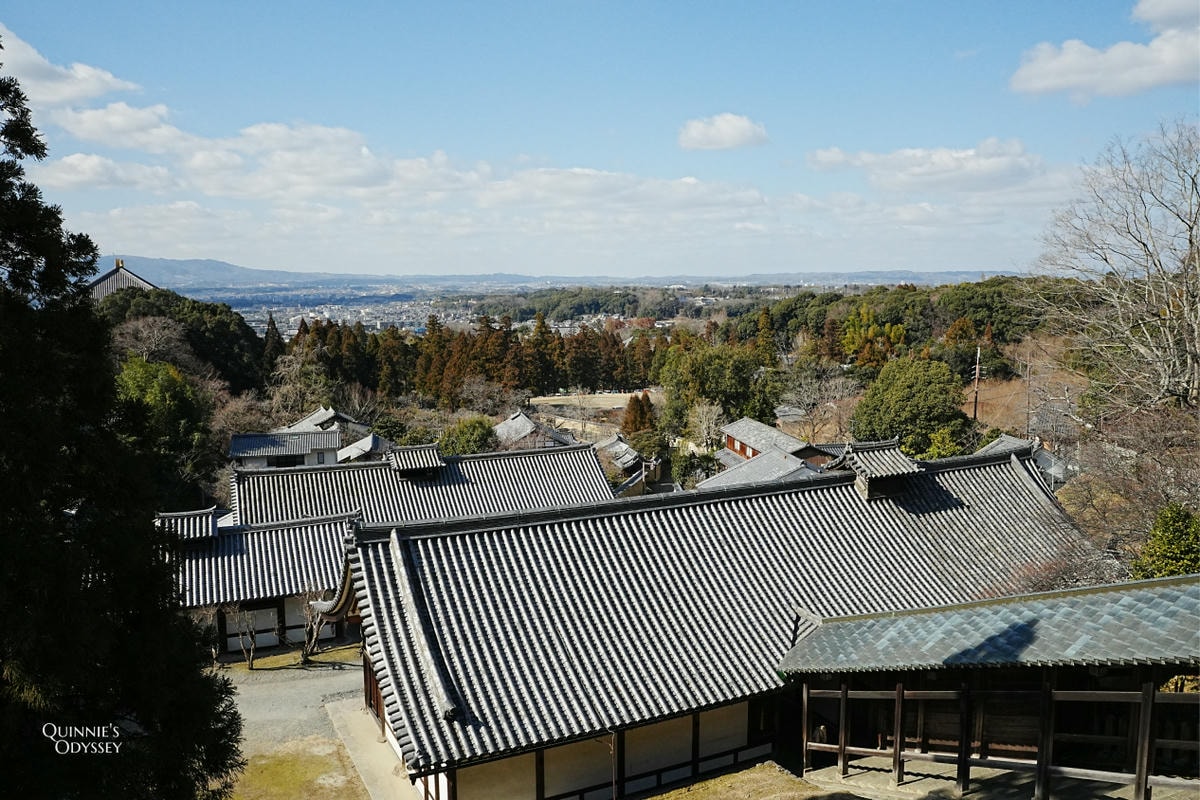
Read more here 👉👉 Todai-ji Temple in Nara: Great Buddha, Scenic Nigatsu-do & Travel Tips
Kasuga Taisha is one of the most important Shinto shrines in Nara.
It was founded in 768 and enshrines the deities that protect Nara and the influential Fujiwara clan.
When the Fujiwara family held power, they invited the deity Takemikazuchi-no-Mikoto from Kashima Shrine to protect the country and the imperial family.
According to legend, he traveled to Nara riding on a white deer. Because of this story, deer have long been regarded as sacred messengers of the gods and have been carefully protected throughout history.
This is also why deer are so closely tied to Kasuga Taisha and why they eventually became a symbol of Nara.
Today, Kasuga Taisha remains the guardian shrine of the Fujiwara family.
Its bright vermilion buildings, ancient forests (Kasugayama Primeval Forest), and countless stone lanterns create a serene, spiritual atmosphere.
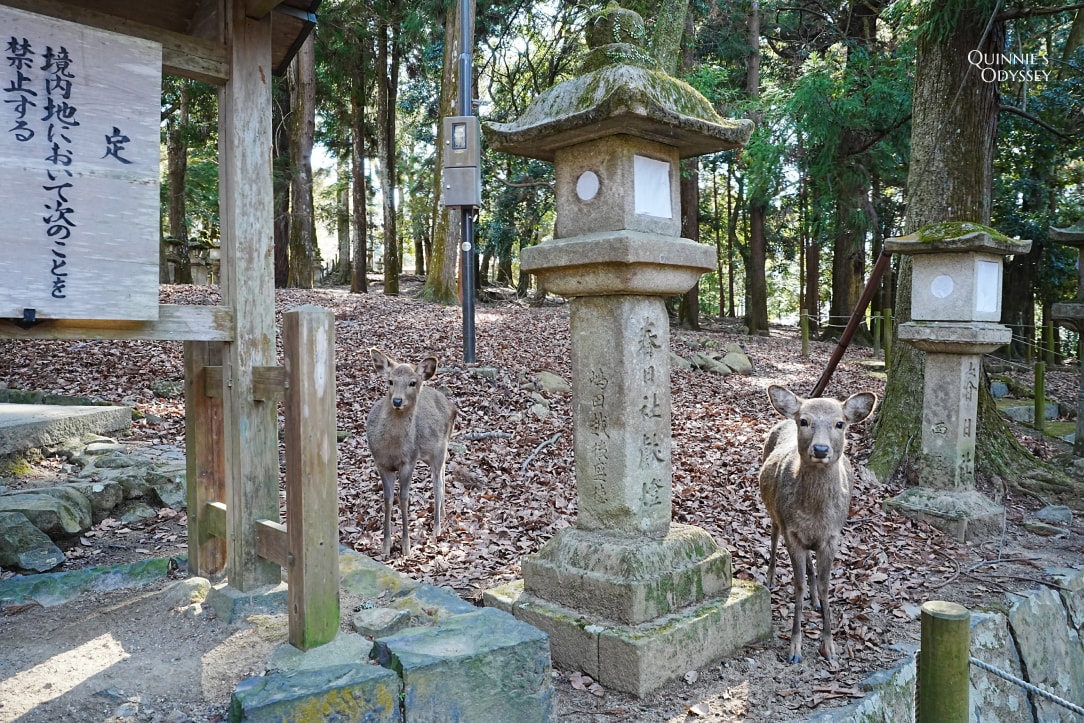
One of the shrine’s most famous sights is the “Mandōrō,” or festival of the lanterns.
Around 3,000 stone lanterns and hanging bronze lanterns line the grounds and corridors, most of them donated by worshippers over centuries, with family crests or names engraved on them.
During the Setsubun Lantern Festival in February and the Obon Lantern Festival in August, all the lanterns are lit at once, creating a mystical, otherworldly scene, almost like stepping back in time.
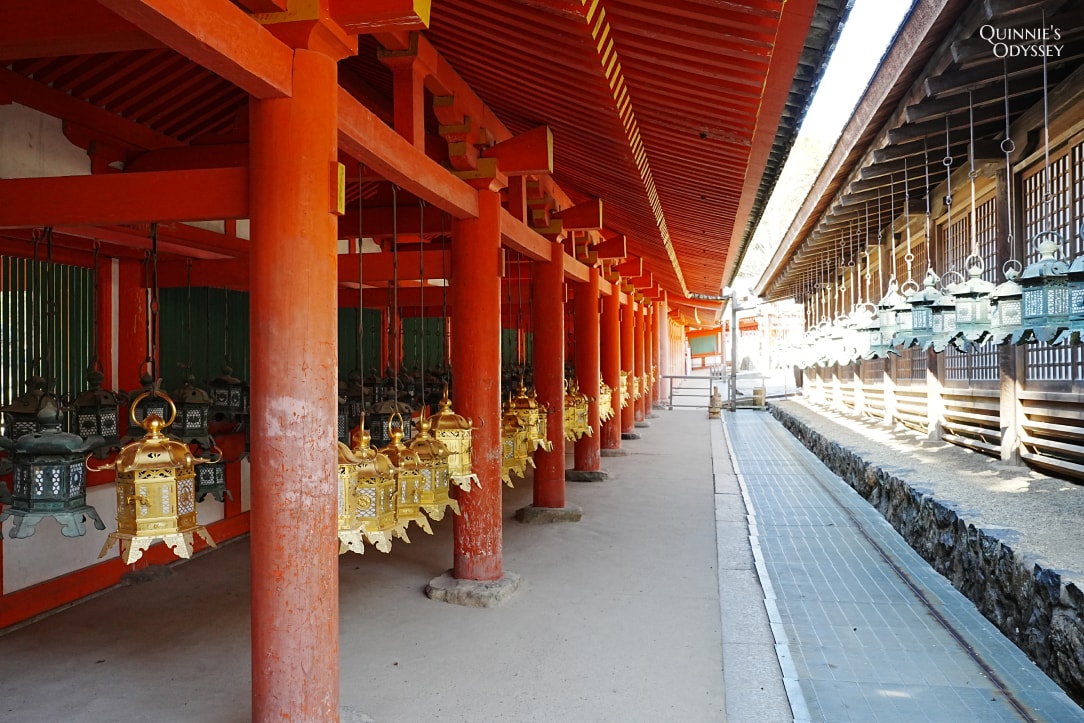
Read more here 👉👉 Kasuga Taisha Nara Guide: Sacred Deer, Lantern Trail & Ancient Myths
Kofuku-ji has a history of more than 1,300 years and is deeply connected to the Fujiwara clan.
Its origins date back to 669, when Kagami-no-Ōkimi, the wife of Fujiwara no Kamatari, built a temple called Yamashina-dera at her residence to pray for her husband’s recovery.
The temple moved several times through the years, and in 710, it was relocated to Heijō-kyō (modern-day Nara City) and renamed Kofuku-ji.
During the Nara period, Kofuku-ji prospered thanks to support from the imperial family and the Fujiwara clan. However, the temple was repeatedly damaged by wars and disasters, so much of what we see today is the result of later reconstructions.
The temple is home to many national treasures and important cultural properties.
The most iconic is the Five-Story Pagoda, originally built in 730.
The current structure dates back to 1426.
Kofuku-ji is also famous for its Buddhist artwork, including the beloved Ashura statue housed in the National Treasure Hall.
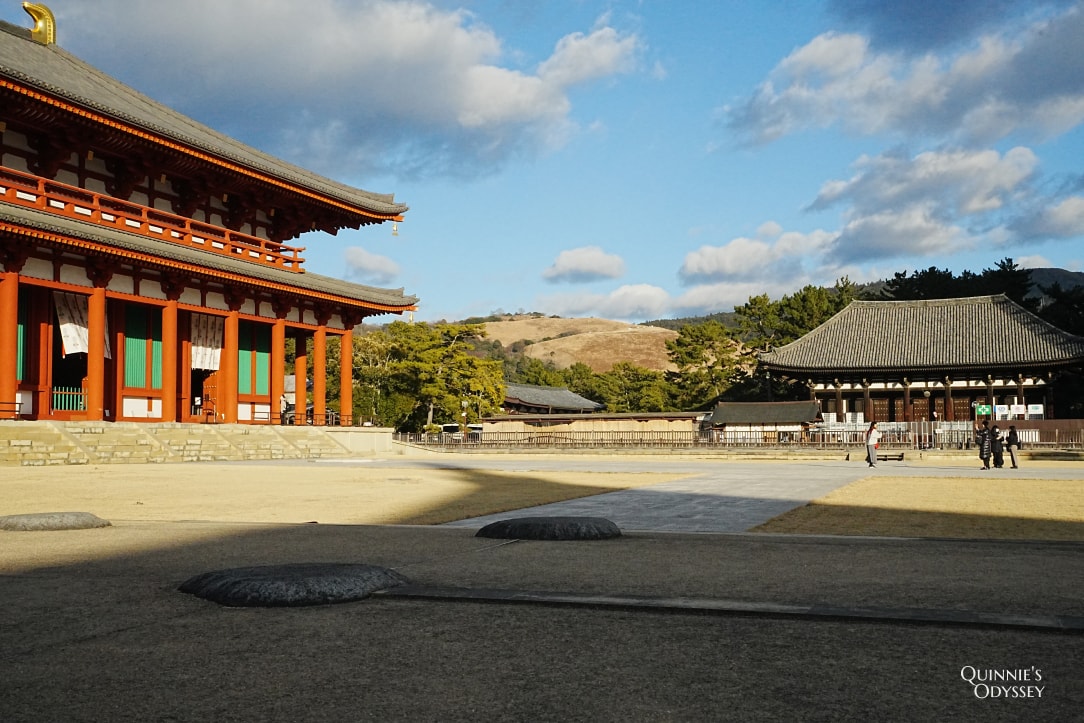
Mount Wakakusa sits on the eastern edge of Nara Park.
It’s a grassy hill about 342 meters high, and its shape, like three stacked straw hats, has earned it the nickname “Mikasa-yama.”
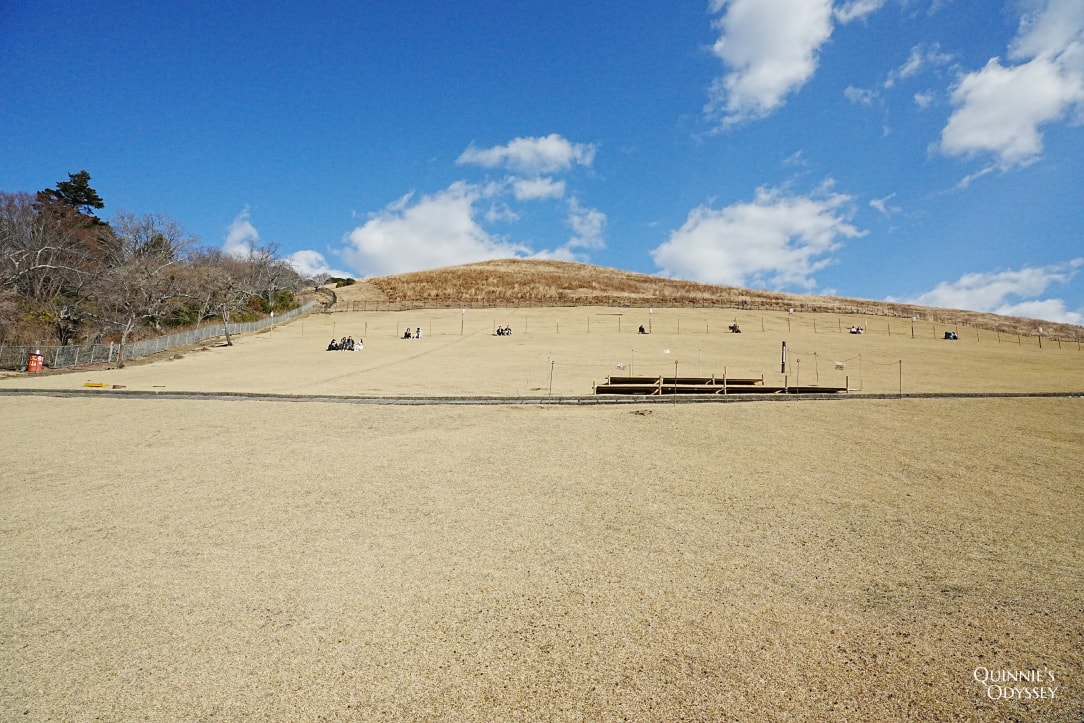
The mountain is best known for the annual Wakakusa Yamayaki Festival, held every January.
As night falls, fireworks first light up the sky.
Then the entire hillside is set ablaze, creating a dramatic and unforgettable view.
It’s one of Nara’s most spectacular winter events.
Read more here 👉👉 2026 Nara Wakakusa Yamayaki Festival: Best Viewing Spots, Schedule, and Travel Tips
Besides the festival, Wakakusayama is also one of the best viewpoints in the city.
Follow the walking trail to the summit, and you’ll be rewarded with sweeping views of the Great Buddha Hall at Tōdai-ji, the Five-Story Pagoda at Kofuku-ji, and even the Ikoma mountain range in the distance.
You’ll also find plenty of friendly deer along the hillside.
It’s a nice spot for a picnic, though some deer might come over expecting a snack!
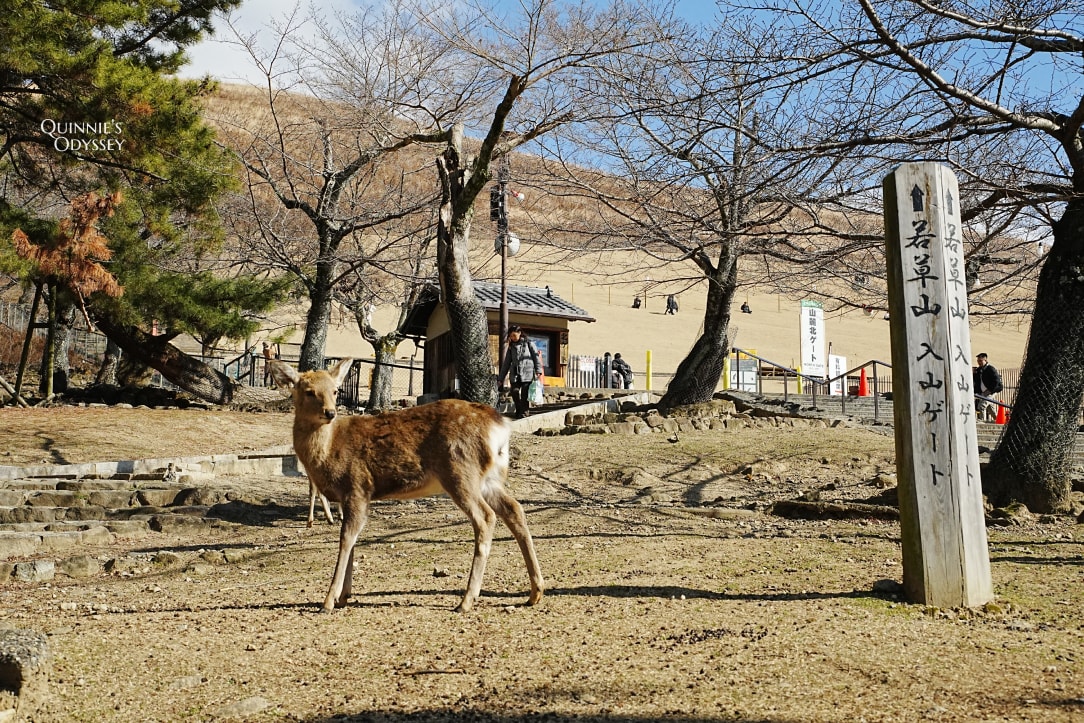
If time allows, stay for the sunset or night view. They’re both stunning.
Tamukeyama Hachimangu Shrine stands right next to the Great South Gate of Tōdai-ji.
Since the 8th century, it has served as the guardian shrine of Tōdai-ji.
The word “Tamuke” means “offering,” symbolizing devotion to the deities.
The shrine is dedicated to Hachiman, the god of war and protection.
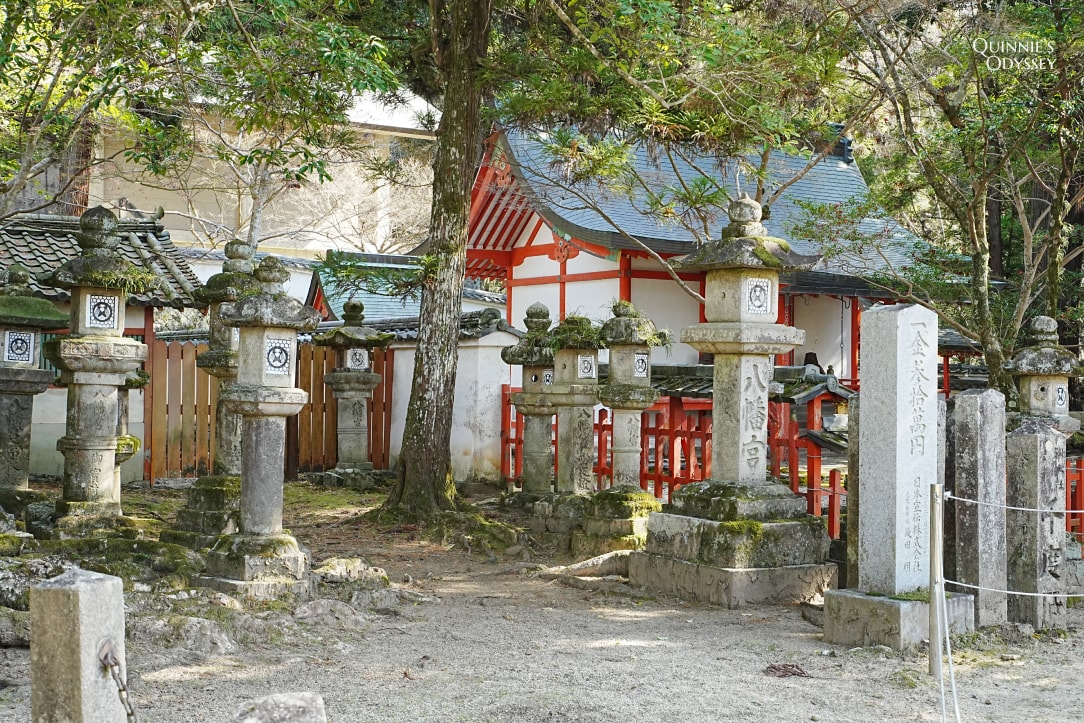
It’s said that when the Great Buddha of Tōdai-ji was being constructed in the 8th century, the Hachiman deity was invited from Usa Hachiman Shrine in Oita Prefecture (Kyushu) to watch over the project.
Later, during the Meiji-era separation of Buddhism and Shinto, Tamukeyama Hachimangu Shrine became independent from Tōdai-ji.
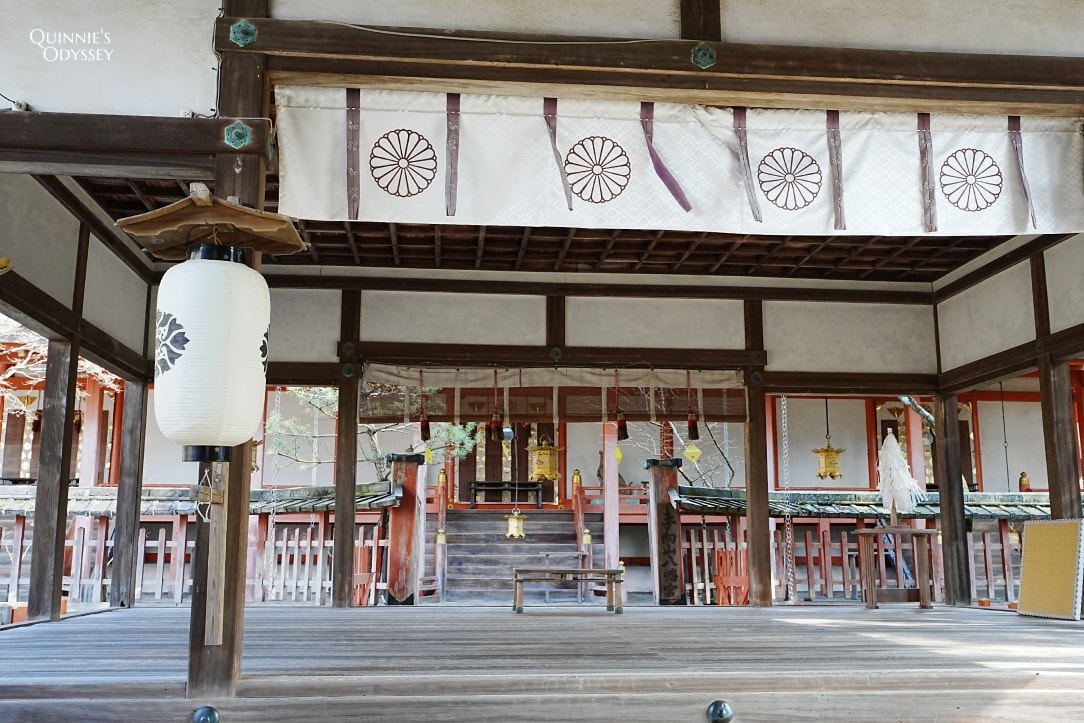
The shrine grounds are peaceful and atmospheric.
Compared with the busy Tōdai-ji area, it feels quiet and hidden, a place with an ancient, mysterious charm.
Step outside Kintetsu Nara Station and you’ll immediately find yourself at Higashimuki Shopping Street.
This street has over 1,300 years of history. Its name, “Higashimuki,” meaning “facing east,” comes from the fact that in ancient Heijō-kyō, all the houses along the street were built facing east.
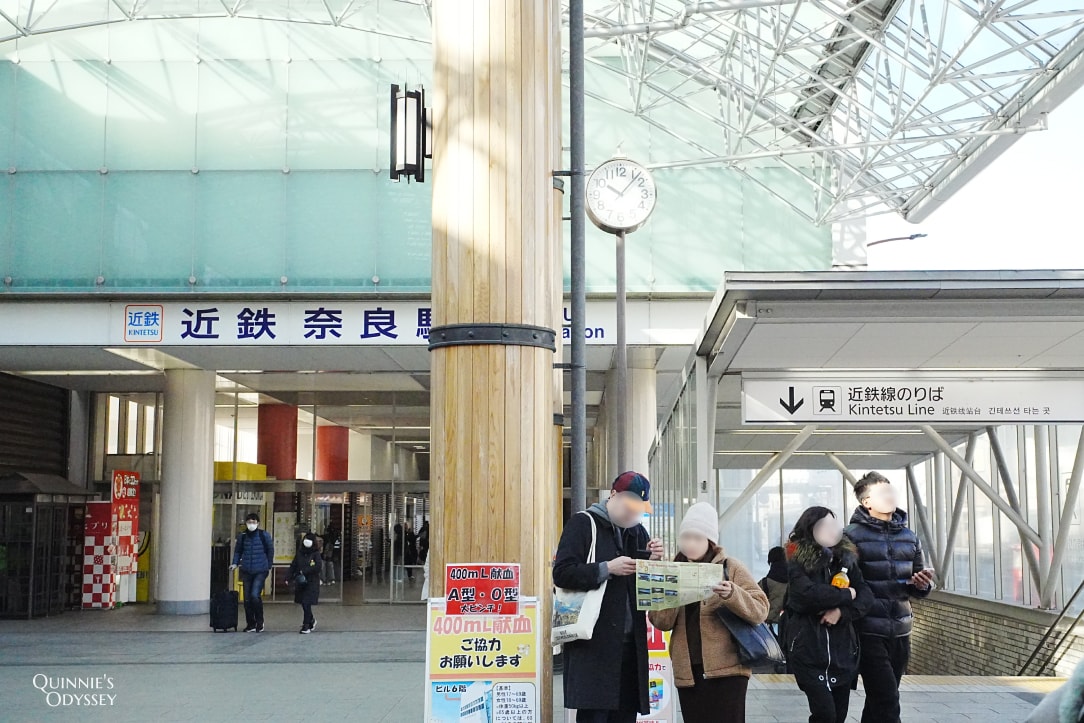
After the Kintetsu Osaka Line opened in 1915, the shopping street slowly grew into one of the busiest commercial areas in Nara City.
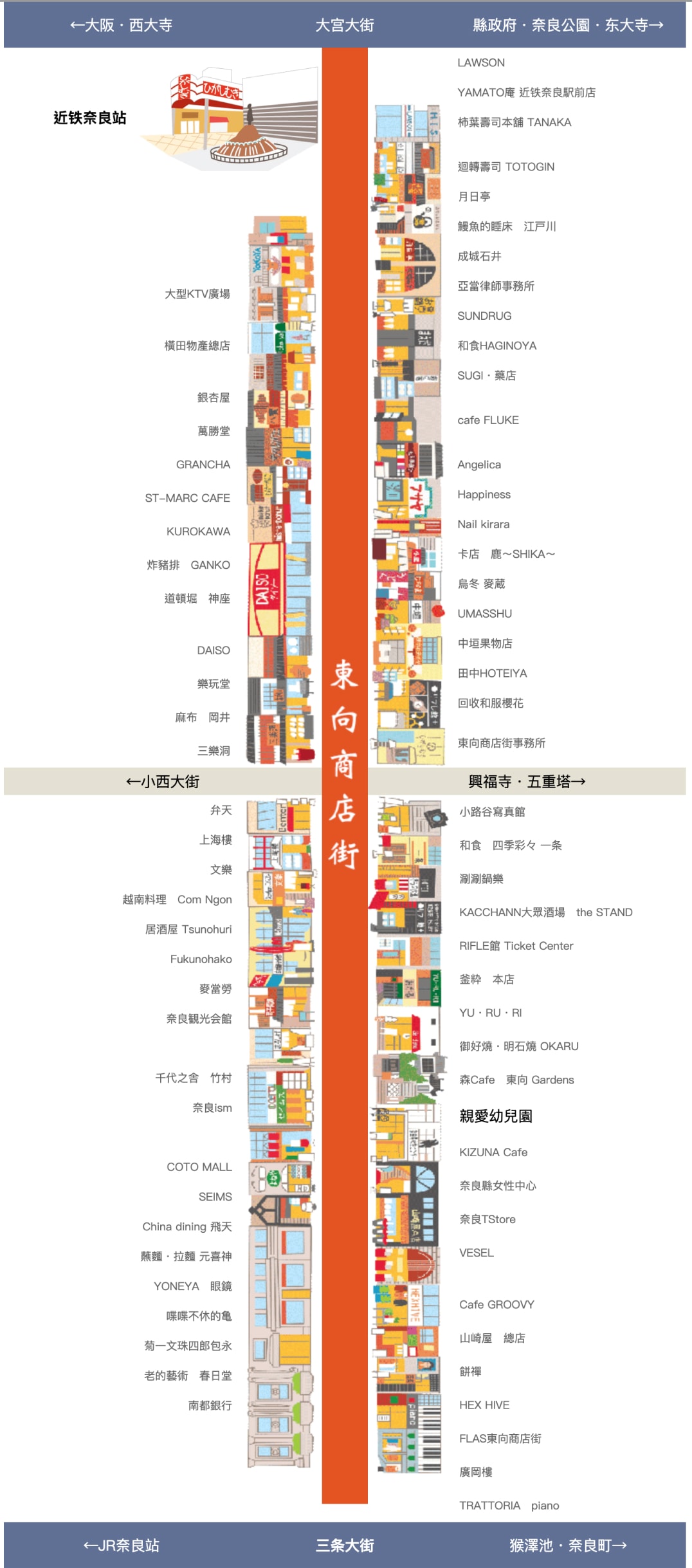
It’s about 250 meters long, and you’ll find around 80 shops on both sides, restaurants, drugstores, salons, clothing shops, and more.
Some stores have been here for over a century, including Nakatanidō, the famous shop known for its lightning-fast mochi pounding.
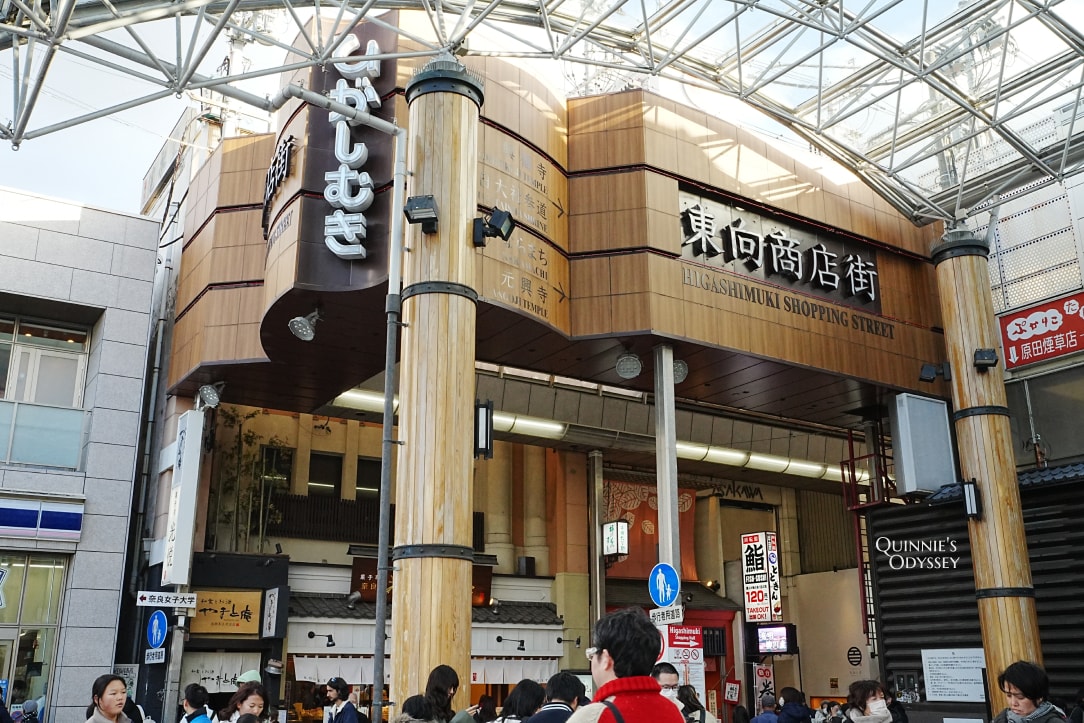
The street leads directly to major attractions like Kofuku-ji, Sarusawa Pond, and Naramachi. Nara Park and Tōdai-ji are also within walking distance, making it a super convenient stop.
During my visit, I ran into a small crisis. My camera’s memory card was full!
Nothing is more frustrating for someone who loves photography!
Thankfully, I found a Daiso along Higashimuki Street and managed to buy a new memory card just in time to save my Nara trip.🥳🥳
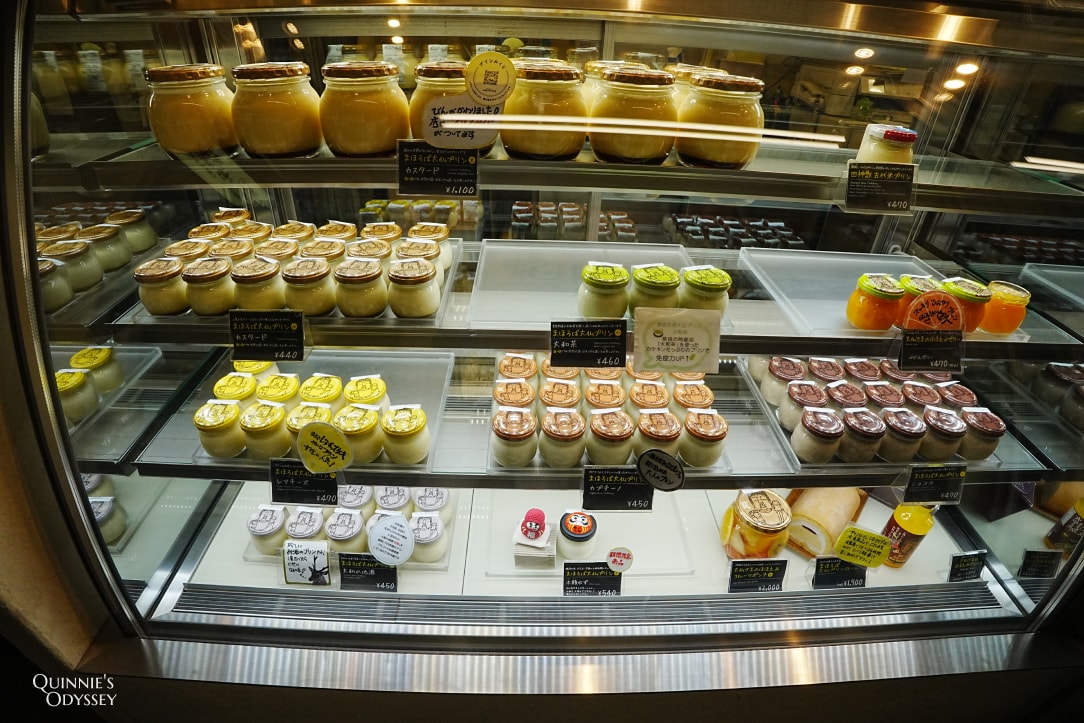
Inside Kintetsu Station, you’ll also find the famous “Daibutsu Pudding.”
This adorable pudding, inspired by the Great Buddha of Tōdai-ji, comes in cute jars and tastes rich and smooth. It’s a popular souvenir for visitors.
▼ Kyoto Travel Essentials ▼

Thanks for reading!
If you’re interested in my stories, feel free to follow me on Instagram.
👉👉 IG: @sika_artist 👈👈