Physical Address
304 North Cardinal St.
Dorchester Center, MA 02124
Physical Address
304 North Cardinal St.
Dorchester Center, MA 02124

Koyasan is the spiritual center of Shingon Buddhism in Japan, and this sacred mountain has carried the teachings of esoteric Buddhism for more than a thousand years.
Shingon Buddhism is a major school of Japanese Buddhism.
As an esoteric tradition, it emphasizes secret rituals, symbolic practices, hand gestures, and mantras (the “true words”) as a path to enlightenment.
Among all the sites on Koyasan, Danjo Garan is especially important.
It was created by Kobo Daishi Kukai, the founder of Shingon Buddhism, as a physical representation of the Buddhist universe.
The entire complex reflects the layout of a mandala and serves as the central place for rituals and monastic training.
Danjo Garan and Okunoin are known as the two most sacred sites on Koyasan.
More about Okunoin, Koyasan 👉👉 Okunoin Koyasan Travel Guide: Visiting the Sacred Resting Place of Kobo Daishi
How to get to Koyasan 👉👉 Koyasan Day Trip Guide: Danjo Garan, Okunoin & Easy Transport Tips
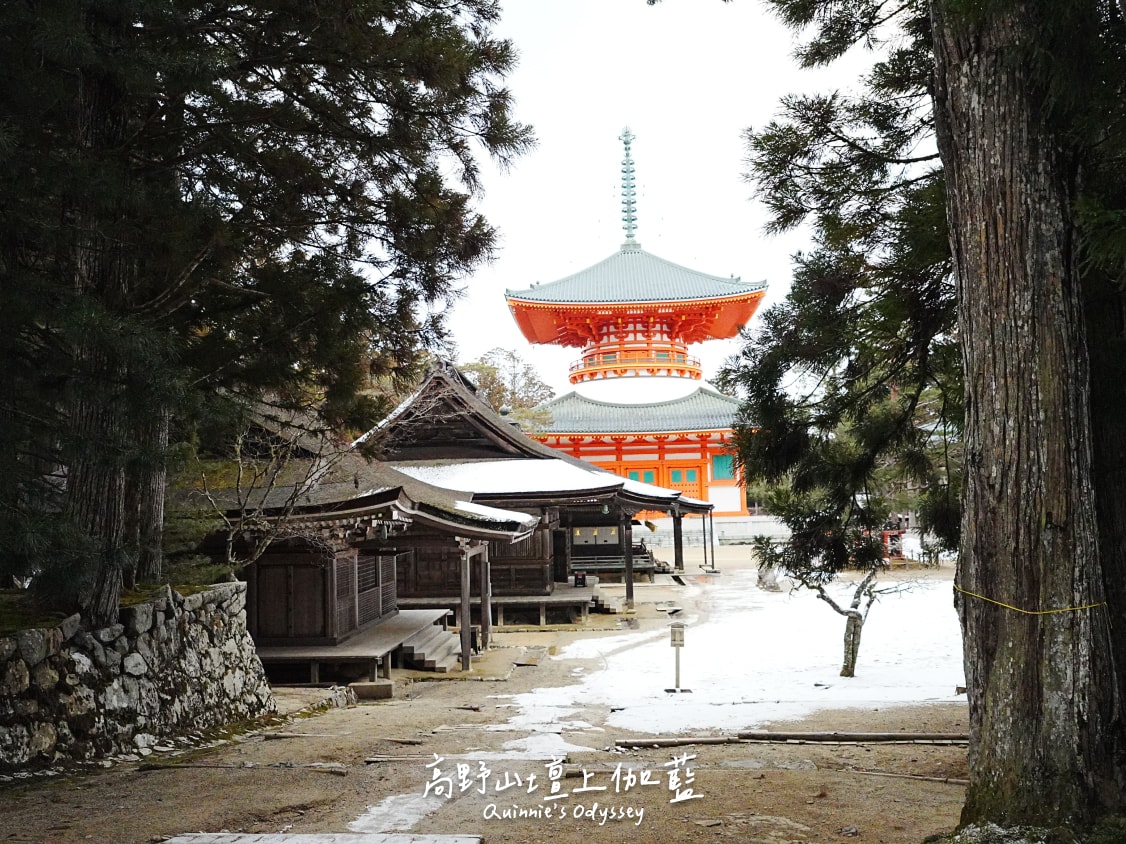
The bright red Konpon Daitō stands out among the deep green cedar trees, symbolizing the center of the cosmic mandala.👇
▼ Koyasan Travel Essentials ▼
The origins of Danjo Garan go back to the 9th century.
Kobo Daishi traveled to China in 804 to study esoteric Buddhism in Chang’an, where his teacher Huiguo passed down the essential teachings of Shingon.
After returning to Japan, Kukai received permission from Emperor Saga to establish a sacred training ground.
He chose this mountain basin surrounded by peaks and created Danjo Garan as a symbolic mandala of the universe.
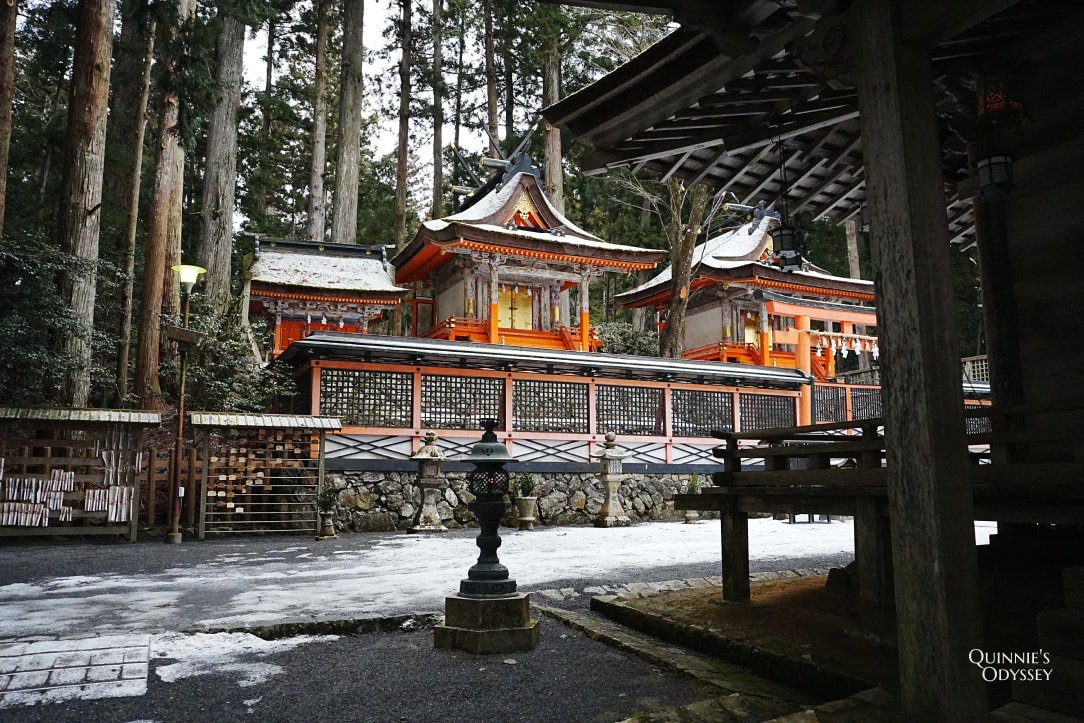
In Buddhism, dan refers to an altar or sacred platform for rituals, and jo means “upper” or “sacred place.”
Garan comes from the Sanskrit word sangharama, meaning monastery or temple complex. So “Danjo Garan” literally means a sacred temple complex built on a high, holy place.
The layout of Danjo Garan reflects the Womb Realm Mandala, representing the cosmic order of Buddhist teachings.
Monks come here to train, practice rituals, and seek enlightenment.
(To be honest, hearing all this as an outsider makes Danjo Garan feel incredibly mysterious to me! 😮)
Transportation around Koyasan is surprisingly convenient.
Buses run frequently and stop near all the major attractions.
To reach Danjo Garan, take the cable car to Koyasan Station, then board a bus toward Okunoin.
The ride takes about 16 minutes, and getting off at Kondo-mae puts you right in front of the Danjo Garan entrance.
If you’re driving, there are parking lots near Kondo.
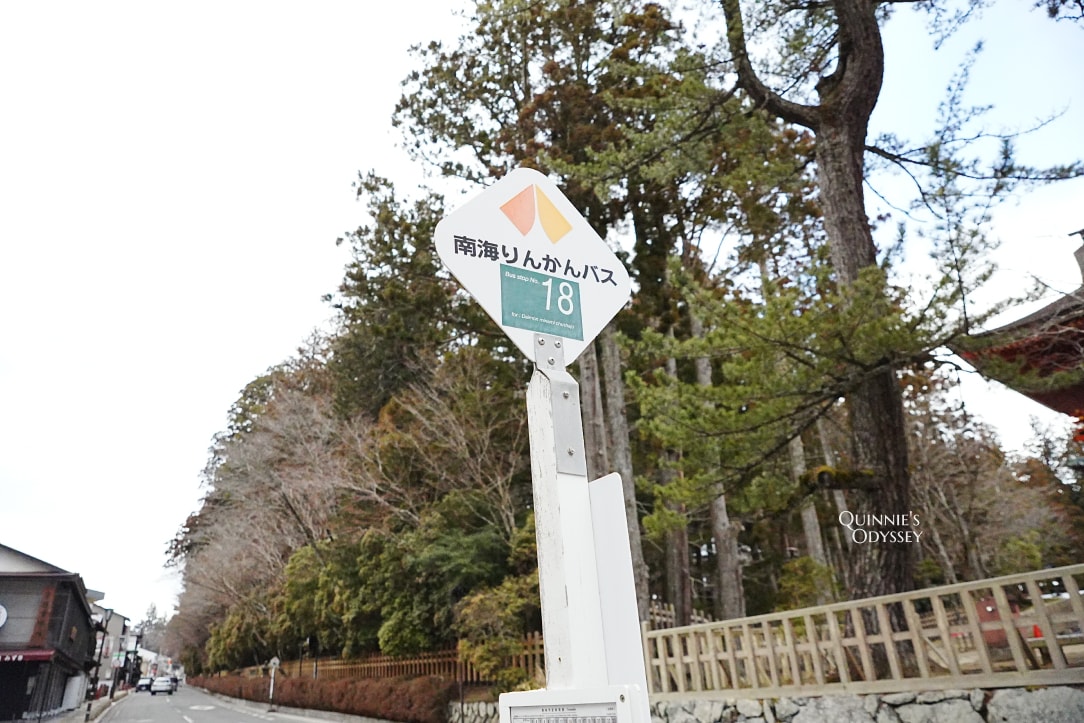
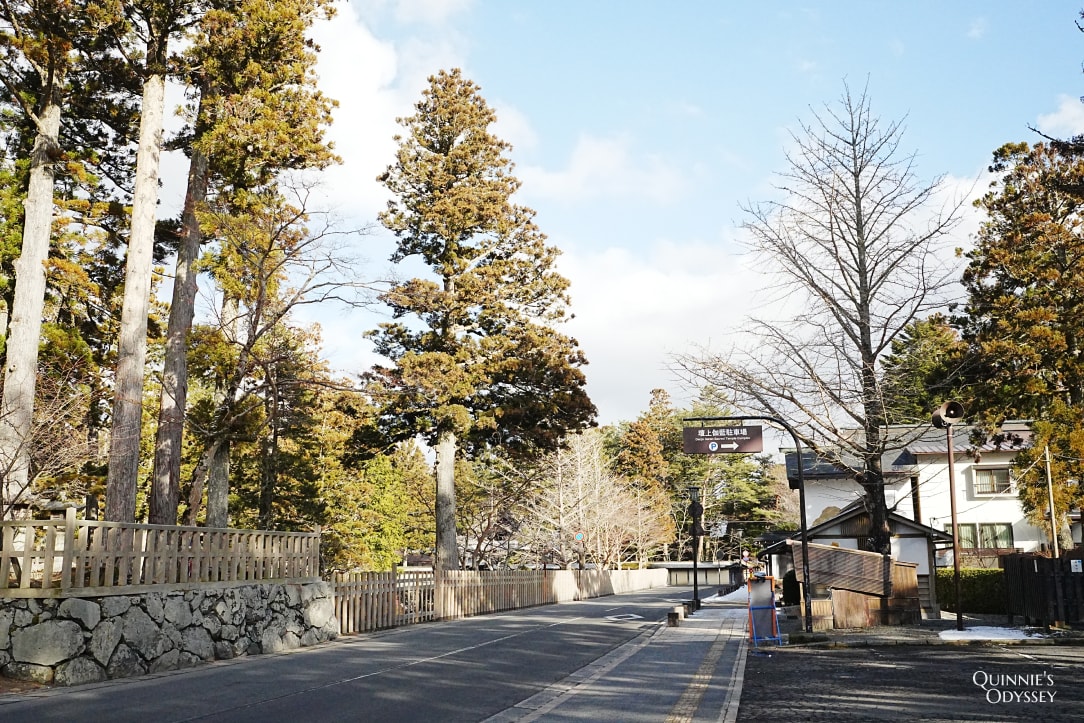
When I visited Koyasan, it was a cold winter day.
There were barely any people around, so I could really take in the stillness and sacred atmosphere of the area.
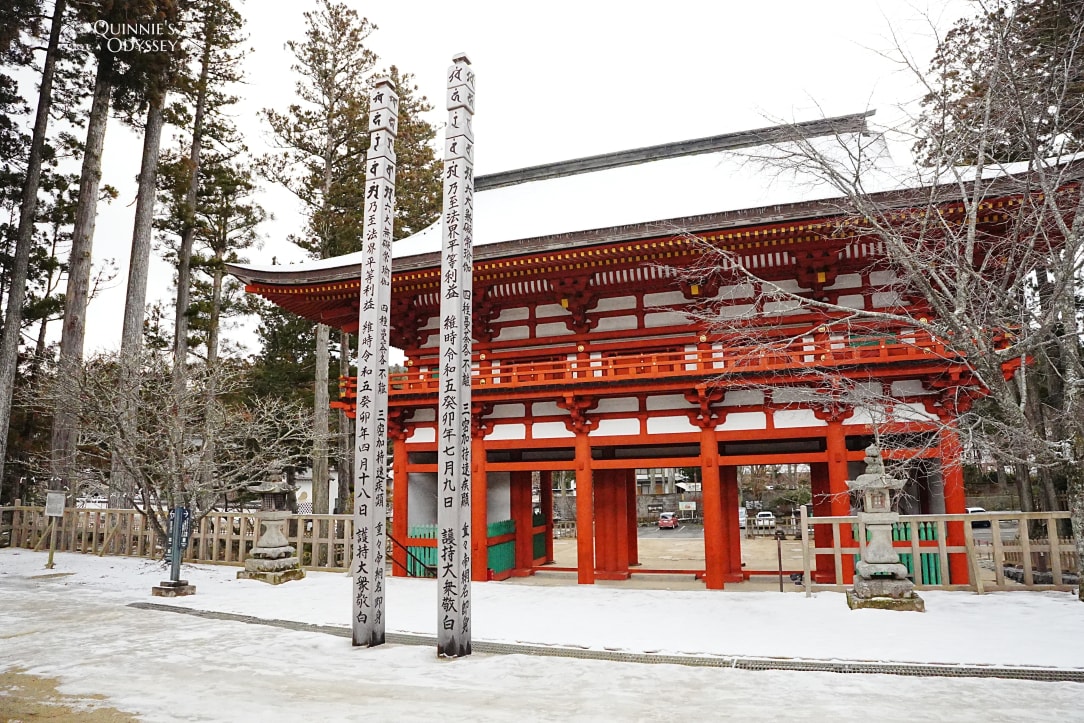
Chūmon is the main entrance to the Garan complex.
Originally built in 816, it was destroyed in a major fire in 1843 and later rebuilt in 2015 to commemorate Koyasan’s 1,200th anniversary.
Inside the gate are statues of the Four Heavenly Kings: Jikokuten, Tamonten, Zōchōten, and Kōmokuten.
These statues survived the fire and were returned to their place after the reconstruction.
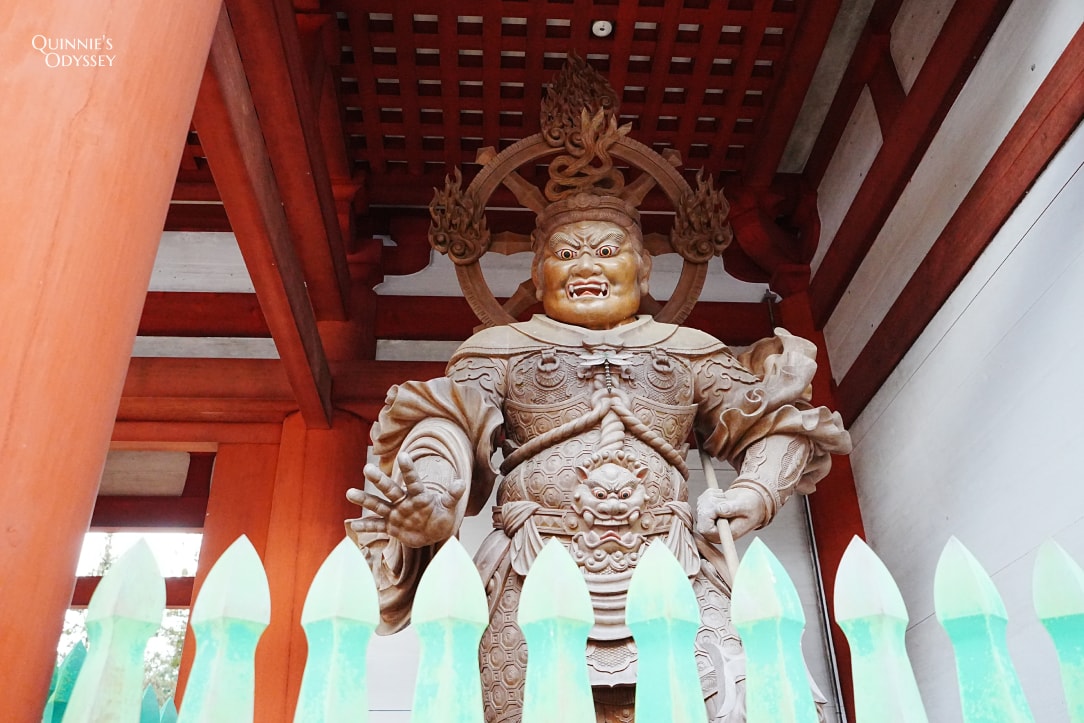
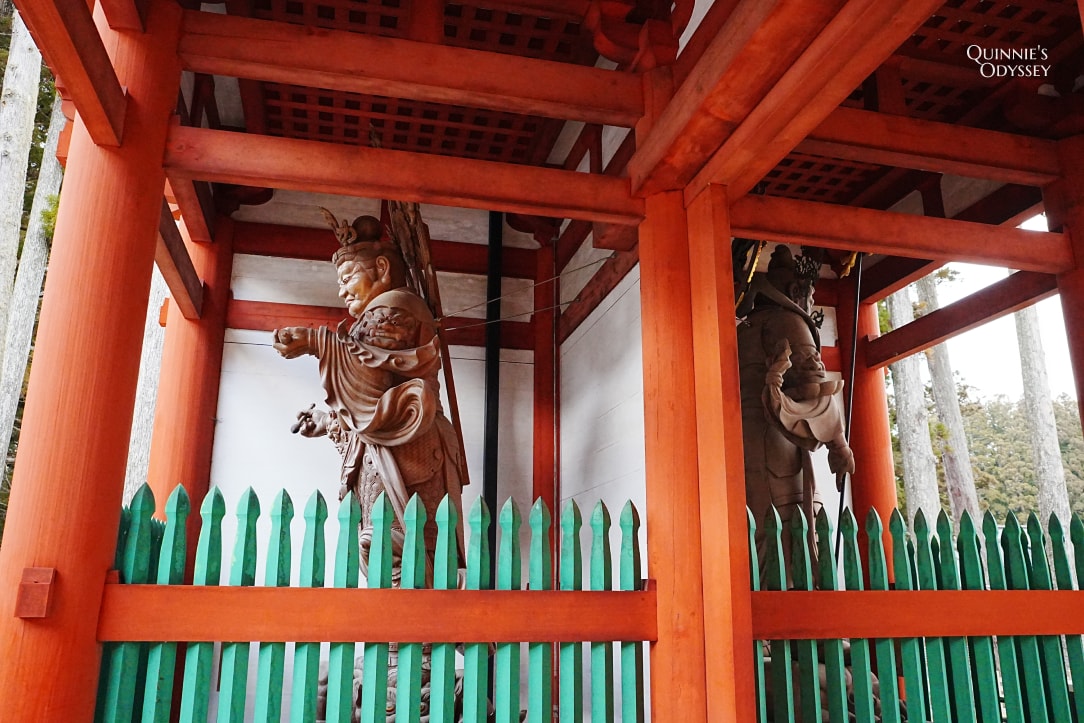
In front of the gate stand two mysterious pillars known as the Vajra Realm Pillars, which symbolize the Diamond Realm Mandala in esoteric Buddhism.
They represent unshakable truth and mark the entrance to the world of Buddhist wisdom.
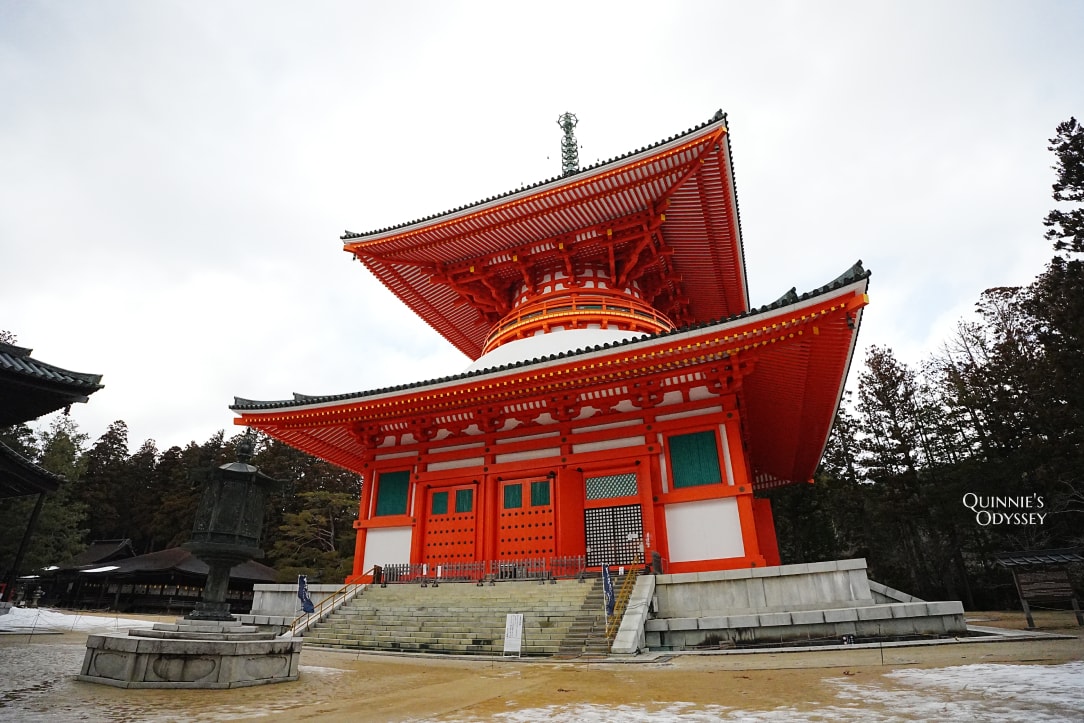
In winter’s muted colors, the bright vermillion Konpon Daito (Great Pagoda) stands out dramatically.
Towering 49 meters high, it’s the most iconic structure in Danjo Garan.
This pagoda was designed by Kobo Daishi himself and is considered Japan’s first-ever Shingon-style pagoda.
It sits at the very center of the mandala-shaped layout of Koyasan, representing Dainichi Nyorai, the central Buddha of Shingon cosmology.
The interior is open to visitors.
Inside, you’ll find a statue of Dainichi Nyorai surrounded by sixteen deities of the Diamond Realm Mandala, forming a three-dimensional representation of the esoteric Buddhist universe.
(Photography is not allowed inside.)
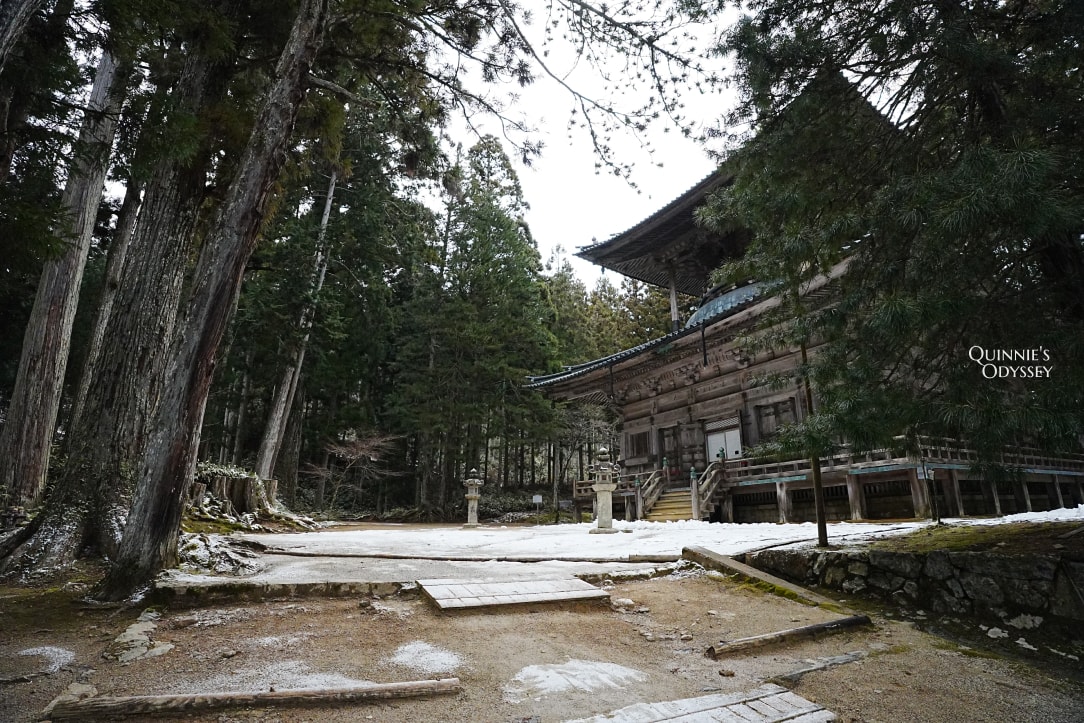
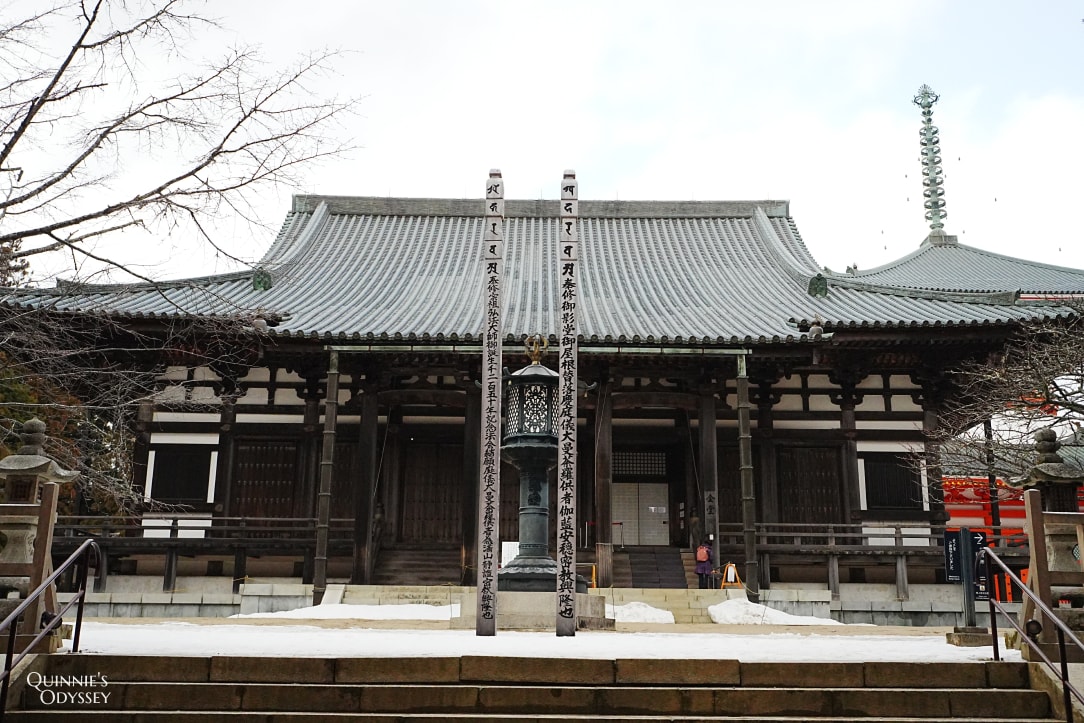
The Kondō is the main hall of Danjo Garan and one of the most important places in all of Koyasan.
This is where major ceremonies and rituals are held, from everyday chanting sessions to special events honoring Kobo Daishi.
Inside the hall, the principal deity is Yakushi Nyorai, the Buddha of healing and well-being. In esoteric cosmology, Yakushi Nyorai rules the Eastern Pure Land, which aligns with the mandala symbolism throughout the Garan.
The hall is usually open to the public, though certain areas may be restricted, and photography is prohibited.
Visitors are expected to remain quiet to respect the monks in training.
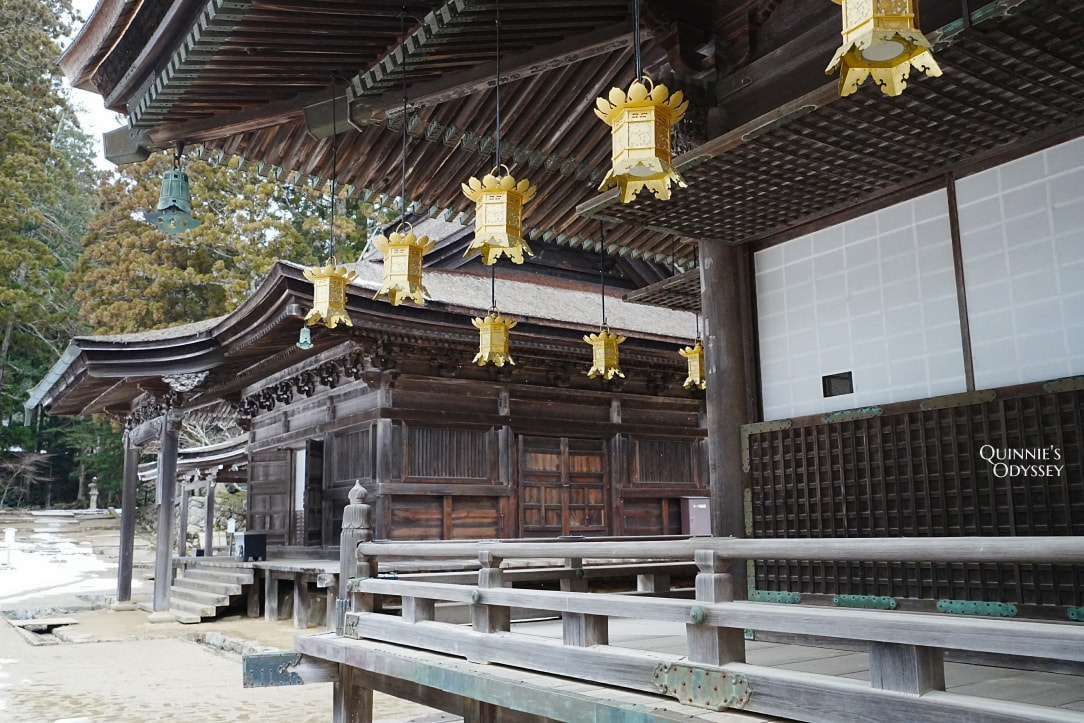
Miedo is said to be the place where Kobo Daishi frequently lived and meditated.
It later became a hall dedicated to him and houses a seated statue of the master.
The simple wooden structure blends beautifully with the surrounding forest.
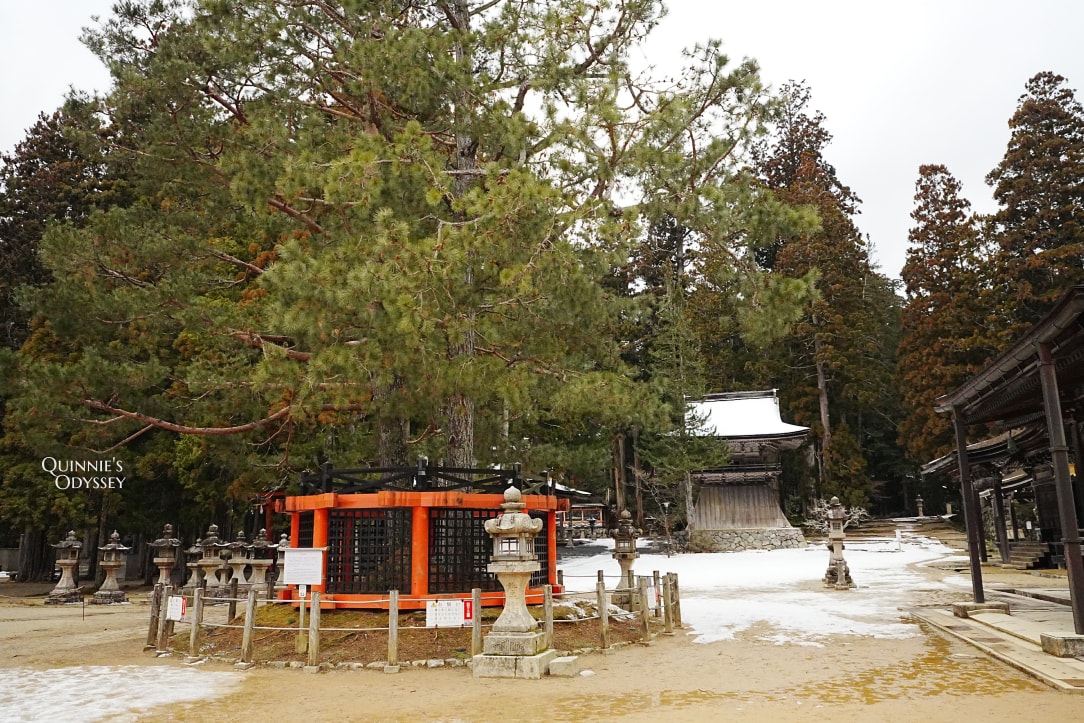
The “Sankosho Pine” is a symbolic pine tree with a unique story.
Unlike normal pine needles, which come in pairs, this tree has clusters of three needles, which are extremely rare.
According to legend, when Kobo Daishi was returning from China, he threw a three-pronged vajra (a ritual tool) into the sky, praying it would land on the ideal site for his new monastery. Years later, when he arrived at Koyasan, he discovered the vajra caught in this tree, and took it as a divine sign to build the spiritual headquarters here.
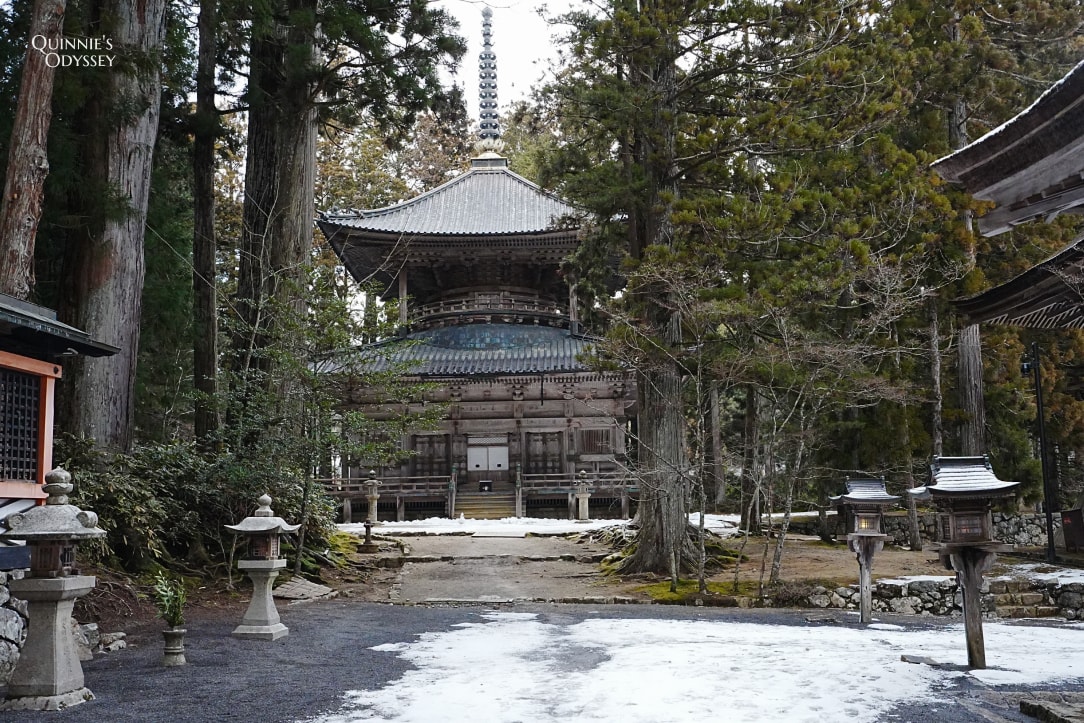
The East and West Pagodas mirror the cosmic order of the mandala.
The East Pagoda was first built in 1127 under the emperor’s wish, enshrining deities such as the Victorious Crown Buddha, flanked by Fudō Myōō and Gōzanze Myōō.
The West Pagoda was built earlier, in 887, according to Kobo Daishi’s wishes.
Today’s structure is the fifth reconstruction, completed in 1834.
Its 36 pillars represent the 36 deities of the Diamond Realm Mandala, with Dainichi Nyorai at the center, surrounded by four deities of the Womb Realm, symbolizing the unity of the two mandalas.
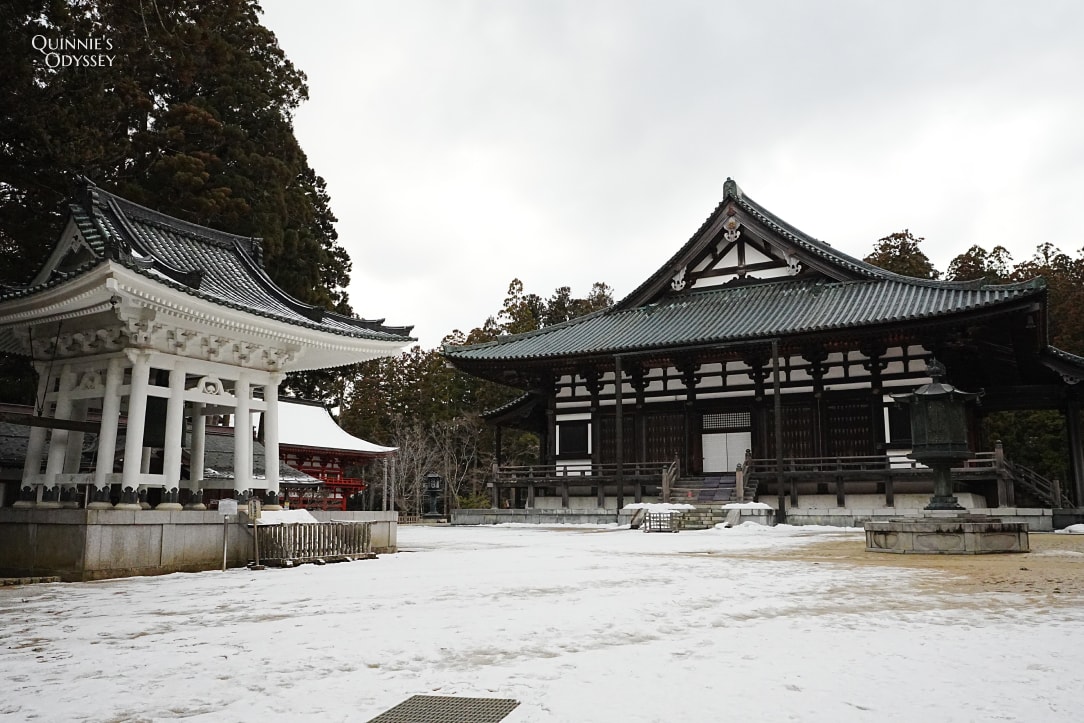
The Great Bell is said to have been commissioned by Kobo Daishi, though it wasn’t completed until the time of the second head monk.
It has survived multiple fires and was recast several times.
The current bell dates back to 1547 and was once the fourth-largest bell in Japan, earning the nickname “Koya Shiro.”
It rings five times a day: at 4 a.m., 1 p.m., 5 p.m., 9 p.m., and 11 p.m.
Its deep vibrations echoing throughout the mountain.
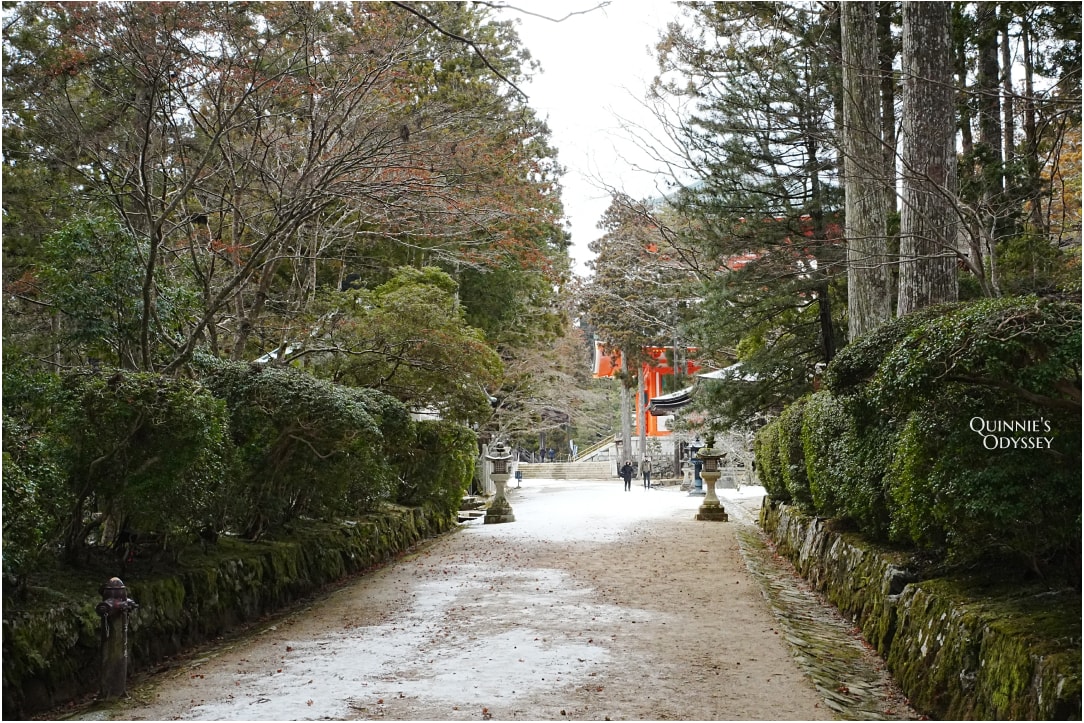
Jabaru-michi connects Danjo Garan with Kongobu-ji, running from the entrance of the Garan to near the East Pagoda.
The path winds through tall cedar trees, and its twisting shape resembles a serpent, hence the name “Jabaru,” meaning “snake’s belly.”
In the past, monks and pilgrims used this trail to move between the most sacred places on Koyasan.
The path is especially famous in autumn, when the maple leaves turn vibrant red.
Sunlight filtering through the trees creates a magical scene, one of Koyasan’s most beloved fall spots.
(In winter, though, it’s honestly just a simple stone path 😂)
After visiting Danjo Garan, don’t forget to explore Okunoin, my personal favorite spot on the mountain. 👉👉 Okunoin Koyasan Travel Guide: Visiting the Sacred Resting Place of Kobo Daishi
How to get to Koyasan 👉👉 Koyasan Day Trip Guide: Danjo Garan, Okunoin & Easy Transport Tips
▼ Koyasan Travel Essentials ▼

Thanks for reading!
If you’re interested in my stories, feel free to follow me on Instagram.
👉👉 IG: @sika_artist 👈👈