Physical Address
304 North Cardinal St.
Dorchester Center, MA 02124
Physical Address
304 North Cardinal St.
Dorchester Center, MA 02124

Gion Shirakawa has a kind of romance that’s hard to put into words.
The stone-paved path is only about 200 meters long, but lined with cherry blossoms and willow trees, the whole space feels soft and gently glowing, almost like it holds the most tender side of Kyoto.

When I visited, a light drizzle was falling. It wasn’t the bright, picture-perfect kind of beauty you get on a sunny day, but instead, there was a quiet, subtle romance. There were fewer tourists around, and it felt especially peaceful and comfortable to walk through.
This area has been a lively hanamachi (geisha district) since the Edo period, and even today, it still retains its old-world charm. Traditional wooden townhouses stand quietly on both sides of the street, and walking here feels like stepping back into old Kyoto.
Knowing that this path was once part of the everyday routes used by geiko and maiko, it’s easy to understand why Gion Shirakawa carries such an elegant, unhurried atmosphere. It’s the kind of grace that can only come from history slowly settling into a place.
The area around Tatsumi Bridge along the Shirakawa River is designated as a Preservation District for Groups of Traditional Buildings. The streetscape has been carefully preserved, so what we see today looks much the same as it did during the Edo and Meiji periods. It makes the walk feel deeply rooted in history.
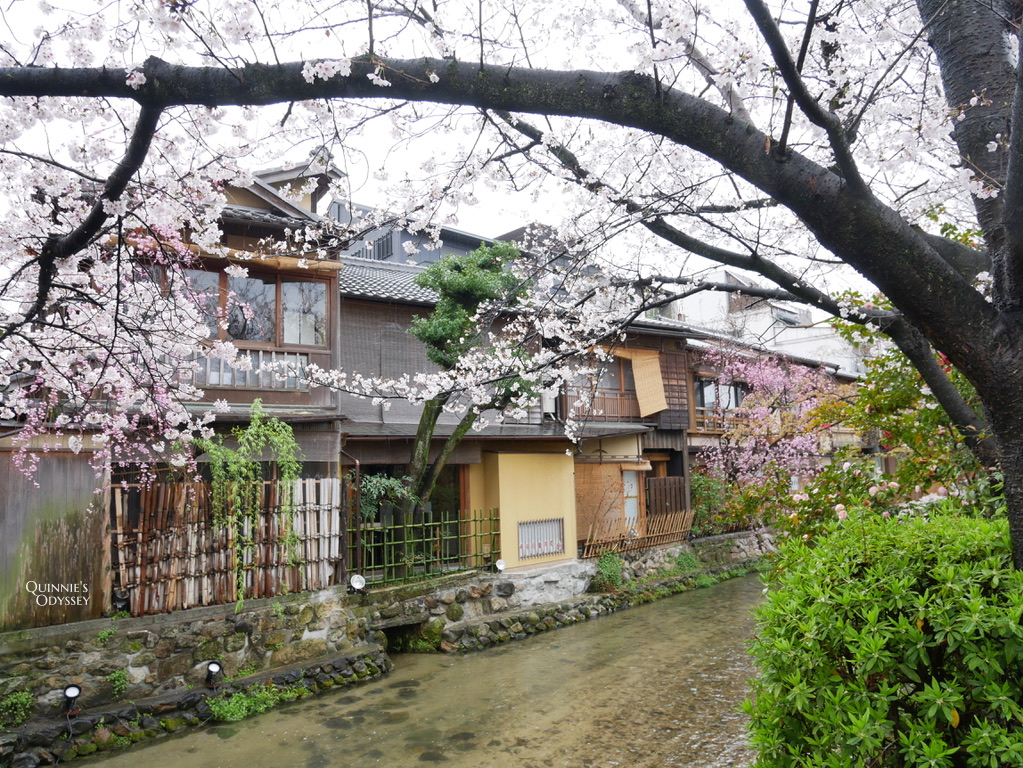
According to information from the City of Kyoto, bridges in the Shirakawa area can be traced back as far as the Keicho era, around the early 1600s. That means this area has already been an important part of daily life in Kyoto for several hundred years.

Right next to Tatsumi Bridge is a small but meaningful shrine called Tatsumi Daimyojin.
Although it’s tiny, it plays an important role in the spiritual life of Gion’s geiko and maiko culture.
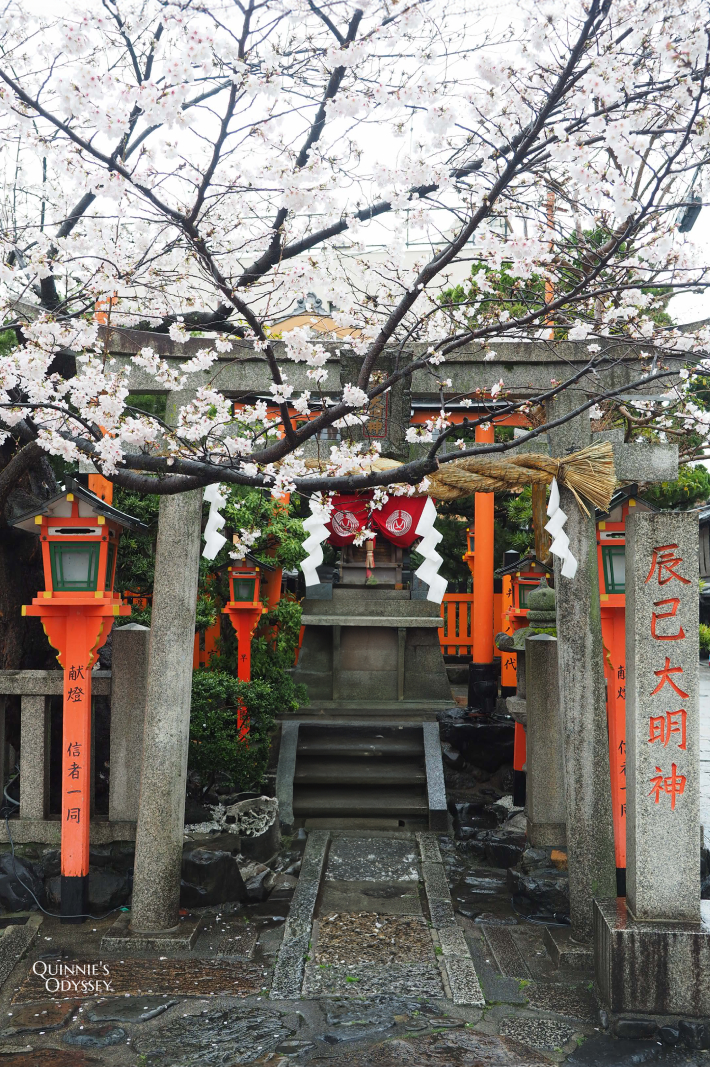
The earliest belief associated with this shrine is white snake worship.
Long ago, a family living nearby enshrined a white snake as their household guardian deity. Over time, this belief was relocated to the area beside Tatsumi Bridge.
Because white snakes are closely associated with Benzaiten, the goddess of wealth, music, and the arts, geiko and maiko began visiting the shrine to pray for improved skills and success in their work.
Interestingly, there’s another legend tied to Tatsumi Daimyojin.
Some say that foxes used to appear frequently in this area, sometimes transforming into human form at night to play tricks on passersby, frightening and troubling the locals. Eventually, people decided to enshrine the spirit instead, hoping it would stop causing mischief, and peace was restored.
Another version replaces the fox with a raccoon dog (tanuki), but the idea is the same: a supernatural being transformed into a guardian deity.
No matter which story you believe, Tatsumi Daimyojin holds a very important place in the Tatsumi Bridge area. It may look like a small, unassuming shrine, but it quietly carries the everyday life, beliefs, and stories of Gion within it.
I really love the quiet, romantic atmosphere of Gion Shirakawa.
The day I visited, the sky was overcast and there was a light drizzle in the air. Everyone was walking slowly along the stone-paved path with umbrellas, and the whole area felt calm and peaceful.
I was holding a clear umbrella borrowed from my hotel and walking along the Shirakawa River.
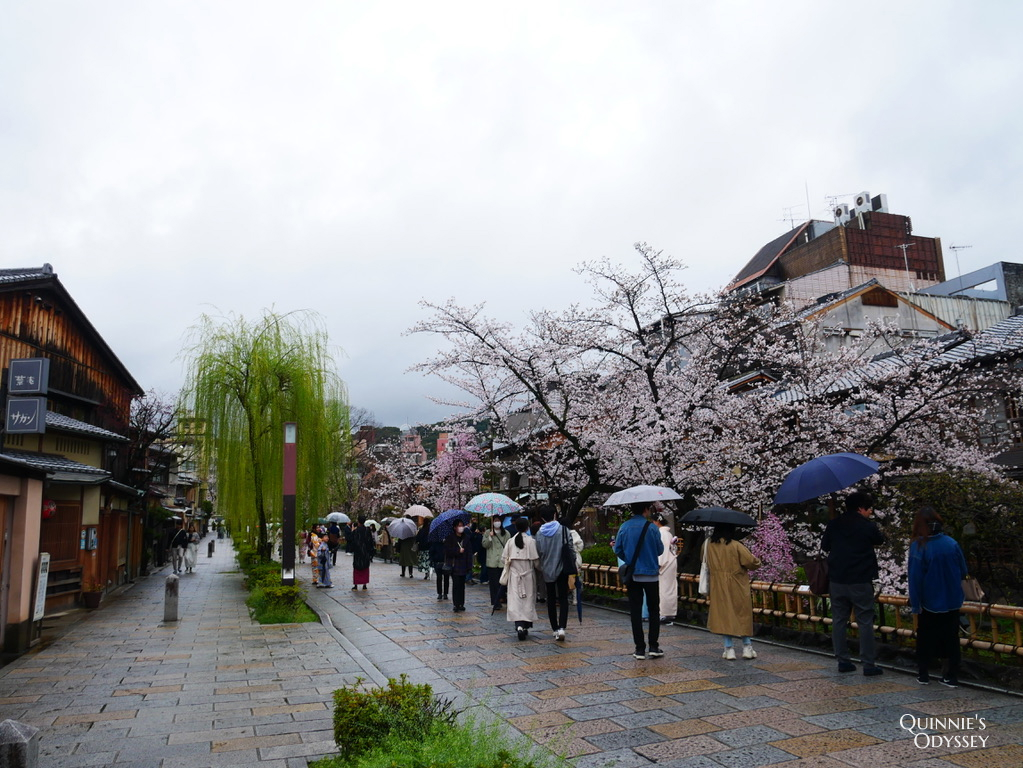
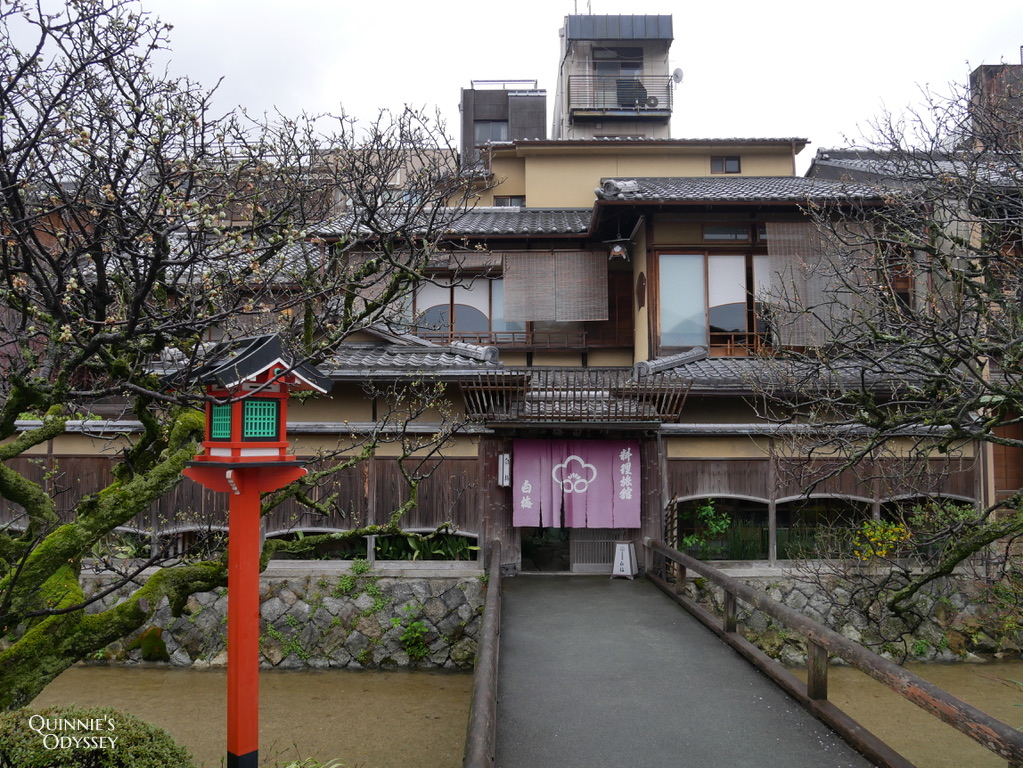
There are about forty to fifty cherry trees in this area. It’s not a huge or overwhelming cherry blossom spot, but with the river, small bridges, and traditional townhouses, everything feels perfectly balanced.
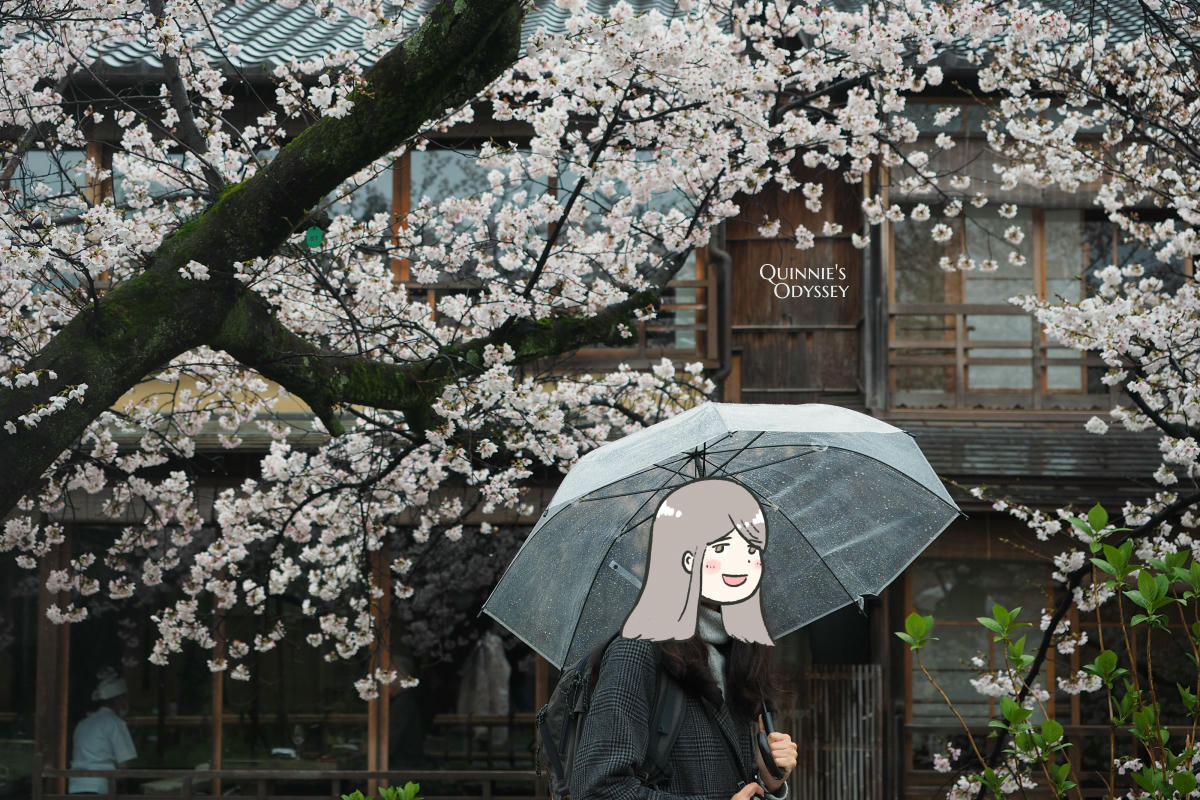
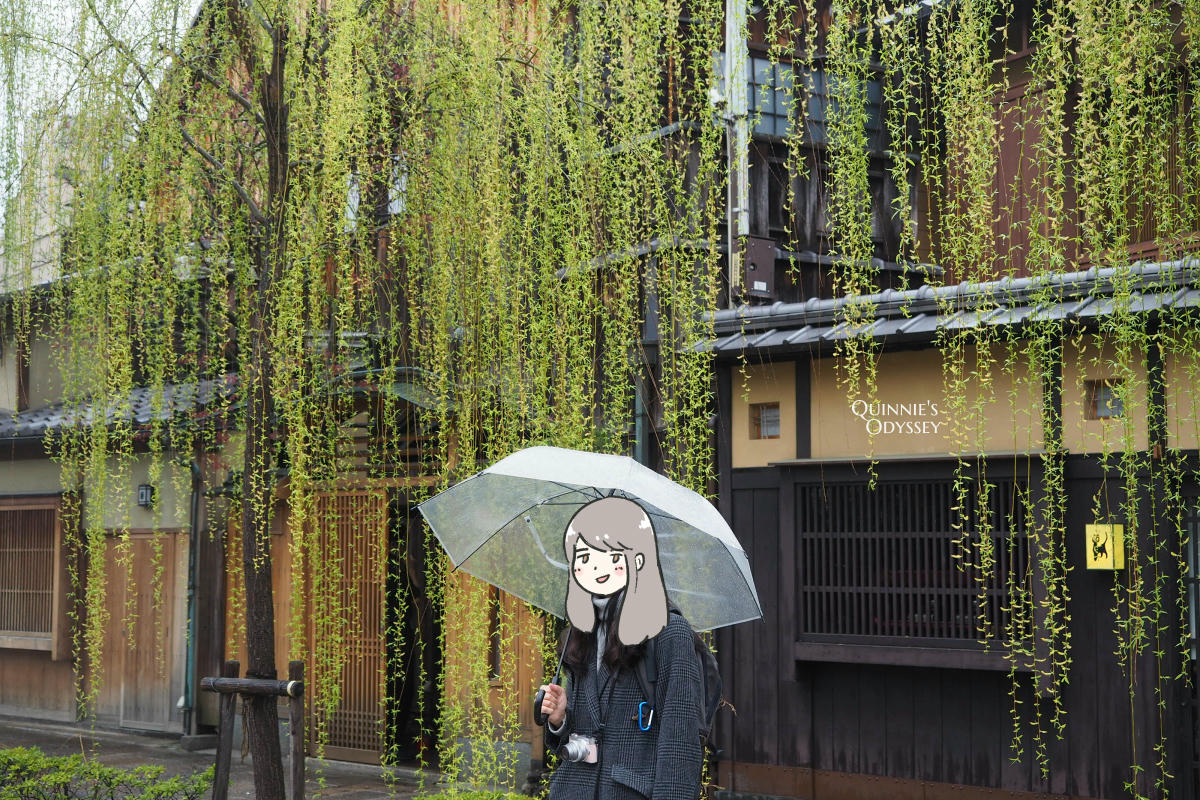
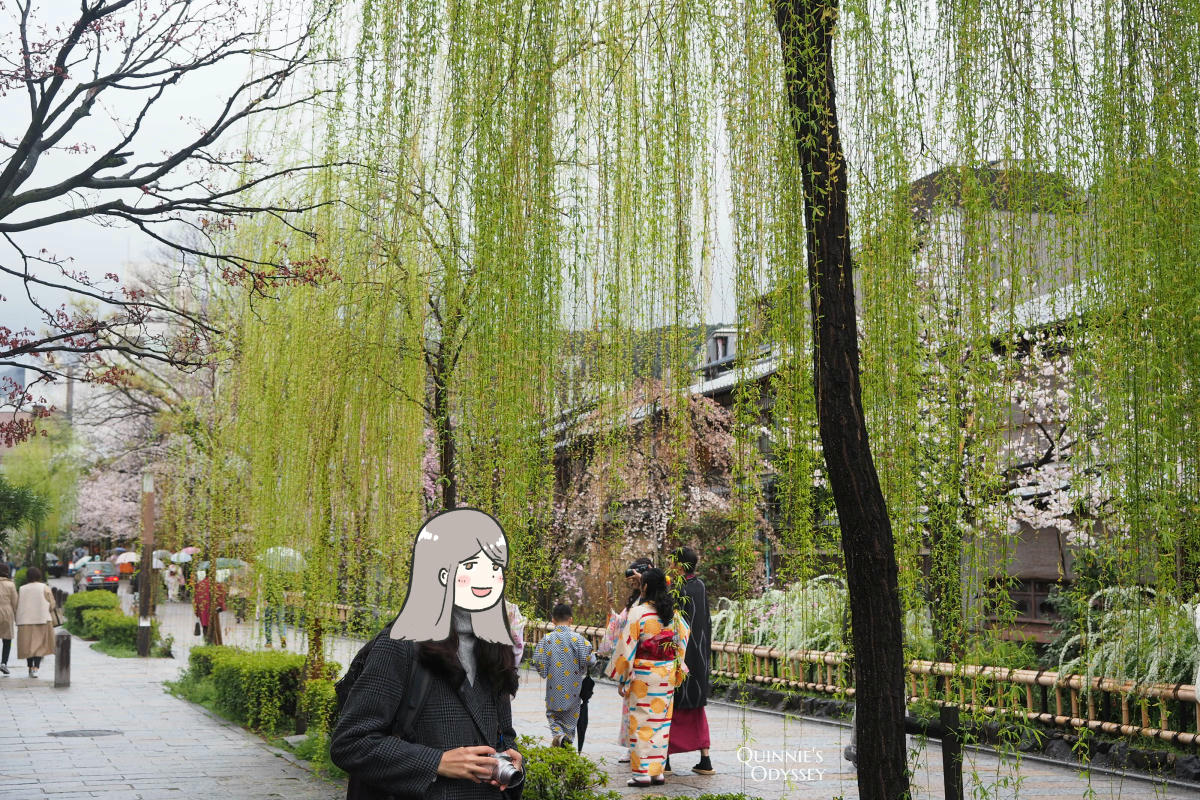
What makes it even more beautiful are the willow trees lining the riverbanks. The soft green of the willows mixed with the pale pink and white cherry blossoms creates a very gentle color palette that’s easy on the eyes and incredibly soothing.
I heard that you might occasionally see maiko here, but unfortunately I didn’t run into any this time.
As I walked along the river, I looked down and noticed a grey heron standing calmly in the water, slowly cleaning its feathers. Every now and then, it seemed to exchange glances with chefs working inside nearby restaurants, which was such a charming little moment.

Both sides of Gion Shirakawa are lined with traditional wooden townhouses. This area is designated as an Important Preservation District for Groups of Traditional Buildings, so many of the buildings still have their original wooden exteriors, window frames, and understated color tones.
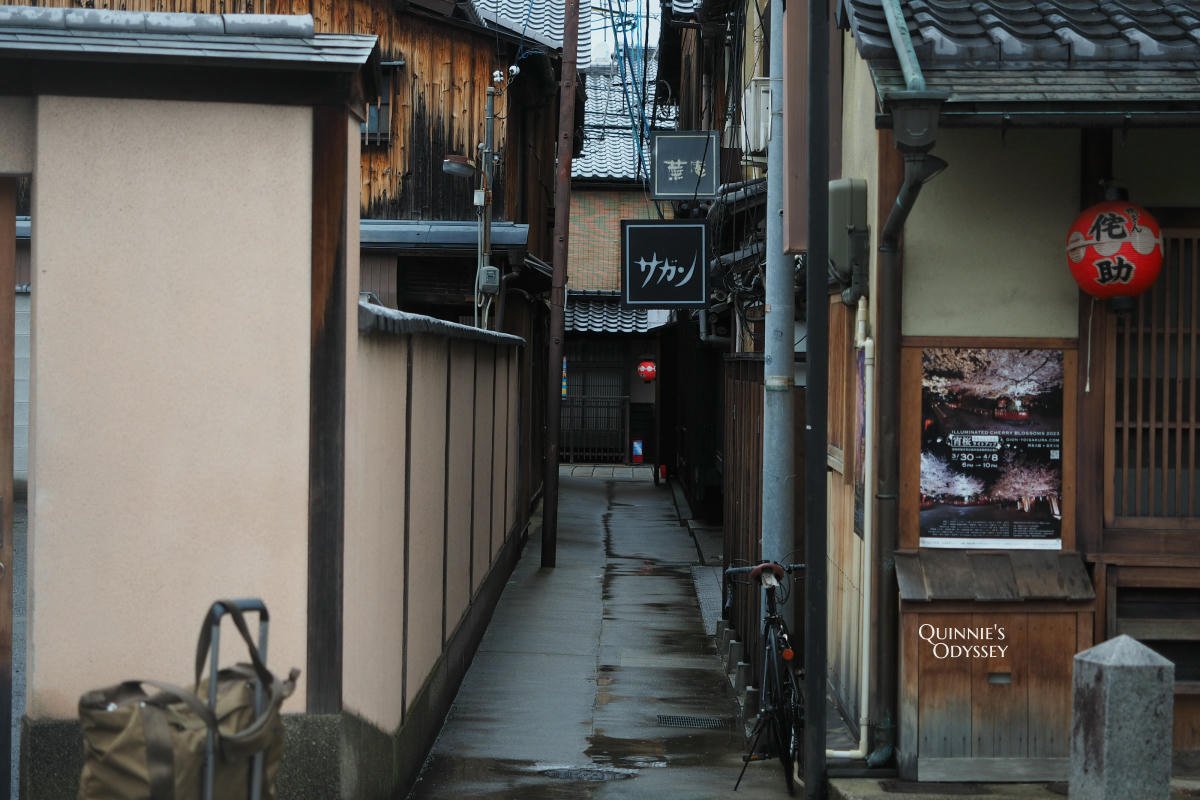
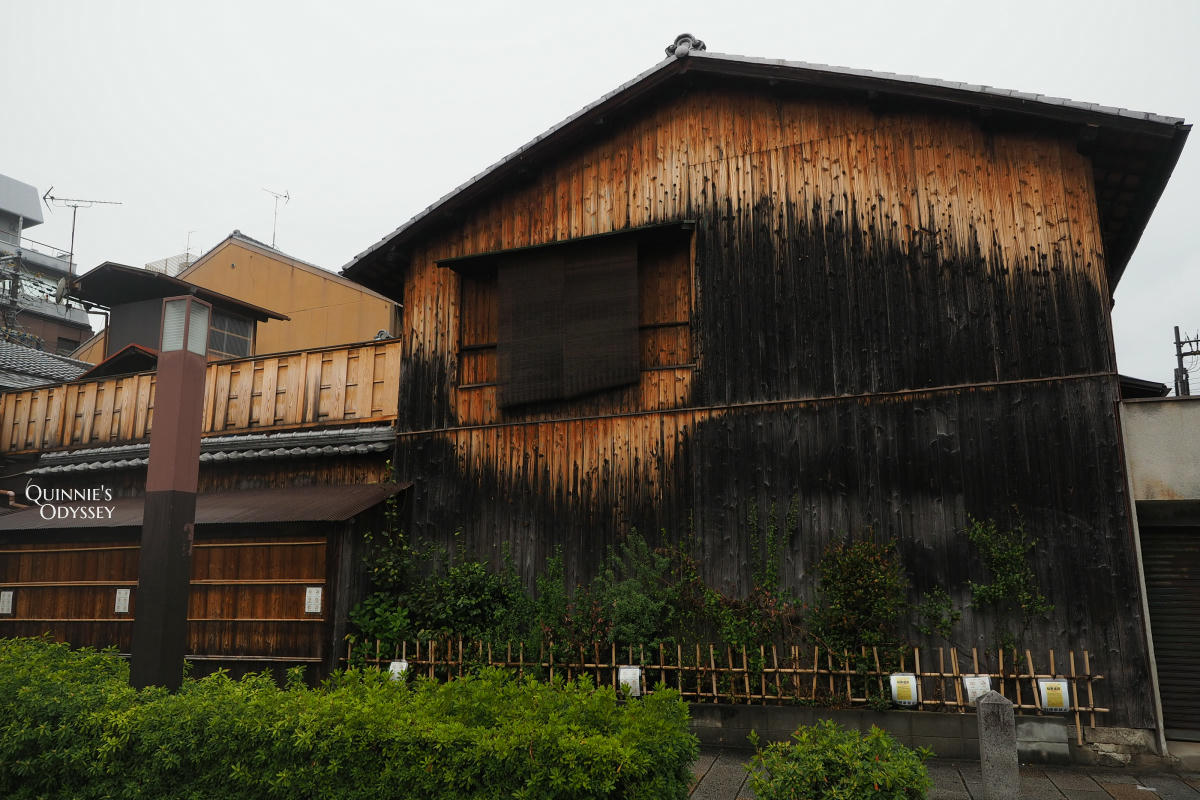
Along the way, you’ll pass several traditional ryotei (high-end Japanese restaurants). Their signs are small and discreet, but you can tell right away they’re not the kind of places you casually walk into.
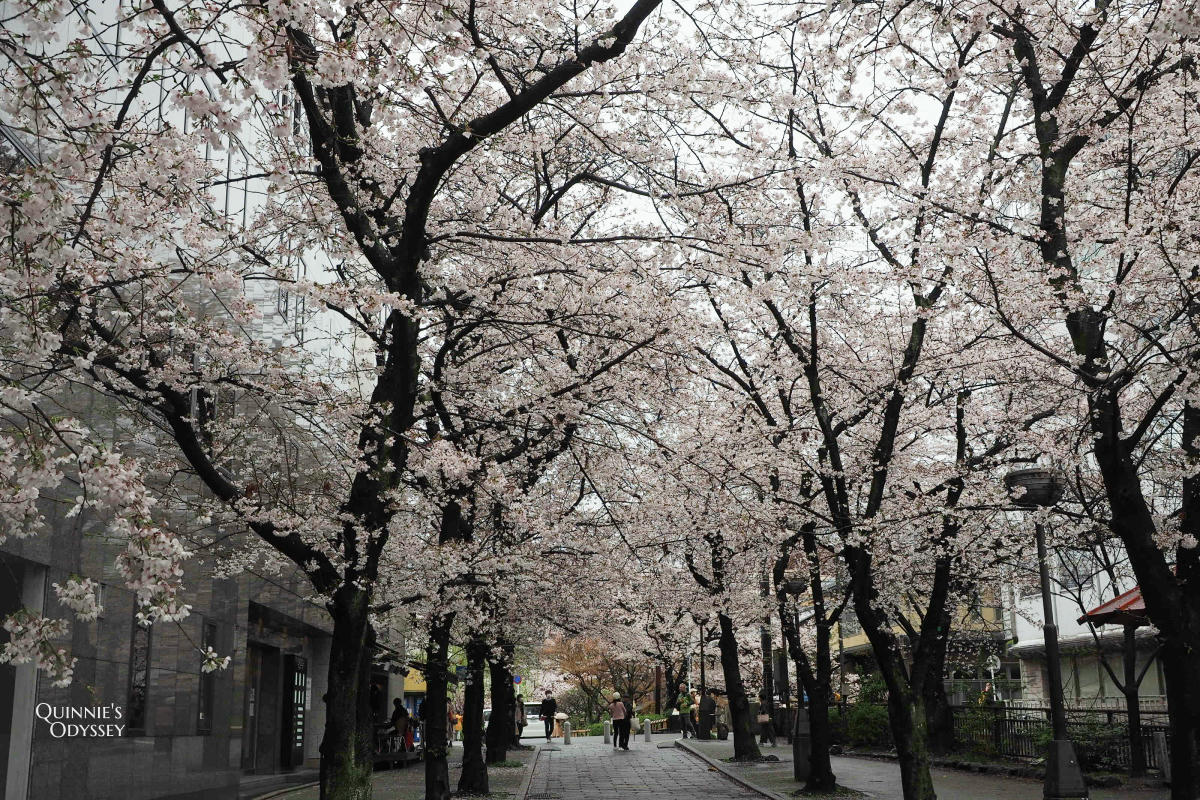
Near the end of the stone path, there’s a short stretch where the cherry blossoms are especially dense, blooming on both sides at the same time. Paired with the grayish-white walls and stone pavement, the whole scene turns into a soft, clean palette of light gray and white, incredibly photogenic.


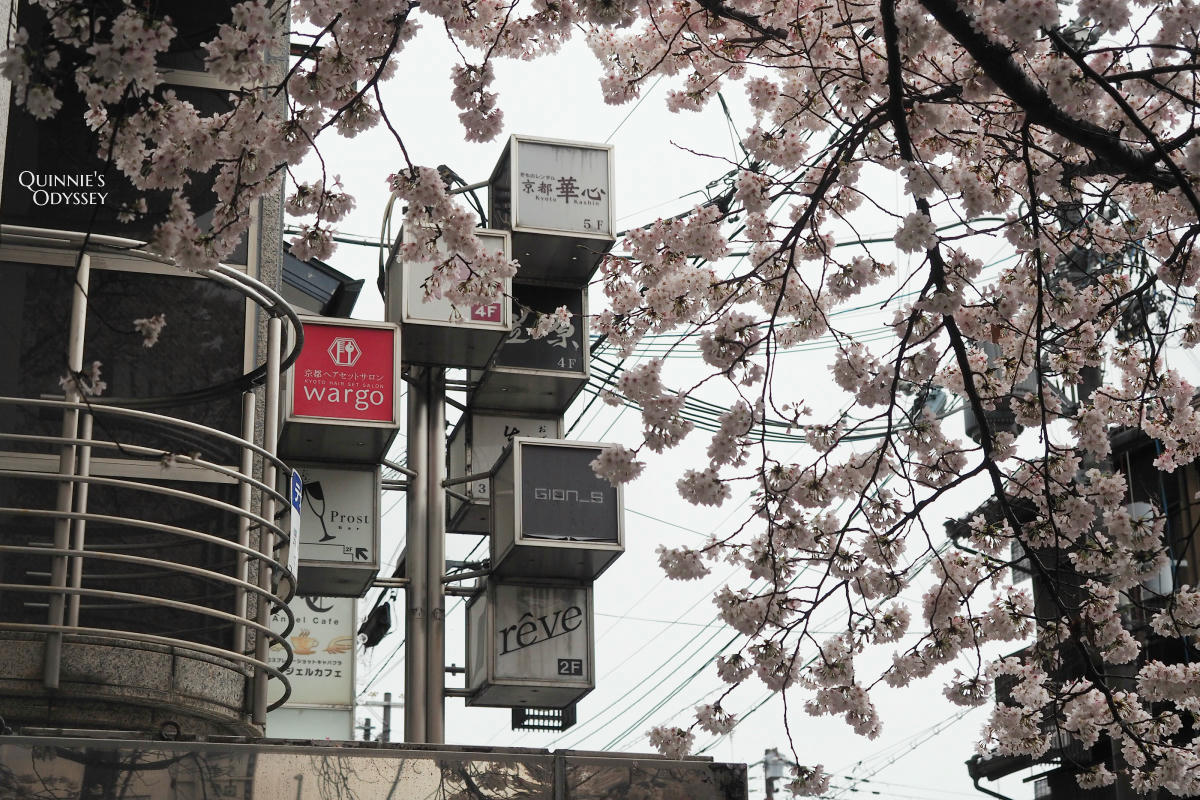
If you have time to come back in the evening, you can also enjoy the cherry blossoms at night.
During cherry blossom season, there’s a limited-time illumination from 5:00 PM to 10:00 PM, and once the lights turn on, Shirakawa transforms into a completely different kind of elegant beauty.
After finishing our walk along the stone-paved path, we wandered into one of the quiet, old-fashioned side streets and happened to pass by a low-key okonomiyaki restaurant called Gion Tanto.
We hadn’t had lunch yet and were starting to feel a bit hungry, so we decided to step inside and give it a try.
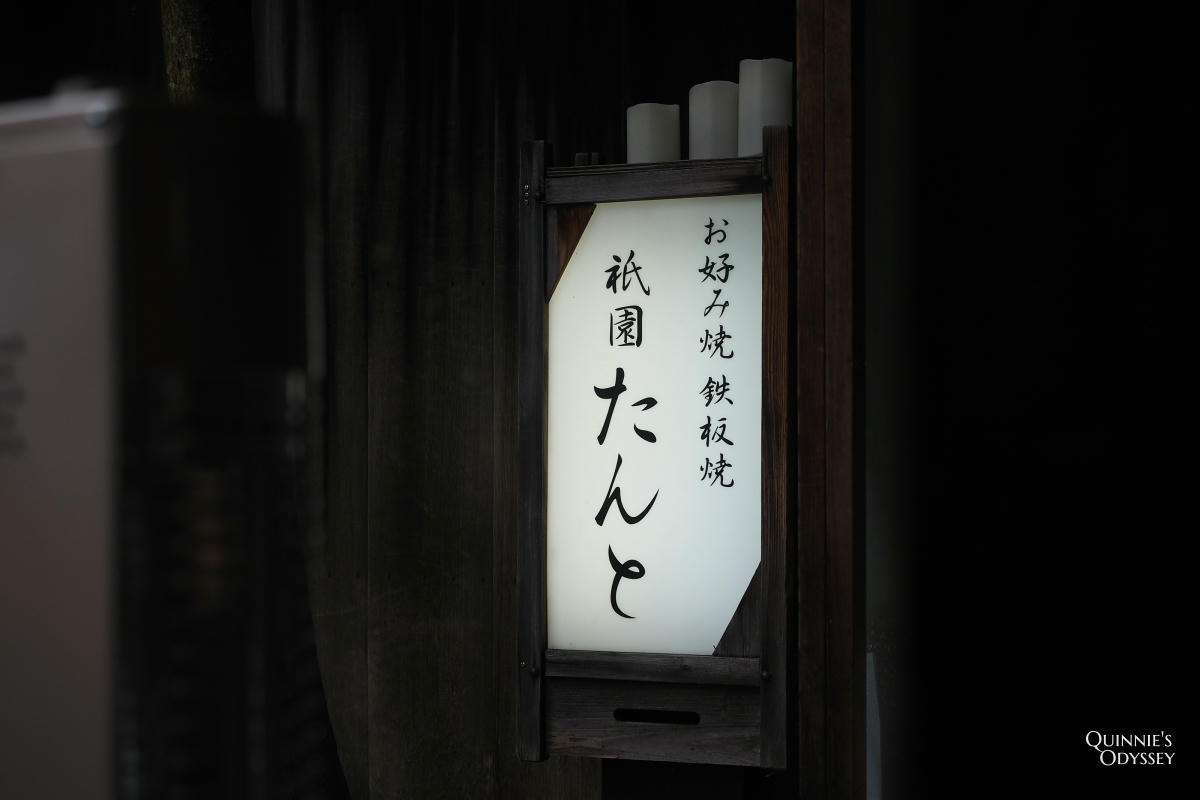
Right at the entrance, there was a slightly goofy-looking tanuki statue, placed there to pray for good business and prosperity for the restaurant.
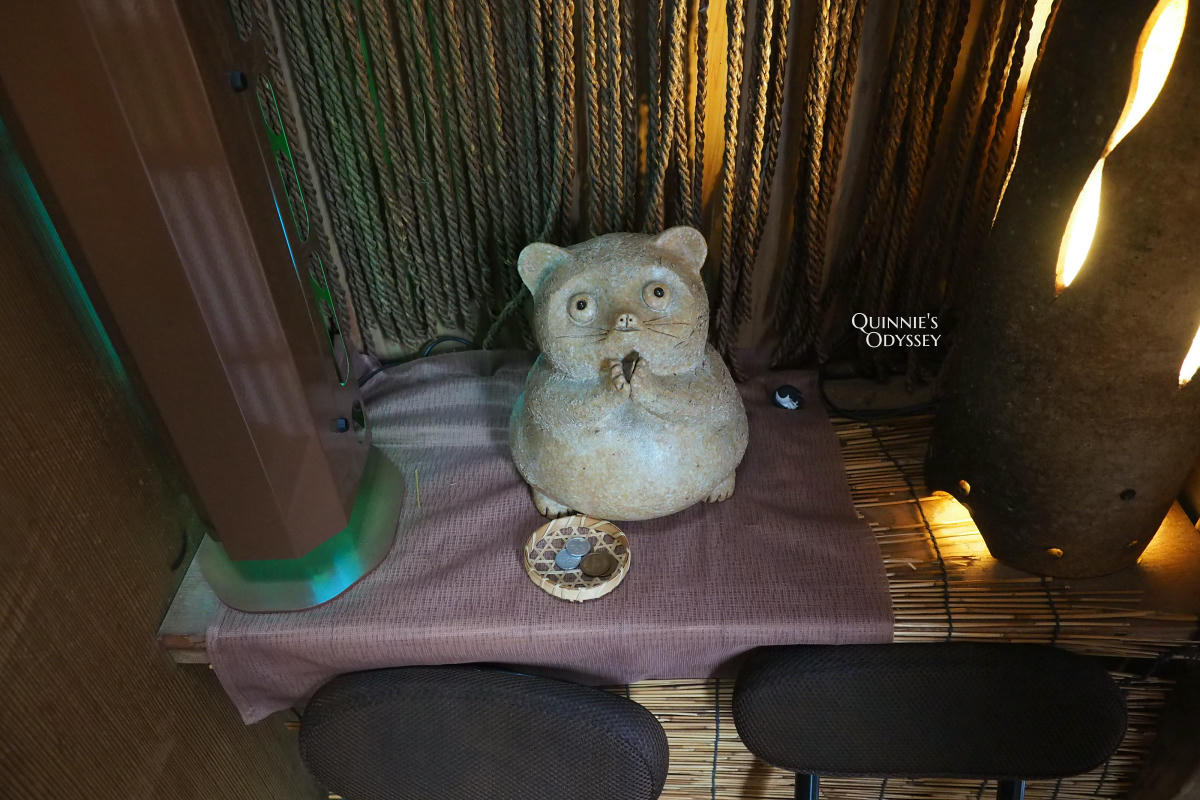
Inside, the restaurant had a nostalgic, old-style Japanese feel. Along the walls, shelves were lined with rows of sake bottles, adding to the cozy atmosphere.

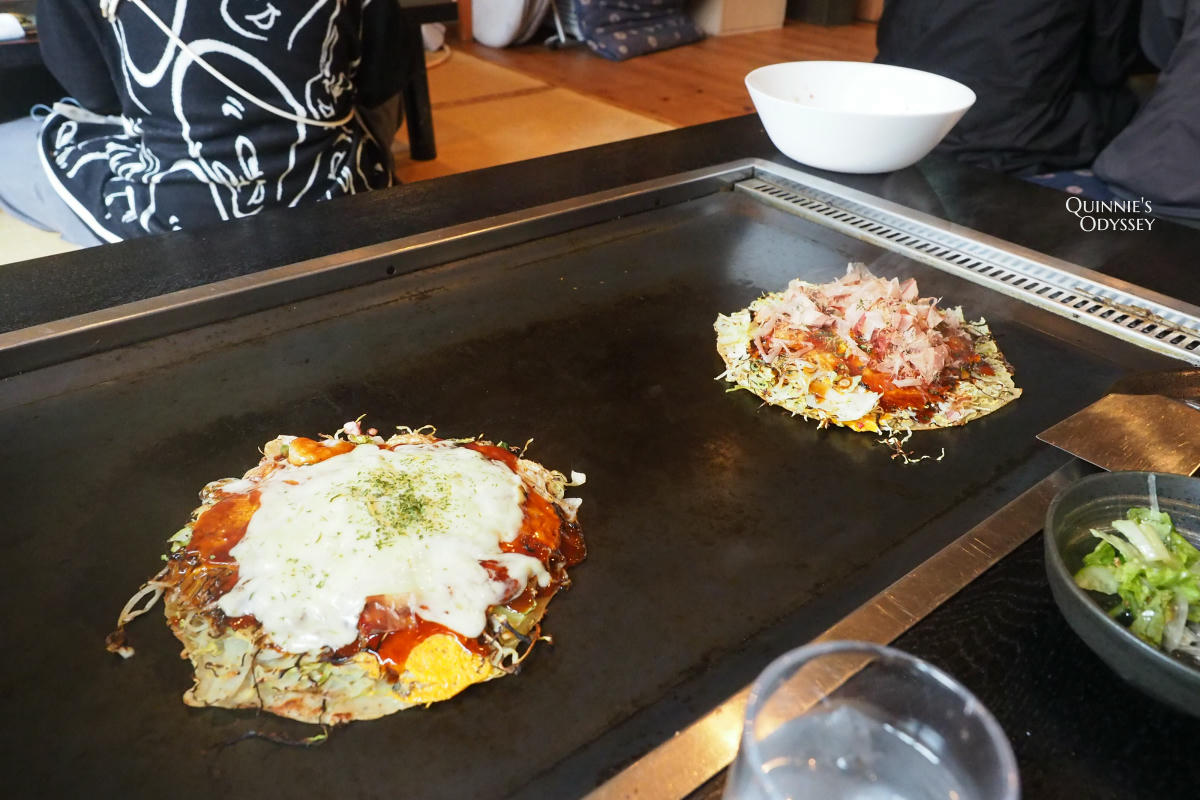
We sat on tatami mats and ordered two okonomiyaki. Once they were cooked on the hot plate built into the table, we ate them using small metal spatulas.
Maybe because it was overcast and drizzling outside, the warm and quiet space inside made us feel especially relaxed.
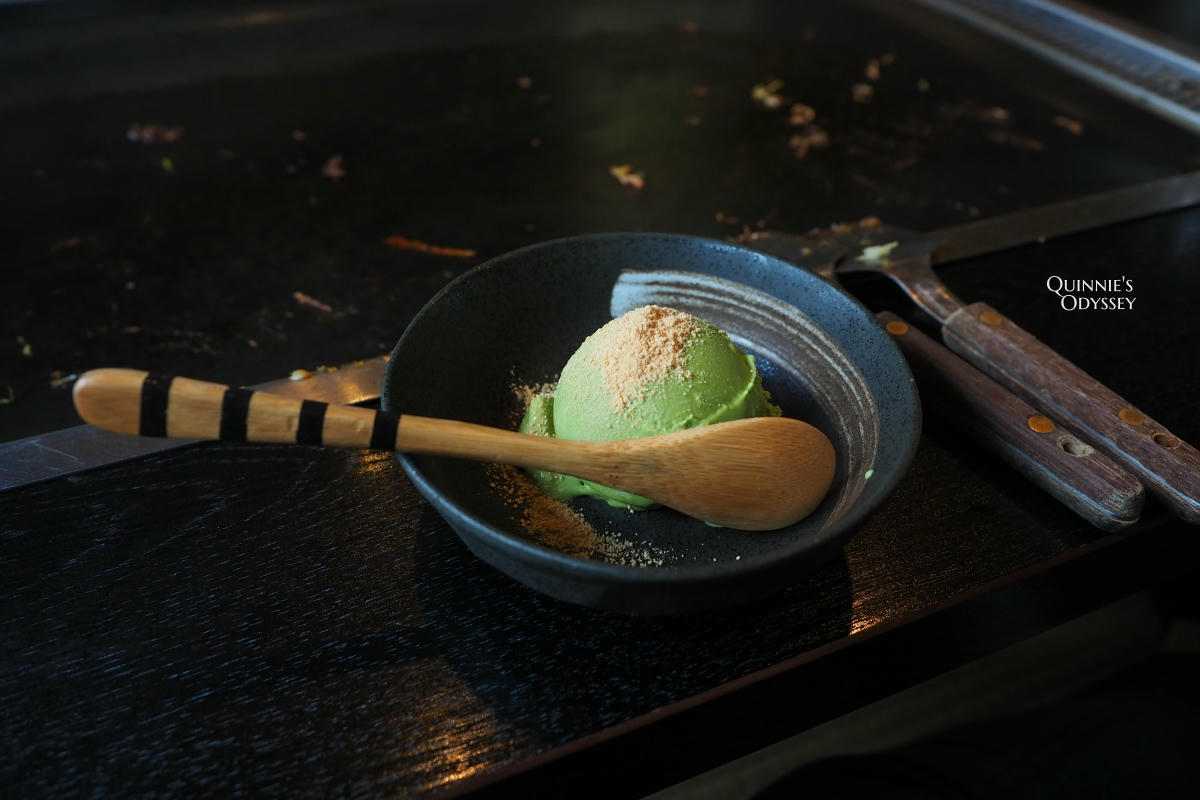
After finishing the okonomiyaki, we were also served a small dessert, matcha ice cream. It had a rich matcha flavor with just the right level of sweetness, which was a perfect ending to the meal.
That’s exactly what Gion Shirakawa feels like to me.
There’s no need to rush or chase after specific sights. Just walking slowly along the river is enough to feel gently healed by the scenery around you.
The romance here comes naturally, from the old wooden houses, the light rain, the weeping willows, the stone paths, the flowing river, and that uniquely quiet, very Kyoto kind of atmosphere.
Especially on a rainy day, this beautiful scene tends to stay with you long after you’ve left.
▼ Kyoto Travel Essentials ▼

Thanks for reading!
If you’re interested in my stories, feel free to follow me on Instagram.
👉👉 IG: @sika_artist 👈👈