Physical Address
304 North Cardinal St.
Dorchester Center, MA 02124
Physical Address
304 North Cardinal St.
Dorchester Center, MA 02124

Ginkaku-ji, officially known as Jishō-ji, is one of Kyoto’s most iconic Zen temples and a must-visit spot along the Philosopher’s Path.
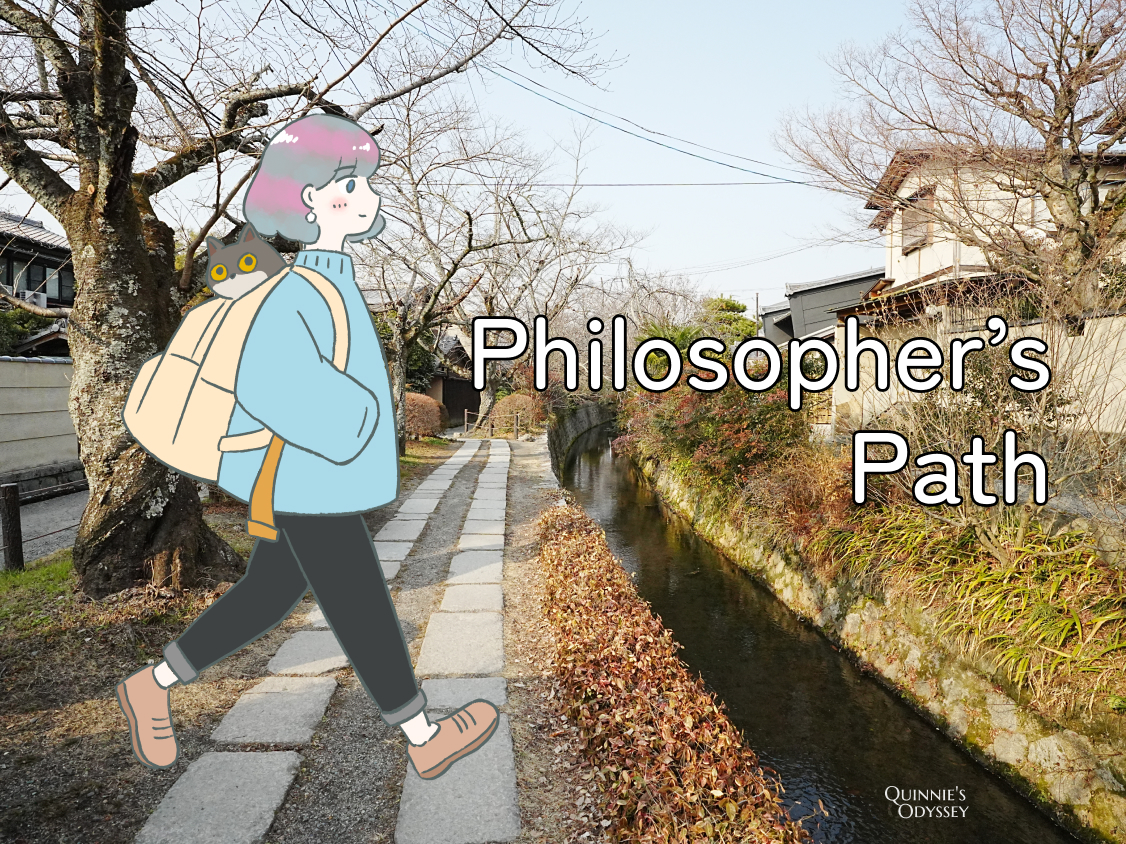
For this trip, I started from Nanzen-ji and strolled along the Philosopher’s Path, stopping by small shrines along the way. Eventually, I reached Ginkaku-ji, which became the final stop of my walk.
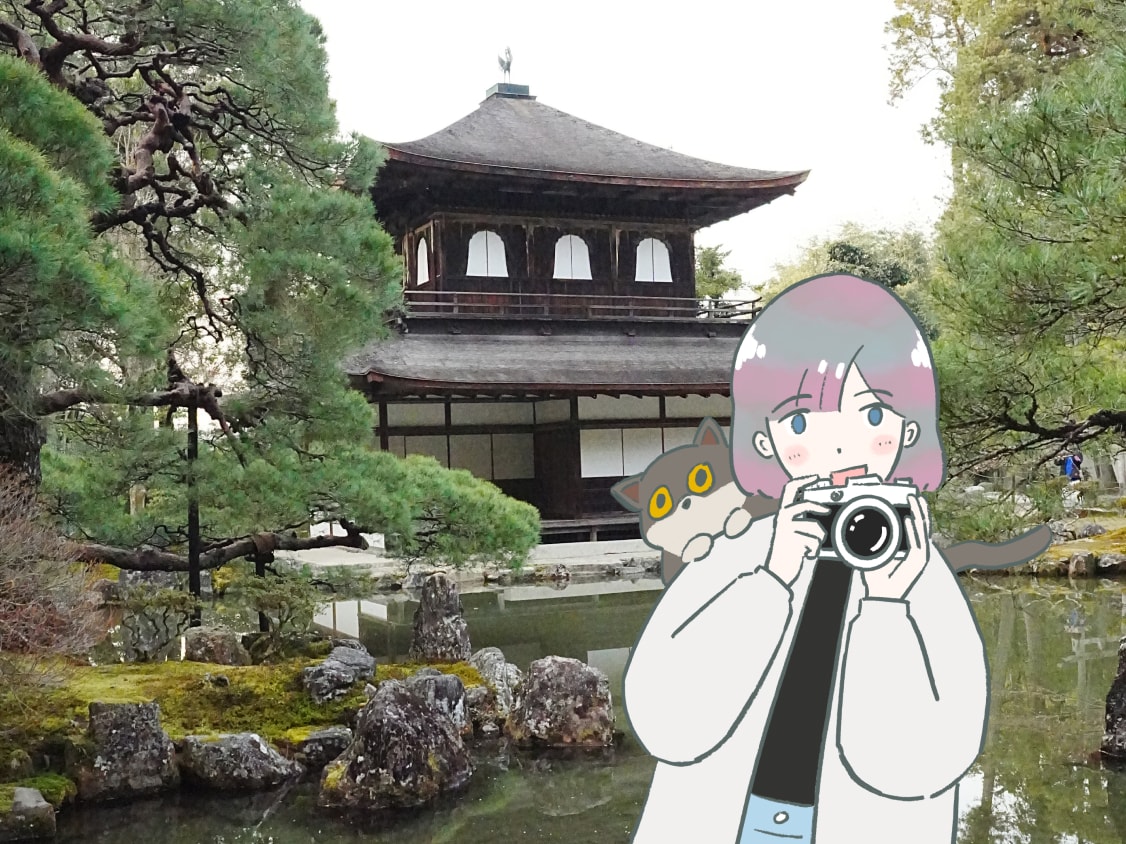
Ginkaku-ji, or Jishō-ji, is located in Kyoto’s Sakyo Ward and belongs to the Rinzai Zen sect’s Shokoku-ji branch.
The temple was originally built in 1482 by the eighth shogun of the Muromachi shogunate, Ashikaga Yoshimasa.
It was first constructed as his retirement villa, known as the Higashiyama Palace.
After his death, it was converted into a Zen temple and named Jishō-ji after his posthumous Buddhist name.
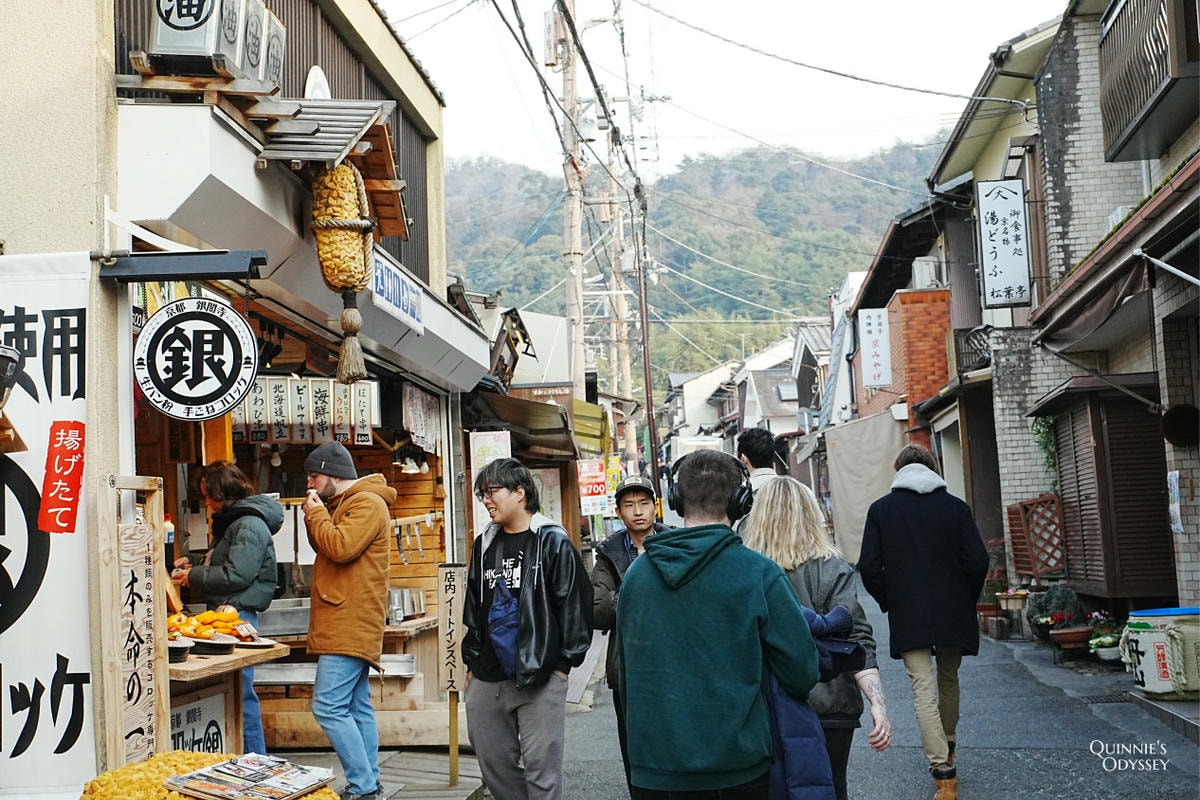
Coming from the Philosopher’s Path, you’ll first walk through the lively approach to Ginkaku-ji.
Shops line both sides of the street, selling souvenirs, senbei, and matcha treats.
Compared to the quiet atmosphere of the Philosopher’s Path, the crowd here suddenly becomes much thicker.
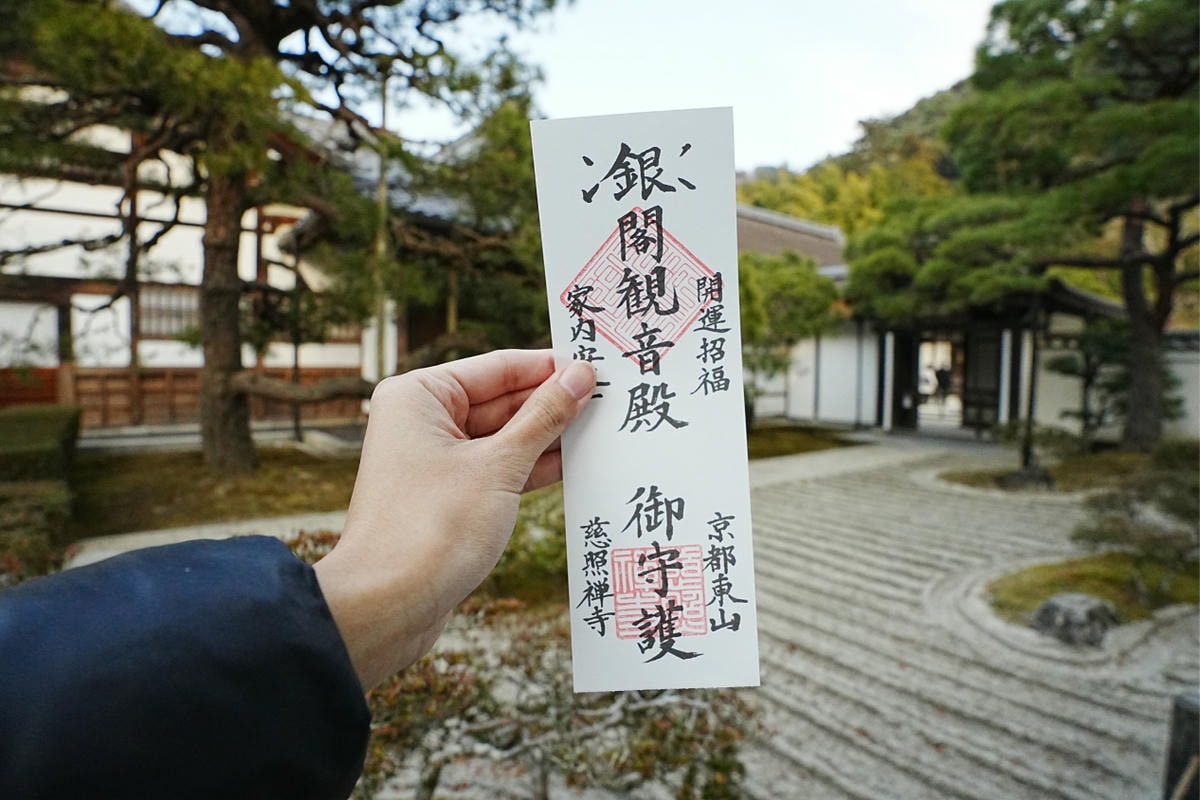
Admission to Ginkaku-ji is 500 yen for adults, and the ticket itself looks like a traditional charm, definitely something worth keeping.
The visitor route is easy to follow.
The first things you’ll see are the famous Silver Sand Garden and the Moon Viewing Platform, classic elements of a karesansui (dry landscape) garden.
The garden is covered with white sand, representing water, while the carefully raked patterns symbolize flowing waves.
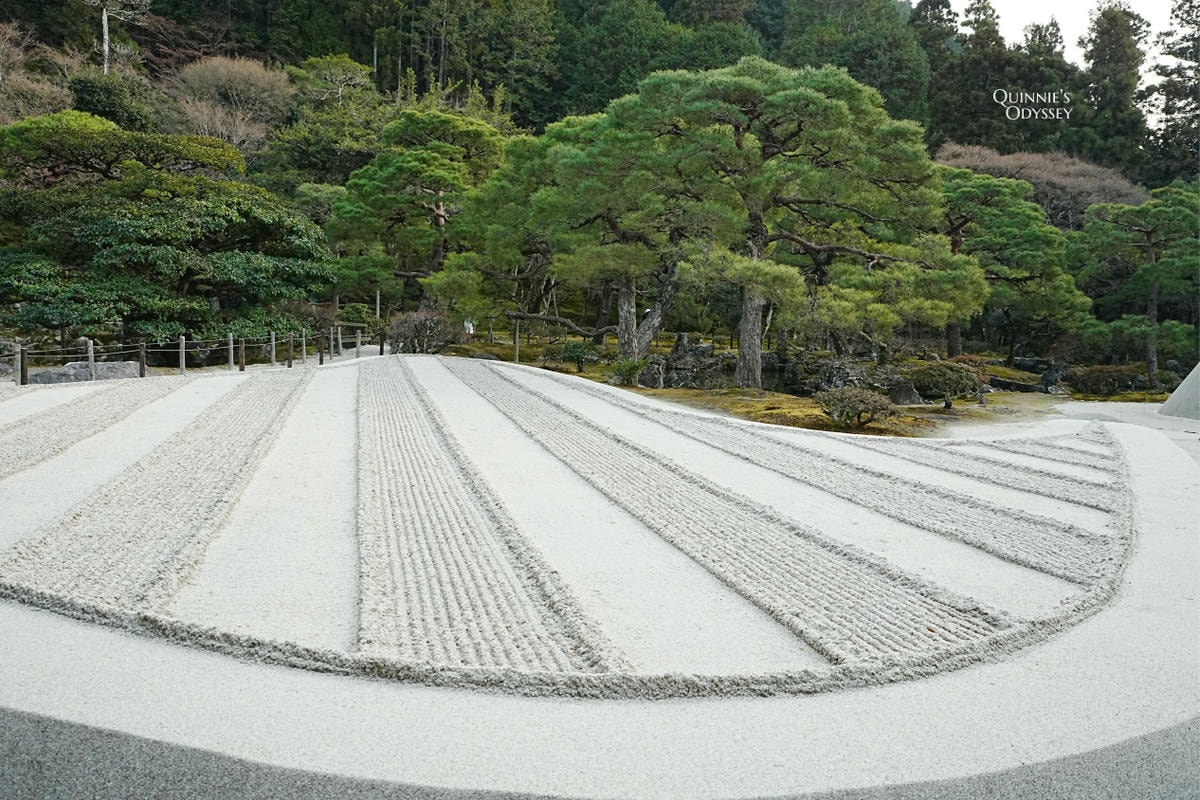
The conical Moon Viewing Platform is said to have been designed for moon-gazing, adding a serene and meditative atmosphere to the garden.
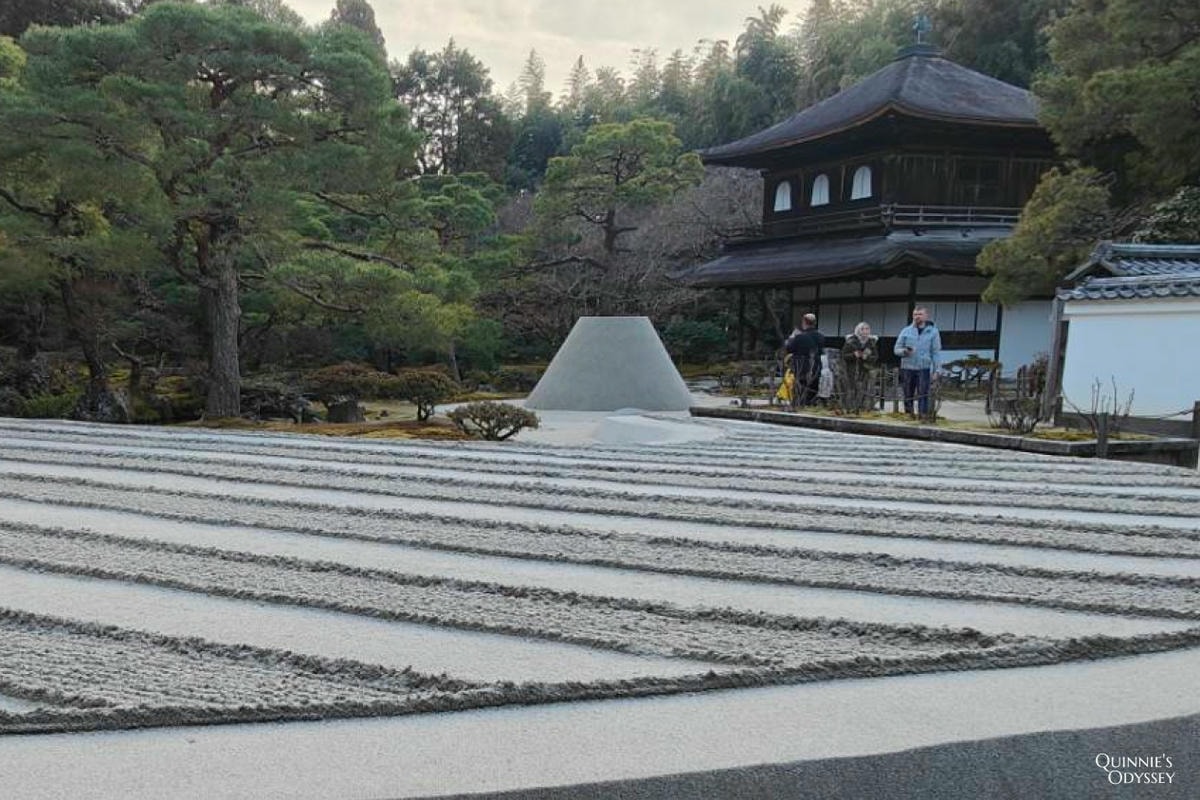
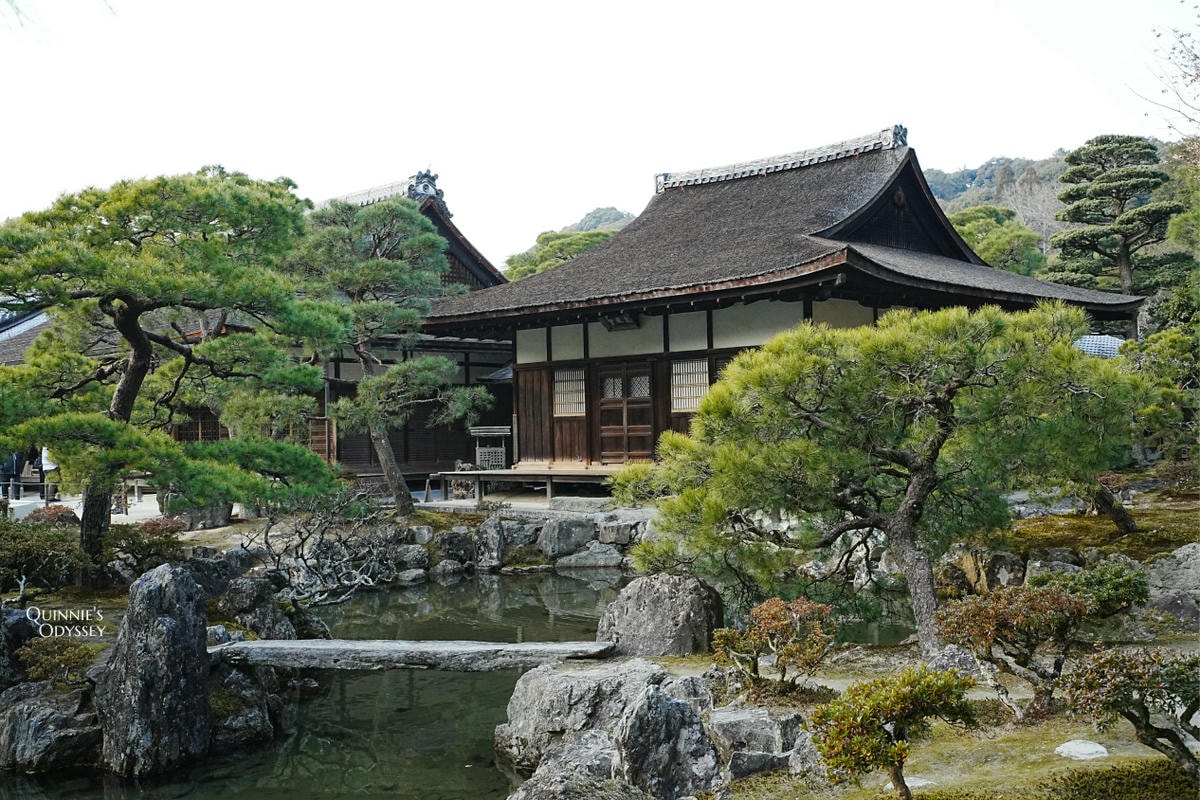
The central area of the temple complex is arranged around Kinkyo Pond, forming a stroll garden where visitors can walk along paths and enjoy different views from each angle.
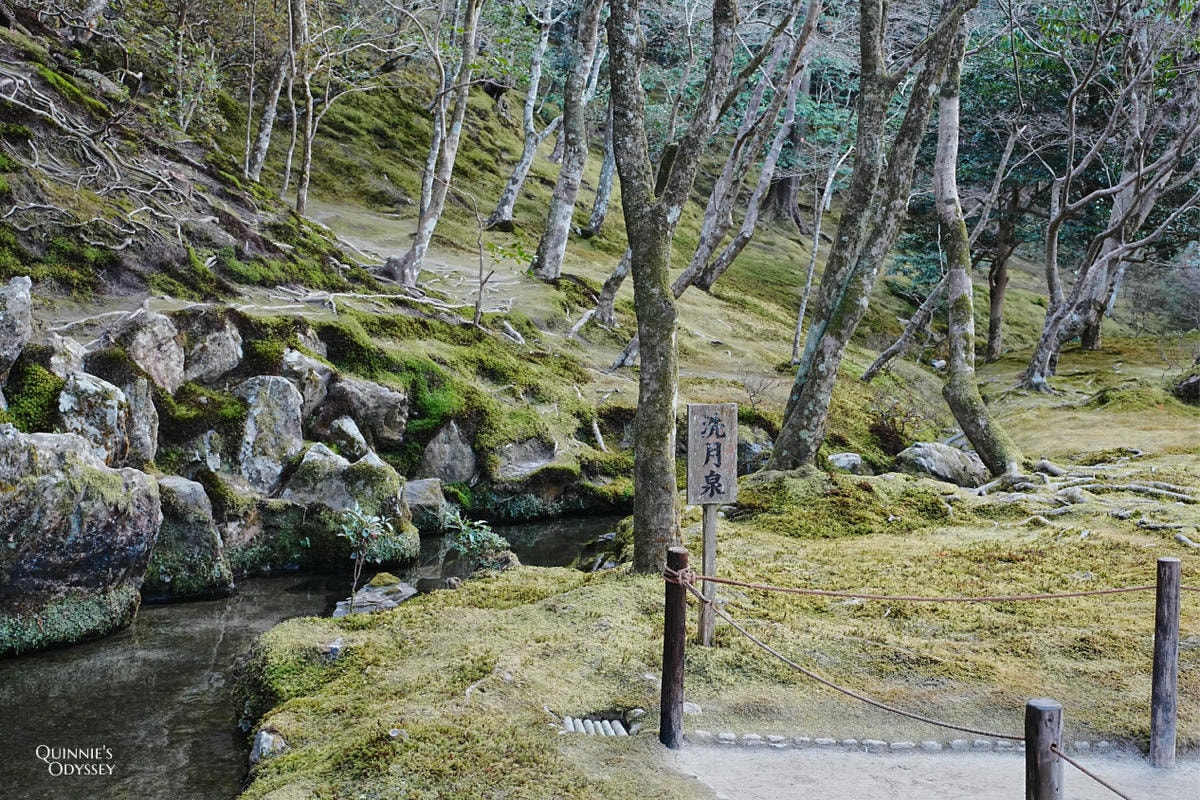
The pond and the surrounding landscape blend together beautifully, creating postcard-worthy scenes everywhere you look.
This combination of dry landscape and stroll-garden design reflects Zen influences, offering monks a peaceful place for meditation and contemplation.
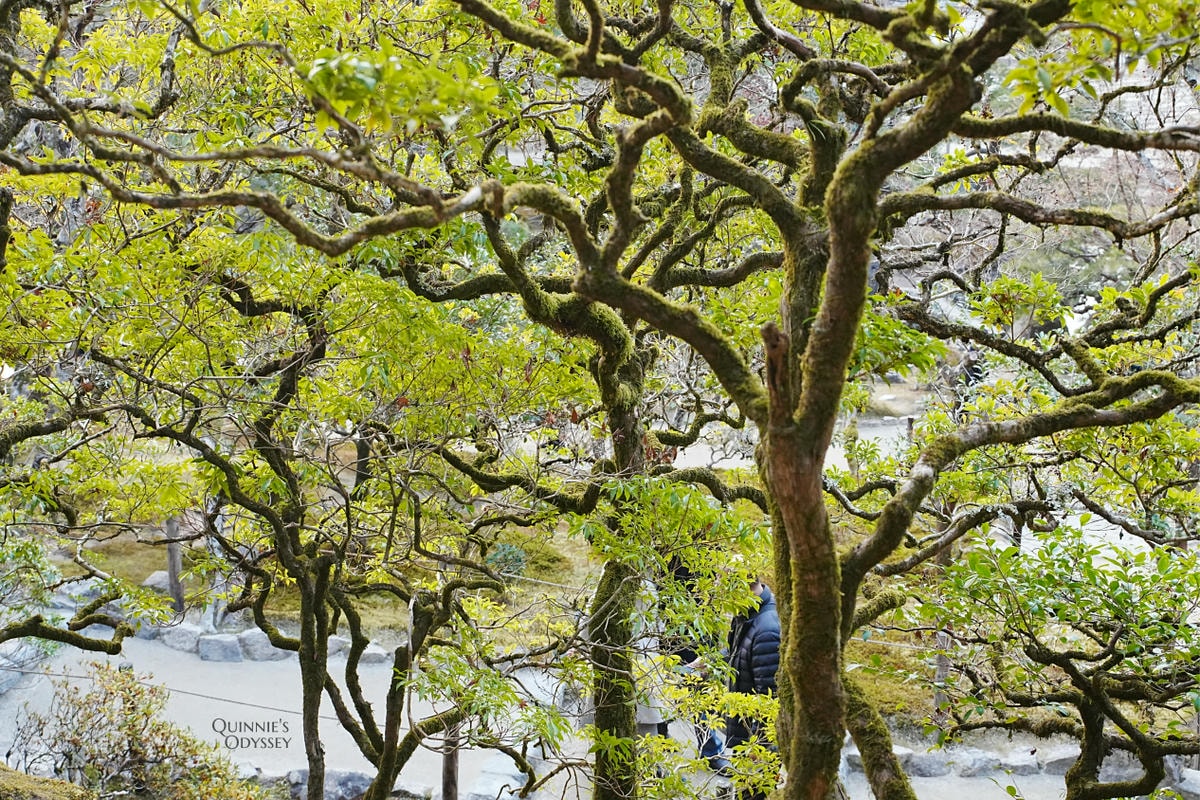
You’ll also notice how the twisted branches of the trees look almost like natural artwork.
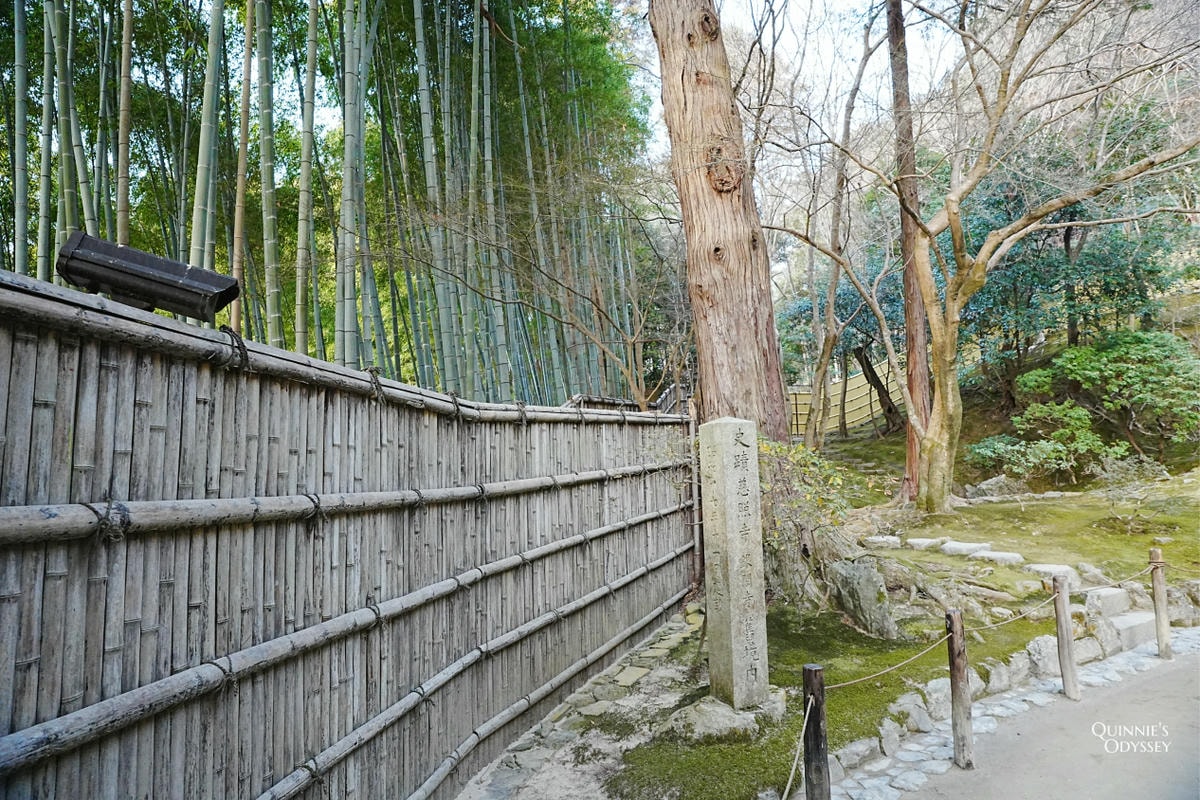
And there’s a charming bamboo grove along the path as well.
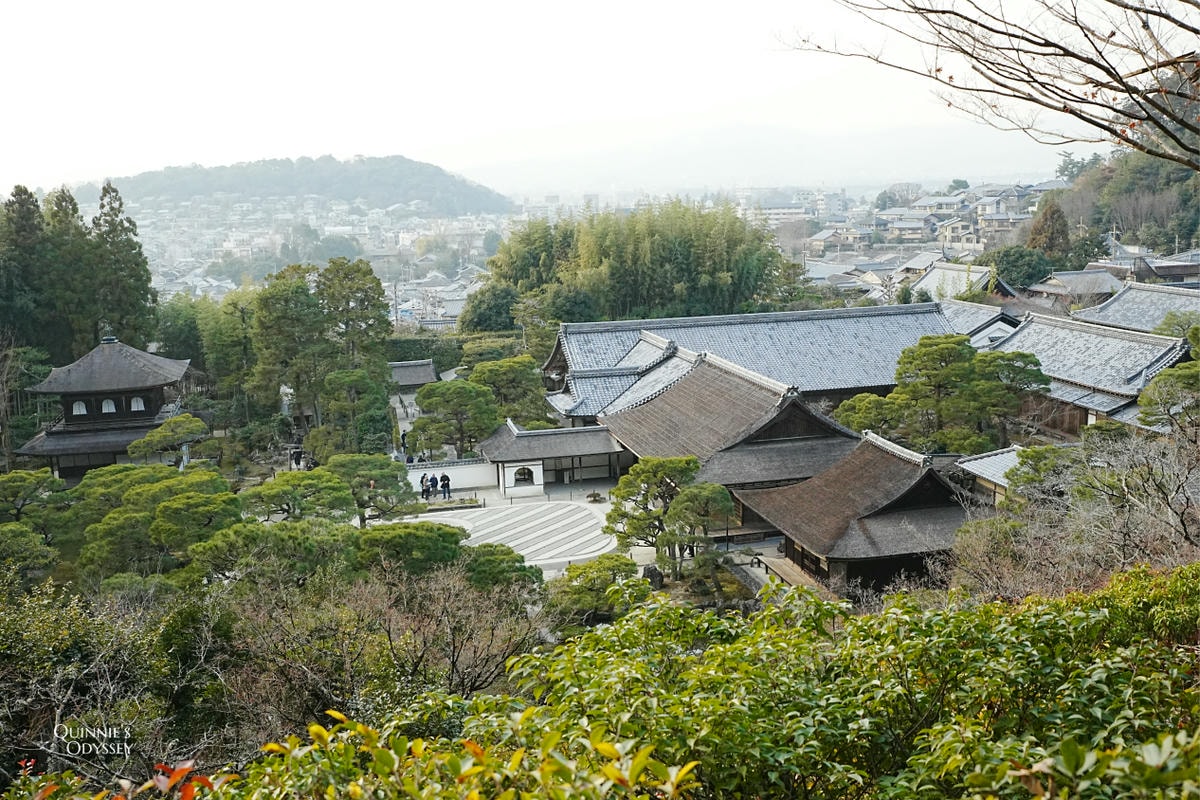
Following the steps uphill leads to an observation point where you can overlook the entire temple complex.
From here, you’ll get a clear view of the garden layout and the buildings.
On clear days, you can also see the Kyoto cityscape and even Daimonji Mountain in the distance.
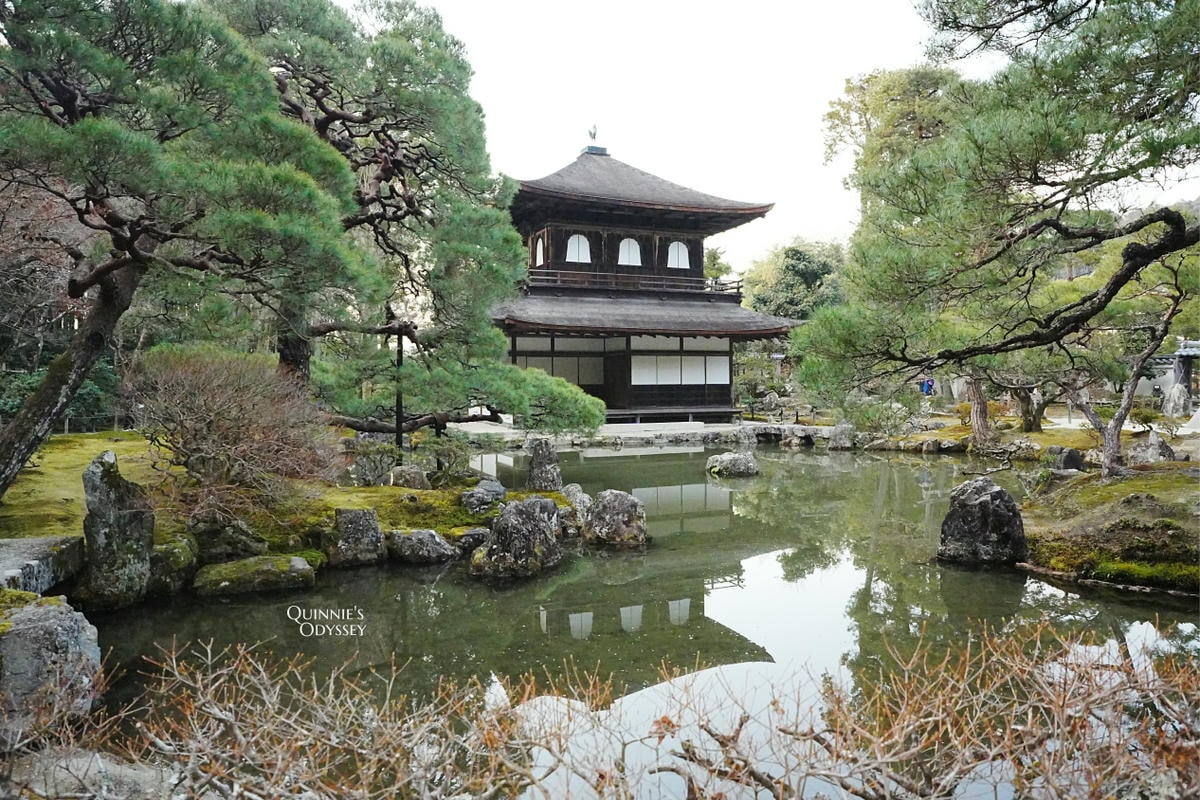
When people think of Ginkaku-ji, the image that often comes to mind is the Kannon Hall, also known as the Silver Pavilion.
Despite the name, the building isn’t actually covered in silver, unlike the golden exterior of Kinkaku-ji. Instead, it retains a simple wooden appearance, an expression of Japan’s wabi-sabi aesthetic, which values simplicity, natural beauty, and the quiet passing of time.
A full loop around the temple grounds takes about 30 minutes.
Although the area isn’t huge, every corner feels peaceful and full of Zen spirit.
Speaking of Ginkaku-ji, it’s hard not to compare it to Kinkaku-ji, located on the other side of Kyoto.
Kinkaku-ji, officially called Rokuon-ji, was built in the late 14th century by the third Muromachi shogun, Ashikaga Yoshimitsu, and symbolizes the luxurious beauty of the Kitayama cultural period.
Ginkaku-ji, or Jishō-ji, was built in the late 15th century by his grandson, Ashikaga Yoshimasa, and represents the more restrained and contemplative style of Higashiyama culture.
Together, the two temples show how Japanese aesthetics evolved, from lavish brilliance to quiet simplicity, and how architecture and garden design reflect each era’s view of beauty.
While Ginkaku-ji may not hold as strong a place in literature as Kinkaku-ji, its wabi-sabi beauty has had a lasting influence on Japanese culture. It’s a place worth savoring slowly.
▼ Kyoto Travel Essentials ▼

Thanks for reading!
If you’re interested in my stories, feel free to follow me on Instagram.
👉👉 IG: @sika_artist 👈👈