Physical Address
304 North Cardinal St.
Dorchester Center, MA 02124
Physical Address
304 North Cardinal St.
Dorchester Center, MA 02124

If you’re visiting Kyoto, a trip to Uji is an absolute must.
Besides being famous for matcha, Uji is also home to one of Japan’s most iconic World Heritage sites, Byodo-in Phoenix Hall, the very building featured on the ¥10 coin.
With nearly a thousand years of history, this elegant structure looks like a Pure Land palace floating gently on the surface of the pond.
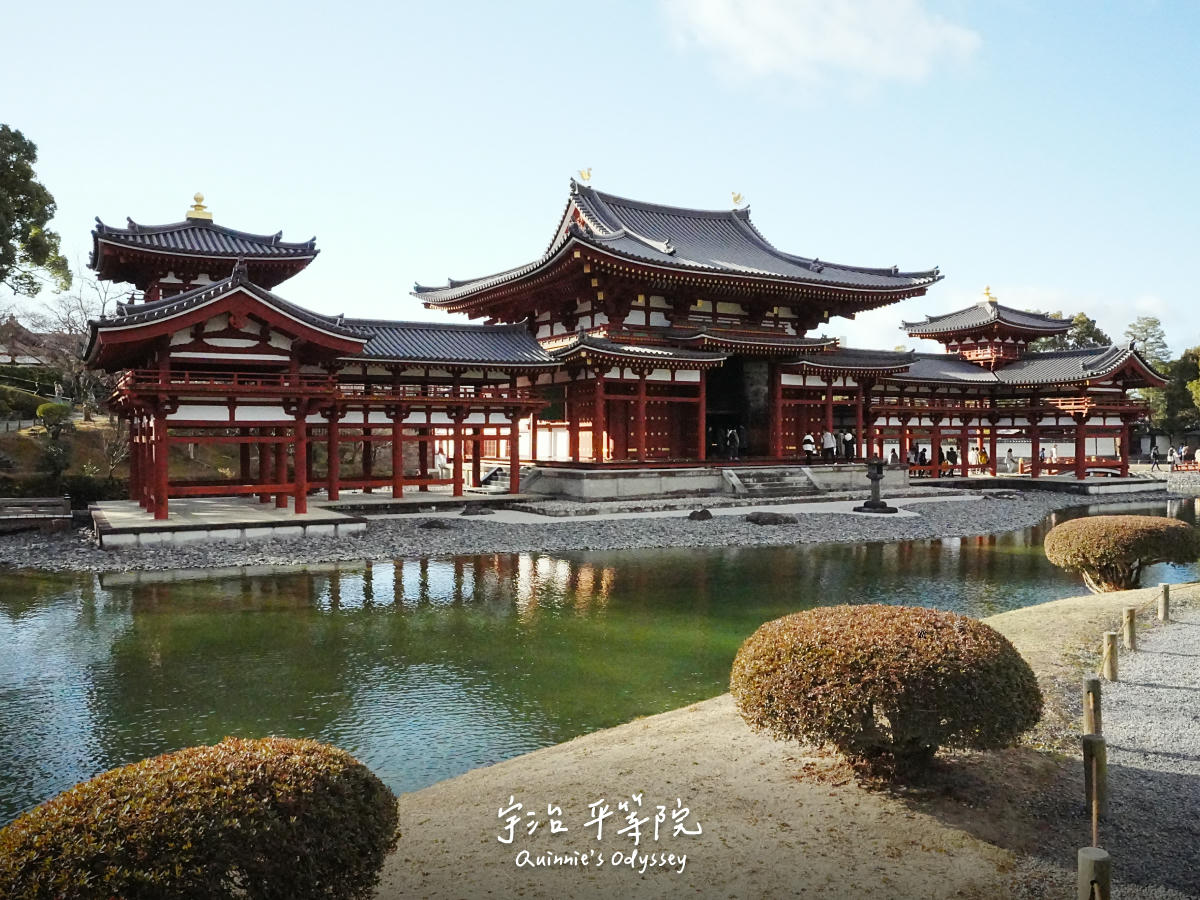
The vivid red buildings reflect beautifully in the clear water, while the golden phoenix statues on the roof stand with wings spread wide. The entire scene feels both majestic and peaceful, perfectly capturing a uniquely Japanese sense of beauty.
It’s no surprise that Byodo-in was designated a UNESCO World Cultural Heritage site and is considered one of the finest examples of traditional Japanese architecture.
If you want to capture that classic shot of the red building reflected in the water, it’s best to come in the morning. In the afternoon, the sun sits behind the hall, which can cause heavy backlighting, like what happened to me this time. 👇
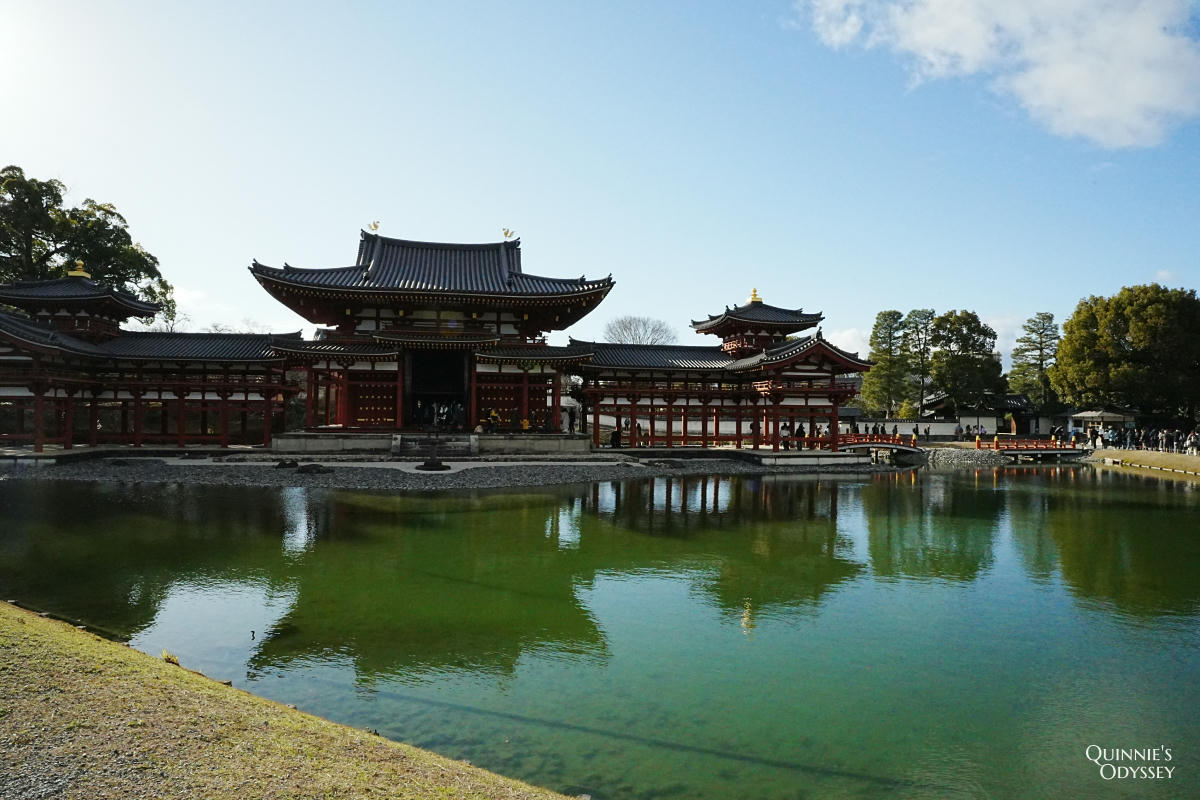
Beyond the Phoenix Hall itself, the surrounding pond, gardens, and museum are all worth taking your time to explore.
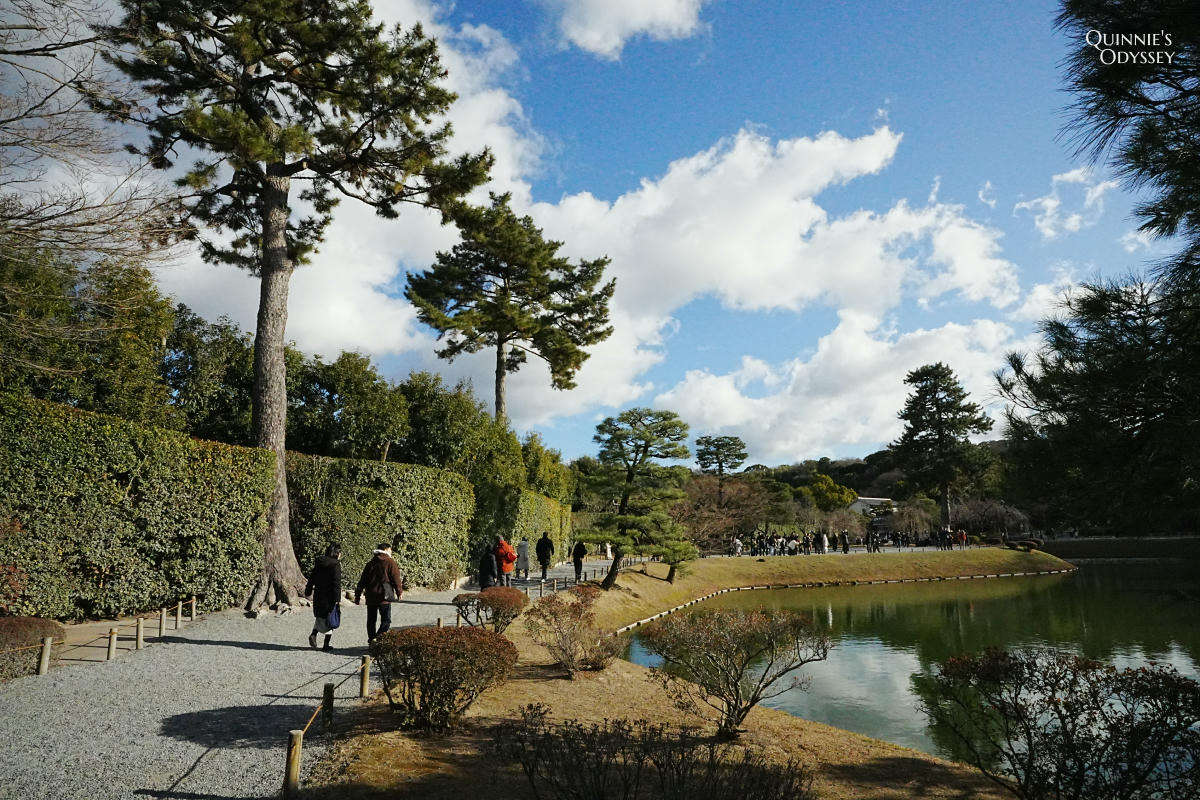
From Villa to Temple
Byodo-in was not originally built as a temple. Back in 998, during the mid-Heian period, it was the private villa of Fujiwara no Michinaga, one of the most powerful aristocrats of the time. Located in what is now Uji City, the estate served as a luxurious retreat for the nobility.
In 1052, Michinaga’s son, Fujiwara no Yorimichi, converted the villa into a Buddhist temple.
The Birth of the Phoenix Hall
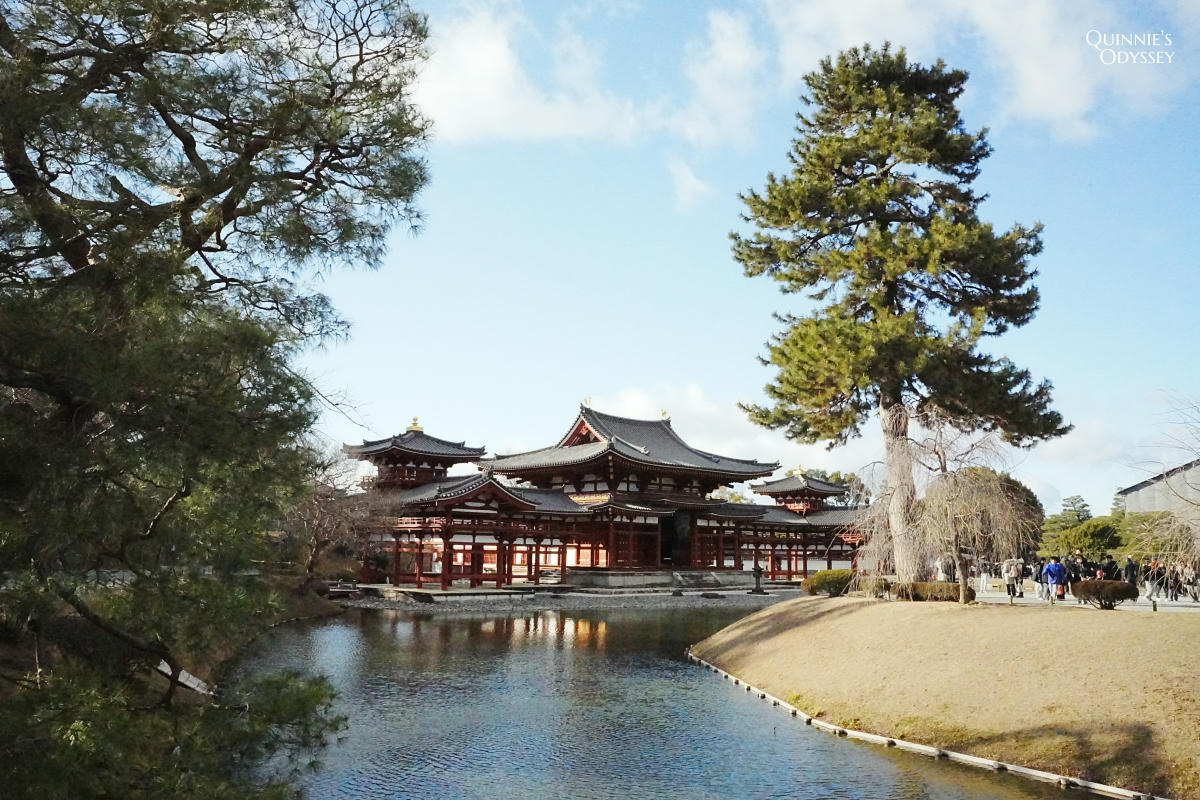
A year later, in 1053, the temple’s most important structure, the Phoenix Hall, was completed. It was designed around the belief in the Pure Land, aiming to recreate the image of Amida Buddha’s Western Paradise here on earth.
The name “Phoenix Hall” comes from the pair of golden phoenix statues on the roof, as well as the building’s shape, which resembles a bird spreading its wings when viewed from the front.
Mappō Thought and Pure Land Belief
During the late Heian period, Japanese society was deeply influenced by the idea of Mappō, the belief that Buddhism had entered an age of decline where enlightenment through personal practice had become extremely difficult.
As a result, faith shifted toward Pure Land Buddhism, which emphasized salvation through the compassion of Amida Buddha. Against this background, Yorimichi transformed the villa into a temple and created the Phoenix Hall and its gardens to symbolize the Pure Land existing in this world.
Survival Through History
From the Kamakura to the Muromachi periods, wars and fires destroyed many of Byodo-in’s original buildings. Remarkably, the Phoenix Hall survived, making it an exceptionally valuable structure in the history of Japanese architecture and Buddhist art.
In modern times, Byodo-in has undergone careful restoration and preservation, and in 1994, it was officially registered as part of the UNESCO World Heritage site “Historic Monuments of Ancient Kyoto.”
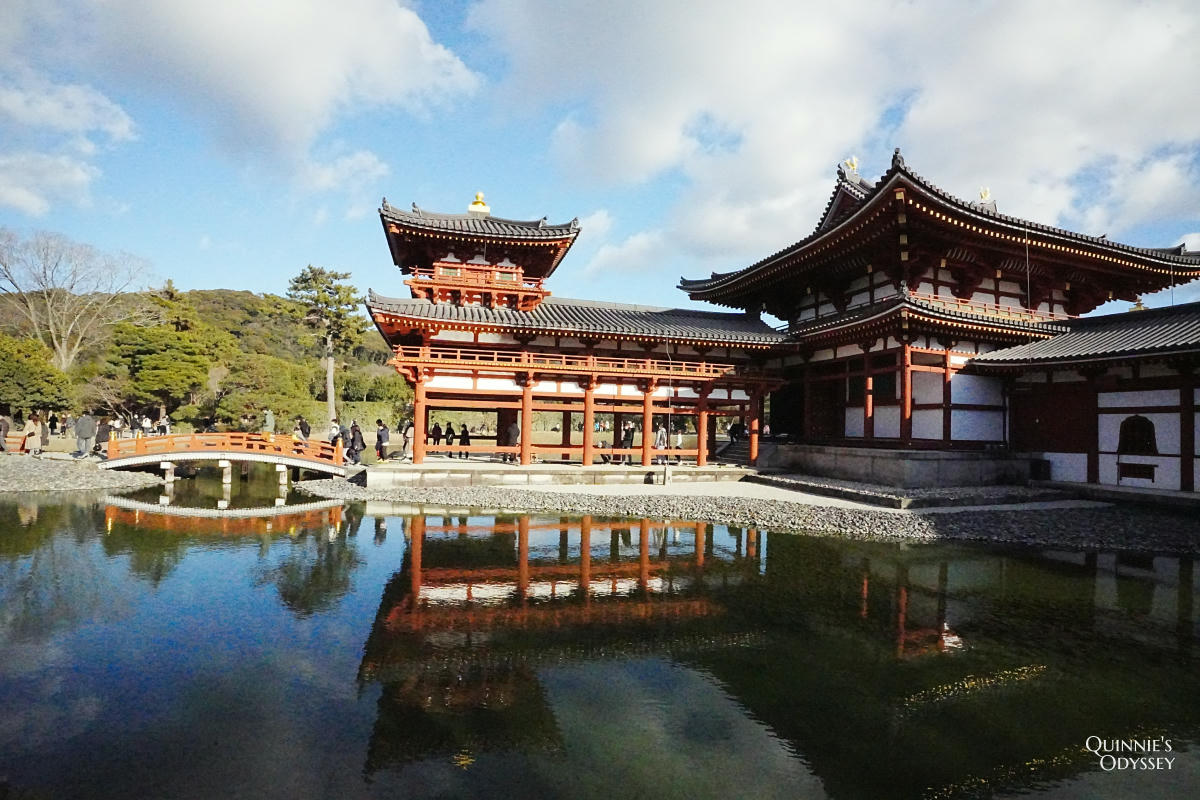
One of the most striking features of the Phoenix Hall is its location on a small island in the middle of the pond. From the shore, the building truly looks as if it’s floating on water.
This design represents the Western Pure Land, symbolizing the ideal path toward enlightenment.
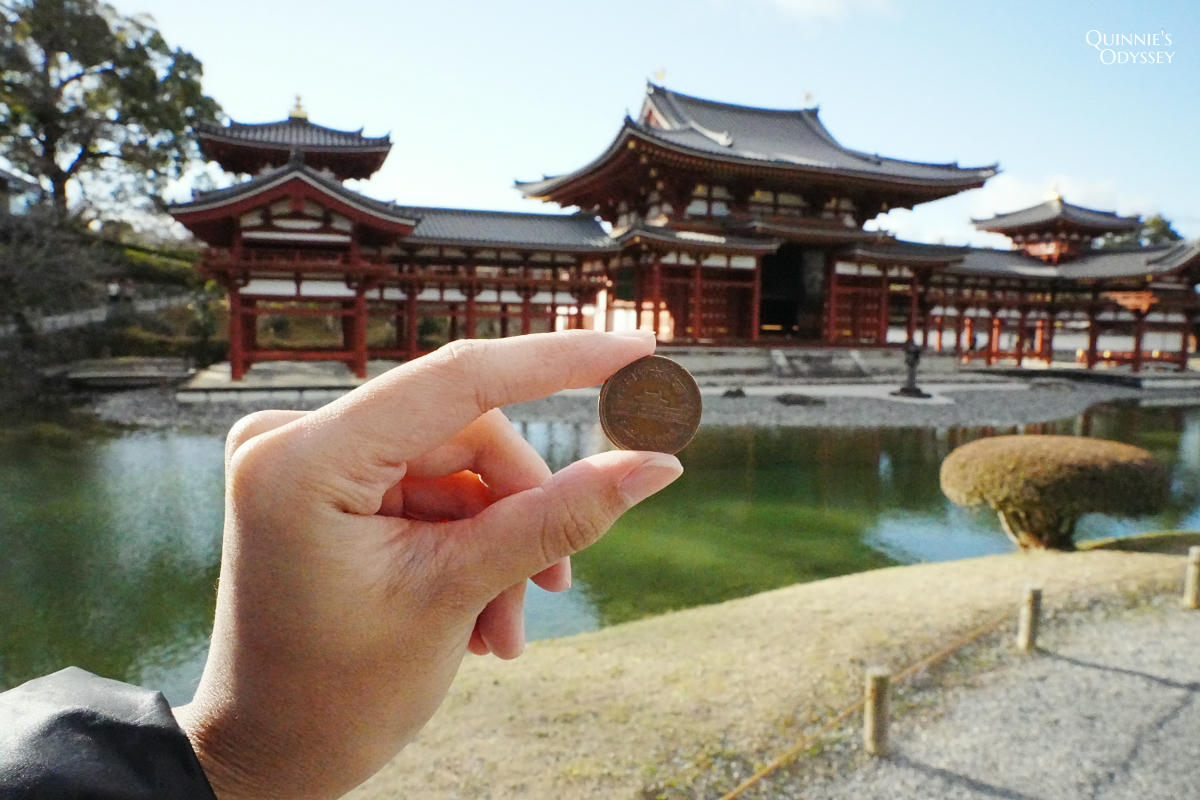
The layout is also unique: a central hall flanked by long corridors on both sides, crowned by two golden phoenixes. Together, they form the image of a bird ready to take flight, the reason it’s called the Phoenix Hall.
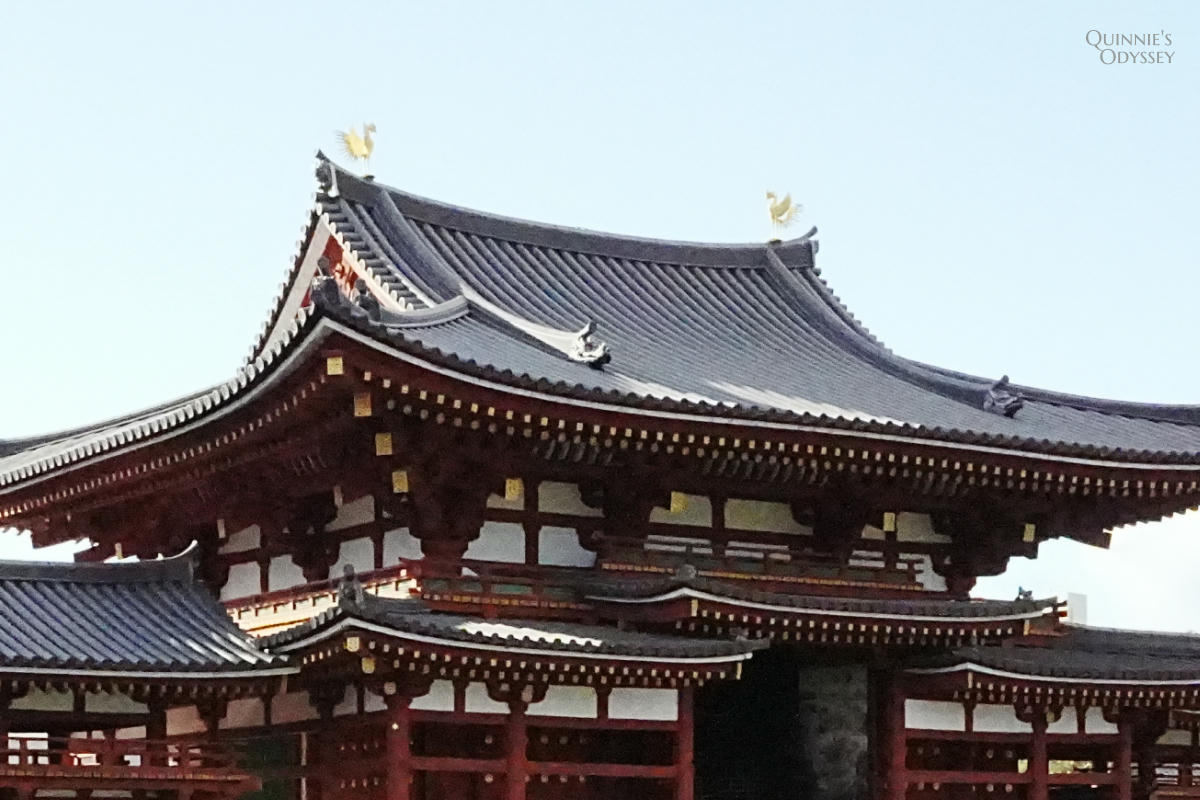
The bright vermilion pillars, paired with the golden phoenix statues and their reflection in the water, create a scene that feels both elegant and deeply serene.
If you want to visit the interior of the Phoenix Hall, you’ll need to pick up a timed-entry ticket at the reception desk and gather five minutes before your assigned time.
Each session is limited to 40 visitors and lasts about 20 minutes.
Shoes must be removed before entering, and photography is not allowed inside.
At the center of the hall sits a seated statue of Amida Buddha, carved during the Heian period. This national treasure is one of Japan’s most important Buddhist sculptures.
The interior paintings are equally impressive. The famous “Raigō” paintings depict Amida Buddha descending to welcome souls into the Pure Land and are among the earliest surviving examples of traditional Yamato-e painting, holding immense artistic and historical value.
For more details, you can check the official Byodo-in website.
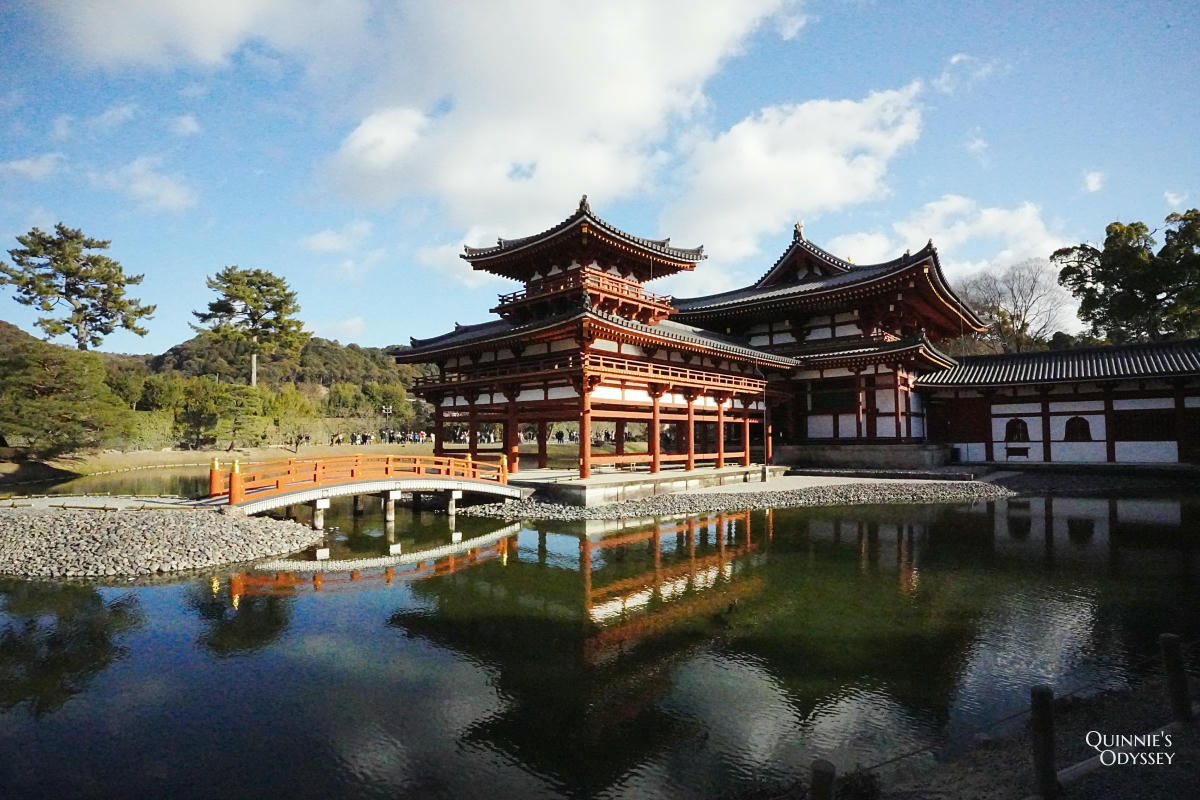
The Hōshōkan Museum houses an outstanding collection of Buddhist art and artifacts from the Heian period onward. If you want to truly understand Byodo-in’s artistic and historical significance, this museum is not to be missed, though photography is not allowed inside.
The highlight for me was the set of National Treasure “Cloud-borne Bodhisattva” statues. These figures once adorned the walls and beams of the Phoenix Hall and are now displayed together in the museum.
Inside the gallery, you’ll see bodhisattvas floating on clouds, some playing instruments, others singing or praying. Each figure has a unique expression, creating an atmosphere that feels light, musical, and almost otherworldly. It really feels like stepping into a floating Buddhist paradise.
Another must-see is the pair of phoenix statues. The ones on the Phoenix Hall roof are replicas, the originals are preserved here. Up close, you can truly appreciate the fine details of their wings and the golden-bronze craftsmanship that still shines after centuries.
The museum itself is designed to blend into the surroundings, with much of the structure built underground to preserve the landscape. The lighting is soft, the space calm, and while the visit isn’t long, it’s incredibly enriching.
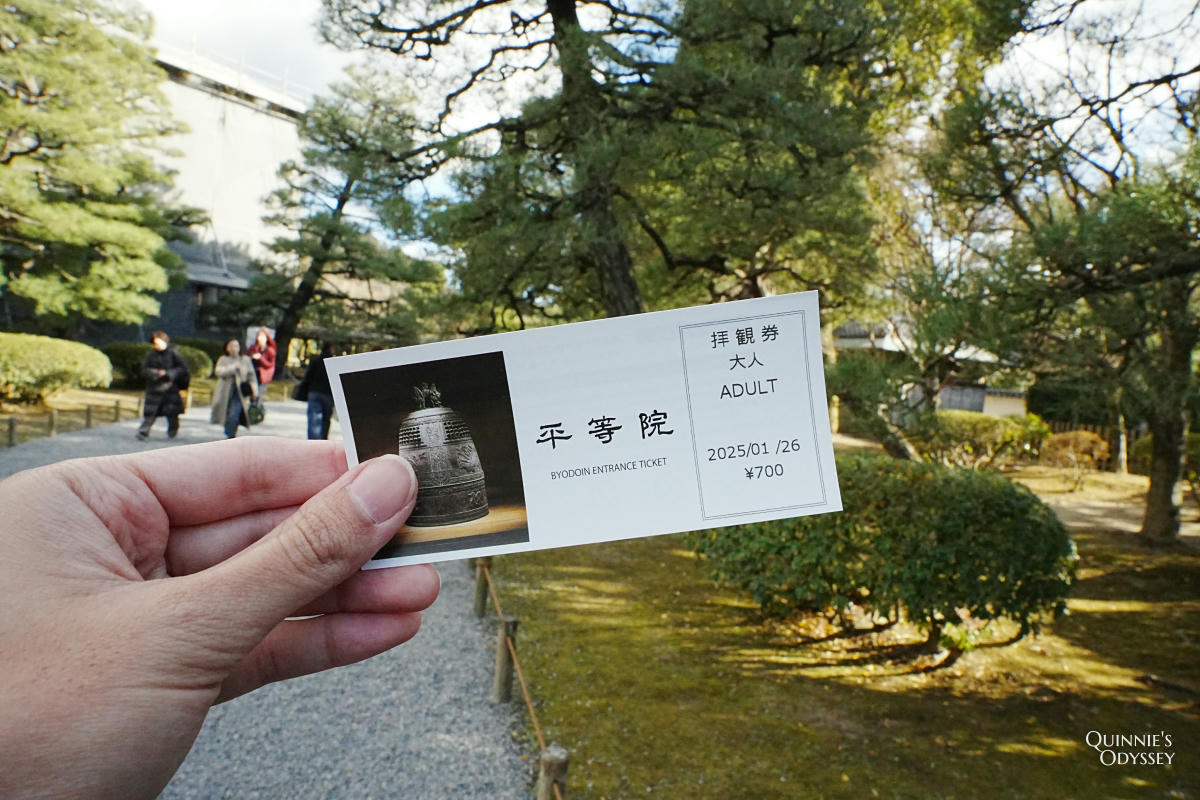
Best of all, admission to the Hōshōkan is included in the Byodo-in ticket, making it well worth your time.
For more details, you can check the official Byodo-in website.
▼ Kyoto Travel Essentials ▼

Thanks for reading!
If you’re interested in my stories, feel free to follow me on Instagram.
👉👉 IG: @sika_artist 👈👈