Physical Address
304 North Cardinal St.
Dorchester Center, MA 02124
Physical Address
304 North Cardinal St.
Dorchester Center, MA 02124

Kyoto’s cherry blossom season is full of surprises.
As you stroll through the streets and small alleys, you’ll often stumble upon a row of cherry trees in full bloom, beautiful enough to stop you in your tracks.
Sometimes it’s just an ordinary street or a neighborhood park you walk past every day, yet it suddenly becomes breathtaking when the sakura bloom.
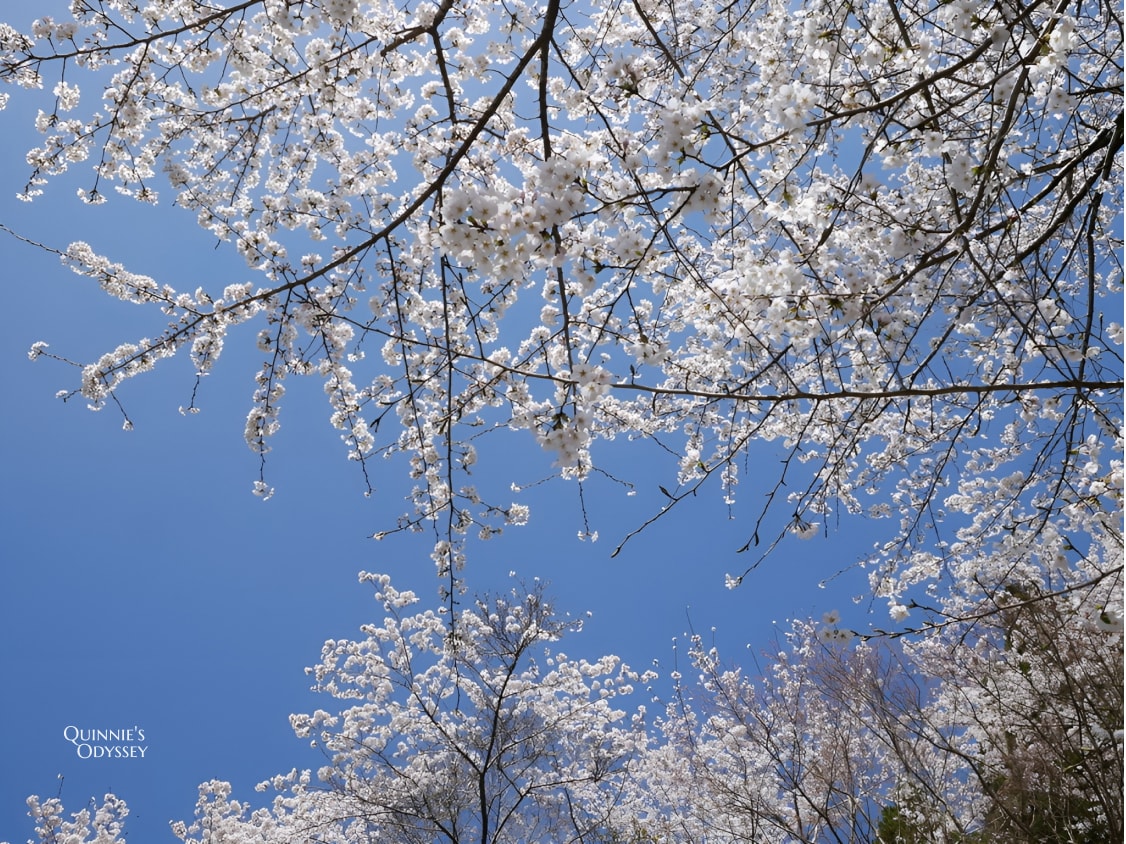
Of course, Kyoto also has many famous cherry blossom spots.
The scenery is spectacular when the flowers reach full bloom, but the crowds can be overwhelming.
Meanwhile, there are places you might visit for the location itself, only to discover cherry blossoms blooming beautifully inside, little surprises that make the trip even more memorable.
To make it easier to plan your itinerary, I categorized Kyoto’s cherry blossom spots based on my personal experience:
🌸 Full Bloom Type: Huge clusters of blossoms that create a dreamlike scene, but expect heavy crowds.
🌸 Accented Sakura Type: These spots are worth visiting even without sakura. Cherry blossoms aren’t the main focus, but they still add a lovely touch.
This category can be further divided into two types: extremely popular spots and lesser-known places with fewer people.

Kyoto’s cherry blossom season usually runs from late March to early April.
Every year, Japan Meteorological Corporation releases the predicted bloom dates, but the 2026 forecast has not been announced yet.
Here’s the 2025 forecast for Kyoto:
| Location | Predicted Bloom Date | Difference (Days) | Predicted Full Bloom | Difference (Days) | Average Bloom Date |
|---|---|---|---|---|---|
| Kyoto | 3/29 | 3 | 4/6 | 2 | 3/26 |
For more details, check the Japan Meteorological Corporation website.
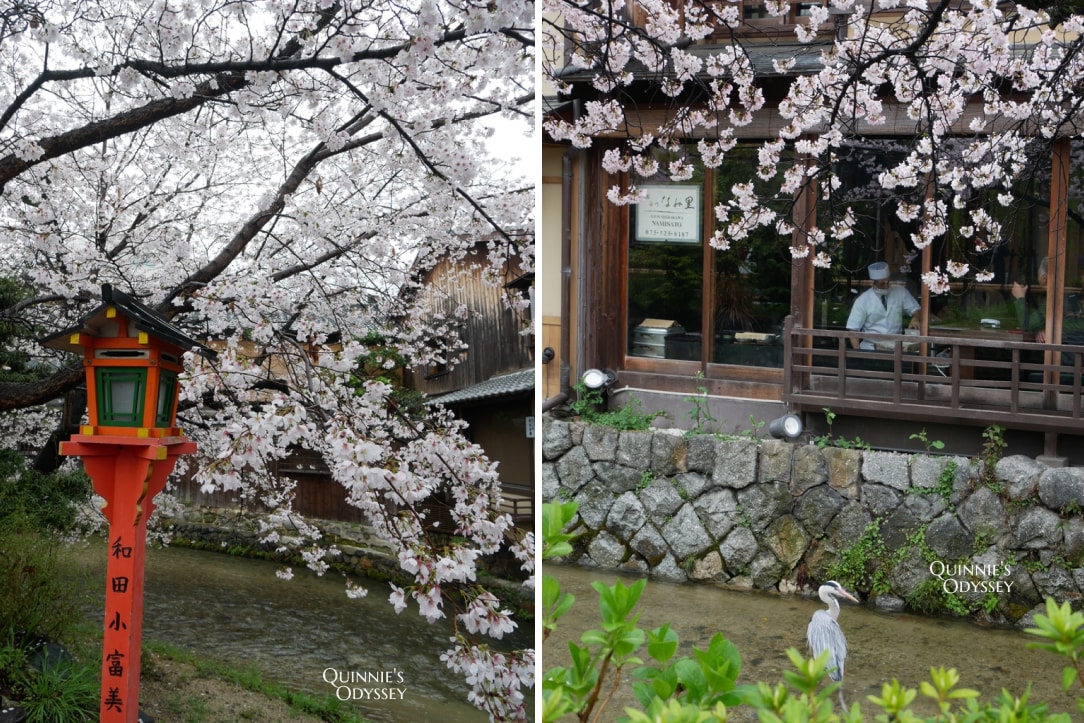
Shirakawa Minami-dori is a 200-meter stone-paved path that runs along the Shirakawa River.
On both sides, you’ll find traditional townhouses and quaint teahouses.
When spring arrives, cherry blossoms and willow trees create a dreamlike riverside scene.
When the blossoms fall, the petals drift along the water, forming a soft pink river.
The atmosphere here feels nostalgic and serene, beautiful in the daytime and even more magical when the lanterns light up at night.
Walk toward Tatsumi Bridge and you’ll find a small shrine called Tatsumi Daimyojin.
There’s a local legend behind it.
It’s said that foxes used to appear around the Shirakawa area and disguise themselves as humans to trick maiko and geiko.
To calm these mischievous foxes, people built this shrine to pray for safety and good performance skills.
Even today, many performers, including maiko, geiko, and entertainers, come here to pray.
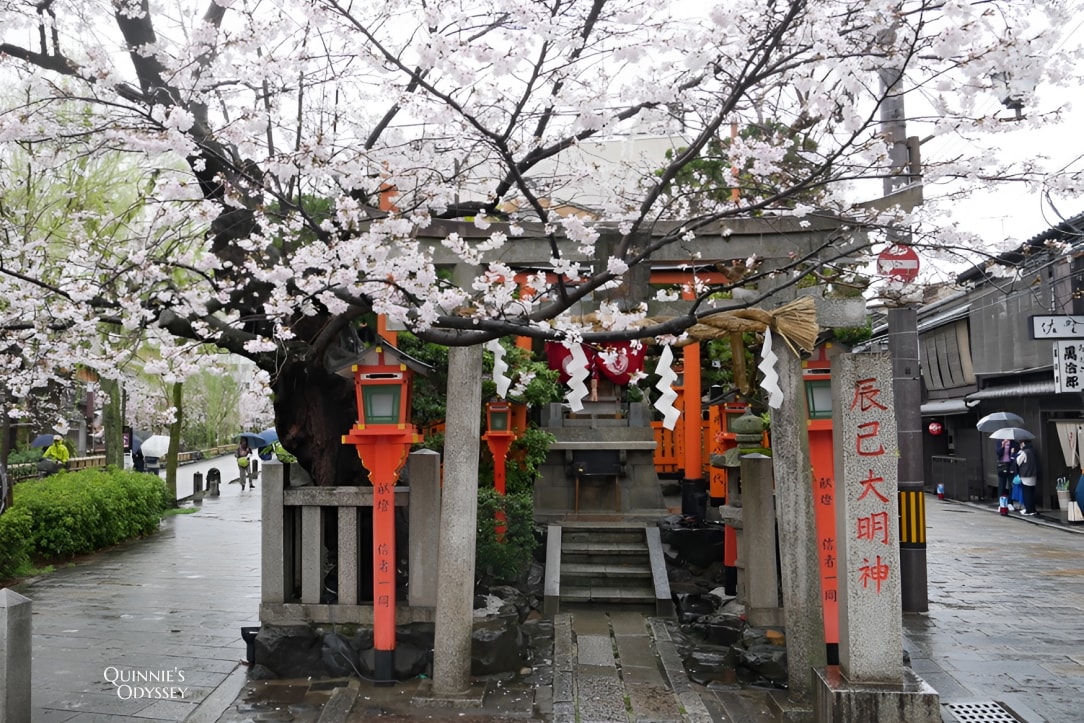
The name “Tatsumi” refers to the southeast direction in traditional geomancy.
Since the shrine sits southeast of the Imperial Palace, it was given this auspicious name.
When we visited, it happened to be drizzling.
The soft rain, the green of the willow trees, and the pale pink cherry blossoms created a poetic, slightly nostalgic atmosphere.
Ninenzaka and Sannenzaka are two iconic stone-paved slopes connecting Kiyomizudera and Kodaiji.
The historic wooden buildings lining the streets date back to the Edo and Taisho periods, and the area is now a popular shopping street selling Kyoto snacks and handmade crafts.
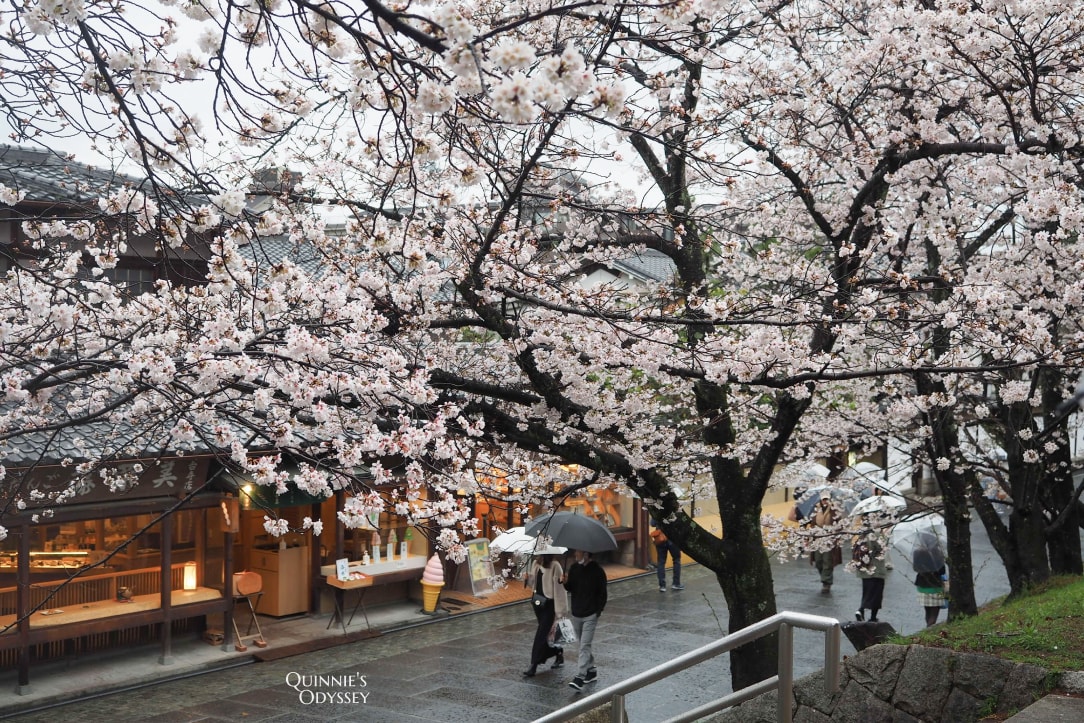
Sannenzaka used to have a famous weeping cherry tree, a major attraction each spring. Sadly, the tree fell in April 2024.
When we walked through the area during sakura season, we still discovered many lovely sakura corners on the way toward Kodaiji.
On rainy days, the glossy stone pavement and quieter atmosphere make the streets even more enchanting.
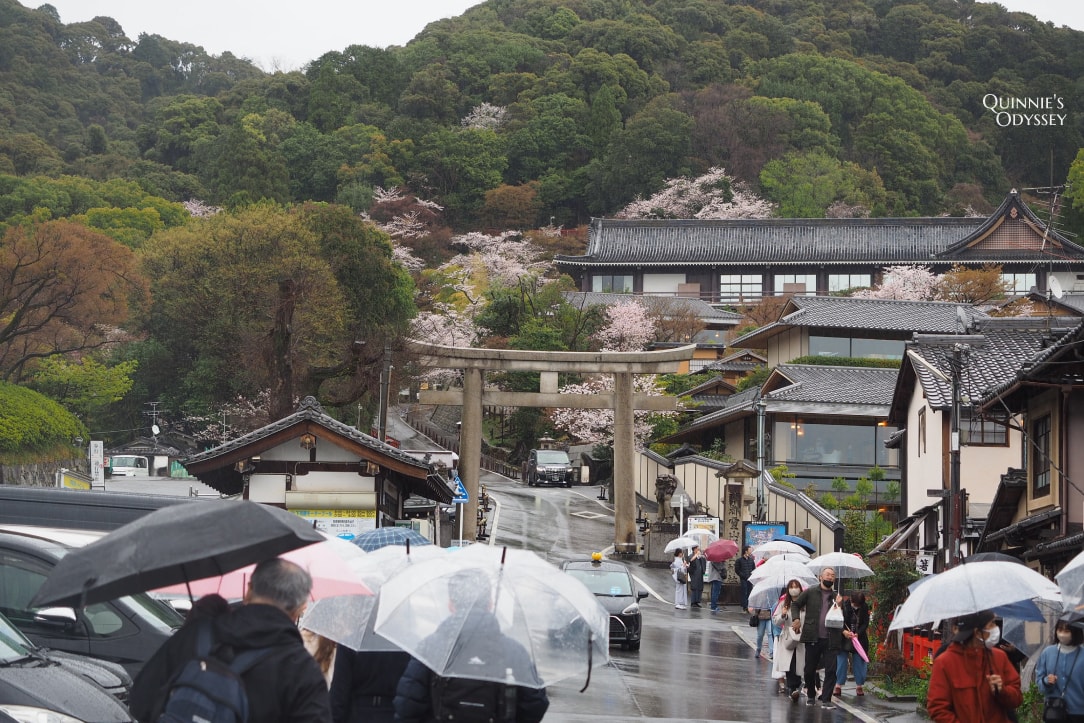
However, in recent years, this area has become extremely crowded.
During peak hours, the crowds are intense.
If you want to enjoy the sakura and the historic ambiance in peace, your best chance is to visit early in the morning or on a rainy day.
Maruyama Park, established in 1886, is Kyoto’s oldest public park.
The park spans about 86,000 square meters and is home to more than 650 cherry trees (some sources say over 800).
The main varieties include yaezakura, Somei Yoshino, and weeping cherry trees.
The iconic weeping cherry tree here is absolutely stunning, like something out of a painting.
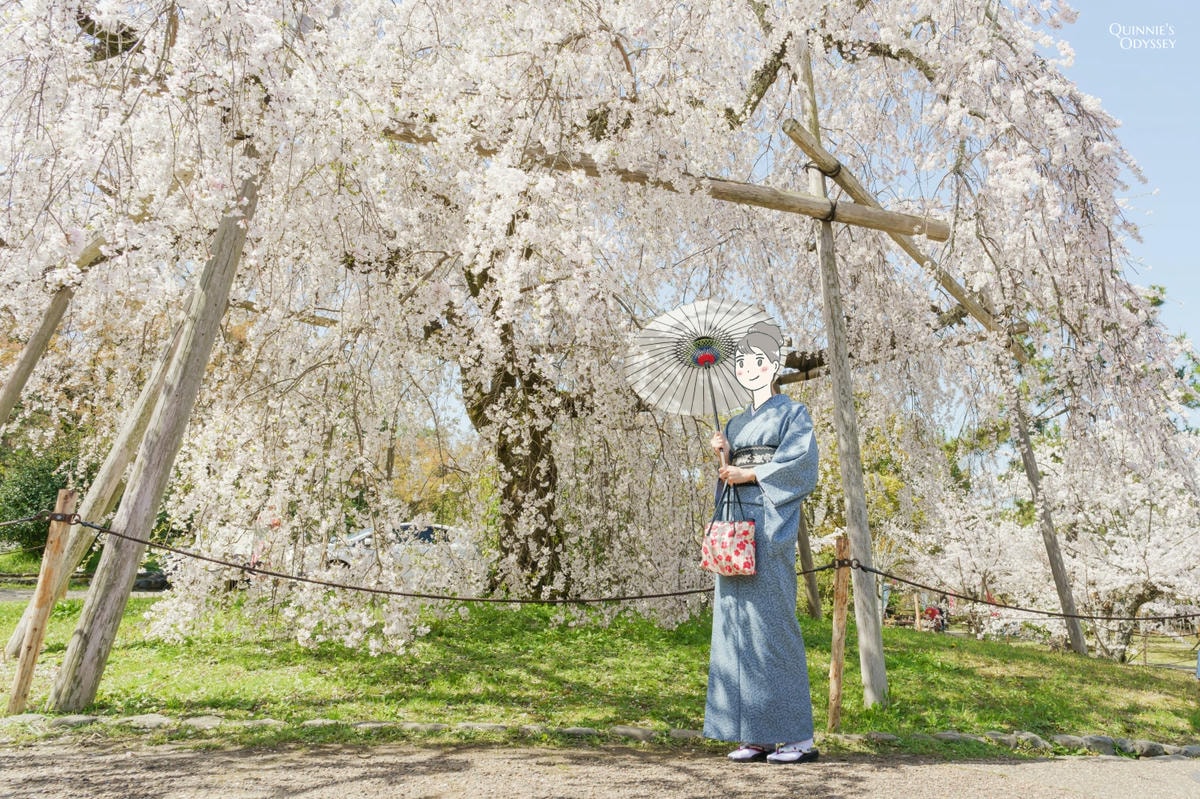
During sakura season, food stalls set up tables and bamboo mats so visitors can enjoy drinks and snacks directly under the cherry trees, creating a classic Kyoto hanami atmosphere.
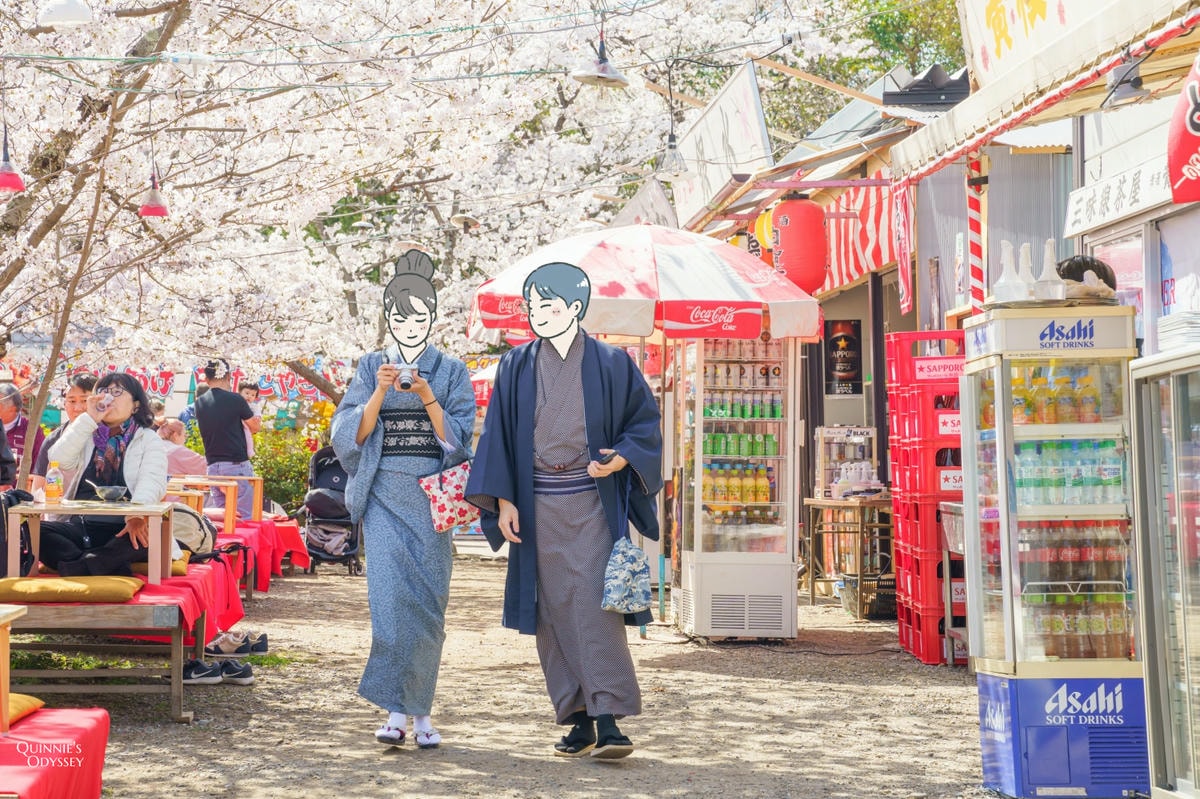
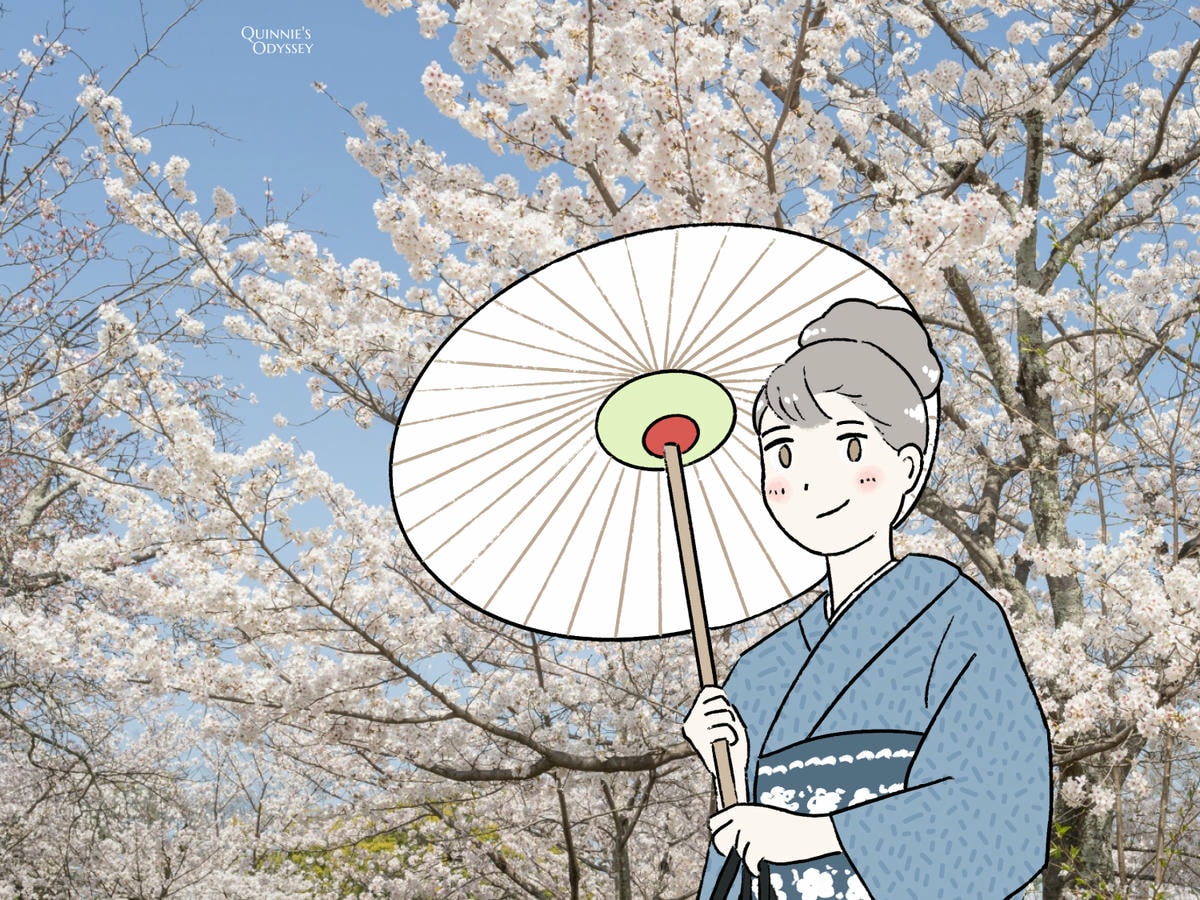
We booked a kimono rental and photography session at Yumeyakata, and the photographer took us to Maruyama Park.
These were some of my favorite kimono photos from the trip, I highly recommend shooting here during cherry blossom season.
Read more here 👉👉 Kyoto Kimono Photoshoot at Yumeyakata Gojo: Prices, Process, and Tips
👉👉 KKday Kyoto Kimono Rental – Yumeyakata Gojo Store
After sunset, the cherry blossoms are illuminated, creating a completely different, magical scene.
Sitting under the trees with a drink while enjoying the lights feels especially cozy and festive.
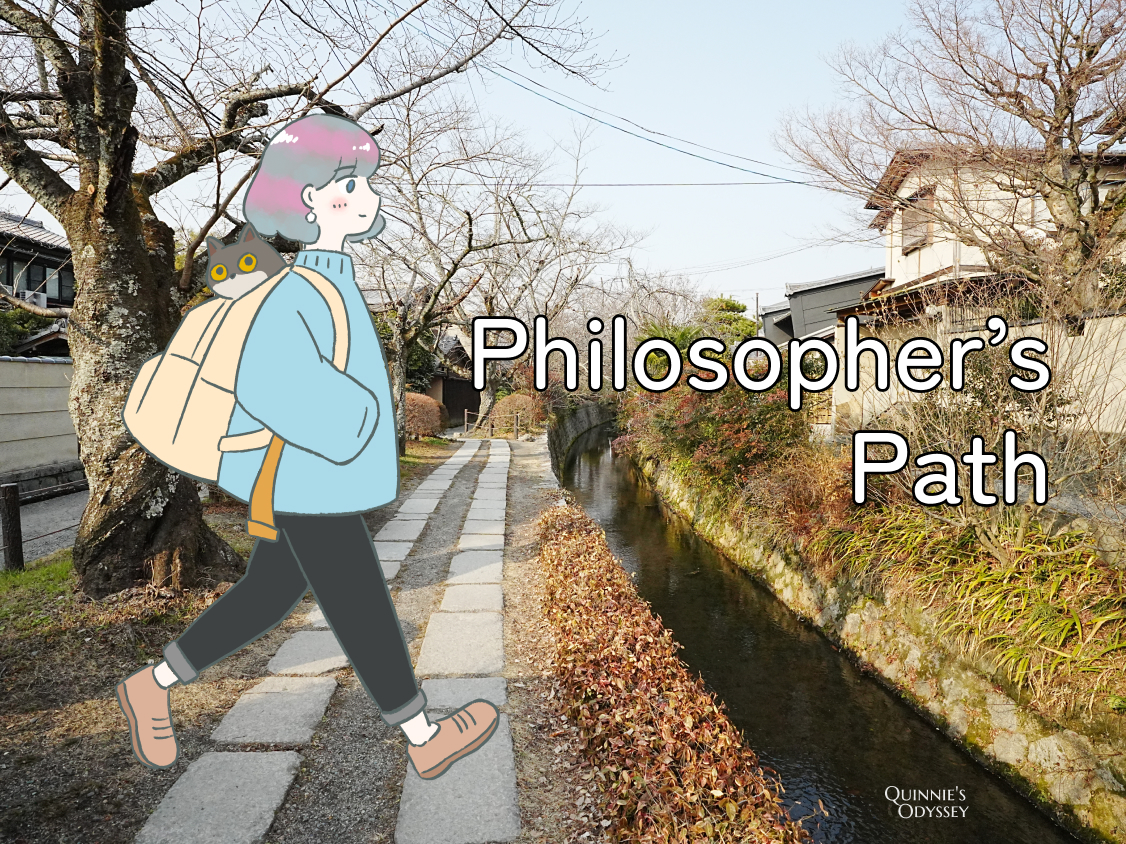
The Philosopher’s Path is a 2-km walking trail in Kyoto’s Sakyo Ward.
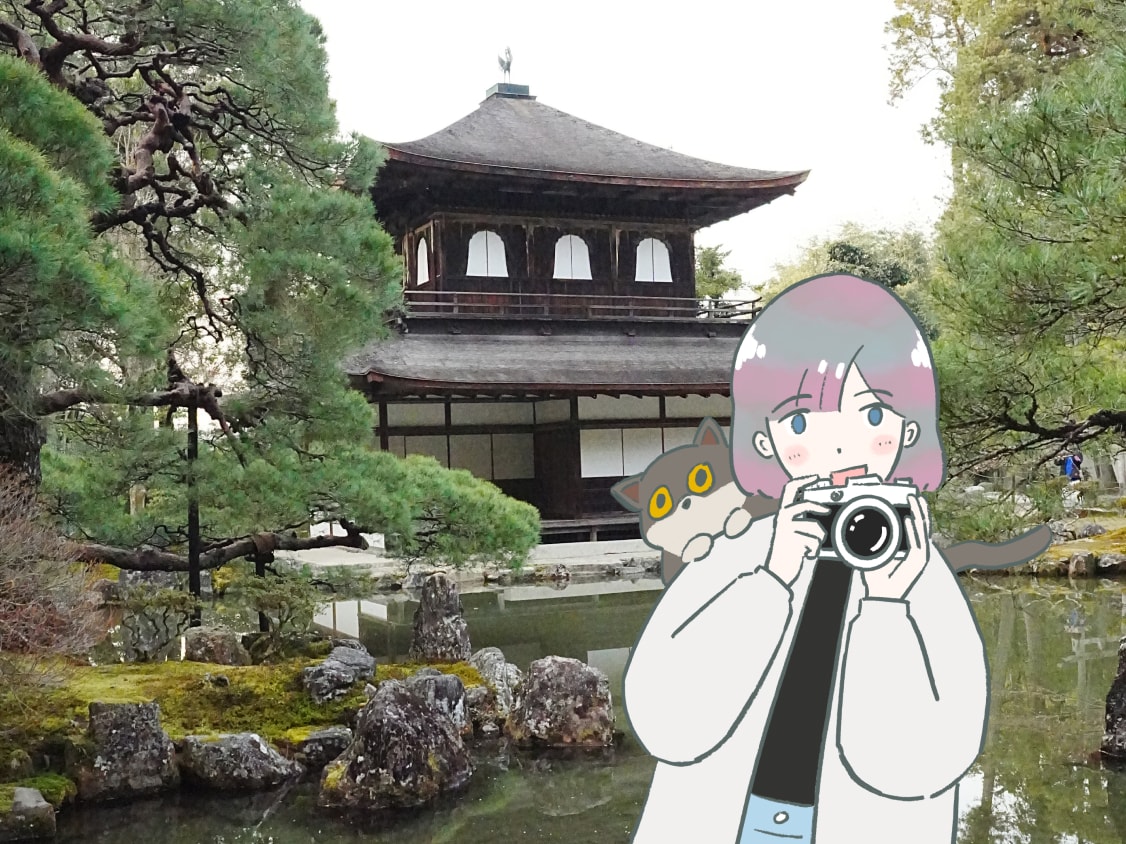
It runs along the Lake Biwa Canal and connects Ginkaku-ji with Kumano Nyakuoji Shrine. Along the way, you’ll pass temples such as Honen-in, Anraku-ji, and Eikan-do, as well as small cafés.
About 500 cherry trees line the canal, forming a stunning sakura tunnel in spring.
During the peak of sakura-falling season, the canal becomes blanketed with pale pink petals, a truly breathtaking sight.
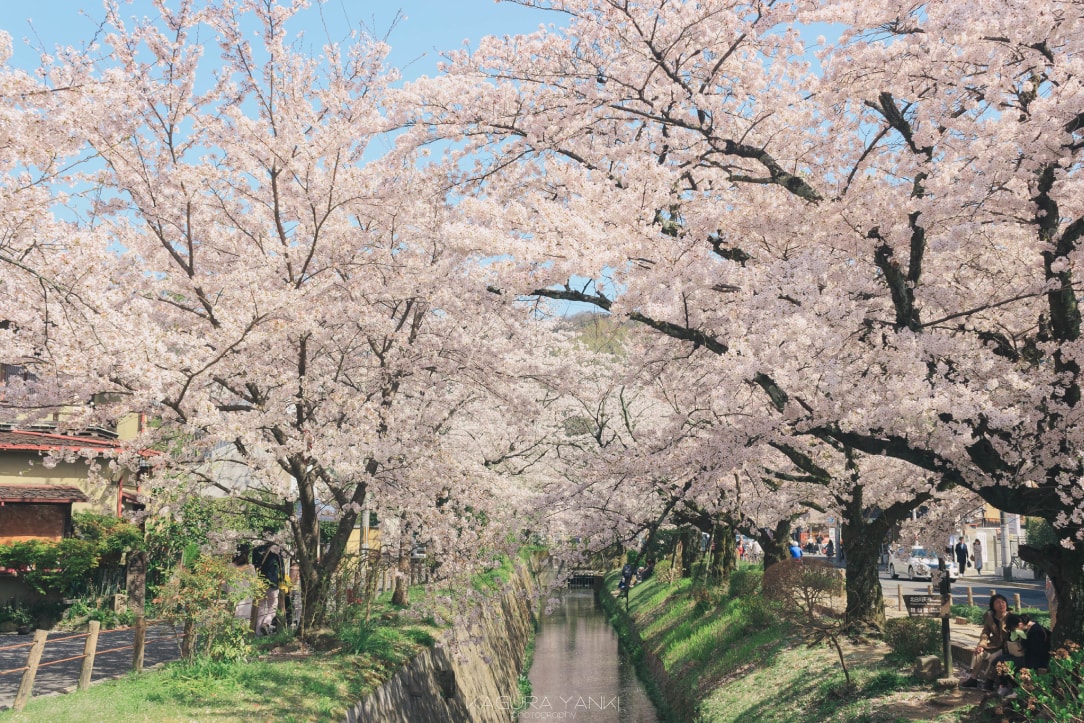
Read more here 👉👉 Philosopher’s Path Kyoto Guide: Scenic Walk, Hidden Shrines & Animal Omikuji Spots
Kiyomizudera was founded in 778 and has a history of more than 1,200 years.
Though it has undergone multiple reconstructions due to wars and fires, the current main structures date back to 1633, rebuilt under Tokugawa Iemitsu.
The famous “Kiyomizu Stage” is supported by 139 giant pillars using traditional Japanese joinery, built entirely without nails.
This incredible craftsmanship allows the veranda to extend dramatically over the hillside.
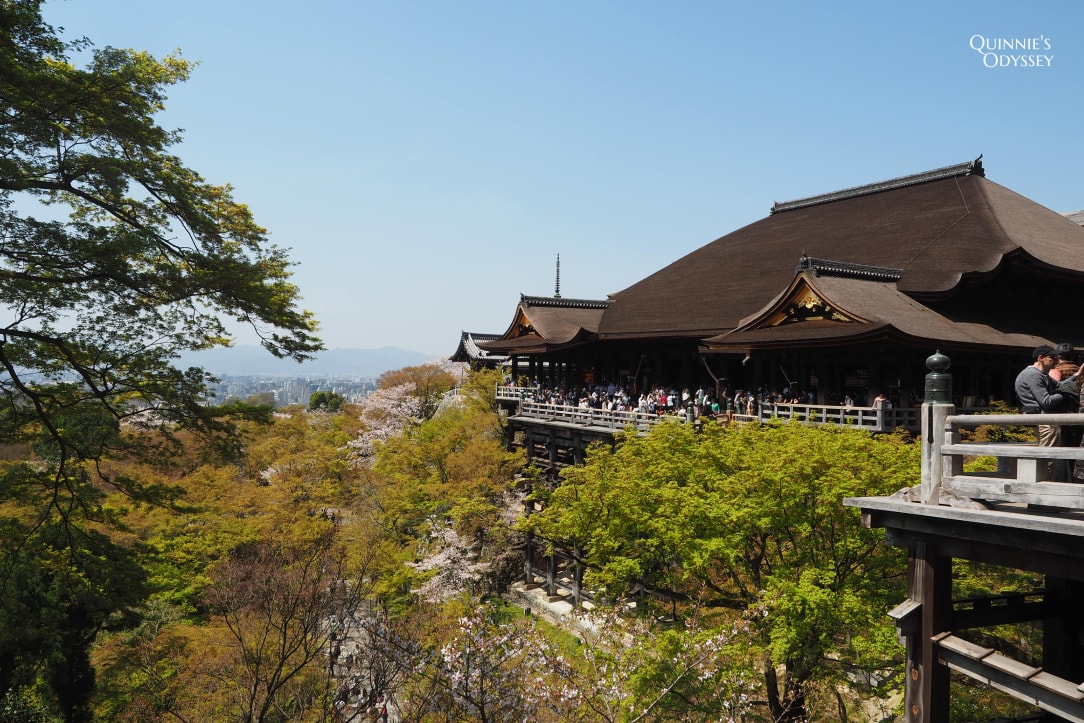
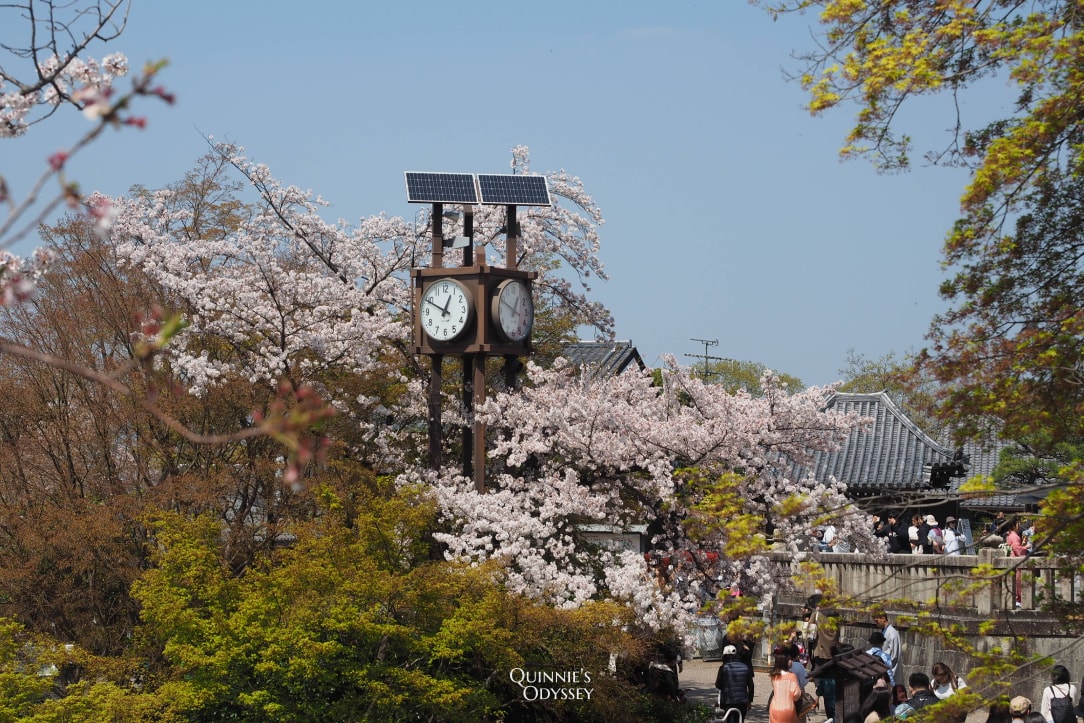
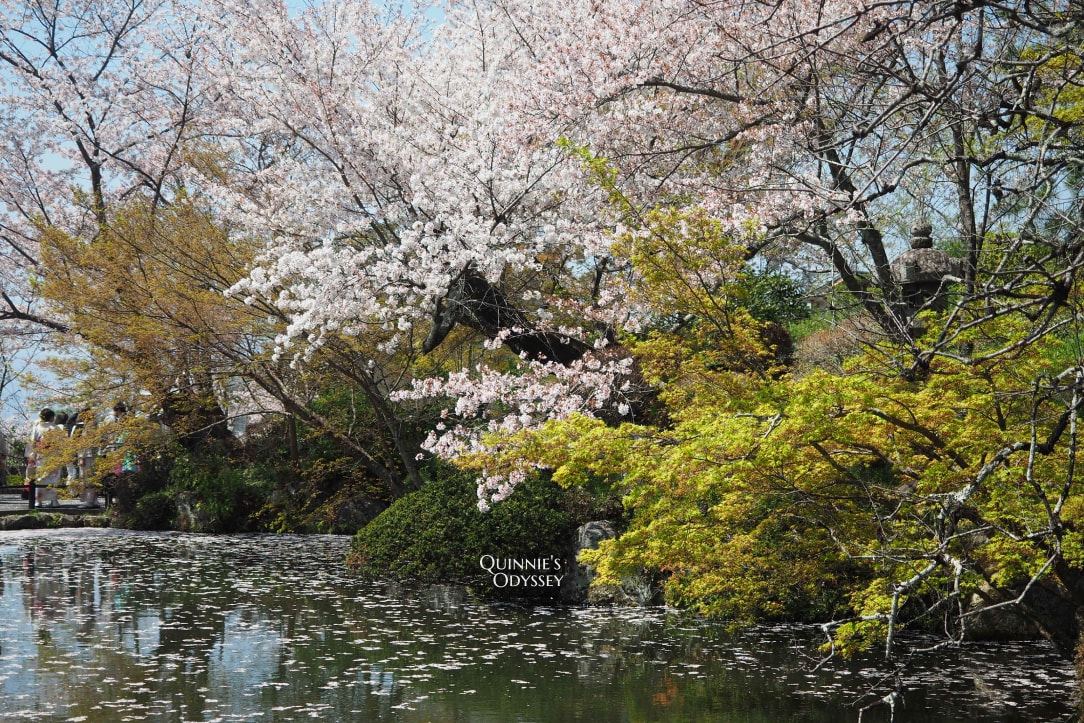
There are about 1,000 cherry trees in the temple grounds, mainly Somei Yoshino and yamazakura.
In the daytime, the pale blossoms contrast beautifully with the vivid red temple buildings.
At night, the illuminated sakura create an entirely different dreamlike atmosphere.
Nijo Castle was built in the early Edo period under Tokugawa Ieyasu in 1603.
It served as the Kyoto residence and political base of the Tokugawa family.
Beyond its political role, Nijo Castle is also an important cultural landmark and was designated a UNESCO World Heritage Site in 1994.
Inside the castle grounds, you’ll find around 50 varieties and 300 cherry trees, mainly concentrated in the Ninomaru and Honmaru gardens.
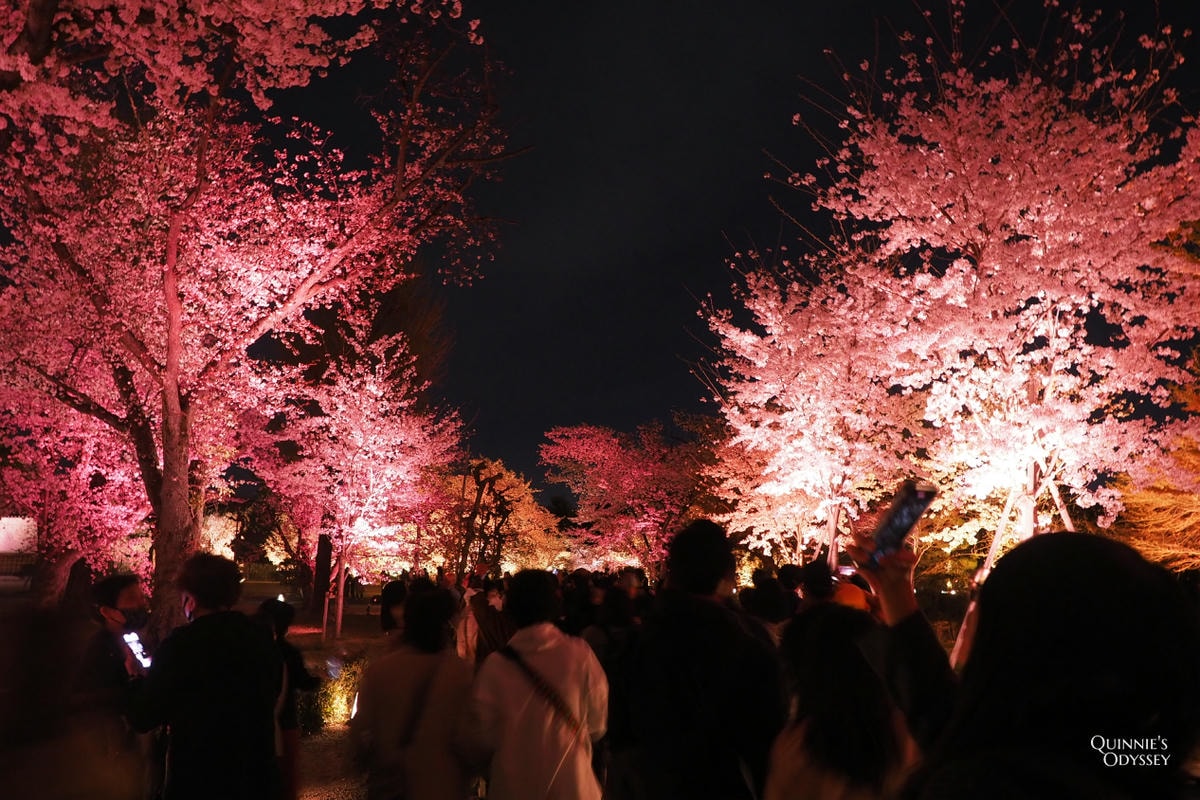
Every spring, Nijo Castle hosts the highly popular NAKED Sakura Festival, a nighttime illumination event designed by NAKED Inc., a creative company known for blending art with digital technology.
The event uses projection mapping, music, and interactive installations to transform the castle grounds into a dreamy, modern hanami experience.
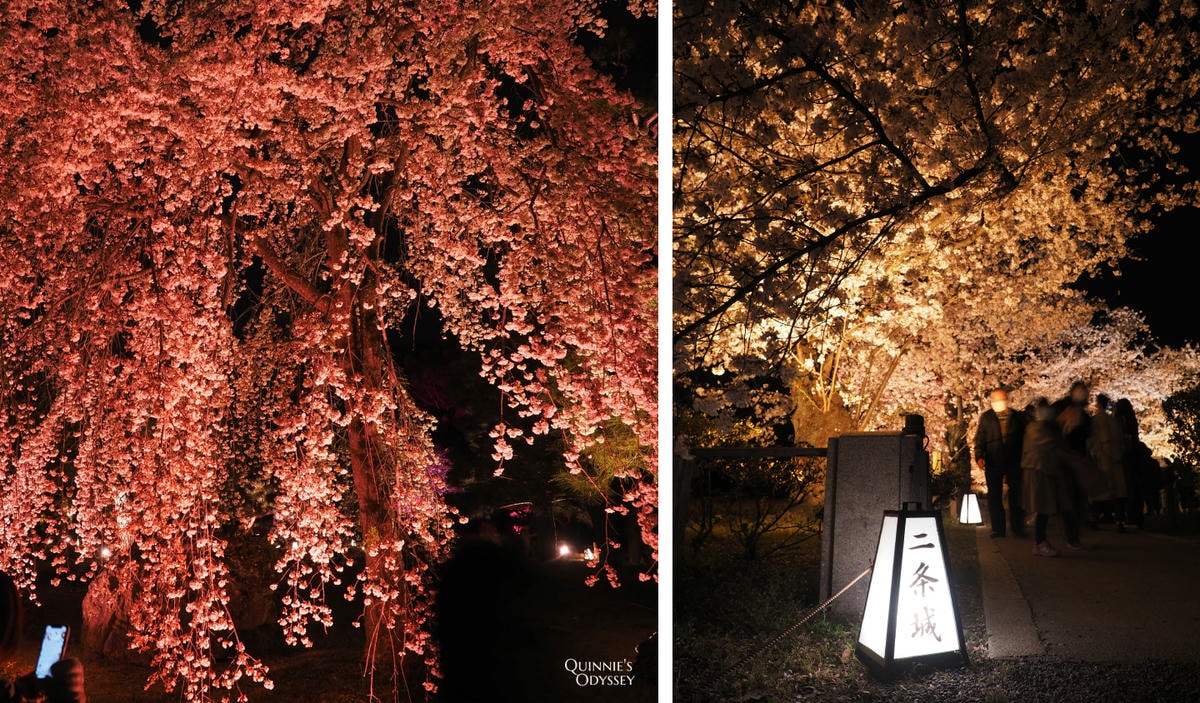
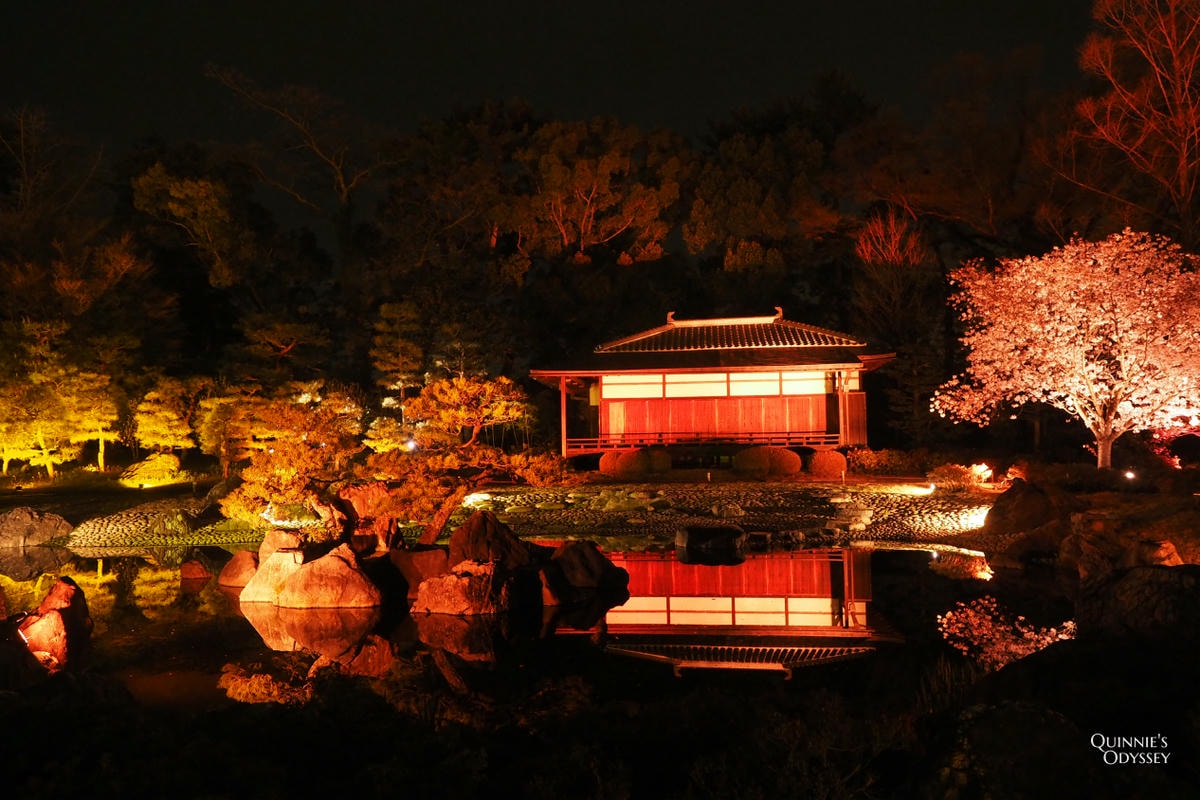
Aside from attracting more visitors, the festival also aims to help people appreciate and protect this historic site through contemporary art.
Read more here 👉👉 Nijo Castle Sakura Festival NAKED 2025- Tickets, and Must-See Highlights
The Fushimi Jikkokubune dates back to the Edo period, when Fushimi served as an important waterway connecting Kyoto and Osaka.
These small cargo boats were mainly used to transport rice, sake, and other goods.
The name “Jikkoku” refers to the boat’s carrying capacity, about 10 koku (roughly 1.5 tons).
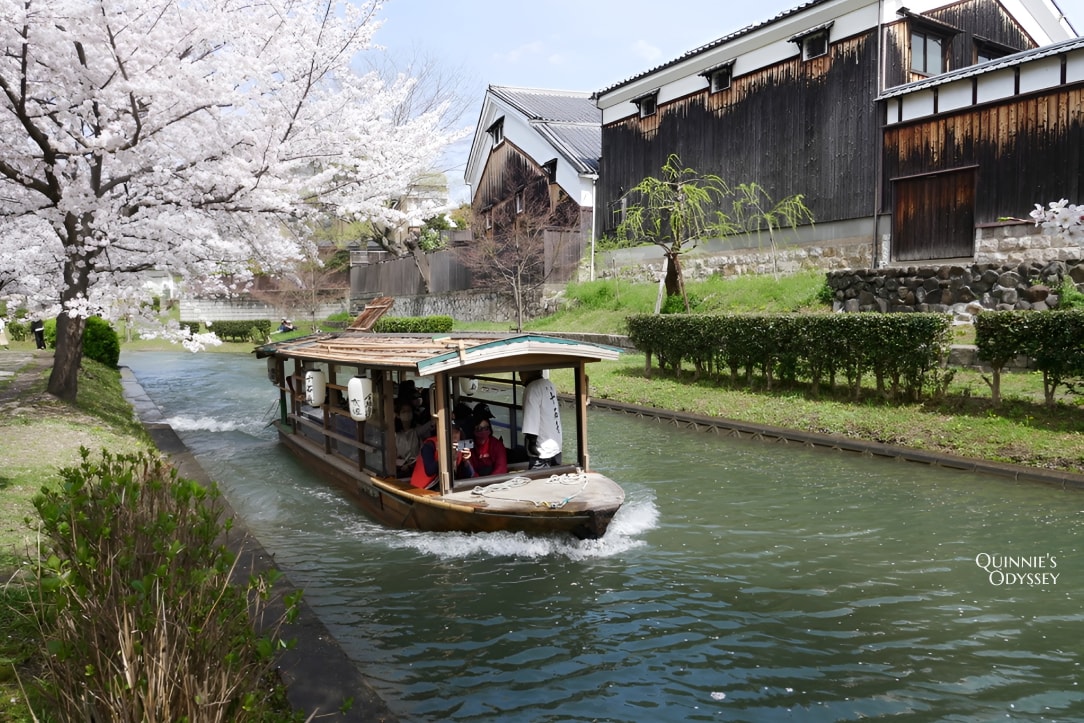
Fushimi is famous for its sake breweries, and Jikkokubune boats once carried its sake down to Osaka.
As time passed, the river gradually silted up, and with the rise of railways, the boats stopped being used for transport.
They were later revived as sightseeing boats so visitors could enjoy Fushimi’s nature and history.
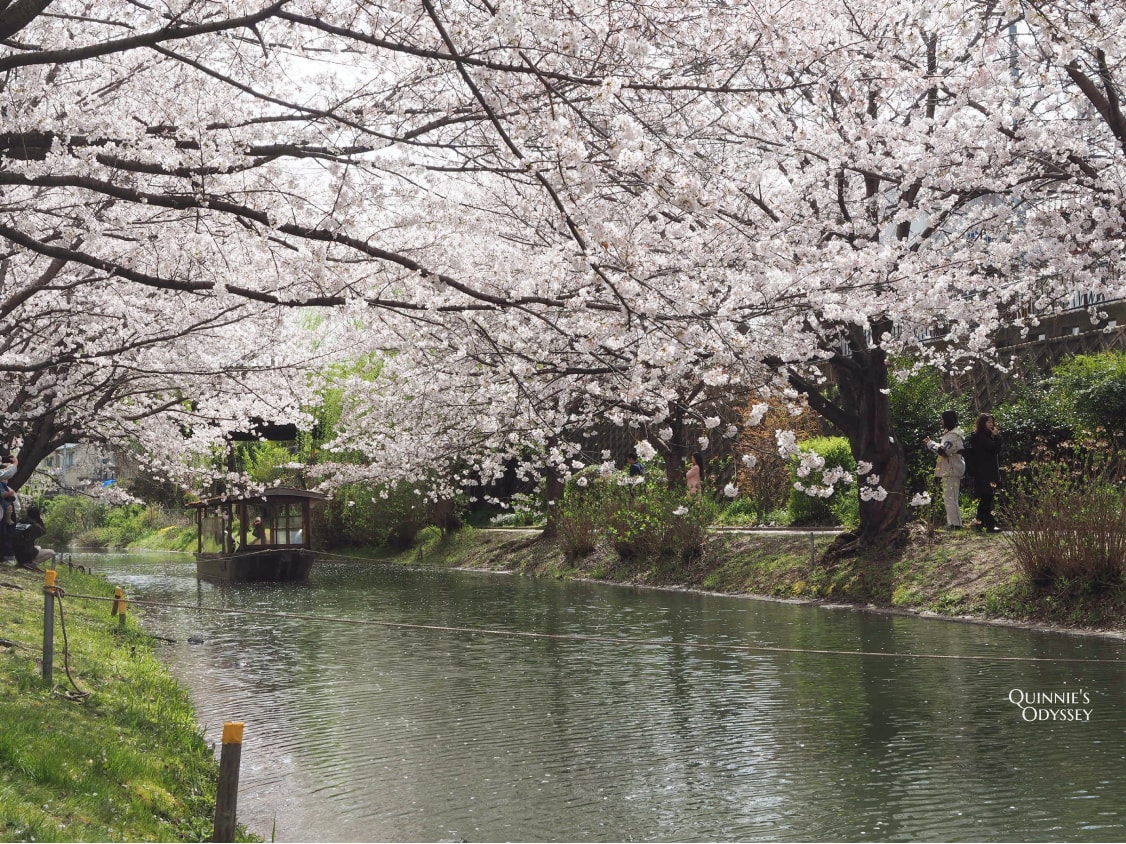
During spring, the riverbanks turn into a stunning pink sakura tunnel.
You can reserve a boat ride and drift along the canal while cherry blossoms fall gently onto the water, like a scene straight out of a postcard.
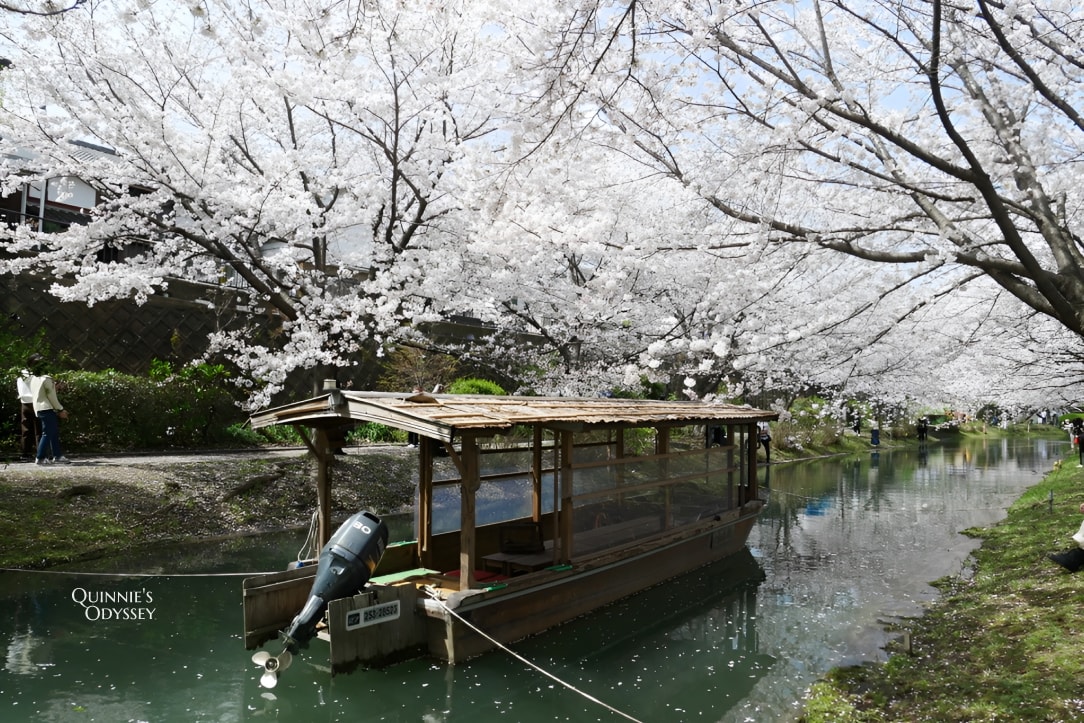
Read more here 👉👉 Fushimi Jukkokubune Cherry Blossom Cruise 2025: A Dreamy Kyoto Experience
Arashiyama has become one of Kyoto’s most visited areas in recent years.
It offers beautiful natural scenery like the iconic Togetsukyo Bridge and the peaceful Bamboo Grove, along with historic sites such as Tenryuji Temple, a UNESCO World Heritage Site.
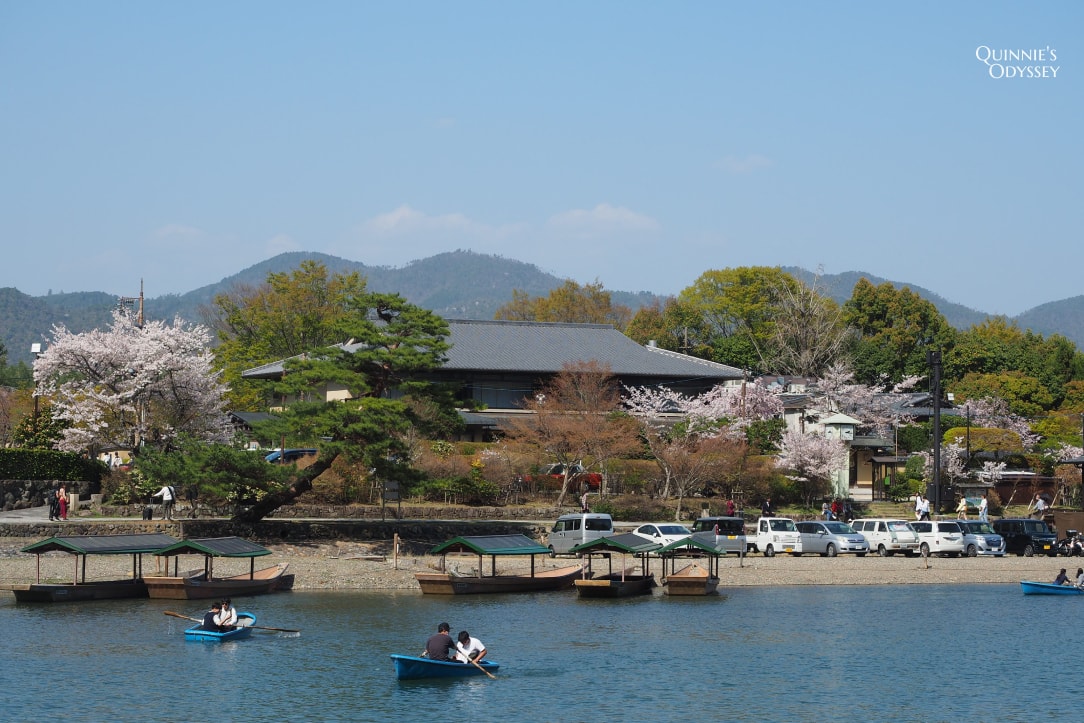
Each season has its charm, but spring has its own special magic.
Cherry blossoms bloom around Togetsukyo Bridge, reflecting in the clear Katsura River to create a picture-perfect scene.
Many temple gardens in Arashiyama also feature cherry trees, blending beautifully with ancient architecture and ponds, the essence of Japanese aesthetics.
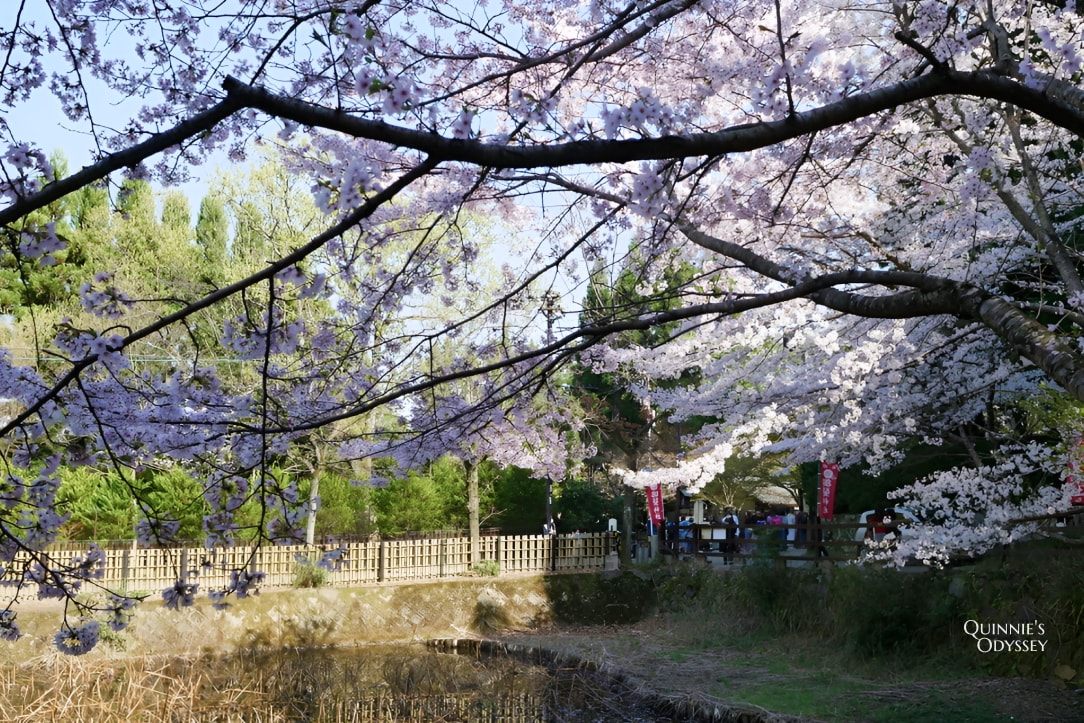
At night, illuminated sakura make the atmosphere soft, dreamy, and romantic.
Sanzen-in Temple is located in the quiet rural village of Ohara and dates back to the 8th century.
It was founded by Saicho, the founder of the Tendai sect.
The temple is famous for its peaceful atmosphere, moss garden, and the elegant architecture of the Ojo Gokuraku-in Hall.
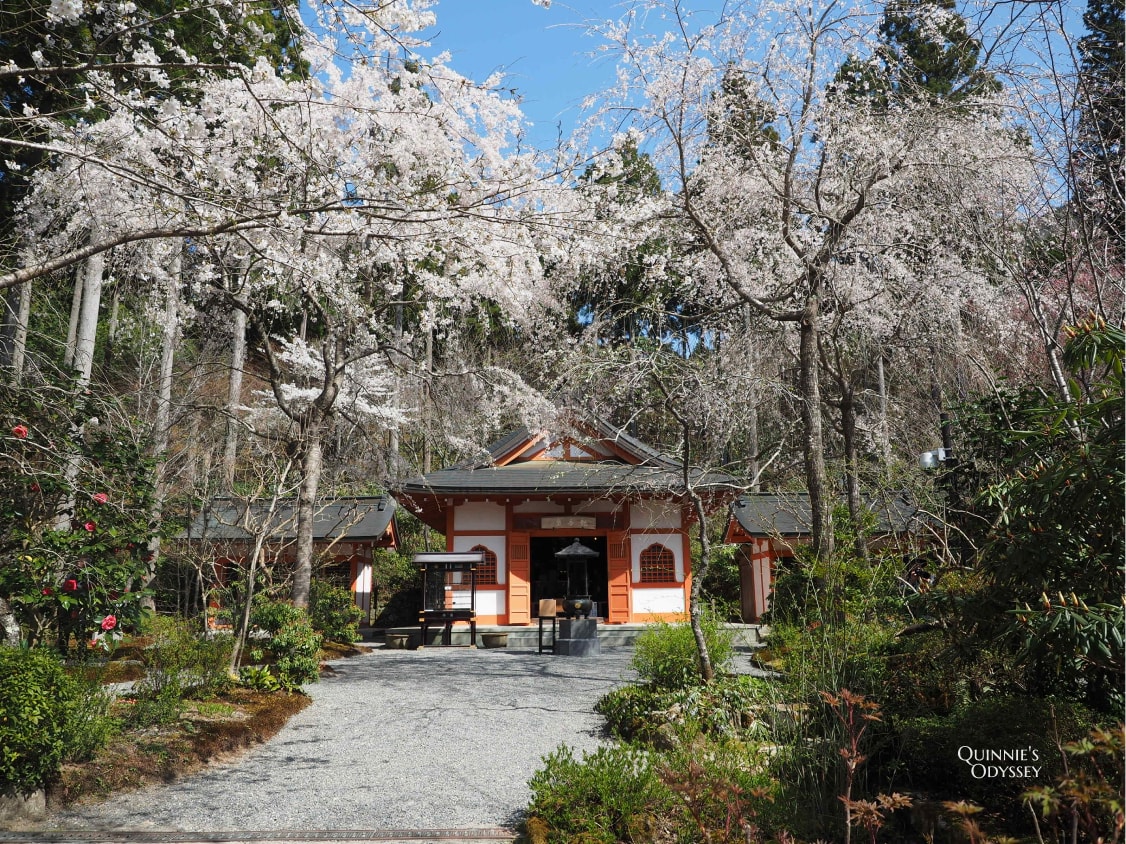
Although Sanzen-in is best known for its autumn foliage, its spring cherry blossoms have a calm, refined beauty.
The sakura here aren’t as overwhelming as other spots, but they blend beautifully with the serene surroundings.
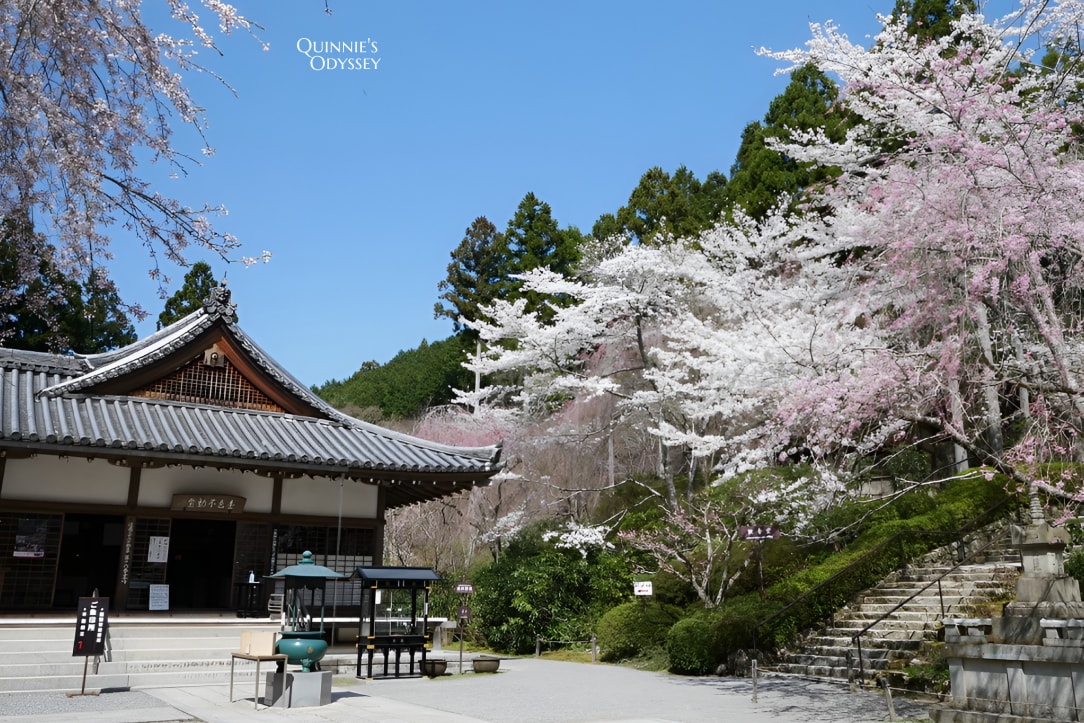
Ryozen Gokoku Shrine was built in 1868 to honor those who died for Japan during the Meiji Restoration.
Many historical figures are buried here, including Sakamoto Ryoma and Nakaoka Shintaro.
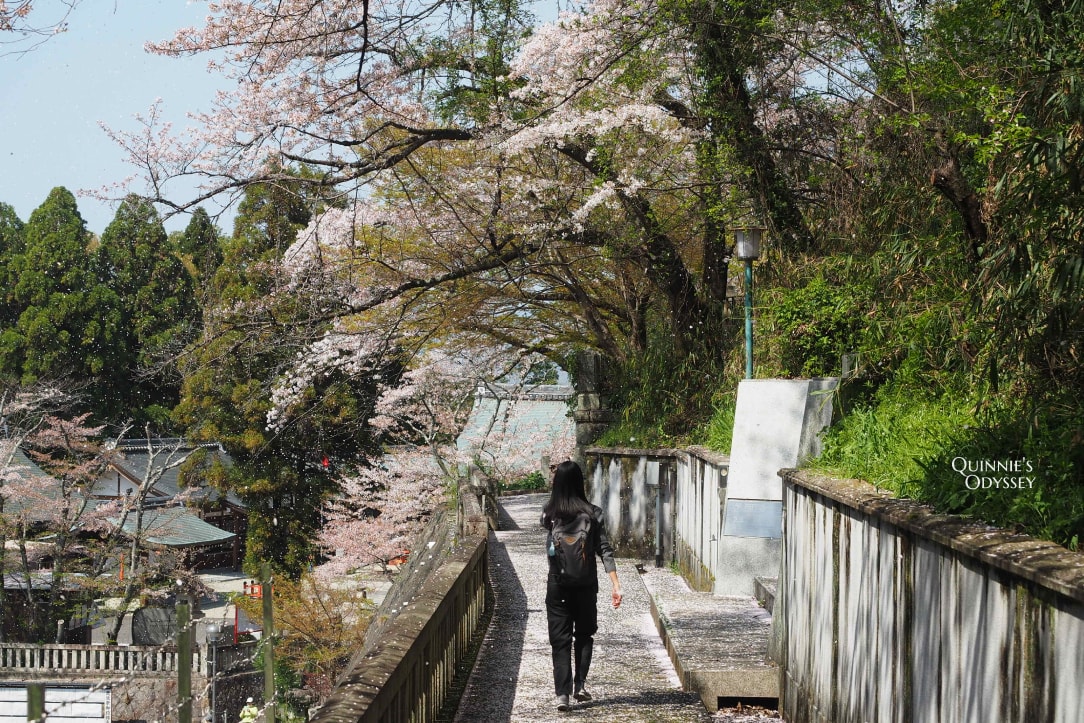
The shrine sits on the slopes of Higashiyama, offering beautiful views over Kyoto.
While the cherry blossoms here aren’t as spectacular as the major sakura spots, the atmosphere is unique, quiet, solemn, and deeply reflective.
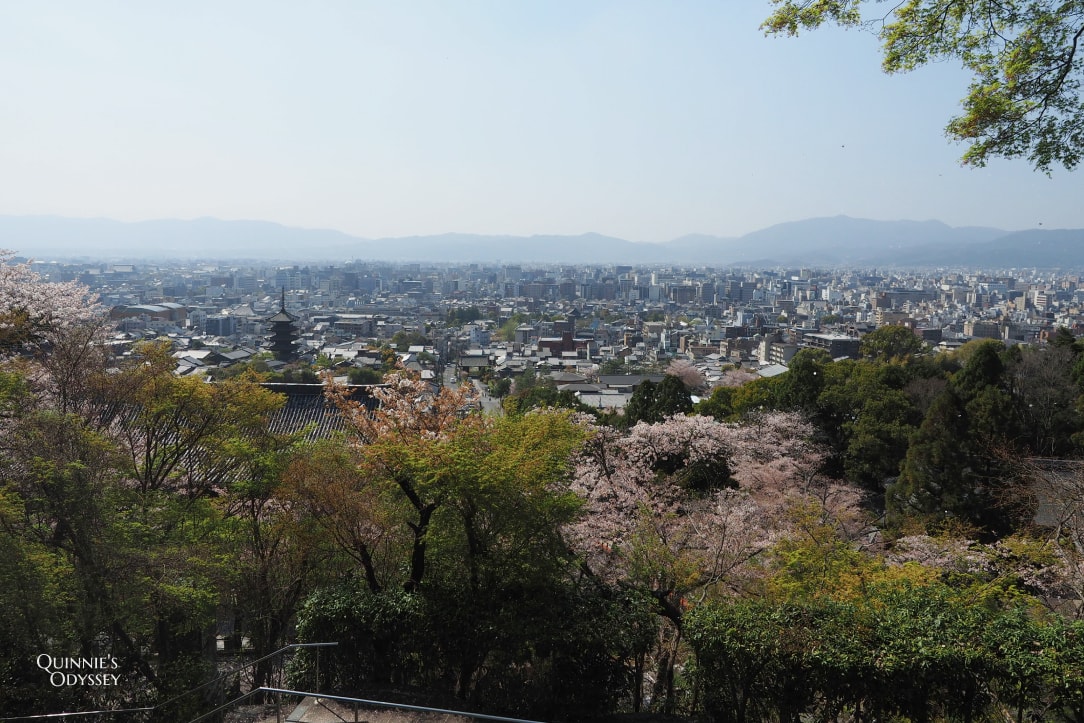
During spring, soft cherry blossoms decorate the grounds, creating a very peaceful setting.
If you dislike crowds and don’t mind the cemetery-like atmosphere, this is an excellent place for calm, quiet hanami.
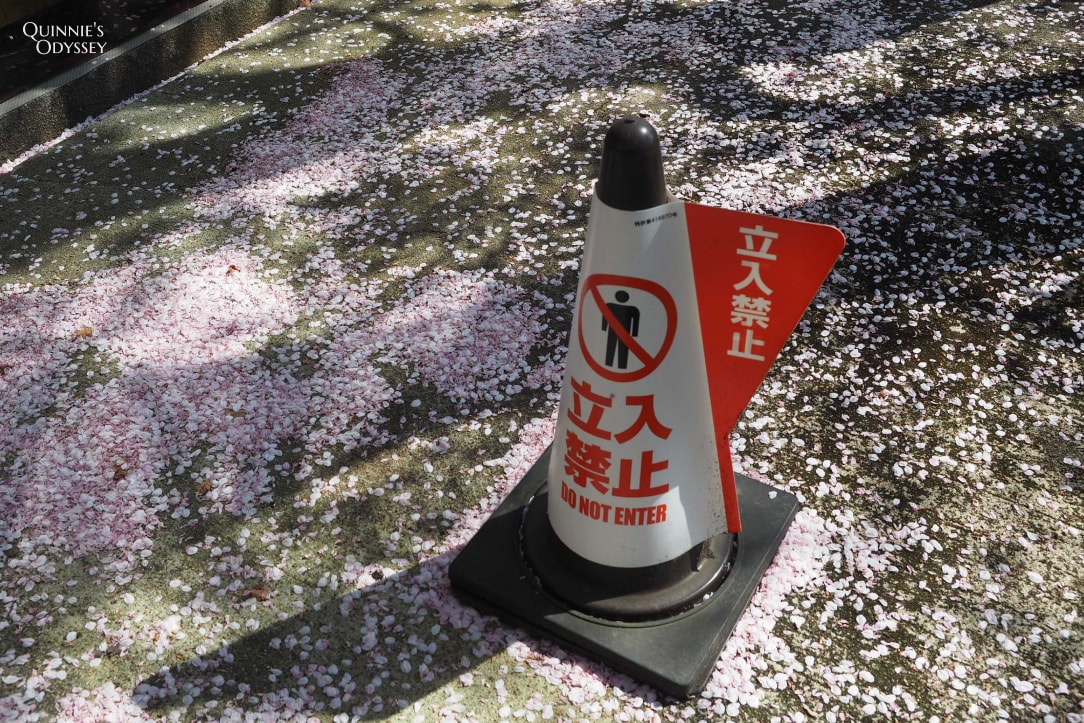
When I visited, it was peak petal-falling season.
The pale petals drifting through the air and covering the stone steps and gravestones created a moment that felt both poetic and emotional, like witnessing time and history passing gently before your eyes.
▼ Kyoto Travel Essentials ▼

Thanks for reading!
If you’re interested in my stories, feel free to follow me on Instagram.
👉👉 IG: @sika_artist 👈👈