Physical Address
304 North Cardinal St.
Dorchester Center, MA 02124
Physical Address
304 North Cardinal St.
Dorchester Center, MA 02124

Sarasa Nishijin in Kyoto is a café unlike anything else.
Before it became a trendy retro-style coffee shop, the building was actually a public bathhouse with almost 100 years of history.
The moment you step inside, you’ll notice the high ceilings, the old-fashioned Japanese tiles, and all kinds of preserved bathhouse details.
It really feels like you’ve slipped back into the Showa era.
This café blends nostalgia with modern style, and the building itself is now registered as a Tangible Cultural Property.
For coffee lovers and anyone who enjoys unique spaces, Sarasa Nishijin is one of Kyoto’s must-visit hidden gems.
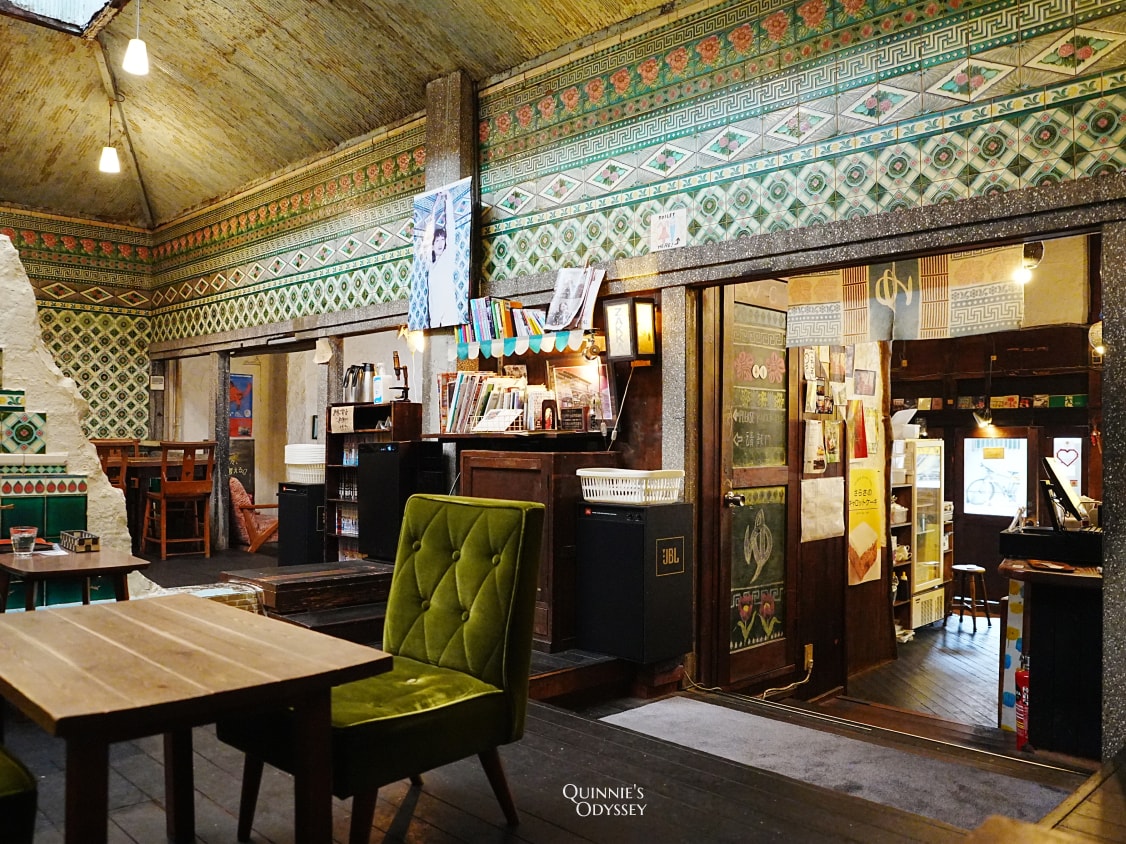
Sarasa Nishijin was originally Fujinomori Onsen, a neighborhood bathhouse that opened in 1930.
It wasn’t until the year 2000 that the café brand Cafe Sarasa took over and transformed the space.
They kept much of the original atmosphere, mixing it with modern café aesthetics, creating a place full of history and character.
At the entrance, you’ll see a traditional karahafu-style curved roof, which was commonly used in luxurious bathhouses for the upper class.
Some people say you can still spot the characters for “Fujinomori Onsen” on the roof tiles, though I personally couldn’t find them 😂
Sarasa Nishijin is the second branch of the Cafe Sarasa group, and among all their cafés, this one has the strongest sense of history. It’s also the most popular.
Today, this former bathhouse has become a relaxing place to enjoy a slow afternoon.
Grab a cup of coffee, order one of their homemade desserts, and enjoy the nostalgic atmosphere that feels uniquely Kyoto.
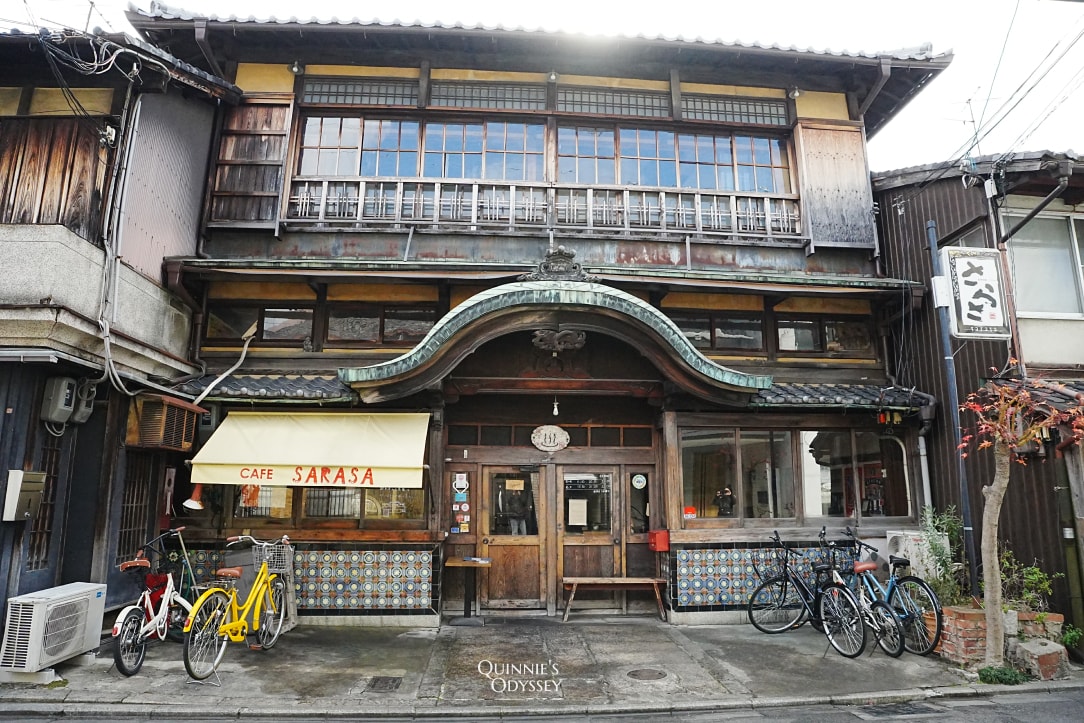
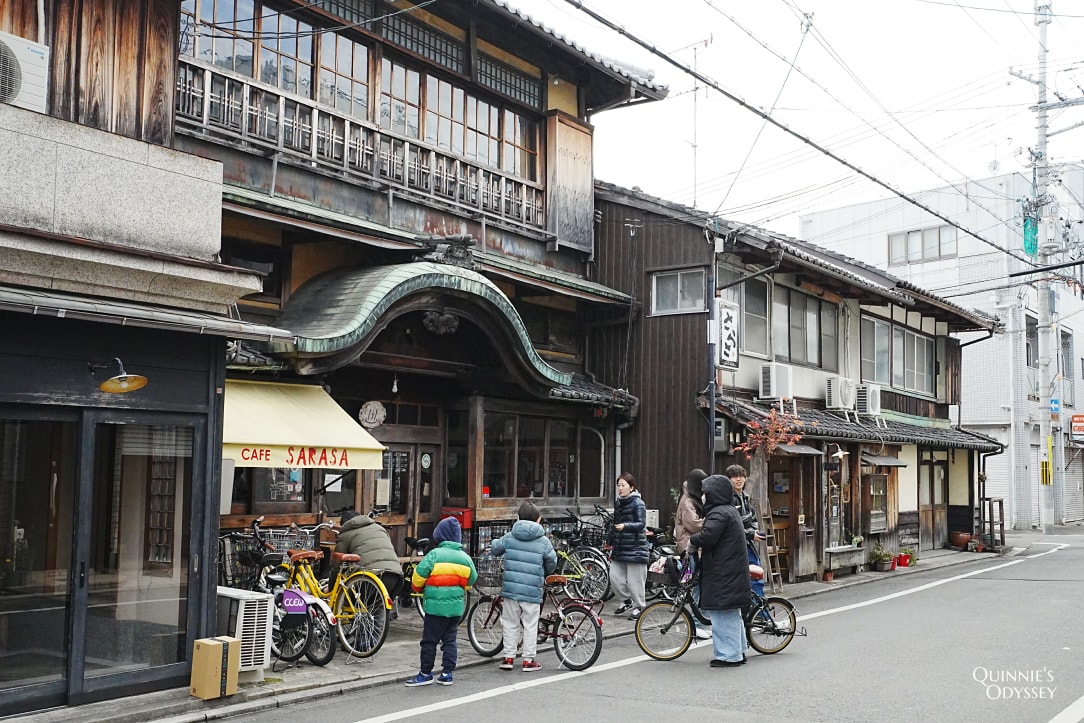
The café is located in Kyoto’s Kita Ward.
If you take the subway to Kuramaguchi Station, it’s about a 17-minute walk.
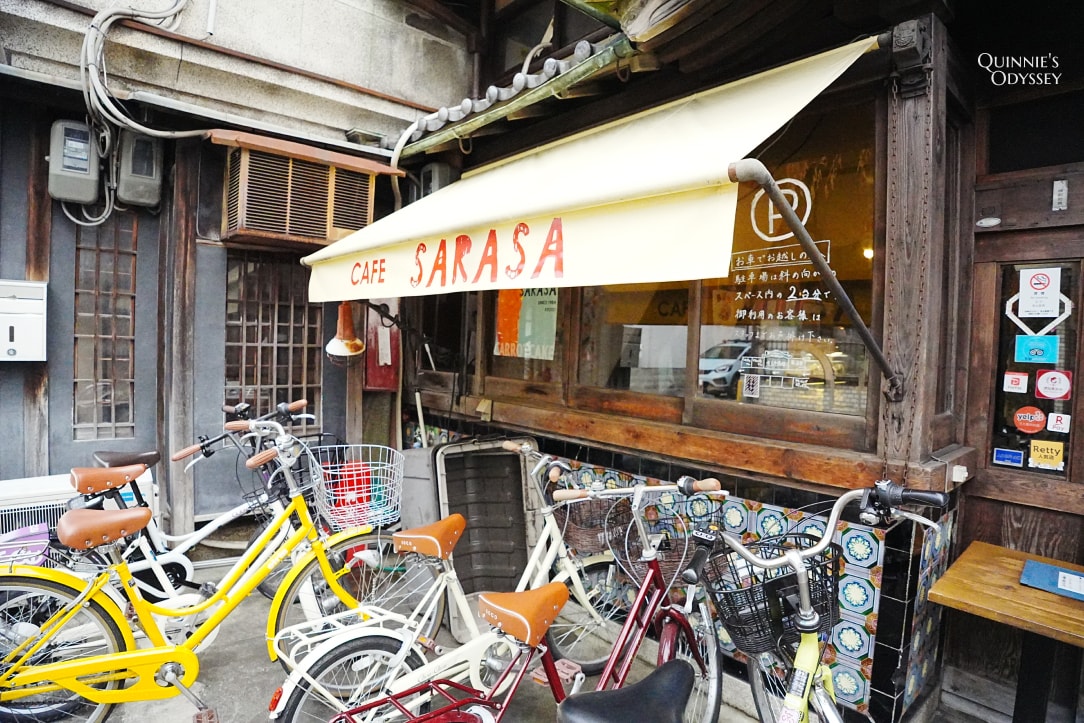
The area itself is pretty quiet with little traffic, so many customers arrive by bicycle.
It’s a great neighborhood for biking around.
The interior of Sarasa Nishijin keeps much of the original bathhouse layout and design.
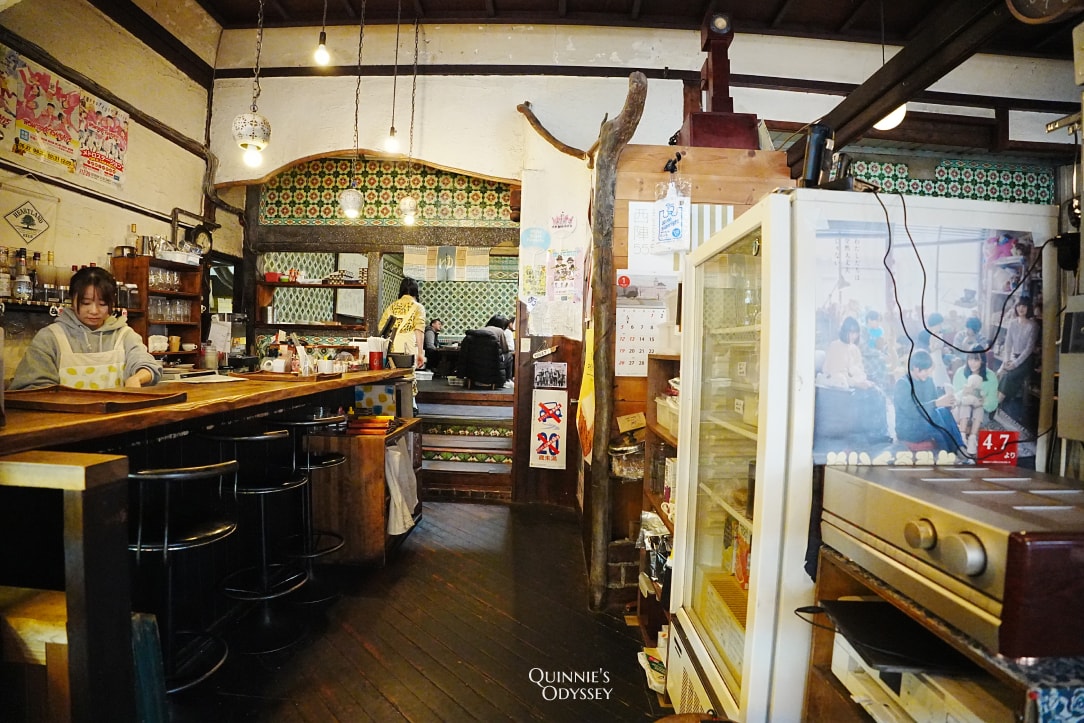
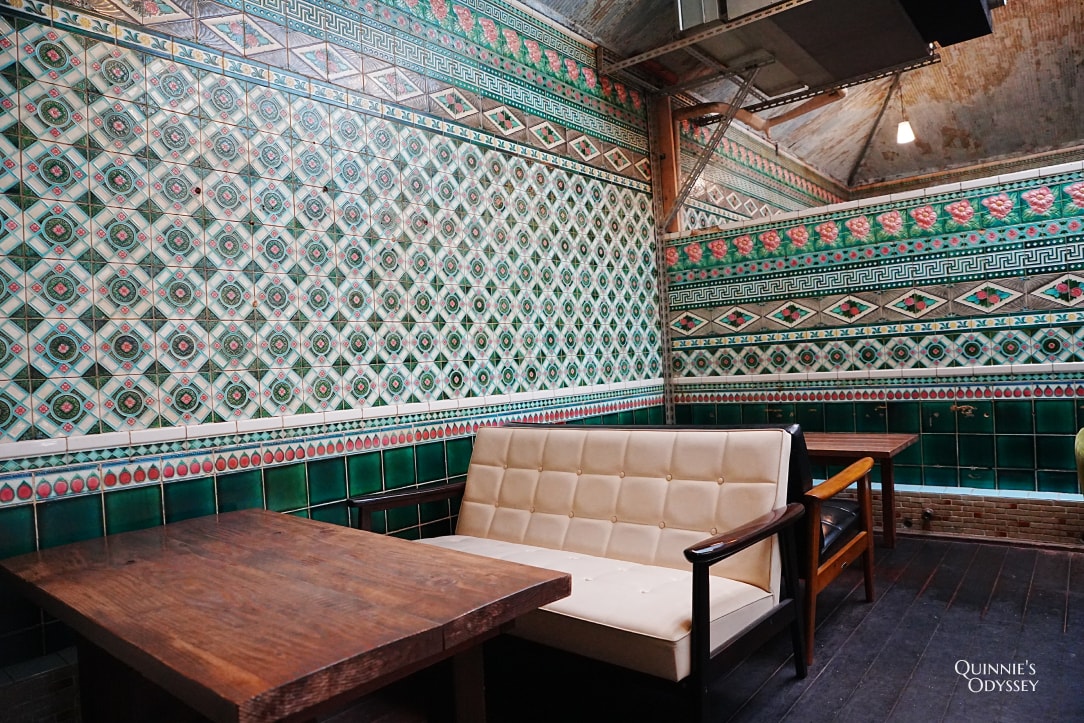
One of the biggest highlights is the colorful Majolica tiles.
These ceramic tiles were very popular in Japan during the early 20th century.
They have raised patterns, beautiful glazes, and intricate designs, each tile is a piece of art from another era.
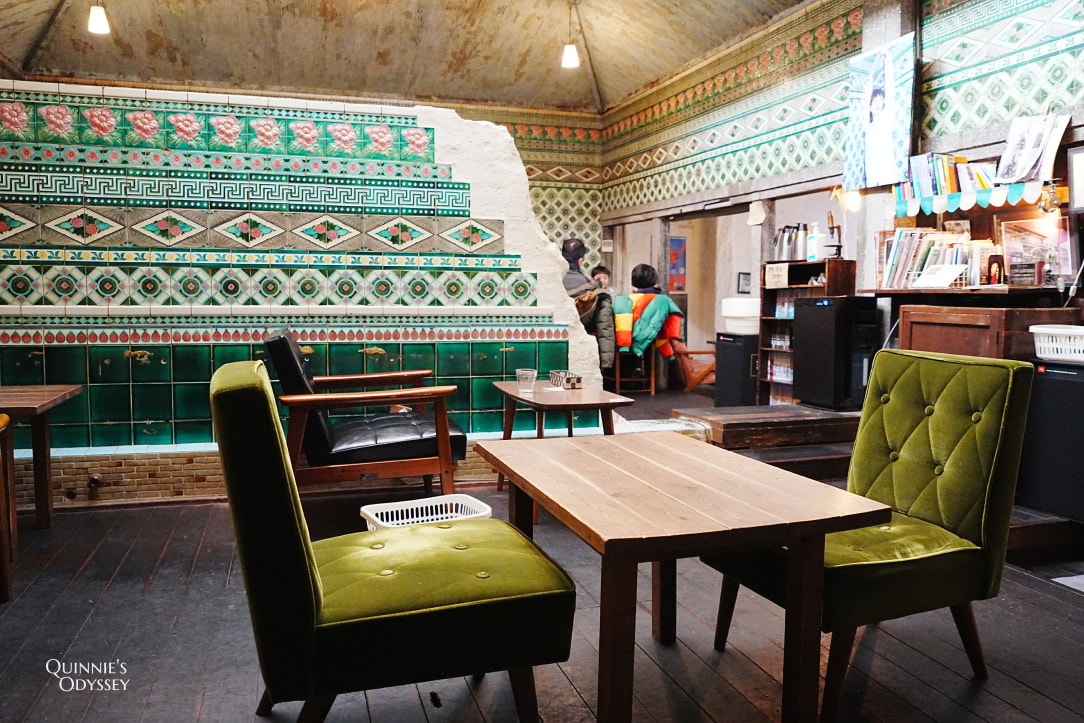
In the middle of the café, you’ll notice a half-demolished wall.
This used to be the divider between the men’s and women’s bathing areas 👇
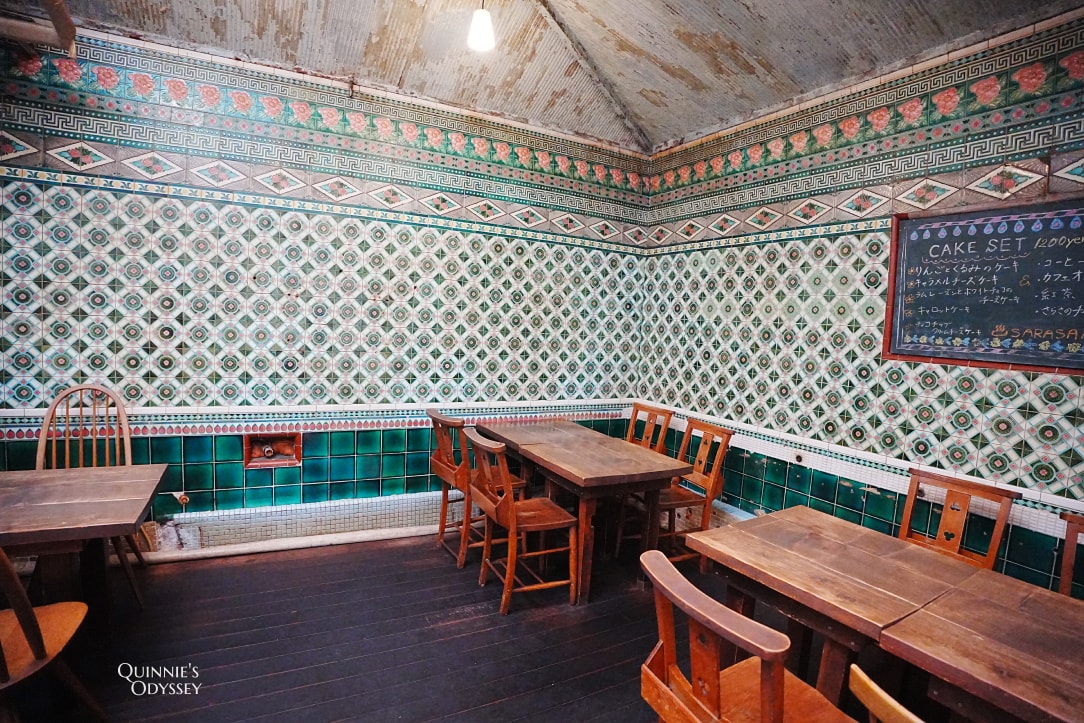
I visited right when the café opened on a weekday, so it was quiet and calm.
Sitting there, you feel like you’re in an art space shaped by time.
The menu is a thick, hand-drawn booklet, very cute and full of options.
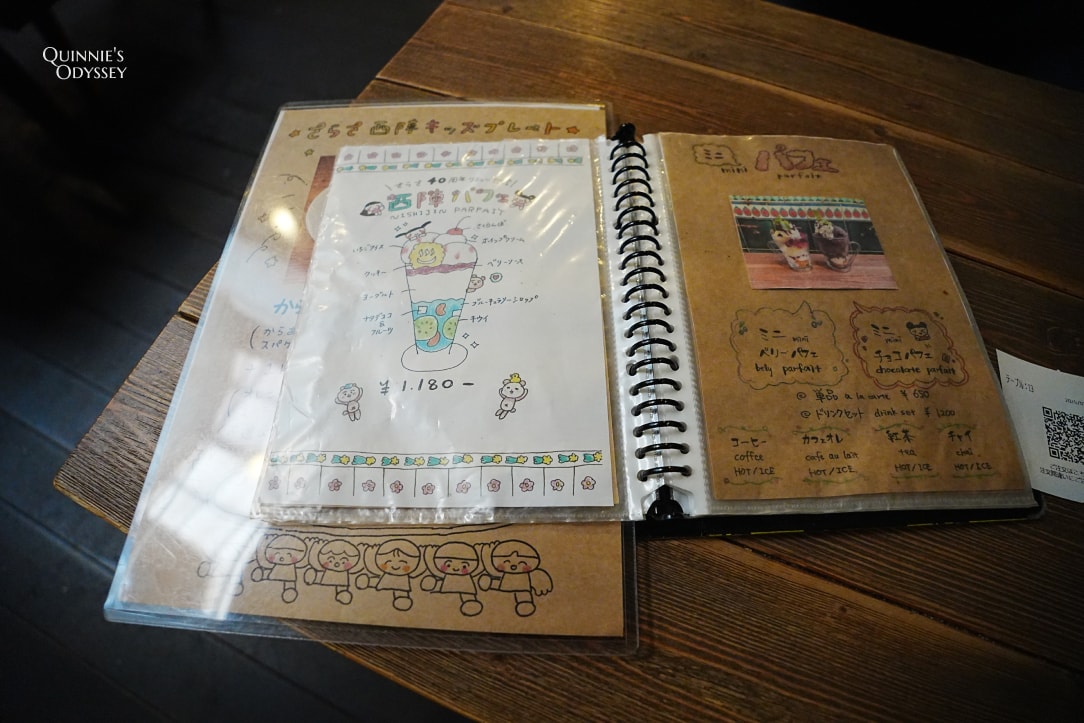
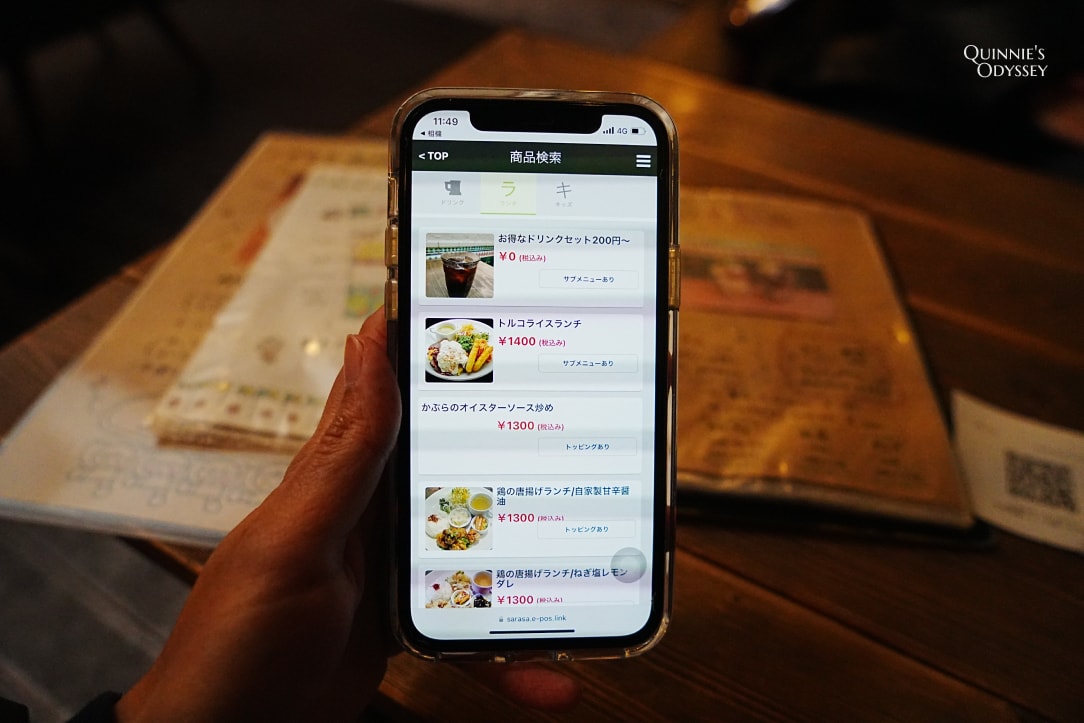
QR code, but the menu is entirely in Japanese, so it might be a bit challenging if you can’t read it. (Maybe there’s a language switch somewhere, but I didn’t see it.)
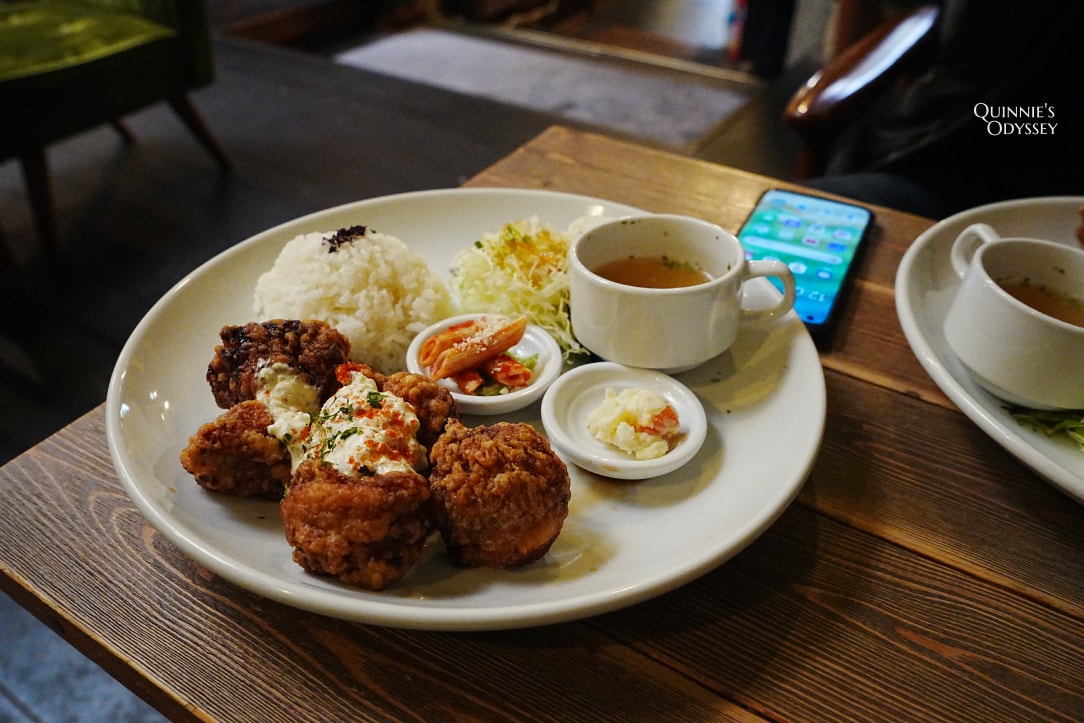
I ordered the highly recommended karaage fried chicken set (1,500 yen).
The portion was surprisingly big, the chicken was crispy outside and juicy inside, and with the rice and side dishes, I was completely full.
If two girls are dining together, one main dish plus a dessert might be just right.
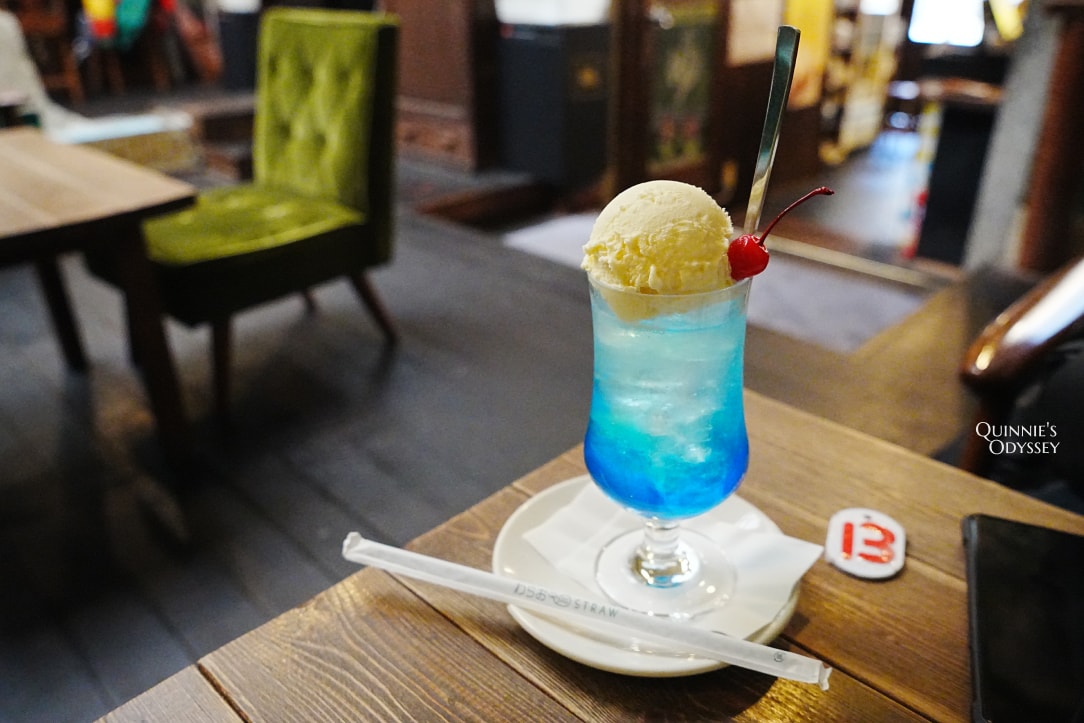
Of course, at a retro café like this, you can’t skip a classic cream soda (750 yen).
There are several colors to choose from.
I picked the blue one, refreshing, cute, and perfect for the nostalgic atmosphere.
I first discovered Sarasa Nishijin while reading an article about decorative tiles in Taiwan.
When I learned that this place was a restored century-old bathhouse, it immediately went into my must-visit list.
Finally stepping inside, seeing the Majolica tiles up close, and experiencing the mix of history and modern culture felt like a special moment.
It wasn’t just a café visit, it felt like a small trip back to the Showa era.
▼ Kyoto Travel Essentials ▼

Thanks for reading!
If you’re interested in my stories, feel free to follow me on Instagram.
👉👉 IG: @sika_artist 👈👈